Magazine Current IssueMagazine Current Issue
This Is Your Home Now: An Interview With Illustrator Emilie Seto
From our Mag
November 1, 2025

This Is Your Home Now: An Interview With Illustrator Emilie Seto

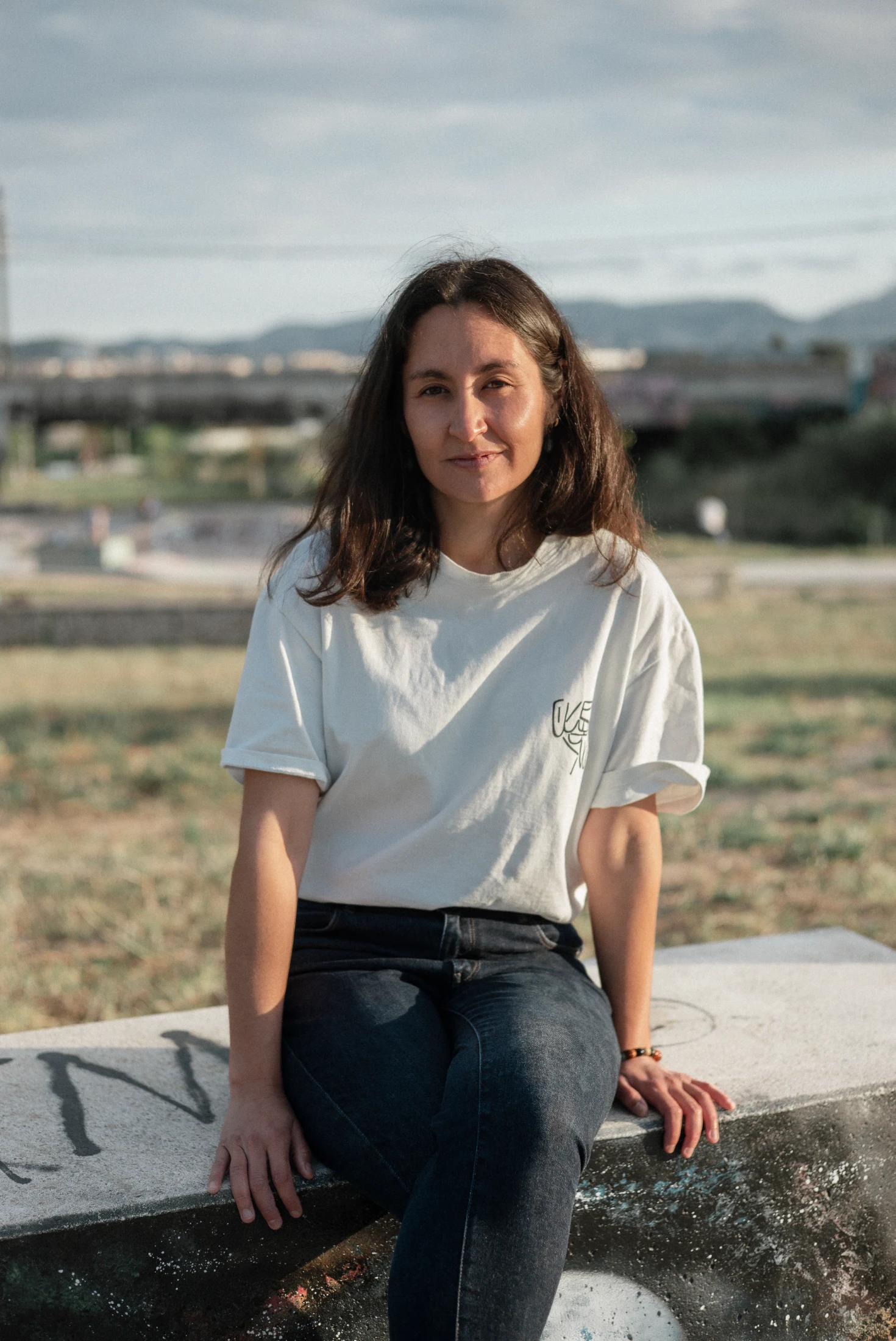
Meet Emilie Seto – a Marseille-based illustrator who translates the banalities of city life into something extraordinary.

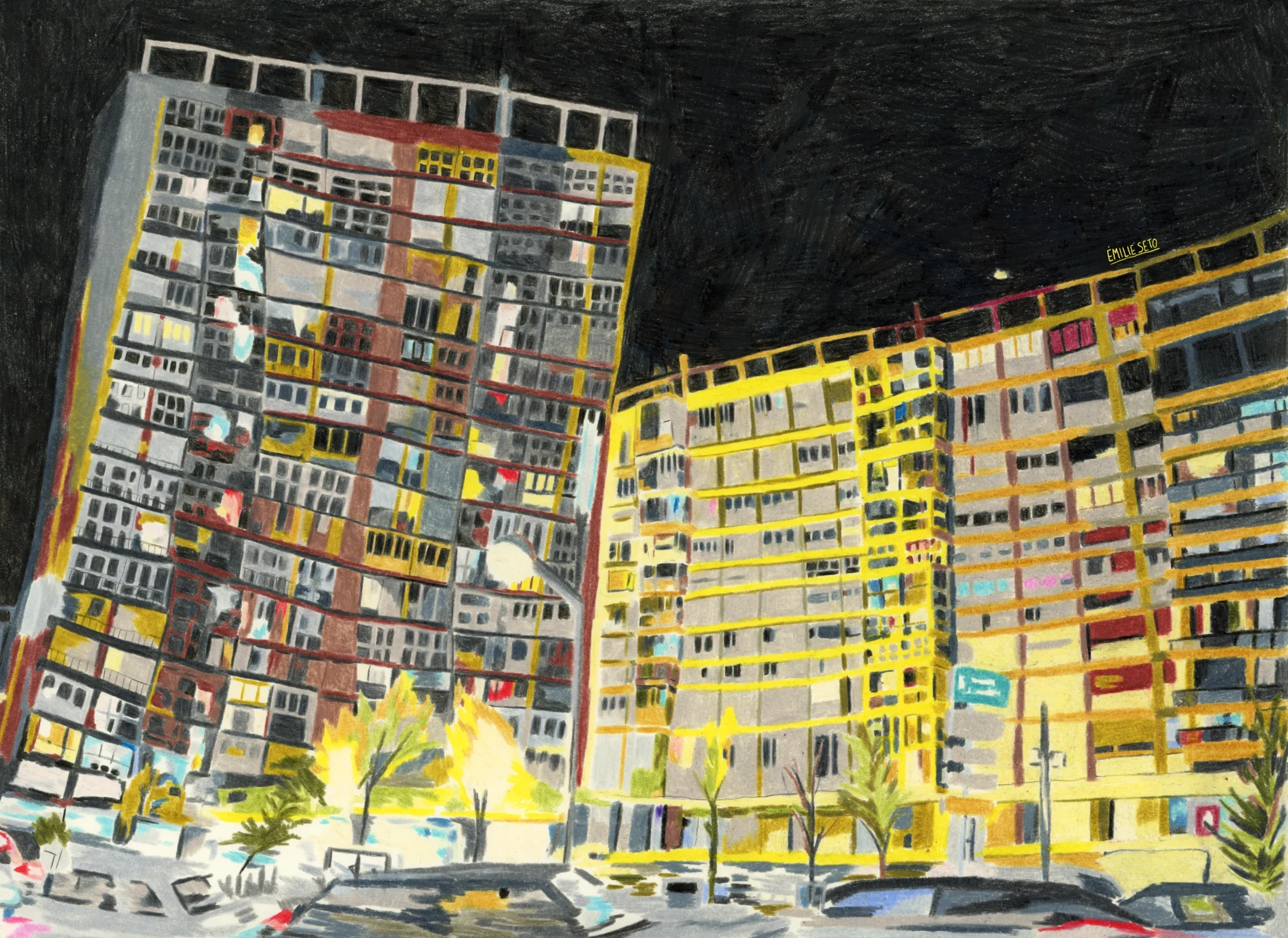
In the illustrated cityscapes of Emilie Seto, bridges bend without breaking, skyscrapers stretch side to side, and busy city-goers trudge to their next destination. Based out of Marseille, France, Seto translates the port city’s unique qualities to her own work. Cars are their own characters: parked at odd angles, skirted up on rounded curbs, and occasionally on fire; all of which emulate her experience of city life. (“Marseille is pretty much dominated by cars and messiness, which intensifies traffic in its streets.”) Seto has also applied her distinctive lens to several cities in China during multiple residencies there, but whichever the city, her work is distinguished by an interest in the ordinary and a flair for translating city scenes into something extraordinary.

Writing:
Harrison Cook
Writing:
Photography:
Photography:
No items found.
Magazine Current IssueMagazine Current Issue
The After shot of the Floorplan
Before
before
after
After
Top
Arrow UpArrow Up

What draws you to urbanity as a major theme in your work?

I began to draw Marseille for training purposes only at first, but seeing the reactions of the Marseillais to my drawings encouraged me to do more. The more I drew Marseille or other cities, the more I noticed and understood things about them. Drawing landscapes is way less intrusive than drawing people who live in them, as I sometimes draw very sketchy places in my city. I feel that telling the stories of these people is not up to me, as my life is very different from theirs, and I don’t want to scavenge on their lives. I prefer the pride of being able to say some of the landscapes I’ve drawn in Marseille were probably never drawn before.

What artists do you draw inspiration from?

I am quite inspired by illustrators like Benoît Guillaume or Yann Kebbi, or painters like Henry Darger or Cranach. But in fact, I really began to draw with manga artists like Eiichiro Oda (One Piece) or Takehiko Inoue (Slam Dunk) when I was a kid, as I am half Japanese and manga was the only thing I could see at the time coming out of my father’s country. At the time, manga was not considered “good art,” and for a very long time I was quite embarrassed by this artistic lineage. I’ve learned, as years go by, to embrace the legacy of these incredible artists. Even though my current drawings don’t look “manga” anymore at all, it’s still burned somewhere in my brain as my first aesthetic.

How has your time living in cities influenced your work?

I have not lived in many cities, in fact. I was born in Lyon and then moved to Marseille almost eight years ago. I haven’t travelled much during my adult life. It’s only been a few years since I travelled to China for work purposes. As clichéd as it sounds, these Chinese trips deeply changed me, as they showed me I could actually have a more international career. This moved me as an Asian person growing up in the West with a very distorted vision of the Asian continent.

Can you describe the moment you realised you were an artist?

I, in fact, define my practice more as an illustrator rather than as an “artist,” as my work revolves a lot around commissions for editorial purposes or for commercial work. However, as I began to draw my adopted city, my style suddenly took a turn around the end of 2019 and the beginning of 2020. As I was drawing parts of my city, people from Marseille were sending me messages to tell me how they loved to see the city through my eyes, or that they were touched to see the neighbourhoods where they grew up being dignified on paper. I don’t know if I can say I realised I was an artist at this period, but it certainly changed my whole life and gave me a strong identity as an illustrator. In 2022, one Marseillais told me, “tu es chez toi ici” (roughly translated as “this is your home now”), and this was, I think, the very moment where I fully realised I was adopted as an artist by my city.

What’s the creative process from conception to completion for one of your works?


I’ve been working a lot with pencils for my landscape drawings (which are my “personal pieces”) because I like the vividness of the colours, and the fact you could either pretty much smash them on the paper to have a very thick, deep line, or sharpen them to have the thinnest line you can ever get with any tool. I usually begin from one side of the sheet to the other, from left to right, in fact, as I hold my pen with my right hand and don’t want to smear the colours by rubbing it on the paper. I was inspired to choose this medium by some of my drawing heroes: Lorenzo Mattotti, Yann Kebbi, among others. Now I am getting a bit tired of this very slow and energy-consuming tool, and using more and more felt pens to draw landscapes. I usually take several pictures of one place and then “mix” them into one final image, which creates this sense of mashed perspectives.

Where have you exhibited your work? Who have you collaborated with?

My work has been exhibited in France, New York, and China. I’ve collaborated with a lot of magazines and newspapers, including the Financial Times and the French newspaper Le Monde. I think my Financial Times collaborations were the ones I am the most proud of, as it felt like a kind of marathon, with a drawing due almost every week. The articles were all written by celebrities talking about their favourite things to shop for. I had some incredibly proud moments when some of them asked me if I could send them a print of my drawing, including a message from Michelle Pfeiffer’s agent, among others. I’ve also drawn stamps for the French Post, for Olympique de Marseille (my city’s soccer team), and for the Palais de Tokyo (a Parisian contemporary art museum). One of my proudest commissioned works is the collaboration I did with 19M (a multidisciplinary cultural space conceived by Chanel), which involved turning my drawing into a participatory embroidery experience with the public during a large event in Marseille.

Tell us about your residency in China and the inspiration behind the richly layered and colourful scenes you crafted there.

In 2023, I stayed for two months, both in Chengdu (south-west of China) and the Dongbei region (north-east), for a series of exhibitions held by French–China cultural-diplomatic projects. During my time there, my schedule was free so I could walk wherever and whenever I wanted. It was pretty dreamy, to be honest. I drew around 60 images of China, mostly at home in France from pictures, that were exhibited again in 2024. Then I returned to China this year for a one-month residency in both Shenyang and Fuzhou. It truly felt like my brain and my heart could explode. The volume of information and the range of landscapes, from thick luxurious forest to industrial desert, that I got from these trips was completely insane — not like anything I had experienced in my whole life. I published a small book, Il y avait une montagne avant (Once Upon a Time, There Was a Mountain), which is a compilation of the best of my drawings from this period.

What’s next for you?

I’d love to work more with Asia, especially Japan and China. Considering the series of exhibitions I’ve had since the beginning of 2023, I’d like to slow down a bit with work now, though. I don’t have any big events planned for the future, but the situation can drastically change in a few months with this kind of work.

emilieseto.com

Writing:
Harrison Cook
Writing:
Photography:
Photography:
Back to Top
Arrow UpArrow Up
Top
Arrow UpArrow Up
The After shot of the Floorplan
Before
before
after
After
Businesses featured in this project
No items found.
Products featured in this project
No items found.
Magazine Current IssueMagazine Current Issue
Writing:
Writing:
Photography:
Photography:
Back to Top
Arrow UpArrow Up