
Magazine Current IssueMagazine Current Issue
Small Home: Alan Díaz & Marc Lago’s Apartment
From our Mag
May 2, 2026

Small Home: Alan Díaz & Marc Lago’s Apartment

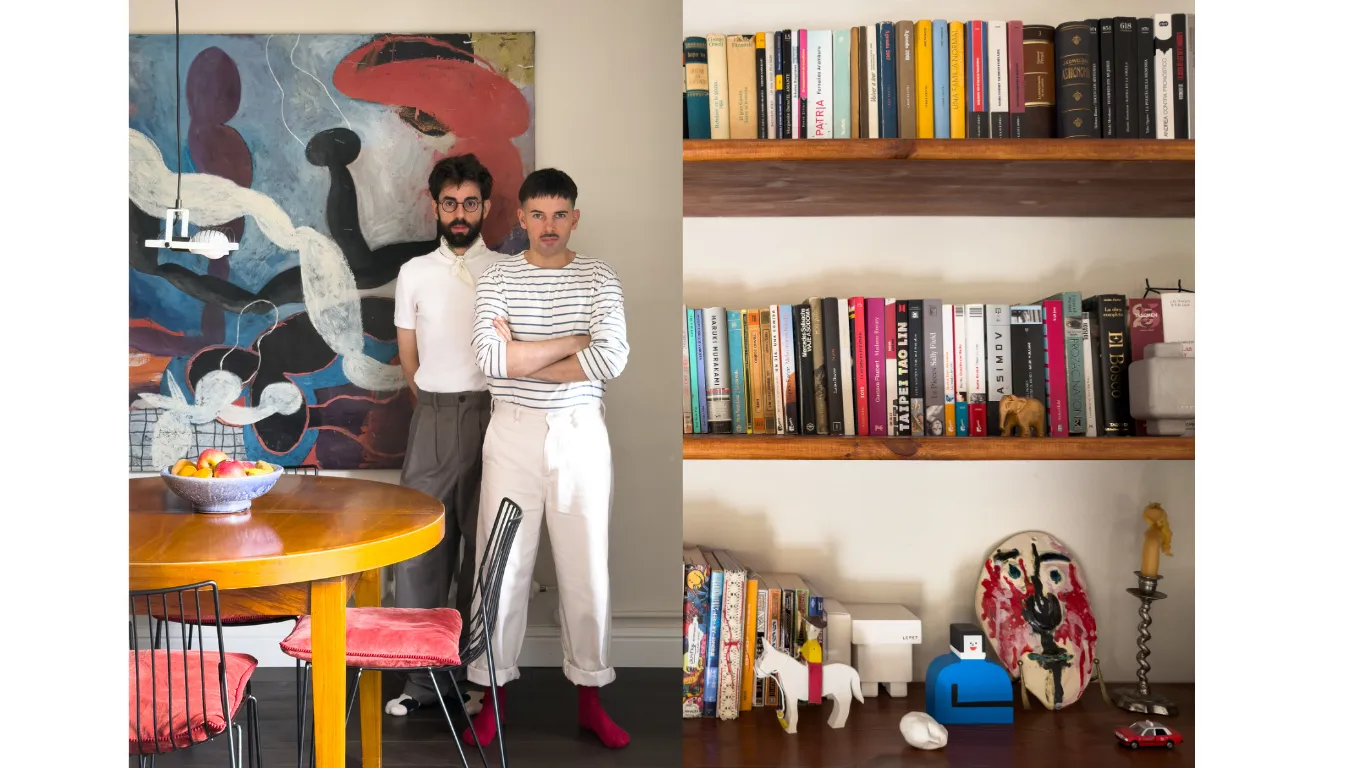
Hidden inside a modest 1929 building near Barcelona, Alan and Marc’s 42-sqm apartment is a deeply personal collage of art, colour, literature and design. Filled with sunlight, a treasured collection of lamps and other thoughtfully collected art and objects, the home balances considered curation with warmth, creativity and everyday ease.

A cocktail of fate and a seriously sexy Volta Catalana ceiling conspired to make this Barcelona apartment Alan and Marc’s new abode. Alan tells us it felt meant to be from the beginning and from there, he and Marc set about designing a home together – one that would nurture and reflect their shared love of art, literature and photography (and also celebrate Marc’s lamp collection). A keen curatorial eye (or pair of eyes) is evident in every detail throughout the light-filled spaces, but not to the point of rendering the apartment cold or gallery-like. On the contrary, it’s a warmly inviting home, with a distinctly lived-in charm. It’s just that the people who live here happen to have really good taste.  

Elizabeth Price
Writing:
Writing:
Elizabeth Price
Photography:
Photography:
Alan Díaz
Magazine Current IssueMagazine Current Issue
The After shot of the Floorplan
Before
before
after
After
Top
Arrow UpArrow Up

Tell us a little about yourselves. Is there a nice story about how you met? What drew you to each other? 

Marc is a fashion designer and I’m a photographer. We met in 2013 in Galicia. Marc is originally from there and although I’ve always lived in Barcelona, my family is Galician too. We felt we had to combine our creativity, and that’s how Élida C was born in 2018, our accessories brand. It started with earrings only, but we’re now expanding the catalog and have added bags and other pieces. What we love most about our project is how it connects nature with our designs. We’ve created several earrings using real flowers, which ties back to our travels and walks in nature, something we’re both passionate about. 

As for a story, the first time we met, it didn’t seem like we had a future together. It wasn’t until we decided to take a trip to Porto that everything changed. Marc ended up moving to Barcelona. What drew me to Marc was definitely his inner world, watching him create his collections and seeing his creativity, not just in fashion but in everything he does. 

In what ways are you similar and different, and how are these shared qualities and differences reflected in your home? 

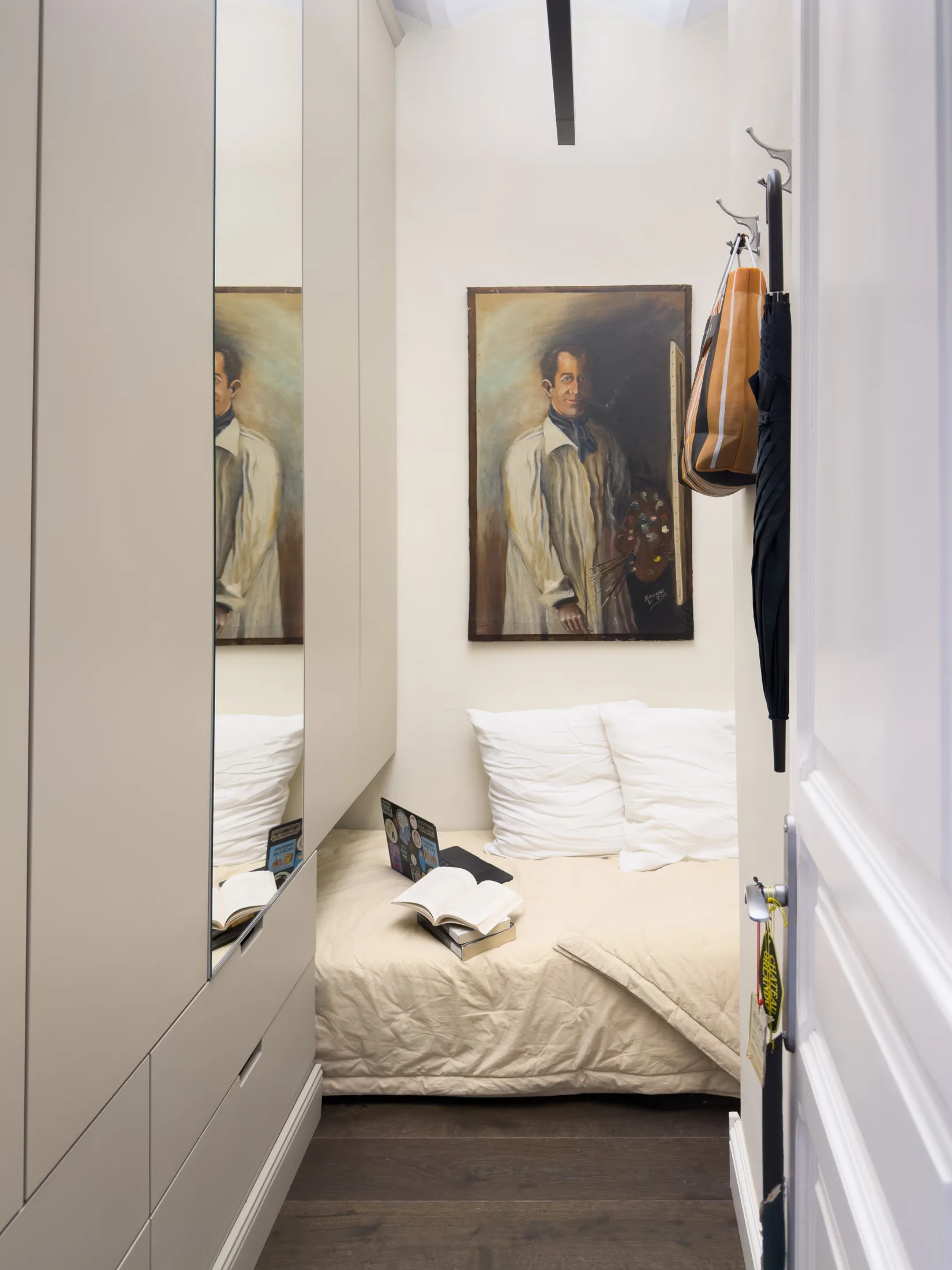
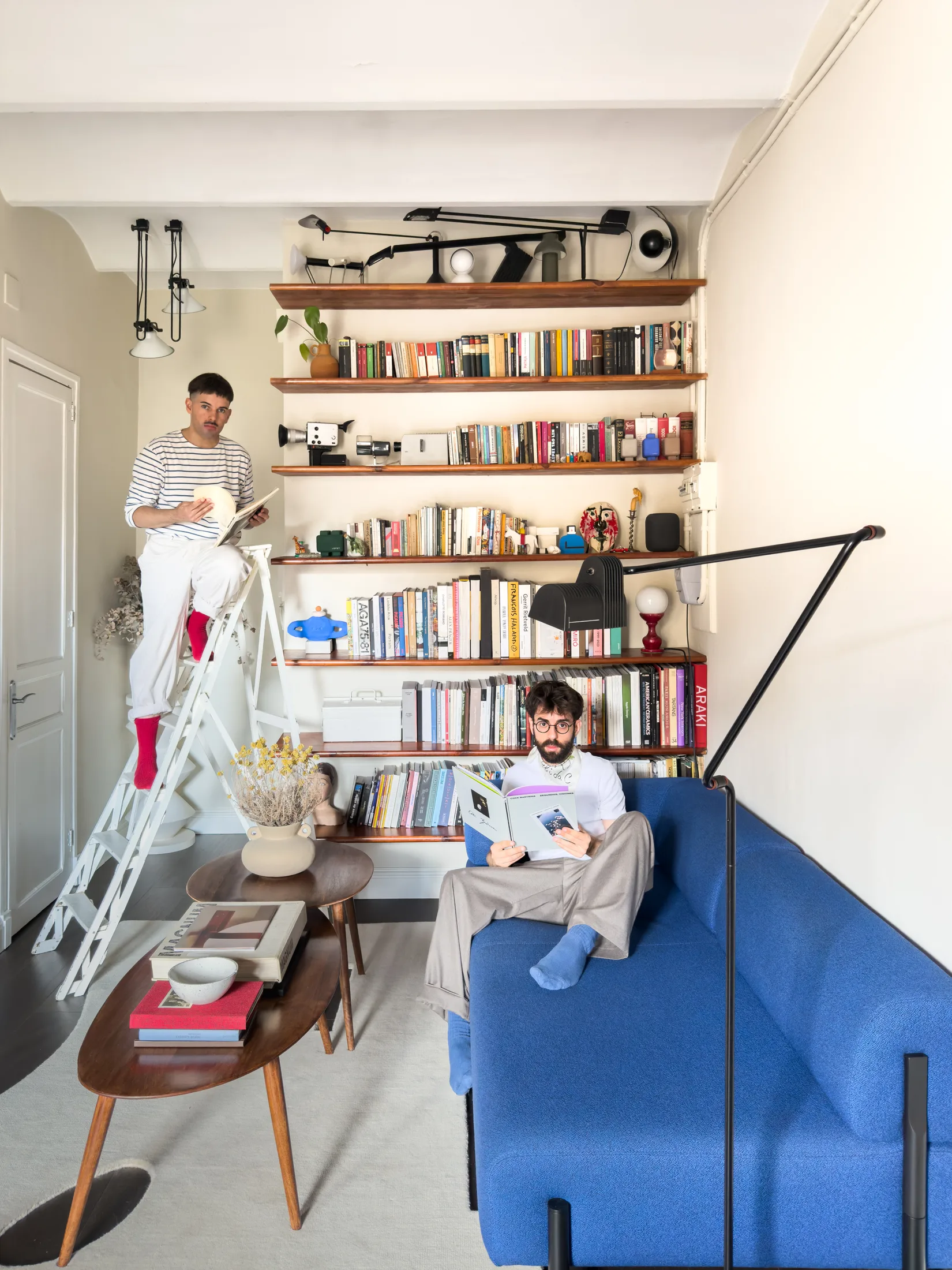
Without a doubt, one of our strongest shared qualities is creativity. It shows in our love of art, literature and photography. We deeply value artistic expression and aesthetic sensitivity, which leads us to collect photo books, rescue old paintings, and acquire pieces from artists we admire. At home, we’ve created reading corners like the sofa with its armrest, spaces filled with inspiring works, and shelves carefully arranged with books and art. 

Is this the first home you have owned and designed together? 

It’s not our first home together, but it is the first one we both own. When Marc moved to Barcelona, we lived in a loft with a fairly industrial style. That’s where our project Élida C began, and where we started collecting our first art pieces. Eventually, we felt the need for change, we wanted a cosier space, something that felt more ours, with the freedom to adapt and experiment. 

This home reflects that evolution, and also our differences. Marc is the one who keeps things orderly and visually harmonious. If it were up to me, everything would be maximalist: colours, objects, books, textures – everywhere. But it’s precisely that mix between his sense of balance and my creative impulse that gives the space character and makes it feel like us. 

When you were looking for your new home together, what were your non-negotiables? 

We were very clear that we didn’t want a new or standard apartment. We were looking for something with history and personality. We wanted it to retain some original features, have lots of natural light and, ideally, high ceilings. 

Can you tell us the story of how you found the apartment and what you fell in love with? 

We honestly believe this apartment was waiting for us. We initially dismissed it after seeing the photos online, and it wasn’t until a few weeks later that we decided to visit. 

In a small space, it brought together many of the things we were looking for. Beneath a layer of poorly executed renovations, we discovered elements that won us over: high ceilings with Volta Catalana, original woodwork, sunlight throughout the day, a small balcony, and a layout with lots of potential. 

Another thing that won us over was the building itself: built in 1929, very small, nestled between two larger blocks as if resisting the city’s transformation. It has very few neighbours, which makes it especially quiet and welcoming. 

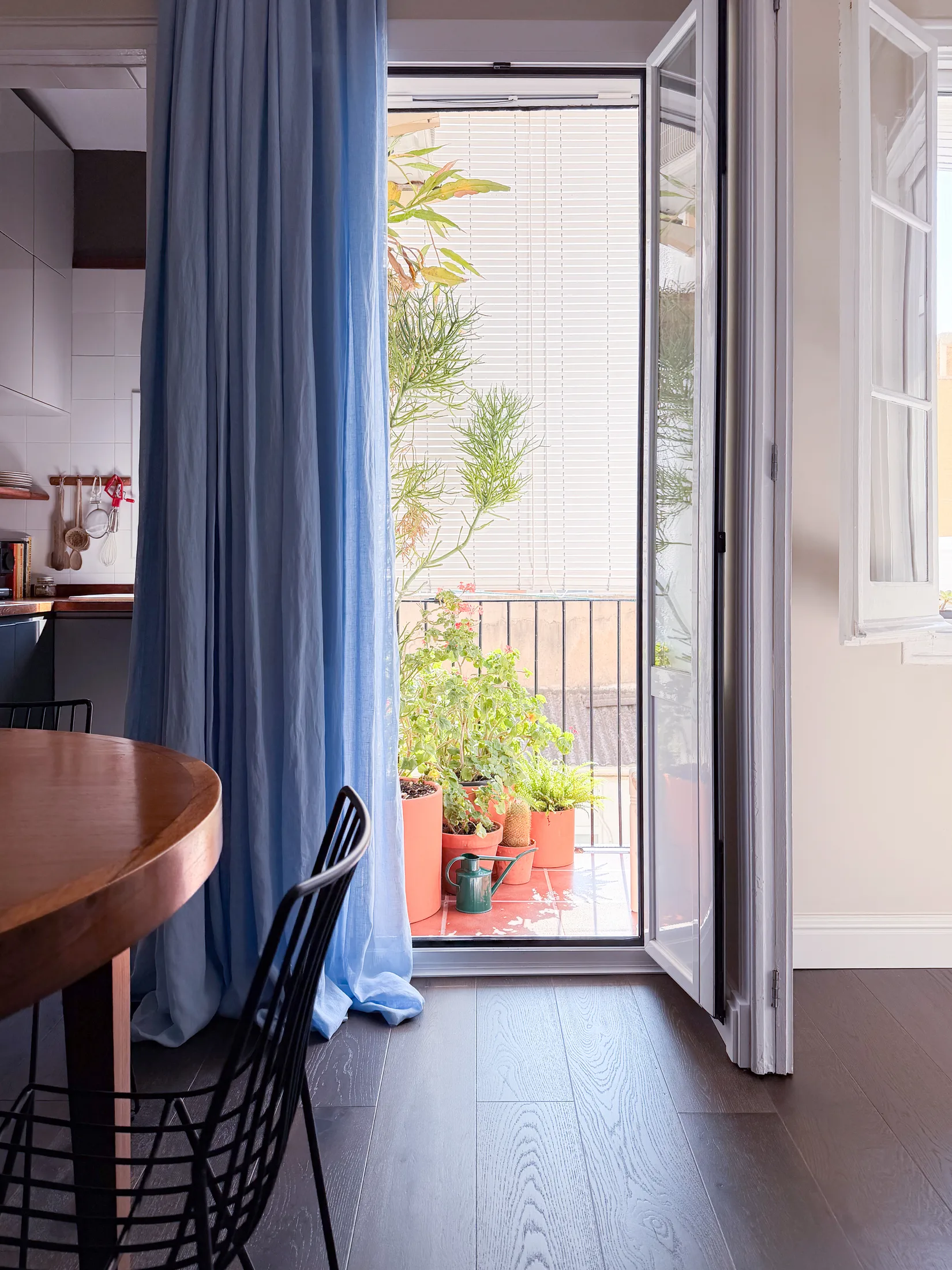
And even though it’s right in the city, when you step out onto the balcony, it feels like you’re in a village. It doesn’t face the street, but rather an open courtyard shared visually with other neighbouring patios. That creates a very peaceful atmosphere, where you hear birds fluttering and feel an unexpected calm between buildings. It’s one of those little gifts we didn’t expect and fell in love with from day one.
What was the state of the original apartment? And what have you changed? What have you left untouched? 

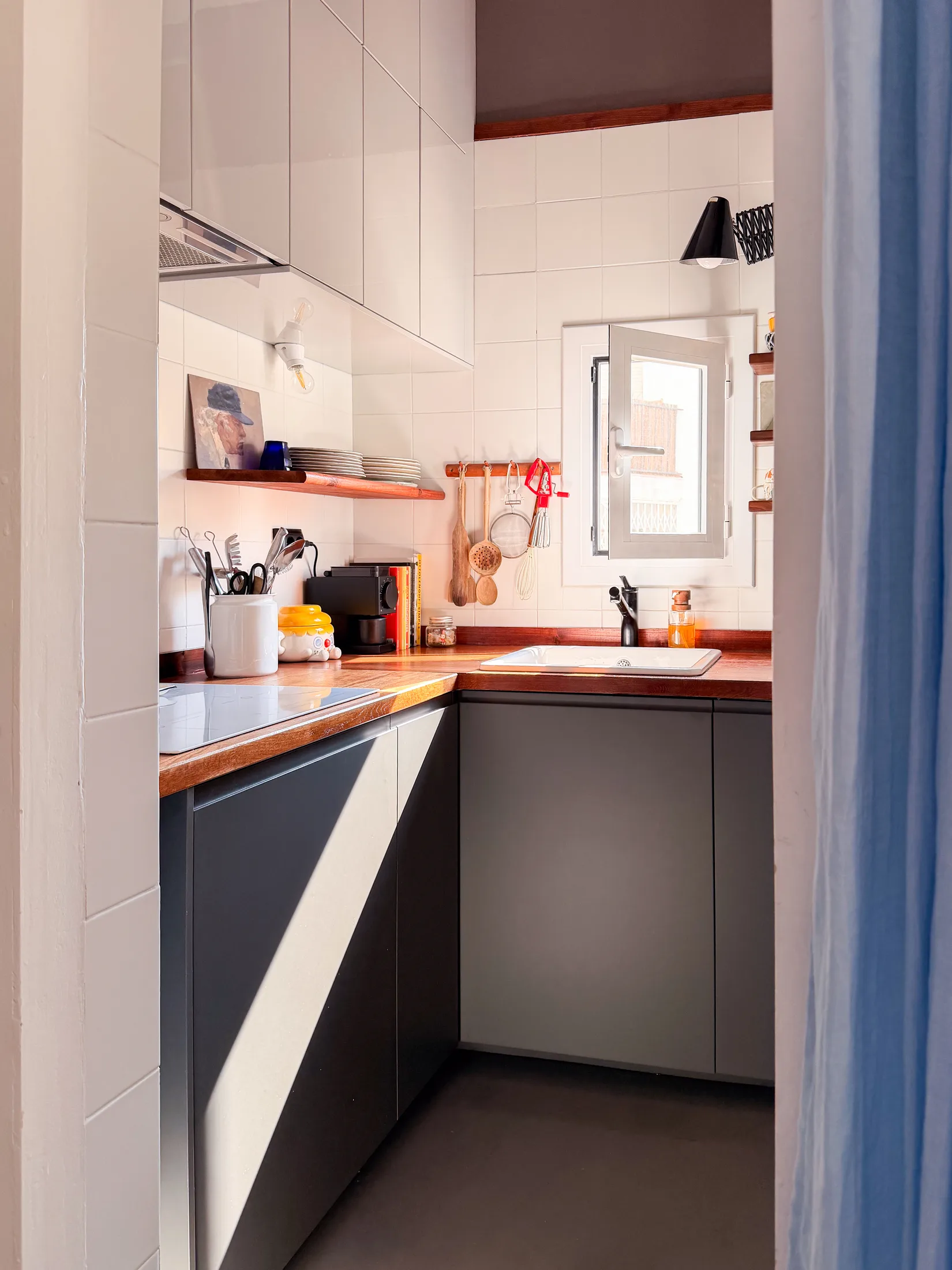
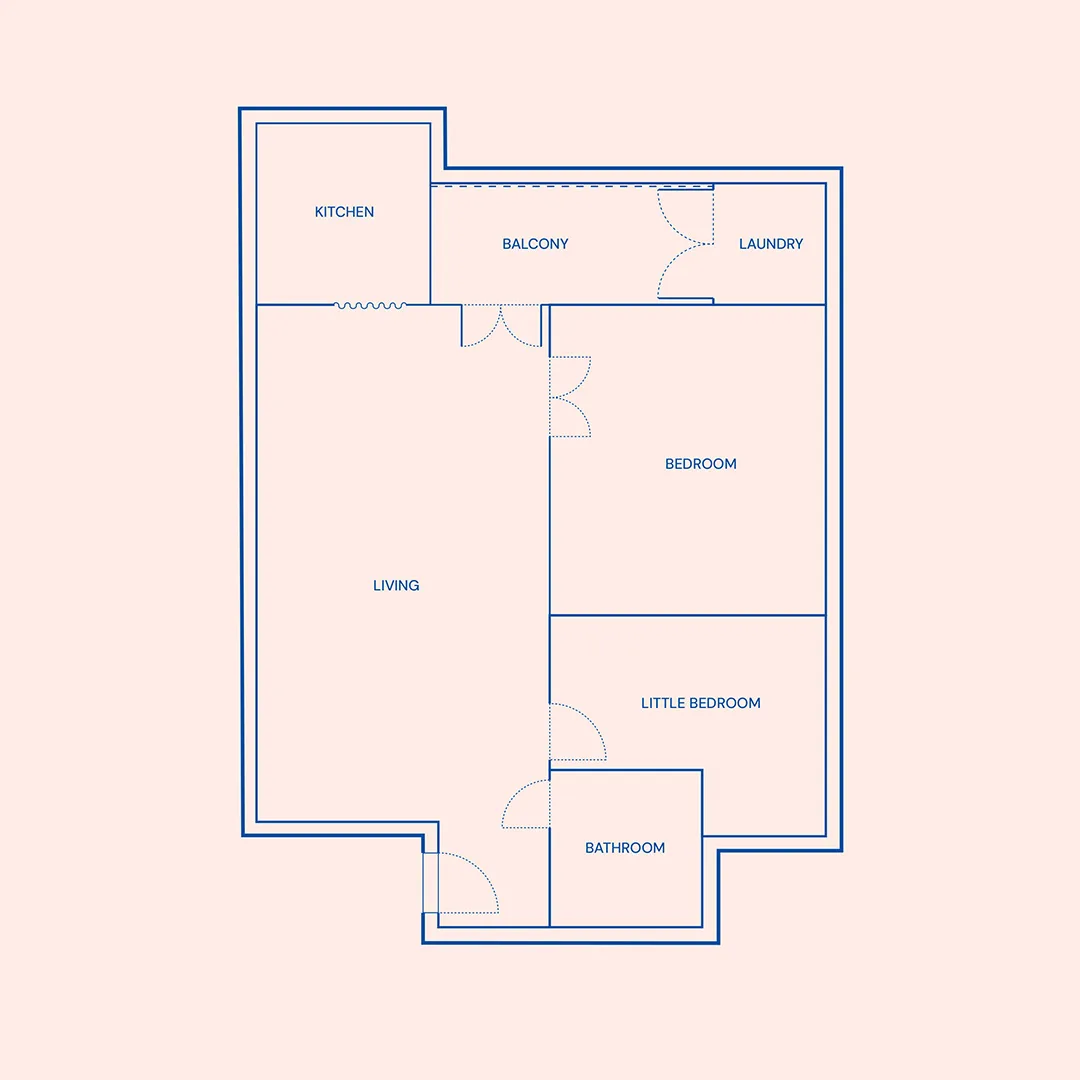
The layout remained exactly the same, but there were things that didn’t quite work. For example, the fridge was in the dining room, which gave it a bit of a student-flat vibe. We had to completely renovate the kitchen: we removed the false ceiling to gain height, improved storage, and visually opened up the space. 

Unfortunately, and very reluctantly, after several years living with the original hydraulic tile flooring, we had to replace it with parquet. We tried to preserve it as much as possible, but some areas were badly damaged and there were abrupt transitions between rooms. In the dining room, for example, there were three different types of flooring, with visible cuts from old walls that no longer existed. In total, there were five different floor types throughout the apartment, which in such a small space created a fragmented feeling that became overwhelming. 

In the end, we installed the parquet ourselves, which made the process more personal and meaningful. 

Did you handle all of the renovations yourself? 

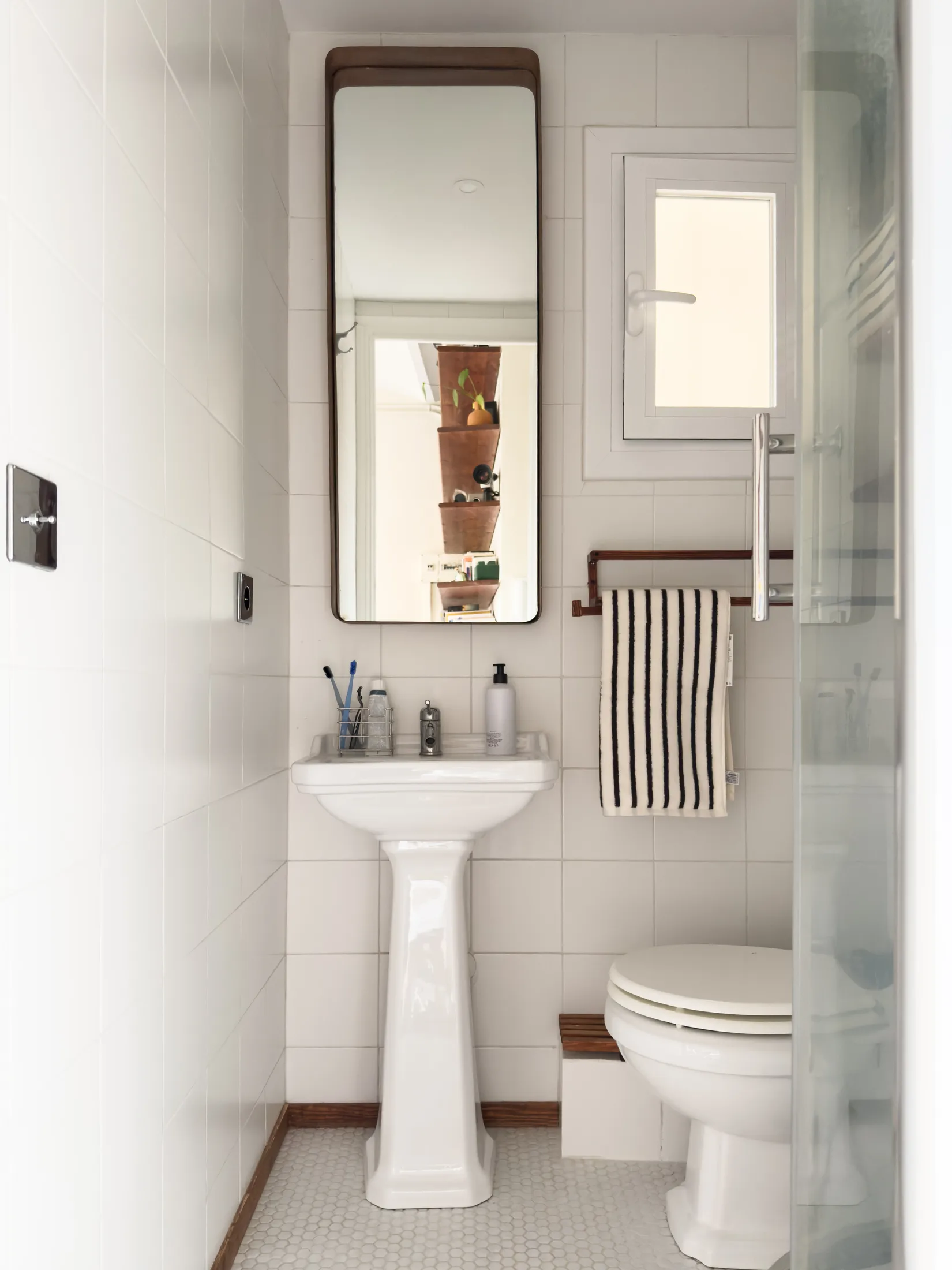
Marc did almost all of the renovation work. For specific tasks, like installing the bathroom, we did hire a plumber, but everything else he handled himself. 

Marc has previous experience with hands-on work, he makes each earring and bag for Élida C himself and has always been very self-taught. He took care of everything from planning to execution, learning and solving things along the way. 

I have to admit that manual work isn’t really my thing… but I helped paint the walls, documented the whole process and, most importantly, kept Marc motivated. Since our old apartment was nearby, I also took care of gradually moving things over, which made the transition smoother and helped the new space start feeling like home from the beginning. 

Doing it ourselves allowed us to tailor every detail to our needs and tastes, without rushing, and with a lot of care. The experience was incredibly rewarding for both of us. Even though there were moments of exhaustion and doubt, it gave us a sense of accomplishment and connection to the space. Every corner has a story, and knowing we built it with our own hands makes us live in it in a much more intimate and special way. 

You have such an interesting collection of lamps. Can you tell us about the lighting in your home? 

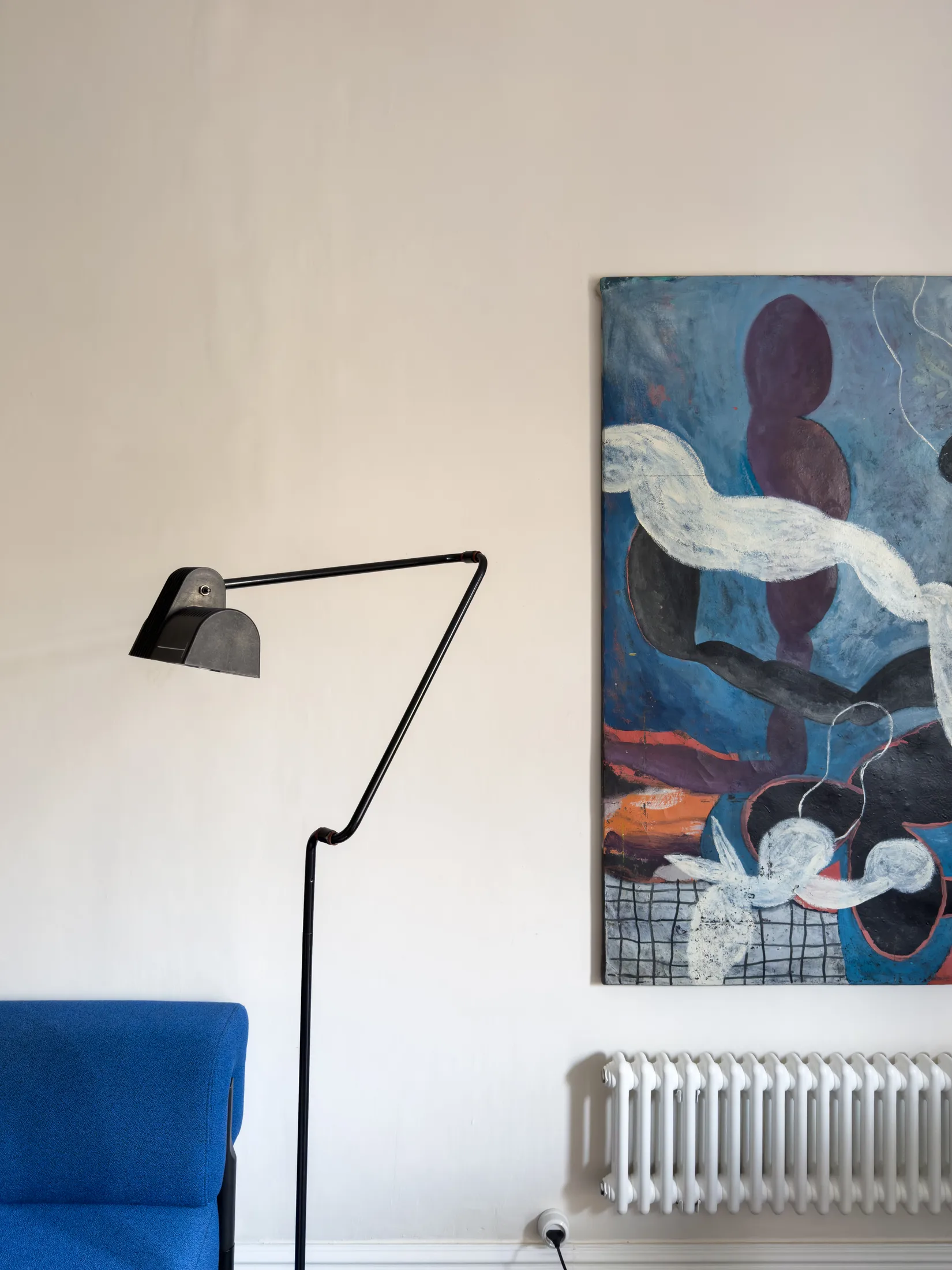
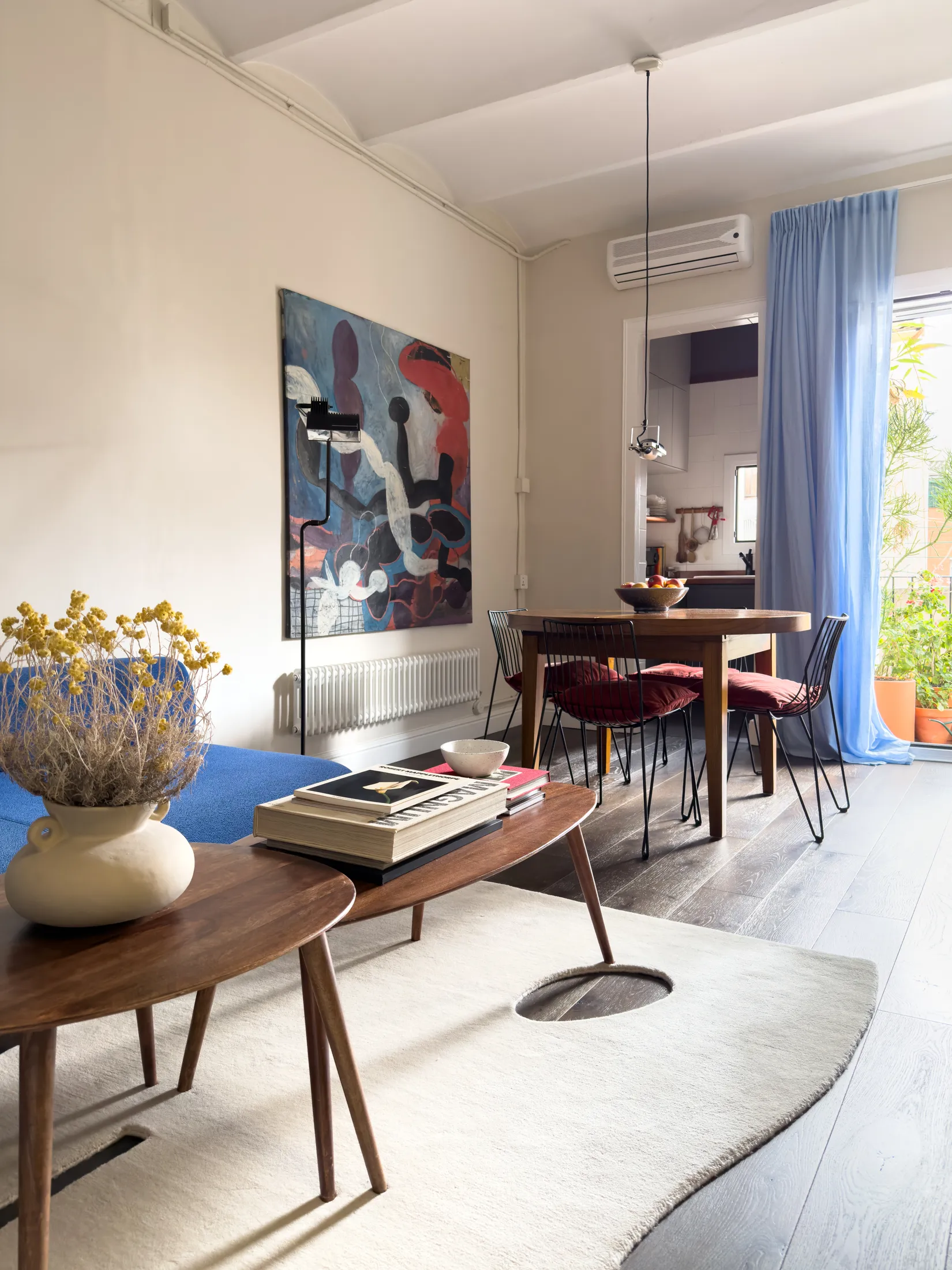
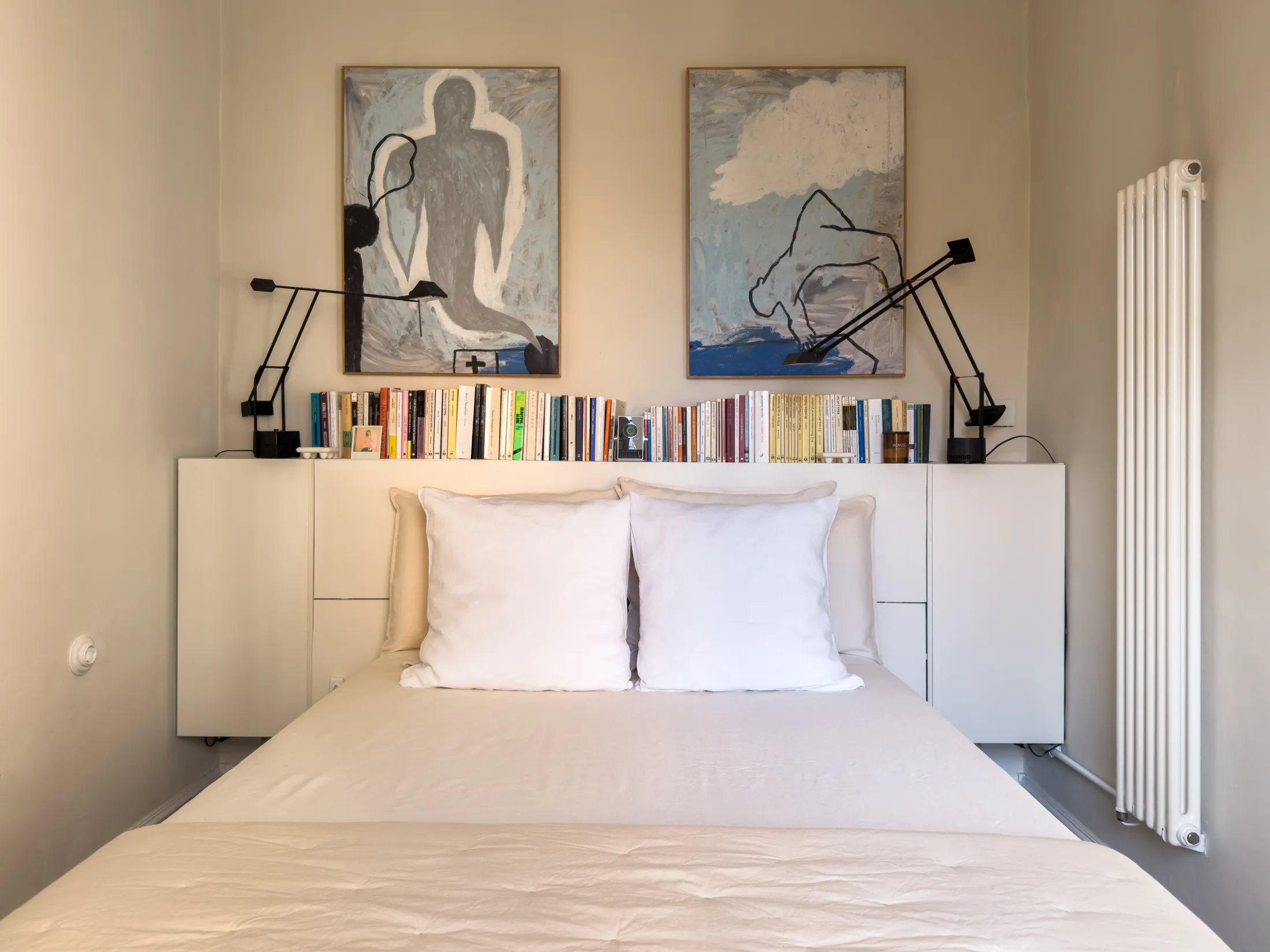
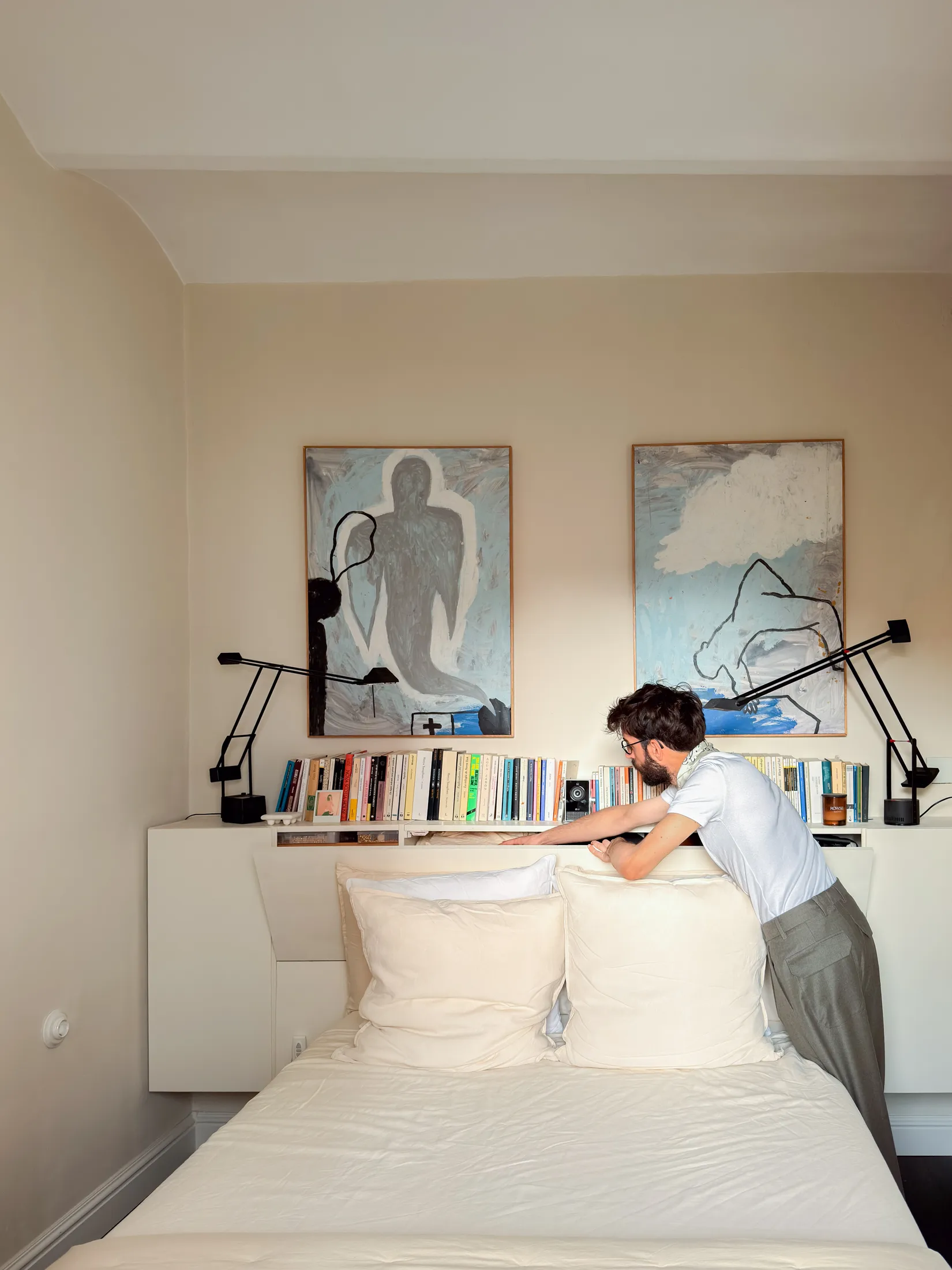
Marc is passionate about collecting lamps, especially desk lamps from the 1980s. That’s why we have several displayed on top of our bookshelf. We’ve also incorporated some Spanish lamps that we’ve found over the years. For example, next to the sofa we have a floor lamp designed by Guillermo Capdevila for Belux, which stands out for its ability to take on multiple positions. In the entrance area, hanging from the ceiling, we have a pair of Micro lamps designed by Eduardo Albors for the brand Lamsar in the 1970s. And above the dining table hangs the Sintesi lamp, created in 1975 by Ernesto Gismondi. As a fun fact, it was the first lamp signed by Artemide’s founder, which gives it an added symbolic value.

Colour clearly plays a fundamental role in the mood of your home. Can you please talk to us about how everything came together from that stunning artwork, to the gorgeous sofa and curtains? 

From the beginning, we had a very clear idea of the colours we wanted in our home, and a major inspiration was Le Corbusier’s Villa La Roche in Paris. We were fascinated by the colour palette and how it interacted with the other materials. 

At the heart of it all is the painting that hangs in our living room. It’s a piece that’s been with us since our previous apartment, and its palette, various shades of blue and orange, became a kind of guide for the rest. It helped us make very intuitive decisions, like the deep blue tone of the Palo sofa by Hem or the linen curtains made by Marc using shirting fabric. 

What else inspired the design of your home?

We wanted a home that felt timeless, even with a touch of classic style, in harmony with the original architecture of the apartment. From the start, we knew that natural materials like wood, wool and linen had to play a central role. 

We were also looking for functionality: we needed storage, but without sacrificing visual lightness. We wanted space for our books, but without making the place feel cluttered. We always keep in mind architects and designers we admire, like Carlo Scarpa, Gerrit Rietveld, and Charlotte Perriand. Their work, attention to detail, and ability to blend the rational with the poetic inspire us deeply. And whenever we travel, we try to visit homes by architects we love, and we adore getting lost in the National Trust heritage sites in England. We always come back with some idea or feeling that somehow finds its way into our home, which is constantly evolving.

How do you like to live in your home? Do you like to entertain? Paint us a picture of your life here. 

We like to live in our home calmly, enjoying the little things. One of the things we value most is being able to keep the windows open almost all year round thanks to the Mediterranean climate. The natural light shifts with the seasons, creating a play of tones that subtly transforms the atmosphere. 

Marc works from home, many Élida C pieces are created here, so he spends a lot of time in the space and really appreciates that changing light, the quiet, and the feeling of being connected to the outside. 

We’re not big cooks, but I am the one who enjoys experimenting more. Even though the kitchen is small, we make the most of it. It has a tiny window, but it lets in a lot of light, and that makes cooking, though sometimes a bit laborious, feel peaceful and relaxing. A typical weekend might be Alan cooking a Galician stew, with the house filled with the smell of broth, while the rest of the day unfolds slowly. 

We also love projecting movies in the bedroom, especially at night. It’s one of our favorite rituals, winding down together, with the house quiet and the lights low. 

Tell us about your neighbourhood and neighbours and the role they play in your enjoyment of your home.

We live in Hospitalet de Llobregat, very close to Barcelona. At first, it wasn’t on our radar, we had seen many apartments in Barcelona, but when we visited this one, everything we had in mind completely shifted. 

Plus, my mother lives nearby, which makes being here feel more familiar and cosy. The neighborhood is very quiet, with long-standing local businesses, and it still retains that authentic, community feel that we really value. That sense of belonging was definitely one of the factors that helped us make the decision. 

Our building has very few neighbours, which allows us to enjoy a lot of peace and quiet. It’s a setting that gives us calm but also connection. We feel close to the city, but without the noise or the hectic pace that can sometimes be overwhelming. 

Talk to us more about those ceilings. And those fabulous shelves too, please. 

The ceiling was one of the things that most captivated us when we first saw the apartment. Its height and the Volta Catalana are very typical here, but that doesn’t make them any less special. The geometry adds a lot of character, and it gives an incredible sense of spaciousness. We were lucky that it was in perfect condition, so we didn’t have to touch it, and that allowed us to preserve part of the original essence. 

We built the shelves ourselves using pine wood, which we then stained in a dark tone to give them more character. We anchored them to the wall with a hidden, very sturdy mounting system, and we love that they reach all the way up to the three-meter-high ceiling. Not only do they make great use of the space, but they also visually follow the verticality of the ceiling, creating a sense of continuity that we really enjoy. 

How have you found the experience of adapting to living in a home of this size together? Have you learnt new things about each other? 

Honestly, we weren’t looking for a large apartment, more of a practical space. We’ve always been fascinated by how people can adapt to the space they have, even if it’s small. 

Living together in this apartment has felt very natural. It really helps you realise what you actually need, and even encourages you to let go of what you don’t. In the end, it becomes almost a philosophy of life having space to live with just the essentials. 

What are your favourite details in your home? What delights you most? And why?

Without a doubt, the Hem sofa is one of the stars of the home. Not just for its design, but because it’s where we spend many hours reading and relaxing. Plus, all the art pieces we’ve collected over time hold a very special value for us. 

On our bookshelf, there are two pieces we especially love: the blue ninot (doll) by Sergi Serra Mir and the blue ‘Rodadoll’ by José Antonio Roda. Both are artists from Barcelona who we’ve followed for a long time, and having their work in our home makes us feel like we share a small connection with their creative universe, which we admire deeply.

-

As featured in Issue 7 of our magazine!

Purchase a copy of Issue 7 https://www.nts-store.com

Subscribe to our NTS Sub Club https://www.nts-store.com/collections/subscribe

Writing:
Writing:
Elizabeth Price
Photography:
Photography:
Alan Díaz
Back to Top
Arrow UpArrow Up
Top
Arrow UpArrow Up
The After shot of the Floorplan
Before
before
after
After
Businesses featured in this project
No items found.
Products featured in this project
No items found.
Magazine Current IssueMagazine Current Issue
Writing:
Alan Díaz
Writing:
Elizabeth Price
Photography:
Photography:
Alan Díaz
Back to Top
Arrow UpArrow Up