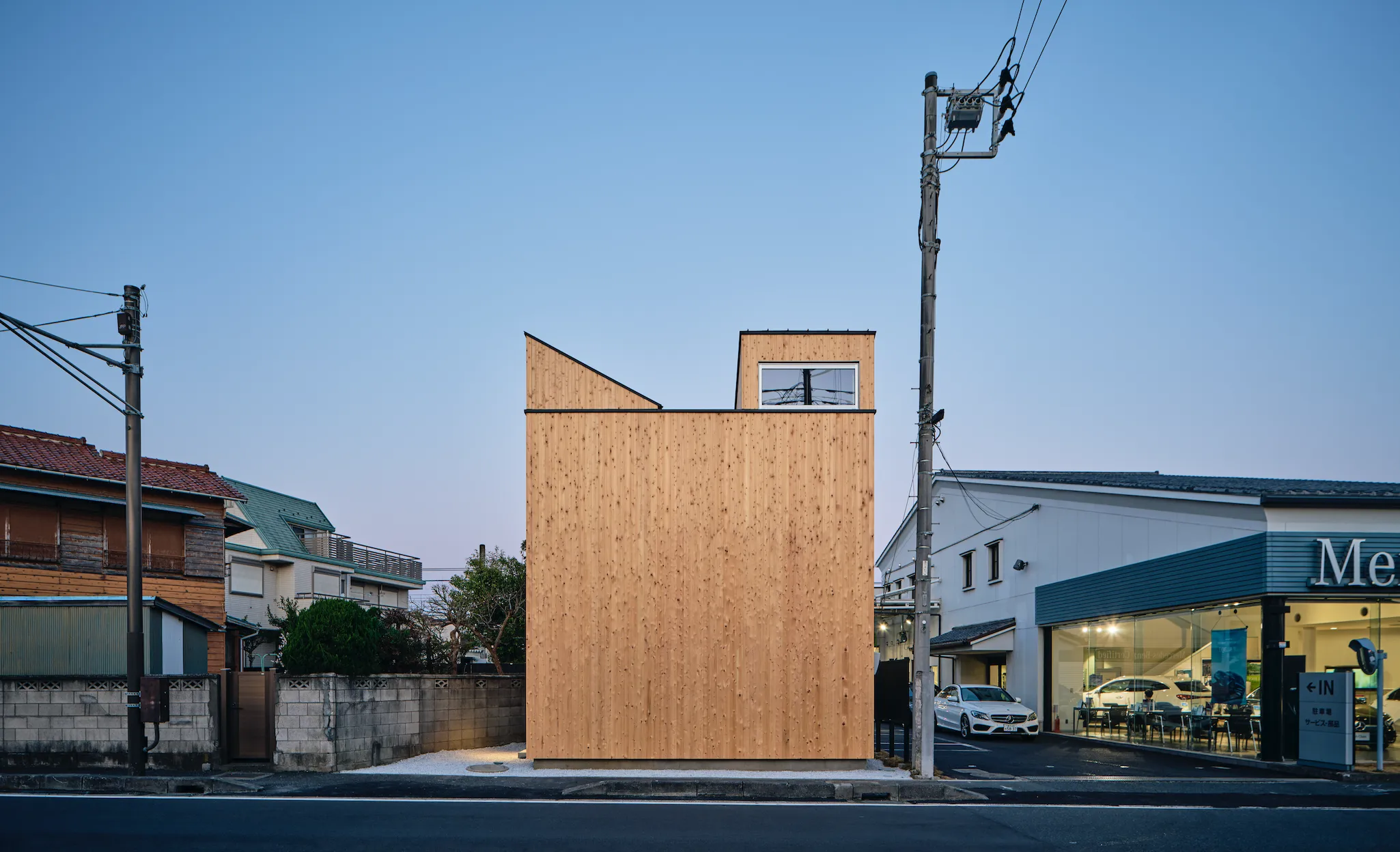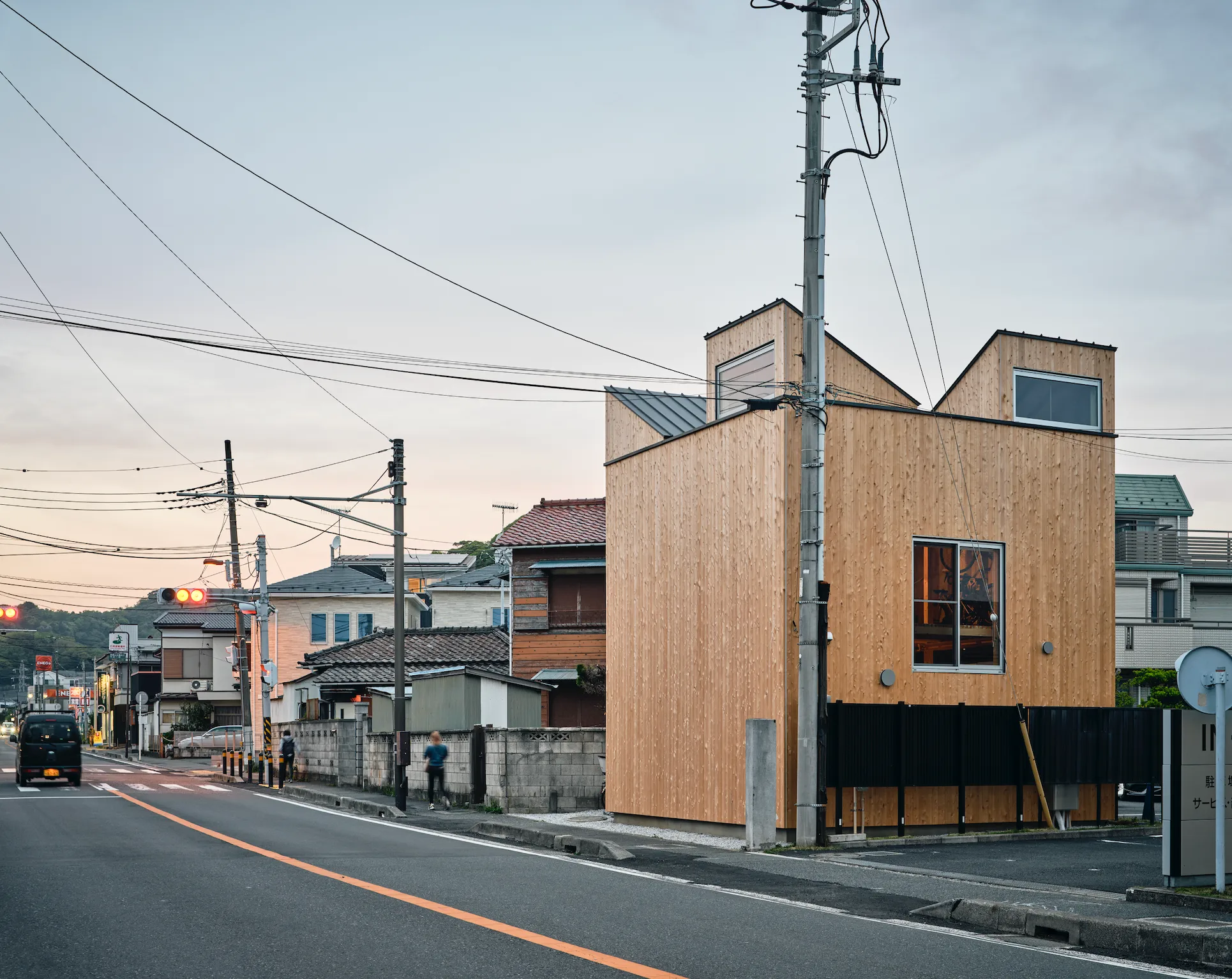



Designing a house on a site that might lose half of its land due to future road widening sounds challenging to say the least. How did this influence your response?
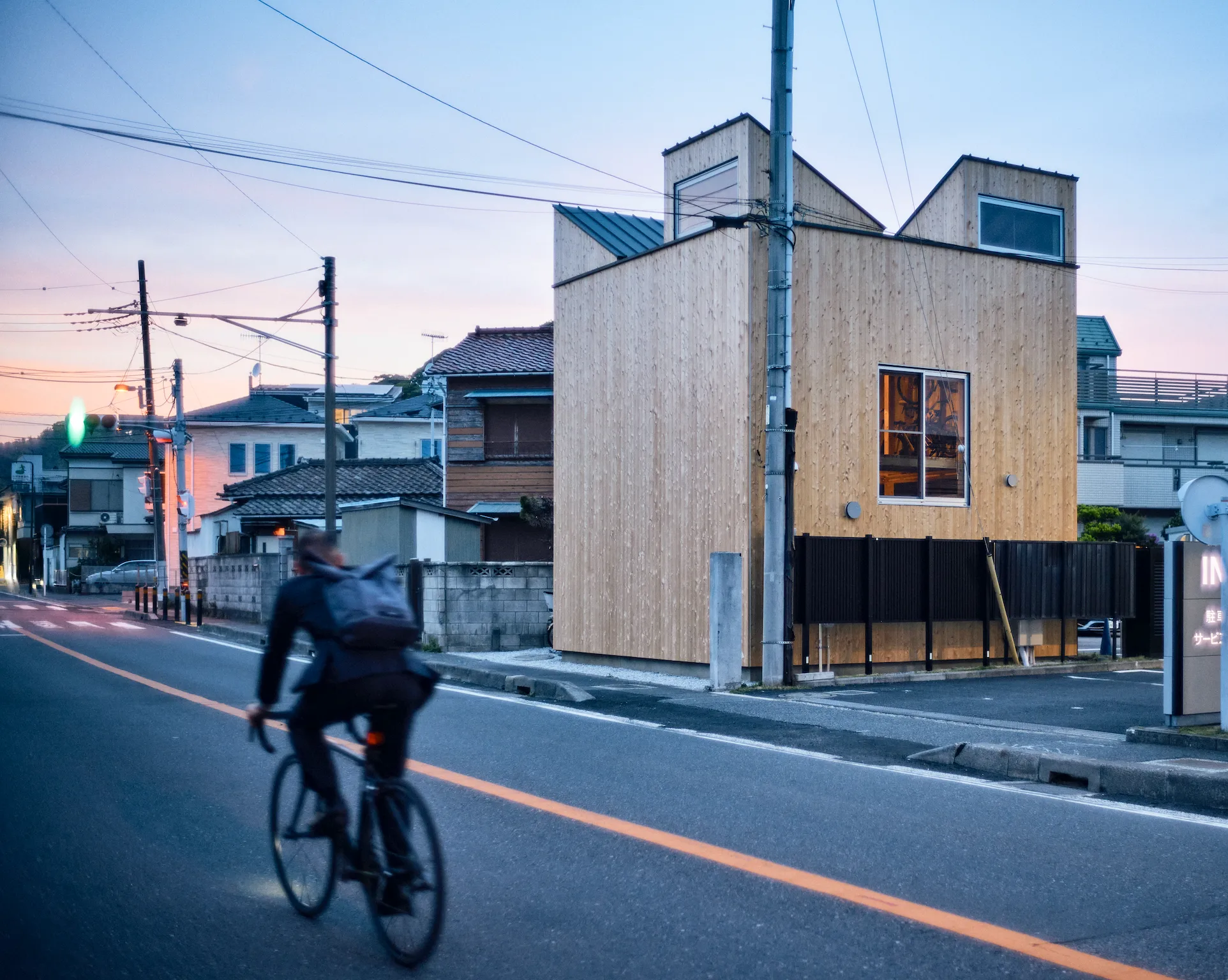
The clearly defined timeline, in which the building must be dismantled before reaching its physical lifespan, allowed us to set ‘how the building should end’ as the starting point of the design. We have long been exploring circularity, but this constraint turned what we had previously considered as theoretical ideas into extremely concrete and pressing challenges. In other words, this constraint served as a powerful catalyst, allowing us to translate our underlying values of circularity into concrete design methods and, in turn, enabling the creation of a feasible and realised prototype.
I understand that the structural components use DIY-standard timber that can be purchased at a hardware store. What was your motivation here?
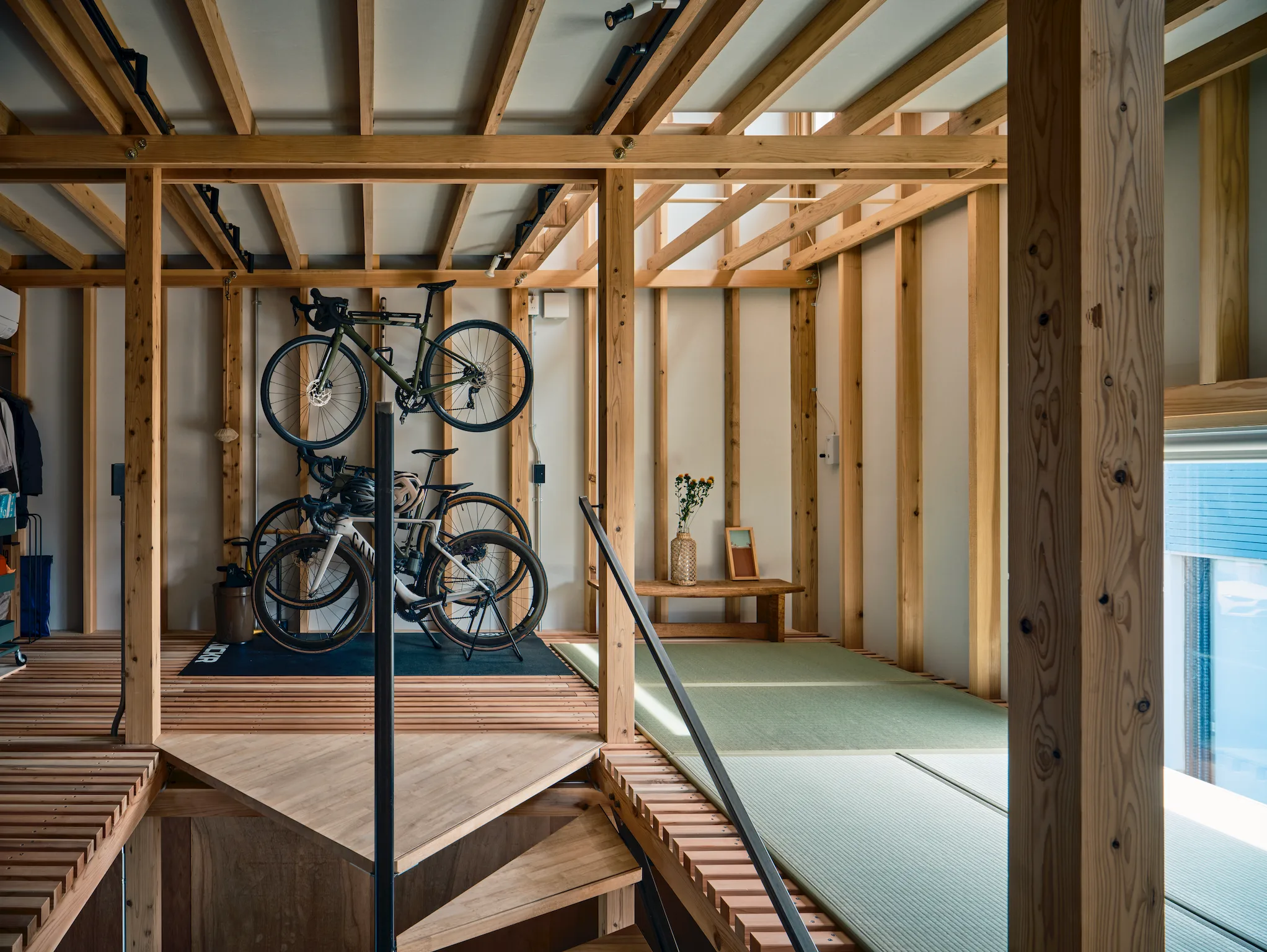
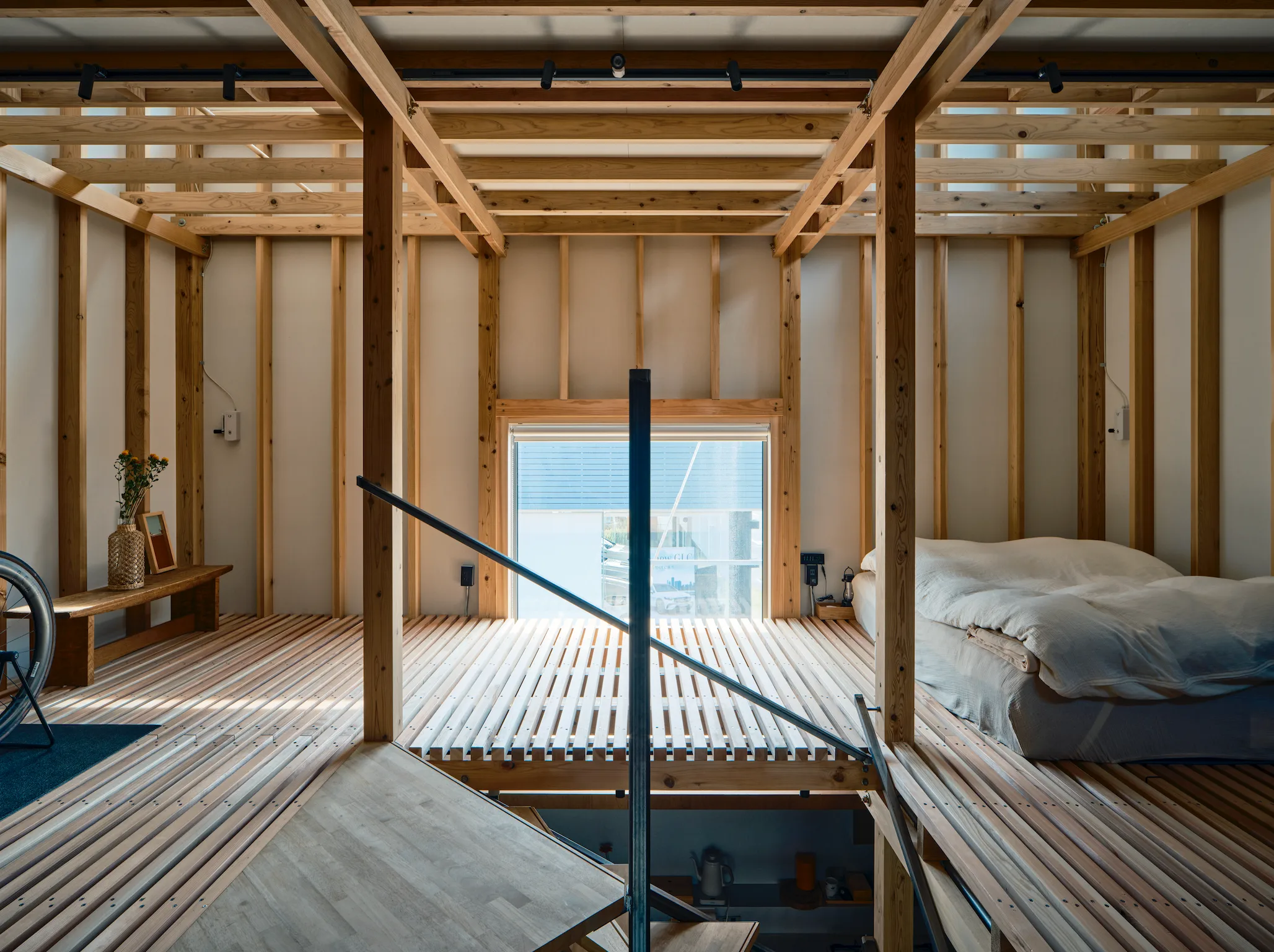
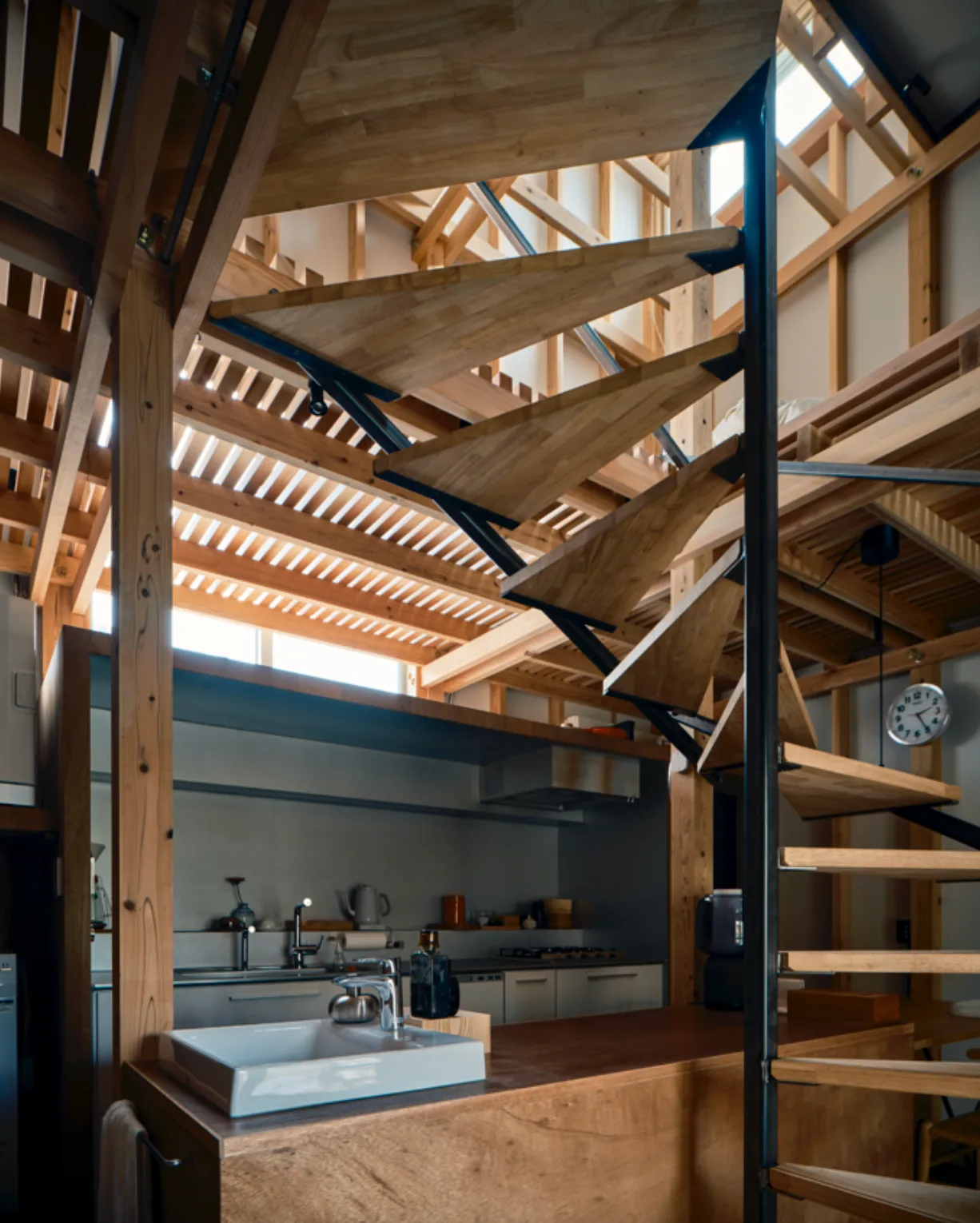
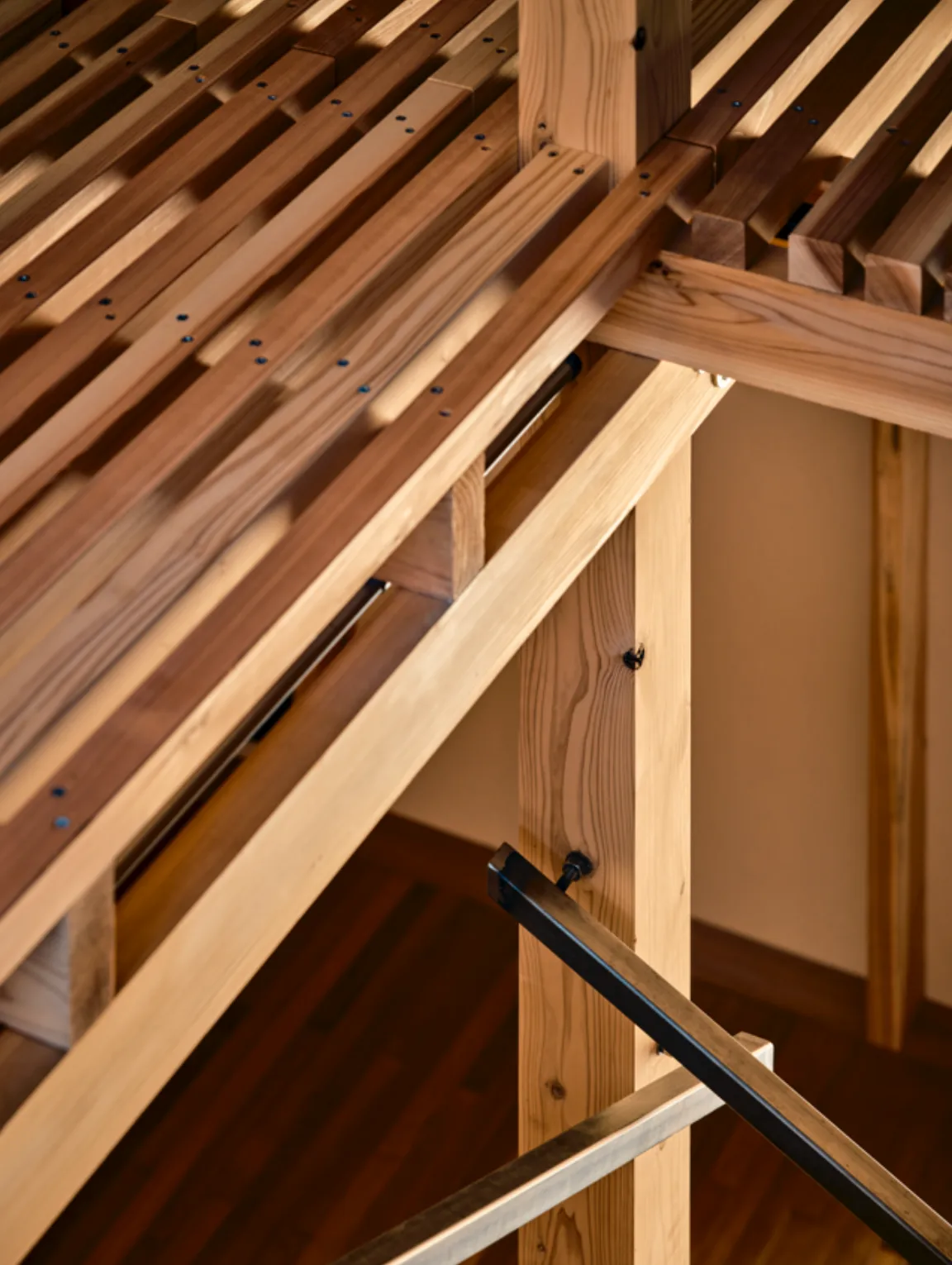
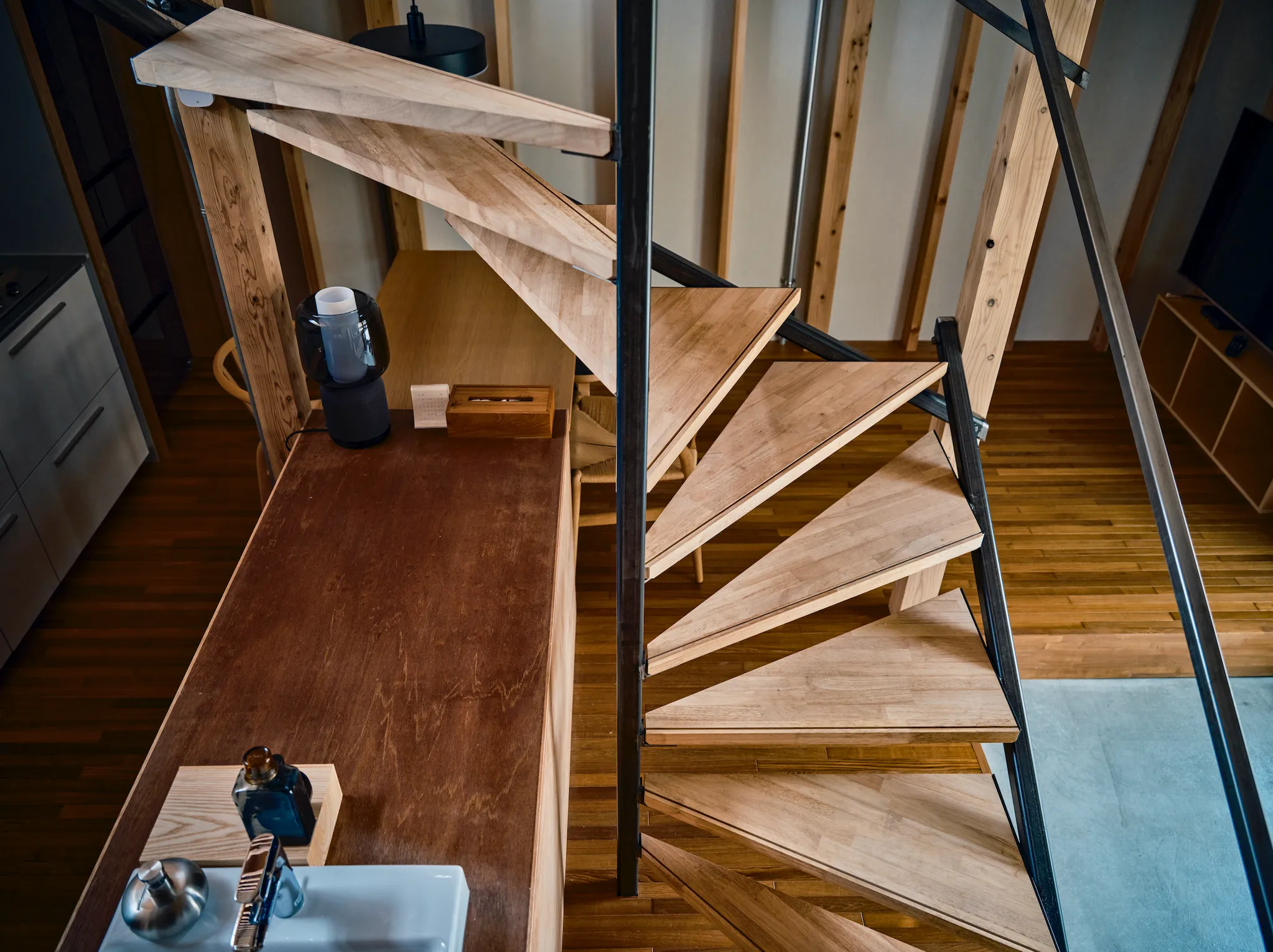
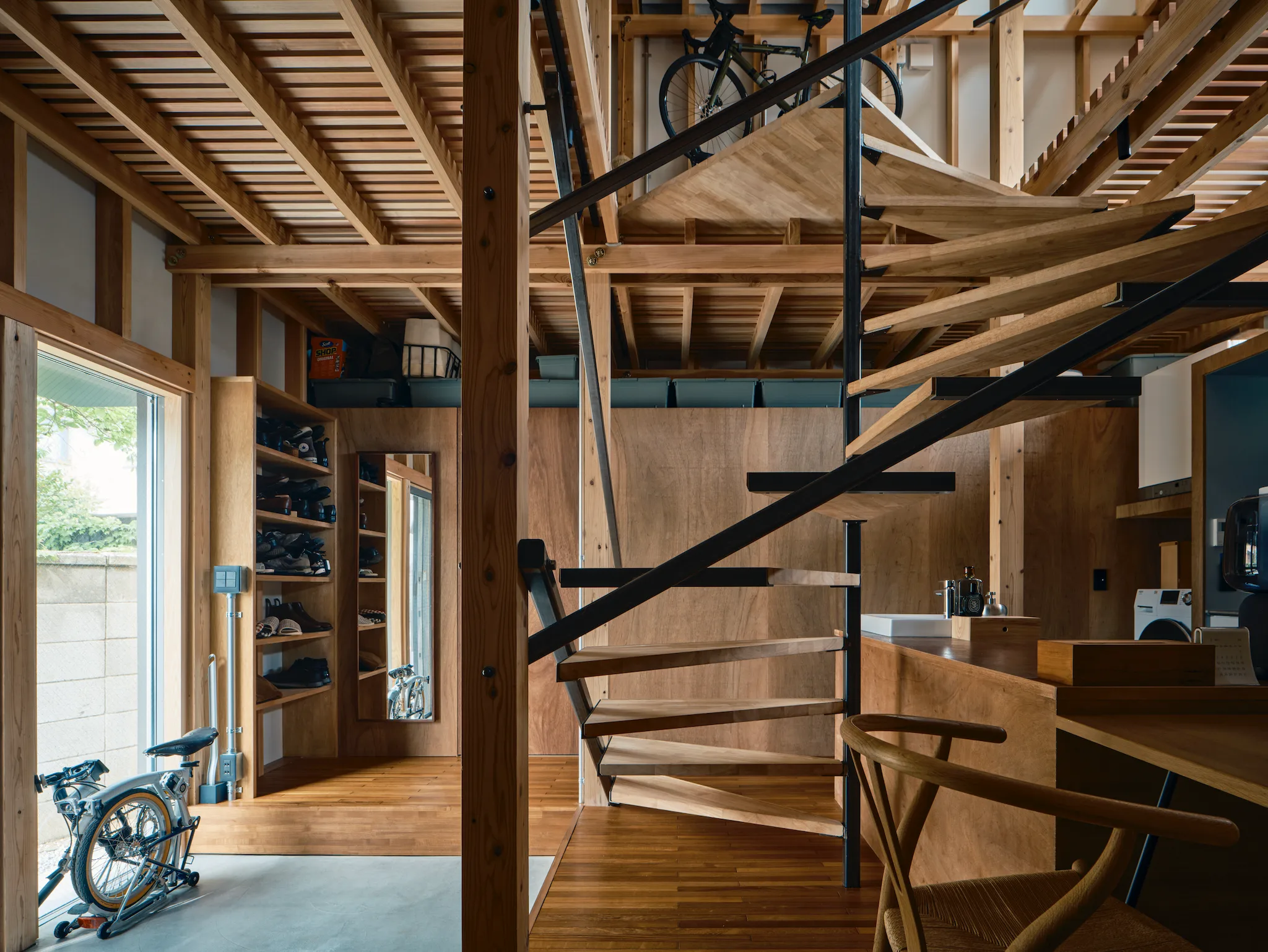
At the time of construction, rising timber prices due to the lumber shortage were a major problem. Working with a limited budget, we reconsidered how to process and source timber, and came up with the idea of constructing the building entirely from small, easy-to-handle standard components that can also be purchased at hardware stores. As a result, I devised a “Semi-Property” that can be easily constructed, dismantled, and relocated – a home that moves with its occupants. This was made possible by assembling the main framework using only bolts and screws without pre-cutting standard lumber. Even if it is not relocated, the timber can be easily stored and reused, achieving a truly circular approach to the home’s architecture.
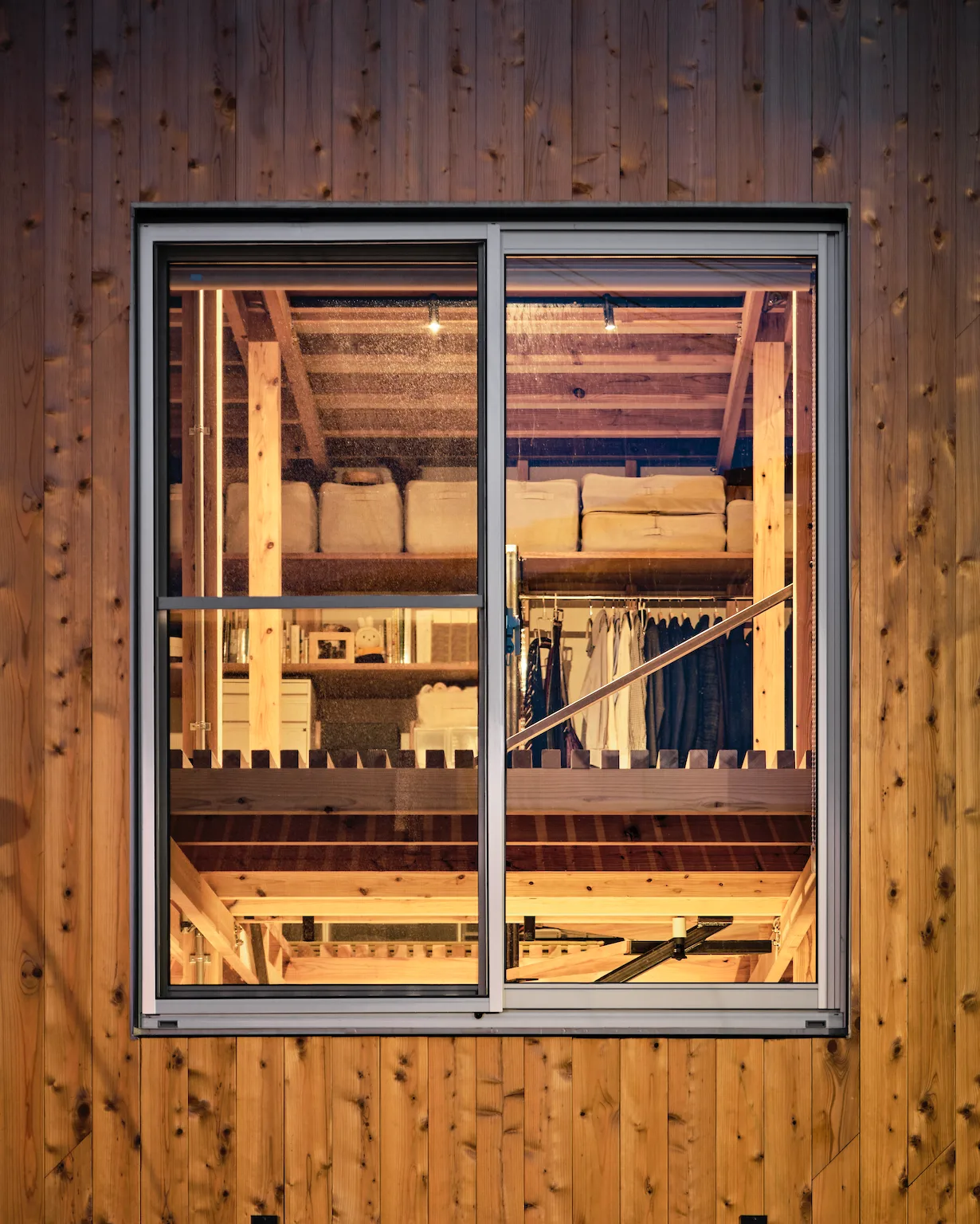
As a small house under 60 sqm (646 sqft), we also paid attention to making it easy to maintain by exposing its structure, so that the occupants can carry out repairs themselves. They can go to a hardware store and handle most fixes on their own. In this way, the design enables longer use, reuse and repair within the circular economy, while also aligning with a design philosophy of ‘restoring rights to residents.’