
Magazine Current IssueMagazine Current Issue
A Soft Side
A Soft Side
From our Mag
August 1, 2025

A Soft Side

Ever wondered what plates and bowls inspired by the medieval myth of Cockaigne look like? The answer is seductive and smooth. Meet Layla Cluer of Softedge Studio and her very pleasing porcelain.

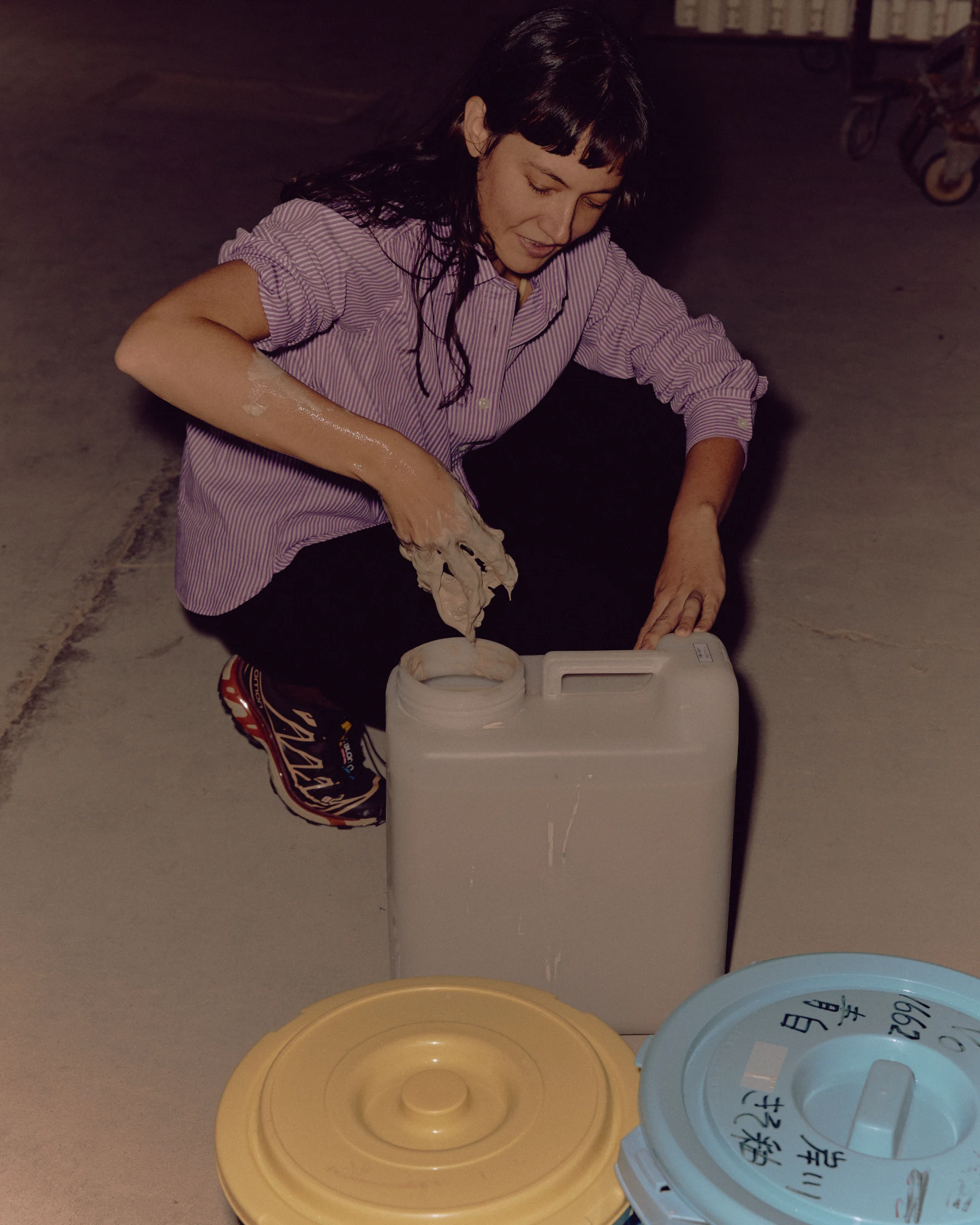
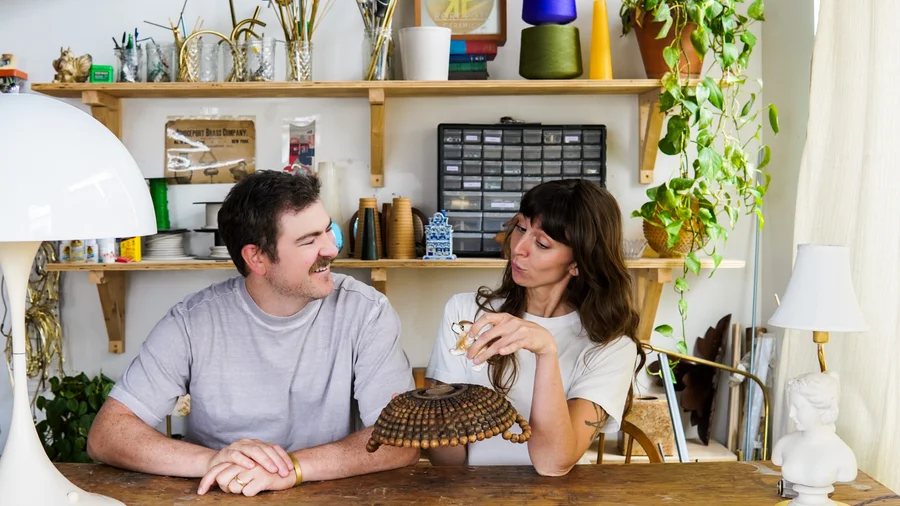
It all started with a jug for designer Layla Cluer. A deceptively large porcelain jug. Generous enough to fill the glasses of 20 guests, playful enough to complement the party and still light enough to get the job done. A jug for big gatherings and not leaving the table. This jug soon led to the birth of Softedge Studio. Informed by a background in architecture, fine art and curatorial practice, Softedge Studio has become a vehicle for Layla's curious and creative experimentation with domestic objects.

Bec Vrana Dickinson
Writing:
Writing:
Bec Vrana Dickinson
Photography:
Photography:
No items found.
Magazine Current IssueMagazine Current Issue
The After shot of the Floorplan
Before
before
after
After
Top
Arrow UpArrow Up

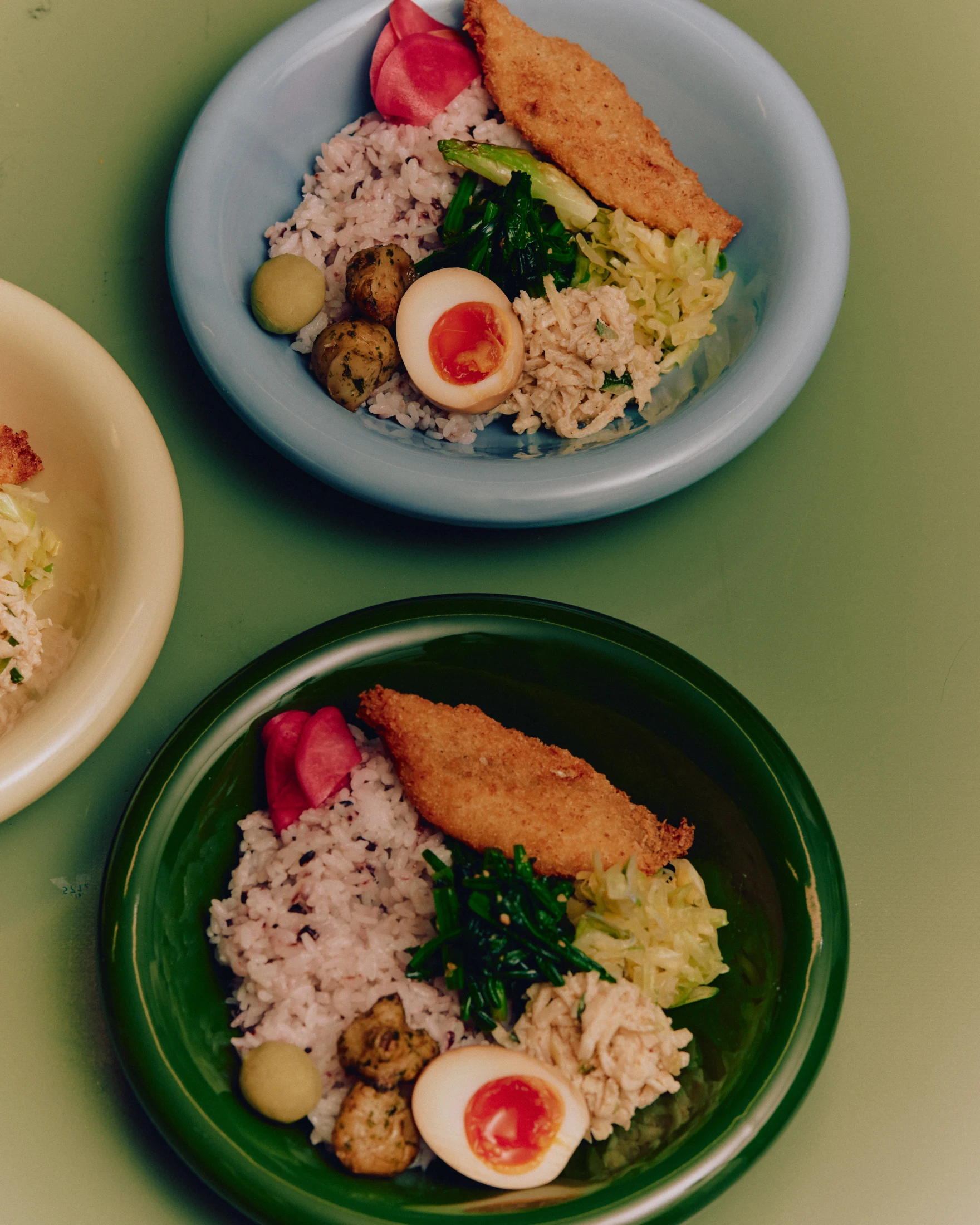
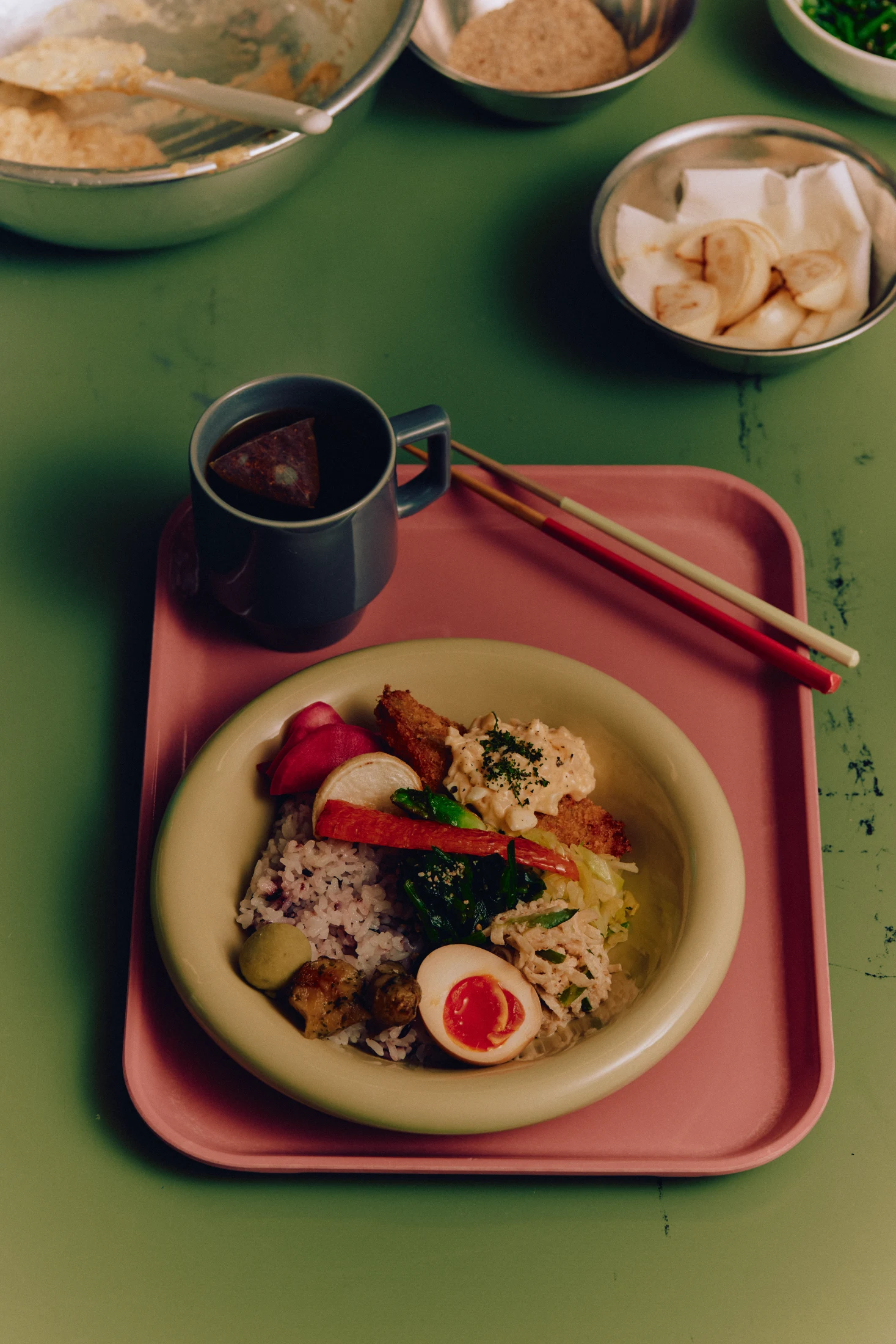
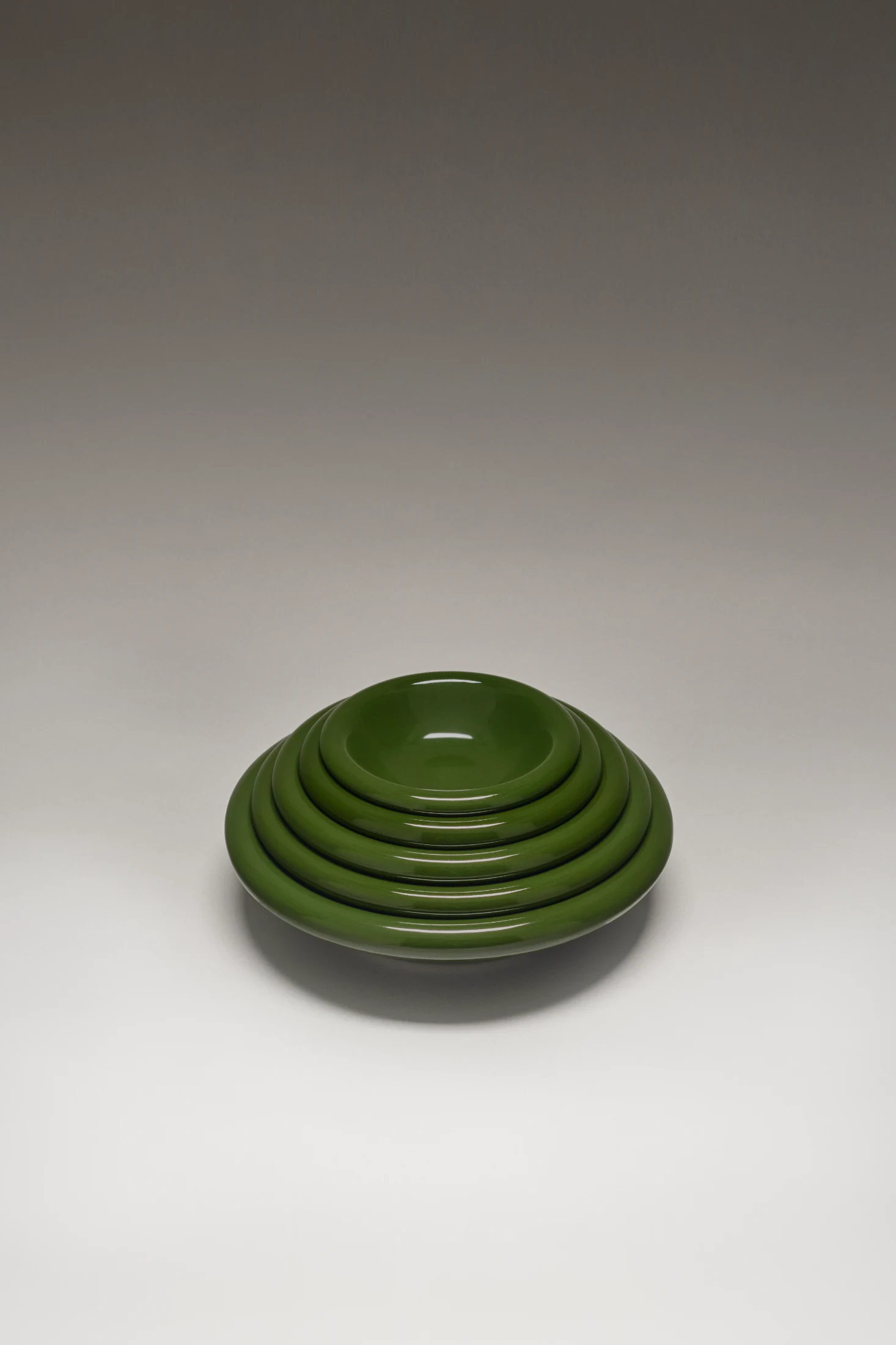
Designed on Bundjalung country/Byron Bay, the studio's porcelain tableware is now made in Hasami, a small Japanese town with more than 400 years of porcelain production expertise. Carefully handcrafted, Softedge Studio's collection of tableware looks how you imagine the perfect porridge spoon would feel. Inexplicably smooth and comforting. Something you decide you need, not want. Like the 'Everything Bowl' – perfect for… well, everything.

How has your background in architecture, fine art and curation shaped your approach to designing ceramics?

It's made for a really rich set of references. I like being creatively ambidextrous and pushing myself in different directions. Studying architecture at age 17 left its mark on me. Quite early on I was lucky enough to become a research assistant, which allowed me to engage with architecture through a theoretical lens and this eventually led me to study fine art. My interest in architecture was diverse but it was architects, who used drawing and other artistic mediums to explore their ideas conceptually that interested me most. Diller + Scofidio's early installation work Indigestion and Sarah Wigglesworth's diagrammatic drawing series (that studied how a formal dinner party setting changes throughout a meal) were a few of the many works I came across that straddled this line. I love the use of narrative and drawing to explore our relationships with each other, objects and spaces. This really informed how I think of making objects – fun pieces, with a function.
Your 'rolled rim' range creates such a calm sense of movement. What inspired it?

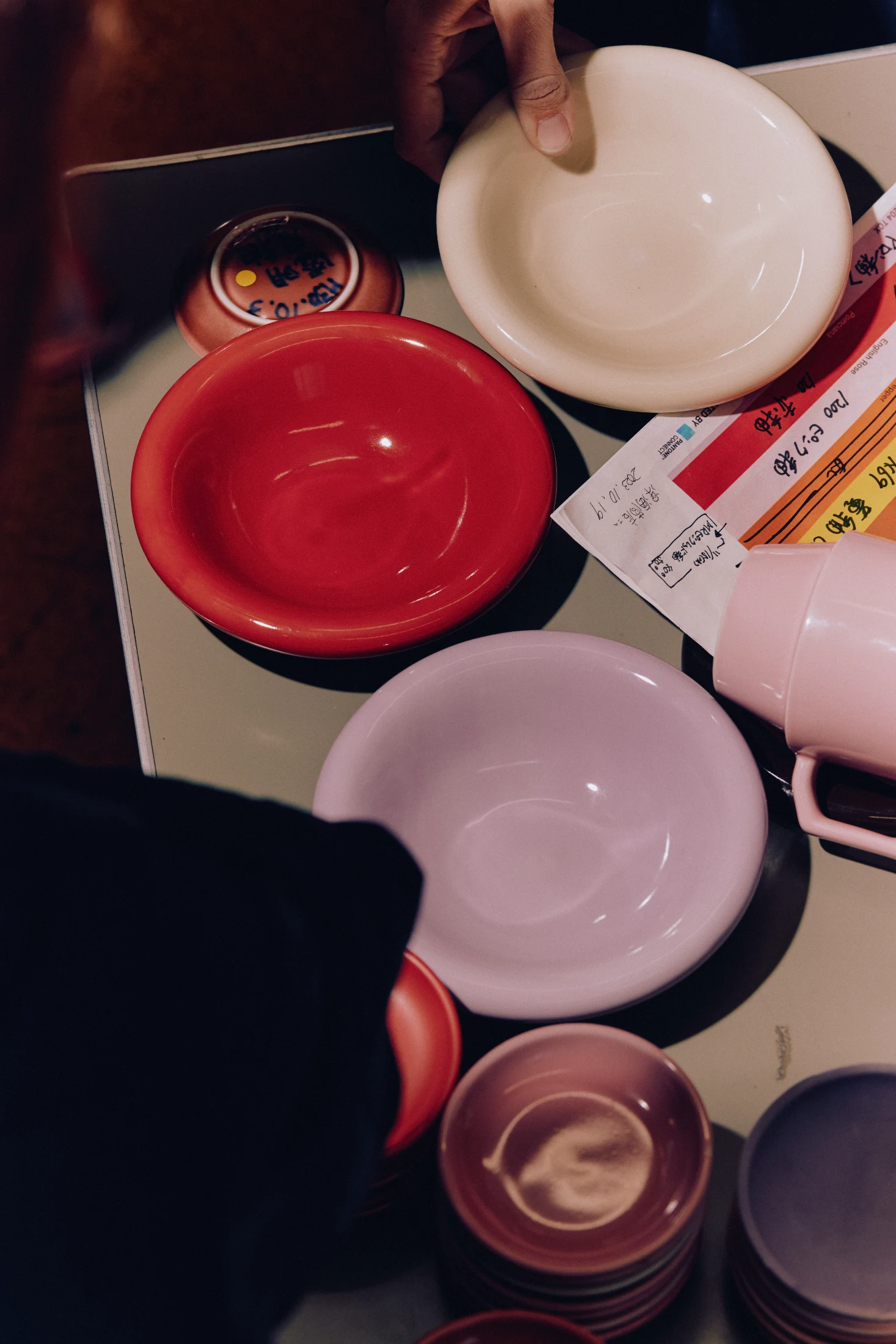
The initial idea came from the medieval myth of Cockaigne: a land of plenty, where rivers run with wine, cheese grows on trees, and roads are paved with pastry. It was the early pandemic days when there were shortages and we couldn't get together.

I was craving that sense of indulgence around people, that collective experience when you eat so much you have to pop your pants open and your rolls spill over – that feeling of abundance.

I played around with distilling that idea into an object, a small sculptural gesture. The end product also enhances functionality, as the exaggerated rims make the products harder to break, extending their lifespan.

All of your production is carried out in Hasami, Japan. How did this collaboration begin?

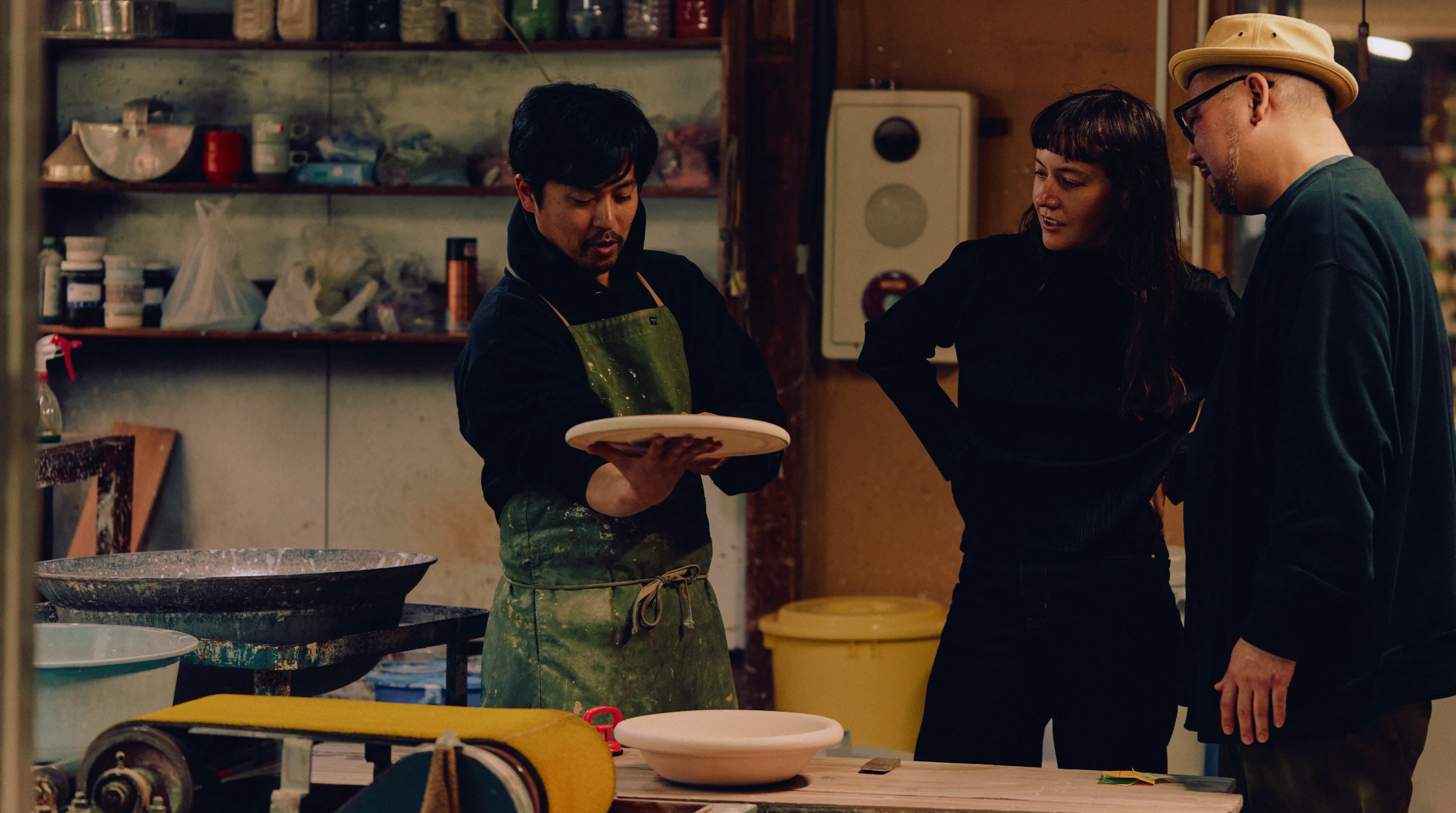
The main drive to manufacture overseas was quality, plus growth in demand, material shortages and a shifting team. Producing everything in Byron Bay became quite challenging, so in 2023, I wound down the studio. Later, while visiting Japan, I was passing through Hasami on my way to Arita (the birthplace of Japanese porcelain) and I started chatting with the owner of a cafe. I showed him my work, and then a few phone calls later, I was being shown around Hasami and learning how the town's small family-run workshops collaborate to handcraft their local ceramics. Hasami was it, I actually danced down the street that night.

How do your pieces come to life from the initial design to the final product?

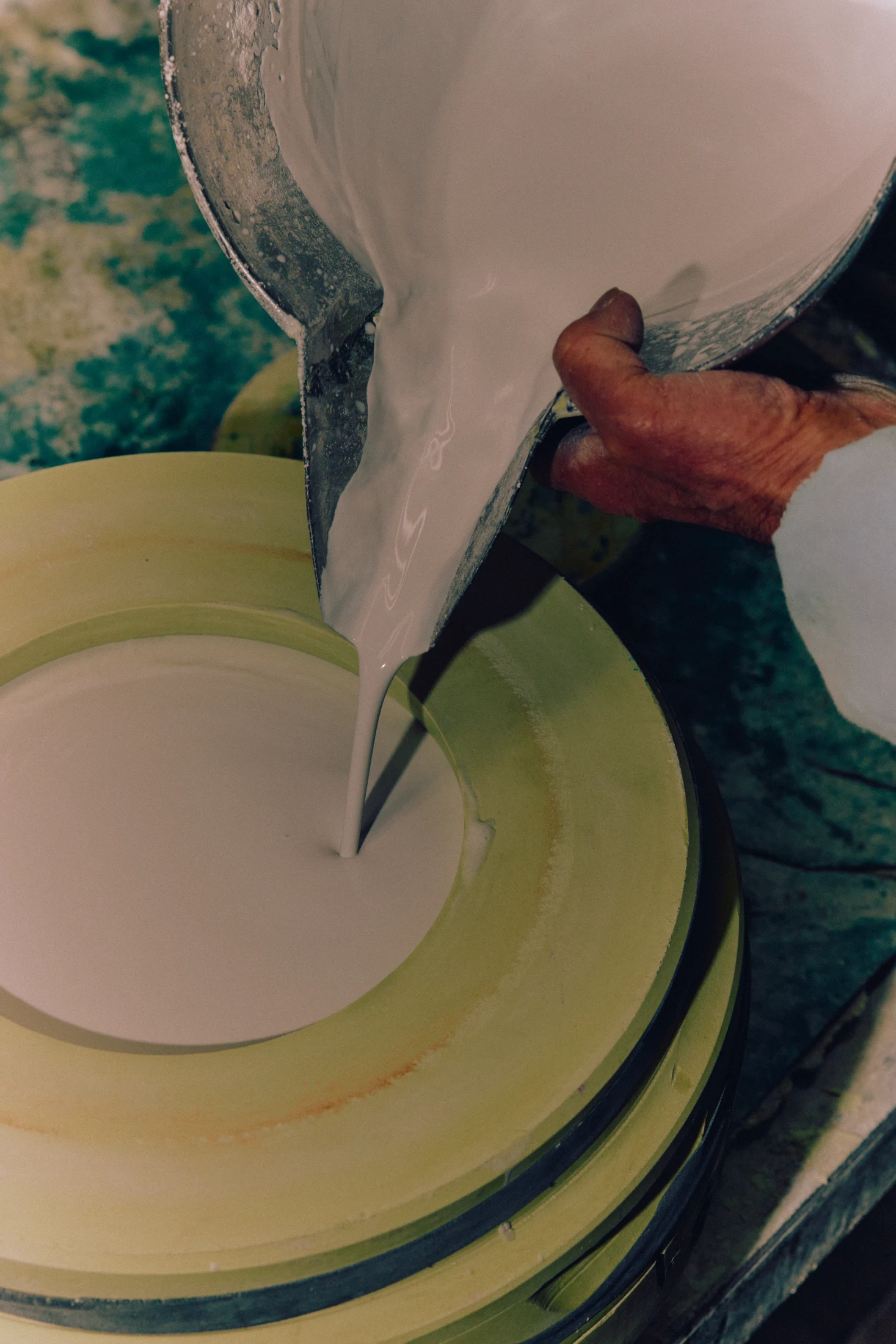
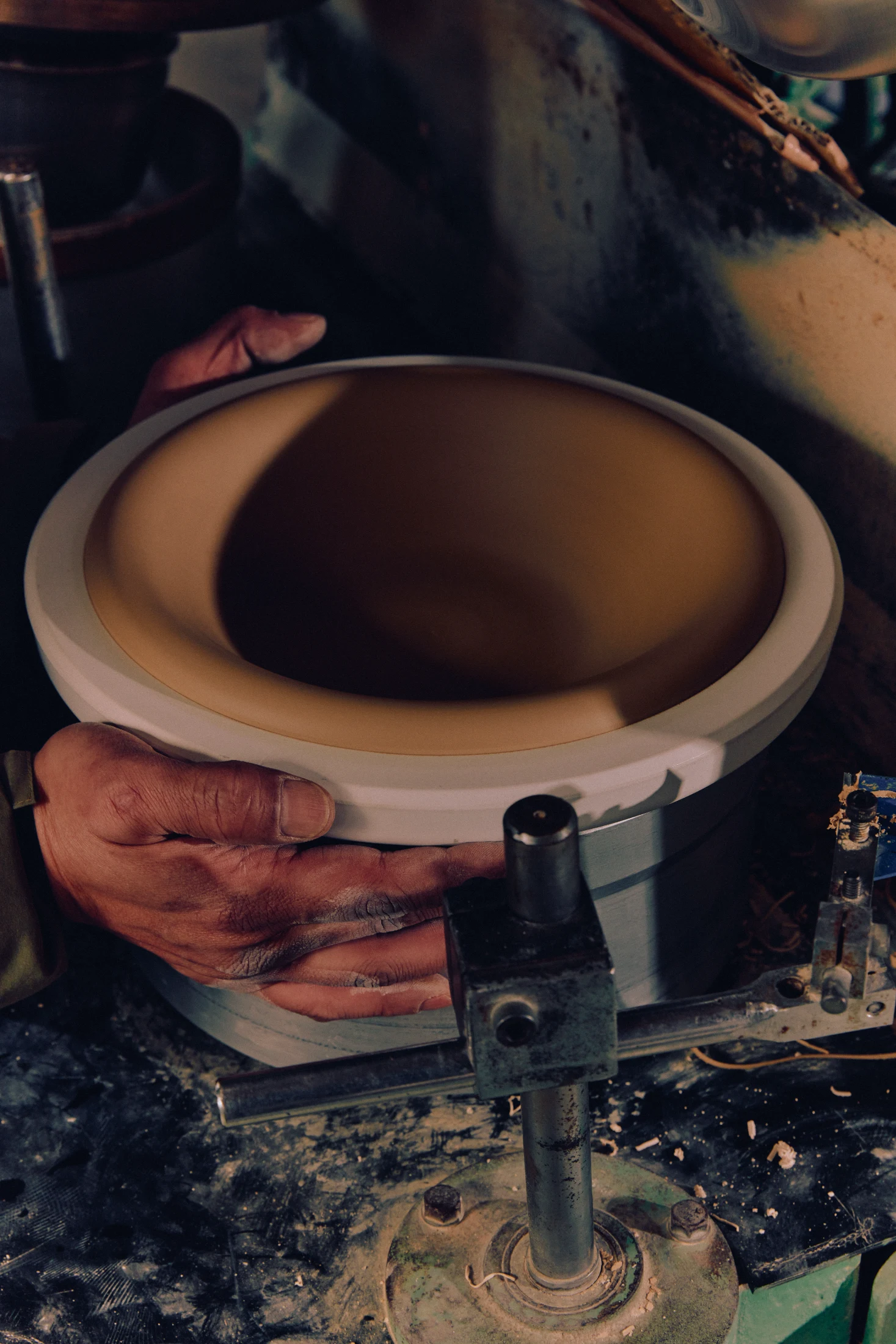
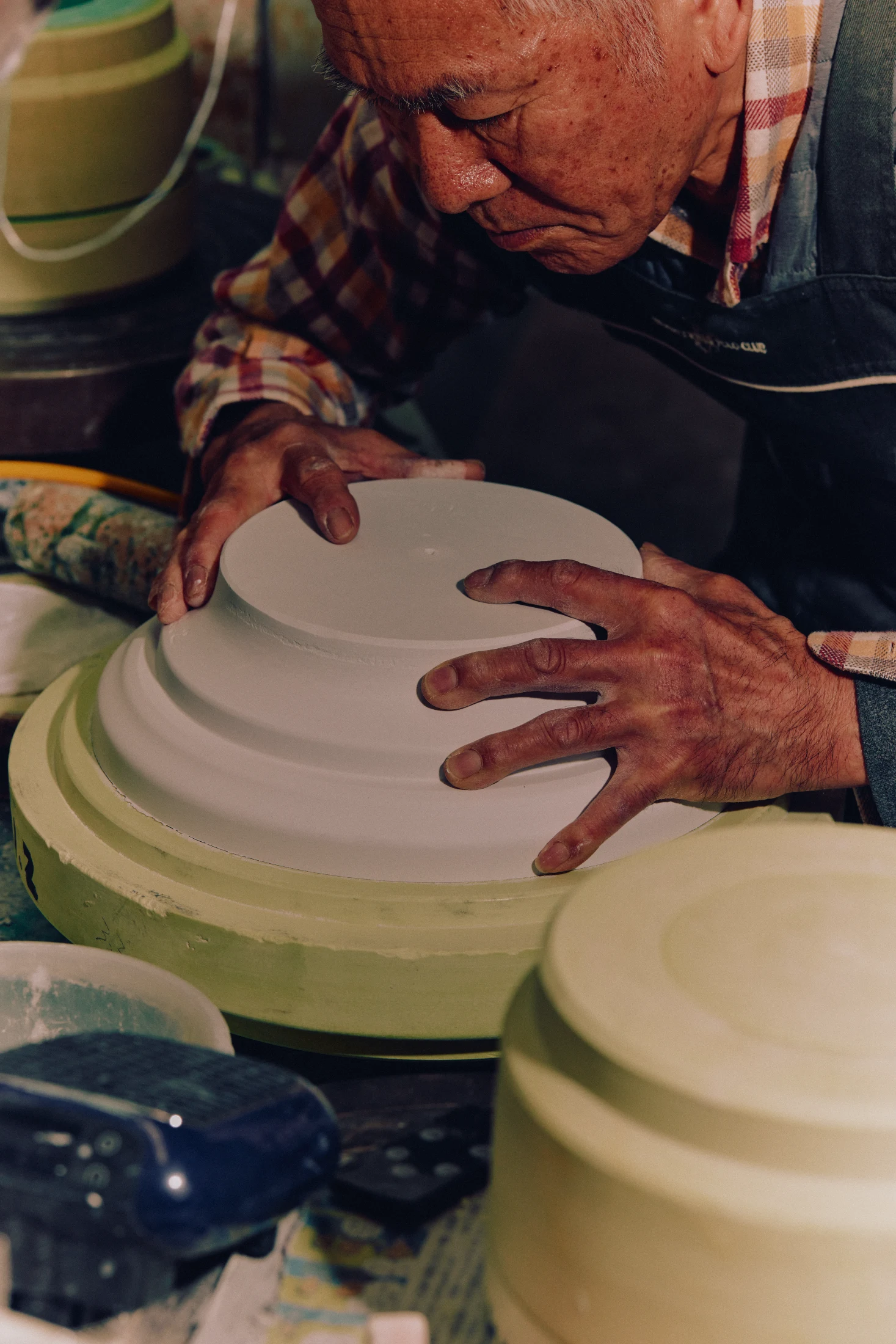
It's an iterative design process. There's a lot of back-and-forth between the digital and physical. I worked with a friend from architecture school, who's great at parametrics, to digitise the original rolled rim pieces. We even wrote a script to help manipulate the rims and bowl profiles so they could neatly stack. Once we were happy with the digital model, we printed out a 3D model for the master mould maker. There were many months of tweaks, testing the way each glaze interacted with the shape in the kiln. With hundreds of years of expertise, Hasami is the perfect place for all this, we even have an 14th-generation glaze expert on the team. We collaborate with a local trading company, Maruhiro Inc., to manage the production process. Ryusei Tasaki, also known as Softedge Sensei, is in charge there.

What would be your dream meal to eat off your gorgeous plates and bowls?

I'd have Ruth Rogers from the River Cafe in London cook for me, for a start. I love her story and that she's not a trained chef. Everything she conceives is so beautiful yet simple, it's always about quality. It would be a big 'family meal' spread, like the ones I cook for the Maruhiro team at the end of my trips to Japan. Each time I try to cook them a different cuisine, usually something Mediterranean, and always with plenty of olive oil.

Writing:
Writing:
Bec Vrana Dickinson
Photography:
Photography:
Back to Top
Arrow UpArrow Up
Top
Arrow UpArrow Up
The After shot of the Floorplan
Before
before
after
After
Businesses featured in this project
No items found.
Products featured in this project
No items found.
Magazine Current IssueMagazine Current Issue
Writing:
Writing:
Bec Vrana Dickinson
Photography:
Photography:
Back to Top
Arrow UpArrow Up