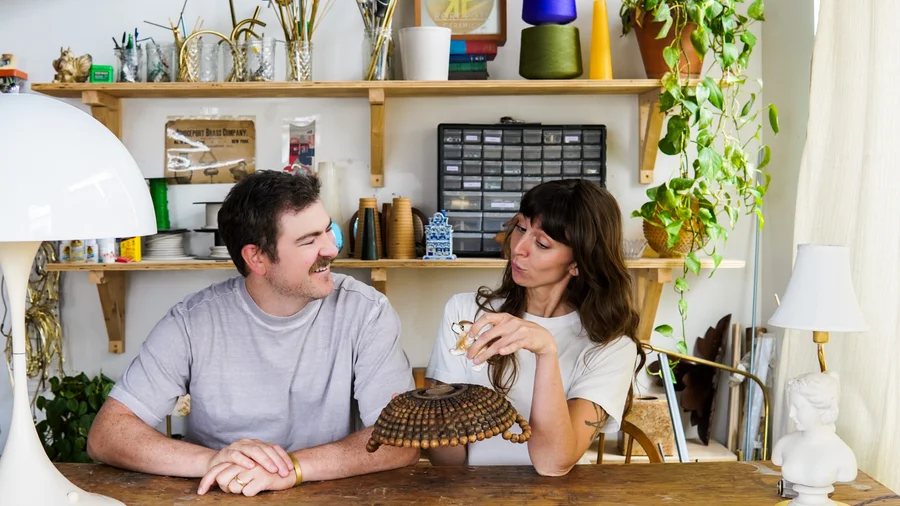
Dowel Jones is literally built on a joke. Dale and Adam met at university in Melbourne – drawn together as a pair of country boys acclimatising to the city. After studying together for a few years, in 2013, they decided to collaborate on a project. The result was the Mr. Dowel Jones lamp – named, you guessed it, for its dominant material of dowel and a joke on the Dow Jones stock index. The 19 and 21-year-old boys (as they were then) needed to register a business name in order to sell the thing. Did Dale think it would stick and that they would still be making lamps and furniture and other things 10 years later? No. But here we are.
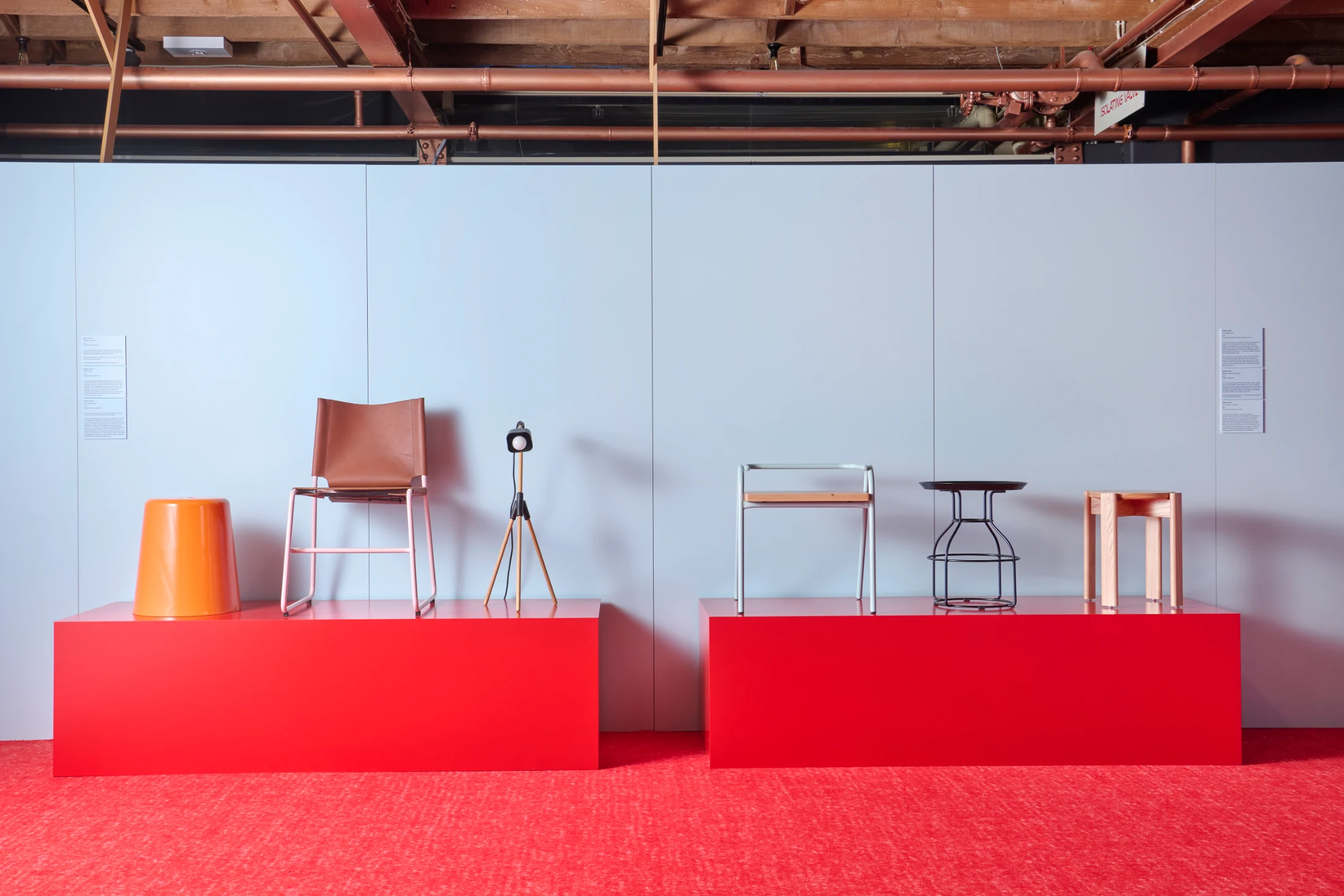
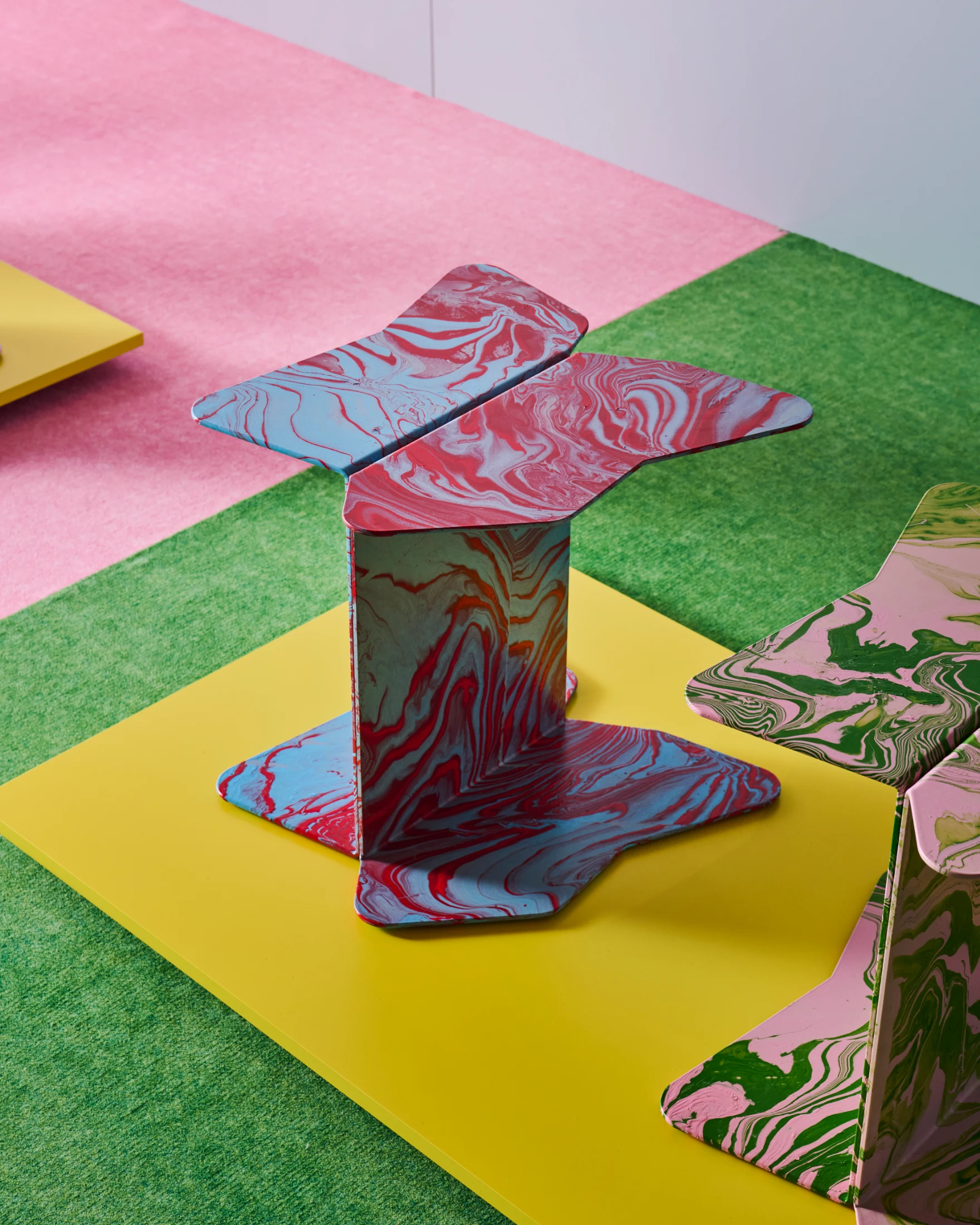
While it all started with a joke, Australian manufacturing and “making hyper-local products” are two things that fall into the category of things Dale and Adam take very seriously. “Not destroying the environment for money” is another. Once upon a time, Dowel Jones was exporting containers of the furniture to the US and the dissonance with their values resulted in a signed agreement with a US manufacturer, which in turn means less revenue but a better night’s sleep. This firmly-fixed moral compass has also guided the business decision to decline multiple requests to replace existing materials in some of their collections with plastic given “it's really cost effective and it's really easy to do in this country.” In fact, the first product Dowel Jones has produced in plastic was one for this very exhibition: a reproduction of its best-selling Simon Says stool, made out of 100 percent locally sourced recycled consumer plastic that is itself infinitely recyclable.
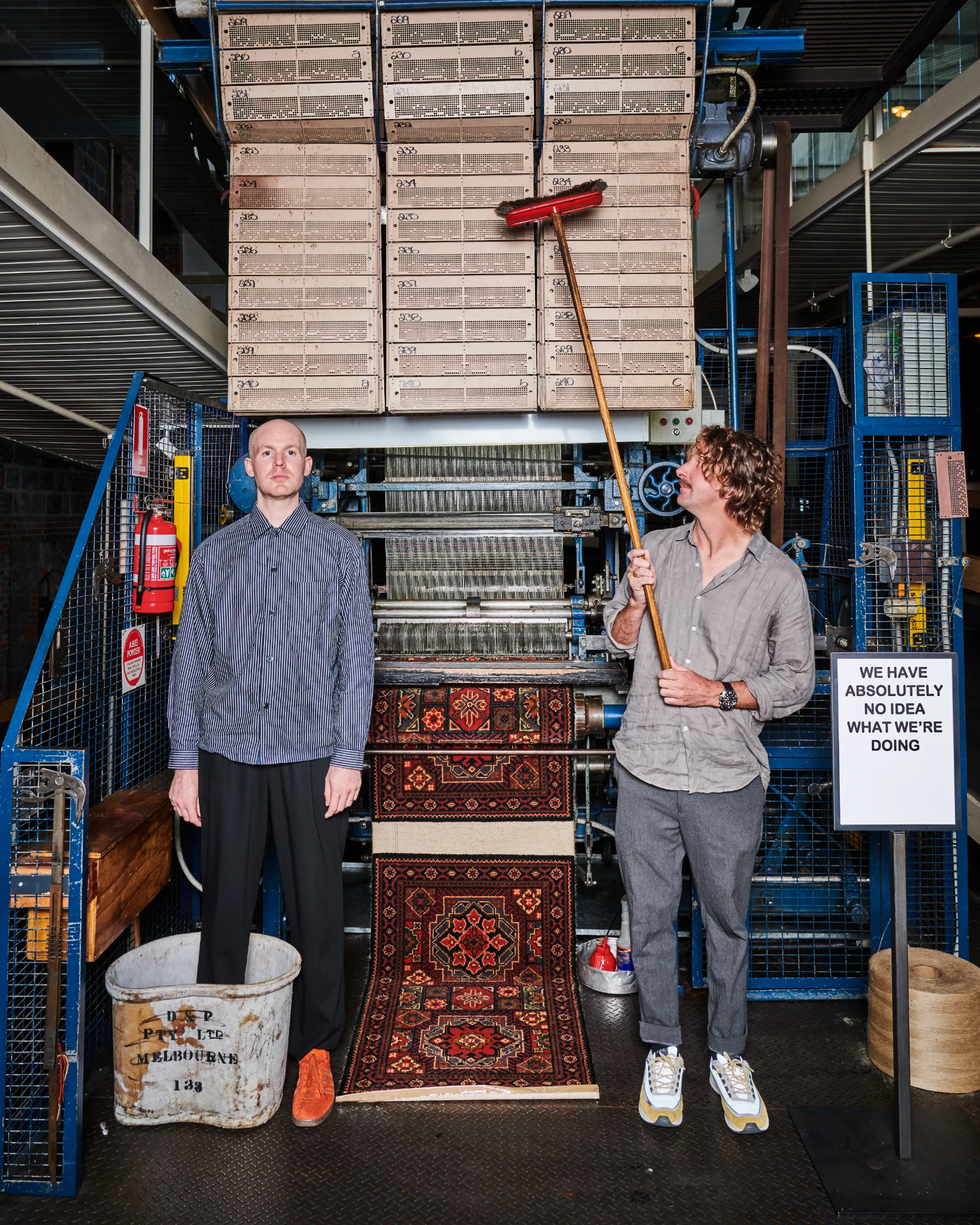
As for Australian manufacturing, it's a riskier and more expensive way of doing things, hence why most of Dowel Jones competitors tend to manufacture their products in China, Vietnam or Indonesia, “but it's done with purpose,” Dale says. It’s also hugely convenient for Adam, who is the maker of the pair, and so lives in his old home town of Geelong where the majority of their production is carried out to oversee this side of their business. Dale, on the other hand, is the designer, and so is based in Melbourne, close to their showroom and retail site where he can remain plugged in to the local creative community he is so active in. It’s a natural division of responsibility that affords each of them the pleasures of spending time doing what they love and living where they want to live.
Dale has his own artistic and design practice outside of Dowel Jones too and in 2021, he was named 1 of the 100 worldwide game changers in design by Architectural Digest Italy. He also has six works in the collection of the National Gallery of Victoria. While all of this might seem terribly serious – Dale is serious about the quality of the things he makes, how they’re made, who they’re made by and the people they’re made for – he’s not one to take himself too seriously.
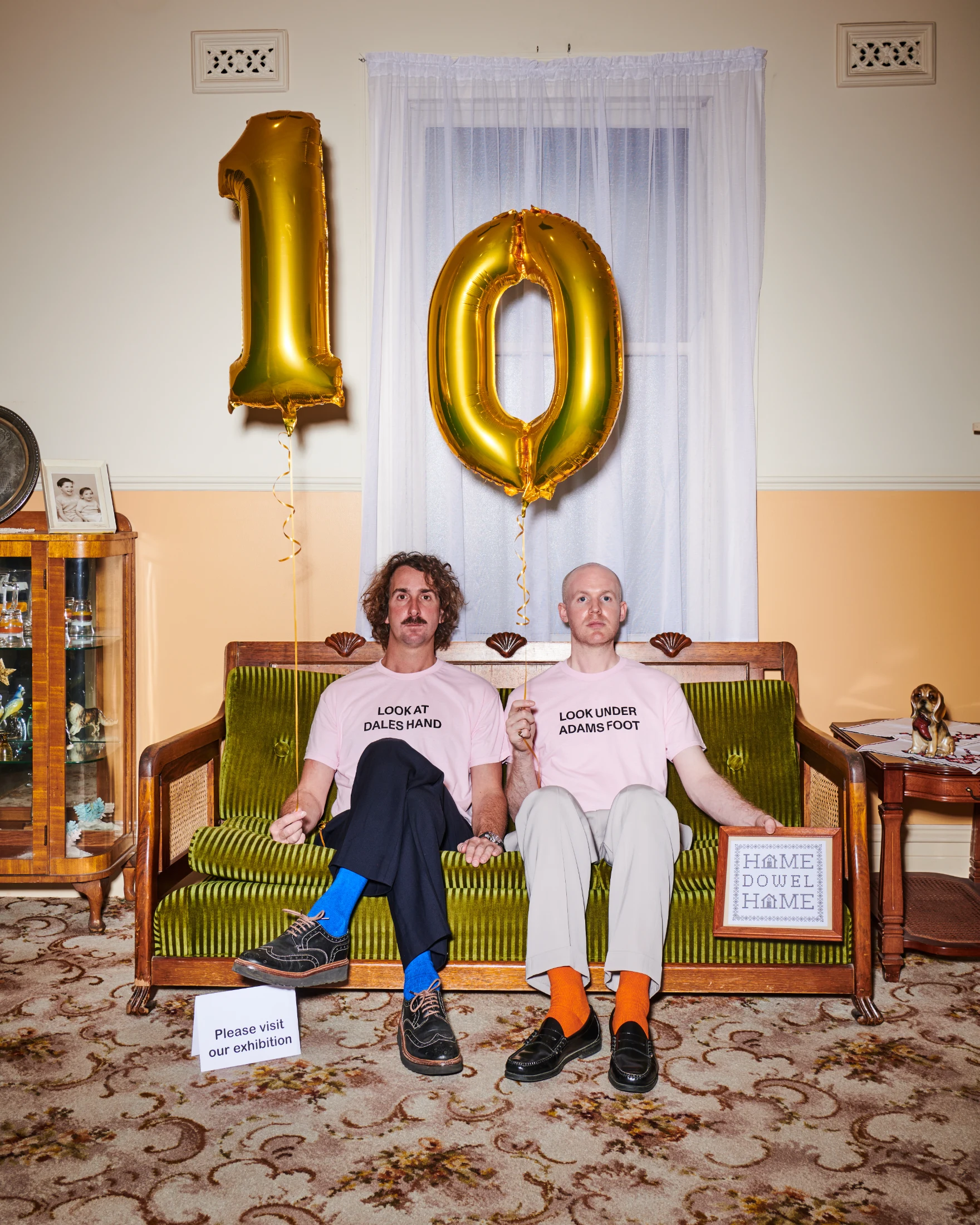
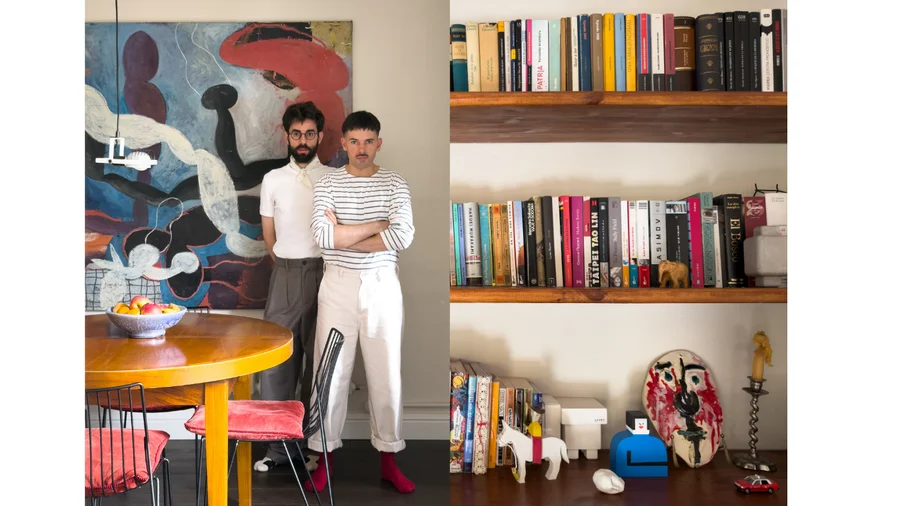
The Dowel Jones portraits Dale has been art directing over the past decade are a case in point. These portraits exist as a sort of raised eyebrow at the industry archetypes he observes; the way designers often look so serious in their photos. “We thought, well, we can not smile in every photo, but let's just build up worlds around us. It's very serious, but then everything is absurd.”
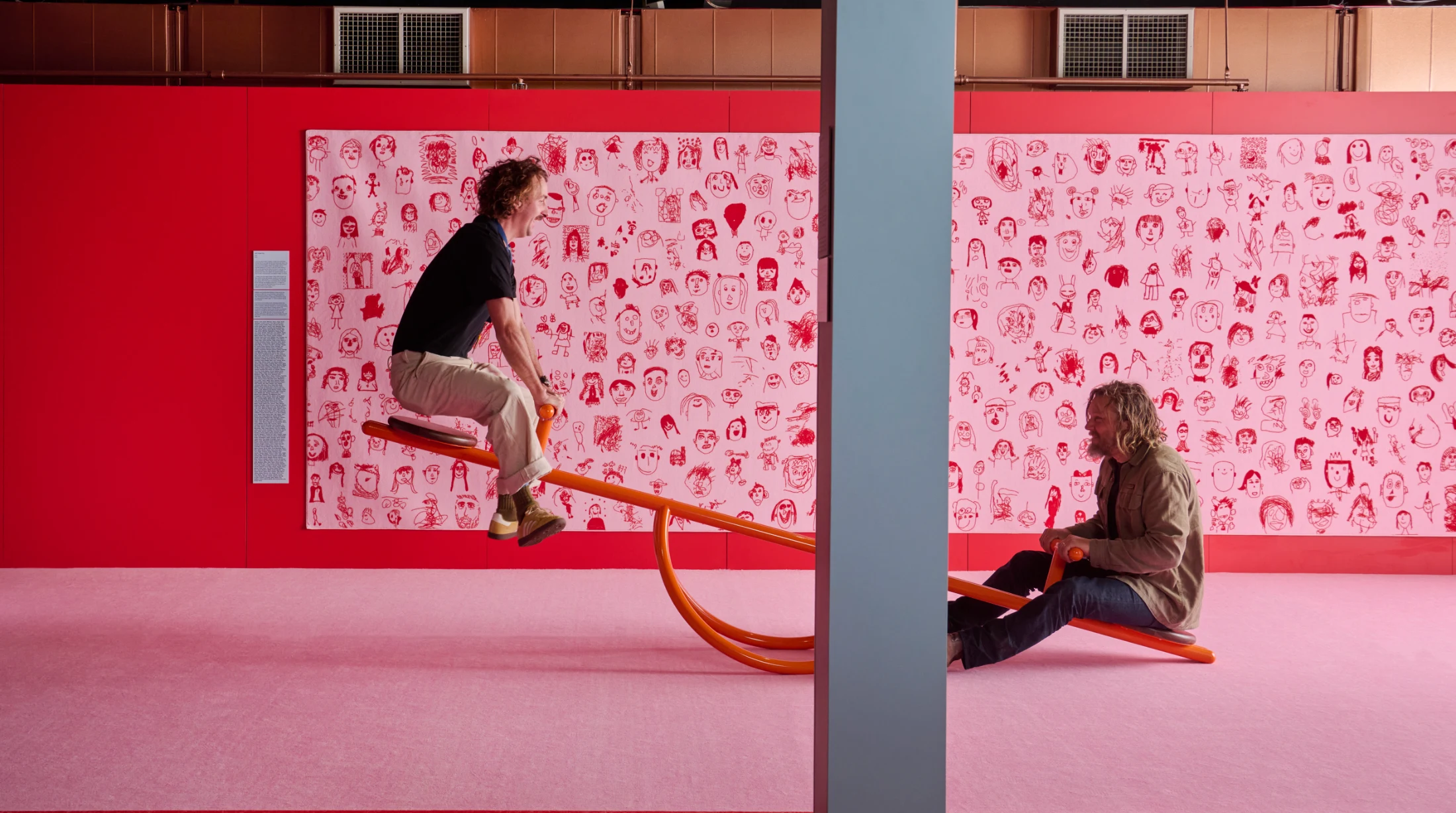
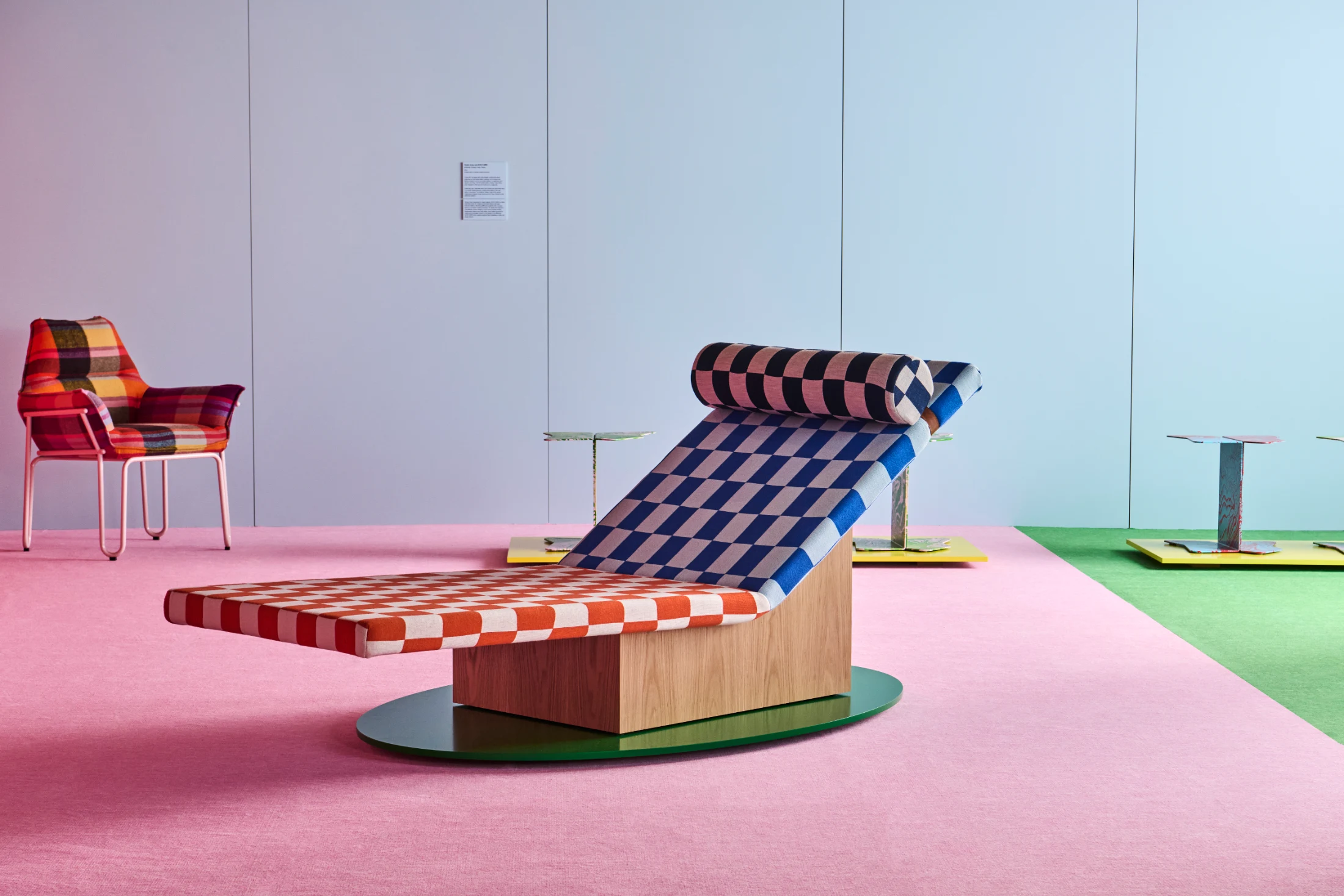
This sense of play is omnipresent in the duo’s work. There was the time Boom Gallery in Geelong invited Dowel Jones to produce a solo show in one of their spaces. It was the first time they had been given the opportunity to produce a solo show from beginning to end and, spoiler alert, they wanted to do things differently. “We weren’t interested in presenting furniture in the gallery because we thought the general public wouldn’t want to see a room full of chairs”. (Dale tells me “chairs weren’t that cool, like they are now”). Instead, they came up with the idea for PLAY: an exhibition featuring custom designed and manufactured adult-sized playground equipment surrounded by child-sized seating for children to sit on while their grownups played. The pieces included ‘Tilda Swington’, ‘Climbin & Garfunkel’, ‘Curley Minogue’, and ‘Rocky Bilbao’ (a seesaw that has been updated and reproduced for 10 Years of Dowel Jones).
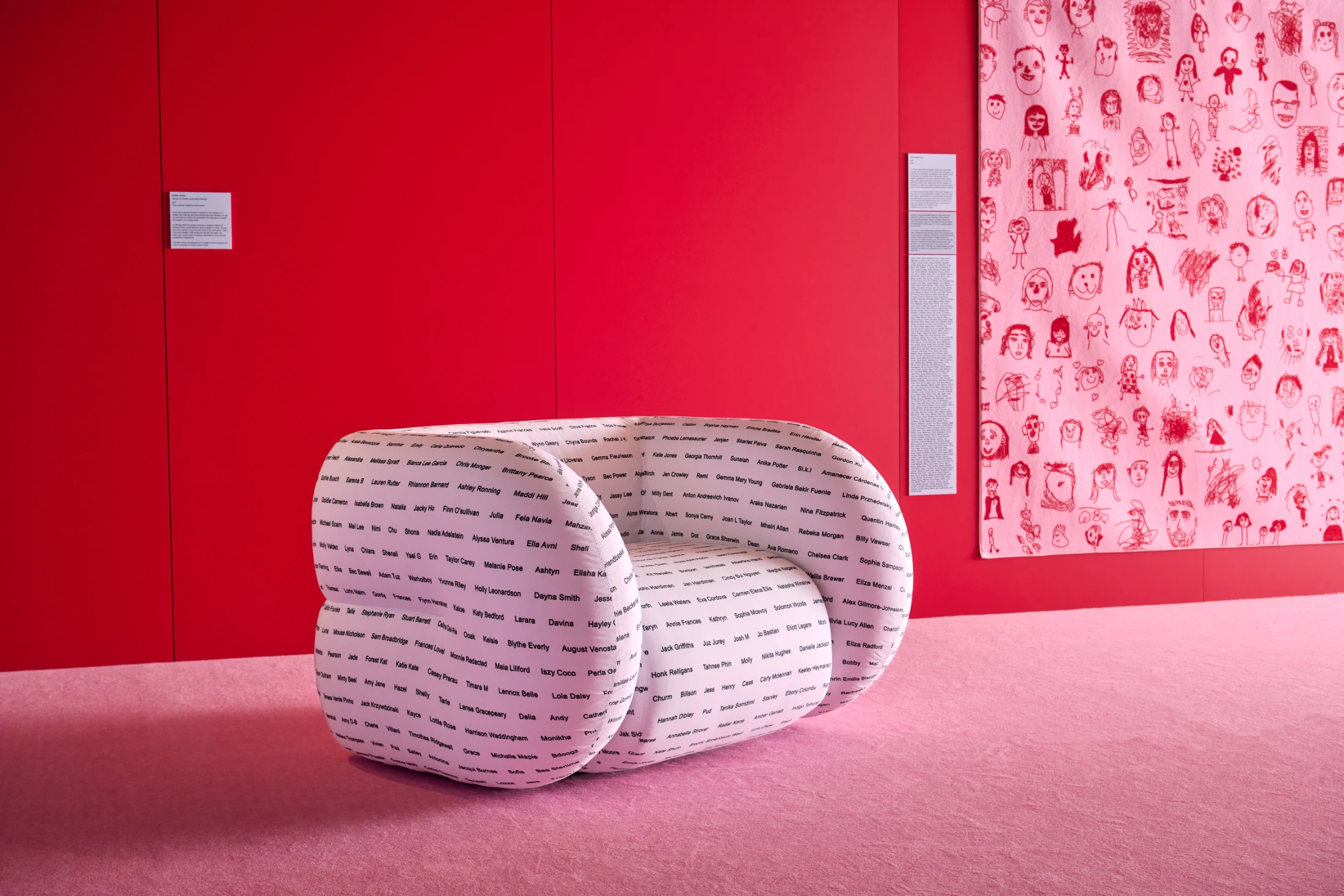
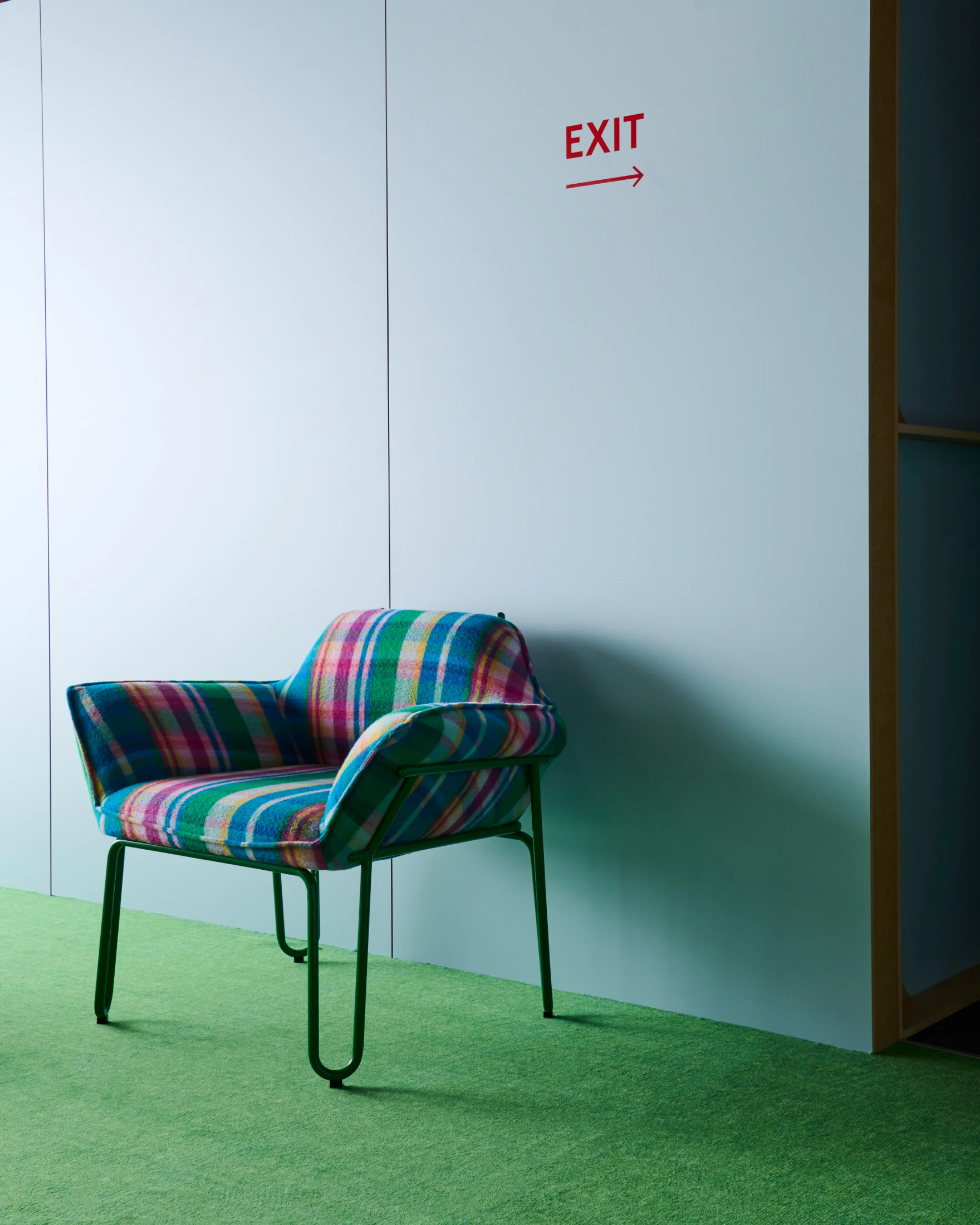
The ‘People of Dowel Jones Big Friendly’, also part of the 10 Years of Dowel Jones exhibition, is a delightful expression of a unique aspect of the Dowel Jones brand. “Organising this exhibition, I realised we weren't representing the people on the internet,” Dale says. He speaks of his gratitude that he and Adam started a business at a time when Instagram was really taking off and questions whether they would have experienced the same success if Dowel Jones was born into a time when the only way to get noticed was via a full page ad in a glossy interiors mag.
Puns, wordplay, generally silly shenanigans (eating artisan gelato out of their upturned ‘Thimble’ stool, International Dowel Jones Free Tattoo Day, coffee table books that are actually pieces of wood, cakes that look like coffee table books that are actually pieces of wood… that sort of thing) – are very much a feature of the Dowel Jones Instagram feed. I ask Dale, ‘If there was a Venn diagram featuring all of your Instagram followers, how many of them, do you think, would say they were there for the furniture and how many would say they were there for the comedy?’ (speaking for myself, I am firmly in the intersecting middle) and Dale readily replies that most are likely there for the jokes.
While that may be so, this community has become a fertile ground for surfacing emerging design talent via Dowel Jones’ annual Design from Home competition that has been running since 2020. The competition offers anyone “interested in putting pen to paper” the chance to potentially see their design go into production with ongoing royalties to follow (plus cash prizes to boot). The runner up for the 2020 competition, CJ Anderson, is the designer responsible for the original ‘Big Friendly’. The custom version of his design that appears in the anniversary exhibition has been adorned with the names of Dowel Jones’ flock of followers. In May this year, Dale posted an image on Instagram inviting people to: ‘PUT YOUR NAME ON OUR CHAIR’. All they had to do was to comment their name on the post within seven days. The finished piece – upholstered in fabric, custom-printed in Sydney – features 1,395 names (after Georgia from the Dowel Jones team painstakingly removed all the jokes and profanities) from Dowel Jones’ global online community.