
Magazine Current IssueMagazine Current Issue
Small Home: House for Cosimo Piovasco
From our Mag
February 1, 2025

Small Home: House for Cosimo Piovasco

Design: Mariana de Delás

Size: 45sqm / 484sqft

Location: Madrid, Spain

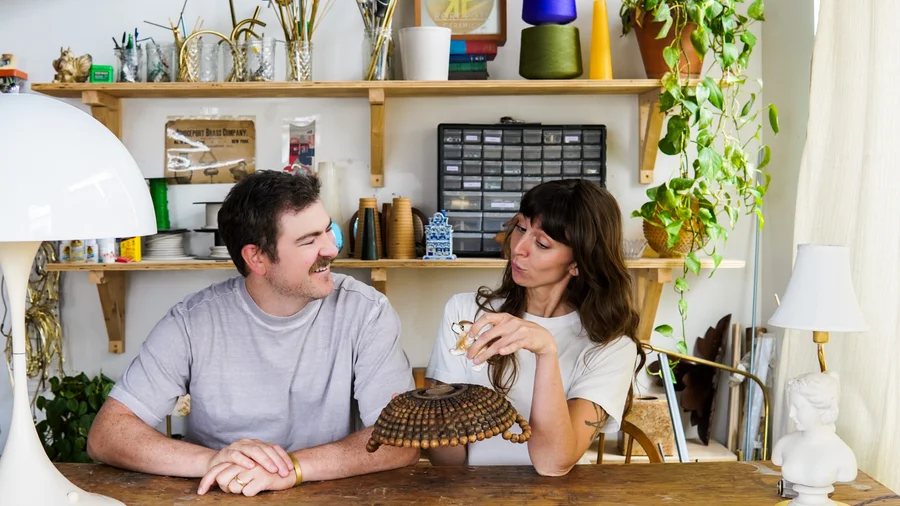
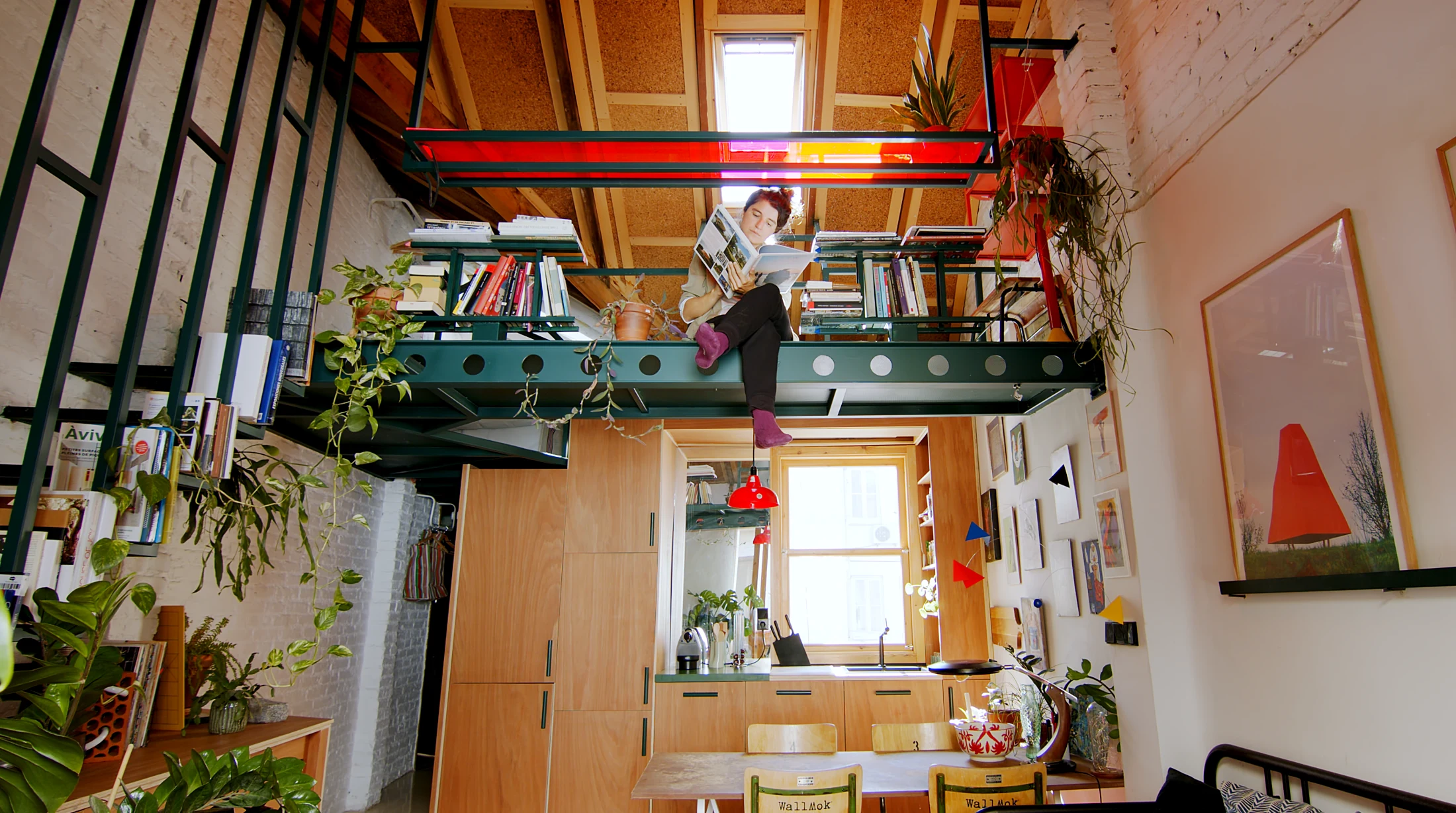
It was a plate of snails that was the last strawfor the young Baron Cosimo Piovasco. Herejected the gastropods and his entire nobleexistence and instead traded up, literally, fora life in the treetops. Italo Calvino’s whimsicalnovel, The Baron in the Trees, is one of Marianade Delás’s favourites. She too built a world anda life for herself amongst the branches andcanopies of trees as a child. But it was a visitto the home of the late Norwegian Architect,Terje Moe, that unlocked the possibilities ofhow these inspirations might translate into acontemporary urban home… for a grown up.The result is a playful and deeply personalhome – largely self-built – perched above acommunity-centric pocket of central Madrid,where Mariana plans to continue to edgecloser still to the sky.

Elizabeth Price
Writing:
Writing:
Elizabeth Price
Photography:
Photography:
Imagen Sublimina
No items found.
Magazine Current IssueMagazine Current Issue
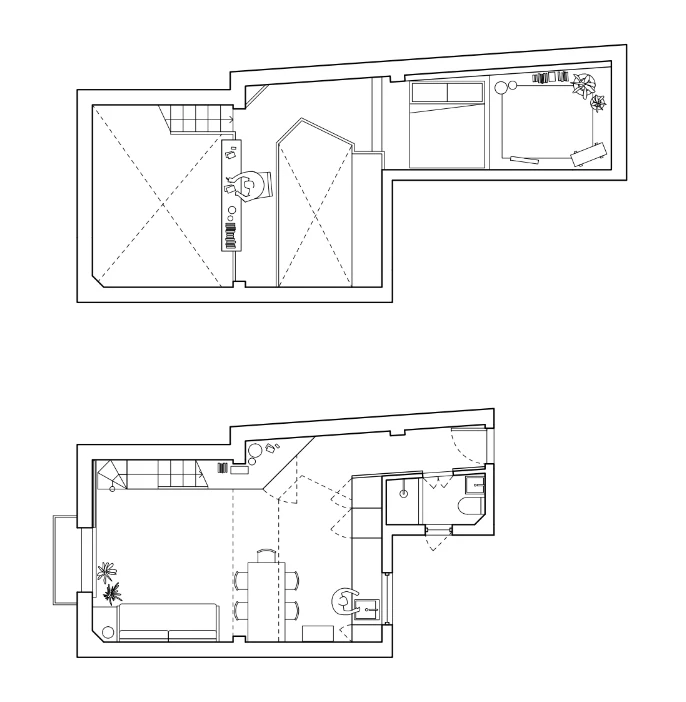
The After shot of the Floorplan
Before
before
after
After
Top
Arrow UpArrow Up

Tell us about your childhood and the role it played in inspiring the design of your home…

I grew up between the city and the countryside. Every summer we would spend almost three months in the countryside, which was a great change compared to the fast-paced city routines. I loved climbing trees and loved to spend time between branches, finding specific areas within atree to suit my pre-teenage needs. On that branch I read. On the other one, I sing. From this one, I can spy on my brother etc. It was a great feeling.

And I guess the idea of climbing and creating my own home within the branches of a tree as a child has resulted in me now as an adult, unintentionally designing my home as a tree.

You clearly thrived in the countryside but now live in the thick of a bustling city. How does this tension play out in your home?

I love both the city and the countryside and forme the combination of both is where I feel comfortable. When designing (or living) in the city, I feel I need to introduce a lot of natural elements that can escape my control and when designing (and living) in the countryside, immediately Ilike to order or modernise some elements to feel I'm giving part of my character to the vernacular.

What’s your philosophy when designing for small spaces and how did this play out in designing your own home?

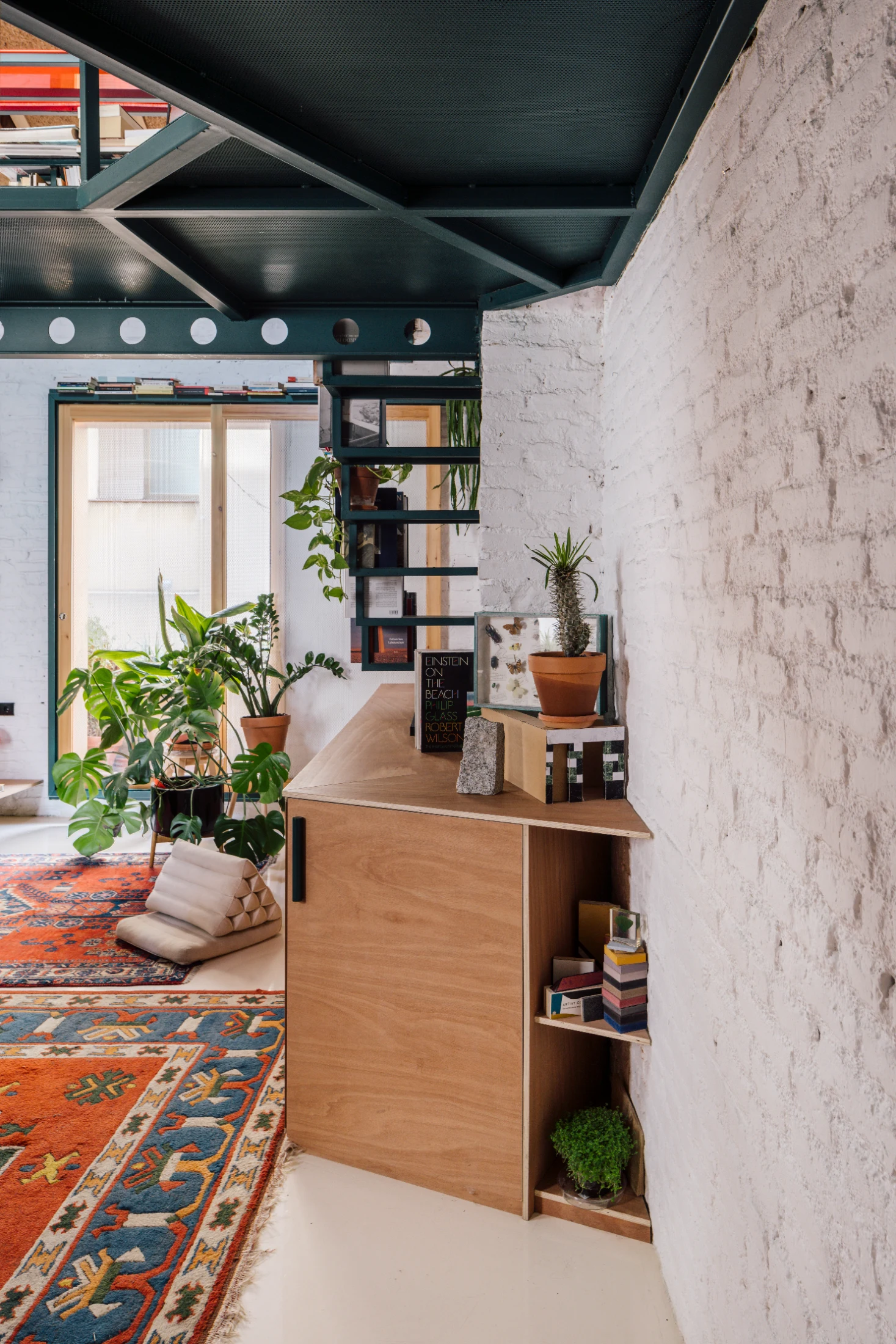
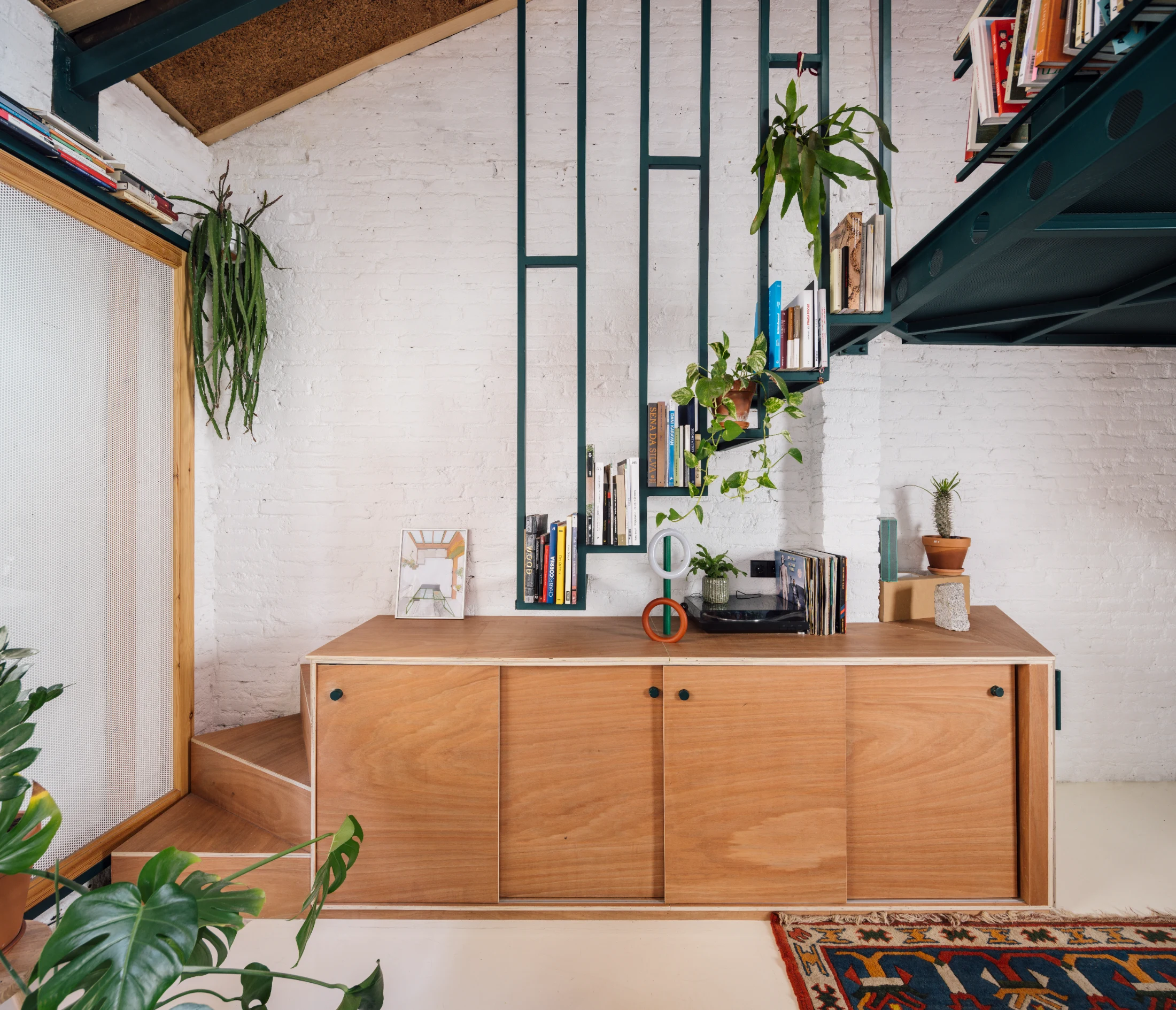
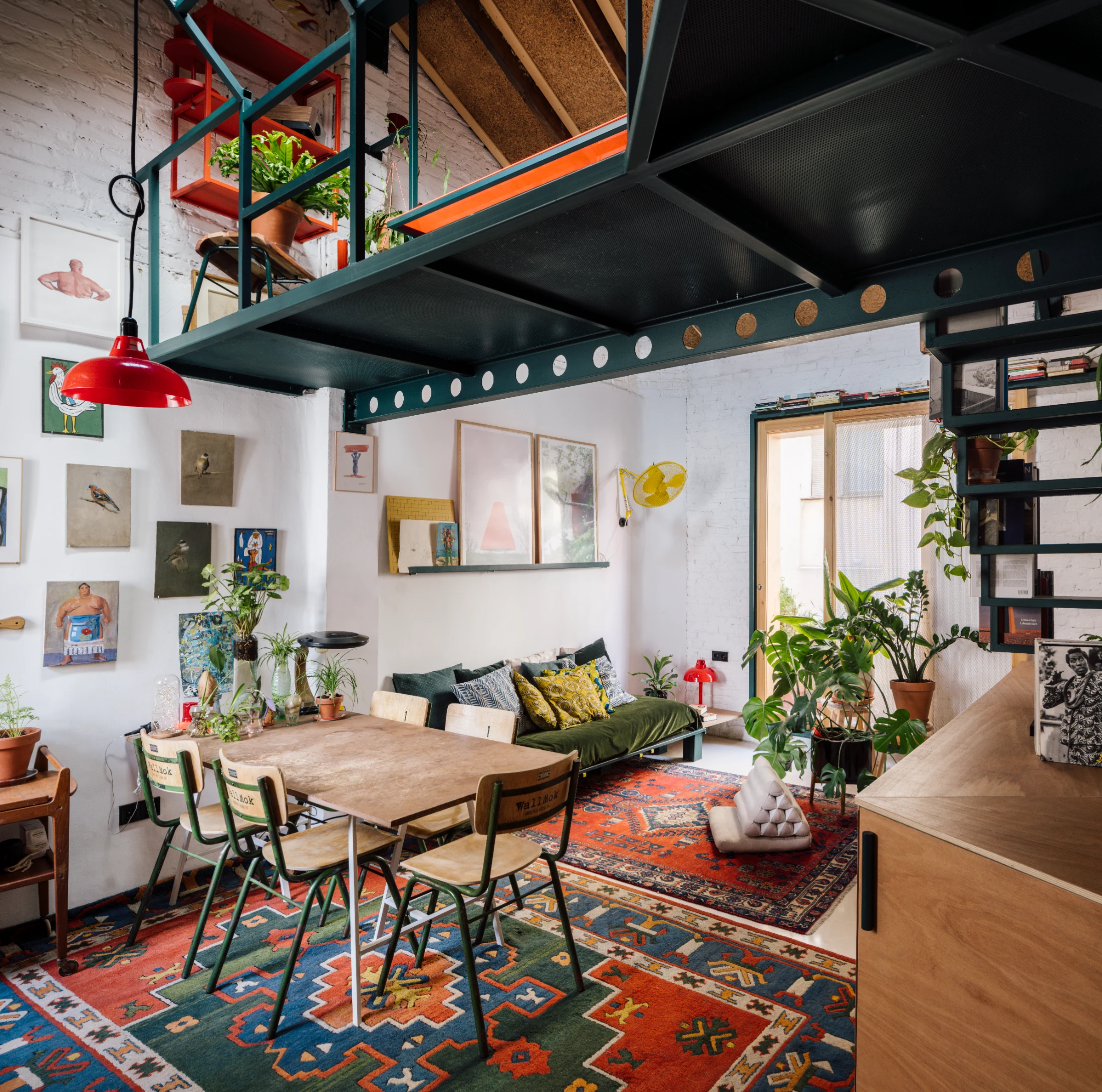
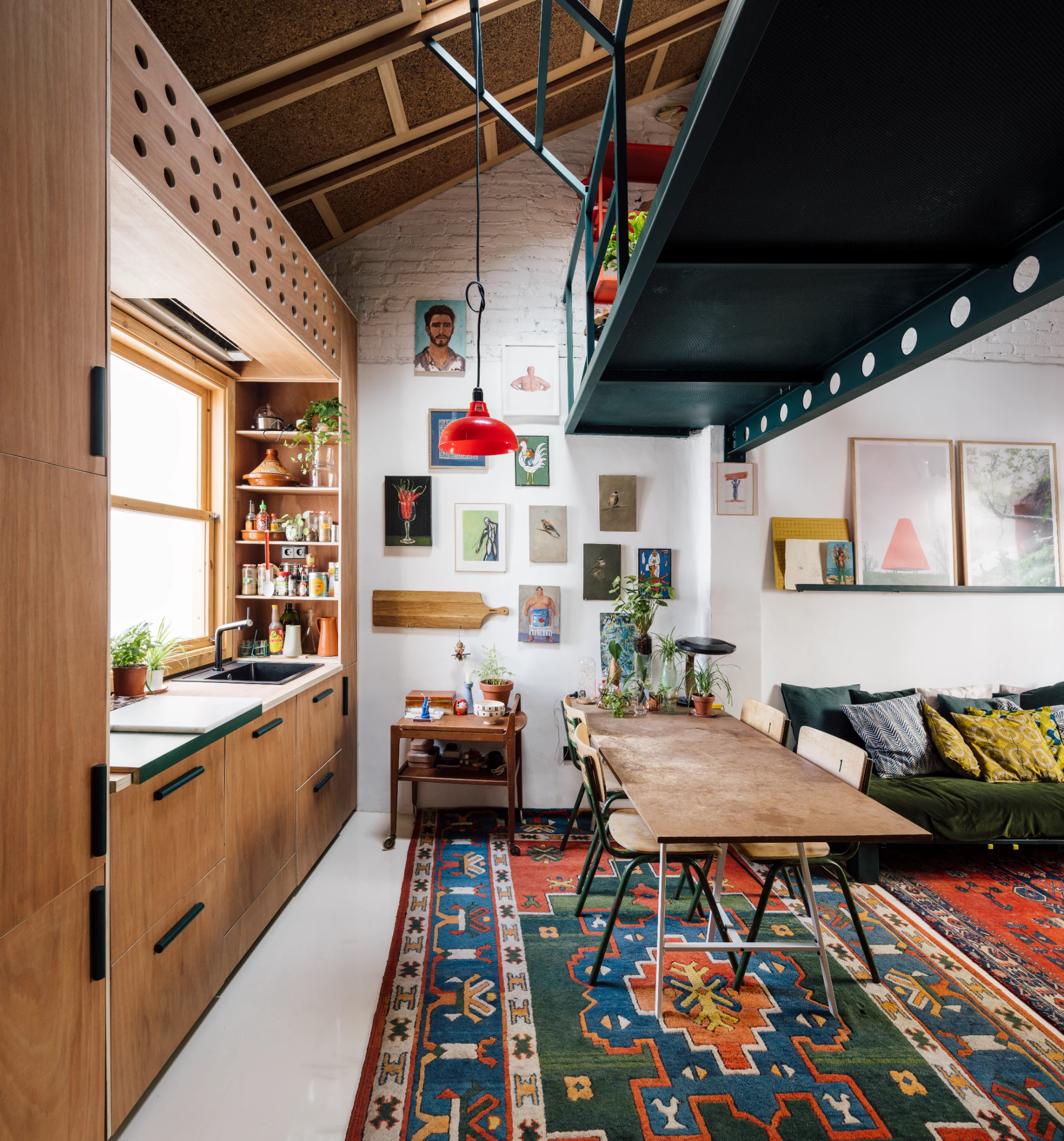
If you are designing for small spaces you tend to give every element you design a minimum of two functions. In this case for example, the stairs are also shelving, the tabletop also works as alamp etc. It is a very fun exercise as it feels a bit like designing the inside of a boat, or a campervan. I also feel that if you can, it is nice to have an open space or a more open area, so that even though it is a small space, it doesn't feel like one. A small space shouldn't feel like one; it should aim to look spacious. It is a great challenge to keep that in mind.
Tell us about the “quirky details” in your home and the ways in which you’ve celebrated them in your design…

When I mention quirky details, I mean details of things I wanted to have in my home but, because they are self-made, they do not have the perfect finishing or perfect functioning. For example, there is the ‘flexo fan’, which I co-designed with my lifetime colleague, Marcos Duffo. We are planning to produce it in a more professional way, but in the meantime we build them ourselves.

I also wanted to play with plexiglass, which resulted in the tabletop also serving as a lamp. Sometimes the flexo fan twists its head in a way it shouldn’t, or the electricity transformer is a bit too exposed on the LED table. I don't mind it, and I like to consider it as a bit of wabi sabi. Of course, I always tell myself: one day I will fix it, but I enjoy the idea of an unfinished home.

The late Norwegian architect, Terje Moe, was another major source of inspiration for you and your home, tell us more…

I had the privilege of visiting his former home in Oslo with one of his sons, and it was of great inspiration. He was a great woodworker, and he self-built his entire home. I encourage all of you to look at his Kube Hus online. It is just very fun, simple, practical, and charming.

I was very impressed by the way his personality was reflected in his house, and it kind of liberated me from the feeling that a home had to function in a certain way. It relieved me in a way that was more like a friend telling you:

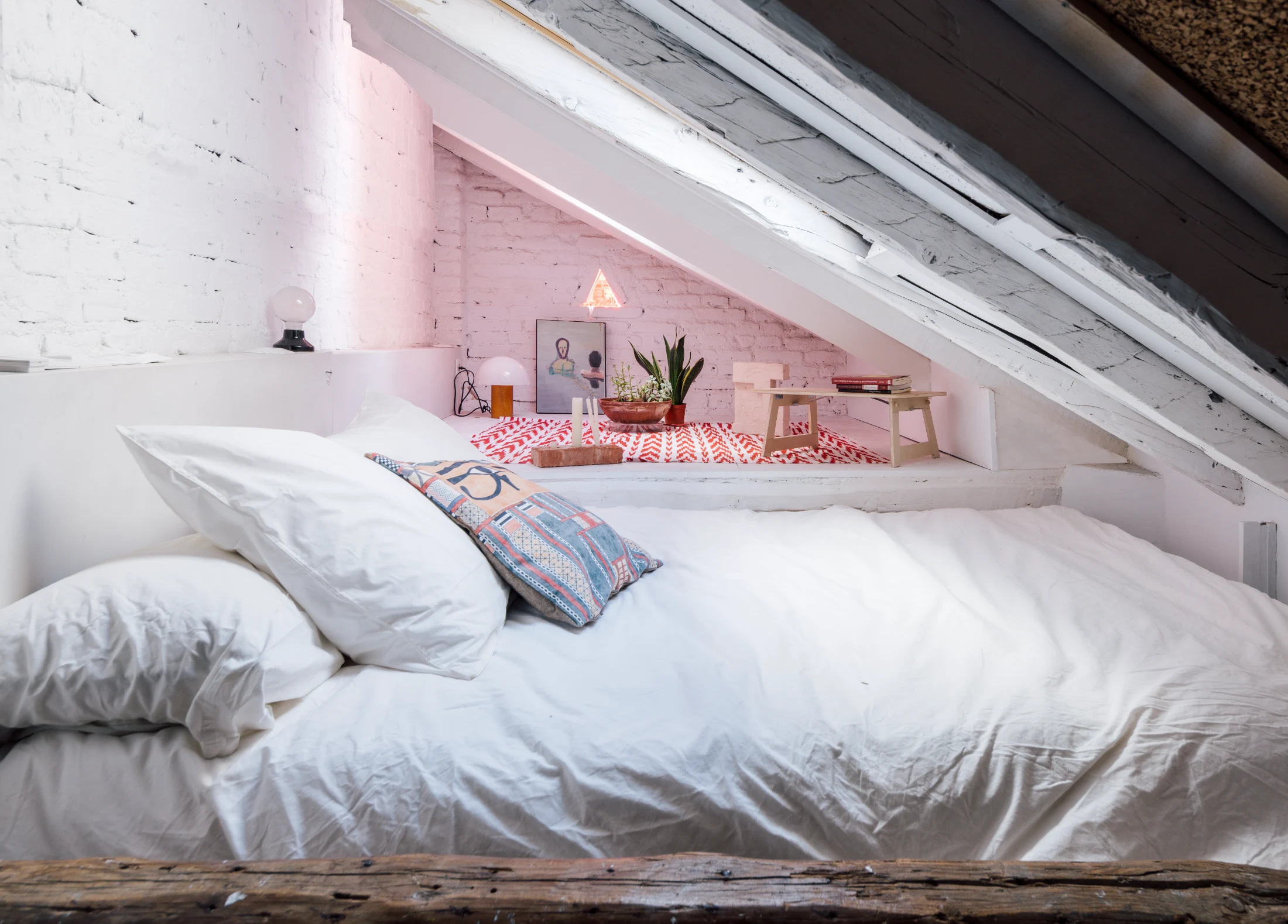
“Hey, your house can be whatever you want it to be. If you want your bedroom to be an elevated cubby-like bed over the living area, then do it.”

What was it about this space that aligned with your vision?

When seeing the apartment before buying it, one could sense that above the false ceiling there was an open volume that maybe one could colonise to add a bedroom, but you couldn't be sure of it, or how high it was, or how easy it would be to build there. Normally, in these types of constructions, an empty space would be left between the roof and the false ceiling that would act as an insulation barrier, but it was still impossible to know how big the roof pitch was until the false ceiling was removed.

The greatest feeling was after getting the keys and tearing it apart—I saw that the total height was enough to do this gangway for the bed area, and thus it liberated the floor space for the living areas.

How much of the work is your own?

Essentially decorative elements and finishes. So, for example, I chipped away the plaster to uncover the brick area, painted the walls in white, and took away the ceiling plasterboards and all the 100-year rubble on top of the false ceiling. With a friend, I repainted the roof with waterproof paint and fixed some roof tiles, installed the lights, made the sofa, the table (only the top—it is sitting on IKEA feet), the book hangers, and the cork insulation between beams. We made the bed structure with more friends out of MDF; we made the flexo fan, the picture shelf on top of the sofa (it is just an L-section metal profile), and prepared the floor for when the white resin would be poured. A friend installed a new (old) entrance door. Normally, to keep expenses lower, I try to do everything I can by myself—and with friends—(which is normally reduced to finishes) but still call on professionals to do the main work.

How long did the whole process take?

I don't think it has finished. I still need to finish some things, and I'm also applying to build one more floor on top. Once I get the permits, it will expand to one more branch. It all started in 2018.

What was your favourite skill that you learnt along the way? Welding is pretty cool…

Welding has been very fun. It seems like magic. I always say that to weld two pieces is quite easy, but welding well is very hard and better left to the professionals. My welding has been centred on the decorative elements: the sofa, the book holders in the gangway, and some pieces of the hanging orange table. If you look closely, you can see that the welding beads are incredibly big and bad, but because it is for me, it works, and I see them with nostalgia. Structural metal work, such as the gangway and stairs, has been done by professionals, as I would never risk that.

How has being ‘on the tools’ like this influenced you as an architect?

You realise that everything seems much easier when planning it than when doing it. It makes you feel more humble with the construction process and grow in admiration for the people who have the expertise.

In the end, the conclusion is that everything in the building world is always harder, more expensive, and takes longer than what you envisage—but of course, it is extremely rewarding. As a designer, it teaches you common sense to try and keep creativity and simplicity always together.

Tell us about your art wall and where all of its treasures came from…

During Covid, colleagues had an art gallery at my studio. It lasted for a few years, and the format was to promote emerging local artists in a weekend personal show format. It worked really well and was very exciting, as with lockdown not many things were happening. The art wall features many of these artists, such as Felipe Martinez-Villalba and Adriana Muñoz.

Your home speaks to your personality in such a special way. Can you tell us about how some of the bespoke design details in your home cater to the way you live in your home?

For me, a home, or at least my home, feels like a good friend or like a very loved family member. The feeling of coming back home after days away, and my home welcoming me, makes me feel incredibly happy and safe. It's like the house hugs you and tells you, “welcome back.” I guess the more of yourself you put into your home, the more the home hugs you back. I personally love that feeling, so I keep on adding personal touches and enjoy giving love to my house. Some other people may want their home to be more of a clean-slate container. I guess it is always a very personal choice of what you want from your house.

Bespoke design can sometimes be misunderstood as something that can stand in the way of a design having longevity, but what role do you think personalisation plays in the success of small footprint design?

For some reason lately, bespoke furniture has been dismissed as not being flexible, as if everything must be subject to a potential change that might never eventuate. Longevity, for me, is normally related to good design. If there is good design, there is longevity: if the bespoke furniture is well considered and well executed, it shouldn't need to change for a long time and will work a thousand times better than mass-produced fast furniture that you need to replace regularly.

The more sustainable way of thinking about design, for me, is to try to make it beautiful, well built, and useful. Also, when choosing bespoke, you usually involve local artisans and workers, contributing to local craft and a lower carbon footprint.

Writing:
Writing:
Elizabeth Price
Photography:
Photography:
Imagen Sublimina
Back to Top
Arrow UpArrow Up
Top
Arrow UpArrow Up
The After shot of the Floorplan
Before
before
after
After
Businesses featured in this project
No items found.
Products featured in this project
No items found.
Magazine Current IssueMagazine Current Issue
Writing:
Imagen Sublimina
Writing:
Elizabeth Price
Photography:
Photography:
Imagen Sublimina
Back to Top
Arrow UpArrow Up