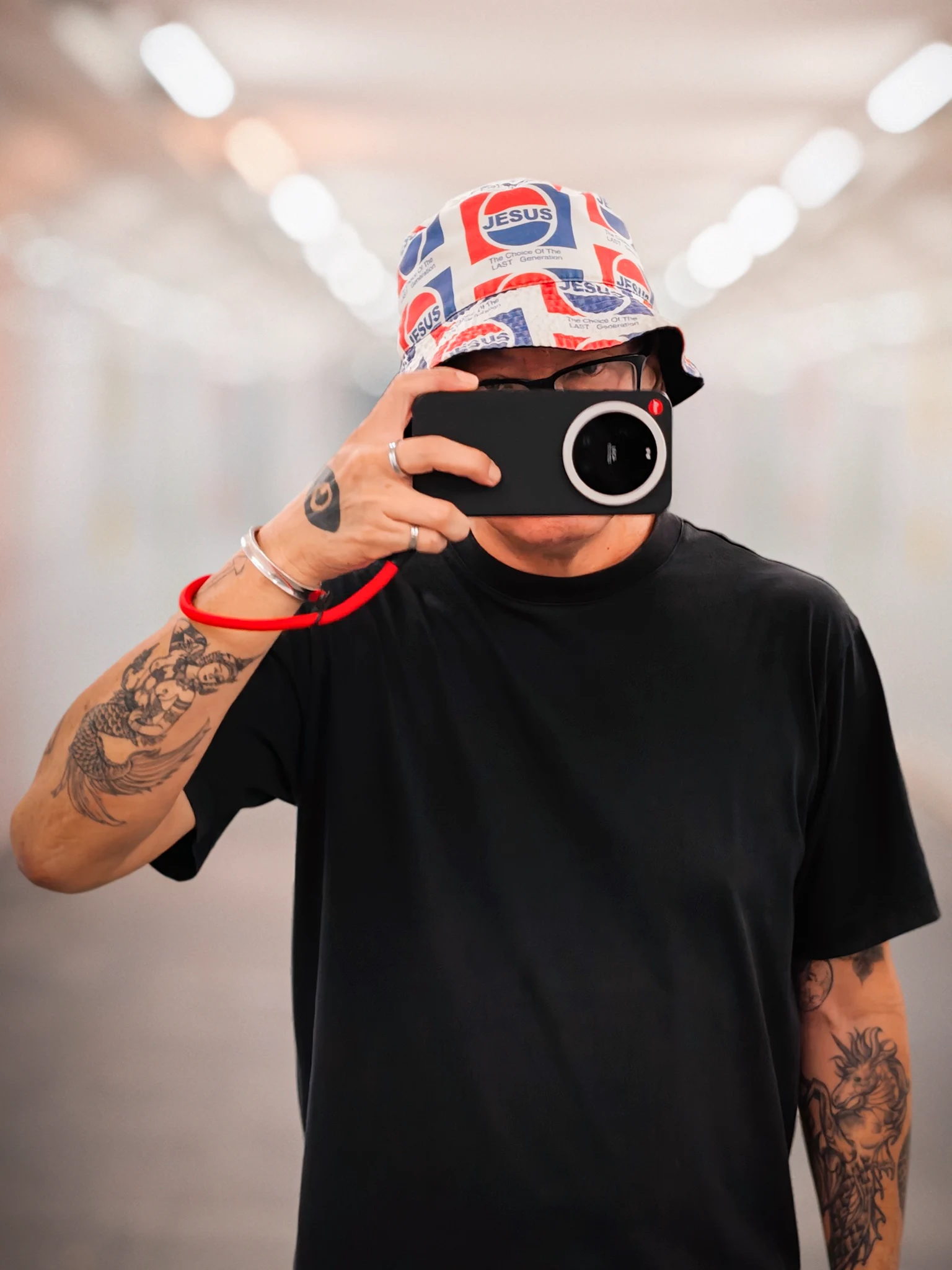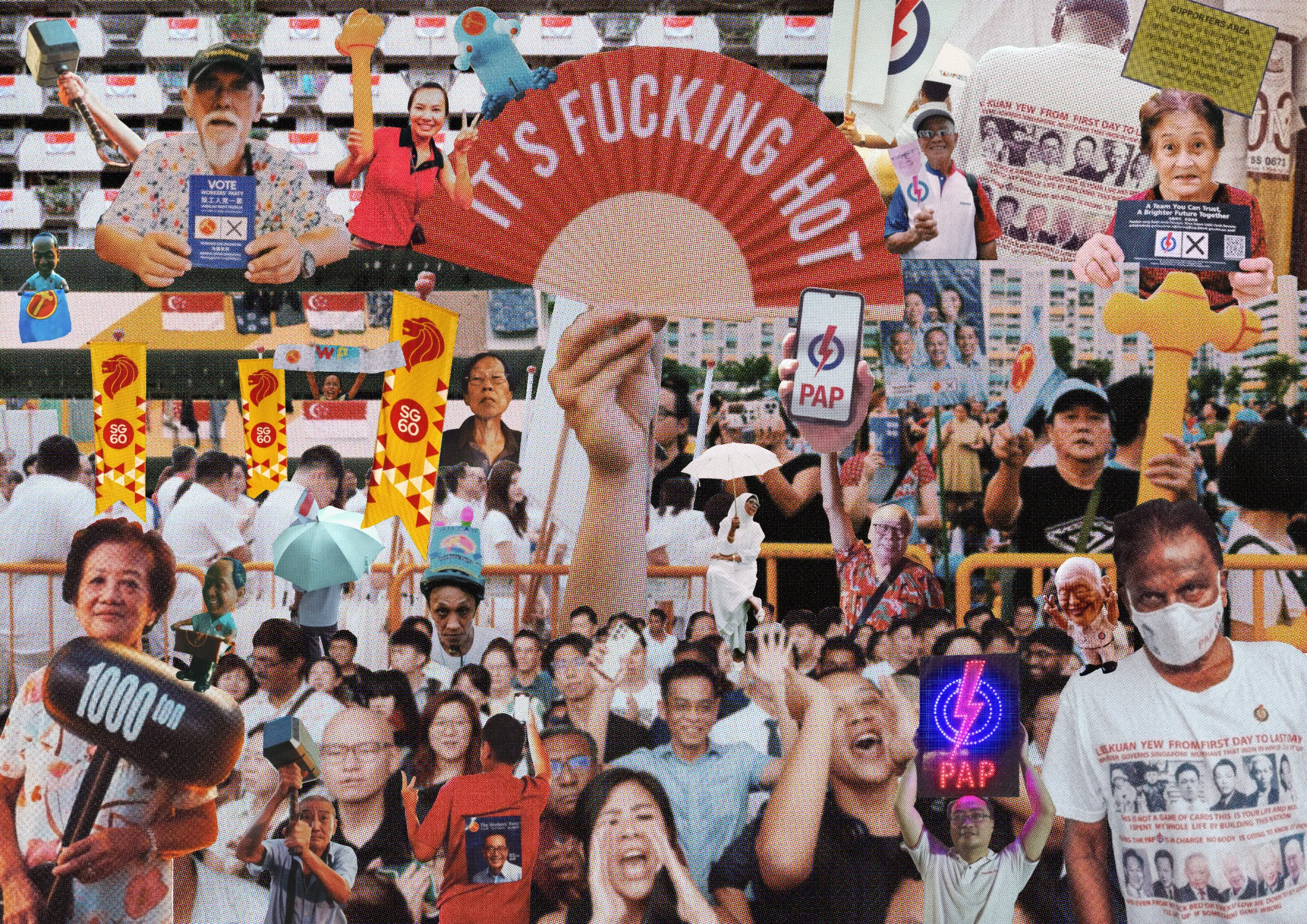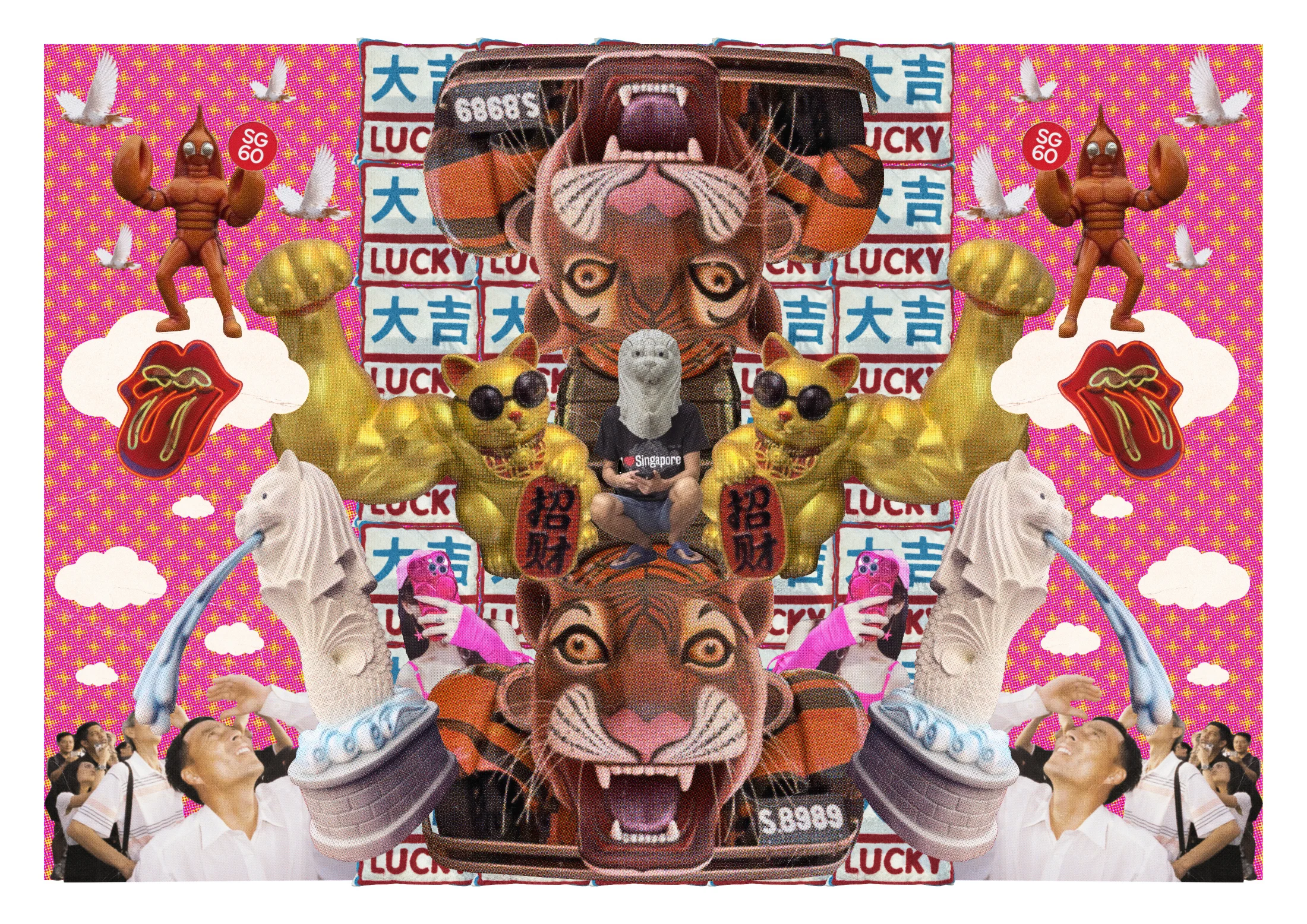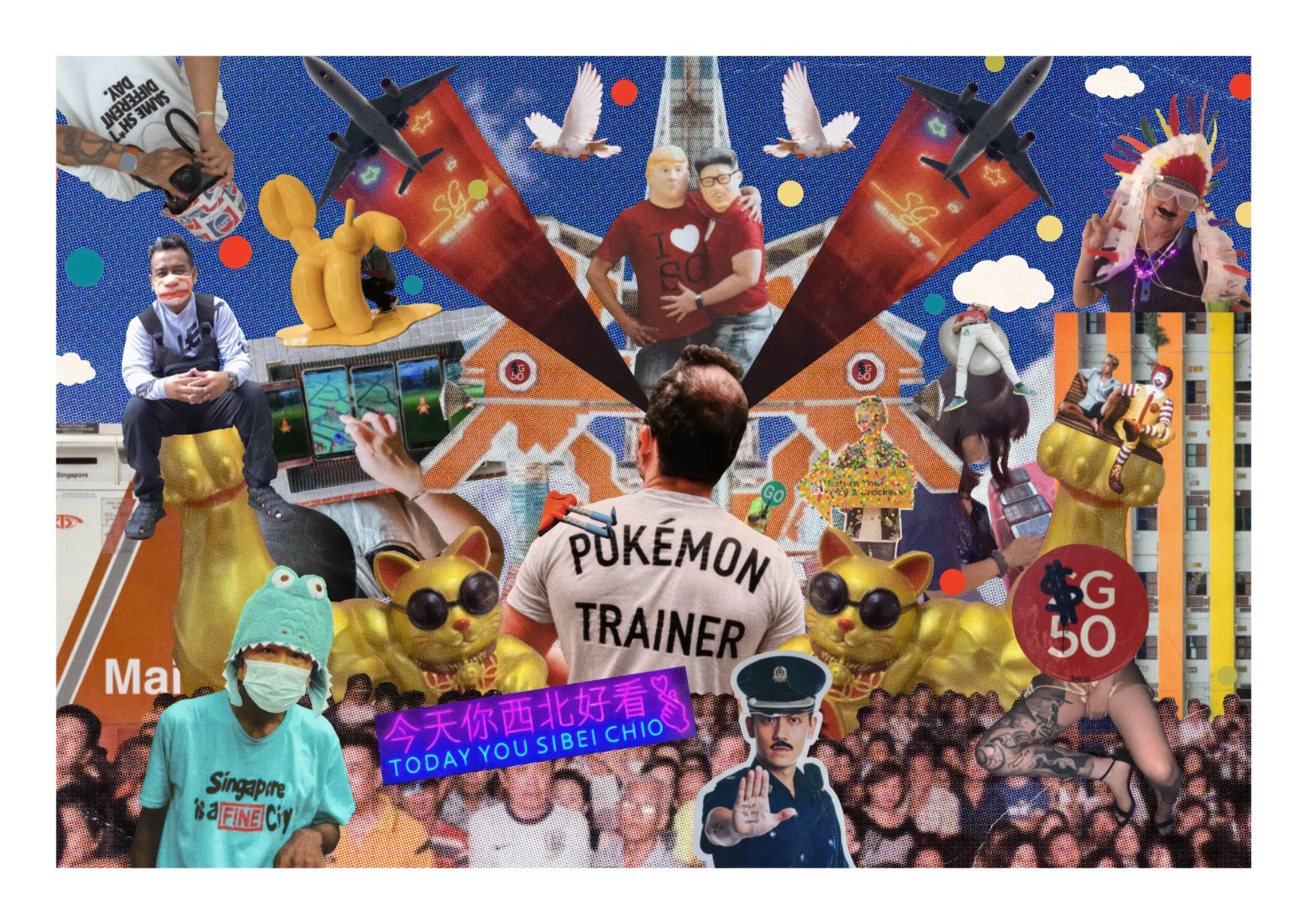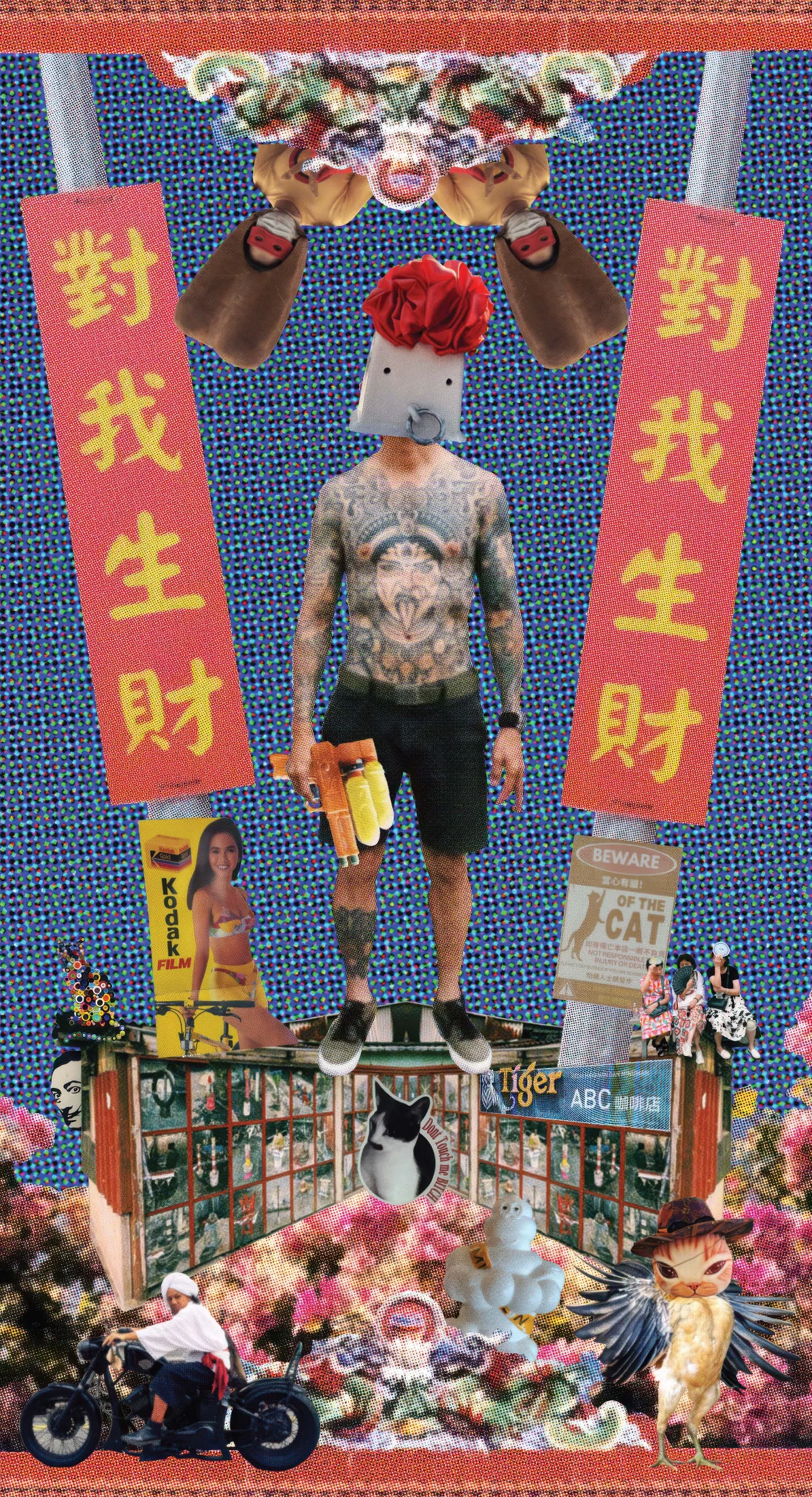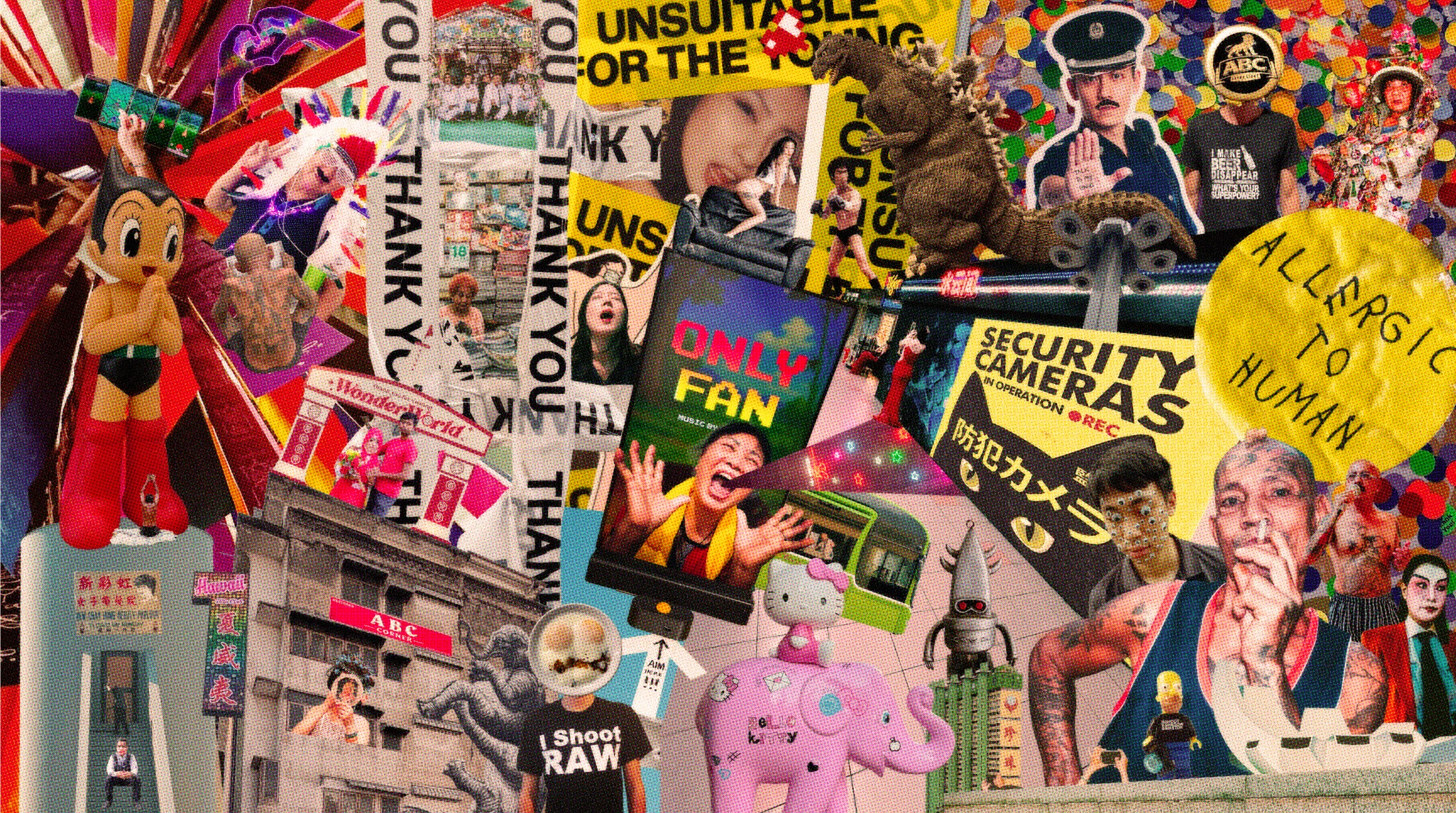


After 15 years as a photographer, Singkarpor REMIXED marked a transition into collage. You’ve said the idea came to you while eating rojak (a dish whose name essentially translates to “mixture”). Why the sudden appeal of collage?
After spending so many years on the streets, photography started to feel a little too “neat” for what I was feeling inside. That moment eating rojak made things click. Rojak is messy, layered, sweet, sour, contradictory. That’s how memory works, and how Singapore feels to me. Collage gave me permission to break away from the need for a single “decisive moment” or one clean truth.
With collage, I could compress different times, places and emotions into one image. Photography freezes a moment; collage lets me reconstruct how it felt. It allowed me to embrace contradictions, nostalgia and discomfort, humour, darkness, and be more honest about my experience, not just document what I saw.
Why does remixing feel especially relevant to understanding contemporary Singapore? Does “remix” imply it’s not an image of the “truth”?
Remixing feels right for Singapore because the city itself is a remix of cultures, histories, memories and constant change. Nothing here exists in a single, untouched state. “Remix” doesn’t mean it’s untrue. It simply acknowledges that there isn’t one fixed truth. Our experience of Singapore is fragmented and personal, and remixing reflects that reality more honestly than a single image ever could.
What camera do you use to capture your images and do you build the collages digitally or on paper?
Currently I’m using Leica Q, Insta360 Ace Pro 2, occasionally I’ll use Leica Sofort or Fujifilm instax Cameras. On a daily basis I used my iPhone to shoot. I built the collages digitally and manually on paper.
From what I can tell, fun seems like your default setting – like curiosity and playfulness are central to how you move through the world. At the same time, documenting the world inherently means confronting hardship and loss. How do you hold these realities together in your work? Or, why is fun crucial to the story you’re telling?
Fun isn’t about avoiding hardship for me. It’s how I stay open to the world. Curiosity and playfulness get me onto the streets, noticing small moments and connecting with people.
That lightness creates an entry point into the work. Once you’re drawn in, the quieter, heavier layers are already there. That balance feels honest to life: humour and warmth existing alongside loss, uncertainty and change.