
Magazine Current IssueMagazine Current Issue
From the Heart to the Hands
From our Mag
December 3, 2025

From the Heart to the Hands

Dutch designer Bertjan Pot turns curiosity into craft, transforming humble fibres into masks, gloves, kites and objects alive with colour, texture and play. In his Rotterdam studio, experimentation reigns—where accidents spark ideas, materials misbehave deliciously, and the hand leads the head into unexpected, joyful forms.

Bertjan Pot’s approach to design and art making is one of consistent curiosity and exploration. As a designer, he questions how physical items fit together, while, as an artist, he is driven by the impact his final forms have on the viewer. 

Harrison Cook
Writing:
Writing:
Harrison Cook
Photography:
Photography:
Magazine Current IssueMagazine Current Issue
The After shot of the Floorplan
Before
before
after
After
Top
Arrow UpArrow Up

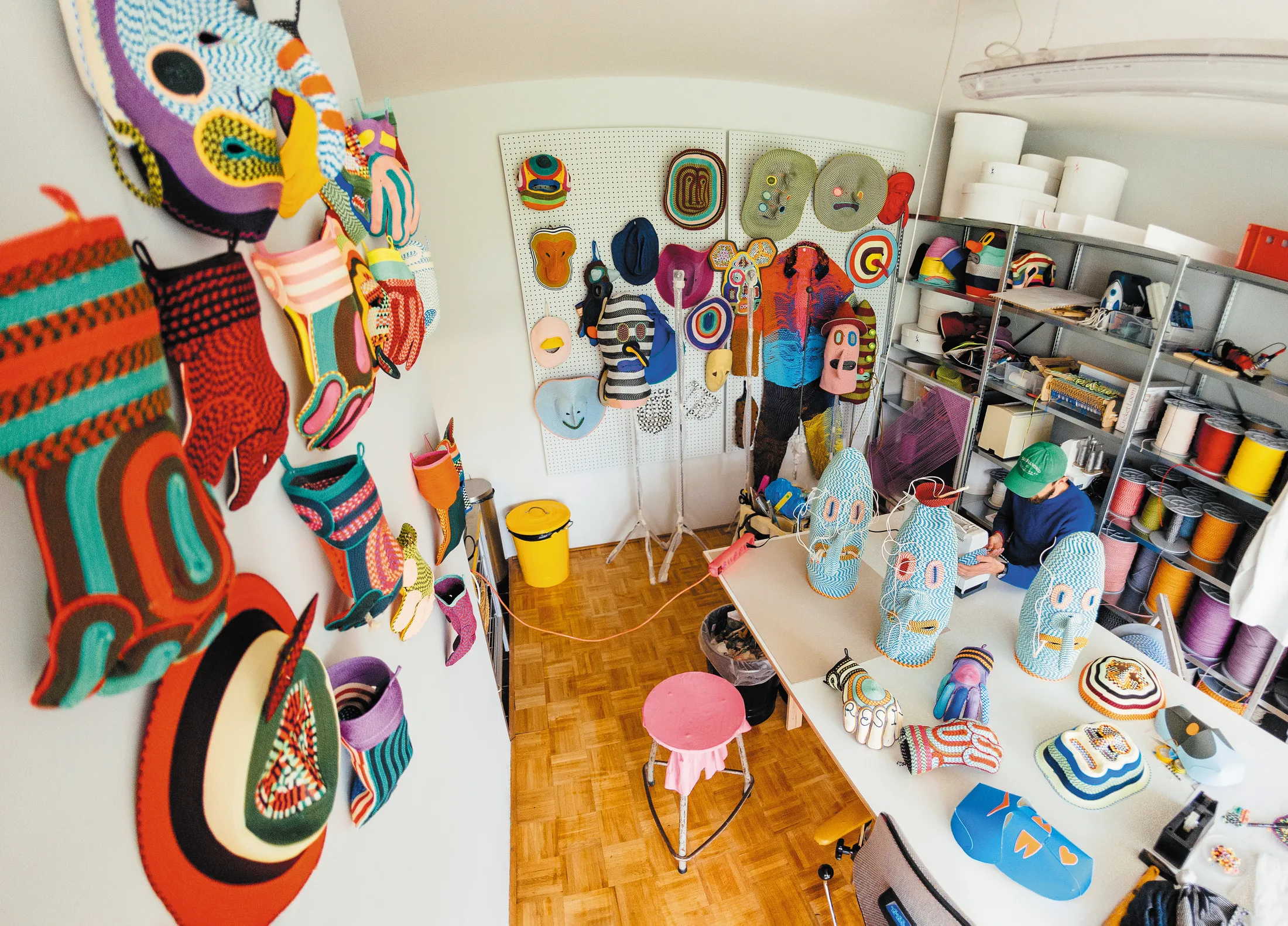
Pot’s practice is active, disciplined and highly dexterous, so it seems only fitting that his studio in Rotterdam, the Netherlands, had a former life as a gymnasium. Here, in this expansive environment, each design and in-progress prototype has its own dedicated space to breathe into its full vision. As if in a laboratory, Pot learns from each experiment and then iterates or evolves. Unconventional materials are tested against unconventional applications. New colour combinations emerge. And sometimes experiments give way to general play. “In all cases, I tend to like colours that clash. I love it when an individual colour gets stronger because it is presented next to another colour that is from a completely other world. I like dark next to light, bright next to dull and colours next to each other from the opposite side of the colour wheel,” Pot says. This approach is most evident in his fibre work, consisting of masks, gloves and now kites. 

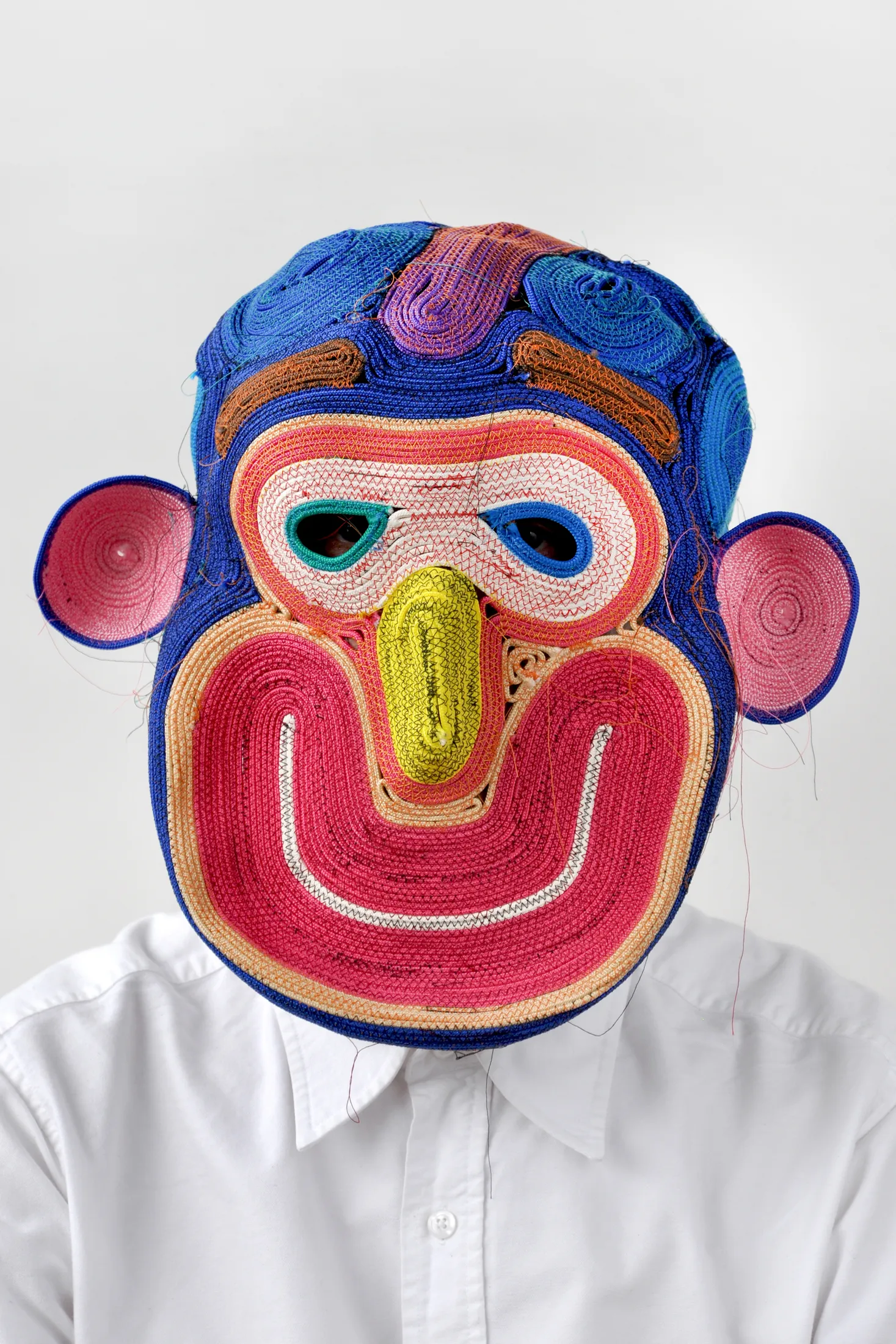
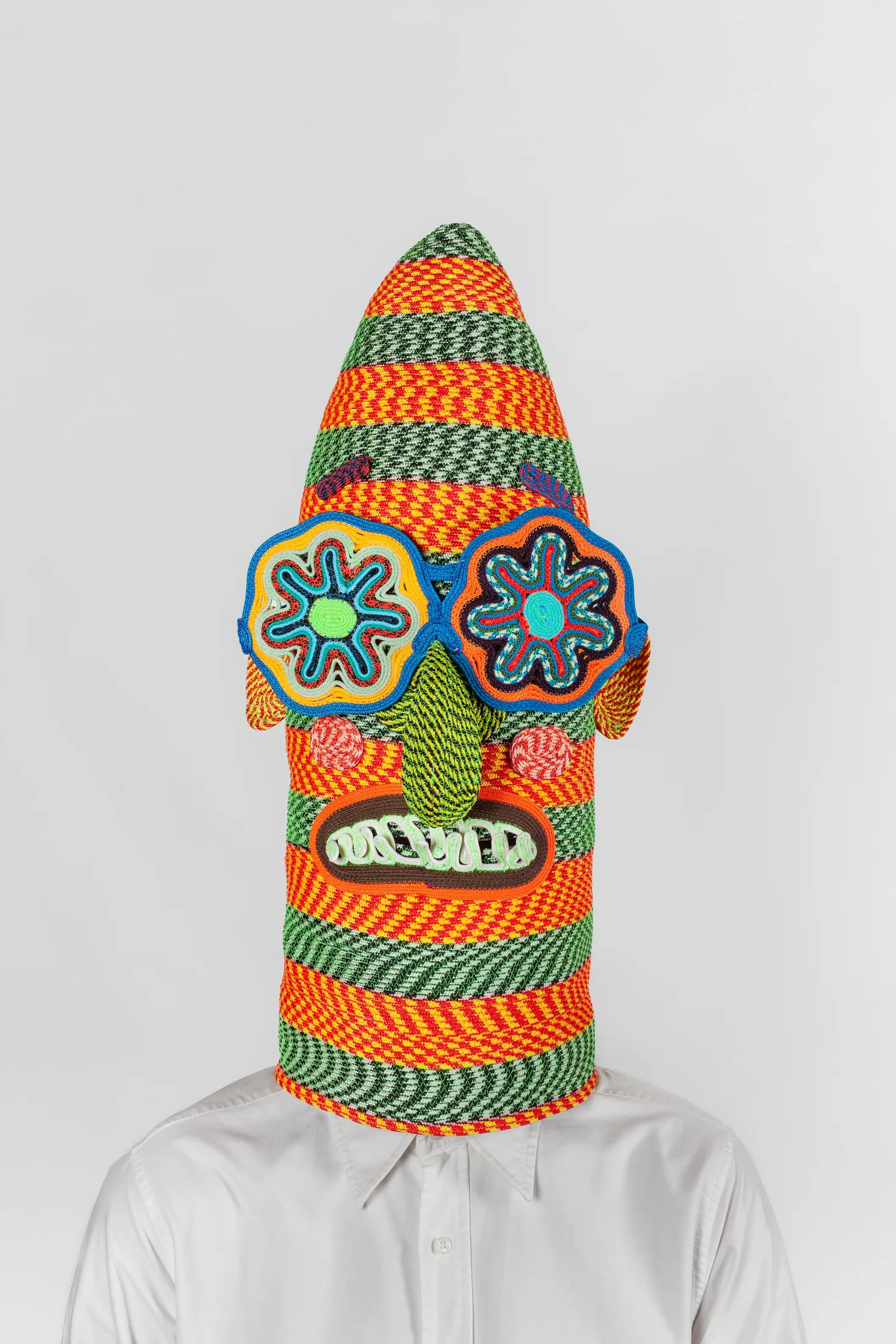
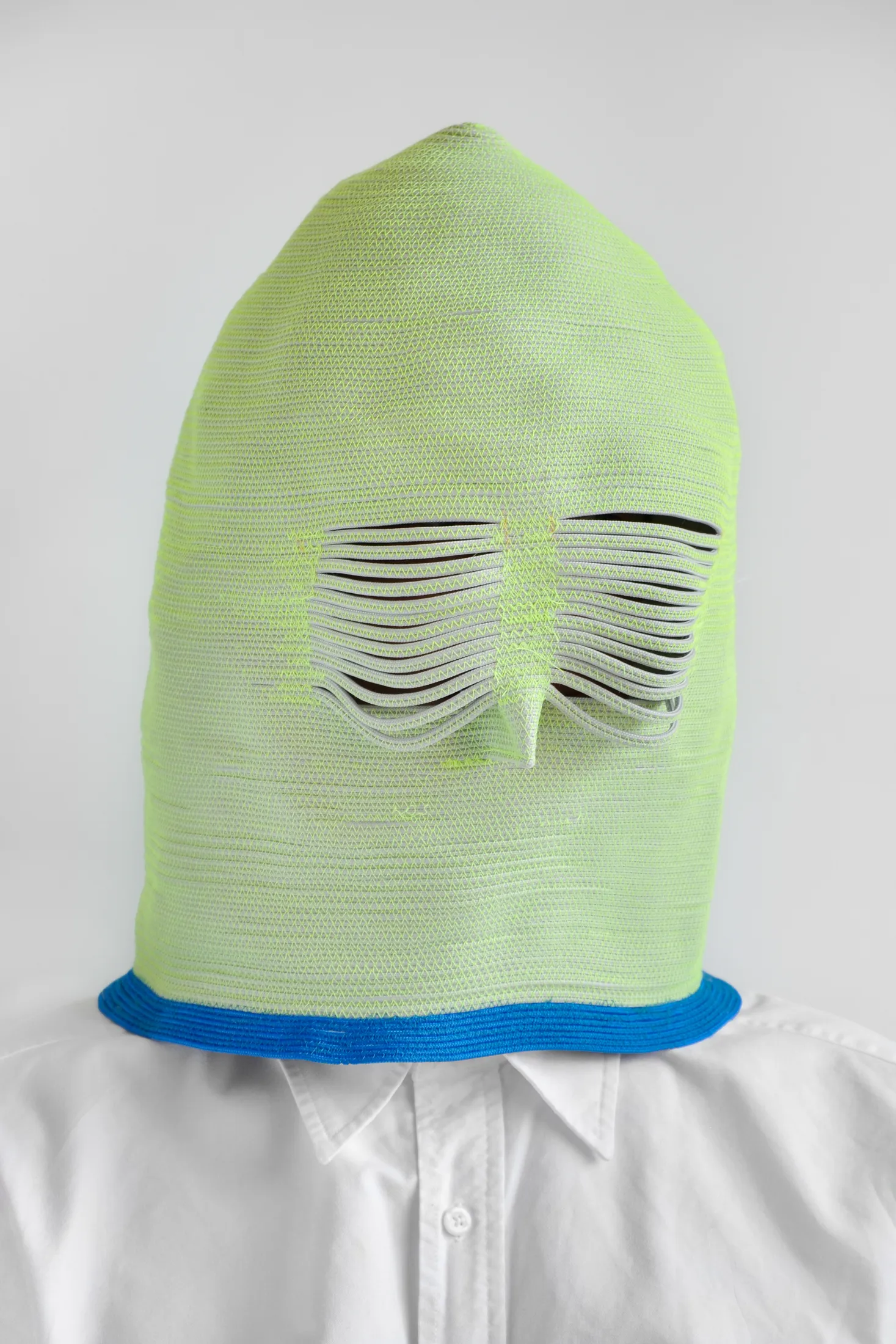
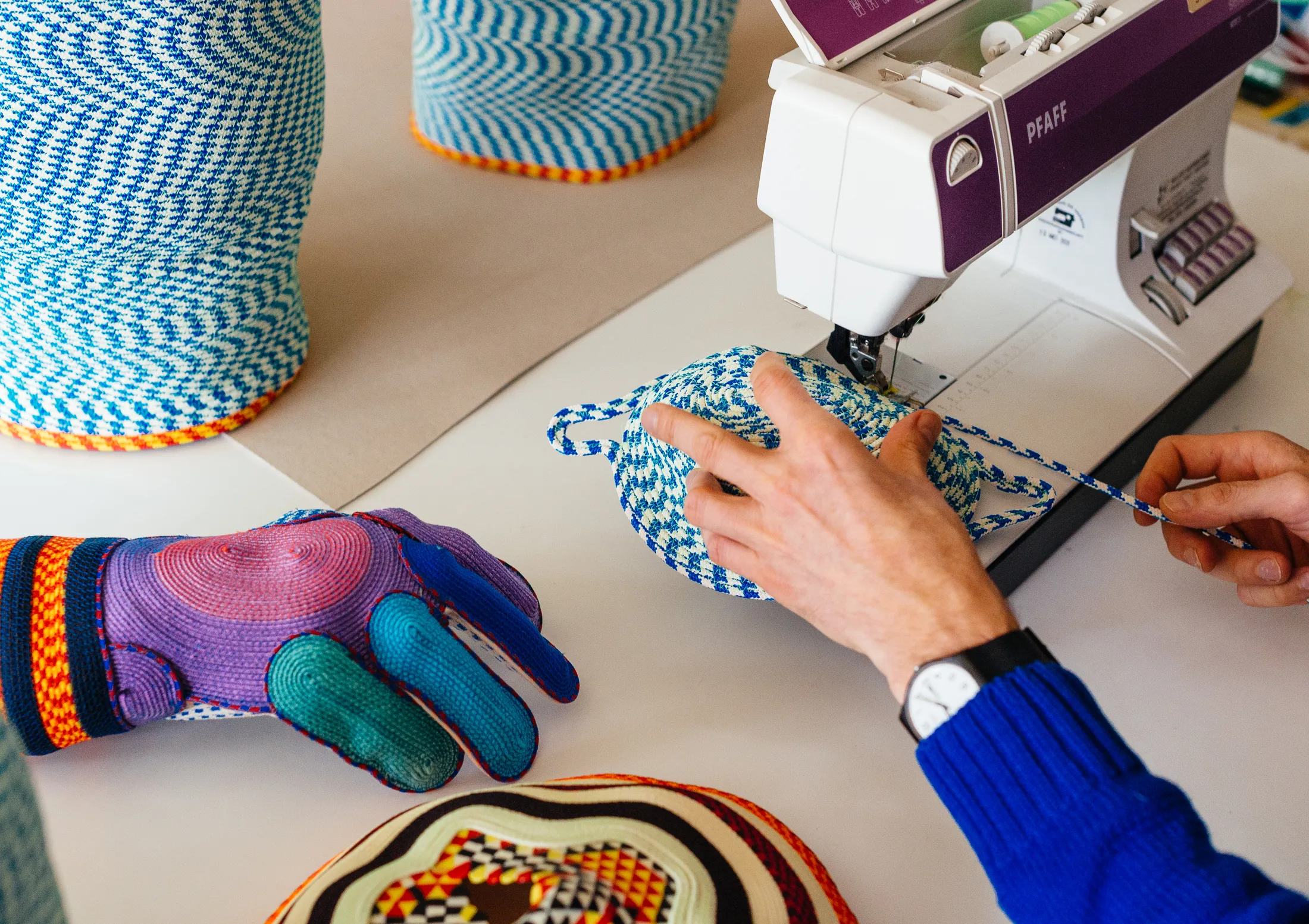
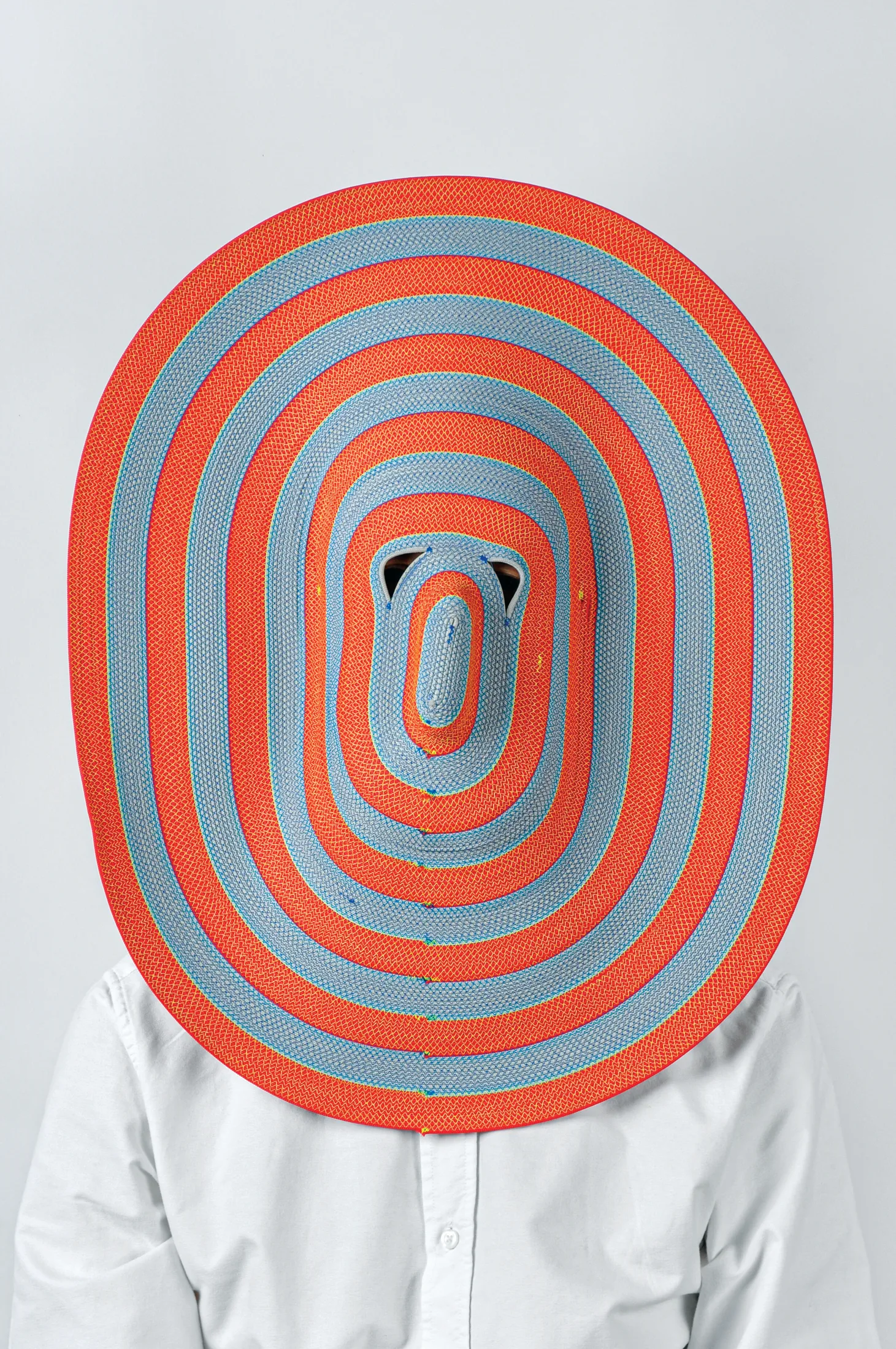
Picture Pot sitting at his desk, working with a heavy rope-like material, testing its properties and foldability. The end goal is a rug meant for a large seating area, but the material keeps bending and protruding at its seams. It’s here where Pot leans into the folding and creates the first iterations of his masks. Now, these masks are a daily part of his art-making process. When he finds himself creatively stuck or in need of a change of pace, he will go to ‘the mask room’ of his studio, sit at a sewing machine, and whip out a piece in no time. So much of prototyping for manufacturers is time-consuming and (at times) tedious work. To Pot, mask making is a respite – a sort of lane-change – where energy is regained and harnessed, and satisfaction is achieved, in the making of a single ‘product’ in an afternoon. Since 2010, he’s worked with plains of bright colours swirled in the woven texture of the masks. Neon or black stitching binds edges and holds their form. Optic patterns draw the viewer’s eye inward (in many cases with a confusing cocktail of benign menace). One mask in particular, patterned in an orange and grey orbital stripe, two eye holes appear in a gentle protrusion at its centre. A sort of face-like mound. As the viewer, it seems we are to bridge the gap of these absent features. Where major landmarks of the face do feature in Pot’s masks, they are abstracted, allowing the viewer to ascribe their own meanings, moods and even narratives to the fibre characters.

“[The masks] can tell their own story, and probably that story is different for every viewer. I think the story that is sparked in your own head is much more powerful than that of the maker,” Pot says. “When I make something (a mask or anything else), I always have several stories, and I know it’s going well if the different stories of the same product start to contradict each other. So, I don't talk about what I see in them, I would much rather hear what you think they are,” Pot says.
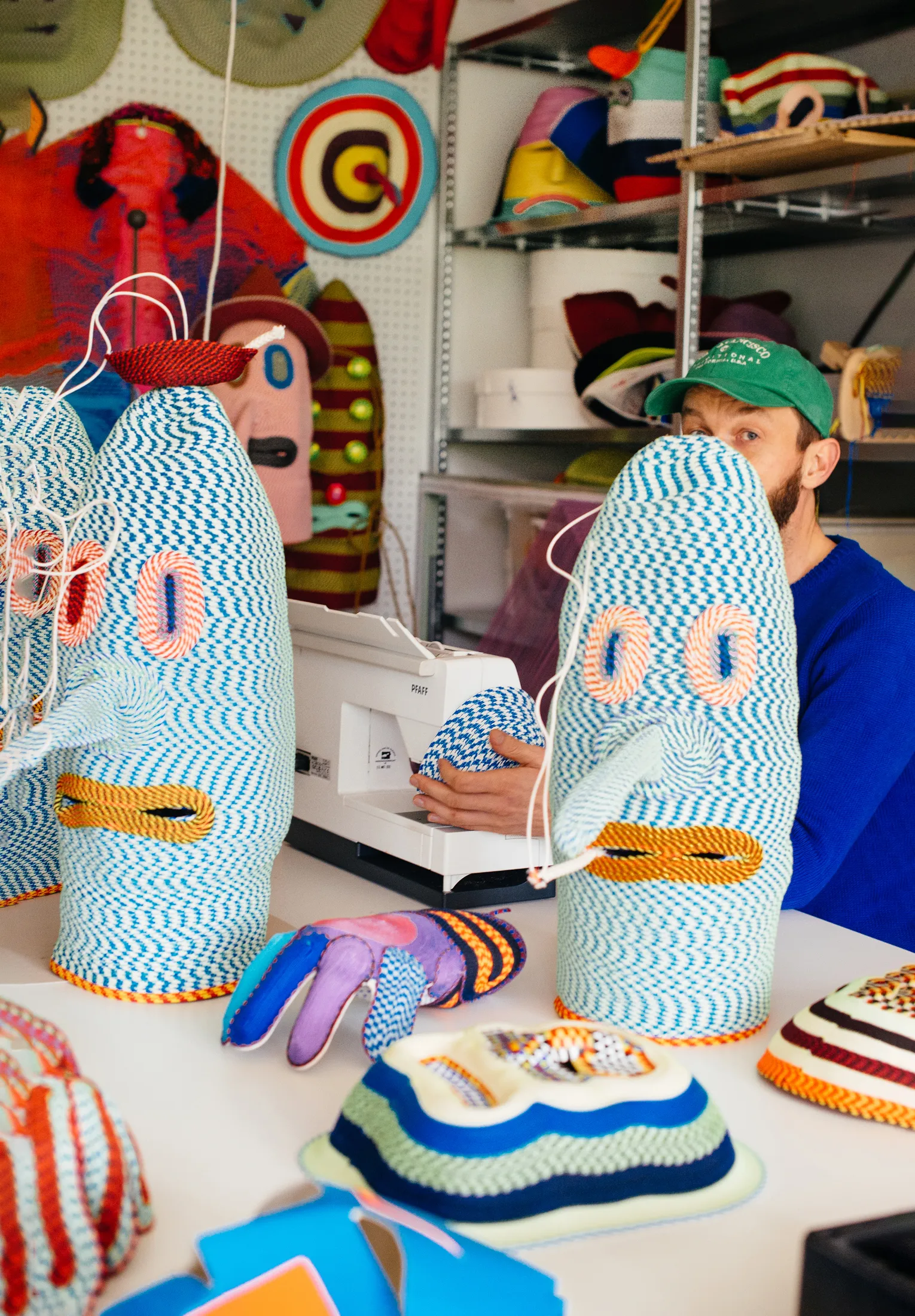
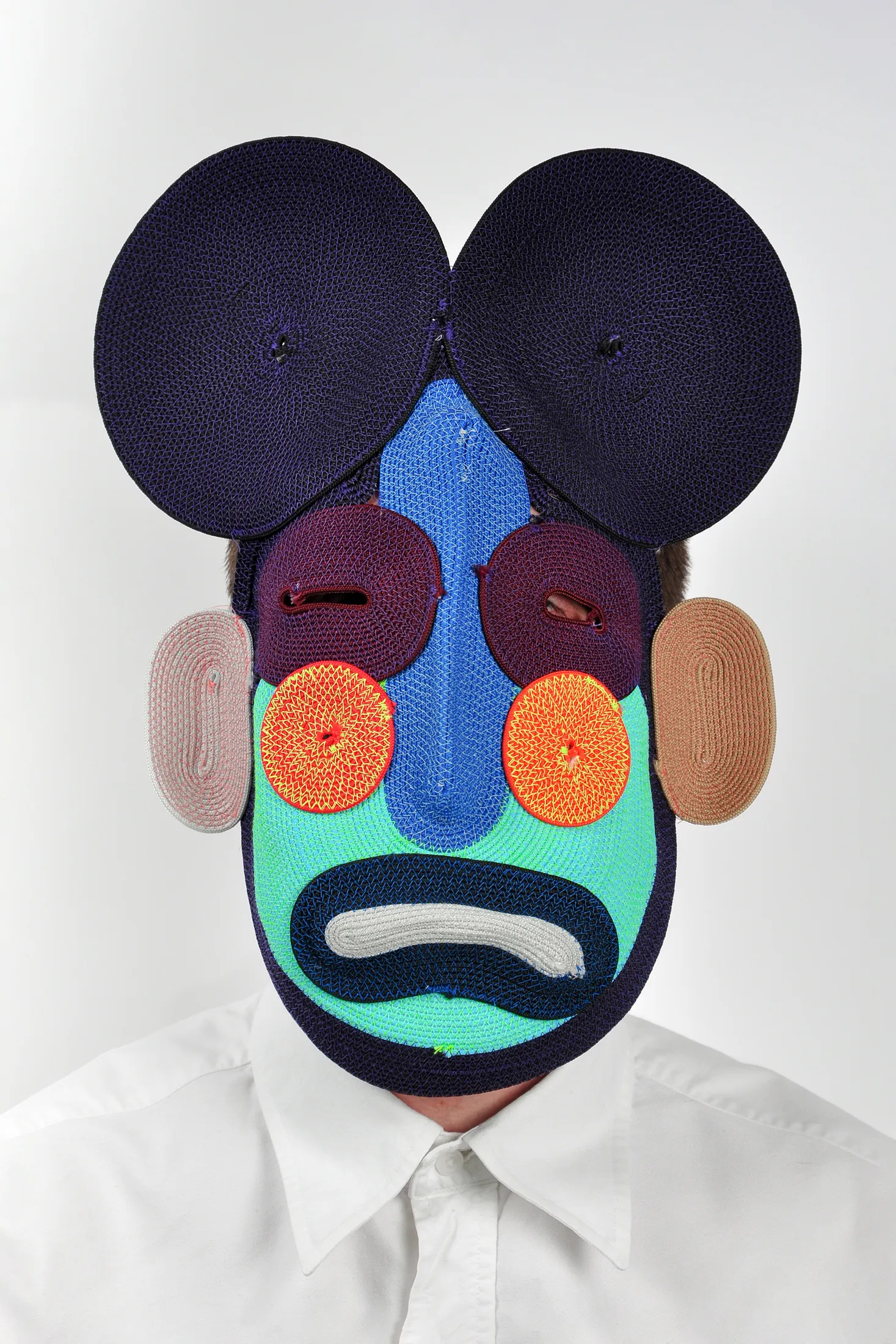
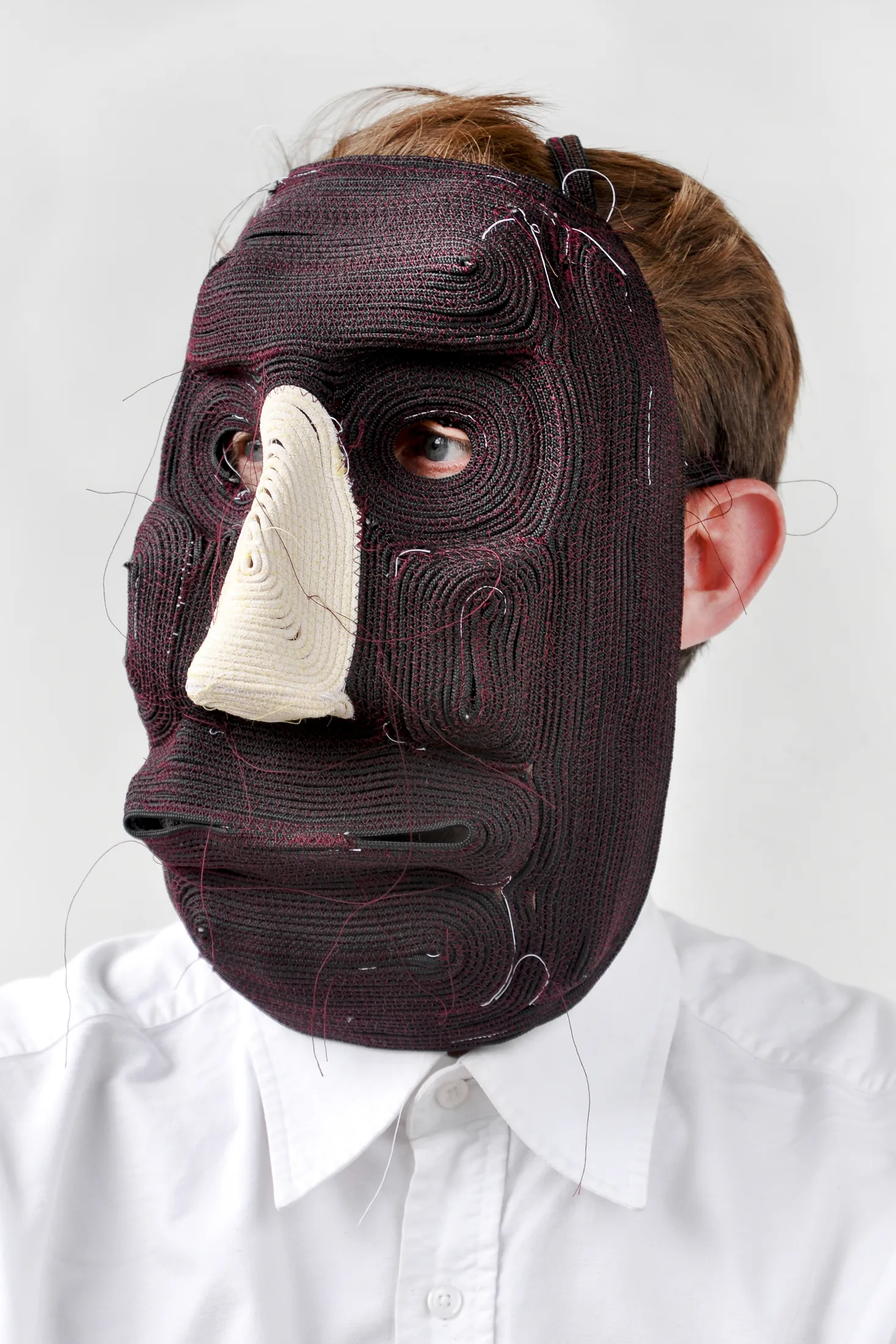
Here’s a happy blue face with squinting eyes, a bent clown smile, rosy cheeks and big pink ears … Here’s a pensive face with a furrowed brow, long chin and head, made out of a charcoal brown cord juxtaposed against a white ivory nose … Here’s a sad face featuring bright and dark colors, frowning through turquoise cheeks with symmetrical eyes, Mickey Mouse ears, and orange citrus tears.

“The possibilities are endless. I’m meeting new faces every day.”

Pot’s mask project is always ongoing, leading to different iterations and forms. In 2010, two masks featured more tubular builds, elongating the human head. If we were to position a model for Pot’s masks, the model’s eyes would look out of the mouth of the tall form. This expression of Pot’s masks resurfaces in his 2020, 2021 and 2022 editions. Here, the eyes blend with the bridge of the nose. Neon colored rope ripples out from this viewpoint, clashing into the horizontal stripes of alternative colours to the top of the head. Ears the size of a field mushroom adorn either side, curling inward. Some masks even have detached earlobes with little playing dice attached – a suggestion of an earring.

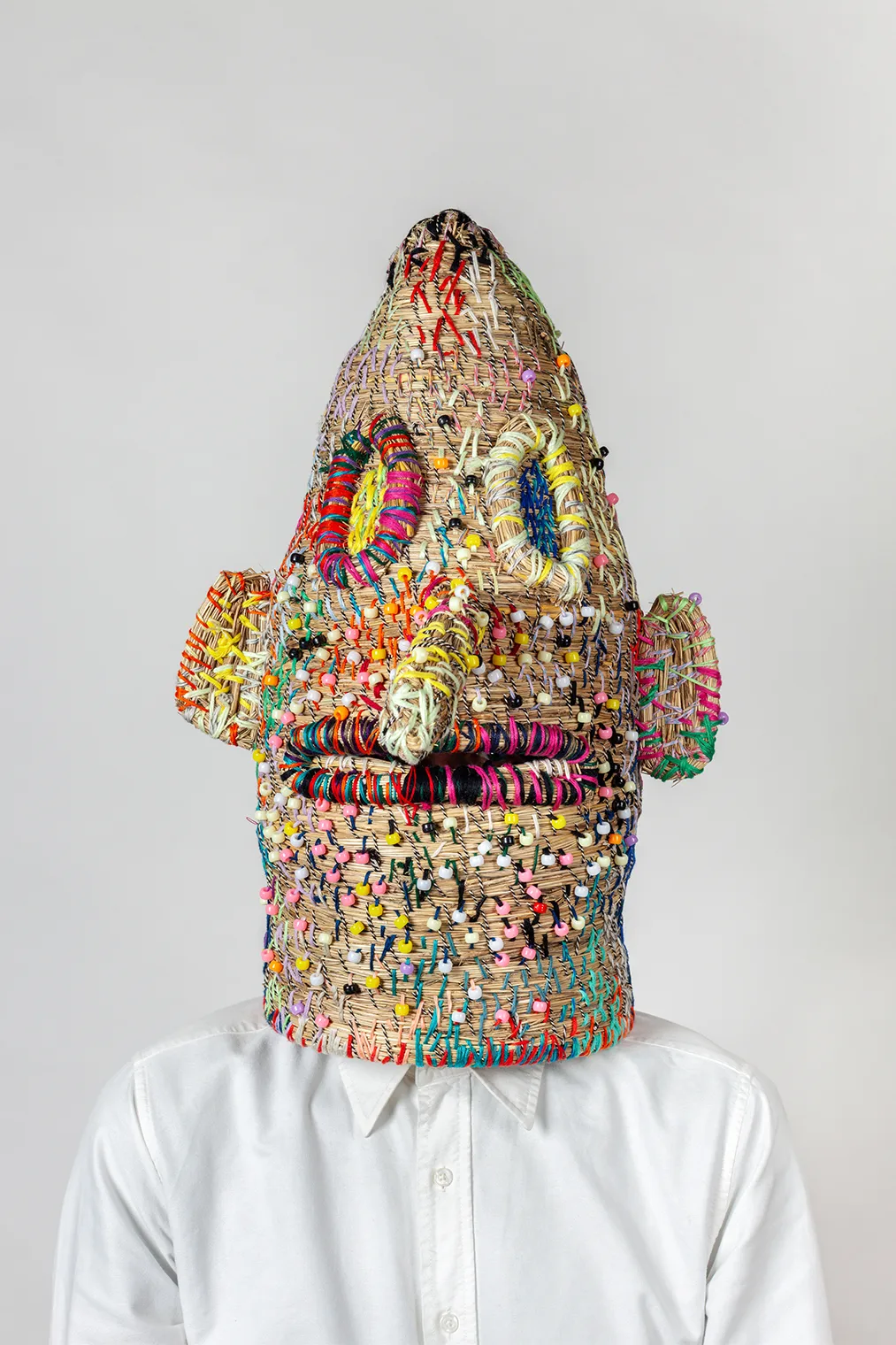
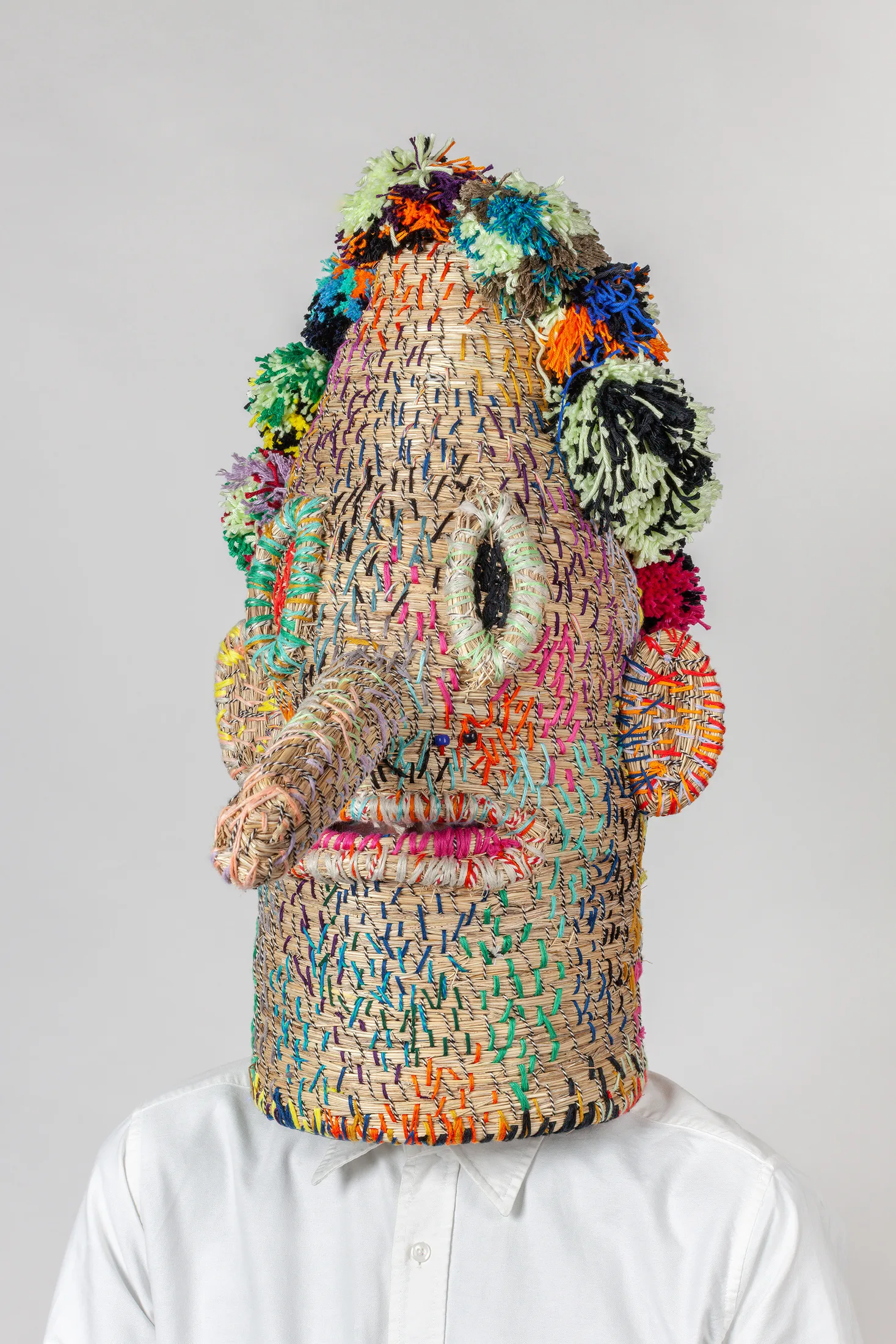
In 2021, Pot broke out of his polypropylene rope and polyester yarn comfort zone and created his own fibre using grass found around his studio. Pot writes: “I really enjoy a good, precisely made hand-coiled basket, but when I have to make it myself, I know I get very impatient if the process is too slow and repetitive. So, I allowed myself to be very sloppy and fast, which resulted in these characters. There are only a few of them yet, because I am restricted by the harvesting season (winter), and they also take a lot longer to make than their synthetic rope cousins.” The grass is first dried to a crisp tan before it is coiled and connected by Pot’s colourful stitches. From there, the natural fibre masks are adorned with beadwork, a pom-pom hairline, or perhaps a fluffy goatee. In 2022, Pot returned to making masks out of synthetic materials with a new zest for forms, including doilies shaped with citron eyes, angry eyebrows, and glasses with skulls in place of lenses.

While the relationship between the humble basket and Pot’s pieces might not be immediately apparent, the construct of the woven basket is deeply influential and instructive in much of his work. When it comes to a woven basket, its materiality, texture, and functionality directly influence form. A basket with the purpose of holding fresh vegetables must be reinforced for heavy-duty yields. A basket with the purpose of holding grain needs to have more frequent stitching, so no grain leaks out of its vessel. A basket with the purpose of holding spools of thread doesn’t need such strength or repetition in the seams. “I like things where texture becomes a structure that becomes a shape that becomes an object – in the same way that a fibre becomes a thread that is knitted into a sweater,” Pot says. 

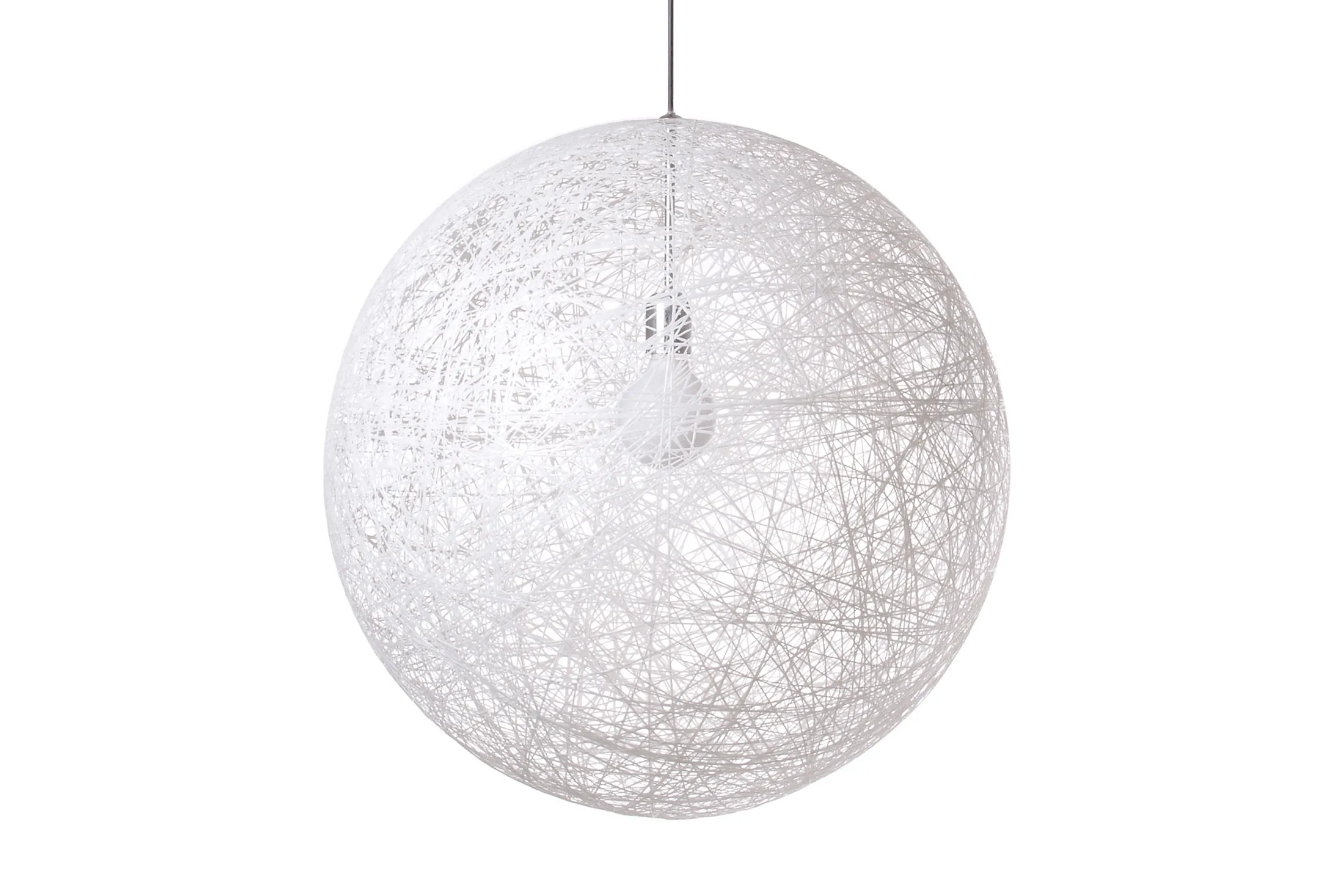
This evolution from texture to structure to shape to object can be seen in Pot’s product design work, not least in his breakout work, The Random Light (2002). Three years of prototyping all started with glass yarn that was soaked in clear resin, then wrapped around inflated balloons. Once it had hardened (and the balloons were removed), a sphere of clear, random coils remained, ready to cocoon a lightbulb. Lit up and suspended from a ceiling, The Random Light invokes a nebulous effect, drawing any viewer into its orbit. The prototype design was later picked up and manufactured by Dutch interior design brand Moooi, where it went ‘mainstream’, gracing galleries and high ceilings from Europe to New York and beyond.

In 2016, Pot was invited to design objects for the NIKE exhibition ‘The Nature Of Motion’ at Milan Design Week. He came up with the idea of Resting pods, an organic shape with netting on the inside to promote comfort and relaxation for visitors. “A net seemed to be a very ‘Nike thing’ to rest on because of its lightweight structure and minimal material,” Pot writes. While prototyping, he began weaving ropes and laces around inner tubes and he used hand-weaving basket principles like coiling and triaxial weaving to push the boundary of fibre placement within the lightweight constructions.

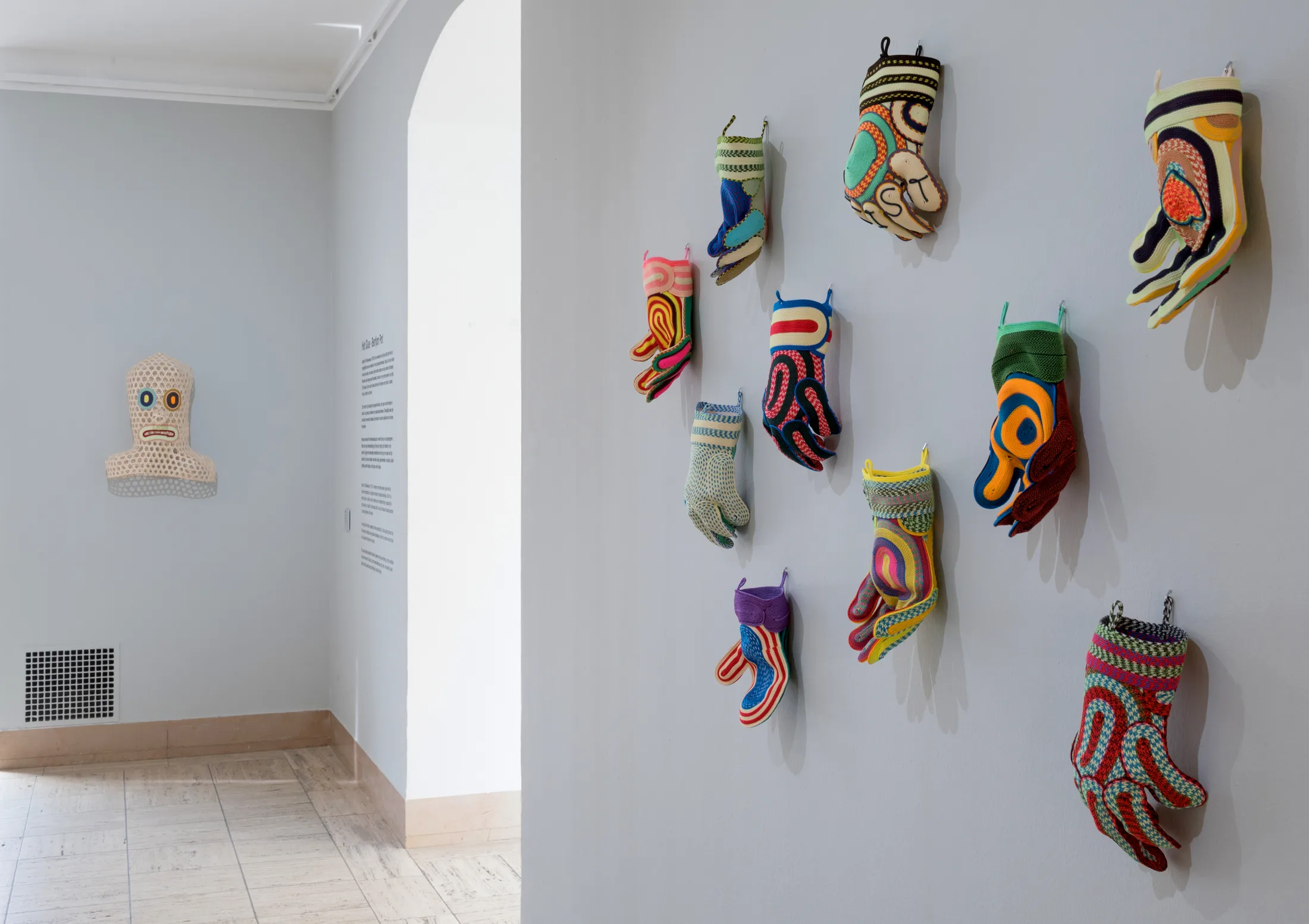
While Pot discovered his sense of play with masks, there were also gloves, which he admitted he had to take a break from. There’s a steep learning curve starting with a mask and moving to a glove. While the primary function of a mask is to conceal the one plane of the face, a glove has five fingers, a top and a bottom, and five sides-to-sides, including the webbing of your hand. Gloves are a lot more work. For Pot’s reimagining, neon colour and bright patterns mimic the topographical planes of a heat map. All right-handed, one glove sports a bright pink node on the centre of the back of the hand, breaking into other plains of chocolate brown, and then a cool mint. The fingers mimic the same pattern with neon stitching holding the form together. Stripes of ivory white and candy pink alternate, making the cuff of the glove. “I see the gloves as masks for your hand. Most of the time, they will probably be in their box or hanging from a nail in the wall. But if you feel like it you can take it down and wear it and see what you want to do with it. Wave? Make a fist? Hit someone?” Along the wall of ‘the mask room’ within Pot’s studio, single gloves hang on the wall provocatively: splayed out, balled up or ready to jump like Thing from The Addams Family

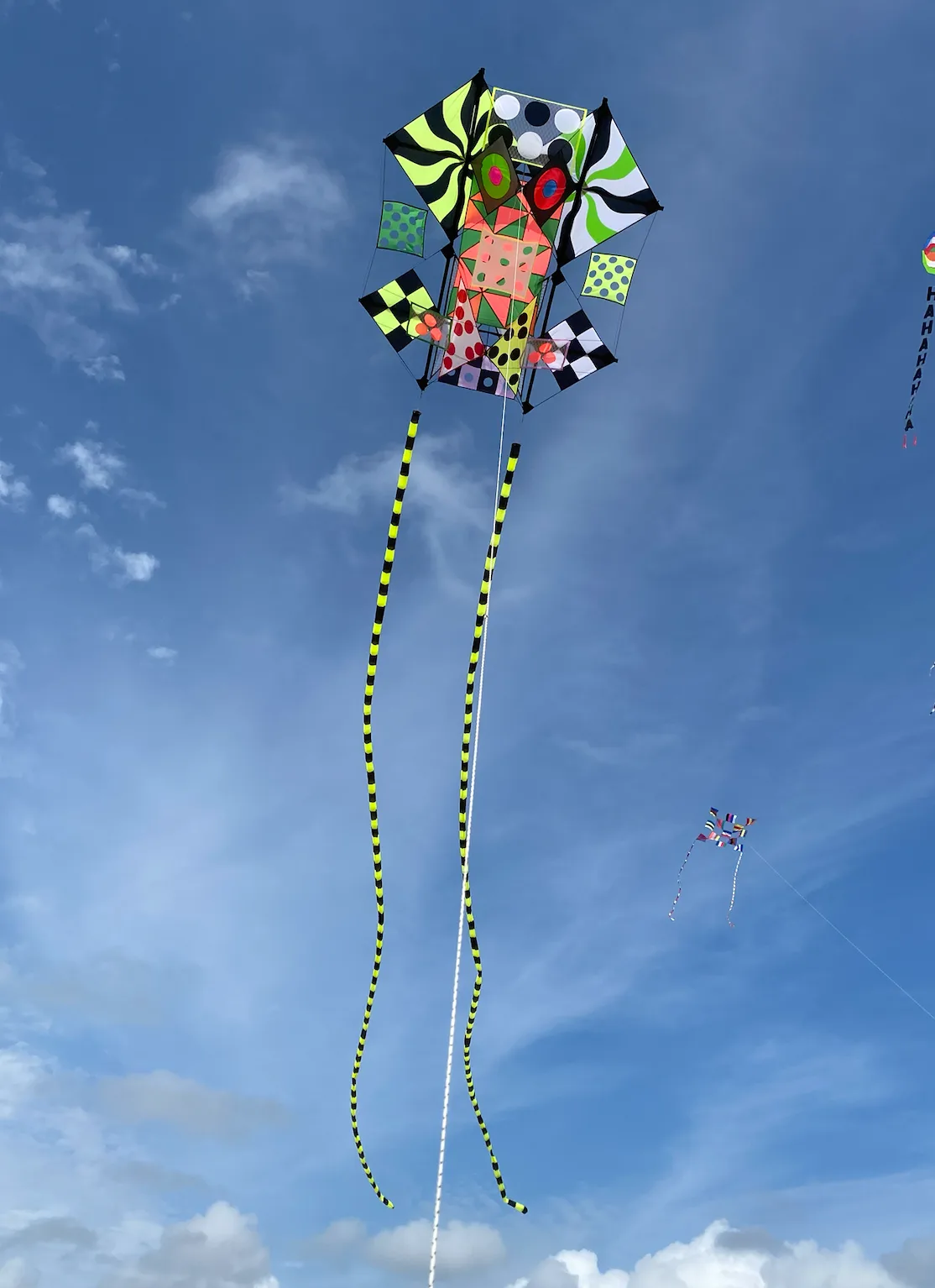
Pot’s current fascination lies with another object, though, made uncommon by Pot’s brilliant application of texture and colour. The humble kite embodies every one of Pot’s interests. “They are a construction, lightweight, textile, decorative,” Pot says. “Sometimes a protest and sometimes a performance.” In their book titled One Single Kite, Pot, along with co-authors Maurice Scheltens and Liesbeth Abbenes, showcase the intense intricacy needed in making one of these structures. The book documents, step by step, the process of making your own quality kite while also displaying the long history of kites coming from Asia. One of Pot’s kites, titled deconstructed plex-box, reinvites a traditional kite shape, adding additional panels sitting like a square and others tilted like a diamond. Some panels sport polka dots, others have checkers and swirls, and, while in the sky, it darts like a massive fish underwater, leaving two long tails whipping in its wake. Along with artists Scheltens and Abbenes, Pot is working on creating a Kite-Club presentation at the Museum Voorlinden in Wassenaar, Netherlands, where anyone can partake in flying kites and kite making.

From baskets to kites, Pot’s often finds inspiration in artists that straddle the intersection of craft and fine art. The outsider art, the folk art – the art brut, as some call it in certain circles – are what interest him. “It always seems so much more ‘from the heart straight to the hands’ and not too much [the] ‘head’,” Pot says.

It is this passion and pull towards the handmade, and thereby engagement with the micro details of his craft, that enriches the larger picture. Just as a topographical map tells us the surrounding area’s elevation, Pot’s approach to colour collision creates planes within planes that accent exciting forms, which he seeks to redefine. Pot’s work is a masterclass in micro details adding up to a sum or in his words, “product”, rendered unforgettable by his touch. The zigzag stitching from his sewing machine brings the rope cord closer together. You can see the repetition of the stitch wrapping around the cord, pulling it ever so slightly to make it stronger and durable. The juxtaposing of colour from the stitch to the rope cord creates a buzzing around the eyes, whether it’s neon thread on neon rope or simply black thread on white rope. These little details pull the viewer in and greet them with something new and unexpected in otherwise familiar objects and forms. In an interview with Dezeen in 2022, Pot said “I love it when my hands surprise my head.” It is this very sense of surprise experienced in the making that Pot gifts his audience to experience too – along with all he has explored, discovered and subverted along the way. 

-

As featured in Issue 5 of our magazine!

Purchase a copy of Issue 5 https://www.nts-store.com

Subscribe to our NTS Sub Club https://www.nevertoosmall.com/magazine

Writing:
Writing:
Harrison Cook
Photography:
Photography:
Back to Top
Arrow UpArrow Up
Top
Arrow UpArrow Up
The After shot of the Floorplan
Before
before
after
After
Businesses featured in this project
No items found.
Products featured in this project
No items found.
Magazine Current IssueMagazine Current Issue
Writing:
Writing:
Harrison Cook
Photography:
Photography:
Back to Top
Arrow UpArrow Up