Magazine Current IssueMagazine Current Issue
24 (delirious) Hours in Athens with Point Supreme
From our Mag
February 4, 2026

24 (delirious) Hours in Athens with Point Supreme

Point Supreme’s Marianna Rentzou and Konstantinos Pantazis find romance in the less celebrated corners of Athens. The city’s typical residential buildings – its polykatoikies – sprung up haphazardly between the 1950-19803, usually without an architect’s influence and they were universally scorned by architects and Athenians alike. Nobody considered them beautiful or remarkable. That is, until Point Supreme moved into town.

Jana Perković spends a day in Athens immersed in the dream-like logic and intoxicating “greekness” that defines the one-of-a-kind homes designed by Point Supreme.

Jana Perković
Writing:
Writing:
Jana Perković
Photography:
Photography:
Magazine Current IssueMagazine Current Issue
The After shot of the Floorplan
Before
before
after
After
Top
Arrow UpArrow Up

We all know Athens, or rather think we know it: Acropolis, Parthenon, ancient ruins, maybe a cypress in between. So it’s fair to say I'm startled when the airport taxi takes me on a giant freeway, into a city that looks, of all the places I know, mostly like Bangkok. The concrete is relentless: underpasses, overpasses, flat roofs, apartment buildings at every angle to one another. A sea of grey, in every direction, to the horizon.

“Excuse me, how big is Athens?” I ask the taxi driver.

“Five million,” he says, as if it were nothing.

“And how many people live in Greece?” I ask, uncertainly.

“Eleven million,” he nods. I gasp. Half of the country is crammed into this concrete monster-city we're heading into, clearly not the quiet seaside town of my expectations.

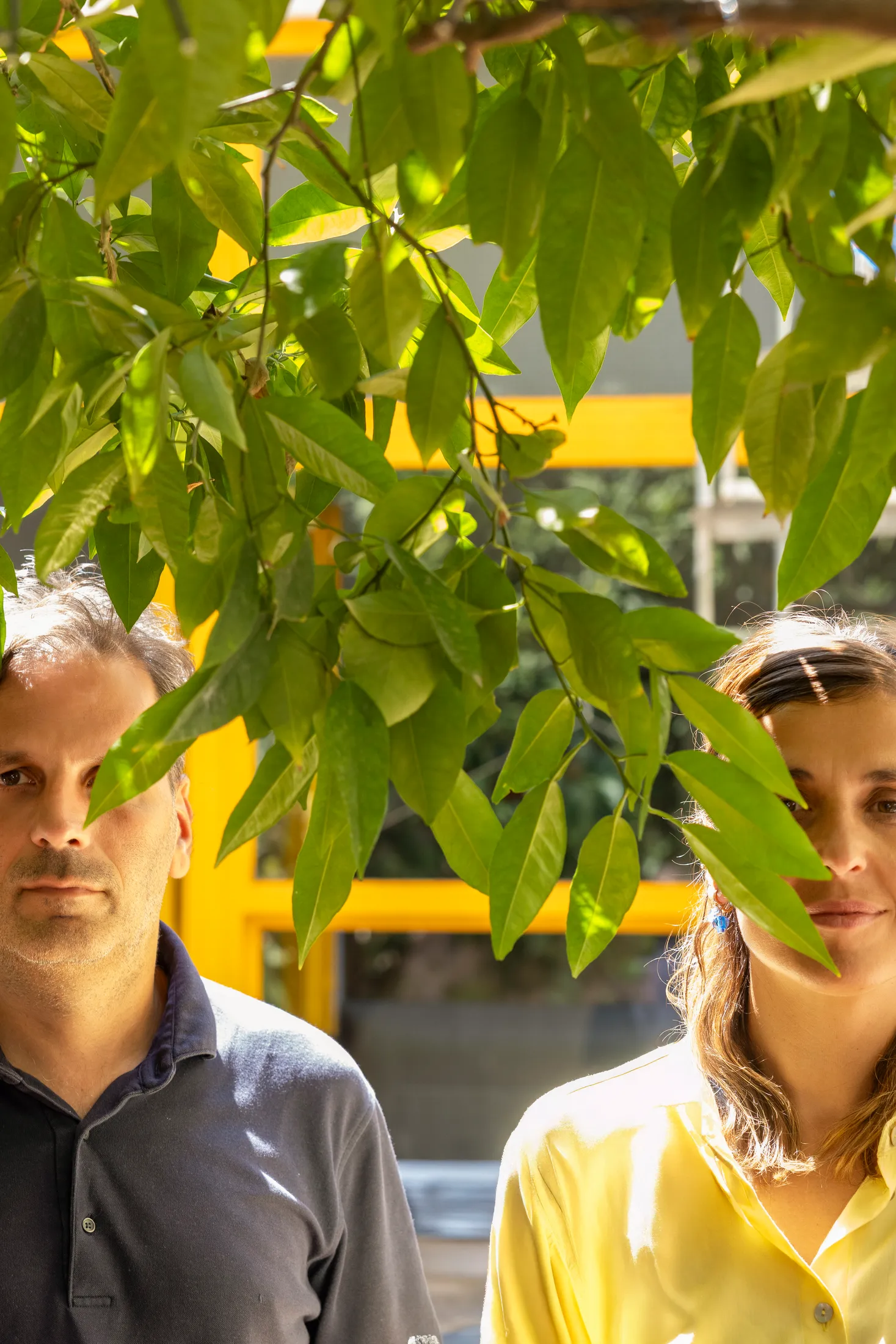
These expectations, I soon find out, are exactly what animates the work of Marianna Rentzou and Konstantinos Pantazis: architects, researchers and university professors, better known as Point Supreme.

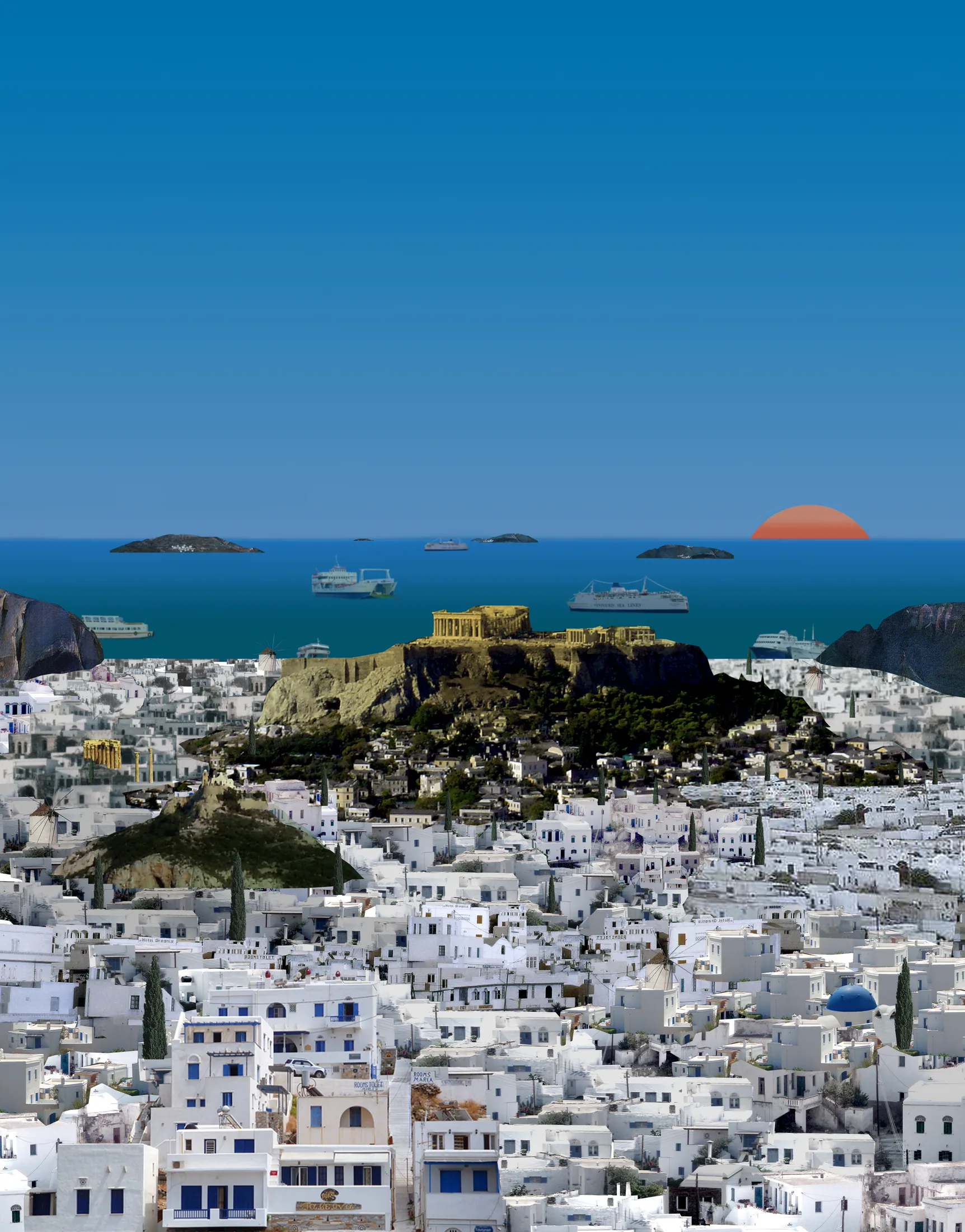
In 2017, at Columbia University in New York, Point Supreme opened their lecture with a collage of postcards of Athens. Acropolis, Parthenon, vases, sculptures, an illuminated cypress hill. You would be forgiven for thinking there isn't a single modern building in all of Greece.

“You don't see the city at all in popular communication,” Pantazis said to the American students. “Never what Athens really is, this thing in-between ancient remains.” They zoom out to show “a formless lava” of a megalopolis shaped only by the topography – hills on three sides of the city, the sea on the fourth. “Every typical neighbourhood of Athens is continuous urbanisation made up of the same module, always.” The module: a five or six-storey apartment building, with top floors set back to let the sun reach the street. This type of building is called a polykatoikia, literally 'multiresidence'. “This is what Athens is actually made of.”

Ancient Athens, the city of our history books, largely declined with the rise of Christianity in the early centuries CE, and was later subsumed into the Ottoman Empire (modern Turkey). By the time Greece became independent again, in 1821, Athens was a village of 400 houses scattered around the Acropolis hill, and was made capital largely for sentimental reasons. Only after WWII did the city rapidly grow, on the influx of refugees. All polykatoikies were originally single-family houses. “There was no money, so an interesting bottom-up process was devised. The owners of little plots would give land to the builder, and in exchange for building an apartment building, they would give some apartments, or whole floors, to the owner,” Pantazis tells me. “It bypassed the need for cash, but it also bypassed any masterplanning procedure or large-scale developments, so there are none in Athens.” Built haphazardly, usually without an architect, to a simple template, polykatoikies were universally scorned by architects and Athenians alike. Nobody considered them beautiful or remarkable. That is, until Point Supreme moved into town.

“We take reality very seriously,” Pantazis told Columbia students in 2017. “The point [of our work] is not to propose new cities, but to take the existing reality and try to see it differently.”

--

Konstatinos Pantazis grew up in the small coastal city of Patras. “I didn't have a clue what architecture was. I wanted to be a painter. My mother was a painter, and my father had a fabric shop. I grew up looking at fabrics and colours.” He entered architecture school for a girl. Rentzou’s story is even more unlikely: a brilliant student from a small village, she studied computer science and chemical engineering before switching to architecture. The two started dating at uni – they've now been a couple for almost 30 years.

“Most of our classmates were sons of architects. They all grew up knowing Mies van der Rohe, copying the same designs.” Not being from Athens, not having family connections in the architectural world, Pantazis said, probably worked in their favour. They approached Athens, and architectural dogmas, with a free spirit.

They are critical of the education they received. It was a lot of Modernism, they say: strict rules on how things should look, how they should be built. Scorn heaped at decoration. “I remember the first house I designed for university: a modern box, gigantic and concrete, with three dots of colour,” Pantazis shakes his head. What was missing is what Rentzou and Pantazis call ‘Greekness’: the ordinary, everyday aesthetic they grew up with. “In seven years of architecture school, colour was not mentioned to us even once.”

After graduation, they went straight abroad, hungrily looking for better ideas. “We had a really honest and deep fascination with foreign cultures,” says Pantazis. It was the time of the Super Dutch, a strong postmodern, conceptual movement spearheaded by Rem Koolhaas, who was writing books about the scary and joyous chaos of Coney Island, of Berlin behind the Wall, of places that grew without a plan (Koolhaas has since studied places like server farms and the industrialised countryside). “We were alarmed and curious.” But they were also interested in the humane, small-scale Scandinavian interiors, in Japan's ability to bind tradition and the future, in Brazilians’ houses that opened up to nature. “This kind of thinking kept opening doors and windows. We would discover, not one, but 20, 50 architects. It was all linked by our desire to bring different things together,” says Pantazis. “I think that instinctively, we felt there was no one architecture. We could never make a building that was modern, or postmodern, or minimal, or maximal. We were trying to understand what pieces worked for us, and why.”

They both studied and worked for a string of prestigious institutions, in Tokyo, Rotterdam, London, Brussels, never once working together. “Konstantinos had specific rules,” Rentzou laughs. “He said: we will get different experiences. I am going to Rotterdam, you are not coming with me. Because I was so much in love, I said OK.” Both ended up working with the Super Dutch protagonists, MVRDV and Rem Koolhaas’s OMA, which Rentzou in particular found very inspiring. She worked directly with Rem Koolhaas. Having always believed herself to be more mathematical than creative, at OMA she learnt to use rational problem-solving to create designs. “It helped me trust myself.“

That these two people from the Greek countryside – not a place known for cutting-edge architectural thinking – would rise to the top of global architectural practice, is remarkable. That they would then decide to return to Greece and build their practice there – in 2008, at the start of the financial crisis that devastated the Greek economy, politics, and society – is extraordinary. But most extraordinary of all is what they did upon return, gave Athens a hard, fresh look, and started reimagining it from scratch. Their work would transform how the city, perhaps even the country, saw itself.

--

“Until very recently, we thought we were very unlucky to have started the office in the crisis. We didn't have connections, or much work in the early years. So we started to do self-initiated projects – projects for the city nobody was asking for.”

Rentzou and Pantazis were struck by the gap between actual Athens and its tourist image. Real Athens seemed invisible even to its inhabitants. But they liked this real Athens, appreciated its wide blue skies, the mountains framing the city, the long vistas from rooftop terraces and deep balconies where ordinary life took place most of the year. They produced their own line of tourist memorabilia that celebrated ordinary Athenian neighbourhoods: tea towels, mugs, T-shirts. They produced a souvenir miniature replica of a polykatoikia in fine marble. They wrote to LEGO with a proposal to create a polykatoikia set (they never heard back). Referencing Hokusai’s 100 Views of Mount Fuji, they commissioned 100 Views of Acropolis: photographic vistas of the Parthenon as seen from rooftop loungers, suburban tennis courts, balconies, parking lots.
They started producing simple, striking visions of Athens’ possible, radical transformations. What if a large leafy promenade was cut through the city, connecting Athens to the beach? What if every hill got its own tourist attraction? What if the parking lots were turned into parks or swimming pools? What if all the rooftops were connected with a public transport network? Reflecting back on this period, Pantazis says: “We tried to address the citizens, not the architects. We brought in imagination, clarity and, I think, identity. These were totally missing at the time. Athens was just the city we had all inherited – there was no contemporary imagination for what it could be.” Each one of their audacious graphics was reprinted across newspapers and magazines, sparking fierce debates. In 2012, popular newspaper LIFO named them one of the 20 most influential people in Greece.

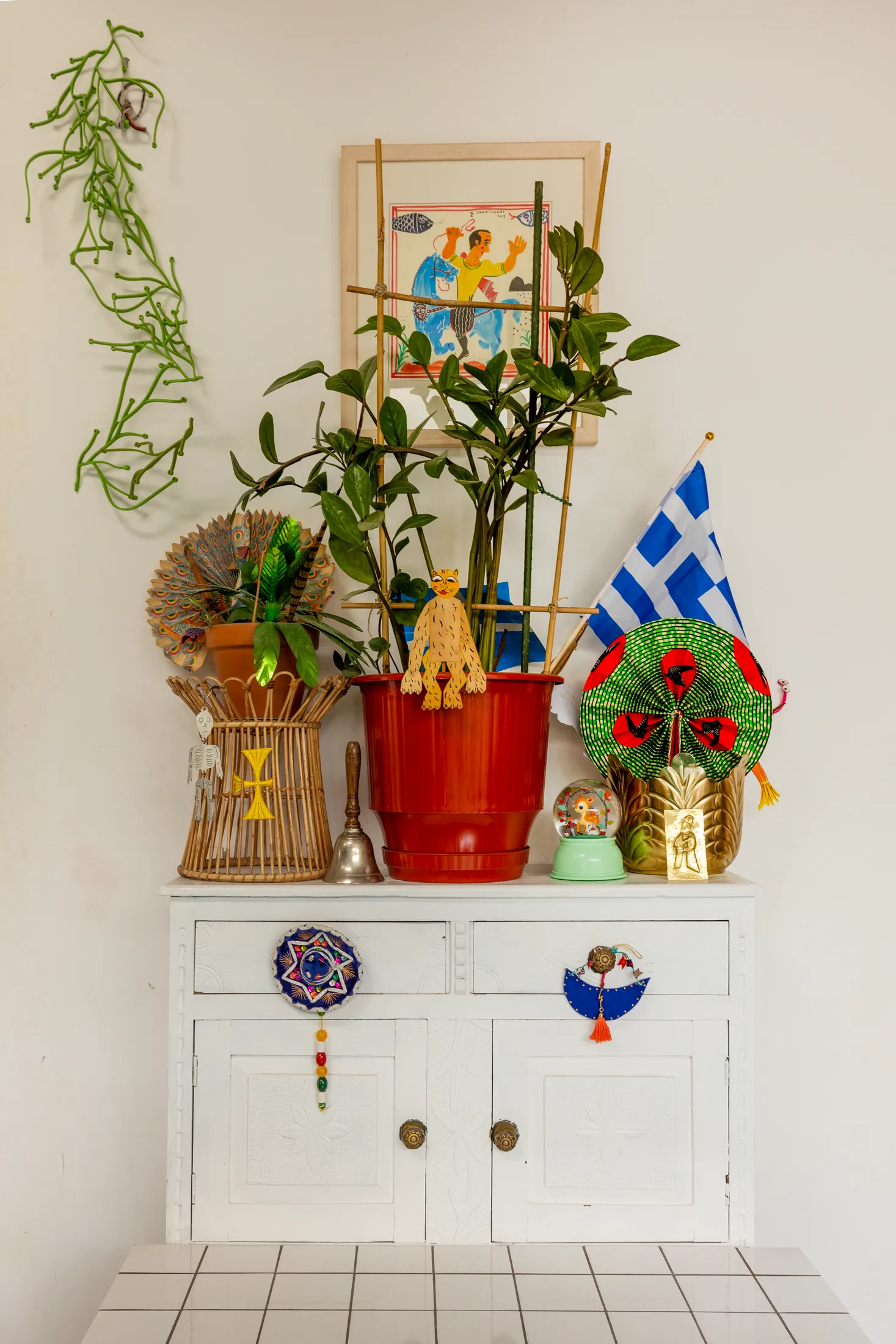
But meanwhile, Rentzou and Pantazis were busy building a family – and their own home. With their penchant for noticing the hidden, they discovered Petralona, a small residential neighbourhood bordering Acropolis, invisible to tourism. They bought a derelict little house and added two stories to it, building – in a typical Mediterranean style – gradually, with the whole family participating. Their son Ikaros grew up on the construction site, tiny tools in hand. They fitted the house with travel pieces and junkyard finds: “We didn't have a budget.”

Once finished, Petralona House became the ultimate showcase of Point Supreme's aesthetic, a kind of a case study. Work followed.

--

The name, Point Supreme, comes from the French surrealist poet André Breton, and describes the dream-like logic in which opposites come together. “We also wanted to call ourselves Minotaur,” Pantazis tells me. “The initial idea was that everyone in the office would have their own logo, each a different hybrid animal. We gave up soon because we just didn't have the time to make a logo each time somebody new joined.”

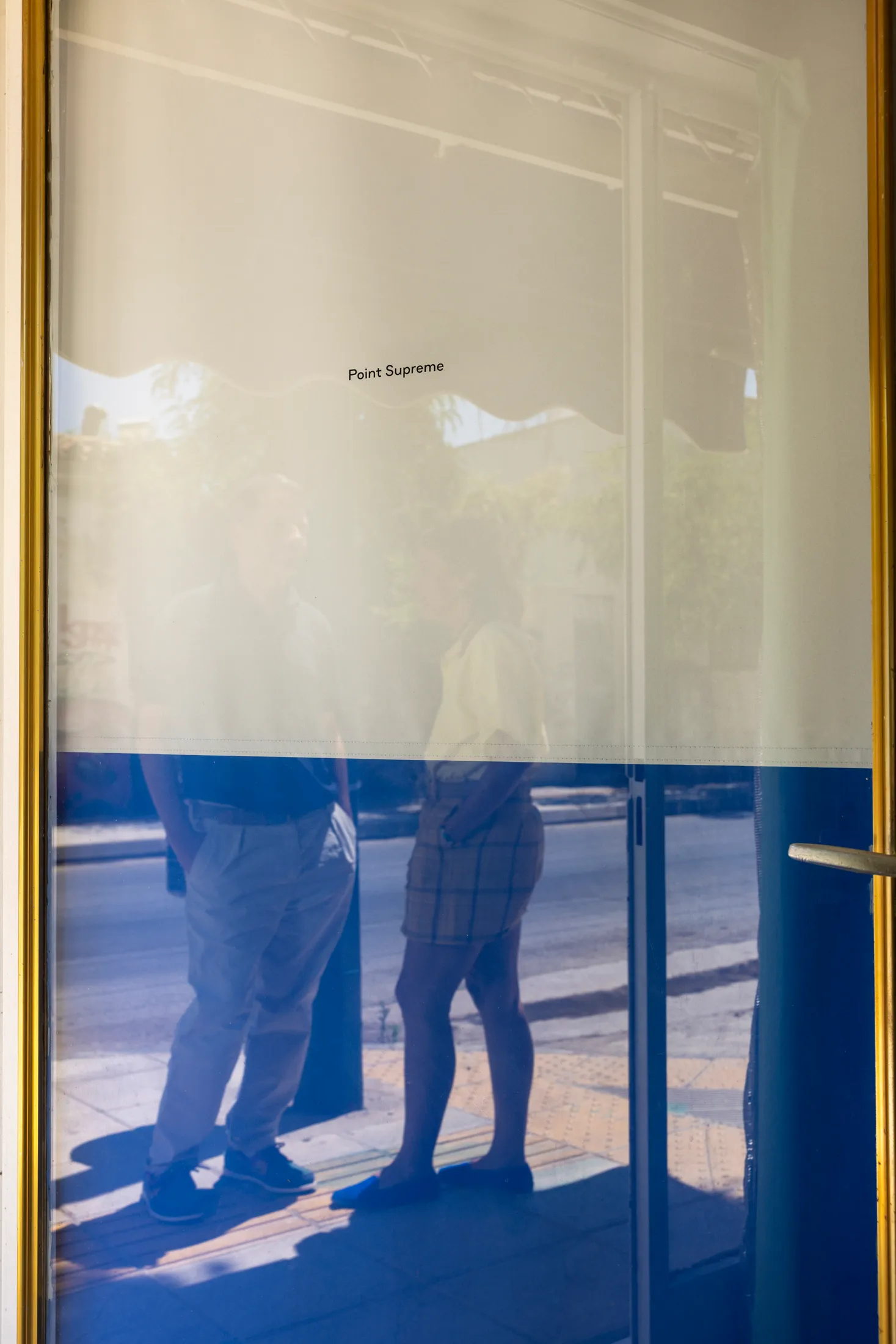
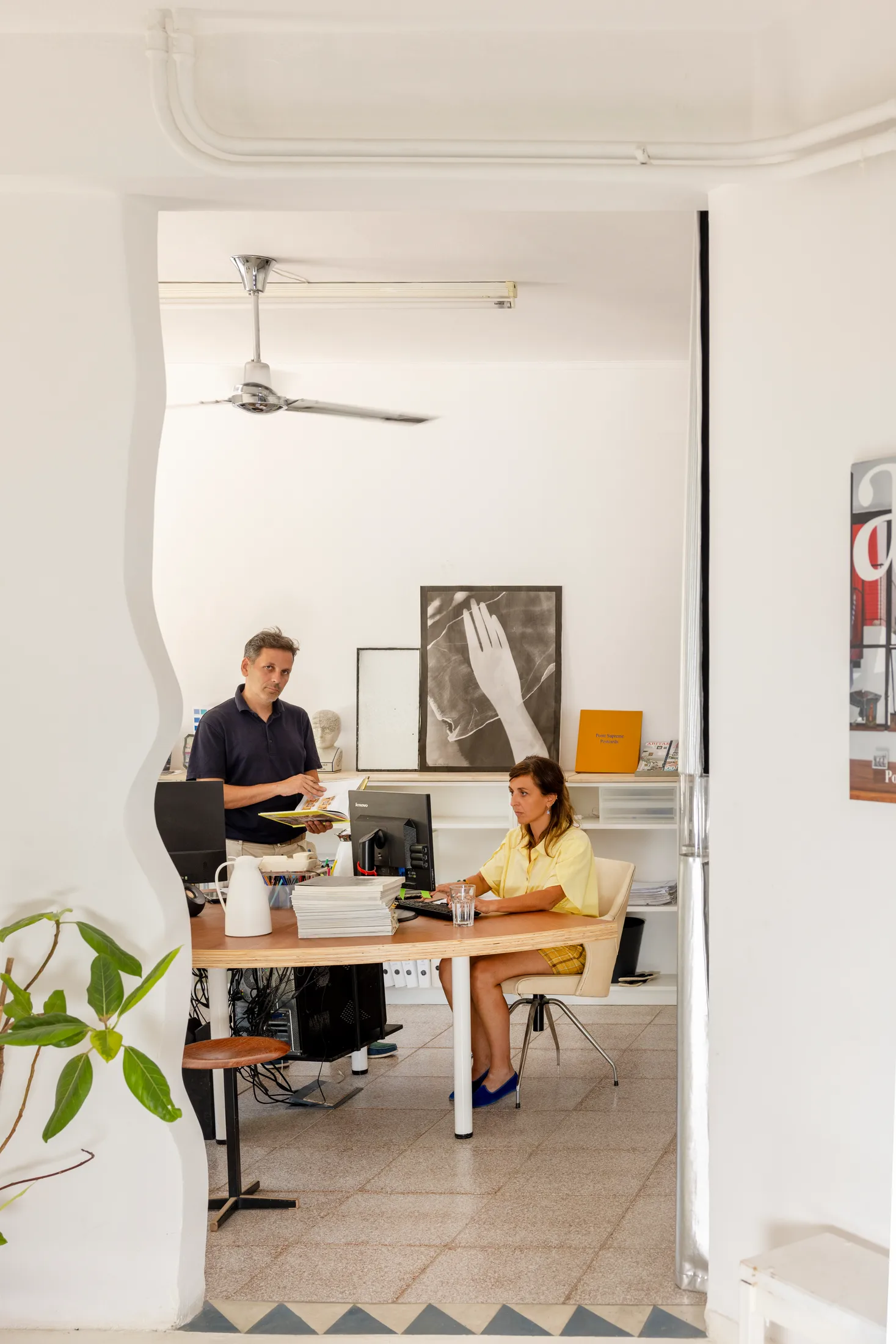
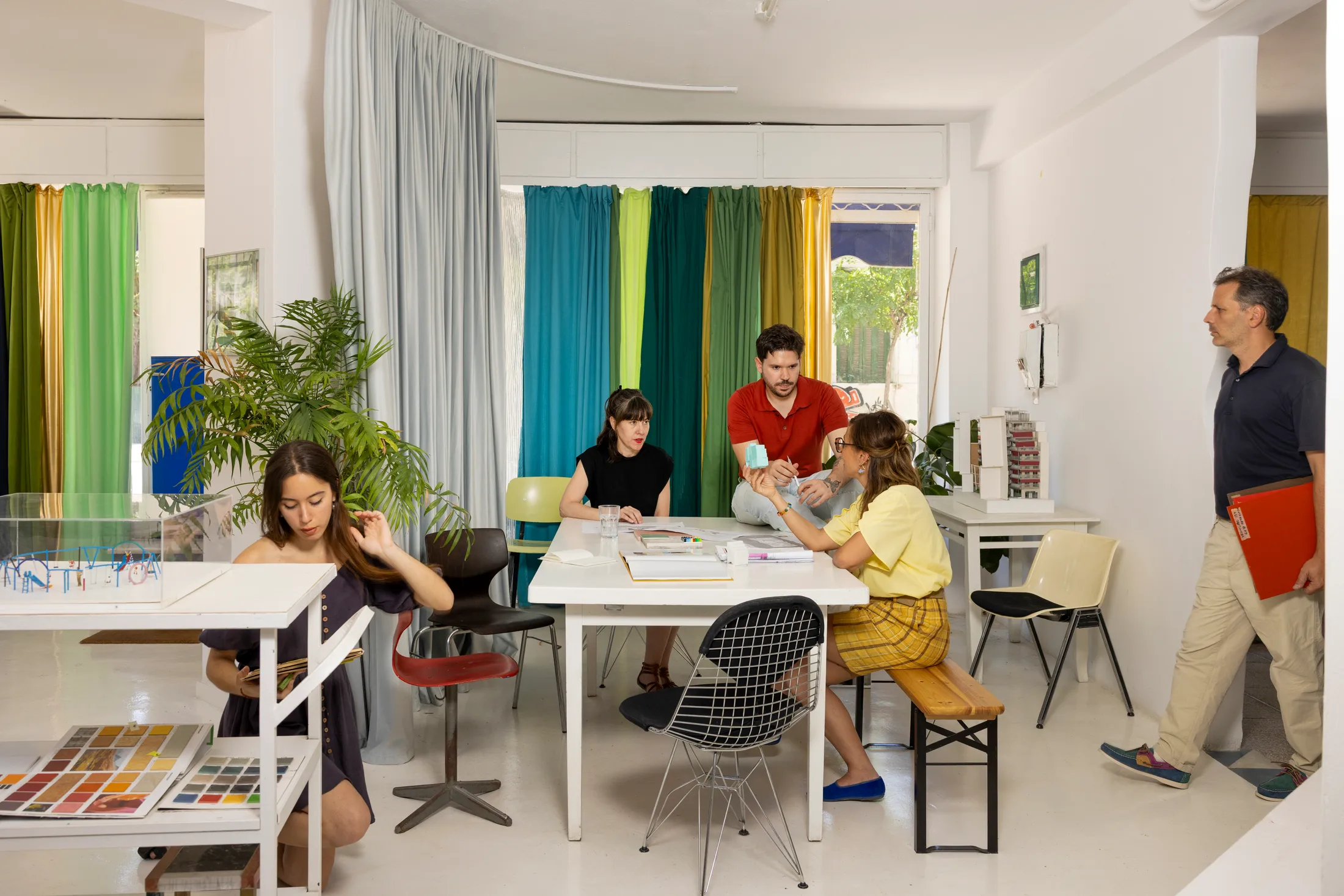
Their office sign is so small that it’s practically invisible unless you're standing right in front of the door: like a lot of their work, this feels like a very well-crafted joke. Inside, a small, very white, very asymmetrical space is divided by curtains of various fabrics and colours. A vast assortment of second-hand designer chairs, mostly street and market finds from the Netherlands (“We brought back two trucks of stuff”) makes up the seating. Printouts stuck to the walls range from completed projects and project management charts to Tintin, The Smurfs, Mondrian and fashion ads. It would seem chaotic if the space weren't so white; instead, it just looks like an independent gallery in suburban Tokyo.

In person, Rentzou and Pantazis are delightful, warm, and very contrasting. While in public appearances Rentzou appears shy and careful, in person she is magnetic, with a radiant energy. Pantazis is much quieter, and speaks in a gentle, thoughtful way, giving off the impression of someone who likes to follow a thought until it’s sharpened to precision. He would, and probably does, make an excellent teacher. I am not surprised when Rentzou opts to stay in the office and hands over most of our conversation to Pantazis. I am also not surprised when she makes sure we leave in a taxi. “I'm not allowed to drive through these small streets anymore,” Pantazis admits. Apparently, the last time he drove a share-car, he crashed.

--

“Architecture in Greece today is mostly island villas for the wealthy. Or hotels, commercial developments, tourist-related things to rent,” Pantazis says. “We have been left out of that – maybe because of our lack of contacts,” he adds modestly, “and have been left working on a different kind of project. Low-profile projects.”

But it is these ‘low-profile’ projects that have cemented their reputation. The spaces are typical for the Mediterranean region, where people like, indeed prefer, to live close to family – often in multigenerational, family-owned properties, that can be flexibly apportioned into individual apartments as circumstances change. “The relationship between the household members is the driving force,” Pantazis explains. For example, Nadja (2015) merged two apartments belonging to the same family. With Ilioupoli (2019), a half-basement of a multi-family house had to be converted into an apartment. These off-cut apartments, adapted many times as generations move up and down the floors of a building, form the social glue of the neighbourhood, holding families in place. Rentzou, whose diploma project was on the multigenerational house, vigorously nods: “Even in Petralona House, the playroom was also designed so it can be used by our parents. This is always on our minds.” Spaces like Ilioupoli, she says, “can keep a multigenerational family together.”

“The majority of our clients come to us hoping we might be able to solve a very difficult puzzle,” says Pantazis. “One couple, I remember, said: ‘We have a space that we want to make into a home, but we don't think it’s possible and we don't think you’ll be interested.’” He adds pensively: “One day we should present all the briefs we’ve been asked to do.”

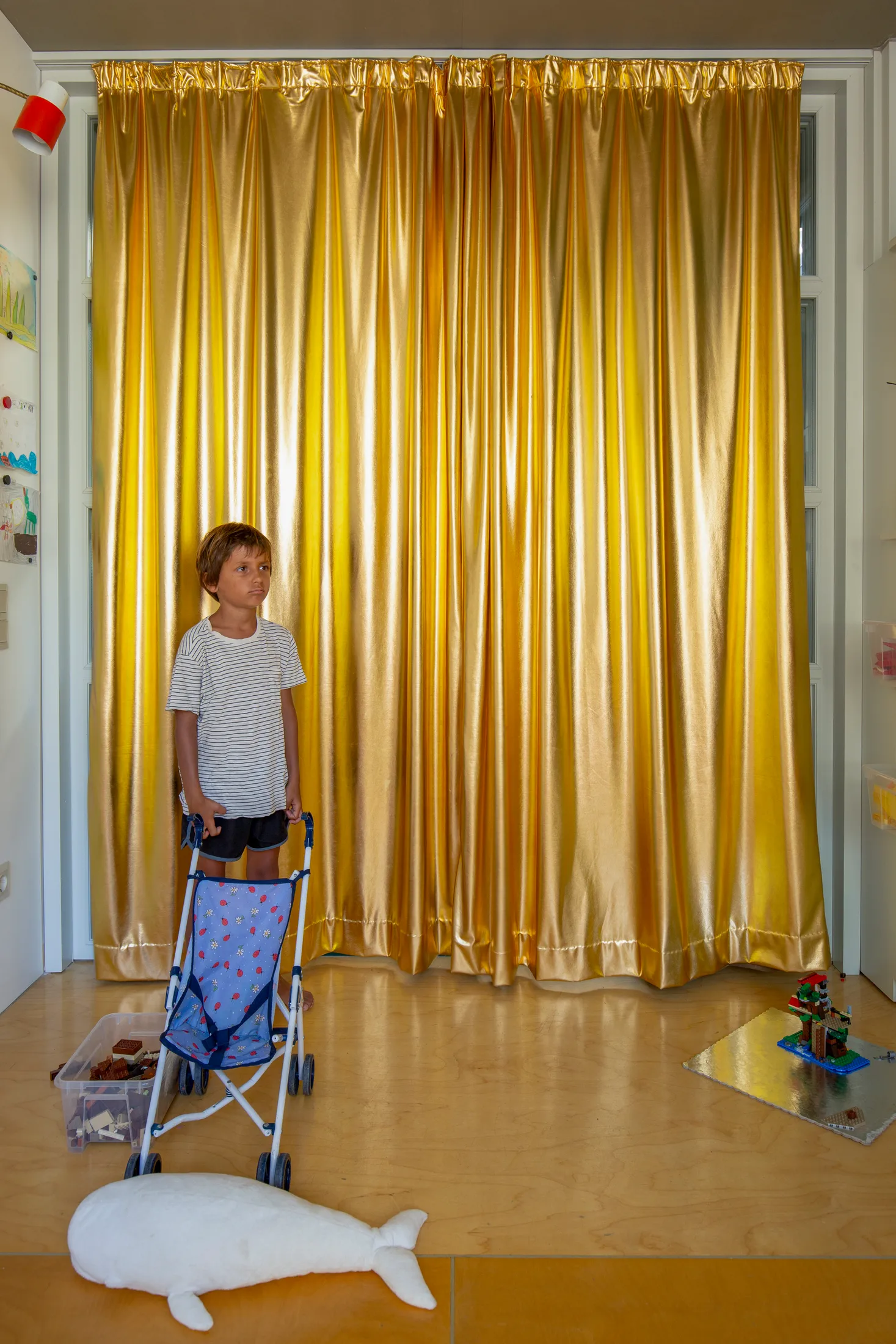
Some of these spaces are so small they can only be photographed by standing on the bed. Ignatiou (2021) – “another difficult one” – is a 21-square-metre top-floor apartment, originally little more than a roofed terrace storage. “The first time Marianna was here, she walked around trying to find the rest of it – she couldn't believe how small it was,” says Pantazis. Three good friends had bought it for pennies as a vacation home and thought they would timeshare. Point Supreme managed to find space to sleep four people at once – but even the space for curtains had to be precisely apportioned. “It was shown on TV twice,” Pantazis tells me, amused, “and then we got maybe 30 emails asking us to make something similar.”

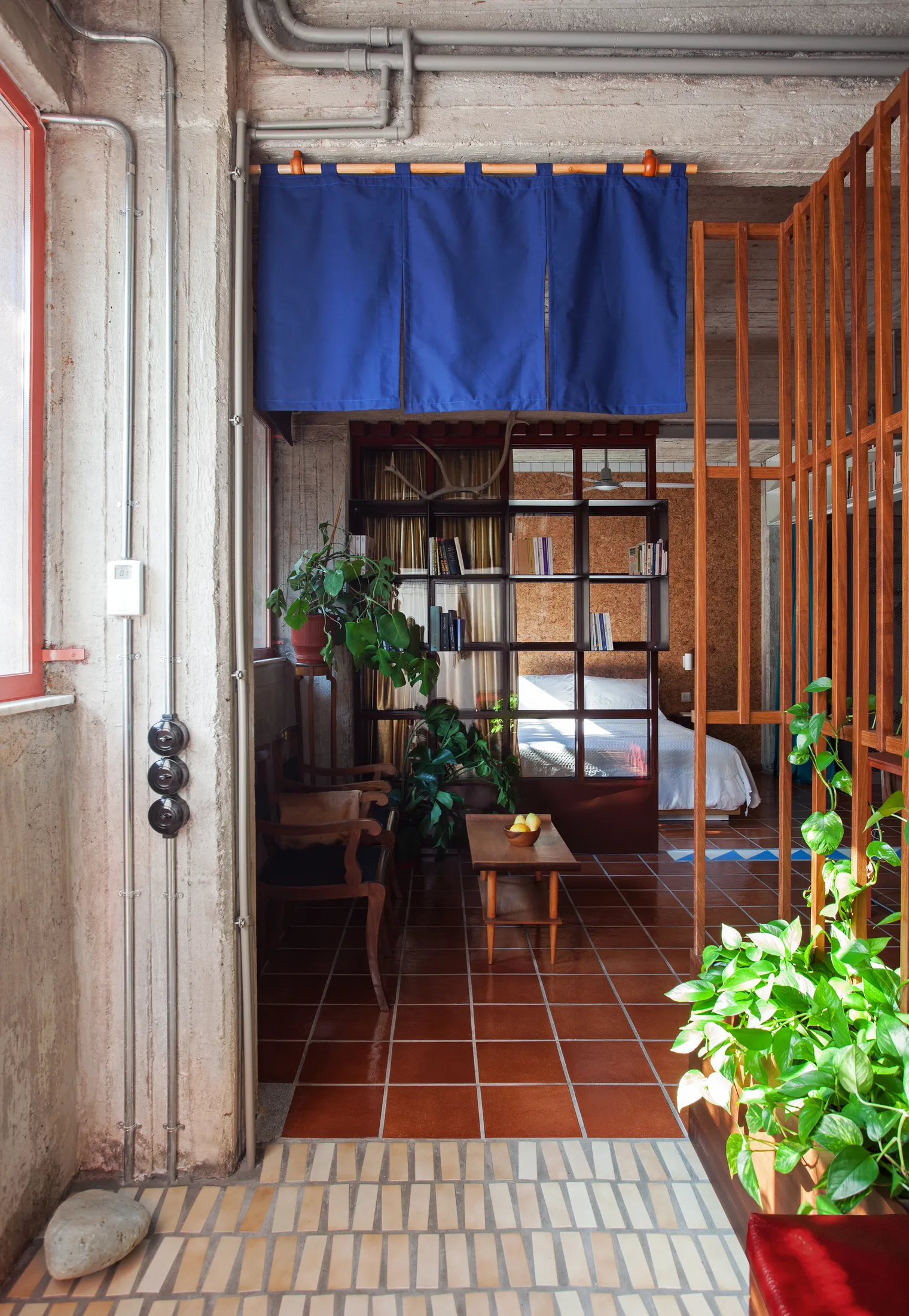
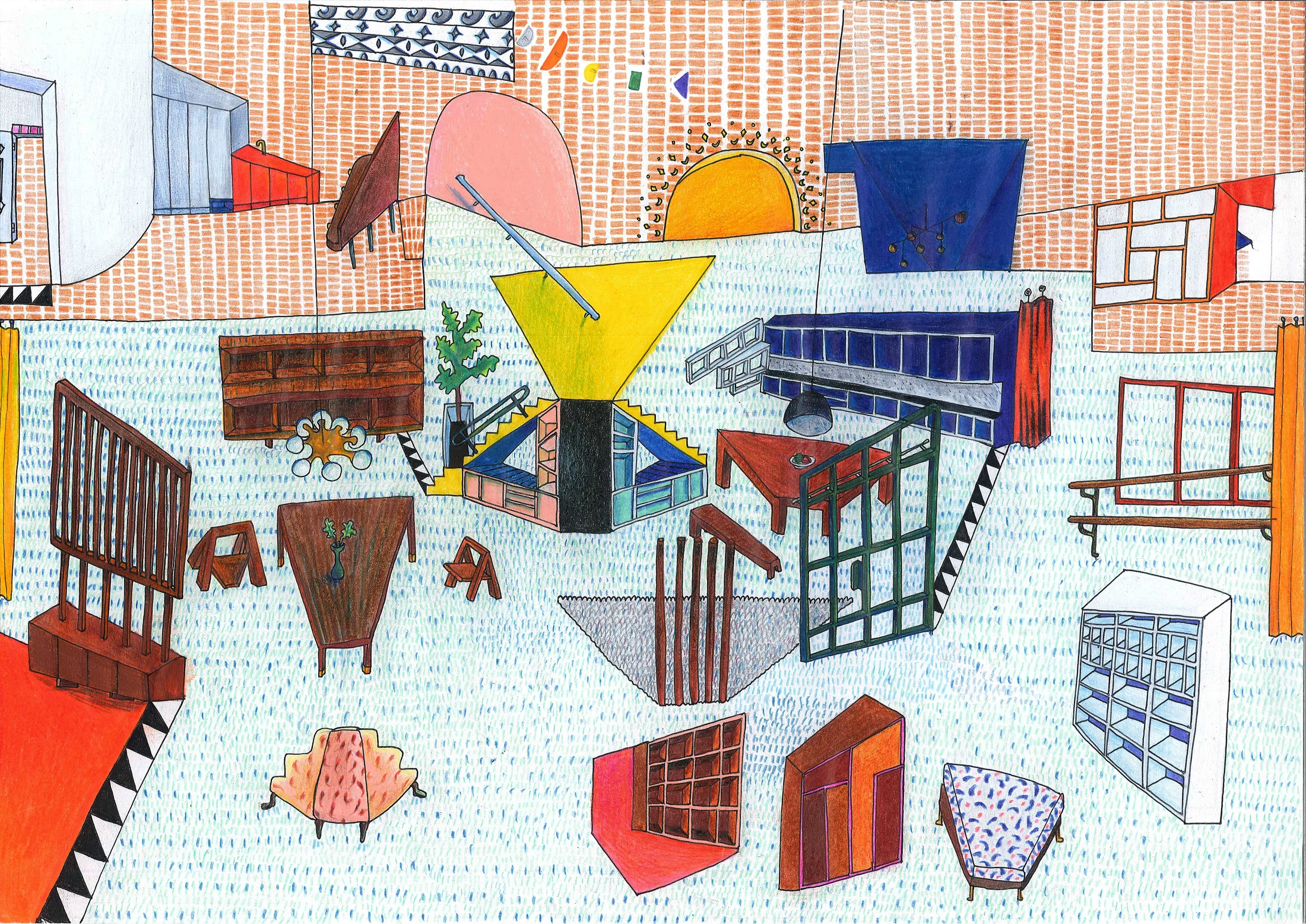
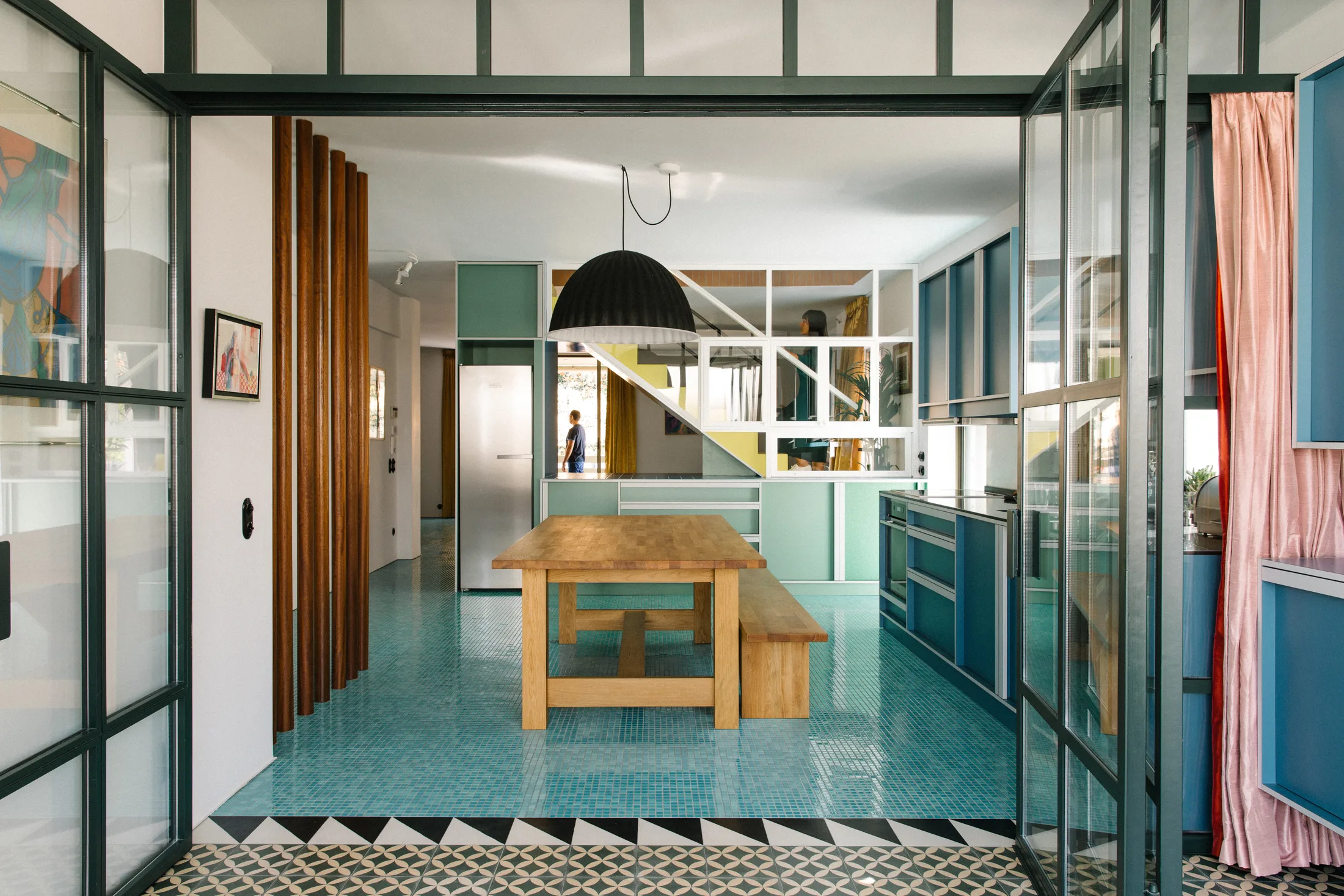
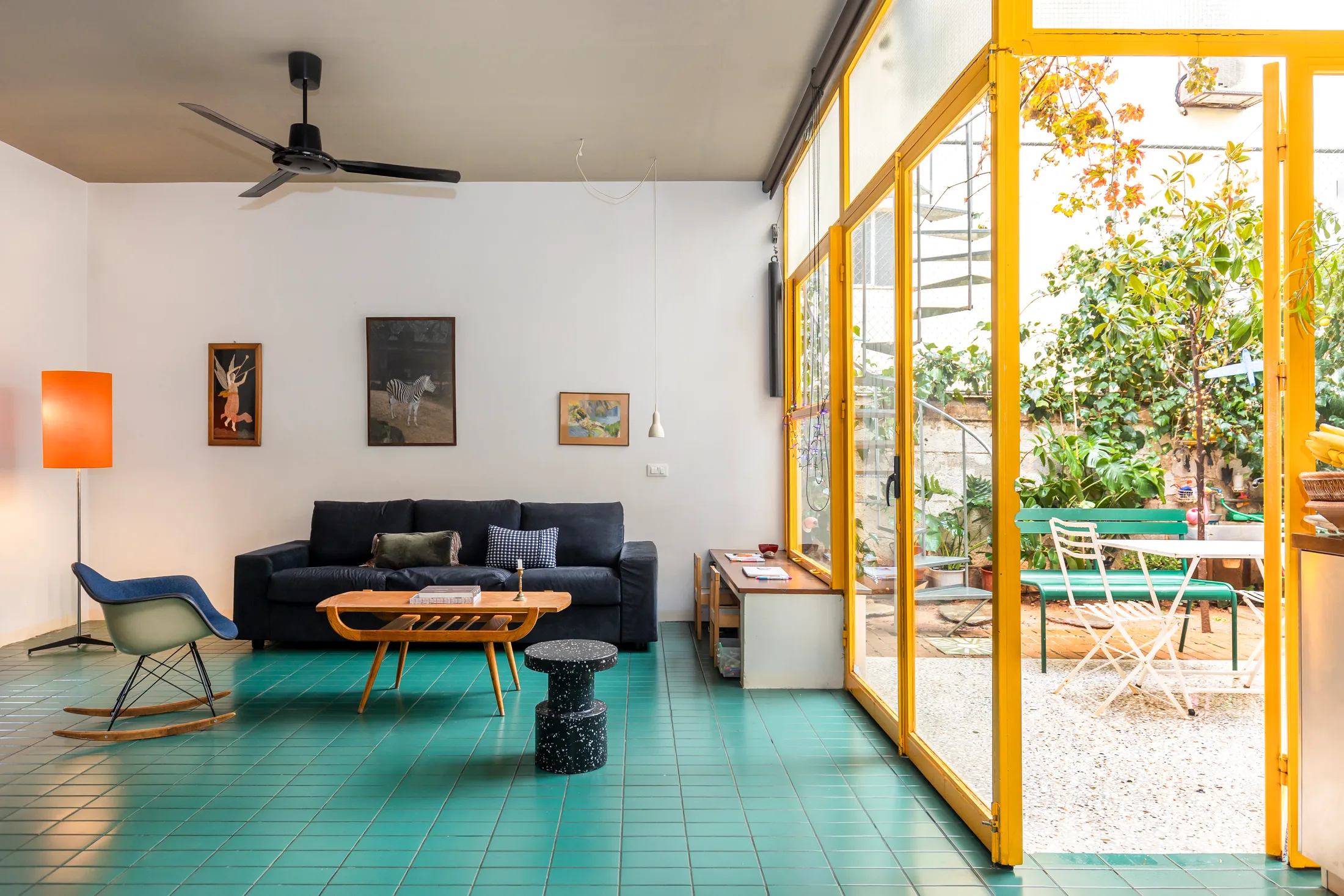
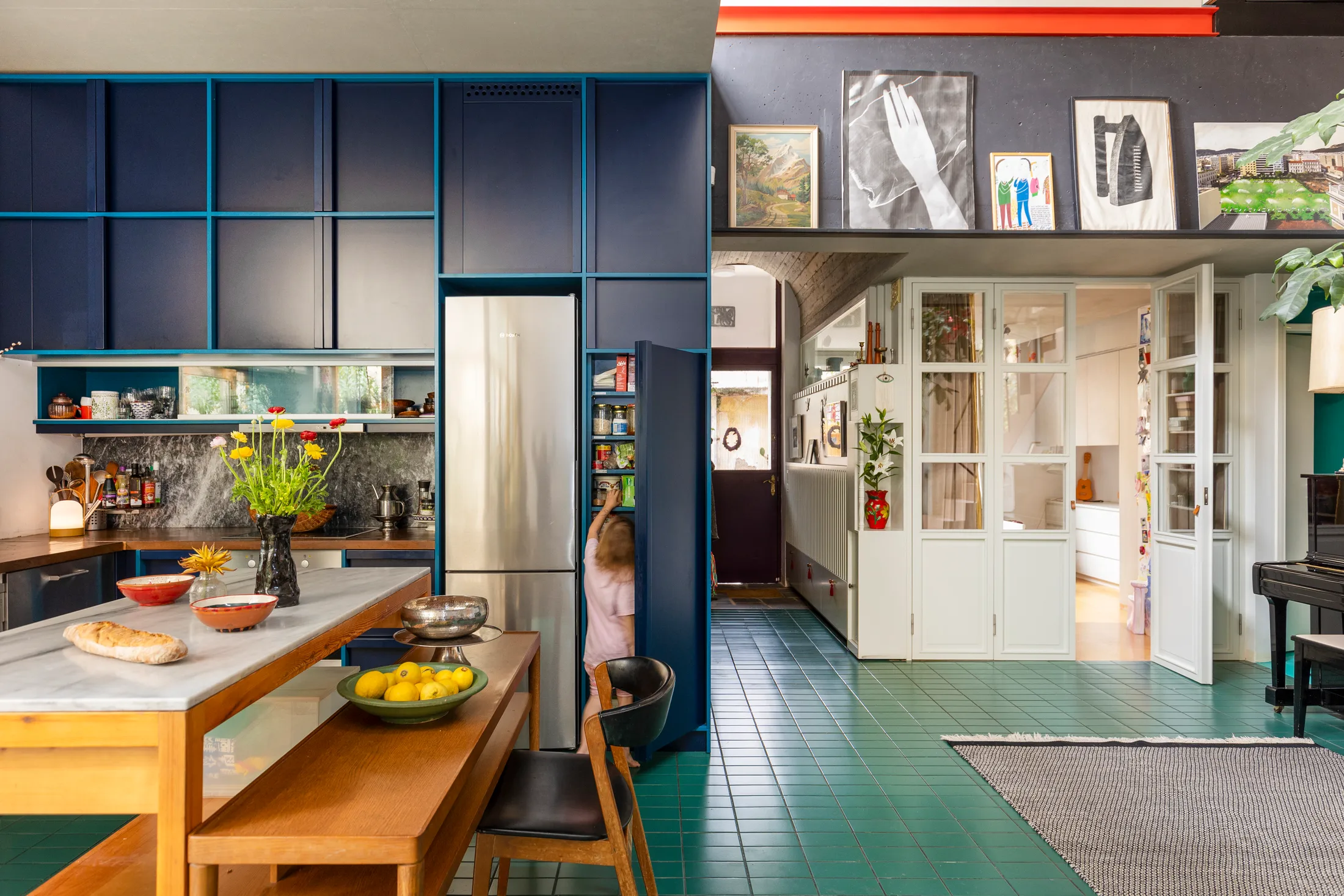
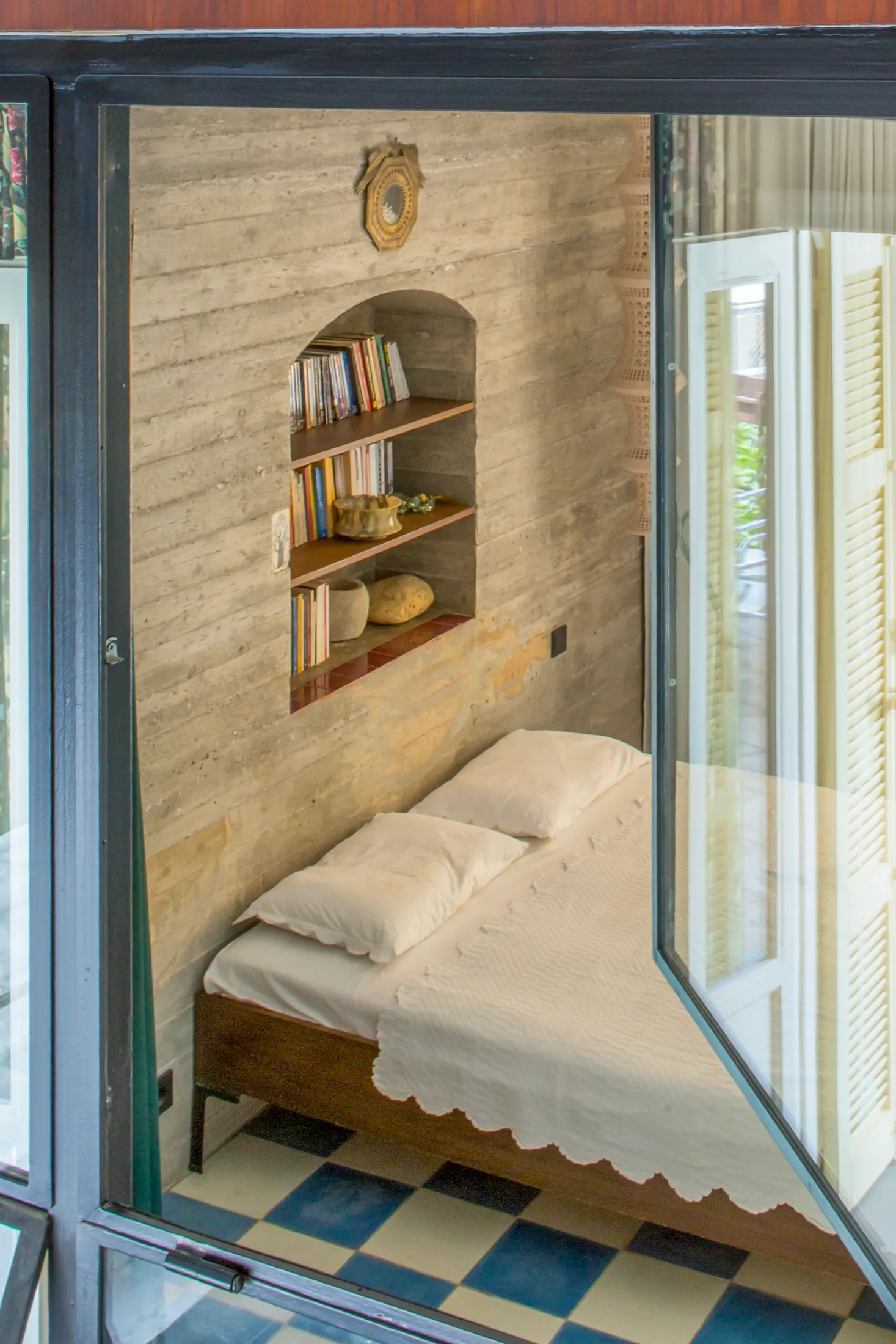
What makes Point Supreme homes so appealing is that they use everyday materials and gestures, immediately recognisable to ordinary Greeks, in an incredibly refined way. “When we design a small space, we do the opposite of what minimal architecture does,” Rentzou has said. “We try to divide the space into many small spaces, and introduce many materials.” The trick is taken from the traditional Greek house where, she says, despite the small size there is “a density of things and atmospheres”, materials, textures and colours. Instead of walls or cabinets, a square of red linoleum or a tiled floor may be all it takes to mark the entry hall, or the kitchen. Planters, shelves, and curtains are used as flexible partitions. Found materials are everywhere – tiles, doors, window frames and knickknacks. “The hidden agenda,” Pantazis says of Iloupouli, “was to create a complexity that makes the spaces seem bigger, that creates a sense of abundance.”

“I think most of our clients come for the plurality of materials, wanting different experiences in one space,” says Rentzou. “It's connected: with multigenerational living, the next generation is always coming.”

--

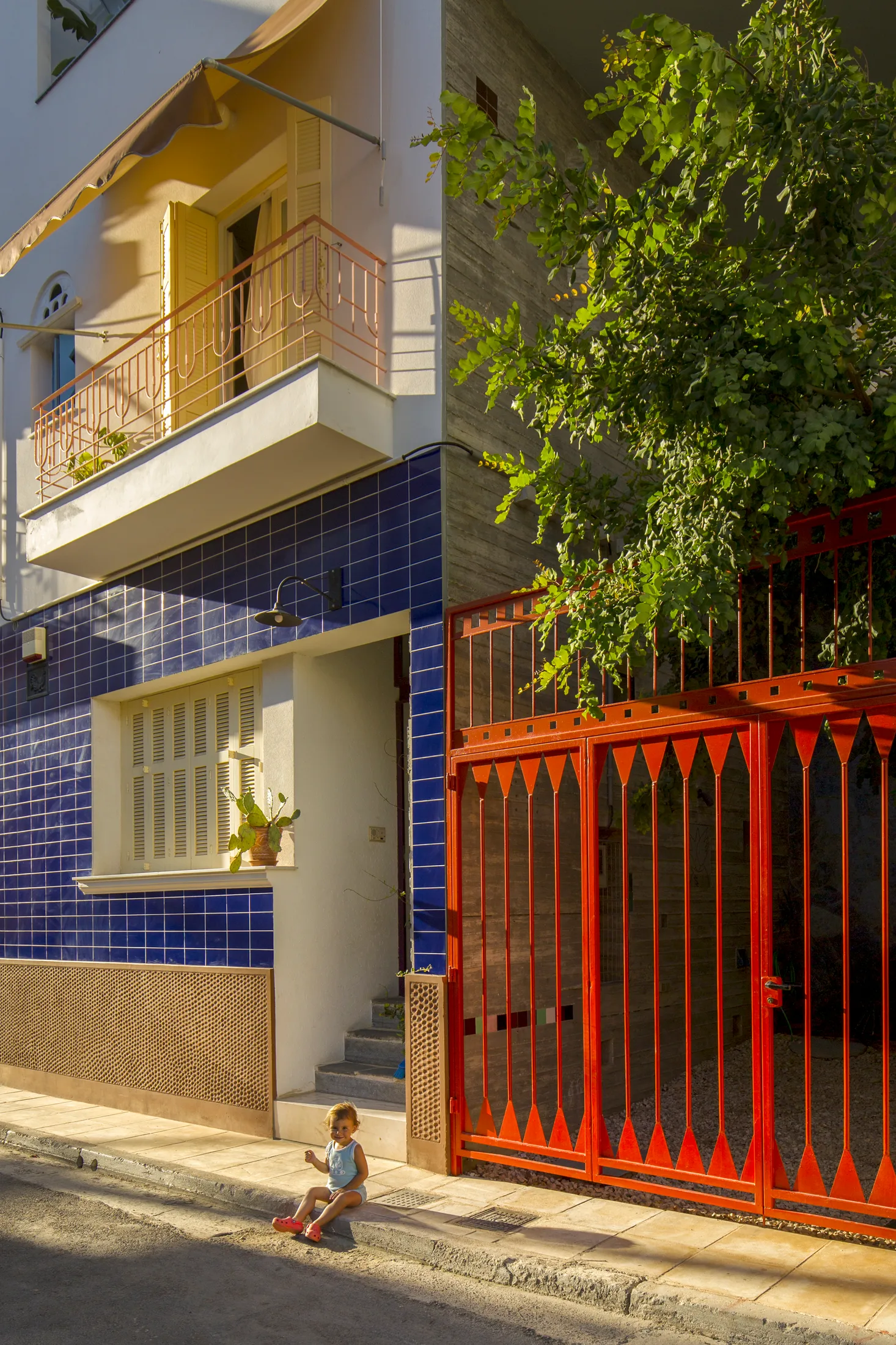
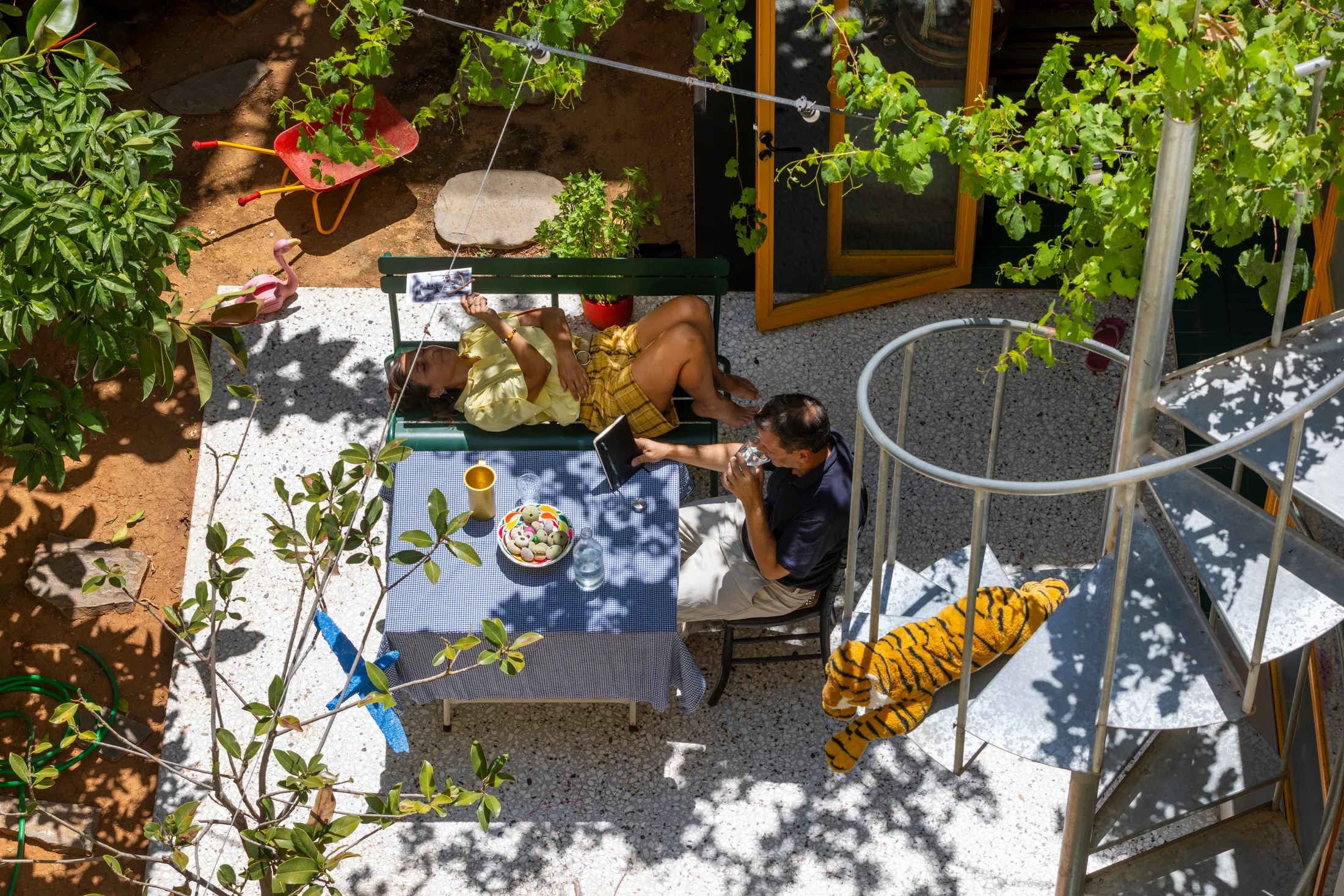
When I arrive in Petralona, I am struck by its beauty. Like New York’s Greenwich Village or Sydney’s Surry Hills, it is an immediately likeable, liveable enclave of small amidst a giant city: an urban village. Rentzou and Pantazis’s home is a short walk from their office, their children’s school is also nearby. Walking down the main street, the southwest views fade towards the faraway seaside, but to the northeast, they are only two blocks deep. At every intersection, a steep hill of cypresses and rocks rises at the end of a short side street – the foothills of Acropolis.

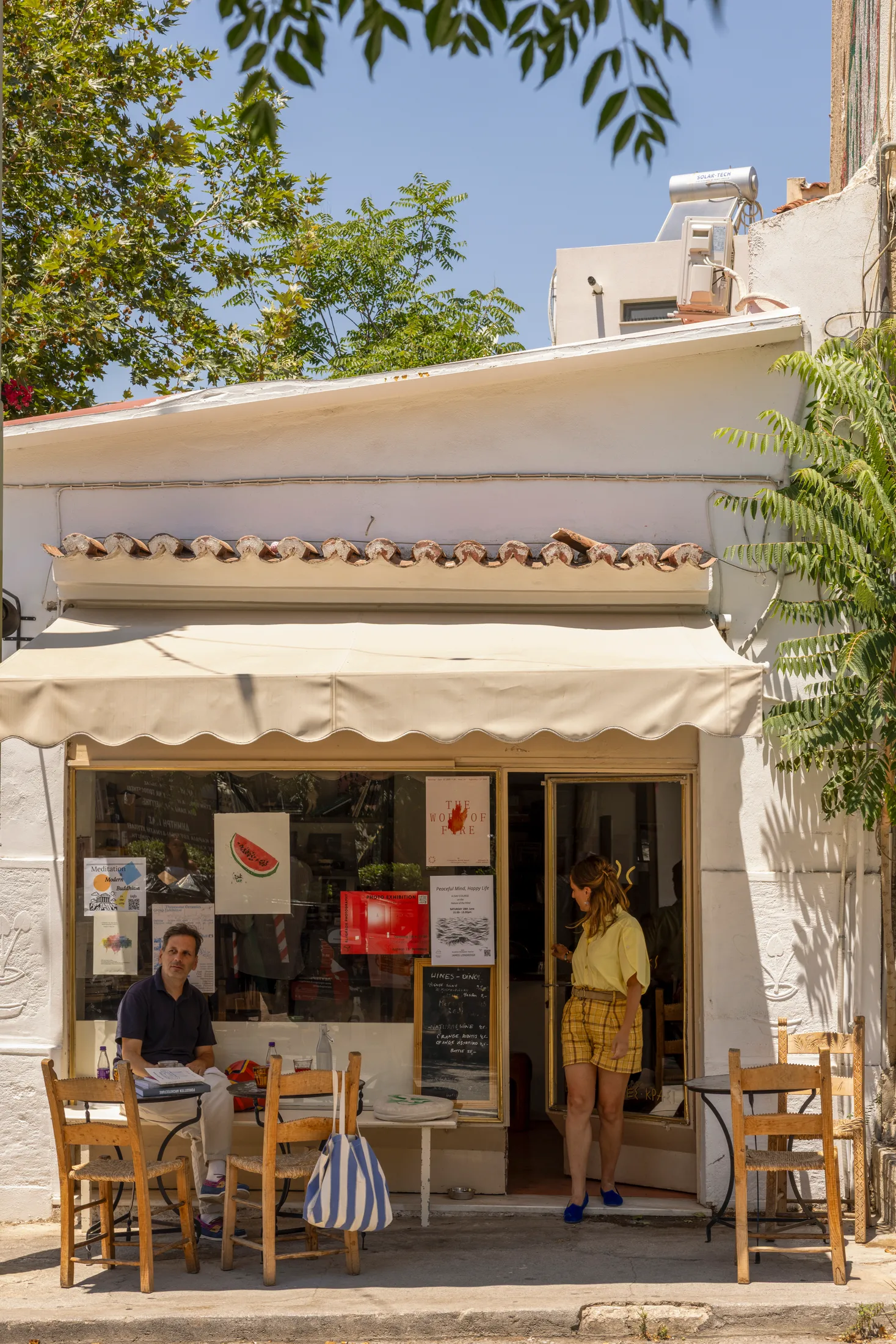
We pass small shops, neighbourhood tavernas, a small arthouse cinema, a pretty little square, and many abandoned single-storey houses with overgrown gardens, waiting for an investor. (Rentzou and Pantazis saw 110 derelict houses before they found theirs.) Deep, leafy balconies frame the street. The many street trees are all either olive or bitter orange. “In Greek movies of the 1980s, a character would live in Petralona if they were un-modern, poor, without a car,” write Point Supreme in their self-published book about their house.

Pantazis’s brother originally lived in the little house across the street, a collection of self-built rooms around a front courtyard, with plastic chairs strewn across. I can think of many architects who would be offended by having to look at a house like that every day. “But I love it!” Pantazis exclaims. He thinks it may be the consequence of living abroad, in countries known for good design. “At first I thought, my God, everything in my country is ugly. But then I started to appreciate the meaning of this: the spontaneity, the originality. [The owner] didn’t go to school to learn the ‘correct’ way. There is so much ingenuity and poetry here, and it’s always coming from economics: making the most of the materials you have. It becomes a way to make the city yours.”

Rentzou and Pantazis built their house in the spirit of the neighbourhood. On the facade of the adjacent house, every door and window is different. So are the windows and doors of Petralona House, except that Point Supreme give lectures about their choices. (At Columbia, Marianna spoke at length about the terracotta potted plant placed at the entrance. It is a gross understatement to say that architects very rarely pay that much focus to pot plants.)

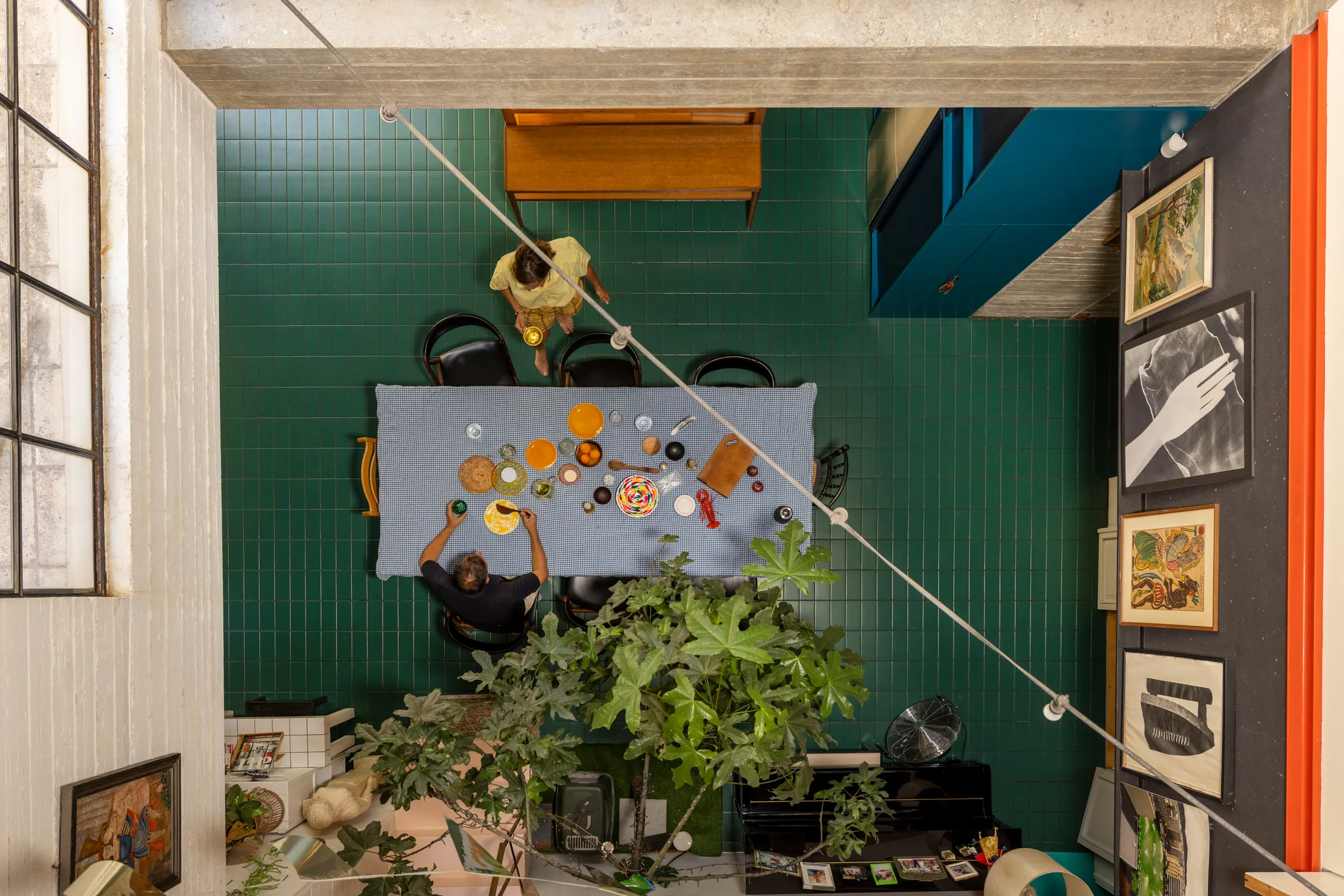
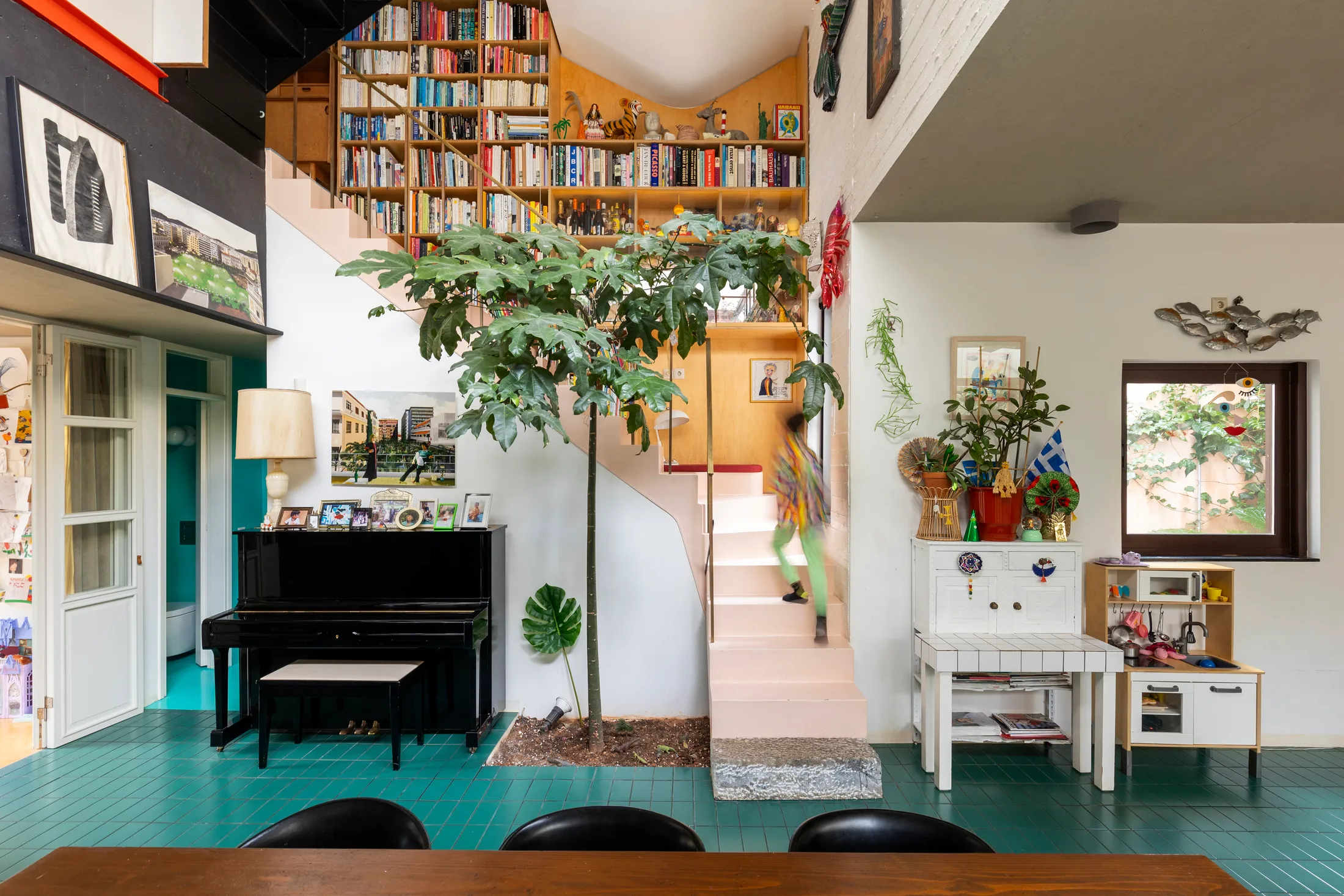
I have seen Petralona House featured in so many important architecture magazines globally, but I couldn’t make sense of its complex design from the photos. Its beauty is hard to describe: it feels like a house built over generations, full of contrasting ideas and memories. The main staircase starts off in peach concrete, reminiscent of Santorini, then continues in black wrought iron, a reference to French architect Auguste Perret (“It’s an encyclopedia of architecture, this house,” says Pantazis). Like every other steel part of the house, the staircase was built by Rentzou’s father, a farmer who taught himself metalwork to repair his tractor. The floors in between are tile, stone, polished and unpolished concrete. Reminiscent of wall nooks found in island houses, the master bedroom has an alcove inserted in off-form concrete. Doors and windows were junkyard finds. Above the balcony door, there is a book nook in the brick wall. “When we decided to put in this specific balcony door, it was a bit shorter than expected,” Pantazis says, “so that bookshelf was created.” The master bathroom window was expertly crafted in the image of those typical of Greece’s Tinos Island (by a marble craftsman and former resident of the island who Konstantinos tracked down in Athens).

Parts of the house were built around the furniture they have acquired around the world, such as the MUJI polypropylene drawer boxes in the children’s top-floor bedroom, inside a coral windowsill and built-in desk. “When our son comes back from visiting his friends, he asks us: Why can’t I have a normal room?” Pantazis notes with a smile. A giant bookcase rises three storeys high along the staircase, with an extensive library of architecture books, but also a cabinet of toy figurines and a book about Walt Disney. There is a pink lobster helium balloon on one wall, a statue on a podium sticking out of the vaulted roof, and golden bunting hanging across the three-level void over the kitchen/dining area. It’s hard to discern what here is architecture, and what may be their kids’ decorations. (Later I discover that flags are a major aesthetic interest in Point Supreme’s oeuvre.)

How does one build a house like this? How many disagreements did it take about what to place where?

“We never, ever fight about work,” Pantazis says. “I think it’s because we were a couple before we decided to have an office together.”

I politely tell him I don’t believe him: my husband and I can’t even cook pasta together.

“If I had cooked with Marianna in the first years of our relationship, I’m sure I would have thought, My God, she’s crazy,” he tells me reassuringly. “We’re complete opposites. Our process developed over time, and our differences bridged in a very constructive way. I think she’s the best architect I know.”

He shows me a half-height mezzanine storage above the front bedroom, accessed by a pull-out ladder. “We didn’t want to lose the views of the garden, so instead of making a box, we made it horizontal.” He nods. “That was Marianna’s idea. You see?”

“We fight about the kids: how much TV, things like that,” he smiles. “And we disagree on how to run the office, how to make it profitable, which neither of us knows. Today our accountant asked: ‘Why do you have an office if you’re making so little profit every year?’”

“It’s true!” Rentzou laughs heartily when she hears this. “We have a marriage counsellor, and instead of talking about our relationship, we talk about our office!” She likes working on big projects, she tells me, but the client relationship can be very difficult to manage. Pantazis prefers small projects, but they don’t make them money. “We are very different, but very complementary.” She becomes pensive. “It’s a good and a bad thing at the same time. We need each other.”

Our house tour is interrupted by clamour, as the Rentzou-Pantazis children come home from school. Soon, neighbourhood kids are pouring in to do homework with Ikaros; the toddler who played on this house’s construction site is now a vibrant 10-year-old. His five-year-old sister, Asteropi, is running around dressed, I think, like a Spiderman princess. The babysitter, Ritsa, is making chocolate crepes. Pantazis and Rentzou tend to work late: they return home at 7pm to have dinner and put kids to bed, they say, but then one of them returns to the office and works until late. This way, says Rentzou, the children don’t feel their absence. And, she adds, “when you have a family, you learn to appreciate solitude.” But, they both tell me, it’s tough.

I keep wondering why they came back. With their prestigious international experience, Point Supreme could work anywhere in the world, and I can think of many places where building good architecture would be a lot easier than in this city without urban planning. They laugh, but with a tinge of ambiguity. “Every time we go abroad and see our friends: they have a stable office, a stable salary, and here we struggle every single moment,” Rentzou says.

In 2017 in New York, some Columbia students asked Point Supreme how much of their collage-like, squirrelly approach they would keep if they had bigger budgets. Would they work the same way if they had more resources? “I think so,” Rentzou answered. “The juxtaposition of low and high is something we find very interesting.”

Pantazis piped in: “If we had had more resources, we would just be faster. Now, we have to spend much more time to achieve what we want to achieve.”

“It’s true!” Rentzou laughed. “Our life would be much easier if we had more budget! But the architecture would be the same!”

But sitting in Petralona, I can see what they came back for. Life is complicated everywhere. And there is a lot to enjoy, in this beautiful house, this lovely neighbourhood, the proximity of family and friends, the tight social relations. “In Greece, people help each other out,” Rentzou says. “With kids, with food. You just have to remember not to compare yourself to the rest of the world.”

-

As featured in Issue 6 of our magazine!

Purchase a copy of Issue 6 https://www.nts-store.com

Subscribe to our NTS Sub Club https://www.nevertoosmall.com/magazine

Writing:
Writing:
Jana Perković
Photography:
Photography:
Back to Top
Arrow UpArrow Up
Top
Arrow UpArrow Up
The After shot of the Floorplan
Before
before
after
After
Businesses featured in this project
No items found.
Products featured in this project
No items found.
Magazine Current IssueMagazine Current Issue
Writing:
Writing:
Jana Perković
Photography:
Photography:
Back to Top
Arrow UpArrow Up