And how did the others come to join?
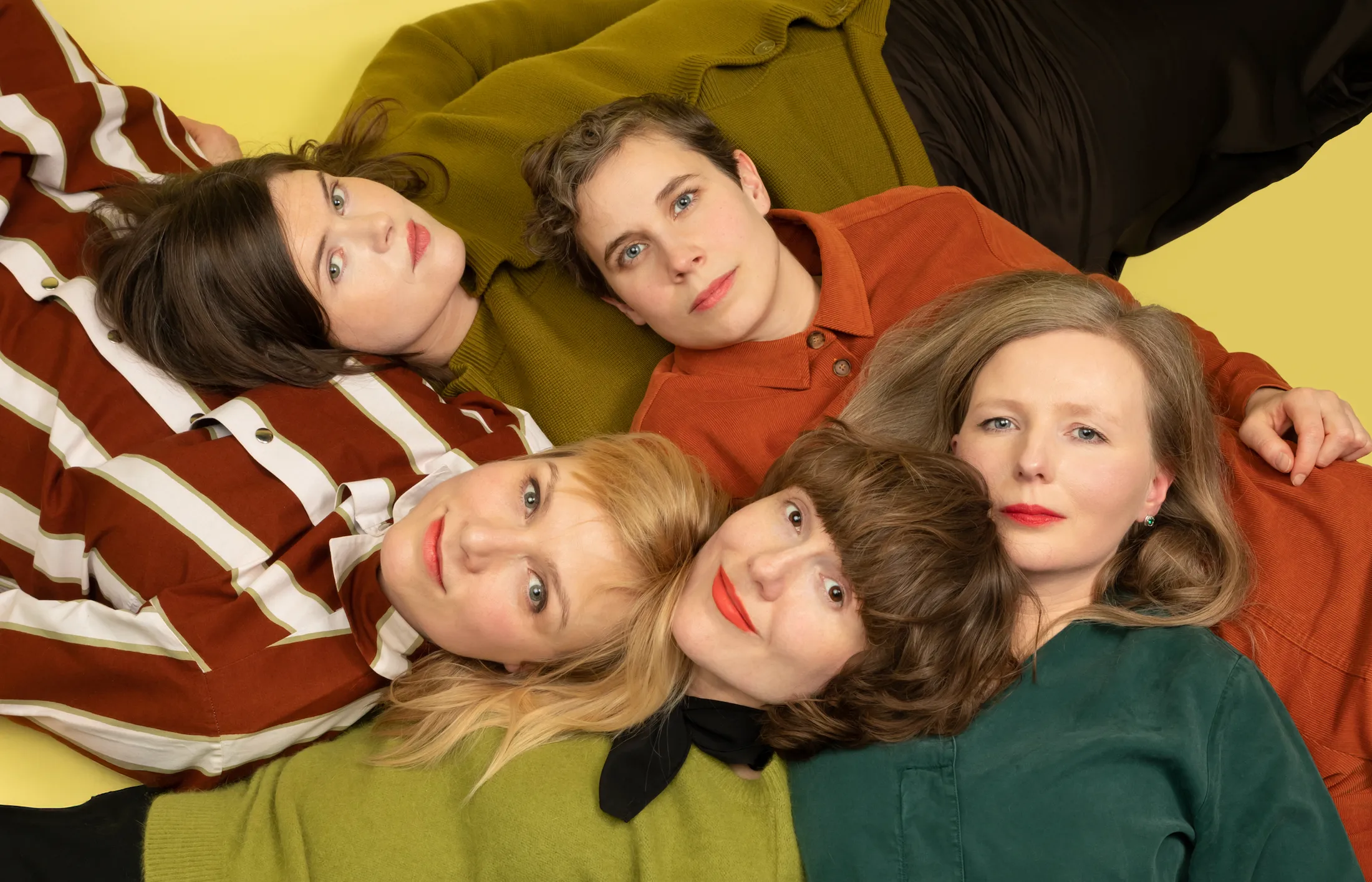
It’s been very organic, with members joining depending on what we need, for example: architecture, tailoring or game design. My background is in puppetry and scenography, and with puppetry you’re always listening to the material to see what it wants to ‘say’. Sometimes I think ÞYKJÓ is the same, it’s almost like a living creature that surprises us as it takes us to new places.
Why did you choose to focus your efforts on free play specifically?
Honestly, I was just surprised by how little there was out there when I started looking for costume design or free play elements. We are in an era now where a lot of pedagogues are advocating for free play to be added to the UN Heritage List as something that is endangered because kids schedules are so packed and, well, screens have become tough competition.
I agree with the statement that you can judge a society on how they support families and nurture children and youth, as it is where the beating heart of each civilisation should be. And I felt there was such a lack of ambition – and even respect – for how children are sensory beings, so I said “okay, let’s try making it ourselves.”
Before we get into the projects, I wanted to touch on Krakkaráð ÞYKJÓ – your “Kids Consulting Panel.” Tell me a bit more about how this works and influences your design.
Krakkráð ÞYKJÓ is a tool, or platform, created in response to Articles 12 and 13 of the UN Convention on the Rights of the Child, which is a pillar upon which all our work is based. These Articles essentially convey a child’s rights to having their voices heard by grown-ups, stating that adults should not only Listen – with a capital L! – to children’s opinions but also create platforms for children to share their opinions.
Practically speaking, this means we always start a project with the kids involved, bringing them on as collaborators during the research and planning to see what interests them most. This is what we’re striving to do – and as designers, need to do – to not assume the needs of who we’re designing for or working for; but rather start a conversation. What is it that you need? What can we do for you? How can we be your tools?
Even though ÞYKJÓ means ‘make believe’ and is a term typically reserved for children, it struck me that it has so much relevance in the world of design, which is, essentially, structured around a similar type of play and imagination of possibilities. What do you think about these overlaps?
This is interesting because as designers we’ve really started being influenced by the kids we work with and how they play or make believe. We started moving away from our screens and began trying to honour ourselves in the same way we do kids. When we’re starting a new project, I set up a rich buffet of materials and we try to go into it in a more tactile way. I can always see how it’s so different than when we’re beginning with, say, an online collaboration tool like a Miro board.
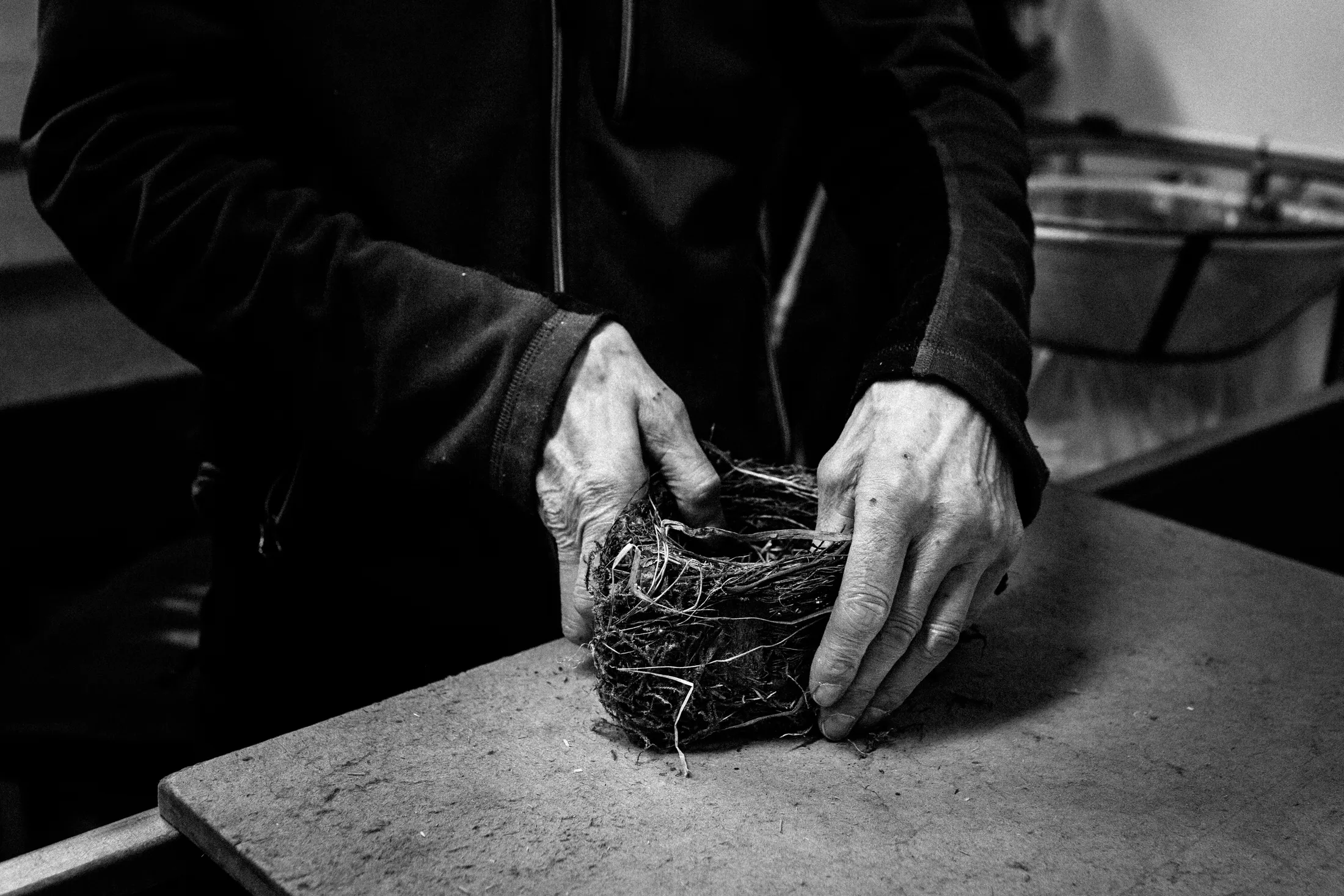
As designers, we tend to think so visually, but going in from a play perspective and how children navigate, we started becoming much more hands-on during the research process. It’s a whole different experience to hold a bird's nest in your hand than it is to look at one online or in a book.
Let’s talk about some of your projects. You mentioned your costume collection, Superheroes of the Earth …
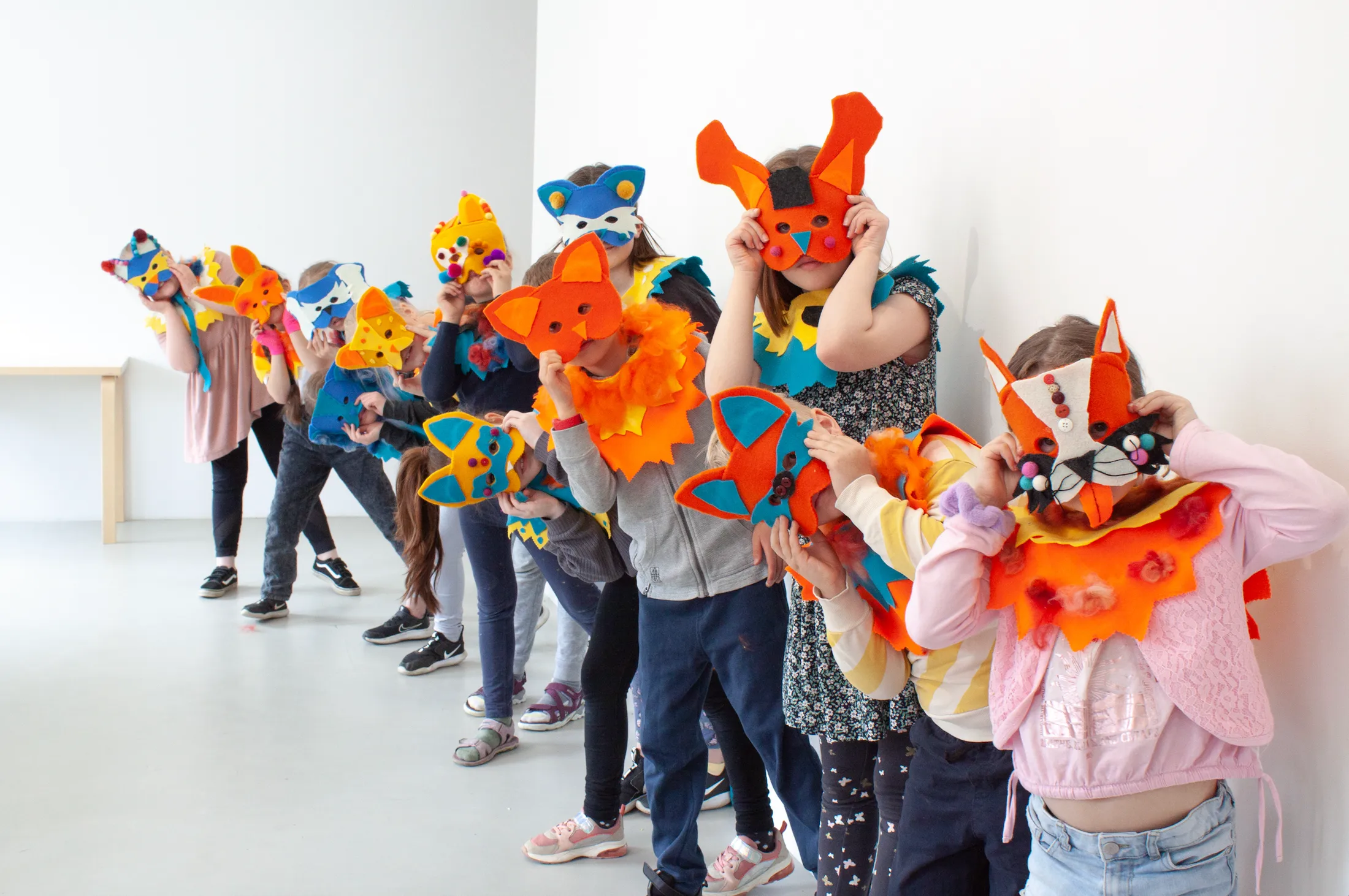
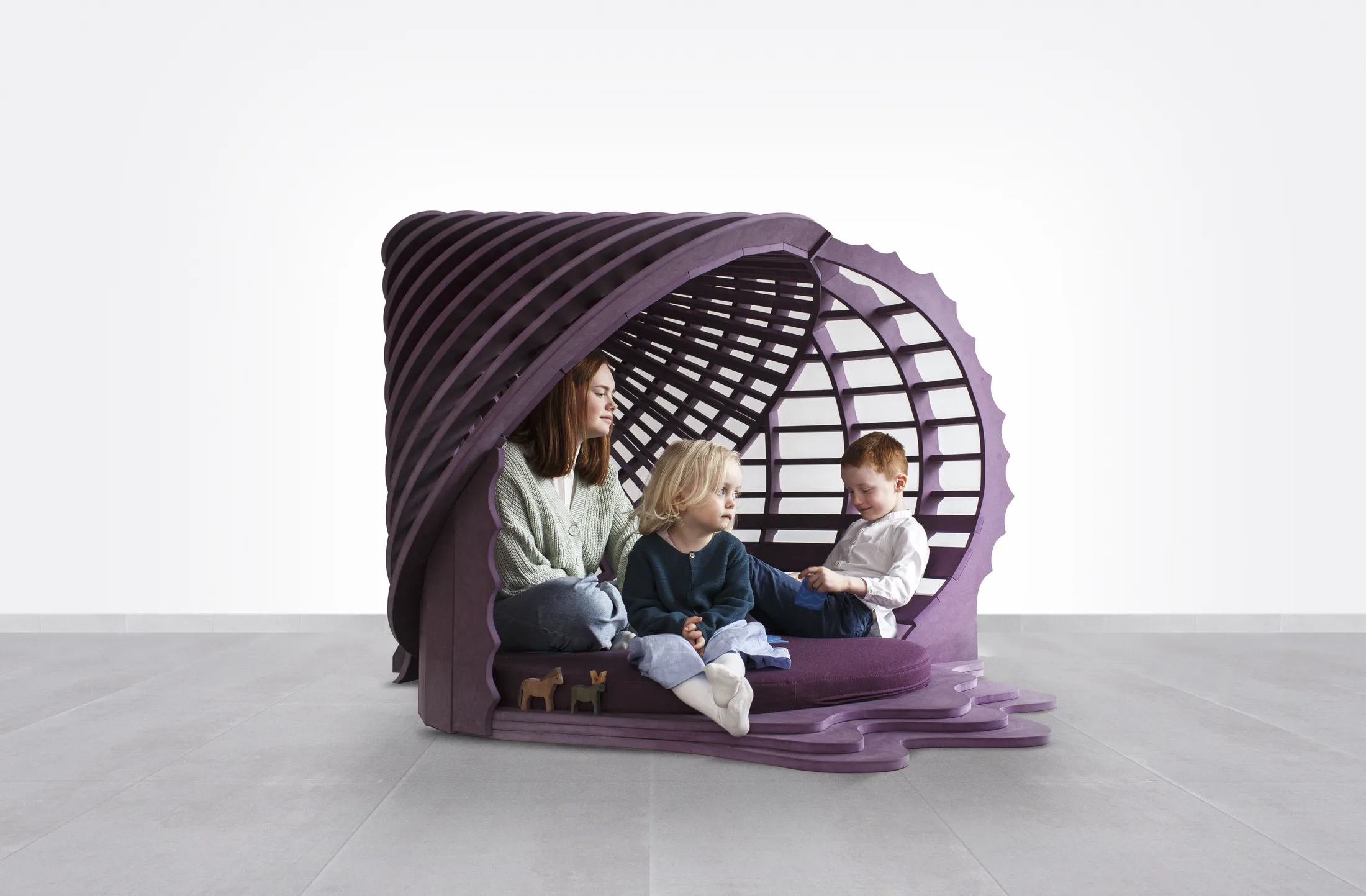
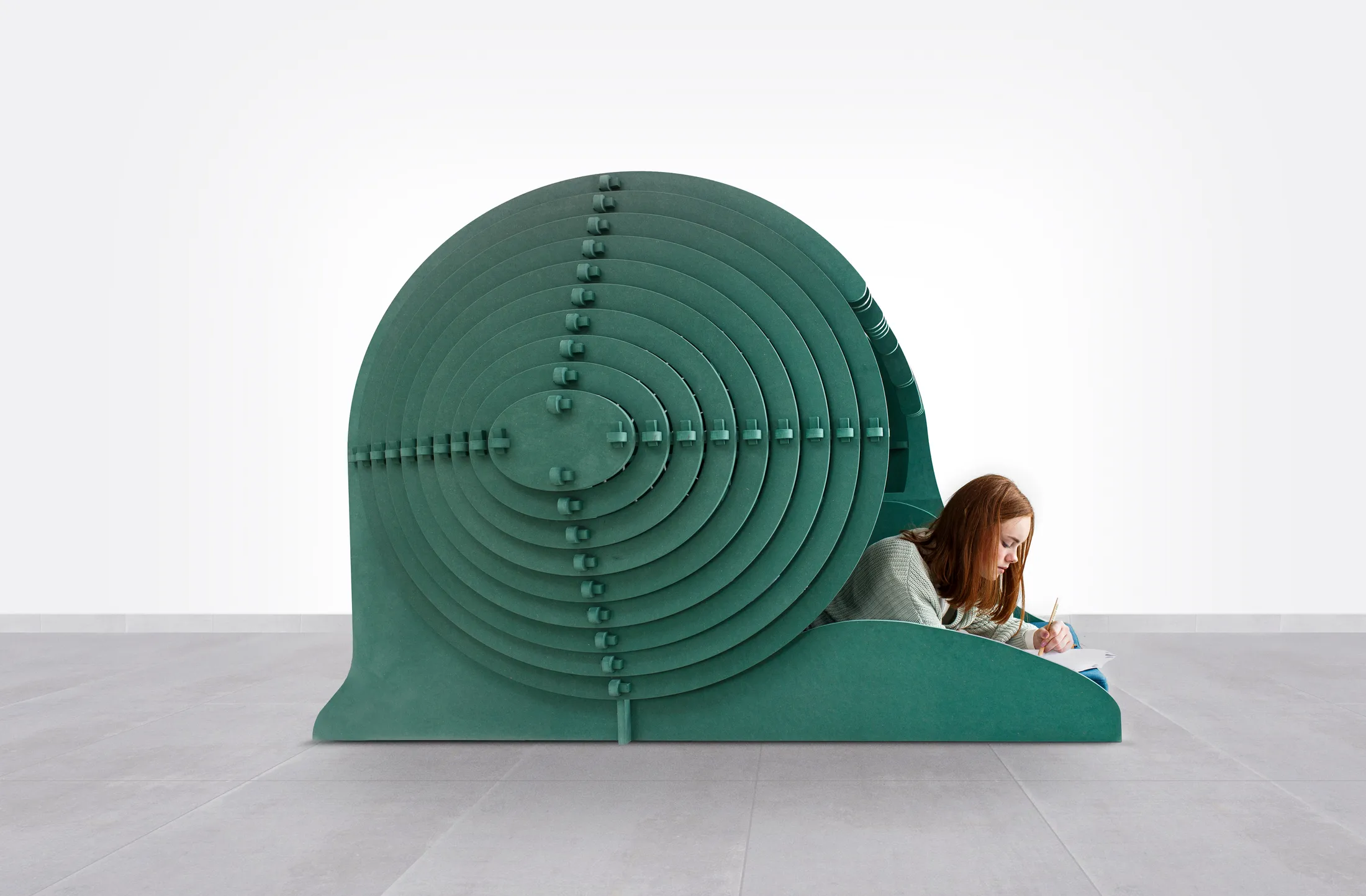
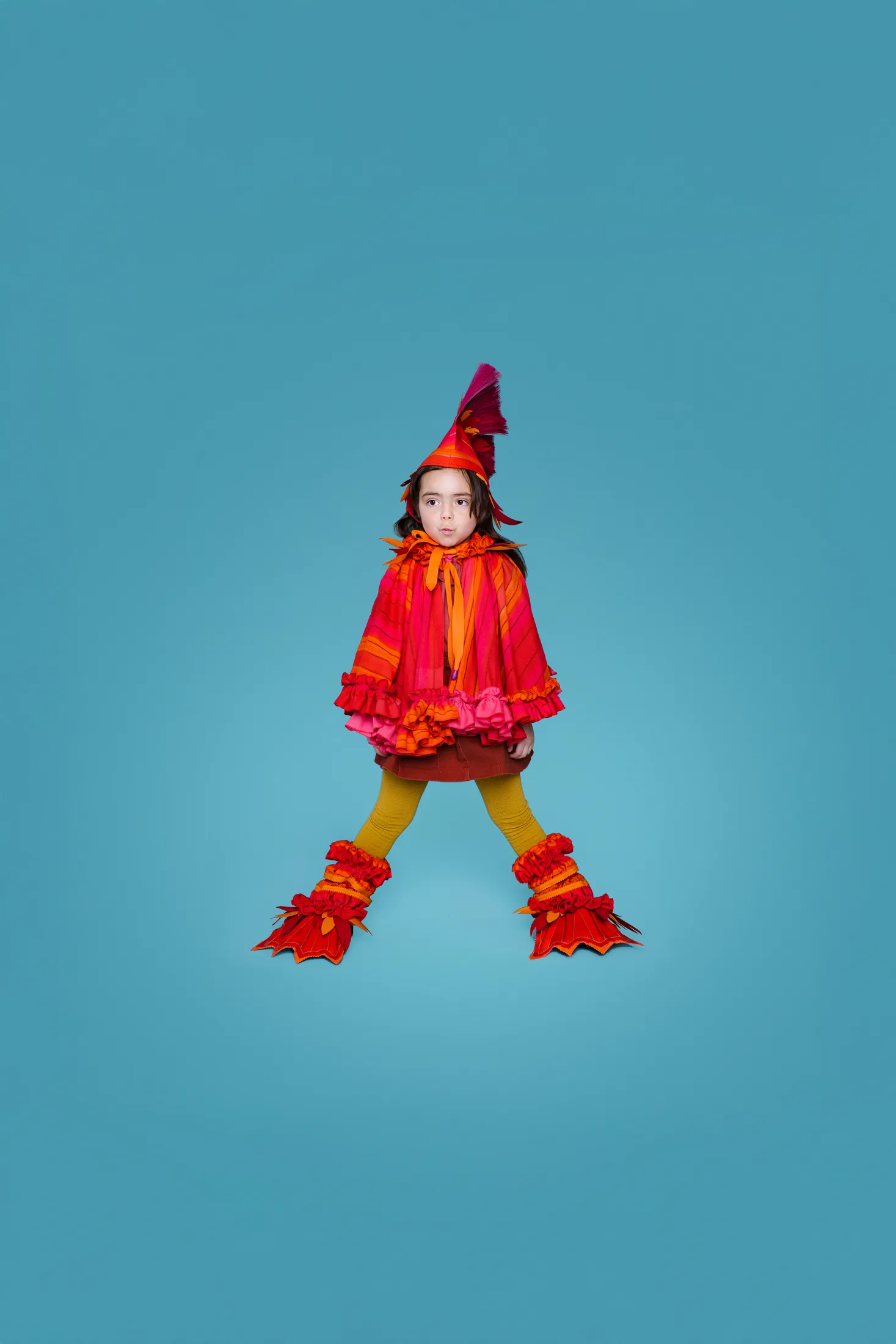
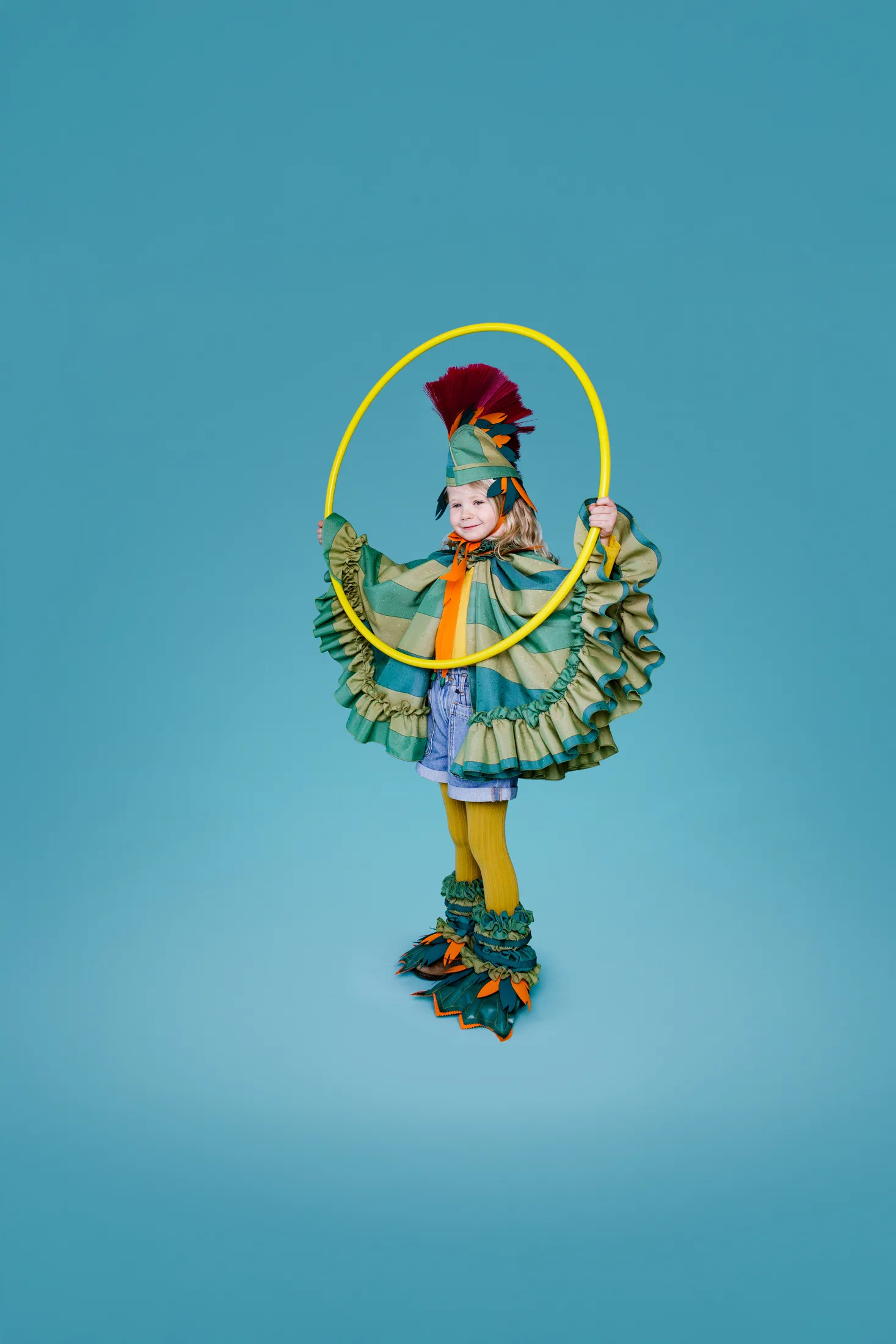
This was our first costume collection, and it’s an ode to the wonders of the animal kingdom and our imaginations. We tried to inspire children to explore a range of free play, adopting the diversity of the animals’ traits – whether that be the ‘introverted,’ self-sufficient shell of a snail or the ‘extroverted’ colours and movements of a lovebird.