Magazine Current IssueMagazine Current Issue
The Light Side Of The Dark Side
From our Mag
December 17, 2025

The Light Side Of The Dark Side

What if the “wrong” side of the building isn’t wrong at all? From dim bedrooms to windowless corners, this playful guide reframes The Dark Side as a place of texture, calm and quiet beauty – with designers revealing how low light can soothe, soften and surprise.

Some lived experience and expert advice for embracing a low-lit home. To avoid eating my own words, I now close every absolute statement with “but never say never”. This is just in case I find myself once again trying to squeezing a queen-size mattress into a south-facing* shoebox of a bedroom. 

Bec Vrana Dickinson
Writing:
Writing:
Bec Vrana Dickinson
Photography:
Photography:
Magazine Current IssueMagazine Current Issue
The After shot of the Floorplan
Before
before
after
After
Top
Arrow UpArrow Up

During one of my more desperate flat-hunts, any amenity beyond a flushing toilet was a bonus. With my rose-coloured glasses firmly on, I decided a ground-floor flat, tucked at the back of a narrow Art Deco block in Sydney’s east, wasn’t dank, or a certain trigger for seasonal mood-swings. It was, as advertised – “cosy”! Especially my room. Tight enough that I could kiss both walls when I rolled over in bed, and dim enough that the window sill could be stacked high with books without any fear of compromising its single source of natural light. I quickly adapted to my cave-den. I learnt how to make my bed while still lying in it, and how to eject myself onto the tiny patch of floorspace without disturbing my fine work. On a good day, I’d stick the landing and hit the on-switch of my floor lamp on the way down. Cloaked in a brown silk scarf to soften the bright bulb, its glow would softly illuminate my intimate confines. I liked to complain to friends and family for drama, but truthfully, I felt oddly content. Coddled even. I remember sleeping very well. The ideal levels of light deprivation for melatonin production, perhaps.

This period of my life happened to coincide with a friend’s entry into the housing market. I was eager to understand the details. Like, “what are you listening for when you knock on walls?” and “why is aspect such a dealbreaker for you?”. I thought about my dimly-lit cave and my acclimatisation to The Dark Side. I admired her ambitious sun-seeking property preferences because, in theory, this would reduce her options by at least 25 per cent. So, from my cave, I began to brew some gentle scepticism. My friend now lives in a dappled two-bedder on The Light Side. 

Thankfully, I’ve since seen the light. And felt it too. The warm serotonin release standing in a kitchen gently bathed in the rays of the rising sun … the satisfaction of turning sausages on a barbeque perfectly positioned to snatch every last setting ray. Much like a shadow never staying still, I’m aware of how fleeting this experience of light can be. Fortunately, my fondness for The Dark Side is still well intact, but it’s still not desirable, is it? Given many of us don’t have the luxury of choice or control over how much sun our home sees, I wonder if we all need to learn how to better embrace The Dark Side?
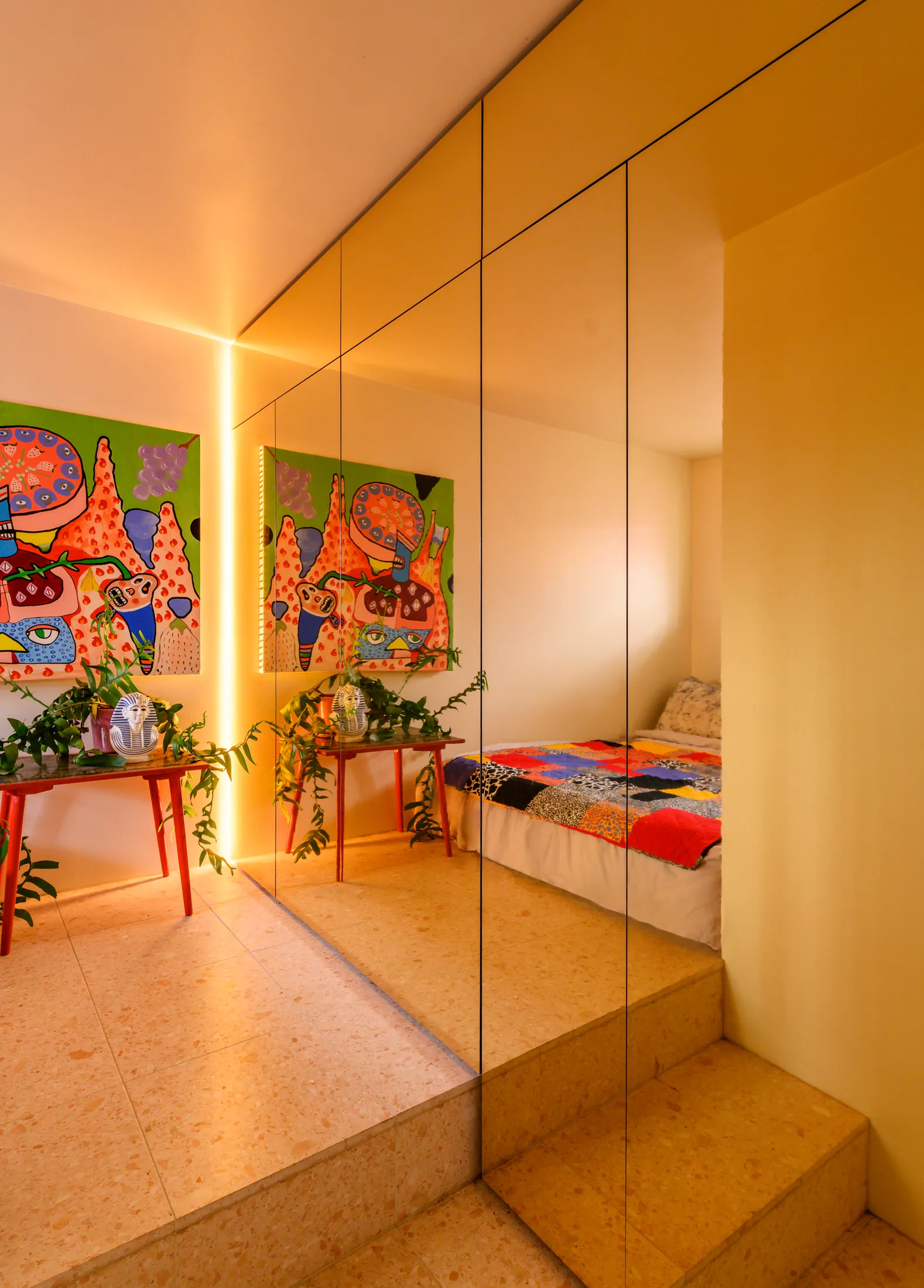
Sydney-based small space designer Nicholas Gurney gets it and has made a career out of transforming compact spaces (sometimes with less-than-ideal amounts of natural light) into clever and considered homes. And in his opinion, The Light Side has its downsides too, based on his lived experience (“Seven years in an oven … one of those apartments with windows limited to a single wall”). If a space is lacking light, “focus on texture and natural timbers – both in construction and furniture – to imbue a sense of warmth, like tonal palettes with hand plastered walls,” Nicholas advises. 

Cesare Galligani, co-founder of Milan-based architectural firm ATOMAA in Milan, agrees. “Light clings to the roughness of surfaces that scratch; the material is alive and becomes tactile”. No stranger to darkness, for ATOMAA’s smallest apartment to date, (So Far the Tiniest), the team took on a windowless bathroom, approaching the space like a spa. “We tried to recreate the sensation of Turkish hammams, where diffused light illuminates [the space] from above and focused artificial light highlights the surfaces”. 

Big on strategic lighting, lamps and avoiding downlights, Nicholas has no hesitation in pairing smart artificial lighting with what light is available, even in the daytime. “The outcome moves the global ambience toward brightness, but also shifts the temperature of light to where it is more comfortable”. In spaces that allow more structural intervention, Cesare recommends openness to let the limited light circulate freely. “Eliminate walls, transform storage volumes into sculptural totems, and use pivot doors. Add mirrors where you least expect them”. 

Then it just comes to plain rethinking. Instead of dancing around the dark, Nicholas urges us to dance in it (in a metaphorical sense). “Get cosy and align with all things hygge, it certainly works for the Danes,” he says. Blankets, cushions, rugs, or even just applying an overarching softness to dimly lit spaces can make all the difference. The Dark Side, he says, “has a beautiful diffused and tranquil quality that’s remarkably consistent … I think you can unlock a stillness and calmness afforded by this light that’s unique to spaces of this orientation”. 

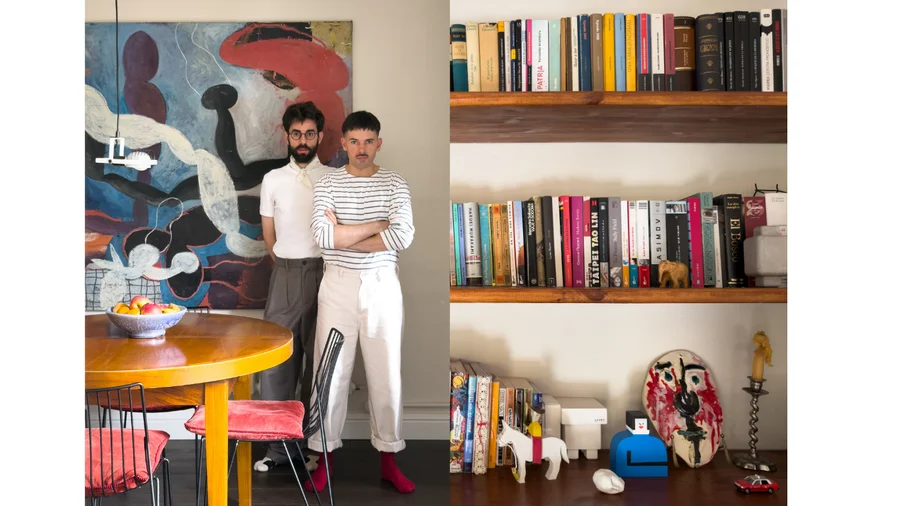
Designing many environments lit purely by the cooler northern-hemisphere light, Cesare and the ATOMAA team have learnt to embrace what they see as more “silent and meditative dimensions”. Low-lit zones can become the ideal space for an entrance, study nook and even a living room with details that use shadow to create interest, like alcoves, timber panelling, or even a moody deep-blue wall. “We like to imagine the living room as an area for pause and relaxation, the fire cracking, long winter films and crunching popcorn. The northern [Dark Side] light, a calm, untiring presence, like in some paintings of Vermeer.” 

I like this reference to Johannes Vermeer, a Dutch painter known for his intimate homelife scenes. In his paintings The Dark Side has been harnessed and heralded. I’ve since read that many artists, including Leonardo da Vinci no less, preferred studios with this aspect for its steady (and likely calming) light throughout the day, less prone to dynamic shifts and shadows that would see The Mona Lisa restarted every hour. 

More than happy to reframe my past cave as an artist's ideal, my cave period did something else, too. Its dimness made every light space I’ve lived in since feel positively incandescent. A little lesson on the value of contrast. As Cesare puts it: “beauty resides in this duality: the freedom to experience and feel both ends of the spectrum”. You hear that, Dark Side? “Beauty". Don’t forget Nicholas also said “tranquil”. Adjectives The Dark Side thought it’d never be called. But never say never. 

-

As featured in Issue 5 of our magazine!

Purchase a copy of Issue 5 https://www.nts-store.com

Subscribe to our NTS Sub Club https://www.nevertoosmall.com/magazine

Writing:
Writing:
Bec Vrana Dickinson
Photography:
Photography:
Back to Top
Arrow UpArrow Up
Top
Arrow UpArrow Up
The After shot of the Floorplan
Before
before
after
After
Businesses featured in this project
No items found.
Products featured in this project
No items found.
Magazine Current IssueMagazine Current Issue
Writing:
Writing:
Bec Vrana Dickinson
Photography:
Photography:
Back to Top
Arrow UpArrow Up