


For about four years in my late 20s, I lived in a variety of what might tentatively be called ‘modern apartments’. These were basically white oblong-shaped boxes, very dark, very small and uniformly uniform, with high-spec dishwashers and low-spec everything else.
In one of them, my partner and I shared a bedroom with no external windows whatsoever, only a thin strip of cheap glass near the ceiling, which – if you stood on a chair – offered unparalleled views of the living room.
In another, we discovered that the bathroom fan wasn’t actually attached to any recognisable ventilation system, and had been sucking moist shower air into a small ceiling cavity for months; a cavity which rapidly filled with mould. Soon the mould spores migrated out of the bathroom and onto our curtains, which were the only things keeping out black soot-dust from the adjacent main road. Between the mould and the black dust, and the top-end Miele appliances (with integrated convection stovetops) the whole place had a weird Park-Avenue-meets-Dickensian-London kind of vibe.
More worrying, though, was the overall design philosophy of these complexes. Socially speaking, they were tombs. The hallways were identical and anonymous, with zero natural light. Everyone’s front door looked the same, and very firmly marked the boundary between ‘public’ and ‘private’ space. We never met, and rarely saw, a single neighbour during our entire tenancy. Communal areas were limited to the lobby, which looked very expensive and vaguely hostile – the kind of place where you might be fined for loitering – and the gym, which was always empty.
Moreover, the apartments themselves had clearly been developed for developers rather than residents: the intent was to sell as few square feet as practicably possible, while still being able to market these as ‘luxury two-bedroom apartments’ (stretching the definitions of both ‘luxury’ and ‘bedroom’ to their absolute limit). There wasn’t a single inch on the floorplan that signified warmth, or generosity of spirit, or made room for trivial things like human health, individual expression or genuine social connection.
As products, these apartments reminded me of a mental flip that seems to capture the fundamental decline of late-stage capitalism, to wit: “How much can we give our customers and still turn a profit?” somehow became “How little can we give our customers and still turn a profit?”
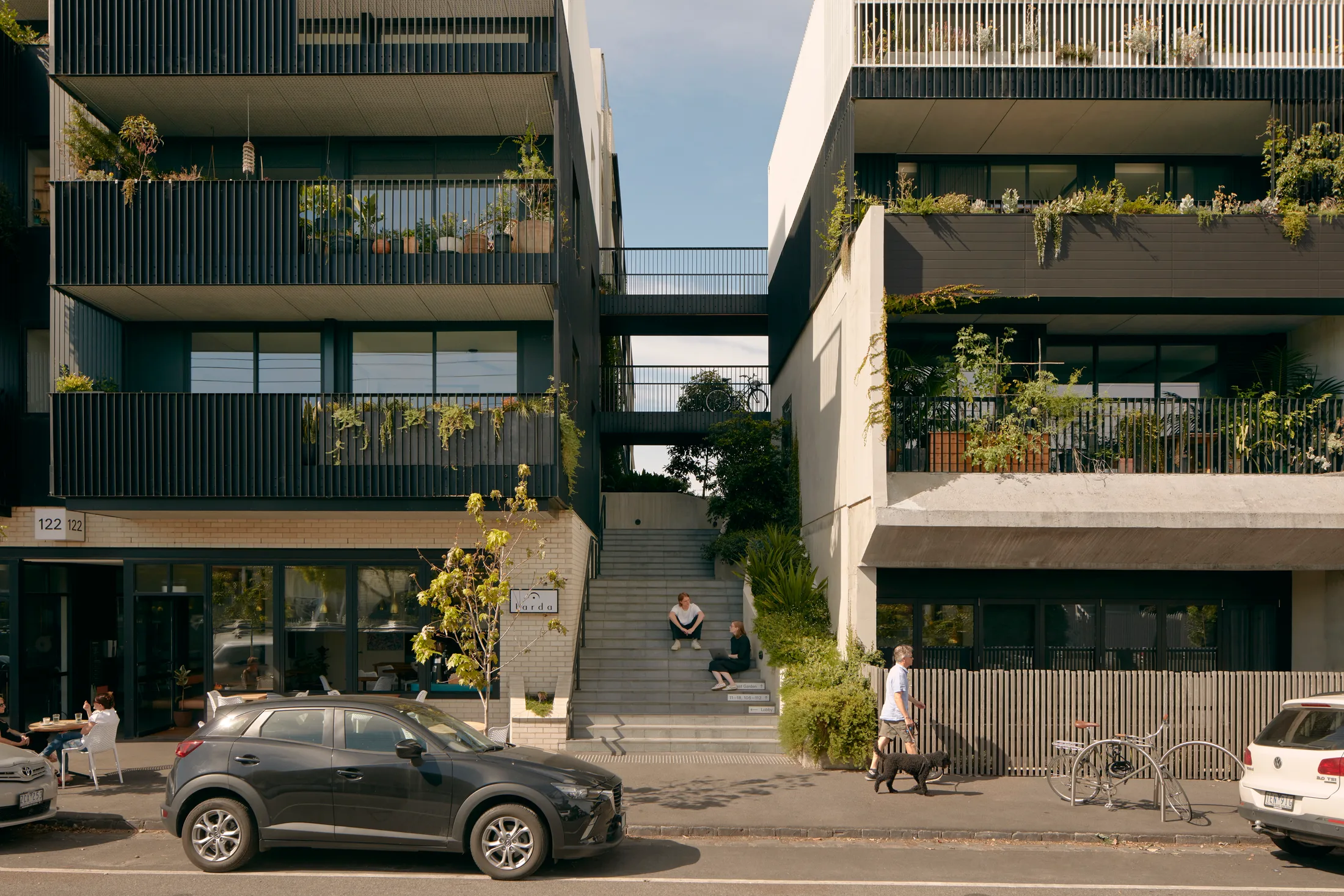
Quino Holland is an architect who’s trying to reverse that flip. As the Director of Melbourne-based design studio Fieldwork, it’s his mission to build apartments that people actually want to, you know, live in. The fundamental brief is to provide high-quality, low-cost housing, nurture community, and (in his own words) “bring real dignity to apartment living”.
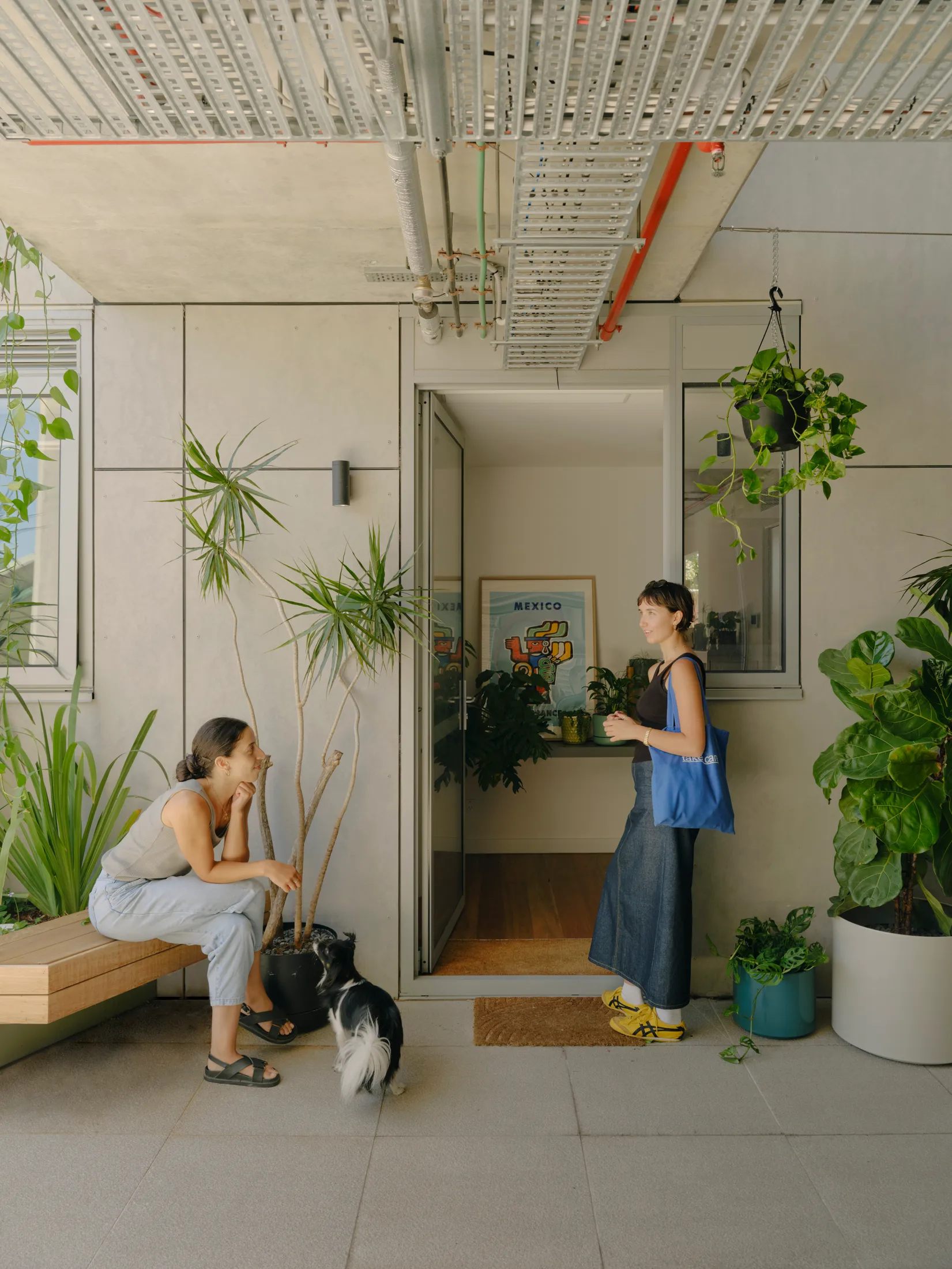
And the funny thing is, while words like ‘dignity’ sound quite lofty and nebulous on paper, the mechanics for achieving them are (almost always) small and tangible: more windows, thicker windows, better cross-ventilation, quality, hard-wearing materials, or public spaces with genuine utility. Even recessing a front door 30cm into the wall, creating a small alcove or doorstep, can help nurture a sense of community. Suddenly there’s space for a pot plant, space for a doormat, space for neighbourliness. Just more goddamn space.
“I think the most important tool an architect can deploy is empathy,” Quino says. “It’s about making sure that we're not narrowing down people's possibilities when they move into an apartment, but actually broadening them.
“If you design apartments right, you can have kids there. You can be old there. You can have pets and mobility and friends.”
Quino knows this first-hand, because for the last eight years he’s been living in a Fieldwork-designed apartment complex. “It's been wonderful,” he laughs, “because it means that I've got this living, breathing laboratory to experiment with.”
For Quino and Fieldwork, high-density design is as much about the bits between apartments as the apartments themselves. “I’m interested in the in-between spaces,” Quino admits, “like those classic walk-up apartments you get in Melbourne. The way the internal life of the apartment spills out onto the communal landings.”
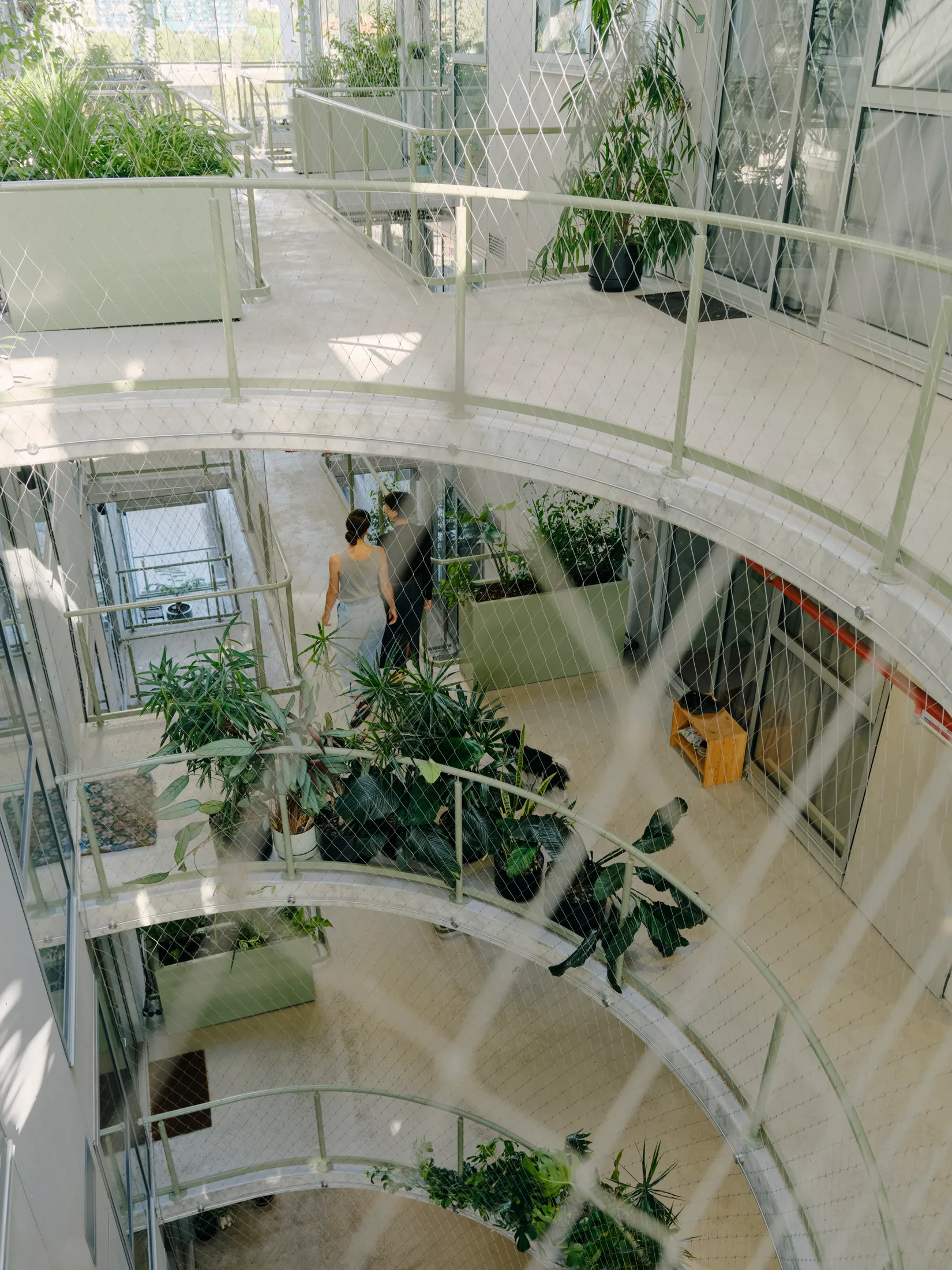
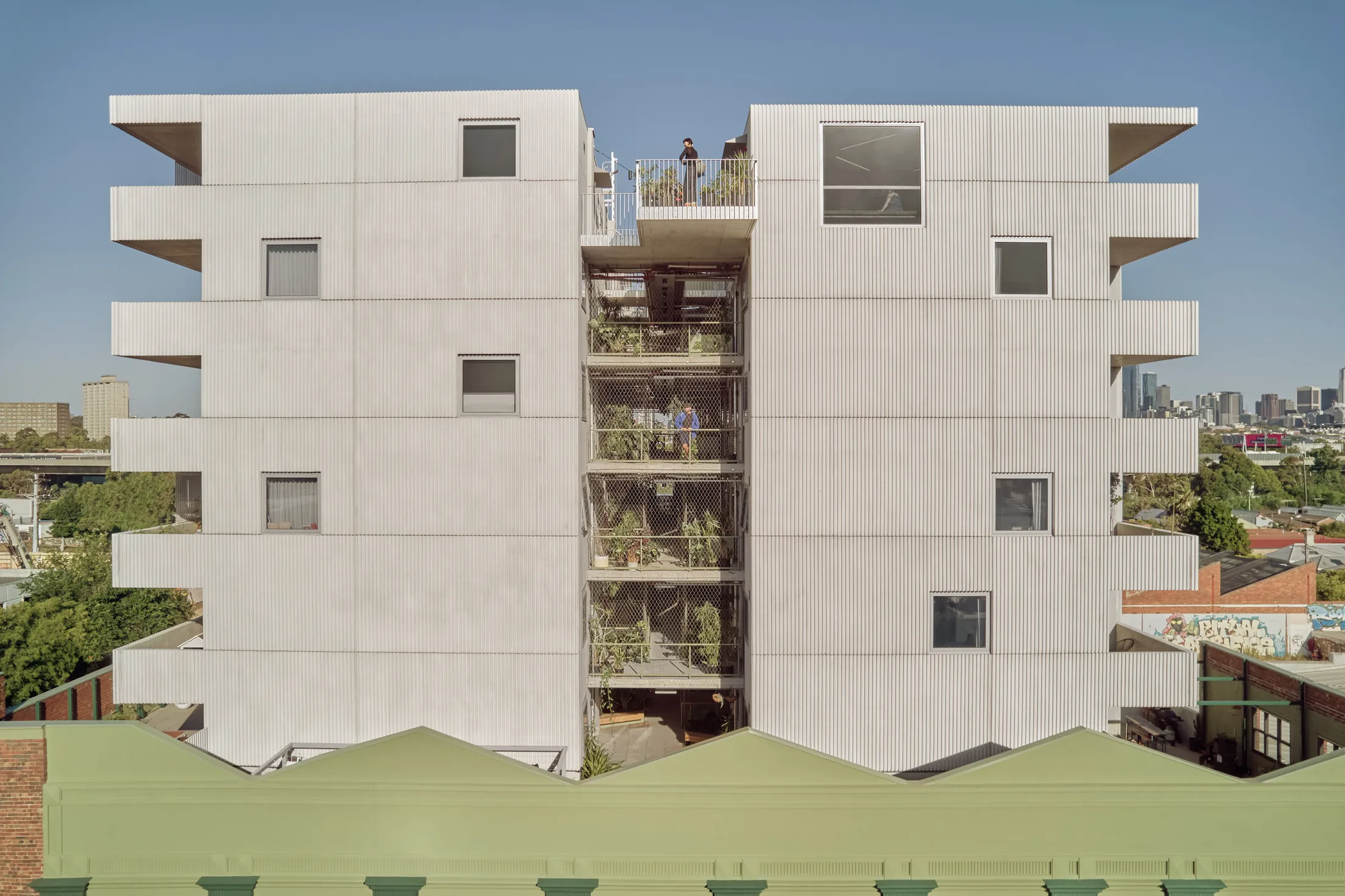
Fieldwork’s recent development for Assemble at 38 Albemarle Street, Kensington, is full of these little ‘in-between spaces’. Instead of the typical double-loaded layout, with a windowless corridor running down the centre of the building and all the apartments facing outward, Quino opted for an open-air walkway that connects the building and also splits it in half.
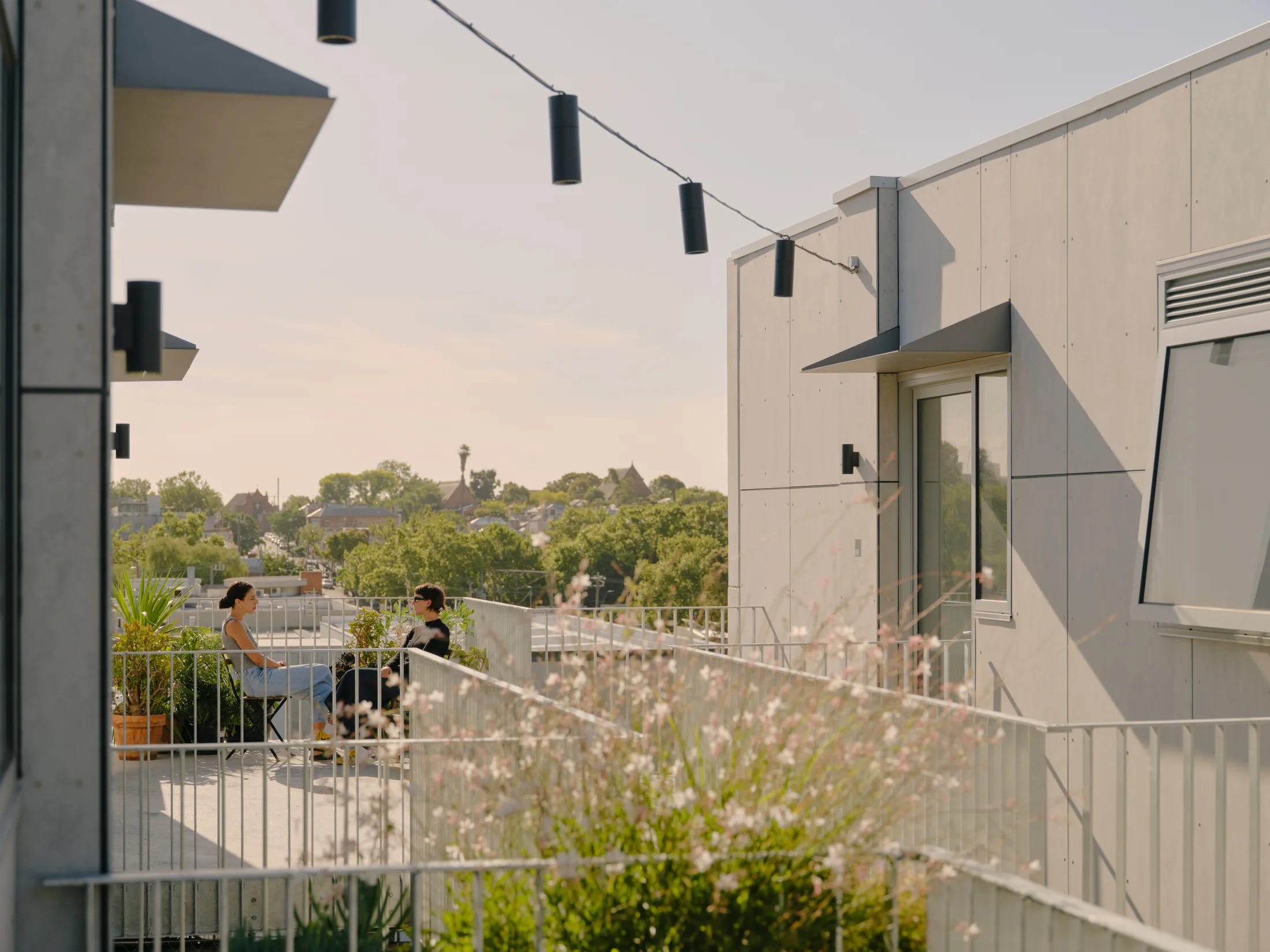
This did two important things. First, it generated cross ventilation for all the apartments, with both light and air circulating freely on both sides. Second, it created space for spontaneous community building. Small built-in bench seating encouraged people to stop and shoot the breeze with their neighbours. Pot plants started colonising the communal areas. Unlike the anonymous hallways of traditional double-loaded developments, the open-air walkway, cut through with massive vertical lightwells, provided the space for connection to grow. And grow organically.
“We gave each apartment a metre or two for its own little front veranda,” Quino says. “Kind of like a classic Victorian terrace house – you've got your private yard, which in this case is the balcony on one side. And then you have a little front veranda on the other; and that's a really lovely interface between private and public.”
“People throw this idea of community around a lot. And you can’t design community. But what you can do is design a building that starts fostering neighbourliness.”
These little ‘metre or two’ spaces really add up. Small measurements are the difference between a shallow, ornamental kitchen bench and a deep, functional one. A closet where coat hangers hang as nature intended, and one where they bump against the wall. An apartment balcony with room for a planter box, encouraging pollinators and wildlife. Or even a recessed study nook, allowing the residents to work from home (potentially saving on commute time and shrinking an entire neighbourhood’s collective carbon footprint).
One architect that embodied this generosity of spirit was British-American Christopher Alexander, author of A Pattern Language, and one of the most iconoclastic designers of the 20th century.
In his book, Alexander advocated for various ‘patterns’ – repetitive design rules – that (he believed) created an objectively beautiful, functional home. Things like orientating bedrooms towards the east (Pattern 138) since gently waking with the sun has always been the most natural and comfortable way to regain conciousness. Each pattern solves a particular design problem, and there are several that deal with small spaces:
- Build cosy alcoves or ‘caves’ into walls, so that children have somewhere to play and exercise their imagination (Pattern 203).
- Workspaces should be semi-enclosed and at least 60 square feet, to create the optimal blend of privacy and collaboration (Pattern 183).
- In major rooms, always make at least one window into a ‘window place’, with built-in bay seating or extra space for chairs (Pattern 180).
- Walls should be thick. Not just for thermal insulation, but so as to accommodate nooks, storage, shelves and surprises (Pattern 197).
- Windowsills should be low and broad, around 12 to 14 inches off the floor. This helps you stay connected to the garden (Pattern 222).