
Magazine Current IssueMagazine Current Issue
Smiling Design
Smiling Design
From our Mag
February 1, 2026

Smiling Design

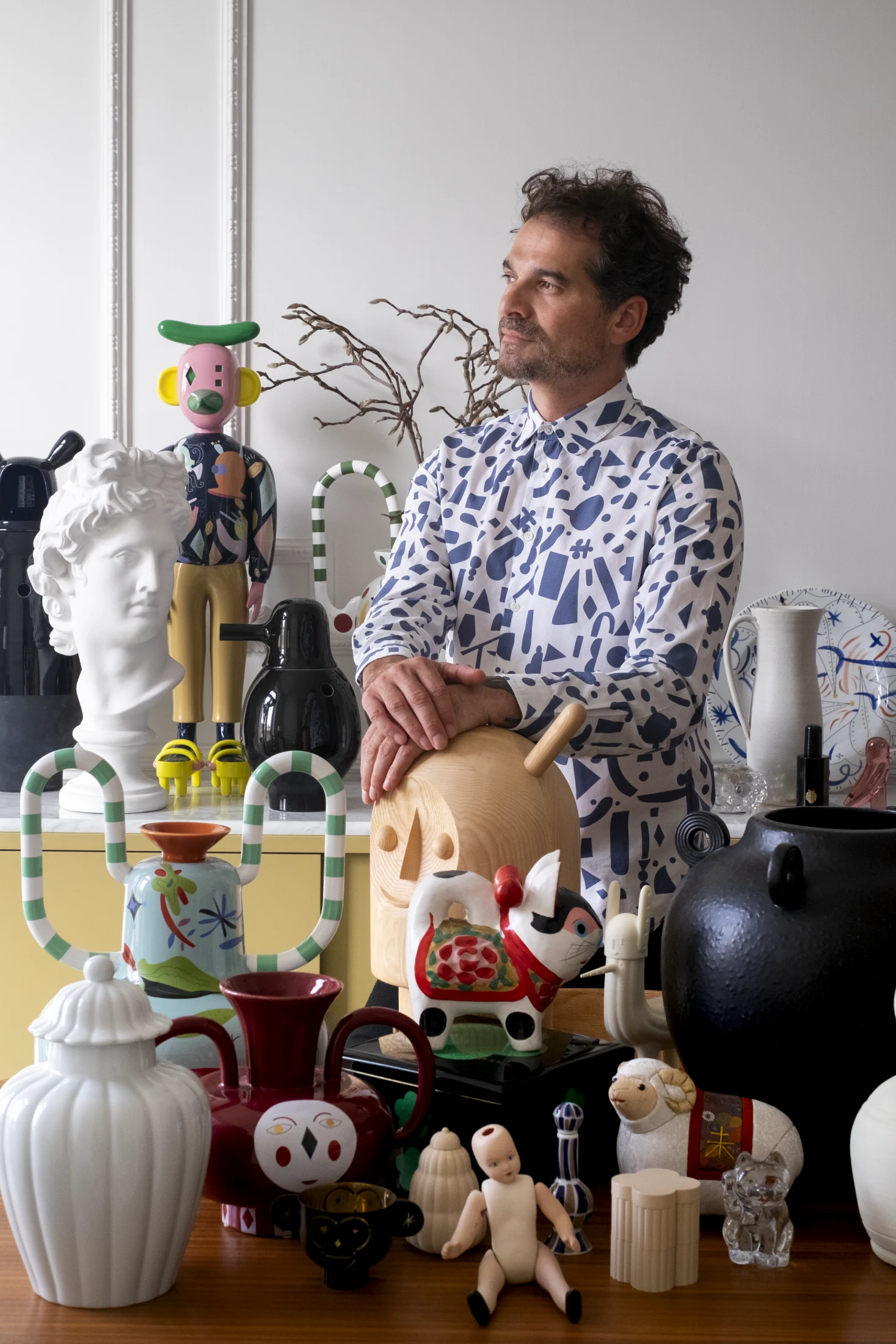
His first installations were constructed from his mother’s pots and pans but today Spanish designer Jaime Hayon spreads joy around the world with a prolific output across art, design and large-scale installations.

Function Follows Fun: An Interview with Jaime Hayo

One has to wonder whether Jaime Hayon's mother, all those years ago, knew that the little boy at her feet making kitchen installations would grow up to become one of the world's greatest living designers. The celebrated Spanish artist's earliest memories of creating go back to when he was just five or six years old, putting everyday items together to make works of art.

Kirsten Drysdale
Writing:
Writing:
Kirsten Drysdale
Photography:
Photography:
No items found.
Magazine Current IssueMagazine Current Issue
The After shot of the Floorplan
Before
before
after
After
Top
Arrow UpArrow Up

"I remember constantly drawing, even on furniture in school! I also remember sitting in my mother's kitchen and building things with pots and pans. Installations, I believe."

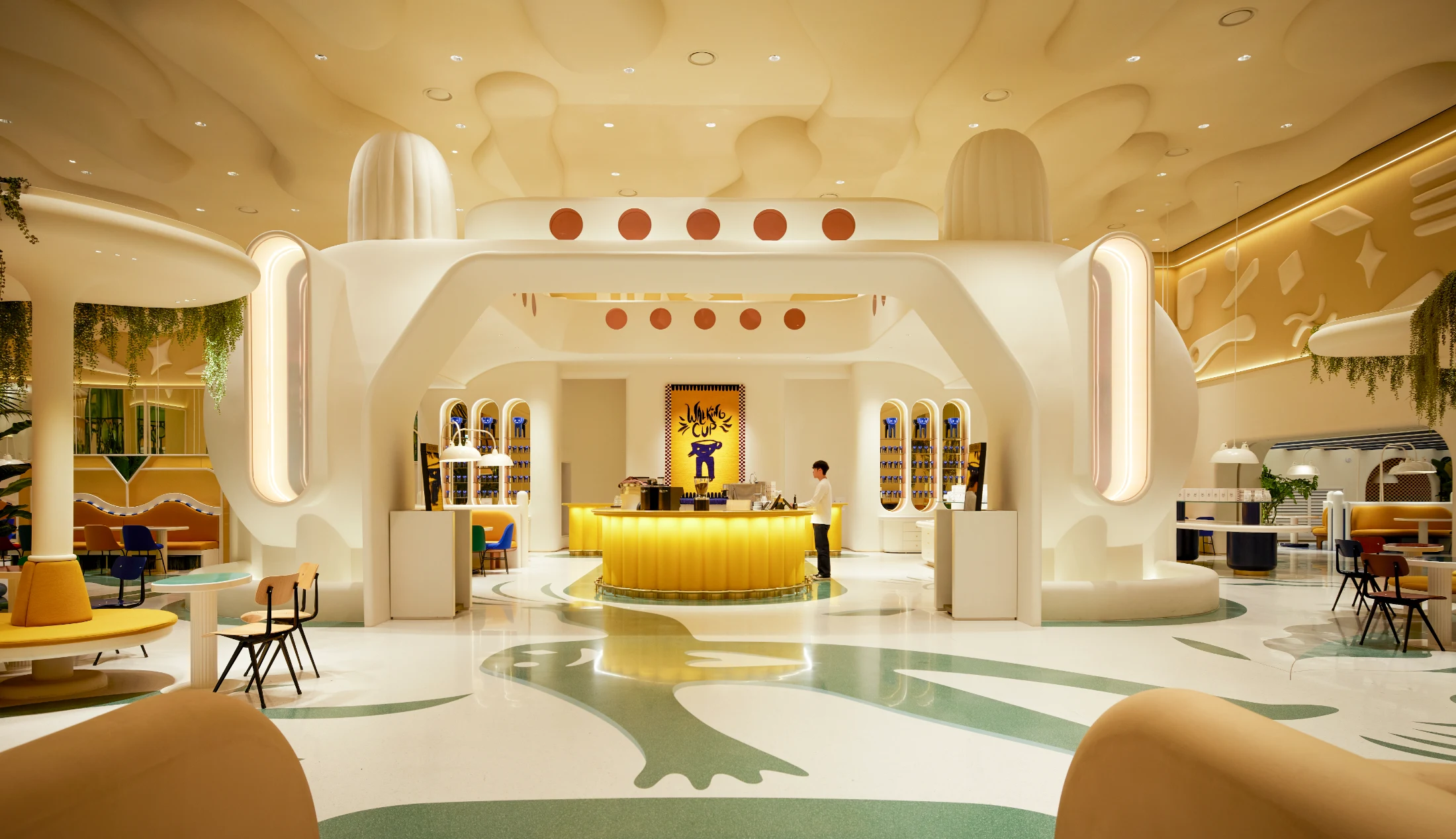
That compulsion became a calling. The little boy grew up to become a luminary of the contemporary design world. A professional creative, straddling the worlds of art, design and decoration; working across a range of media including sculpture, furniture, painting, lighting, interior design, glass and fashion. He is one of the biggest names chased by the biggest design houses all over the world for collaborations: BD Barcelona, Cassina, Fritz Hansen, Moooi, Bosa and Ceramiche have all had the Jaime Hayon magic touch on their collections. He's had installations in London's Trafalgar Square (a giant chess set), designed stunning interiors for flagship international hotels (The Standard, Bangkok), reimagined museum spaces (see: The Groninger Museum, The Netherlands) and had his own works featured in galleries all across the globe.

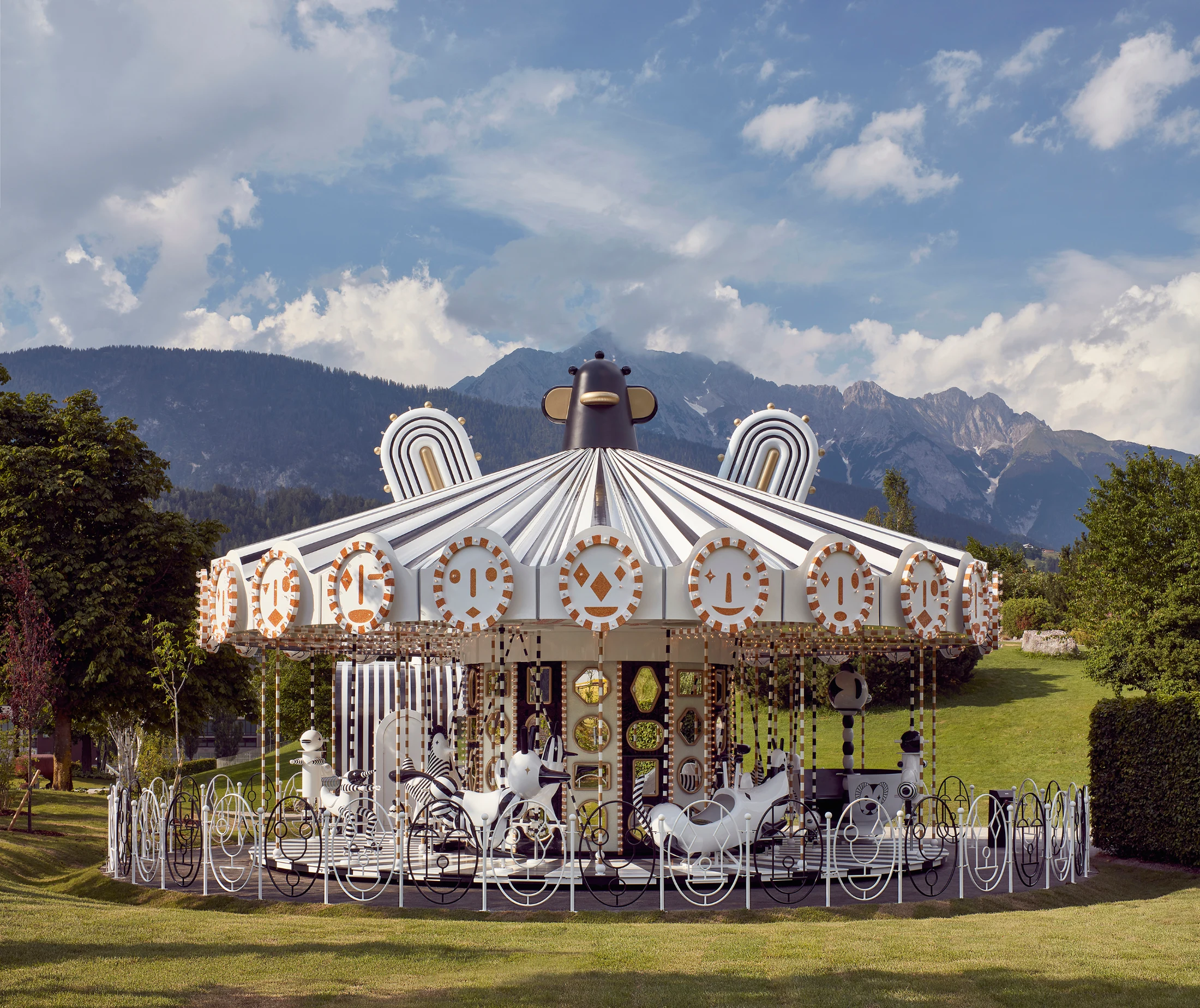
If there is a way to "bring a little bit of joy to this fucked up world", Jaime Hayon will find it. He'll put superfluous legs on a table. Or design an 'anti-vase' vase, to invisibly hold flowers (or weeds!). Use the wood from a sick tree to build a swing and a birdhouse, build a carousel in the Austrian mountains adorned with 15 million Swarovski crystals, make a "pavilion kaleidoscope" out of quartz and stained glass.

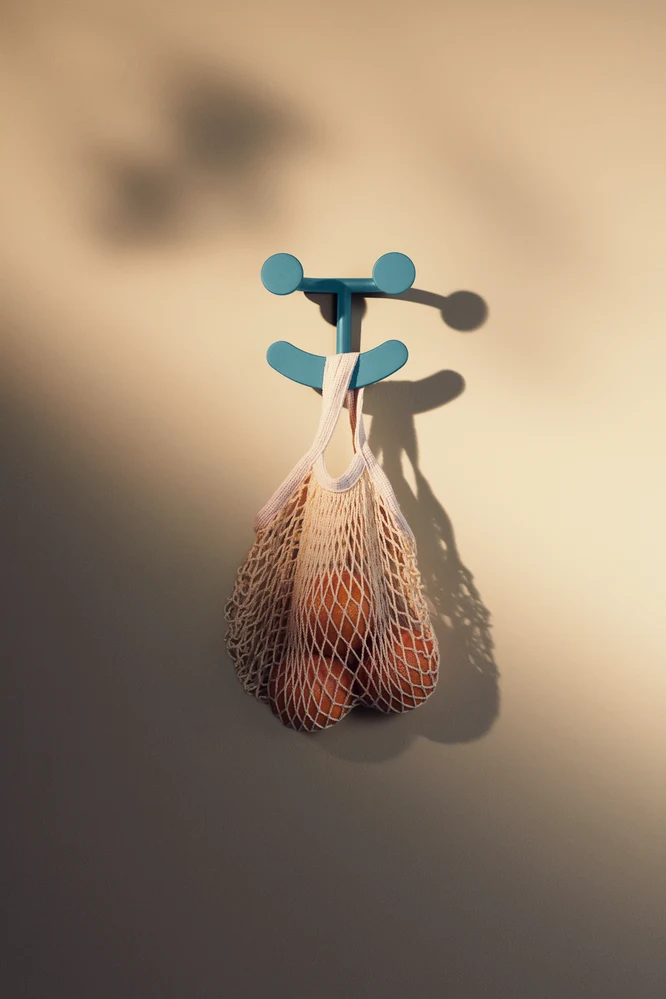
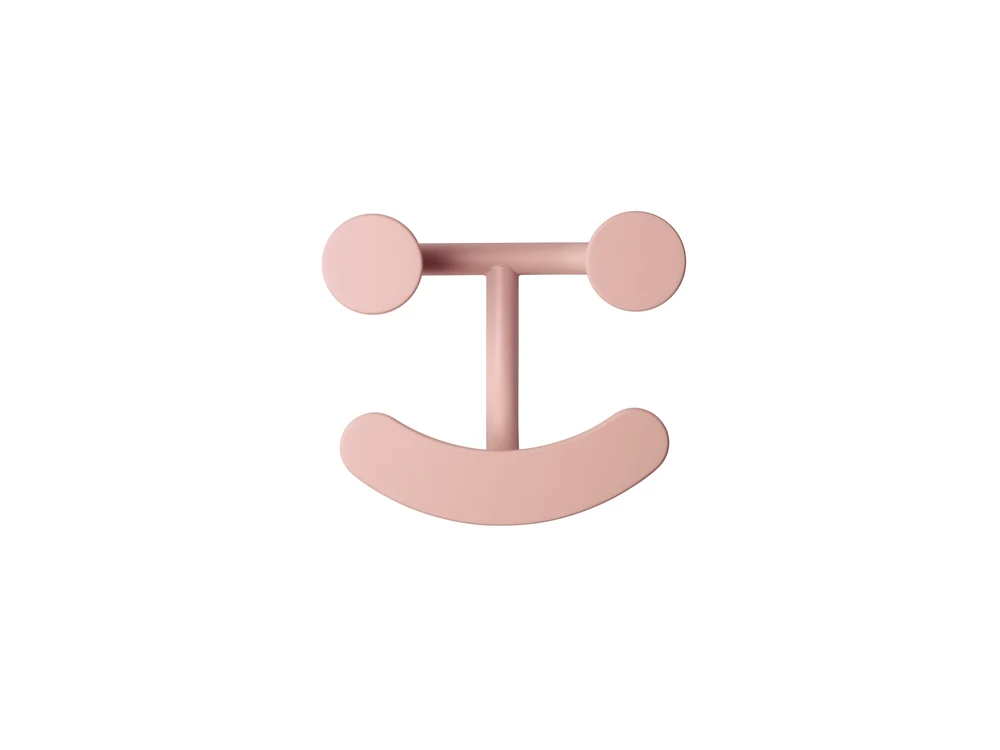
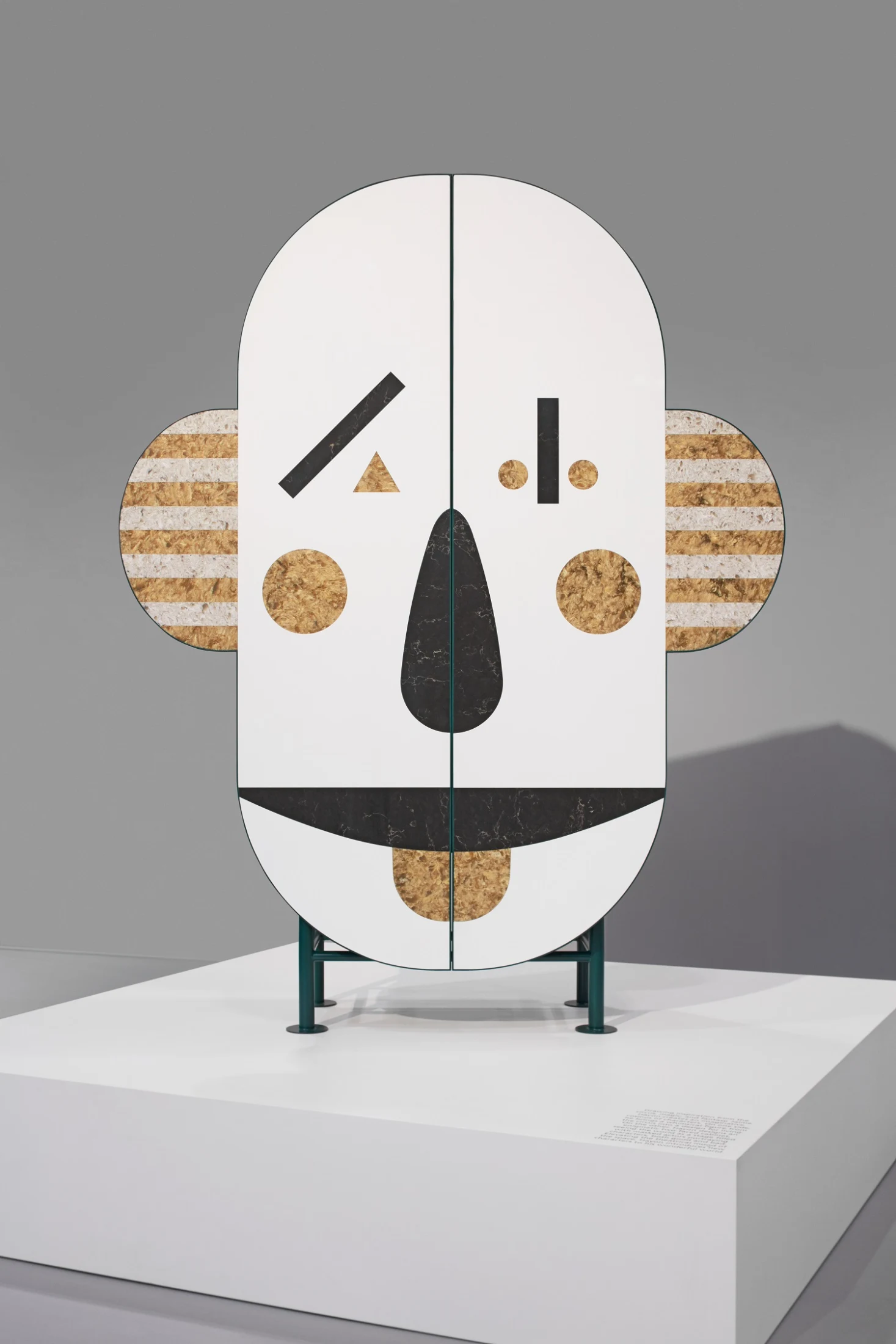
If there is one prevailing philosophy underpinning all of his work, it's that "One shouldn't take oneself so seriously. It's an obstacle for freedom." Faces feature prominently in his work, usually with an upturned mouth. He'll make a coat hanger smile, as a reminder that we should smile. Smiling is so important and fundamental to him, that when he was invited to design a flag for the prestigious Design Parade Hyères festival in 2025, he formed a 'smiling face' from "the purest forms of geometry": a circle, a square, a triangle and a half-moon. How does someone so exuberant restrain themselves from adding to such a simple, but powerful, design? With difficulty:

"I am frequently tempted with embellishment and need to contain the urge."

The secret to Jaime Hayon's prolific, high-energy output is finding inspiration in every aspect of a "good lived life". For him, that's in the time he's spent living with monks in Thailand, and the skateboarding culture he grew up in, and in witnessing the "fearless experimentation" of children.

He has a "third eye", and he says you do, too. To tap into it, you just have to break free from what's expected and be blind to boundaries.
Were you at all discouraged in your early career, when your teachers didn't understand what you were trying to do with your designs?

My first works were very much non-functional; I was just an artist creating sculptures and experimenting with ceramics because they were a cheap material that could look expensive. My teachers and others around me would look at my designs, like a table with too many legs or other pieces that weren't strictly functional, and they would say, "This really doesn't work," or "This is not functional." And I would tell them, "Well, I'm not trying to do anything functional". I was trying to figure out how storytelling and history could influence what I was doing, drawing inspiration from places like the British Museum for my ceramics. It was a completely different way of thinking about design compared to the old 'Bauhaus way'.

The industry at the time often saw design as anonymous, but I believed design should tell a story and provoke emotions. I wanted to bring joy and positive feelings into my work. This meant breaking the rules a little bit and not taking myself too seriously.

Was I discouraged? Not truly, because I have always believed in what I have in my mind. I learned very early on that creativity has no categories. I never thought industrial design was different from art or interior design, or installations. If you have a strong concept and a language, you can adapt to different things, and it will always carry the same essence.

You're passionate about 'practising enthusiasm' and bringing positive feelings, and have said you want to "bring a little bit of joy to this fucked up world". Why is that so important to you?

In a world full of sad news and difficulties, I like to make happy things for people. It's about maintaining a positive attitude and seeing life as an opportunity, even in challenging times like the pandemic, which made me appreciate what I have.

Ultimately, for me, design is not just about solving problems for a client; it's about making things that I like, that are born from an idea or a theme, and that tell a story, making them special. It's about creating an emotional connection, ensuring that people feel the energy and passion I put into every piece.

Why do faces and animals feature so often in your work?

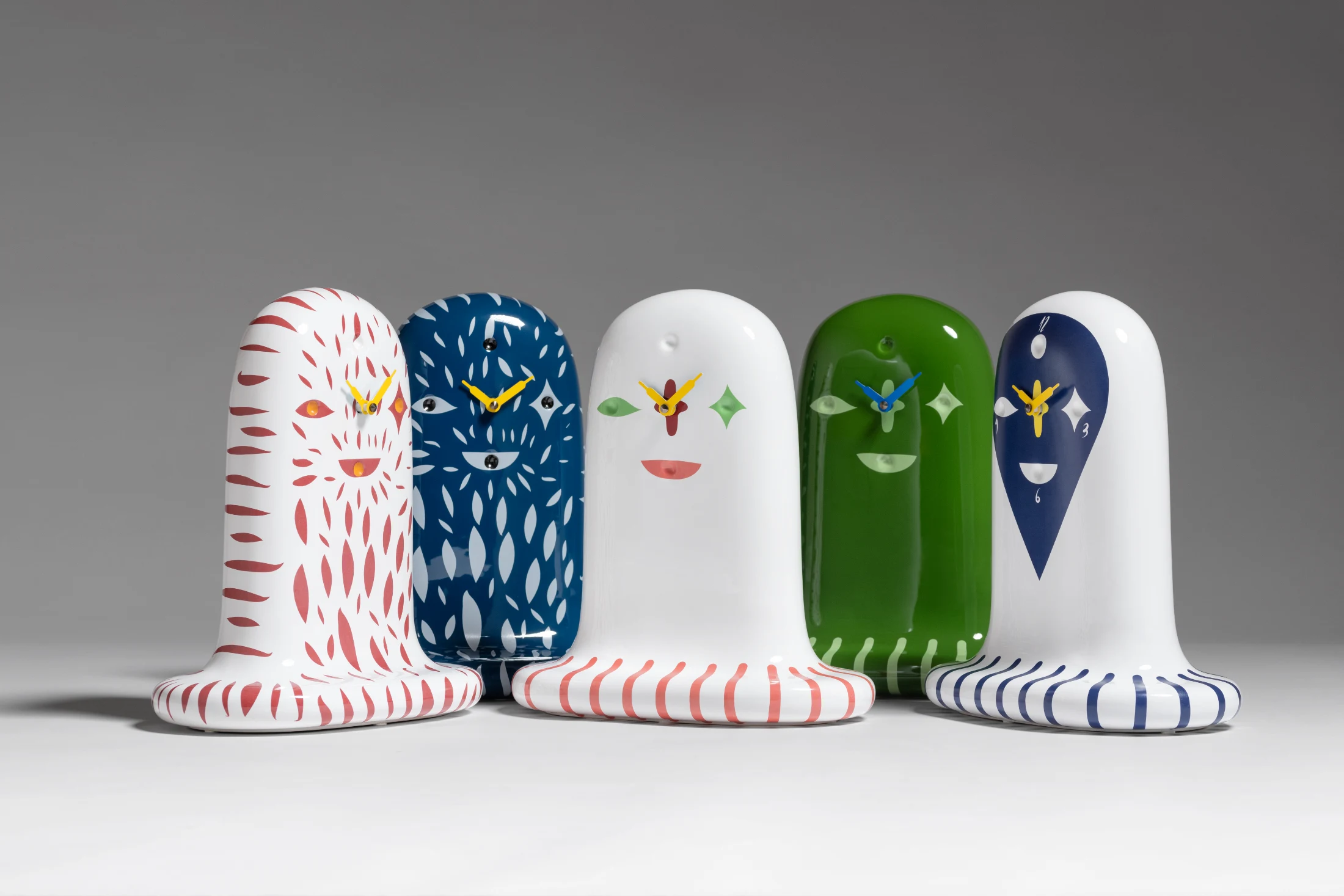
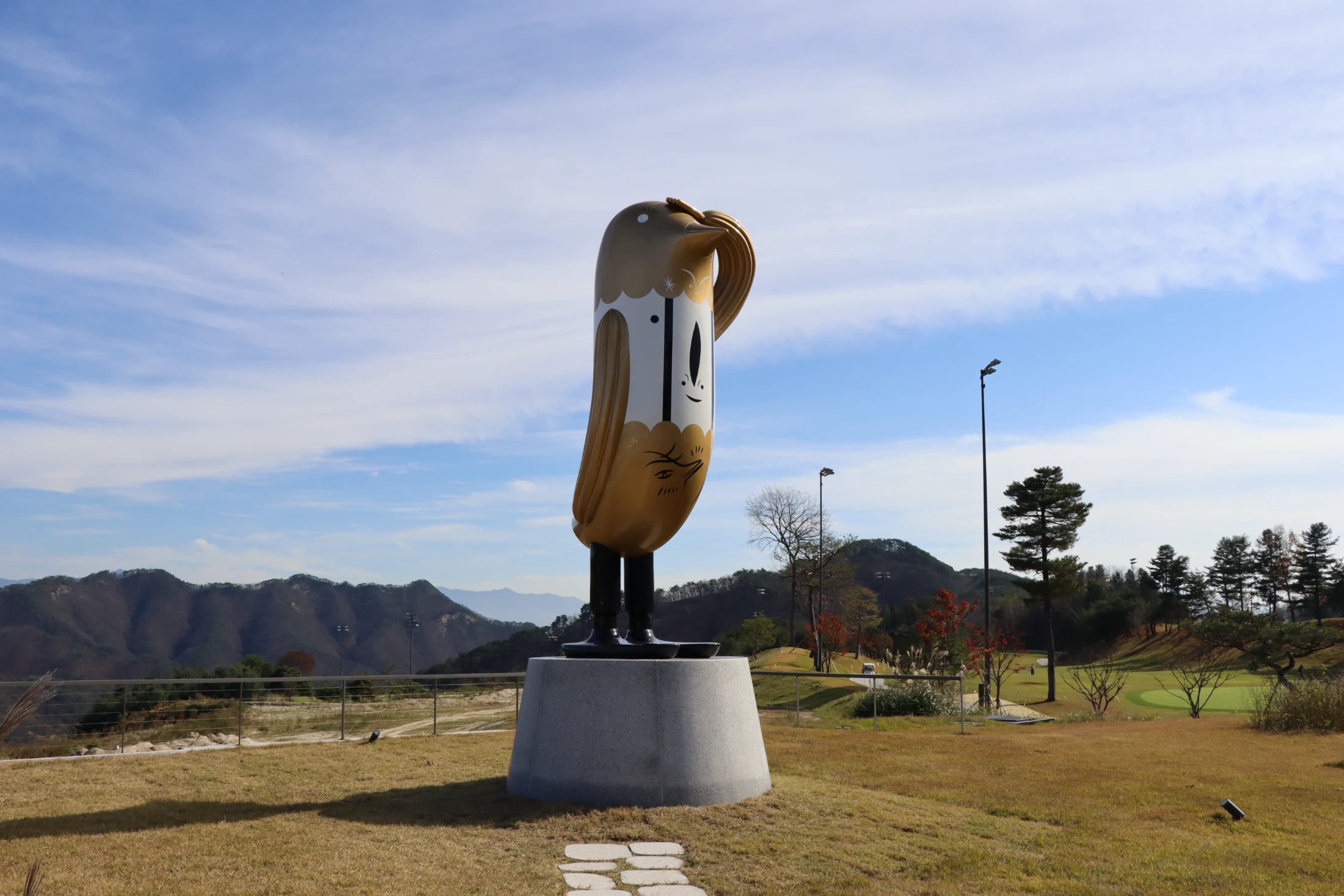
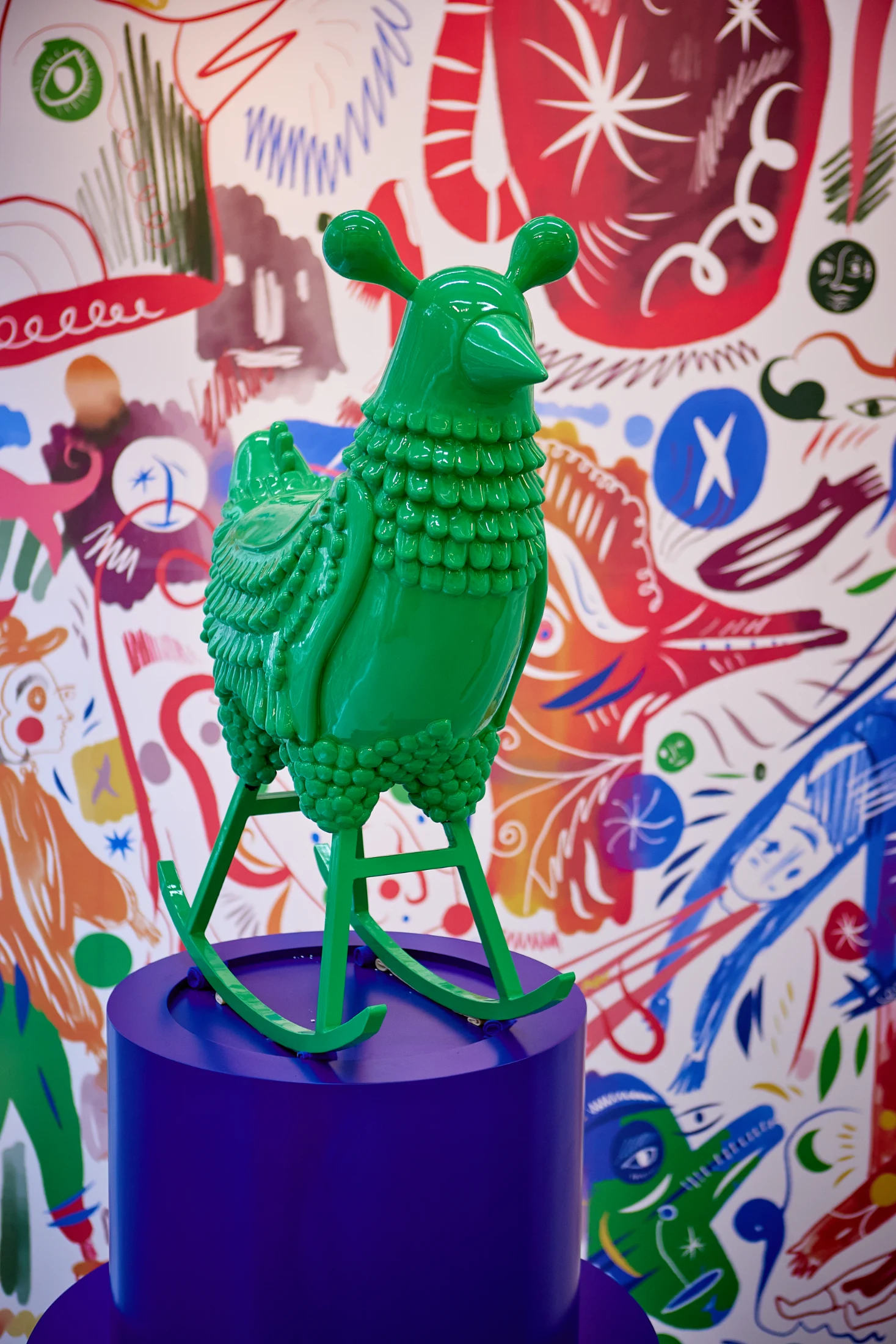
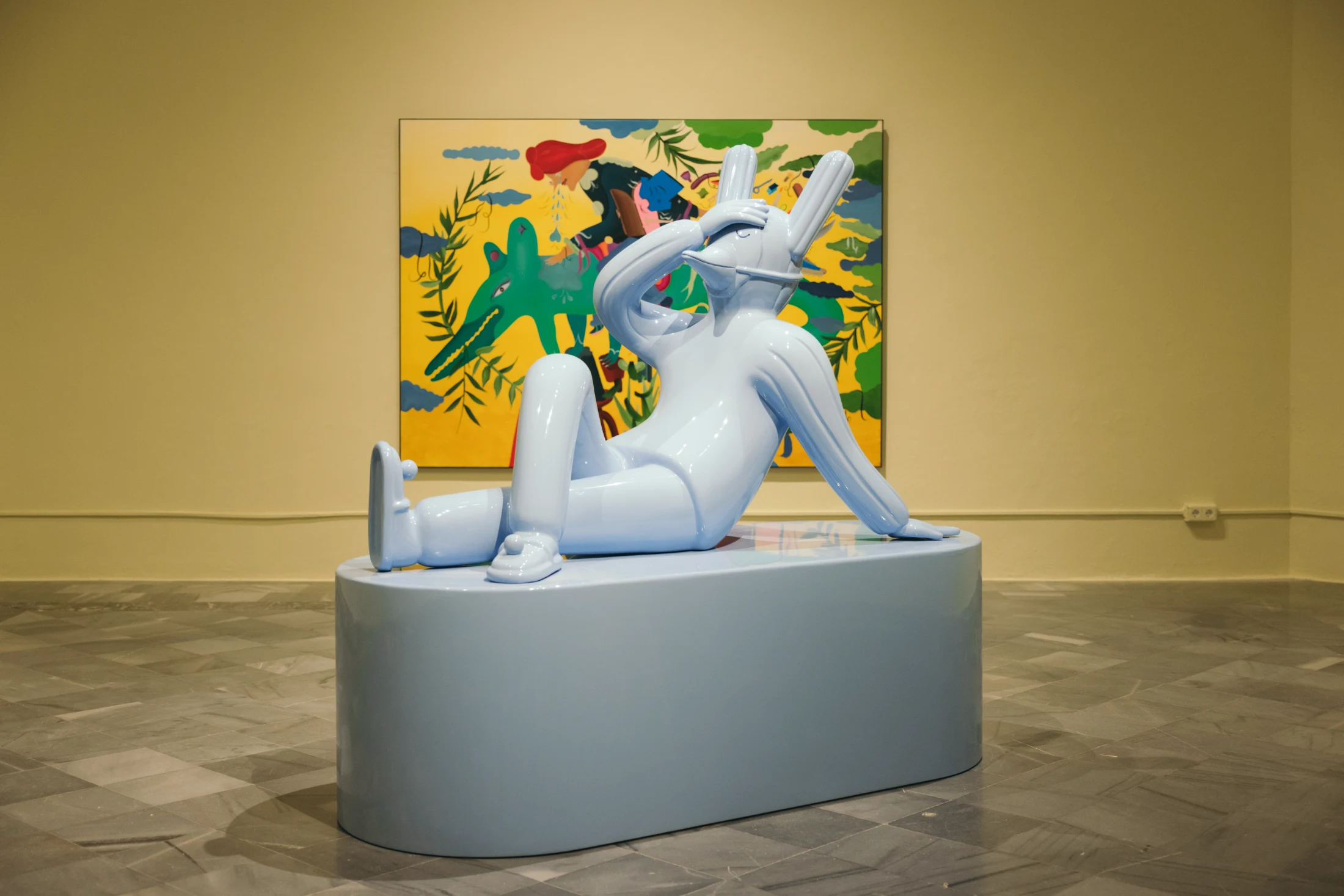
I find expressions very interesting and human interpretation of expressions are a mirror into one's and others' psyche. By giving my pieces anthropomorphic or zoomorphic qualities, I enhance this communication. Each animal or face often carries a deeper narrative or a personal code. For instance, my iconic "Green Chicken" rocking chair captures the essence of "Serious Fun," balancing the quality of materials with a playful subject. The Hope Bird sculpture looks towards the horizon, symbolising a positive outlook on the future. My Catch Chair is inspired by two penguins embracing, conveying a feeling of being embraced. Even the smiling coat hanger I designed for Fritz Hansen was a solution to remind me to smile every day.

If you had to choose one item from your enormous and varied body of work to best represent your aesthetic, what would it be and why?

I feel most identified with artistic installations that do not require many rules and where I can focus on expression. The Carousel I created for Swarovski is a good example of an installation / object / art piece that I feel very proud of. Set in the garden of the Swarovski Crystal Worlds in Wattens, Austria, the black-and-white carousel merges high-tech and craftsmanship with innovation and tradition. Every seat is a unique fantastical sculpture, it is adorned with millions of Swarovski crystals, which shimmer across its 12 ceiling panels and 16 wall panels. There is warm light that illuminates the structure, creating a dreamlike atmosphere. The craftsmanship behind the piece is impeccable and the result is an interactive experience set in a beautiful landscape that invites people of all ages to step into their wildest fantasies.

What else have you created that you are most excited by and proud of?

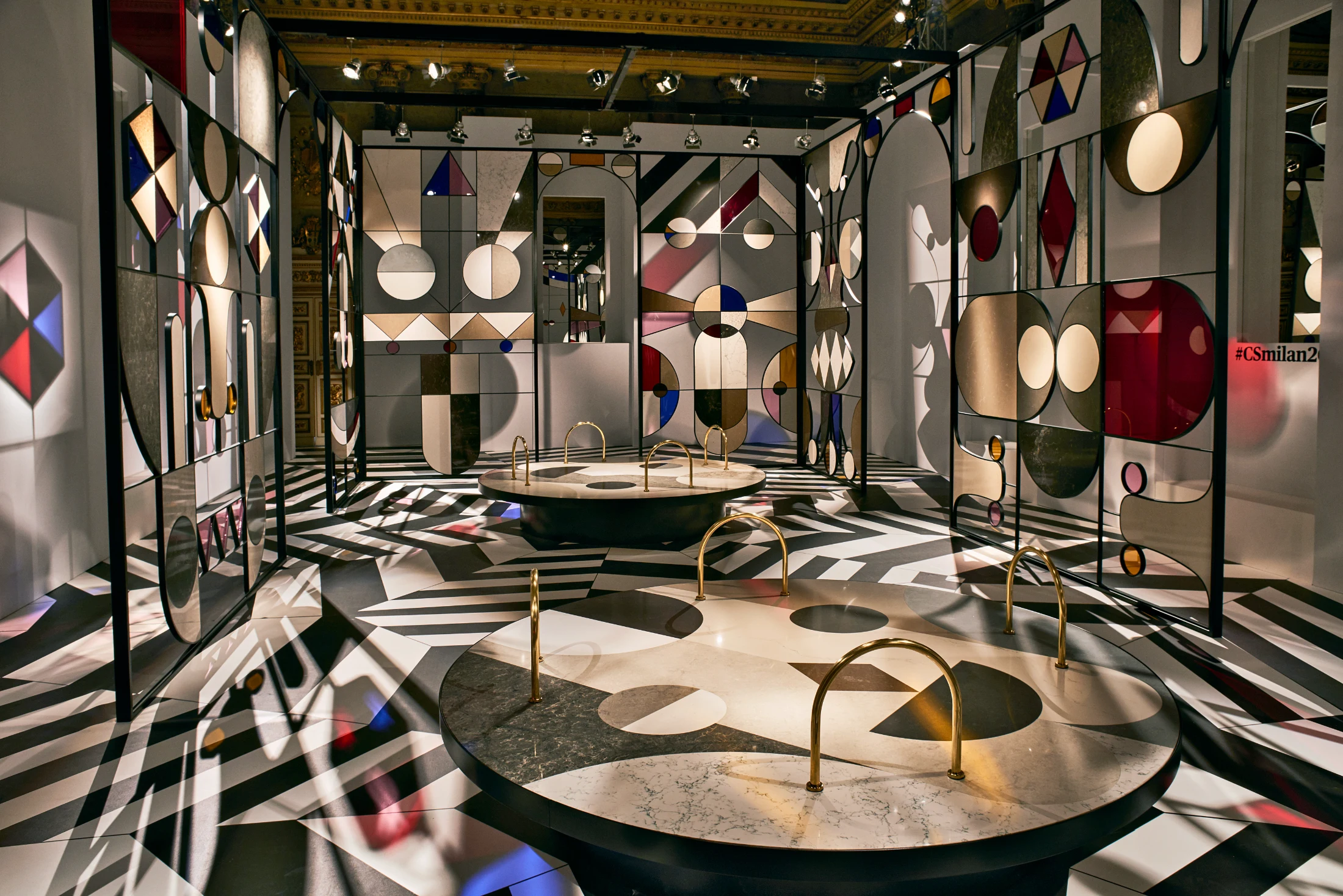
Another project I feel really reflects my work was the Stone Age Folk installation I created for Caesarstone which was showcased at the Palazzo Serbelloni in Milan, Italy. Stone Age Folk was an experiment with material on a grand scale that showed new ways in which the public could experience it. We transformed Caesarstone (a material usually considered really boring, typically used for kitchens and toilets) into something magical and expressive. The installation was like a pavilion kaleidoscope that combined the material with glass and metal creating a sort of 21st century marquetry. The panels had intricate patterns and graphical elements and with light shining through them, we created a magical game of colour, textures and reflections.

What's the strangest thing that's provided inspiration for you?

I have a fascination for the strange, especially when it means something unique and interesting. My creative process draws from unexpected places and I really think that inspiration can truly be found everywhere. One of the most unique commissions came when the Le Corbusier Foundation contacted me about a sick tree that had been planted by Le Corbusier for his mother's house, Villa Le Lac. This tree was central to the house's architecture, providing a natural roof. The foundation wanted me to "do something with the tree" after it had to be chopped down. Initially, I thought of making pencils, but the wood wasn't suitable. Instead, I considered "who would miss the tree" – the birds and children – leading me to design birdhouses and a swing from the wood. This then evolved into a collection of functional sculptures based on Le Corbusier's architectural theories and forms.

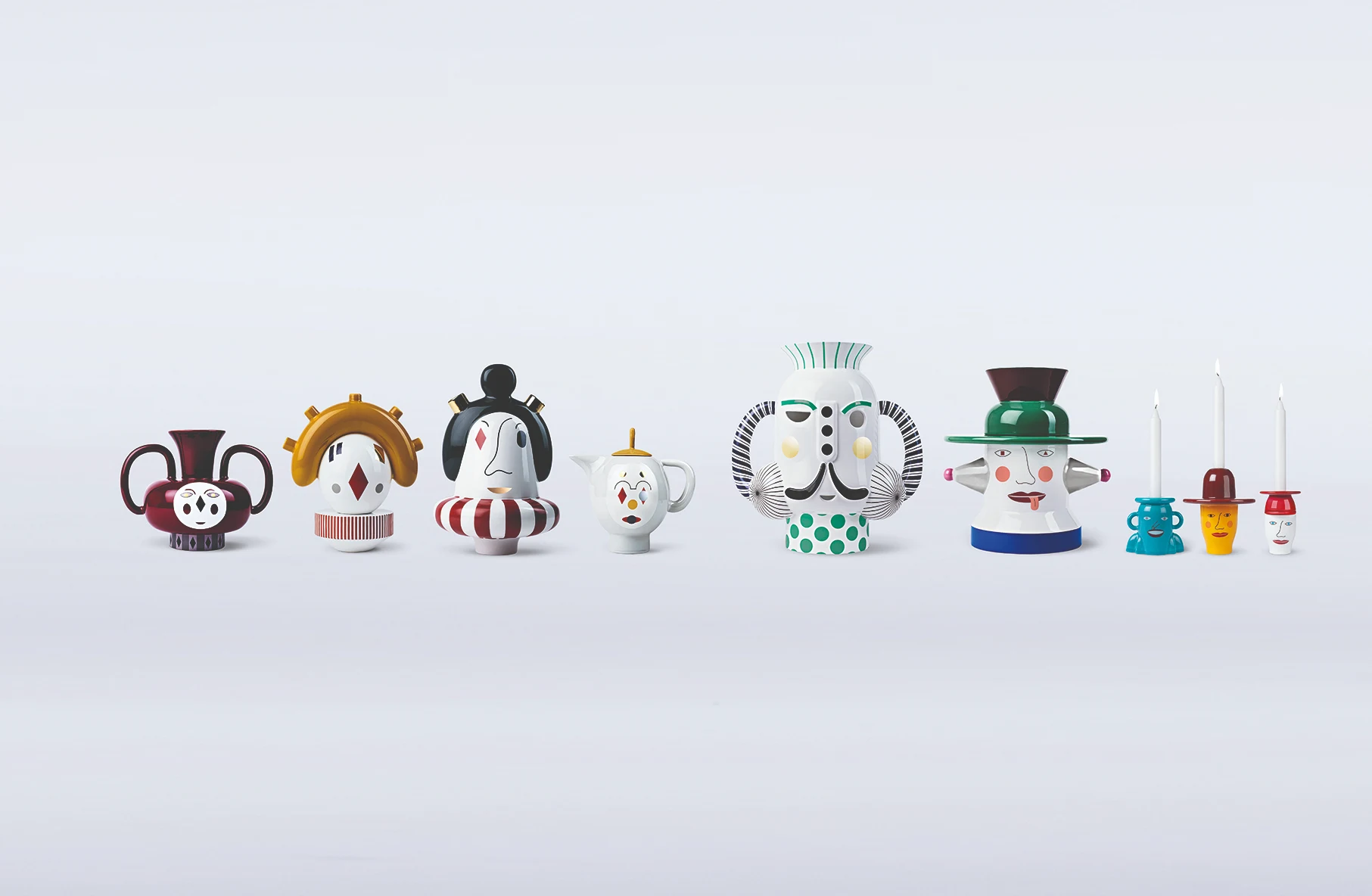
Another peculiar inspiration was behind my Mon Cirque vases. I had been to the British Museum and seen amazing Egyptian funerary urns. I found them beautiful and powerful, and made ceramic vases with character-like shapes, enamelled in precious metal finishes.

Speaking of vases, we're curious about your 'anti-vase' vases. Could you describe the thinking behind them? Do you remember the moment that idea struck you?

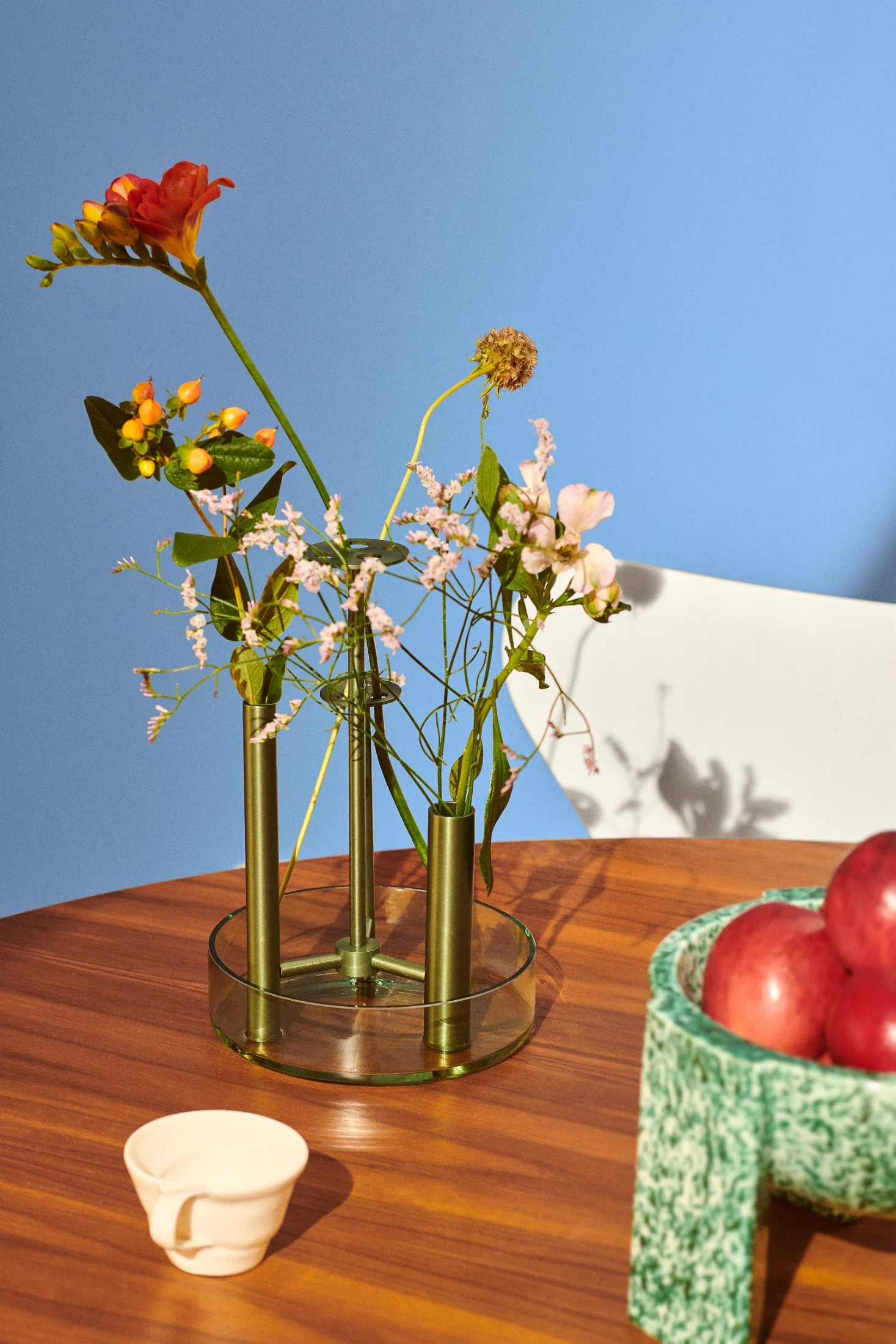
Ah! Ikeru! I have always admired Japanese flower arranging tradition and inspired by this, I created the Ikebana collection for Fritz Hansen. A very minimalist design for me. I love flower arrangements and the objective for this piece was to be able to appreciate the expression of the flowers themselves. The vase is a simple glass vase with a metal structure that allows for very free compositions. You can put a weed in it and it looks beautiful because it helps with the plants standing up properly and you don't need to use a lot of water, helping also to prolong the plant's life.

What do you love about working with kids?

I love their freedom, their focus, their imagination. They are not fearful of judgement, experimentation is their way to understand the world. I identify with a child's view of the world and I think their view is the most inspiring. Discovery, amazement, everything is new for them and I love this.

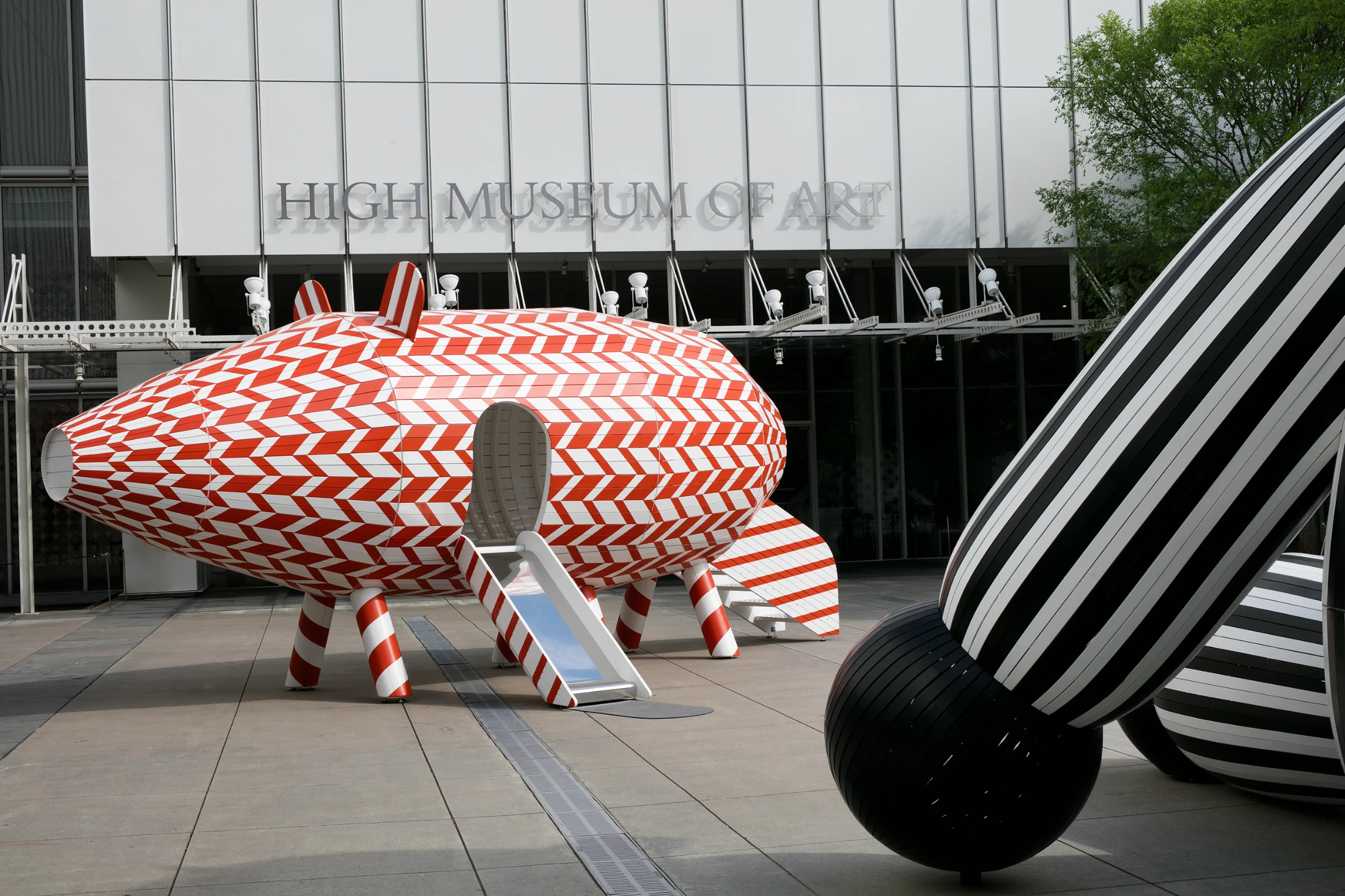
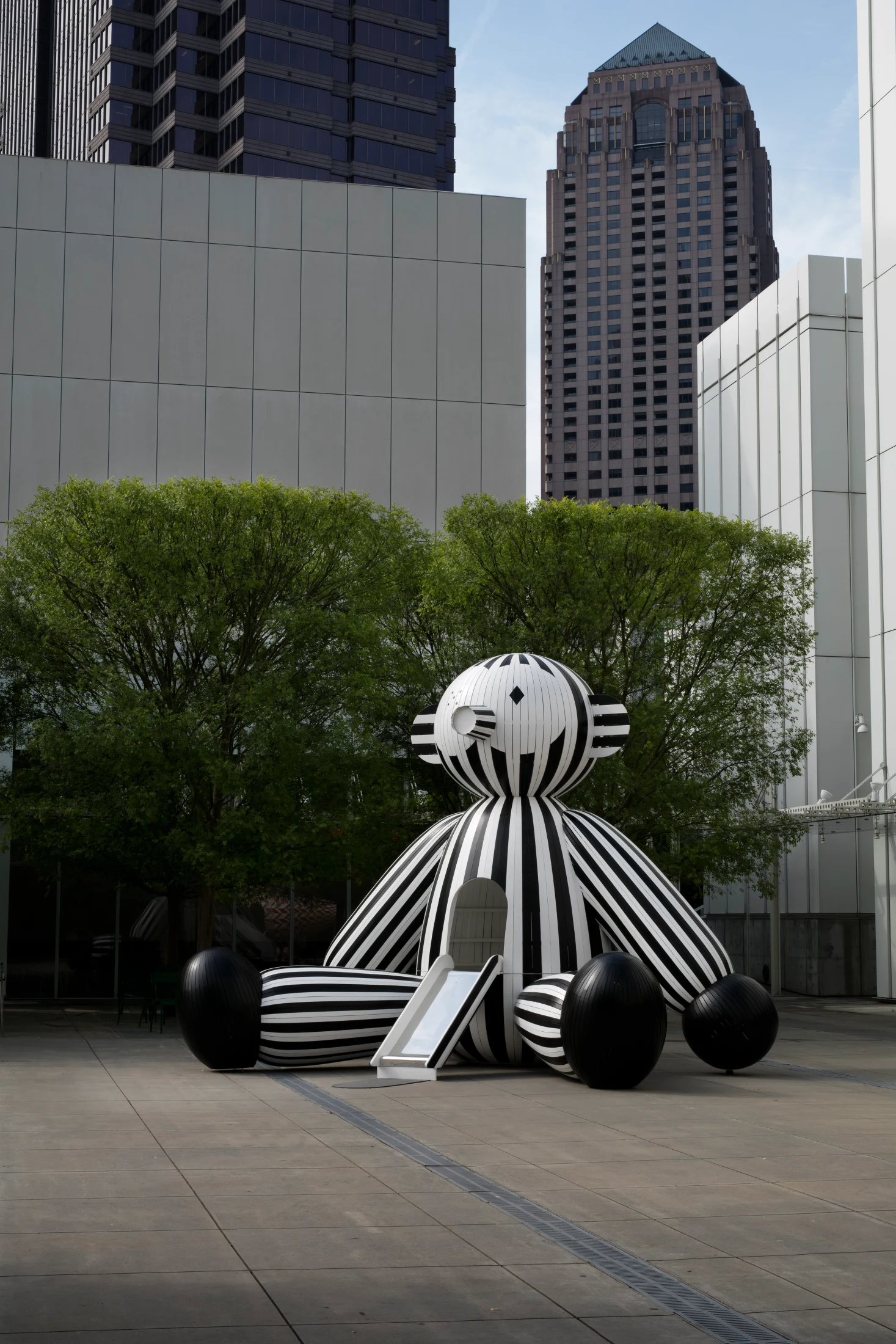
I have done several projects for families hoping to bring everyone together in platforms of art and play. The Tiovivo installation for the High Museum in Atlanta was a great example of this. It was a series of interactive playful sculptures that won the engagement of all members of the family. I think art is a binding platform.

Skateboarding is a big part of your life. What do you love about it? How do skateboarding and graffiti culture influence your design practice?

When I was a teenager, skateboarding meant freedom, it meant meeting cool and interesting people, it meant exploring individuality and personal style. The independent and underground scenes sparked my creativity, and it showed me how to dare and learn by making many mistakes and not being afraid of failure. These things are still very important to me today. All my skater friends were very creative. We made artistic drawings on skates for each other and creativity was at the core of everything we did.

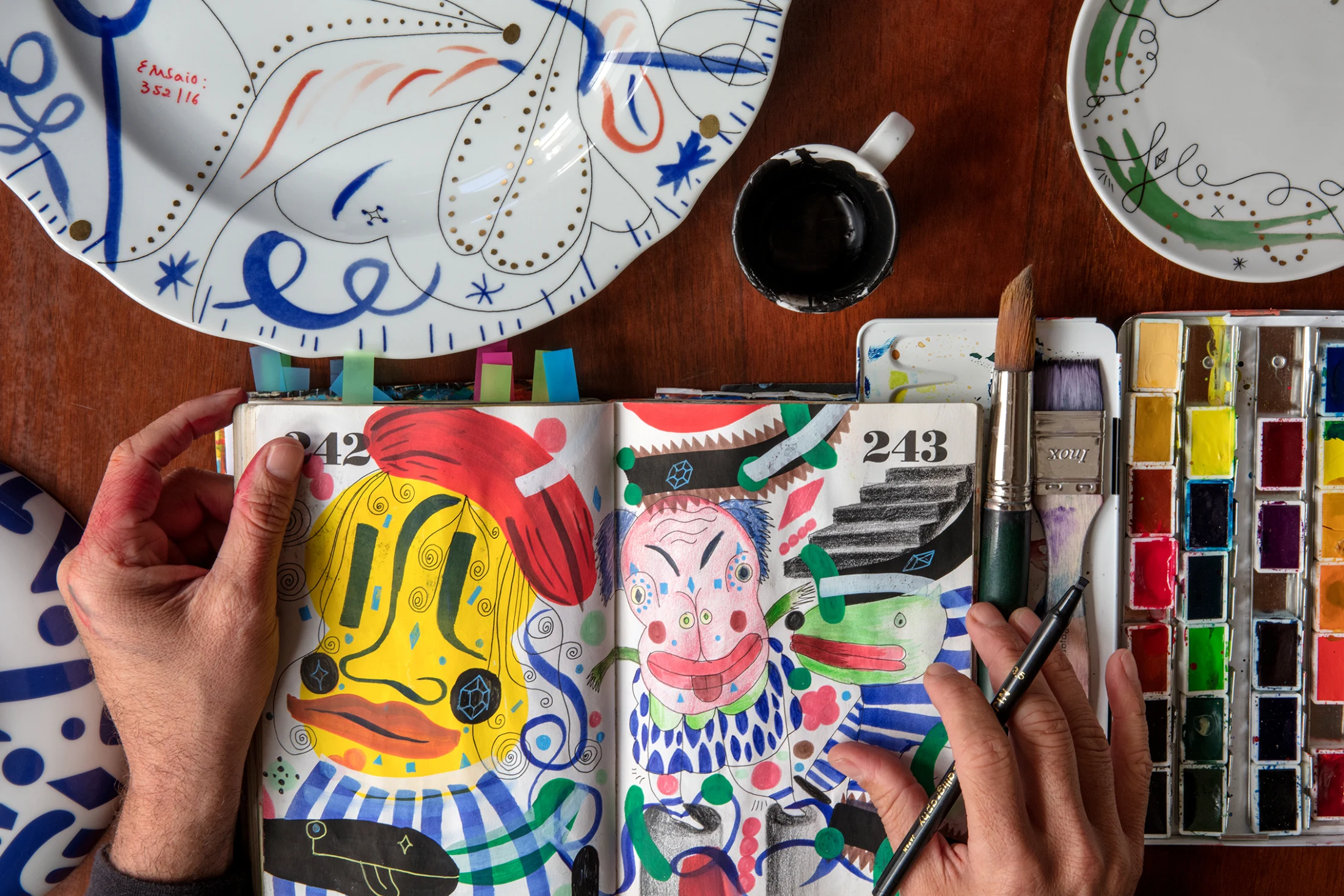
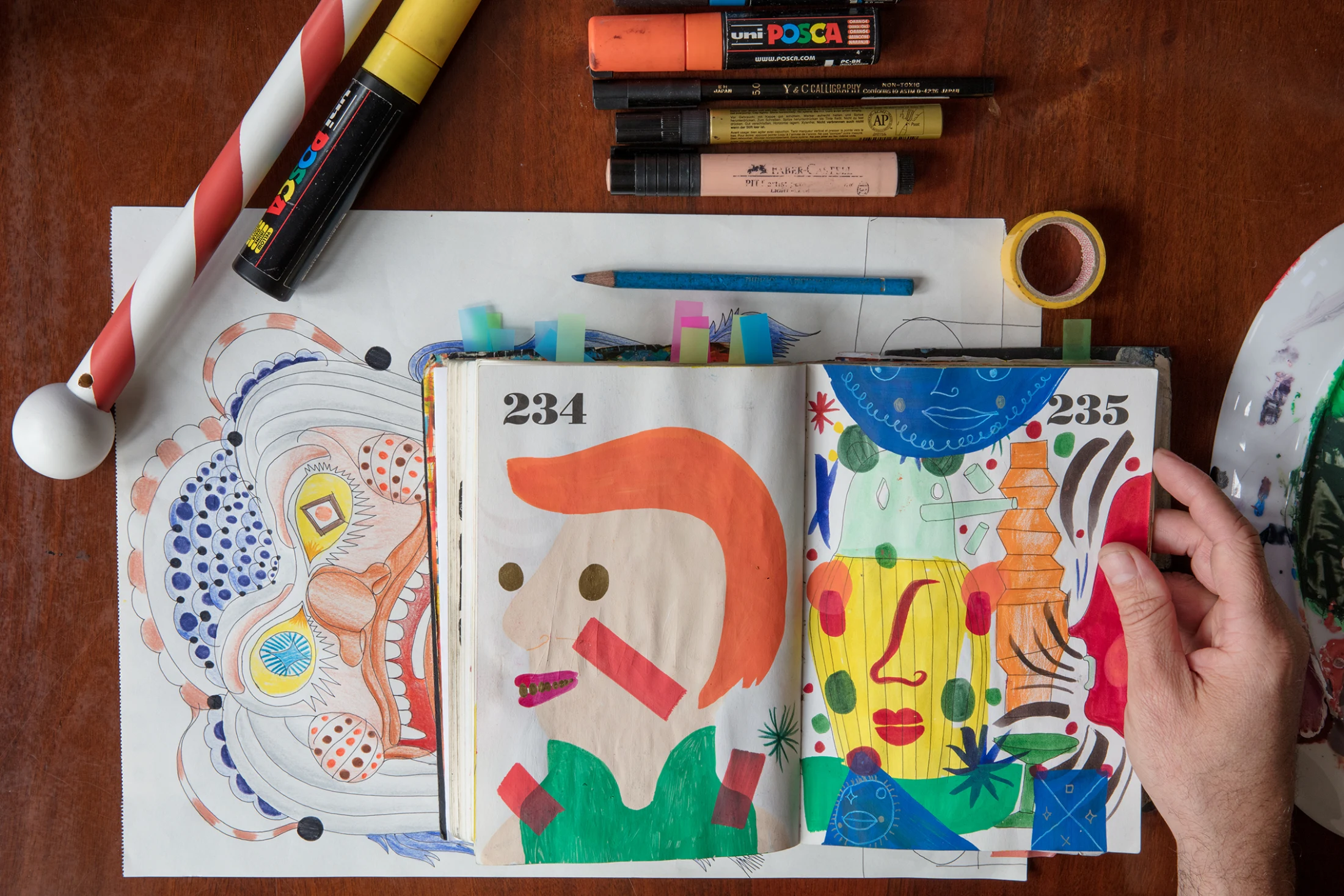
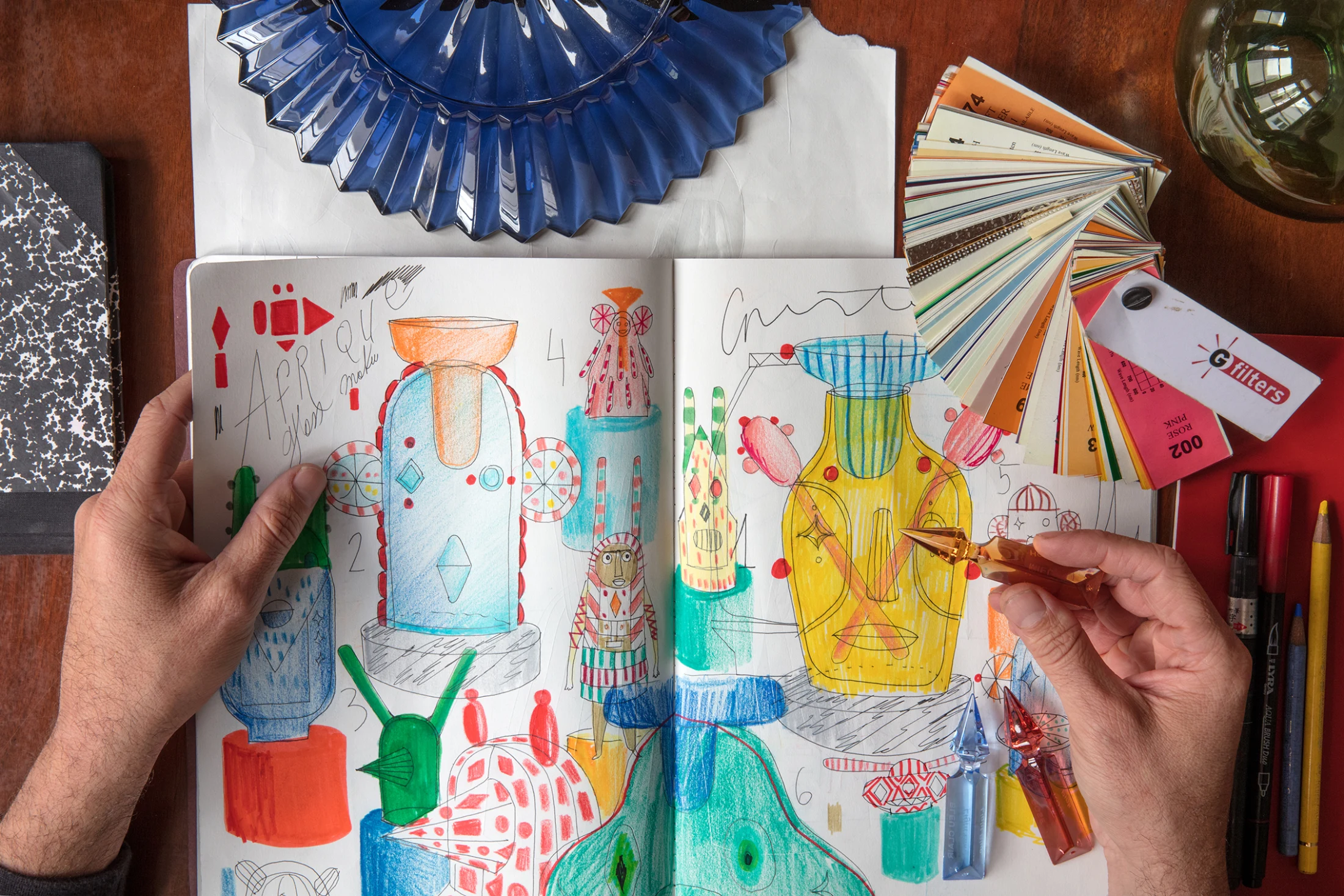
You once said you need to draw every day – "it's like meditation for me, it's like – you know, I'm totally focused". Where do you find your mind goes while you're in this meditative act of drawing – is it focused on the actual drawing itself, or does it wander to other ideas while your hands are busy?

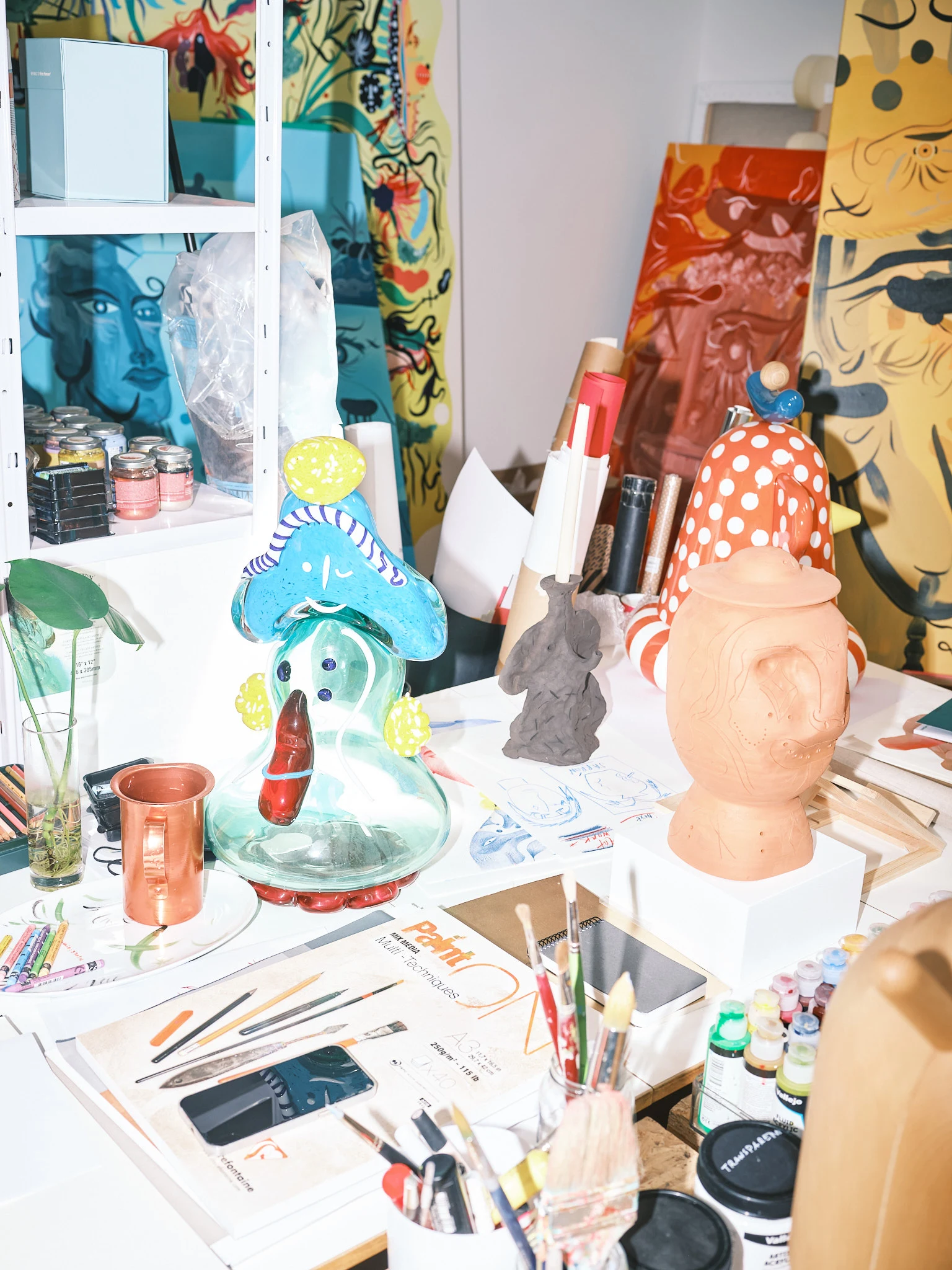
Both! All of it! It focuses my attention – even if I am sketching when speaking to someone, it gives me some sort of serenity. Drawing is like oxygen to me. It's a fundamental progression of my body and mind. It is a constant, almost meditative act, deeply ingrained in my daily life and creative process. I feel both focused exploration and unrestrained wandering. I can be incredibly precise and detail-oriented, especially when working through specific ideas. If you draw an idea, you test it, and there's a natural energy that is then distributed into the reality of the project.

At other moments, my drawing sessions are characterised by a profound sense of freedom and exploration, like dreaming. Even while I'm engaged in other things like talking on the phone, this constant drawing serves me as an outlet for my planet of characters, emotions, discoveries and surprises.

You've talked about how everyone has a 'third eye', and you talk about how you use yours to see things in a different way. How would you advise people, who aren't used to being creative, to access their 'third eye'?

The "third eye"! It's not something only I have, you know. I believe everyone has this "third eye" – it's that ability to look at things in a completely different way, to see no limits, and to constantly find opportunities for creativity. It's about breaking free from what's expected and daring to be yourself.

For those who feel they're not naturally "creative" or haven't accessed their "third eye," my advice is: embrace curiosity and observe everything, don't be afraid to "break the rules" and dare a lot and don't get stuck in categories. Do you, be you … creativity takes on many forms.

What do you think you'd be doing with your life, if you hadn't become an artist?

I could have been a cook, a massage therapist, a bazaar salesman … aren't these all arts anyways?

I am interested in so many things, I don't think that finding what to enjoy doing could have been an issue even if I chose another path.

Writing:
Writing:
Kirsten Drysdale
Photography:
Photography:
Back to Top
Arrow UpArrow Up
Top
Arrow UpArrow Up
The After shot of the Floorplan
Before
before
after
After
Businesses featured in this project
No items found.
Products featured in this project
No items found.
Magazine Current IssueMagazine Current Issue
Writing:
Writing:
Kirsten Drysdale
Photography:
Photography:
Back to Top
Arrow UpArrow Up