Magazine Current IssueMagazine Current Issue
Part of the Furniture
From our Mag
May 1, 2025

Part of the Furniture

Photographer Hayahisa Tomiyasu spent five years observing an outdoor ping-pong table and learning a thing or two about human creativity.

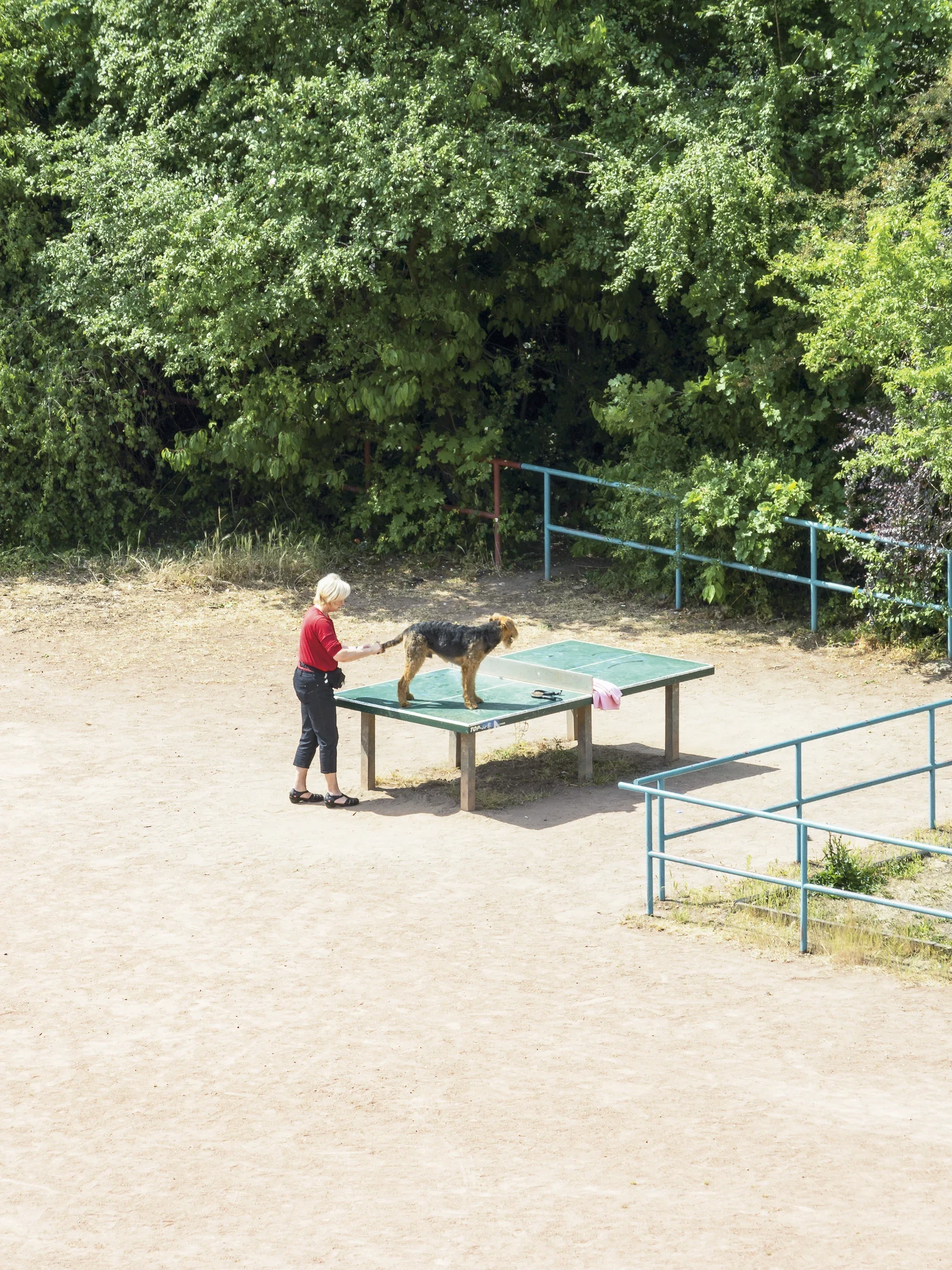
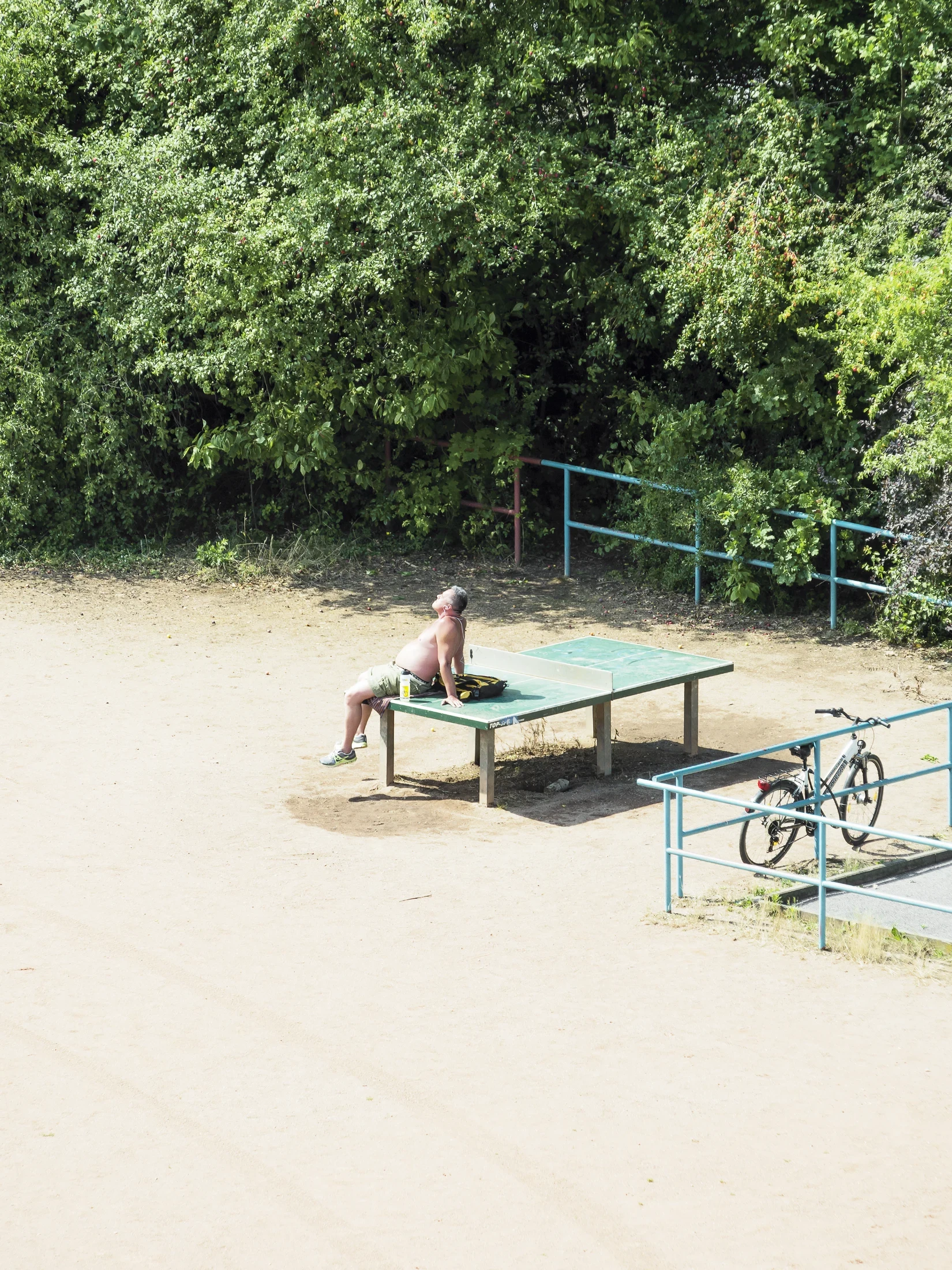
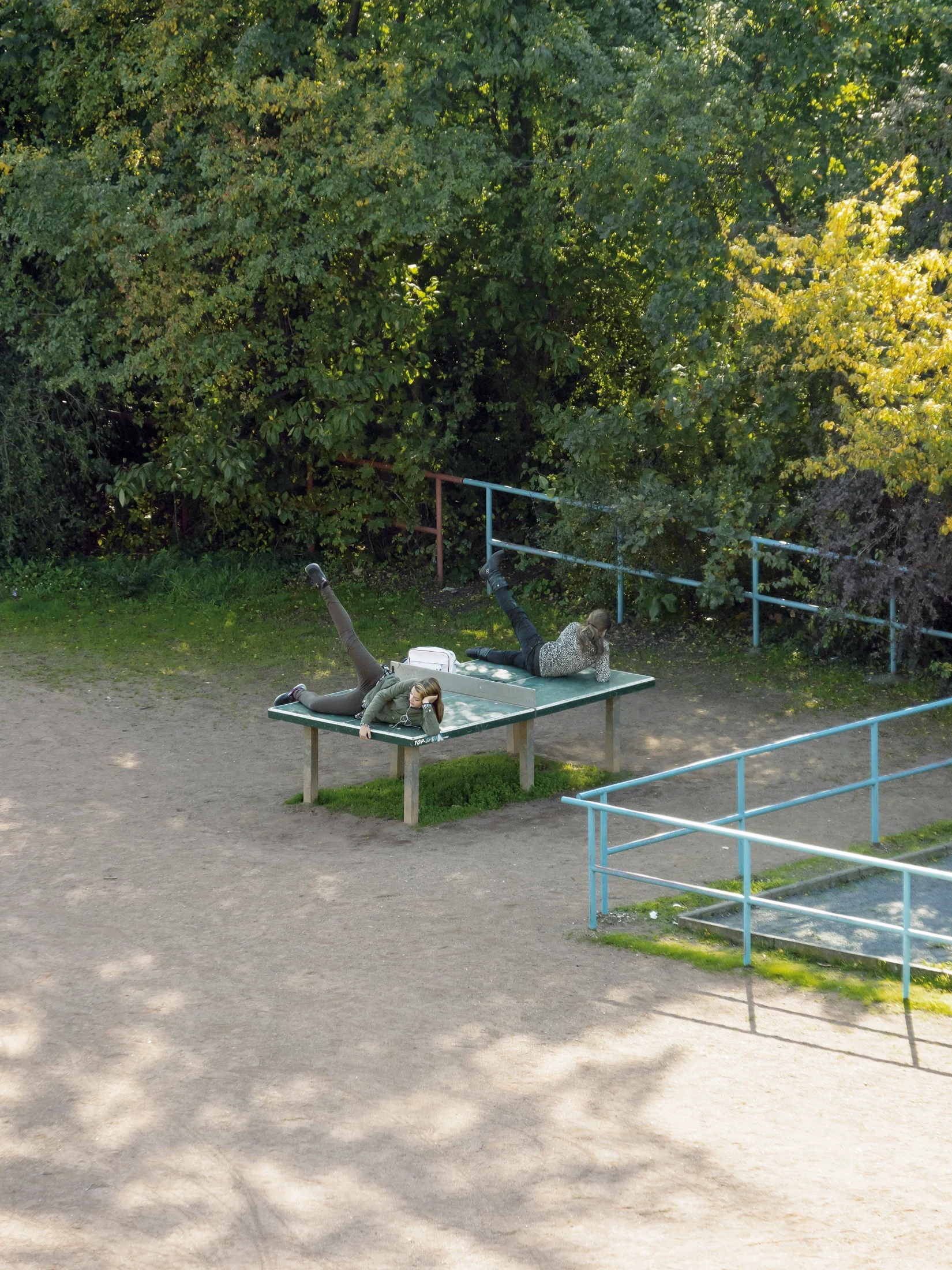
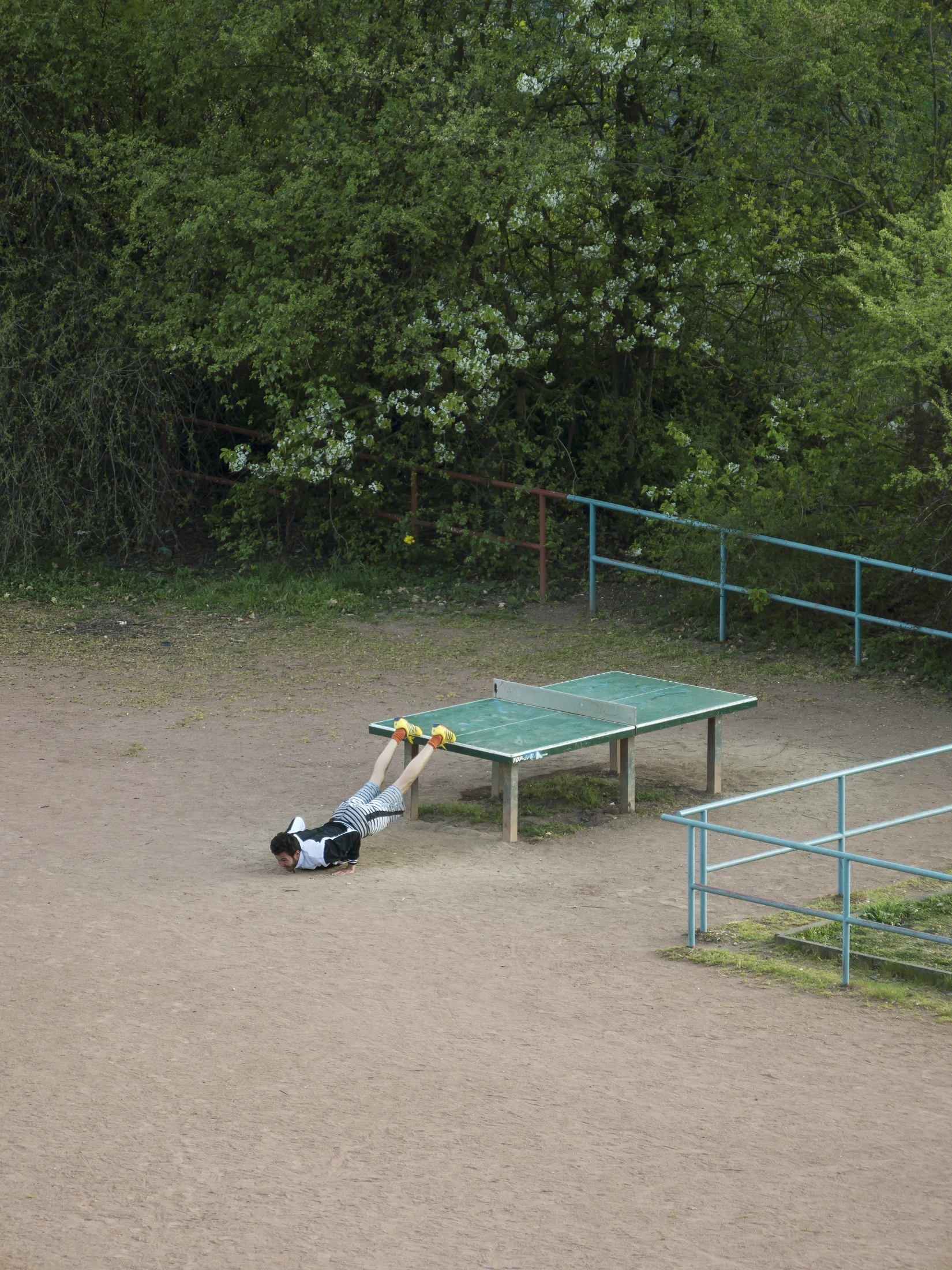
From the window of his former university dorm room in Leipzig, Germany, Japanese-born photographer Hayahisa Tomiyasu spent five years observing a ping-pong table. What began with an encounter with a fox, soon evolved into daily observations of the humble 'tischtennisplatte' throughout the seasons captured in 110 images. The series offers an unexpected window into human creativity with people utilising this simple, communal object in a multitude of ways – workout apparatus, dog grooming station, sunbed – but not once for a game of table tennis.

Eloïse Lachicorée
Writing:
Writing:
Eloïse Lachicorée
Photography:
Photography:
Hayahisa Tomiyasu
No items found.
Magazine Current IssueMagazine Current Issue
The After shot of the Floorplan
Before
before
after
After
Top
Arrow UpArrow Up

Tell us about the fox and how all of this got started...

It all began in August 2011 with two different encounters with a fox. The first encounter took place on Sunday August 14th. I went for an afternoon walk in the city and came across a fox that was quite close to me. I don't think the fox saw me or maybe it chose to ignore me. Shortly before vanishing into the bushes it stopped and glanced in my direction. The tip of its tail was glowing white. The second encounter took place on the morning of August 30th. I had just got up and went to look out of the window. To the left of the building there was a courtyard with a ping-pong table. I spotted a fox on the athletic field in front of my building that was calmly making its way towards the table. It stopped right in front of it and lifted its head to look at it. It then went on and left the field. After that morning I found myself frequently at my window waiting for the fox, but it never appeared again. Slowly but surely, I started to observe the ping-pong table.

What was it about the ping-pong table that sparked your curiosity?

As a Japanese person, I found it very interesting that table tennis tables are in public spaces in Germany. You don't see them outside anywhere in Japan. I thought that table tennis was only an indoor sport where there's no wind or rain. There was also a high school, kindergarten, fitness studio, swimming pool and apartments for older people nearby. This meant that many people came to the courtyard and used the table in their own way and for different purposes. The many ways that people came and used the table often surprised me, which I think was one of the main reasons why I kept observing and photographing the table.

What does this piece of work reveal, do you think, about objects and the conflict or blurred lines between their intended and functional uses?

Objects exist right where they are, where we find them. They can tell us both nothing and something at the same time. Form and structure enable us to recognise and see an object for what it is, but they aren't limited to serving a single purpose. An object's infinite functions and uses can be difficult to recognise in everyday life, but when you try to shift your point of view and dare to observe them from a different perspective, you can start to discover and see things that were right in front of you from the very beginning.

If you had been the subject rather than the artist, how do you think you might have been captured using the table?

I think I might have been seen sat waiting on the table for my football teammates, kind of like the image on the cover of my book. I used to play on the football field right next to the table.

How has this project influenced your subsequent work?

My subsequent work has focused both on similar observations of objects like this project, and on more collective experiences. When I moved from my student dorm to a new flat after graduation, I immediately started observing street lighting from my new room. Also, during my 10-month residency in Rome, I observed and photographed a parrot on the roof from the window of my atelier. With regards to projects on collective experiences, I've become drawn to numbers – figures that are used as a means of communication even across different countries, languages and cultures. I'm now working on a project called 10", where I photograph numbers I encounter around different cities I visit, compiling them into countdown videos.

What do you feel this photo series communicates?

I think I really came to realise through this project just how creative we are as humans, even when we're doing the most boring, mundane things. Each of the interactions I captured over the course of the five years show that creativity can be visualised and captured more effectively through simple things.

TTP by Hayahisa Tomiyasu is published by MACK. Visit mackbooks.eu

Writing:
Writing:
Eloïse Lachicorée
Photography:
Photography:
Hayahisa Tomiyasu
Back to Top
Arrow UpArrow Up
Top
Arrow UpArrow Up
The After shot of the Floorplan
Before
before
after
After
Businesses featured in this project
No items found.
Products featured in this project
No items found.
Magazine Current IssueMagazine Current Issue
Writing:
Hayahisa Tomiyasu
Writing:
Eloïse Lachicorée
Photography:
Photography:
Hayahisa Tomiyasu
Back to Top
Arrow UpArrow Up