Let's talk about some of your projects. You mentioned your costume collection, Superheroes of the Earth ...
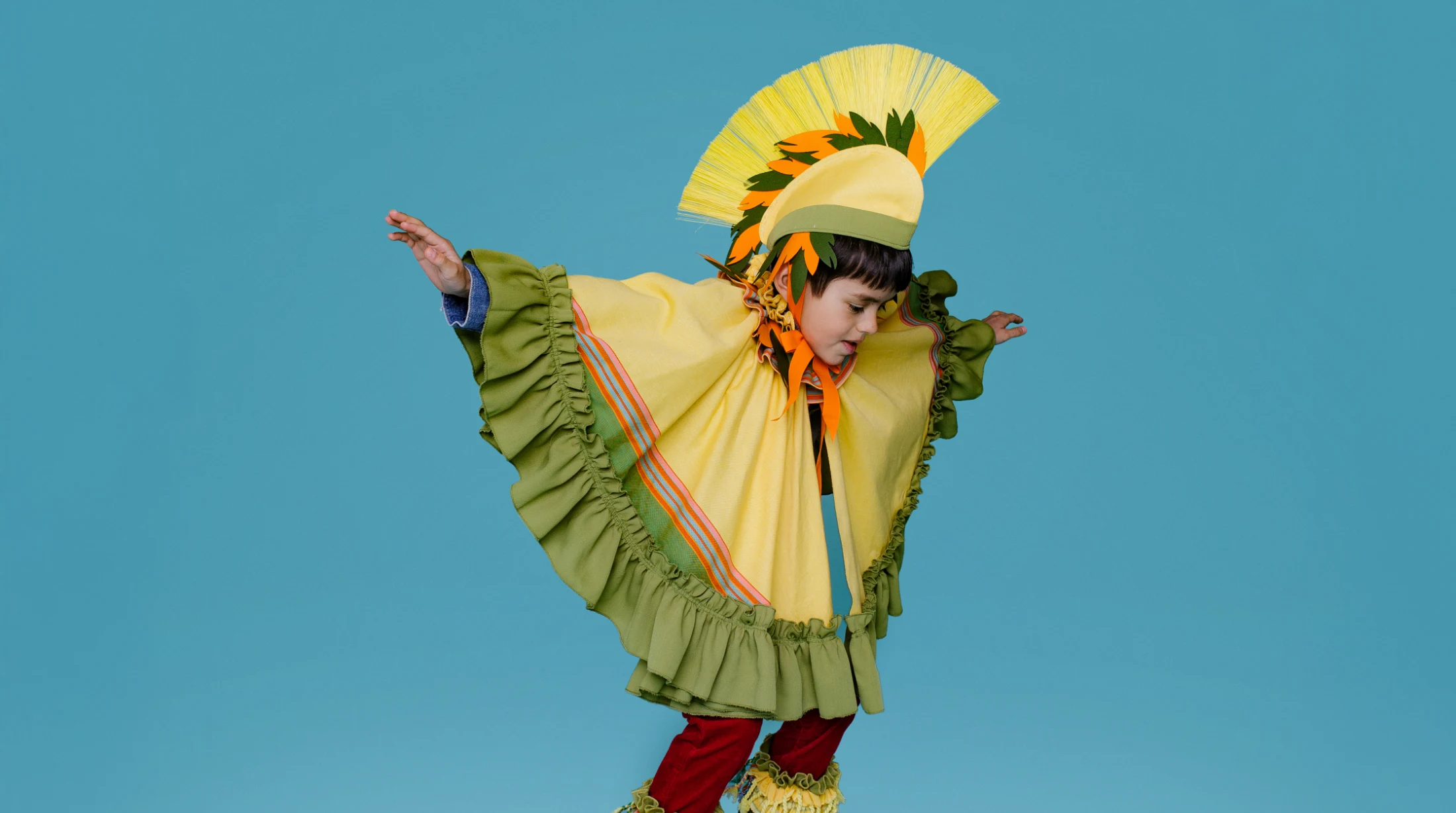
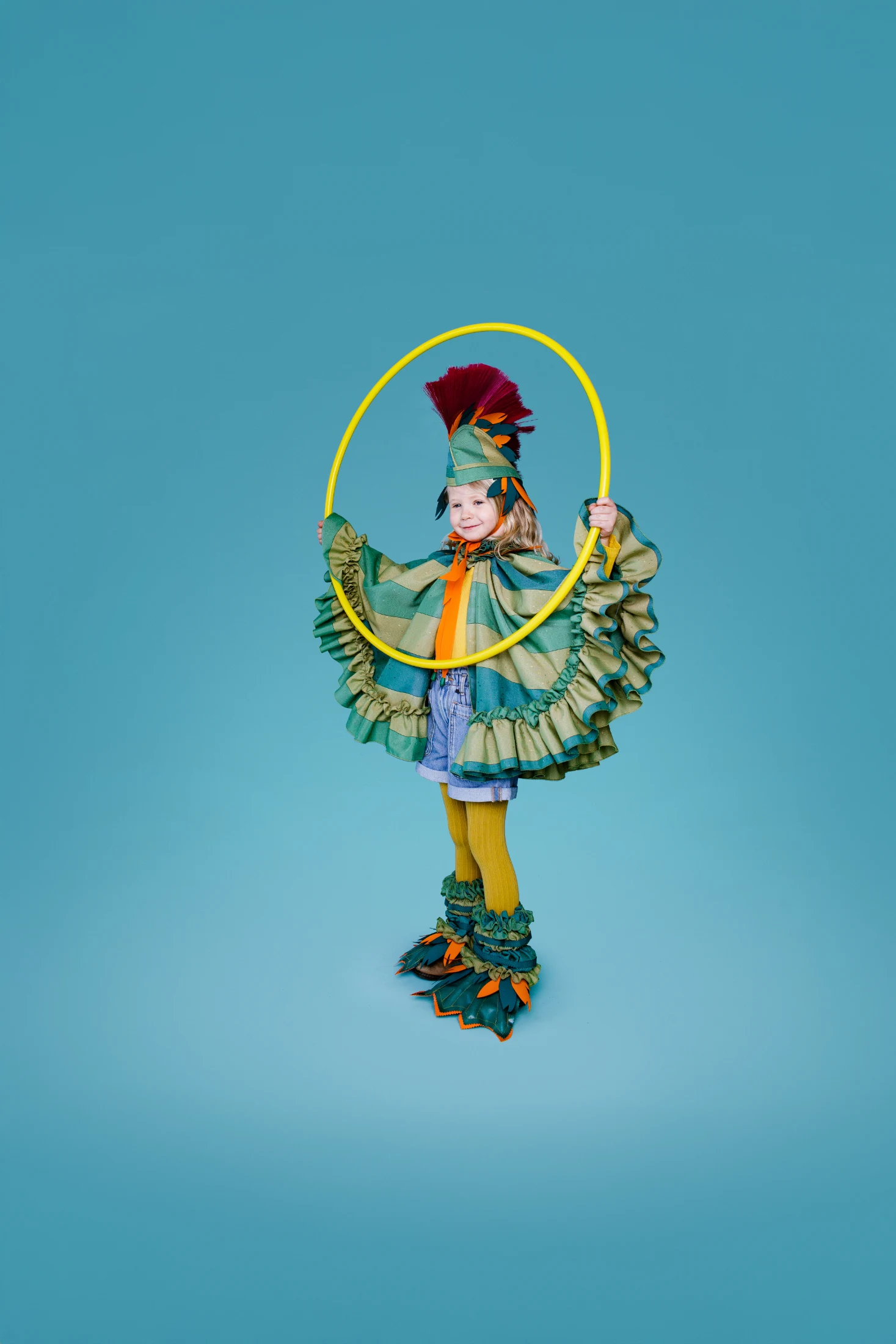
This was our first costume collection, and it's an ode to the wonders of the animal kingdom and our imaginations.
We tried to inspire children to explore a range of free play, adopting the diversity of the animals’ traits – whether that be the ‘introverted,’ self- sufficient shell of a snail or the ‘extroverted’ colours and movements of a lovebird.
So then how do you go from costume to your furniture installation project Shellters? Such range!
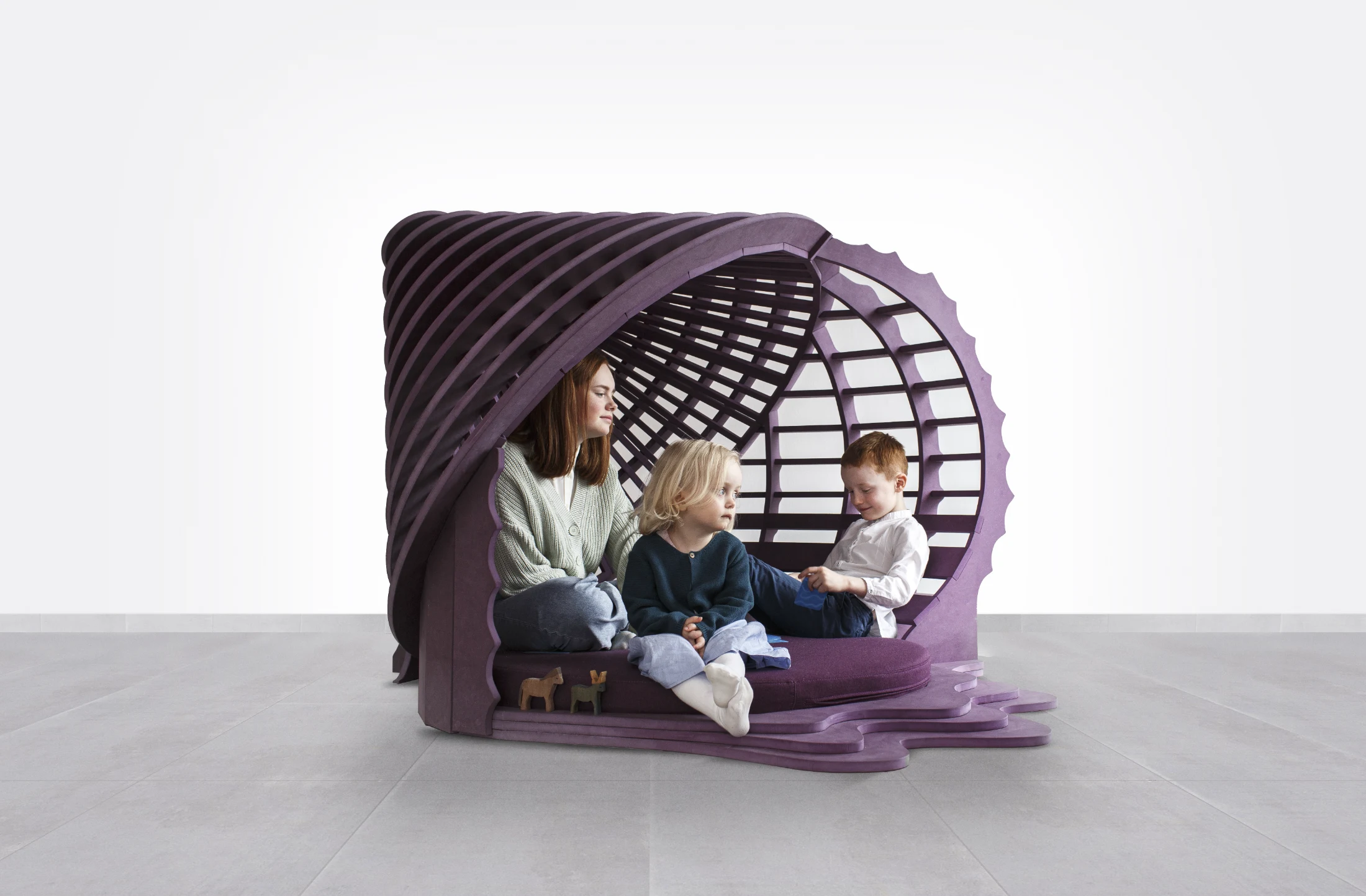
The Shellters actually started when we were exhibiting Superheroes of the Earth. We had added a makeshift cosy corner to the space, basically like an invitation for parents to sit down with their kids. It was so special to watch the moments families shared there, so I started thinking this is what people really need: a space that facilitates quality time. There's something about being private in a public space that I think especially resonates with parents who are on parental leave. You don't want to be isolated at home, but you still may want a bit of a cocoon. The Shellters, which are these cosy shell-inspired cushioned nooks that can be placed wherever, provide just this.
There is already a tonne of interdisciplinary expertise on your team but you're often collaborating with other specialists on these projects too. Why is that?
It comes from a place of curiosity. When we tap into curiosity, it’s when we’re most fruitful as designers, as this collective. I’ve really come to see how much easier it is than I thought to just knock on some- one’s door and ask them: “do you want to come out and play?”
In our experience, similar to when I was a kid, most people want to. That said, you do need to find people you connect with on a human level. Like when we were working on Shellters, the biologists at Kópavogur Natural History Museum welcomed us into their massive collection of shells, or for another of our projects, Bird Song, they trusted us enough to take the birds nests to the basket weaver, who is visually impaired and needed to hold them to get a sense of how they felt.
Ultimately, it's about finding someone who's better than you at something and being curious to know what they know. And somehow building the bridge of how this information can be passed on to a child.
And then kids are of course collaborators too. What does that look like in real time?
Hljóðhimnar, a sound-based installation we created for Harpa Concert Hall is a great example of this. It was a very open-ended commission so we brought kids to the hall to help imagine how this empty space should be filled.
Then we took their feedback and tried to sift through it both individually but also like a choir, to try and hear the song they're singing.
In the case of Hljóðhimnar (pronounced hl-yoh-th-heem-nar), it was so fascinating to witness how the children internalised the building. As adults, it's easy to see this concert hall as beautiful and historic, but as kids, they mostly noticed that it didn't feel cosy or soft. They all wanted to put carpets on the walls, for example. It's not something that I would have assumed to be such a loud wish from kids.
The exhibition itself follows the journey of a sound wave travelling through different parts of our ear. We noticed that during the workshops with the scientists, there were many details that all the kids loved. One good example of this was them learning about the small 'oval window' that forms part of our inner ear, which they were all fascinated by. So, we then decided to make our own little 'oval window' as a way of moving between two parts of the installation.