Search


In February 2024, Samirō Yunoki, the last living link with Japan's mingei folk art movement, passed away. He was 101 years old.
"Humans need to be excited all the time. It doesn't matter what the subject is," Samirō Yunoki told an interviewer in 2013.
By this stage, the Japanese folk art legend was 90 years old, and still going strong, powered by some inexhaustible, Terminator-like creative drive. He would still be dyeing and creating custom illustrations, fonts and artwork four years later, when Roman Alonso, the founder of Commune Design, tapped him on the shoulder and asked him to contribute to the new Ace Hotel in Kyoto. He was still exhibiting six years after that, when the Japanese Folk Crafts Museum launched a retrospective for his 100th birthday.
That was the thing about Samirō Yunoki, the last of Japan's great mingei artists. The dude didn't know how to stop. He really was excited all the time. By life, the universe and everything.


When Samirō passed away in February 2024, he severed a direct link to the founders of Japan's mingei folk art school, and it's hard to understand Samirō's legacy without first understanding the concept of mingei.
Literally translating to 'art of the people', mingei was a 1920s artistic movement, the brainchild of Japanese philosopher Sōetsu Yanagi. It emphasised the beauty and craftsmanship of anonymous, everyday objects, made by anonymous, everyday people. As a young man living in Korea, Yanagi became obsessed with the pottery of the Yi dynasty (1392-1910). Simple, unpretentious, and churned out by the thousand. In these rustic pots and cups, Yanagi saw a beauty equal to anything in the Kyoto Imperial Museum. In his brain, they'd somehow made the categorical leap from 'thing' to 'art'.
When he returned to his homeland, Japan, Yanagi brought this new philosophy with him.
“It is my belief that while the high level of culture of any countrycan be found in its fine arts, it is also vital that we should be able to examine and enjoy the proofs of the culture of the great mass of the people, which we call folk art. The former are made by a few for the few, but the latter, made by the many for many, are a truer test. The quality of the life of the people of that country as a whole can best be judged by the folkcrafts.” Sōetsu Yanagi
One of the Japanese artists Sōetsu Yanagi drew into his orbit was famed potter Hamada Shōji, and together with Kawai Kanjirō, they went on to spread mingei's down-to-earth philosophy throughout Japan, creating a new school of 'folk artists'. And this is where Samirō Yunoki enters the picture. He was lucky enough to study under Hamada Shōji at the Ōhara Museum of Art in Kurashiki.
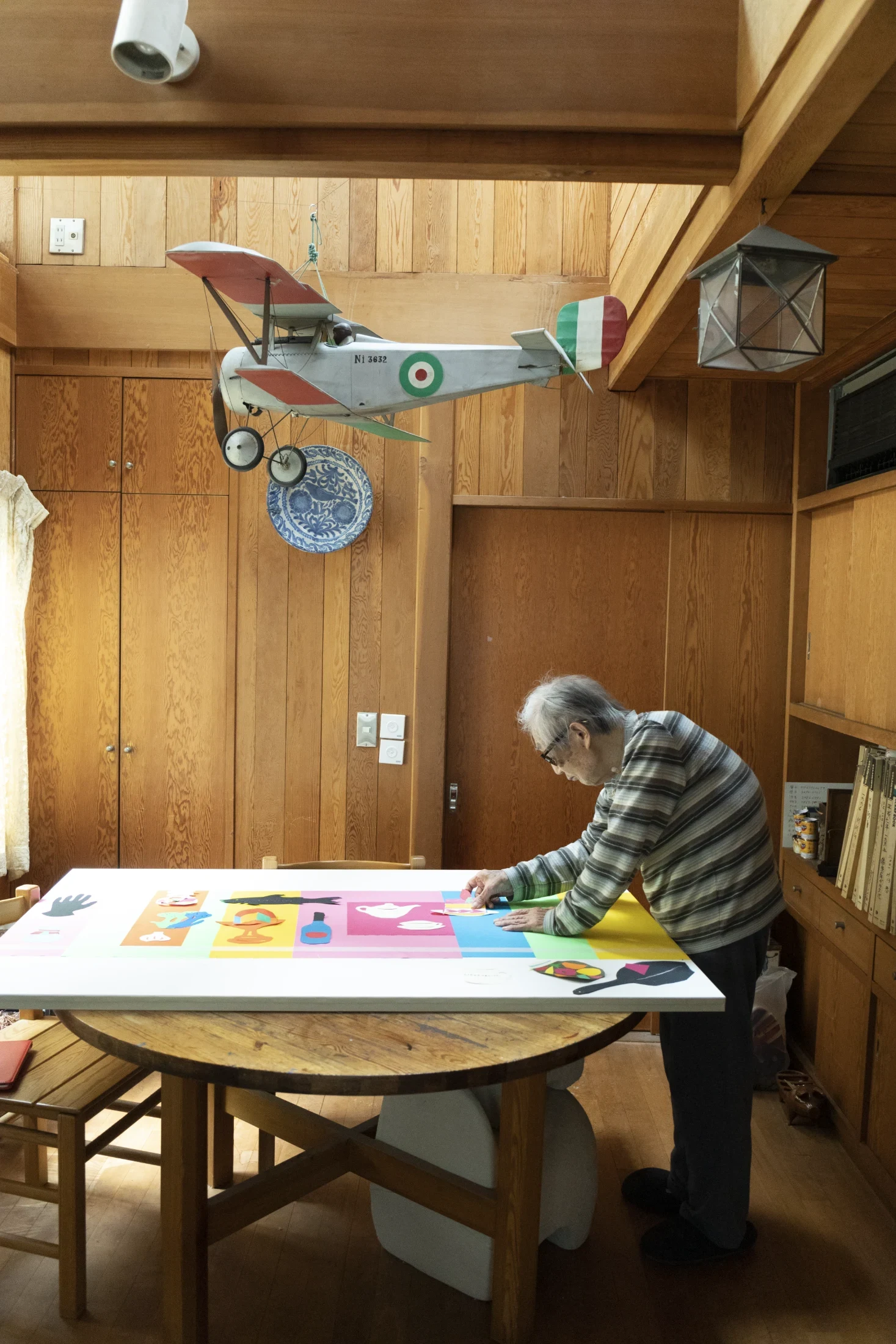
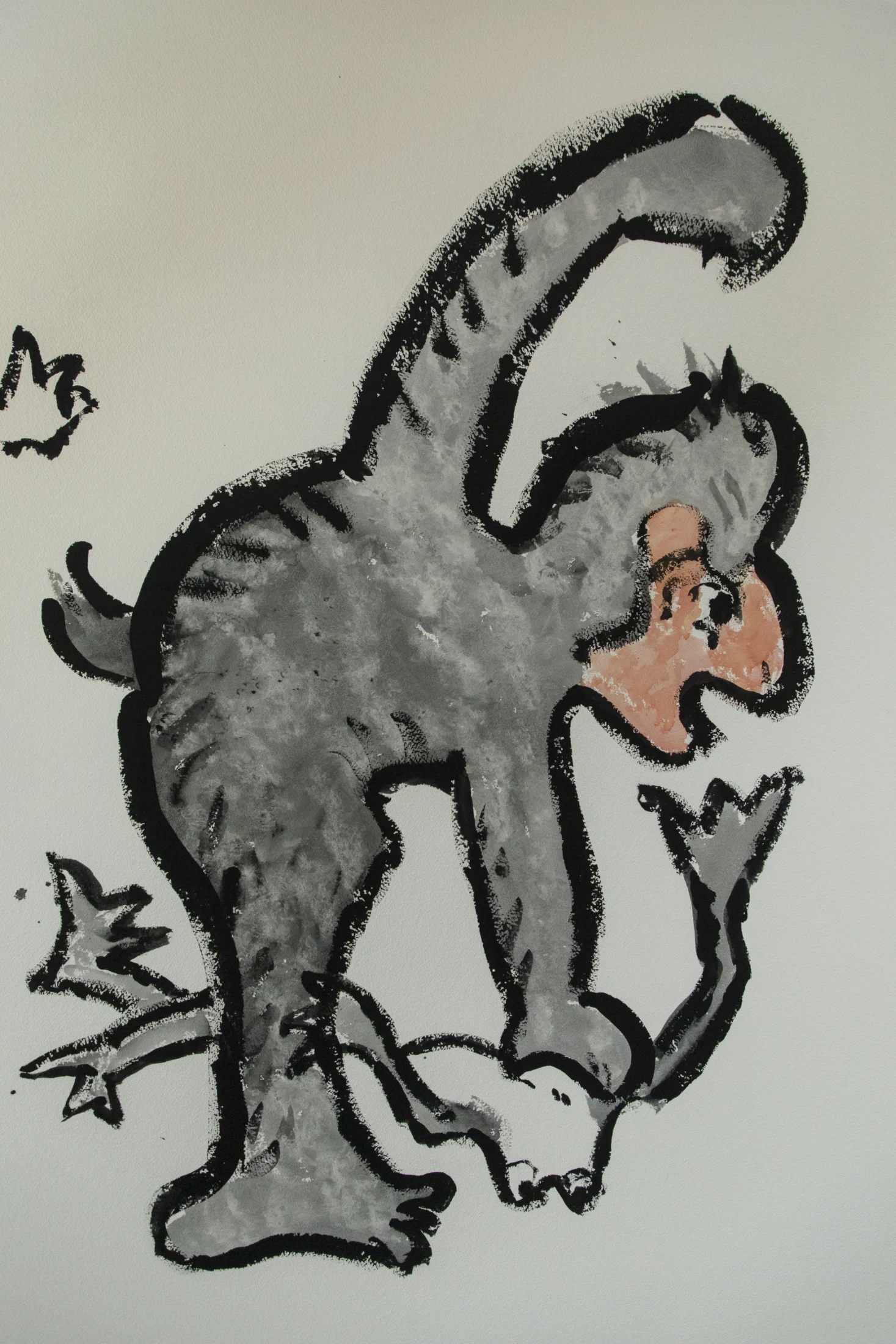
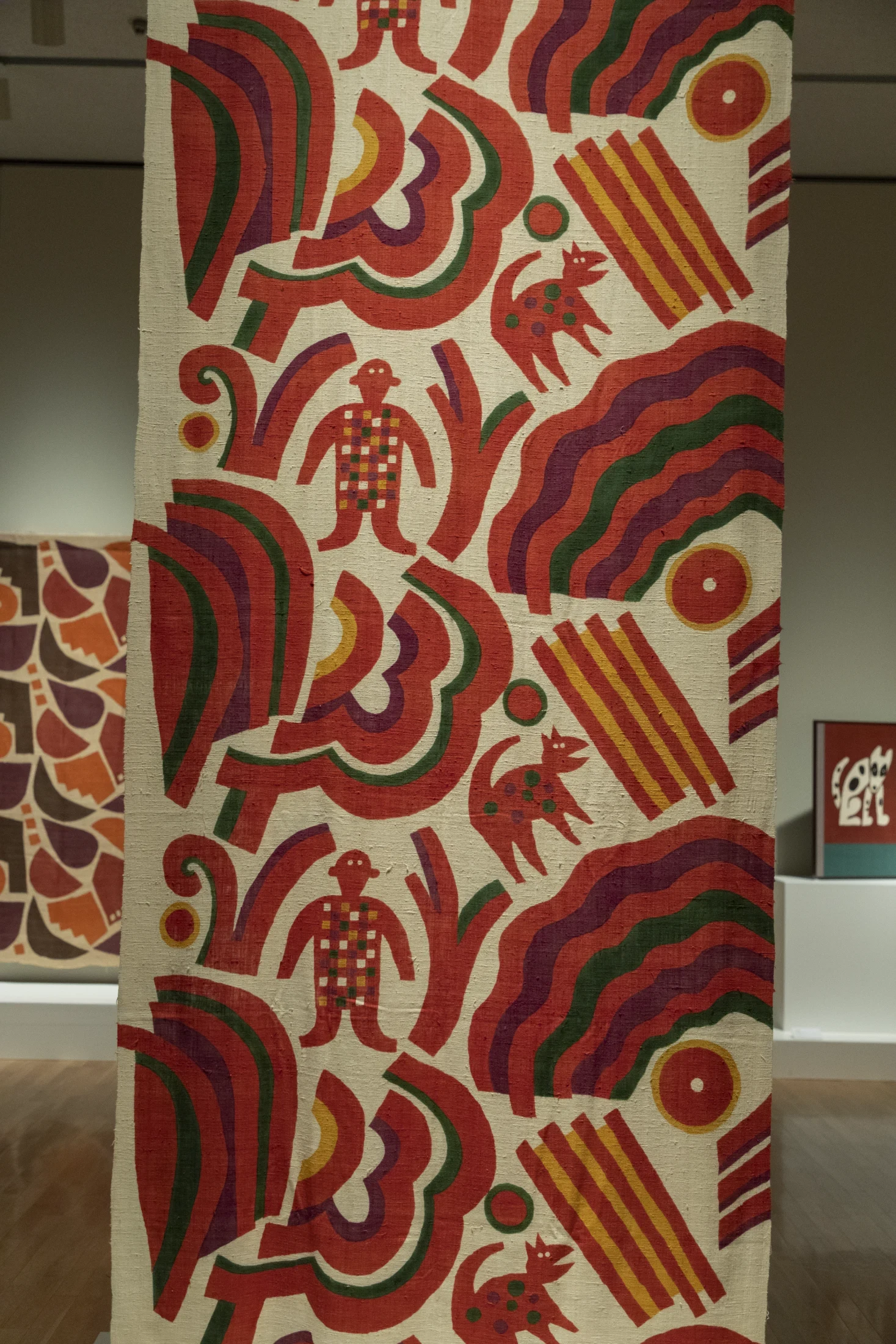
This was in 1947, during the American occupation following World War II, when Japan was undergoing the kind of cultural and economic upheaval not seen since the end of sakoku¹. Samirō himself had been drafted into the army as a young man in 1943. His wartime experiences, along with the devastation Japan endured, influenced his worldview – and his art. When the country emerged from the ashes, he committed himself to peace, beauty and joy. And so he got to work, throwing himself into the Japanese technique of katazome – dyeing fabrics using a rice-flour paste applied through a stencil.
From 1949, Samirō began exhibiting with the Kokugakai Tenrankai, a society dedicated to Japanese arts and crafts. He would eventually become its president. In 1950, he became a full-time lecturer. In 1958, his textiles were shown at the World Exhibition in Brussels, earning a bronze prize and gaining his colourful dye-work a much wider audience. He illustrated picture books, dabbled in painting and sculpture, and continued to push the limits of Japanese fabric design through the latter half of the 20th century.
Samirō was born in 1922 – the same year as the formation of the USSR and the discovery of penicillin. He was still painting, dyeing and drawing when Trump took The White House (the first time). Quite an innings, by any definition.
The principles of mingei really resonated with Samirō. Simplicity, beauty, humility, functionality. When asked once why he chose to draw a chair and bucket for a book cover, he said, "It's something you see on a daily basis. There's something admirable about it."
Of course, one of the founding tenets of mingei is also anonymity – strictly speaking, Japanese folk art should be made by 'unknown' craftsmen – which becomes tricky when you're taking Brussels by storm. Samirō never courted fame, but like most talented people, fame found him anyway. His work had a similar vibe to that of American architect and textile designer, Alexander Girard². A kind of colourful, child-like whimsy. The simplified forms of nature and everyday life.
Put it this way: it's hard to look at a Samirō Yunoki canvas and not smile. His designs seem to trigger some sort of involuntary reflex in the viewer's facial muscles. And this might have something to do with another mingei principle.
Mingei's founder, Sōetsu Yanagi, believed that "beauty of health" was critical to good design. By this he meant that the best folk art was somehow imbued with the attitude and spirit of the artist. If the artist was joyful, the work would be joyful, and would go on to spark joy in others.
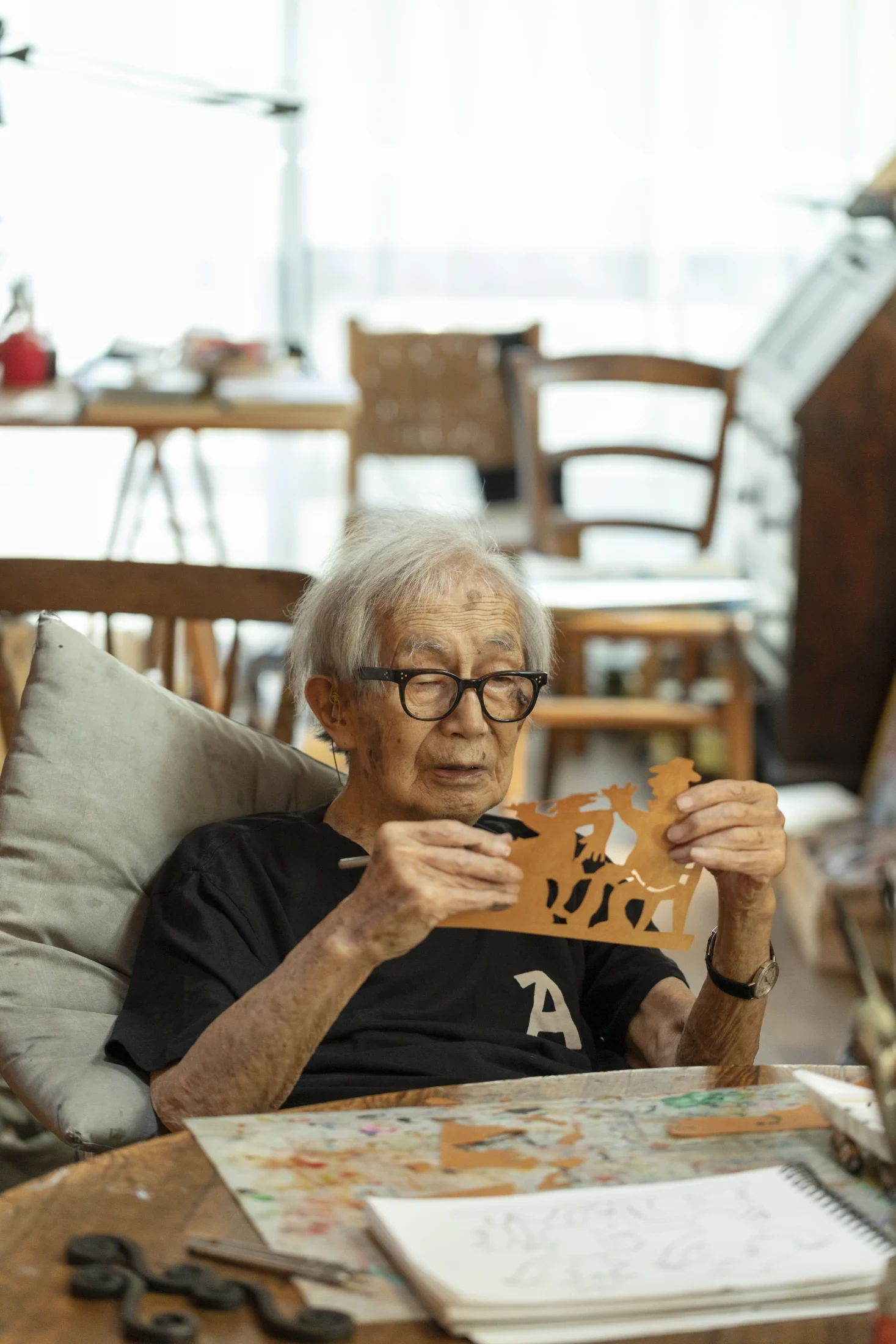
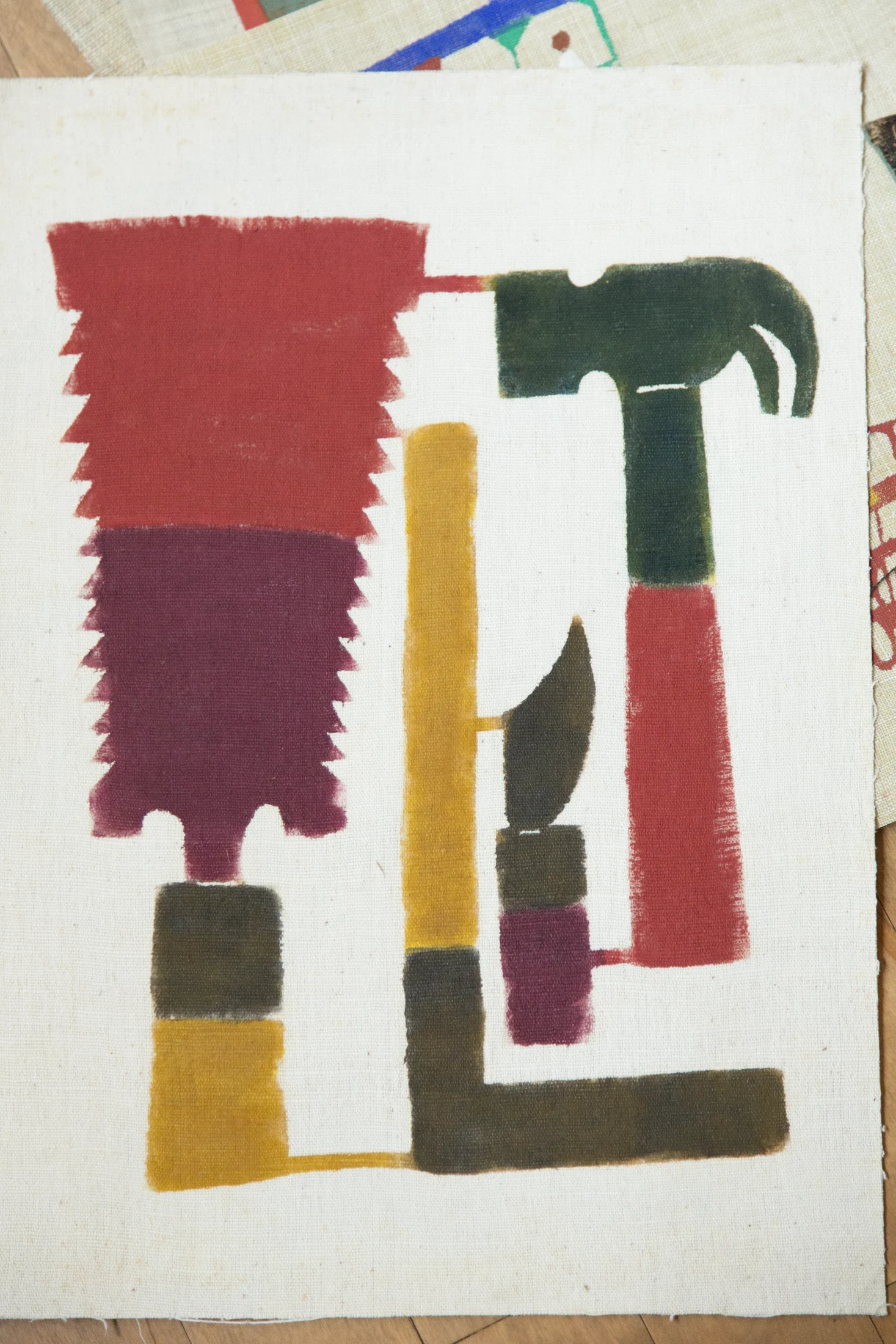

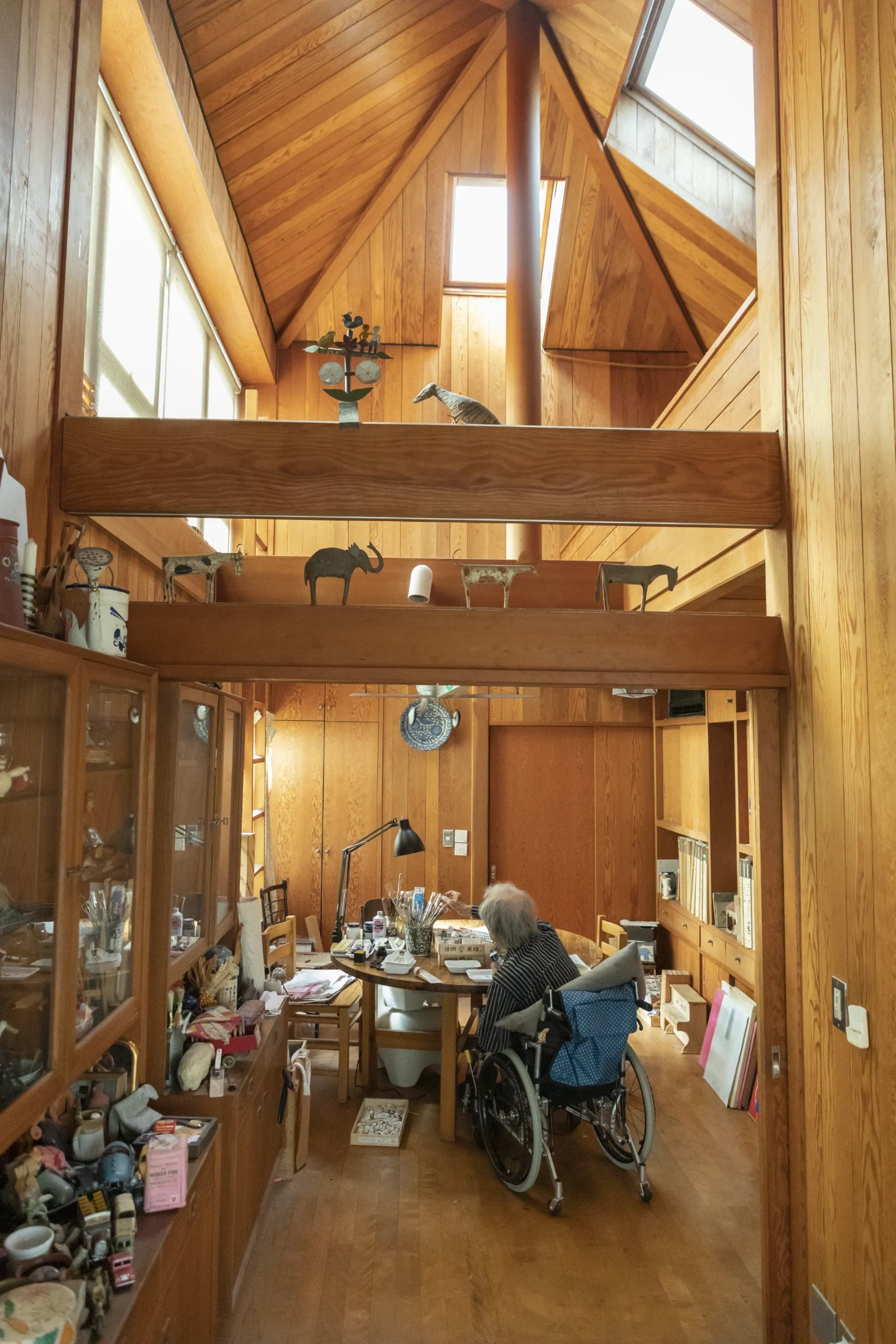
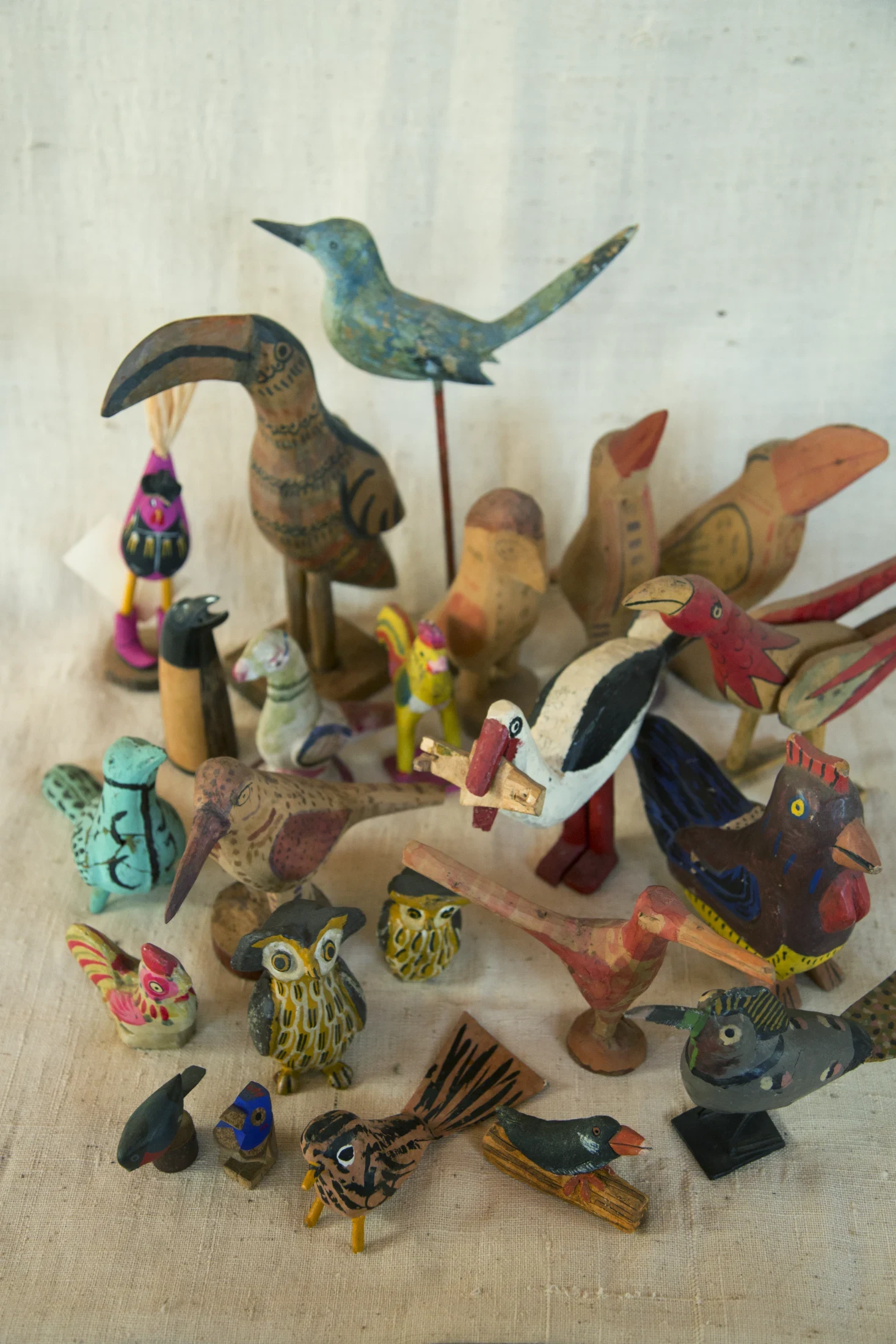
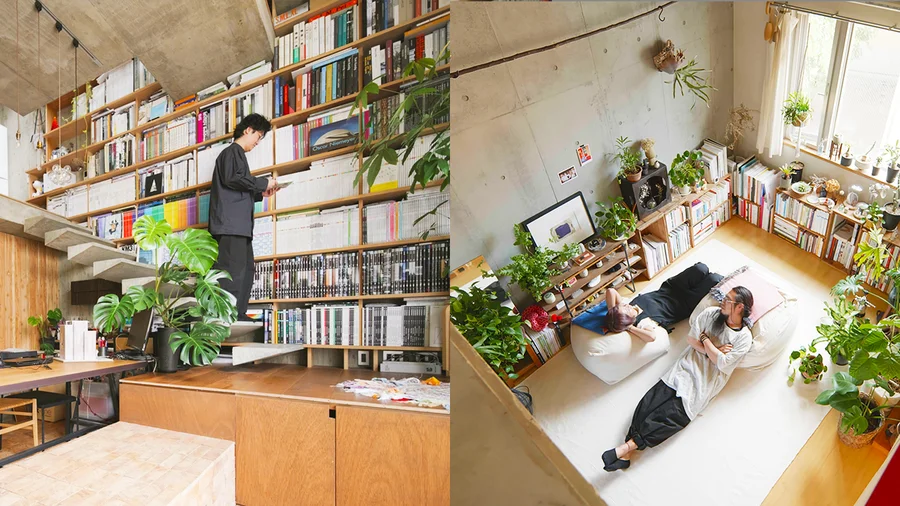
This is certainly true of Samirō, whose three-storey house was famously chock-full of folk art, toys, paintings, knick-knacks, curios and objects d'art. He was a die-hard collector of beautiful stuff.
"Things are good when they are fun," he told an interviewer once. And he meant that literally: the goodness of an object, or an artwork, directly correlated to its level of fun. Fun was interesting, and vice versa.
"Life is not all fun and games," he told Roman Alonso, "but find something that makes you happy, or find something interesting in your daily life, even if it's something small, like receiving a letter that made you smile. Even if it's a cloudy day, if you can find even just one fun thing for yourself, your life and work will be more enjoyable."
Samirō was the last living link to the original mingei school. But he wasn't the last mingei artist. Over a 70-odd year career, he inspired a new wave of craftsmen and women, and you can see Samirō's colourful fingerprints in everyone from Lisa Congdon and Yuko Shimizu to the detailed line work of Jen Corace.
Mingei itself has faded slightly from the post-war craft boom of the 1960s – the weird paradox between anonymous, hand-made folk art and the popularity and commercial success of such art was never really reconciled – but you can argue its spirit lives on. There's still a Mingei International Museum in San Diego, California. And the legions of garage ceramicists and part-time textile designers on Instagram show no signs of slowing down. As the world becomes faster, less tactile, more homogenous, we tend to seek out the slow, the tangible and the unique. People will always be drawn to beauty and simplicity. Humble objects, made with attention and love.
And fun. Don't forget fun.
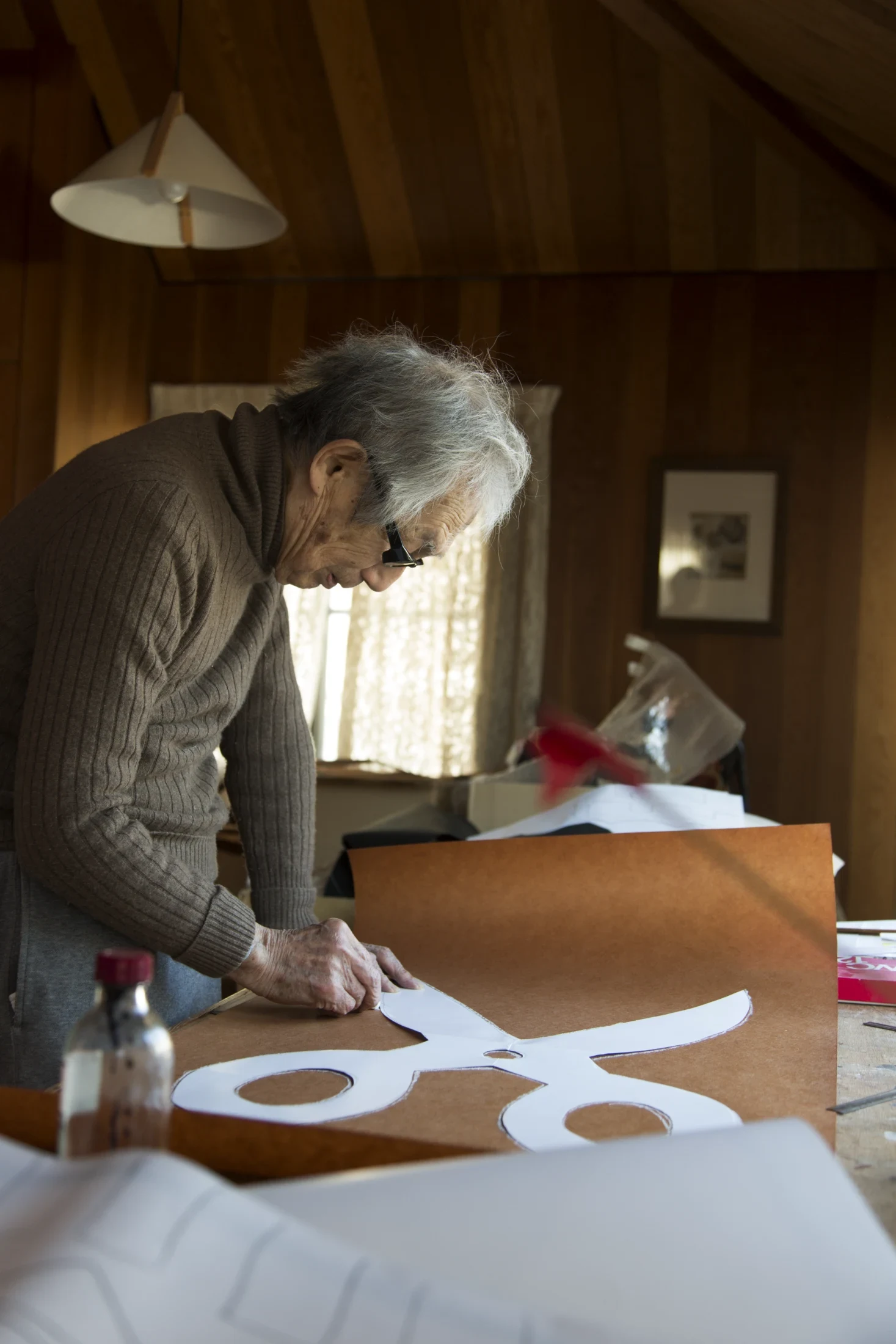

Photographer Norio Kidera spent more than 10 years documenting the life and work of Samirō Yunoki. The resulting images are featured in: Time with Yunoki Samiro published by Graphic-sha and Bessatsu Taiyo Special: Yunoki Samiro published by Heibonsha Ltd. We are most grateful to Norio for gracing these pages with her precious work.
¹ Japan’s sakoku policy of enforced isolation lasted around 214 years, from the 1600s up till 1853. During this time, Japan was more or less cut off from the outside world (apart from some carefully controlled trade in port cities like Nagasaki). The end of sakoku pretty much marked the end of the shogun era, ushering in the Meiji Restoration and turning Japan into a modern, global power.
² Affectionately known as ‘Sandro’, Girard was one of the key figures in post-war American design. Samirō saw his colourful print work as a big influence, and even travelled to Santa Fe in the 1970s to check out Girard’s epic folk art collection.