Magazine Current IssueMagazine Current Issue
The Beguiling Banksia Chair
From our Mag
November 1, 2025

The Beguiling Banksia Chair

Perth-based designer Mark Lilly transforms native Australian Banksia seed pods into an unexpectedly strong and sculptural chair through experimental craft techniques.

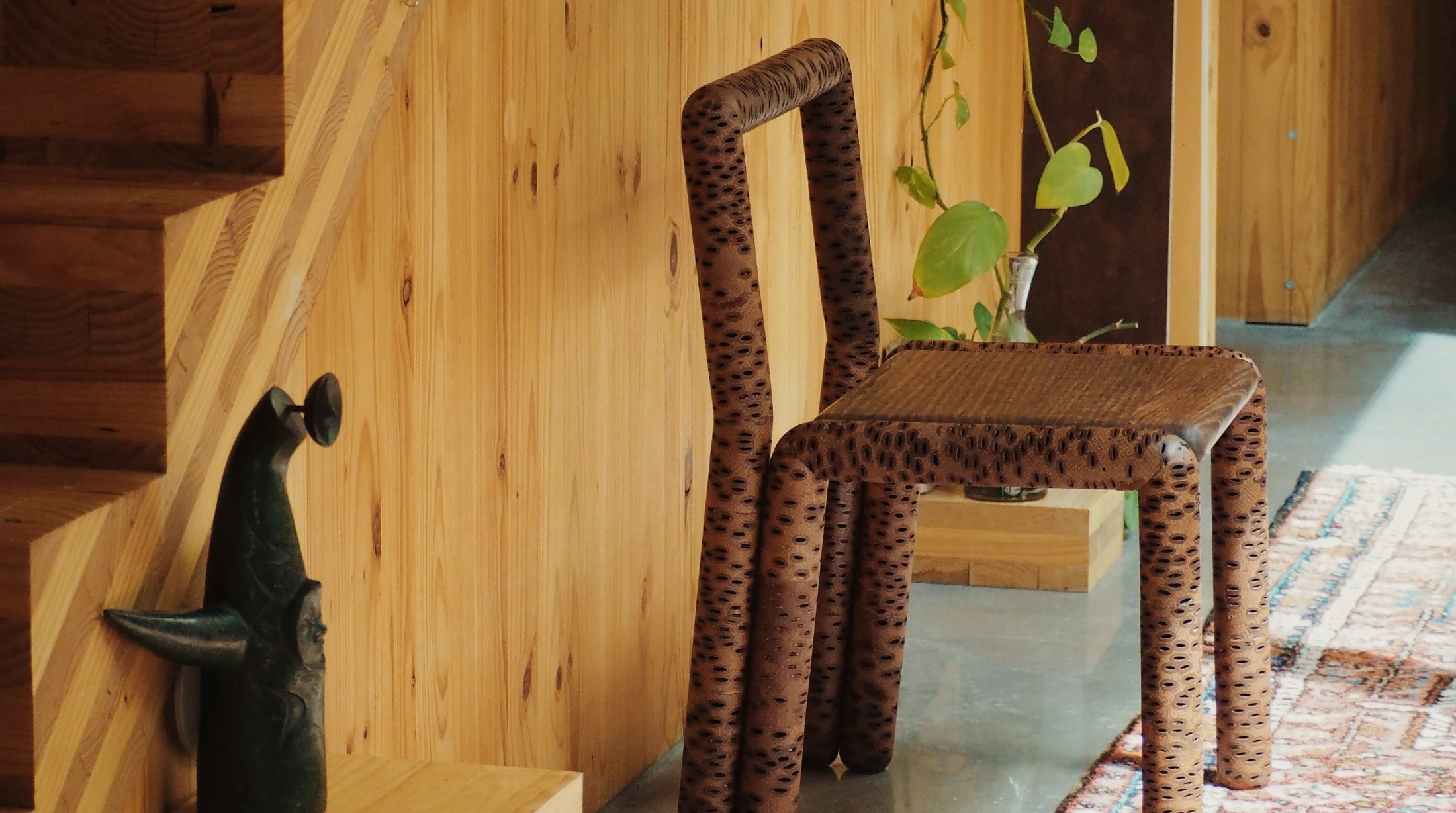
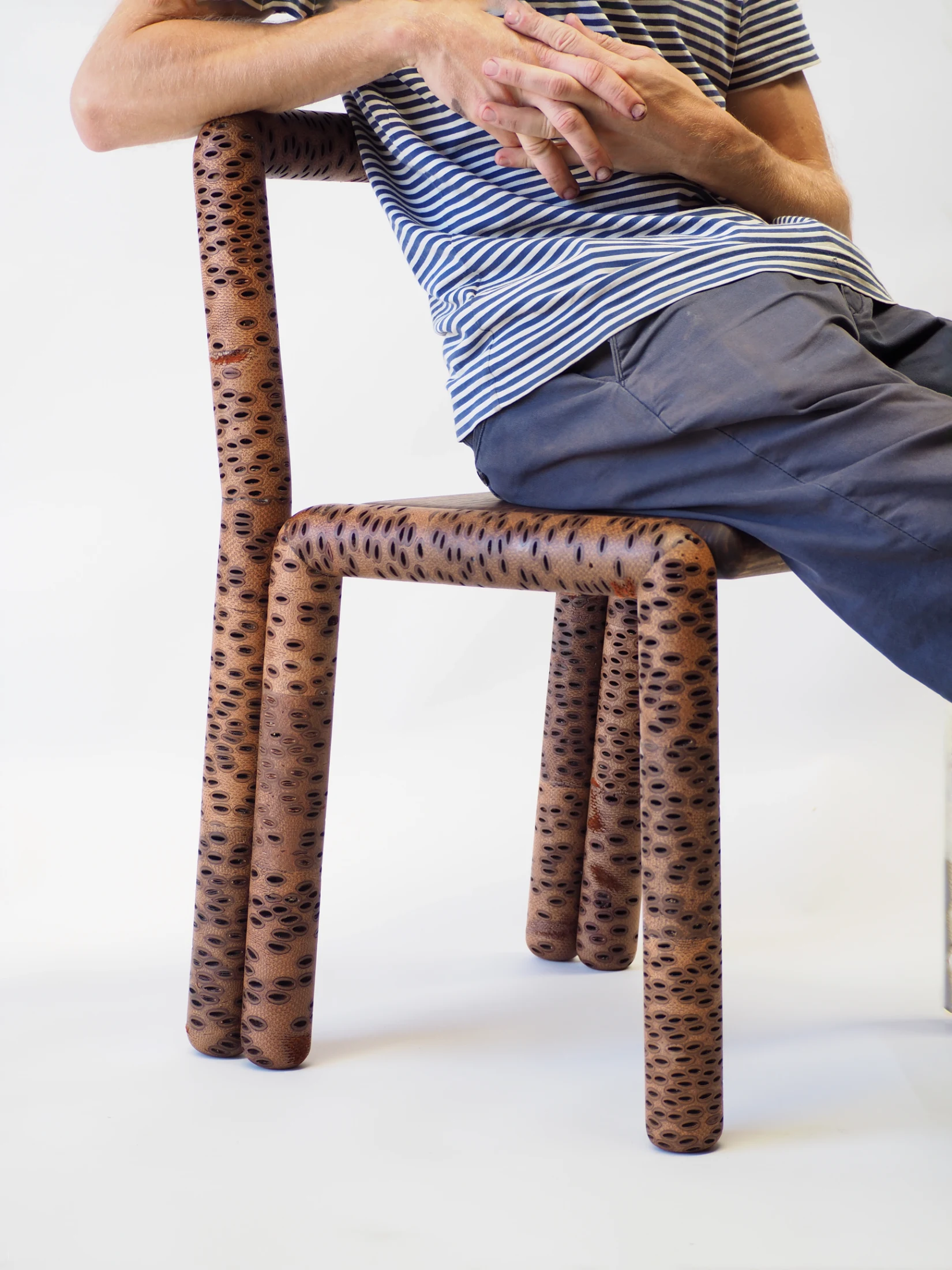
It's hard to decide what's more charming and alluring about the Banksia Chair: its friendly chunky-curvy form or the clever reimagining of its source material. For me, the seed pods of the native Australian Banksia tree conjure images of 'The Big Bad Banksia Men': the rather haunting gang of anthropomorphised Banksia seed pods Australian children's author May Gibbs cast as the villains in her popular Gumnut series. But for Perth-based designer and maker Mark Lilly, these pods – intriguingly intricate and dense – were an underutilised material begging for experimentation.

Elizabeth Price
Writing:
Writing:
Elizabeth Price
Photography:
Photography:
No items found.
Magazine Current IssueMagazine Current Issue
The After shot of the Floorplan
Before
before
after
After
Top
Arrow UpArrow Up

How did you come to designing and making furniture and other things?

It all began about 15 years ago, when I was living in London and frequently moving between rental homes. Out of necessity, I started building any furniture we'd need from scrap timber I could find within walking distance of each new place. Since I didn't have transport, I'd leave the pieces behind when I moved and start fresh at the next location – each time trying to improve on the last. Then over time I began collecting tools, sourcing better timber, refining ideas and learning the hard way!

What was it that drew you to working with wood?

When you first get into woodworking and furniture design, it can feel a bit rigid – like there's a 'right' way to do every technique. But as you gain experience and develop your own perspective, you start to see that there aren't really any rules – you can create whatever you want, however you want – and that endless possibility means there are still some very innovative ideas that haven't been done yet.

Tell us about your "craft-centric" approach and the role experimentation plays in your process.

I'd say I'm a designer before I'm a maker, but rather than an 'industrial' design approach, I think of what I do as 'crafted' design. That means the pieces I create can still be made by hand – with care and attention to detail, but the focus remains on clean, contemporary, minimal forms – without making the handcrafted aspect the centrepiece (if that makes sense).

Much of my design process is driven by hands-on experimentation in the workshop, where I'm surrounded by material samples and odd-shaped offcuts. I love pairing random shapes or materials together and playing with 'what-if-I-did-this-to-this' questions to see where my aesthetic sensibilities lie. I love when something just clicks and you're like: this works somehow but I have no idea why or what for. My phone is full of photos of things like this and if ever I'm stuck for an idea I'll just scroll through them and then my mind's off again!

Tell us about the origins of the Banksia Chair, perhaps starting with the impetus for exploring that specific material...

It was a bit of an odd one really, I was at a makers market and saw someone selling turned Banksia pieces – tea light holders and small bud vases, the kind of things you see quite a lot of in Western Australia. I remember thinking to myself, surely there's something new that can be done with this material – maybe sticking two together end to end might warrant some other use. I drew a couple of sketches of what I thought could be done with them in a sketchbook and then I forgot about it. Two years later I found the sketches and got to sourcing some Banksias to have a play with.

What did you learn while experimenting with the seed pods and its contrast to working with timber?

I learnt that the seed pods had a lot of great qualities that lent itself to my idea of joining them together which I was very pleased about. For instance, although they look super porous with all the holes, there's actually a very dense solid core of about 25mm which is ideal for a bit of joinery to fix them together. They also don't have a grain direction like standard timber, and are just a mass of timber-like fibres, so there isn't any warping over time which also makes for strong joints.

What inspired the beautiful form of the chair?

The chair was made for an exhibition I put on for Fremantle Design Week and I had initially drawn up something a bit more conservative with just straight lines, more akin to a Windsor chair. As I was making it I realised that if I cut a 45 degree mitre in one of the dowels then I could make a rounded corner, and then a chaotic mid-project redesign ensued. I had built the frame expecting I'd need to add extra supports, but it turned out to be incredibly strong and stable as it was. People assume that the chair is fragile and weak, but it weighs more than 10 kilograms! I've jumped up and down on it and tipped back on the legs and it's solid as a rock.

Are there any plans to expand into a collection? I feel like I can see its sibling coffee or side table in my mind so clearly...

You're right, the material lends itself to pretty much every archetype going. I've got a sketchbook full of ideas waiting to be materialised so definitely more in the pipeline.

@mannerfurniture

Writing:
Writing:
Elizabeth Price
Photography:
Photography:
Back to Top
Arrow UpArrow Up
Top
Arrow UpArrow Up
The After shot of the Floorplan
Before
before
after
After
Businesses featured in this project
No items found.
Products featured in this project
No items found.
Magazine Current IssueMagazine Current Issue
Writing:
Writing:
Elizabeth Price
Photography:
Photography:
Back to Top
Arrow UpArrow Up