



How did you find the experience of designing your family home together as your first collaboration?
Although it's our home, we designed it considering that we might not live here forever – it could be used by others or converted into a shop or office in the future. Therefore, we didn't approach it with any special emotional attachment just because it's our house; we treated it as one of our projects.
You live here with your two children and two cats. Can you please tell us their names and ages, and what they each enjoy most about living in this special and unusual home?
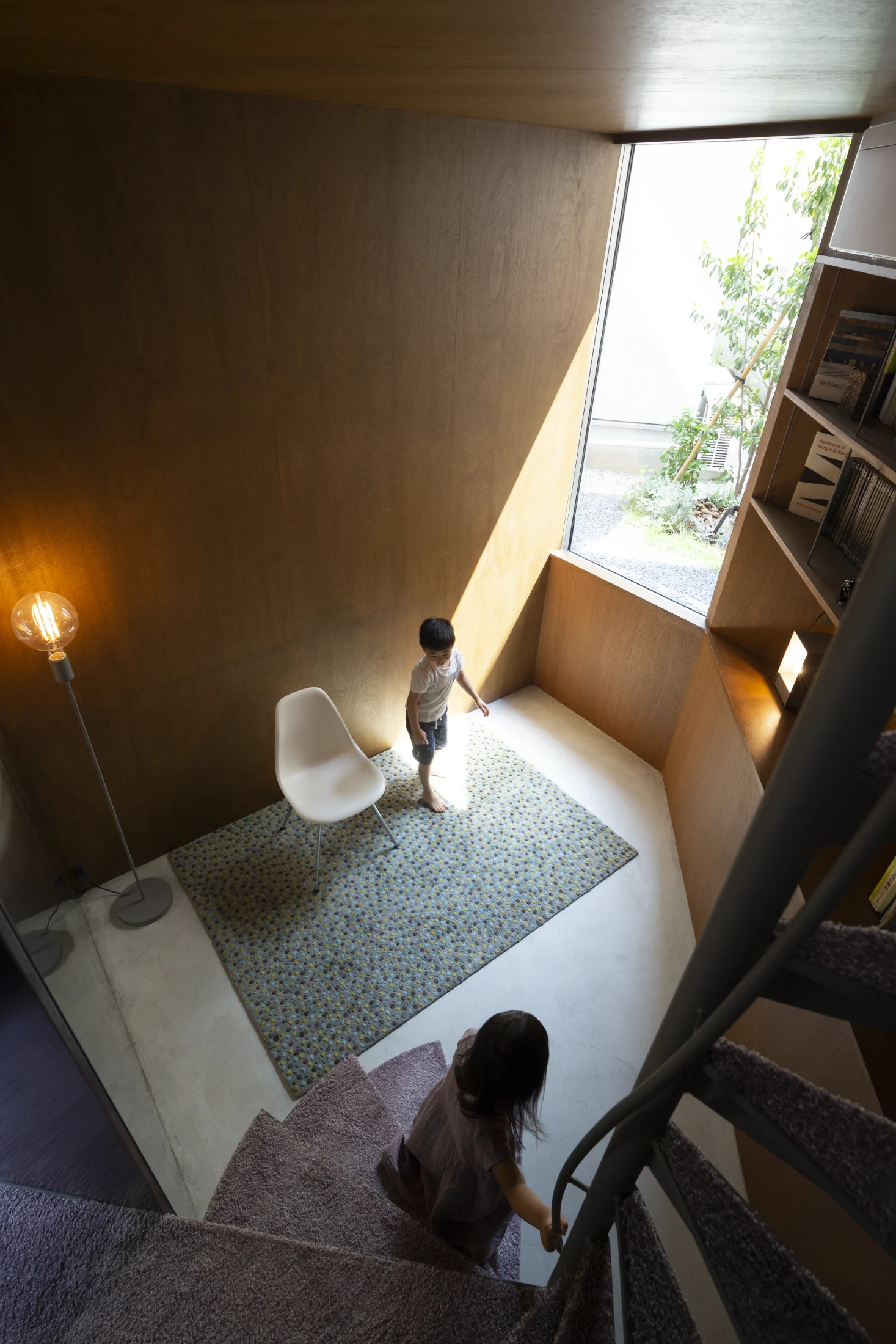
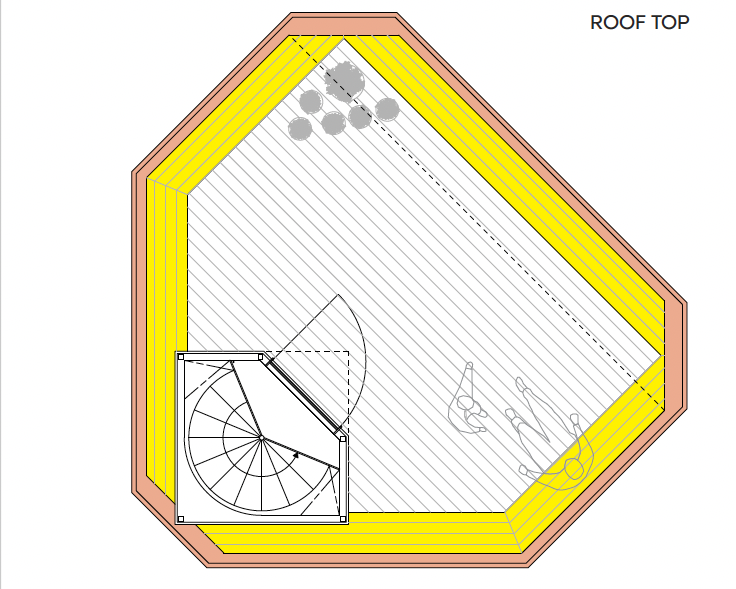
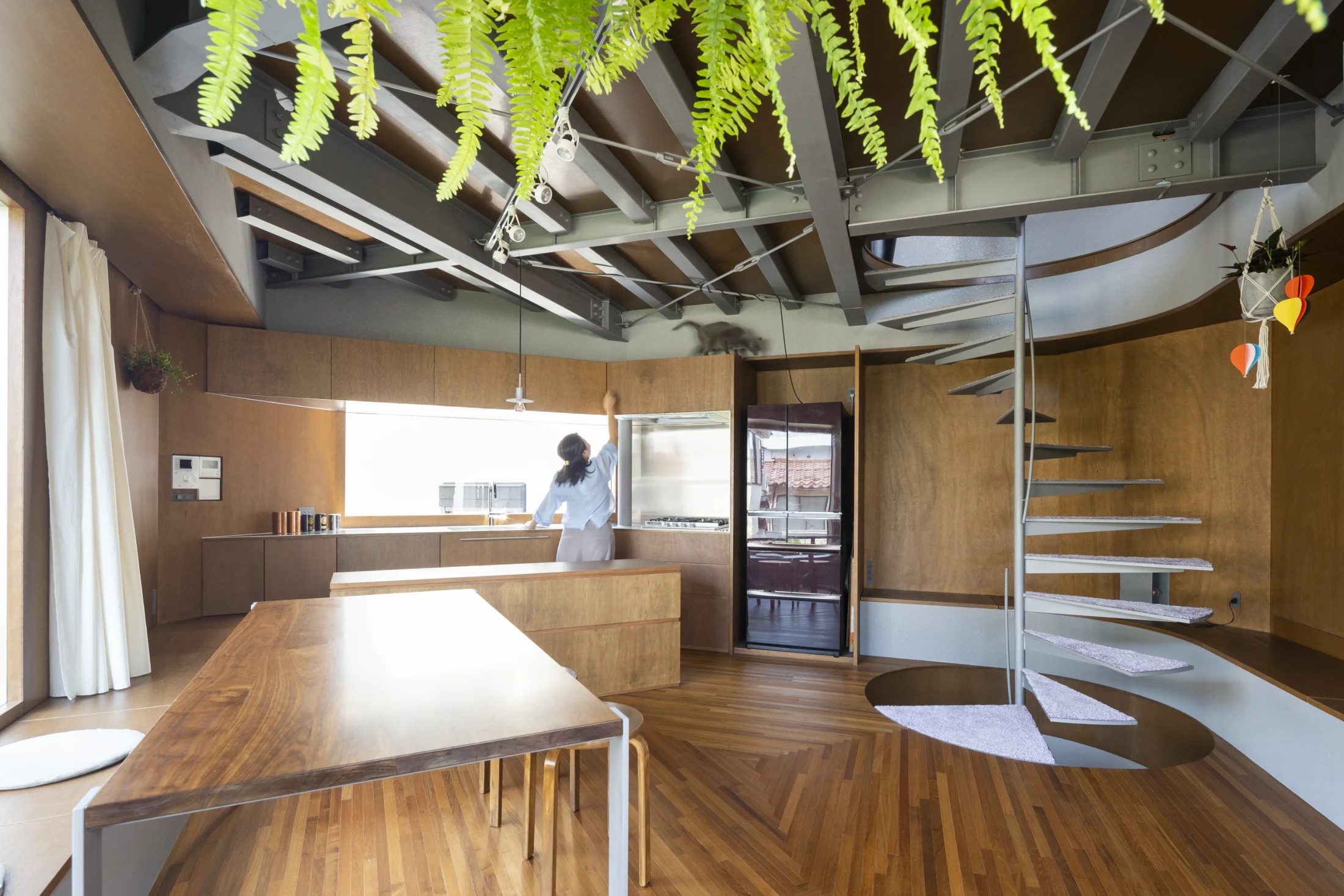
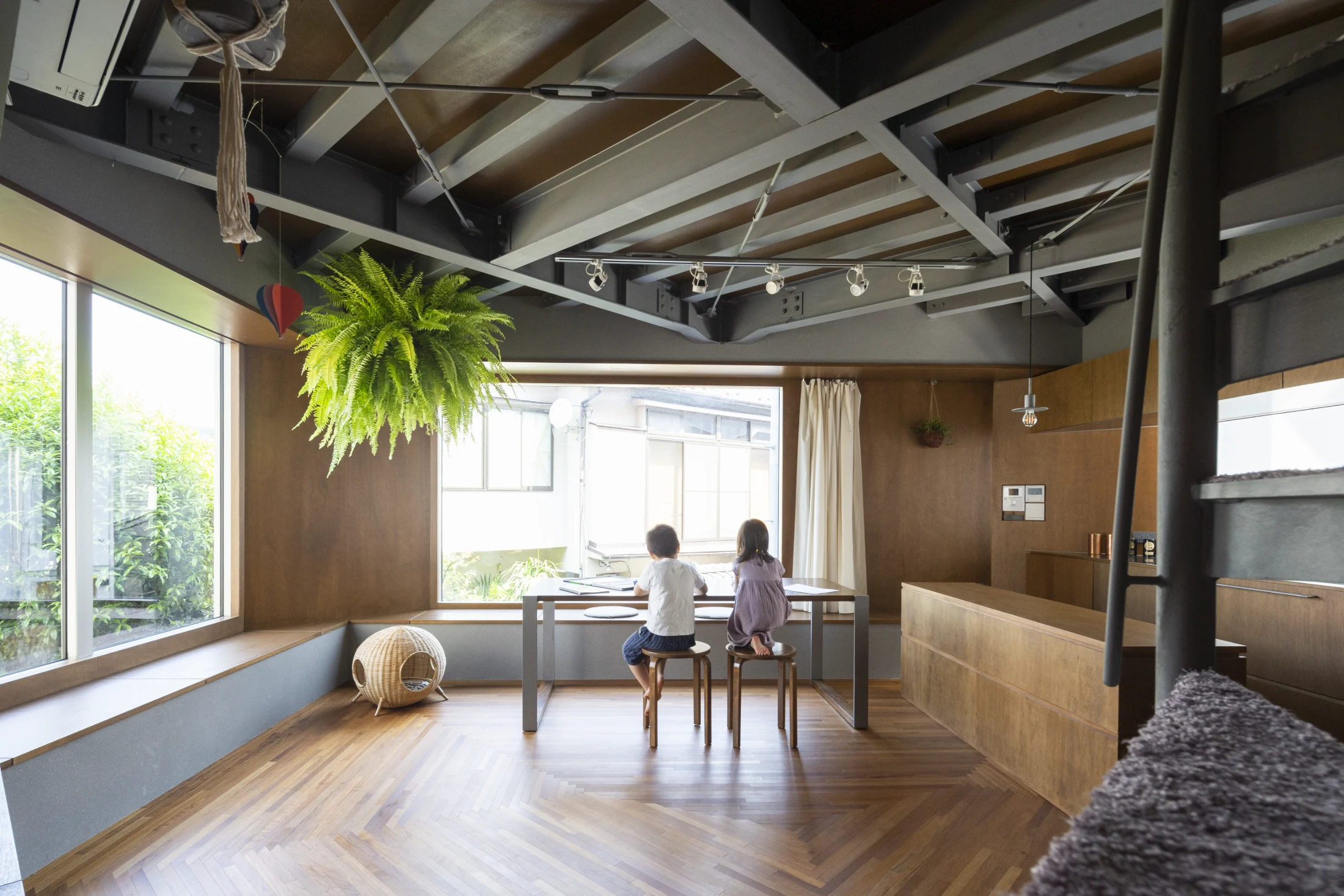
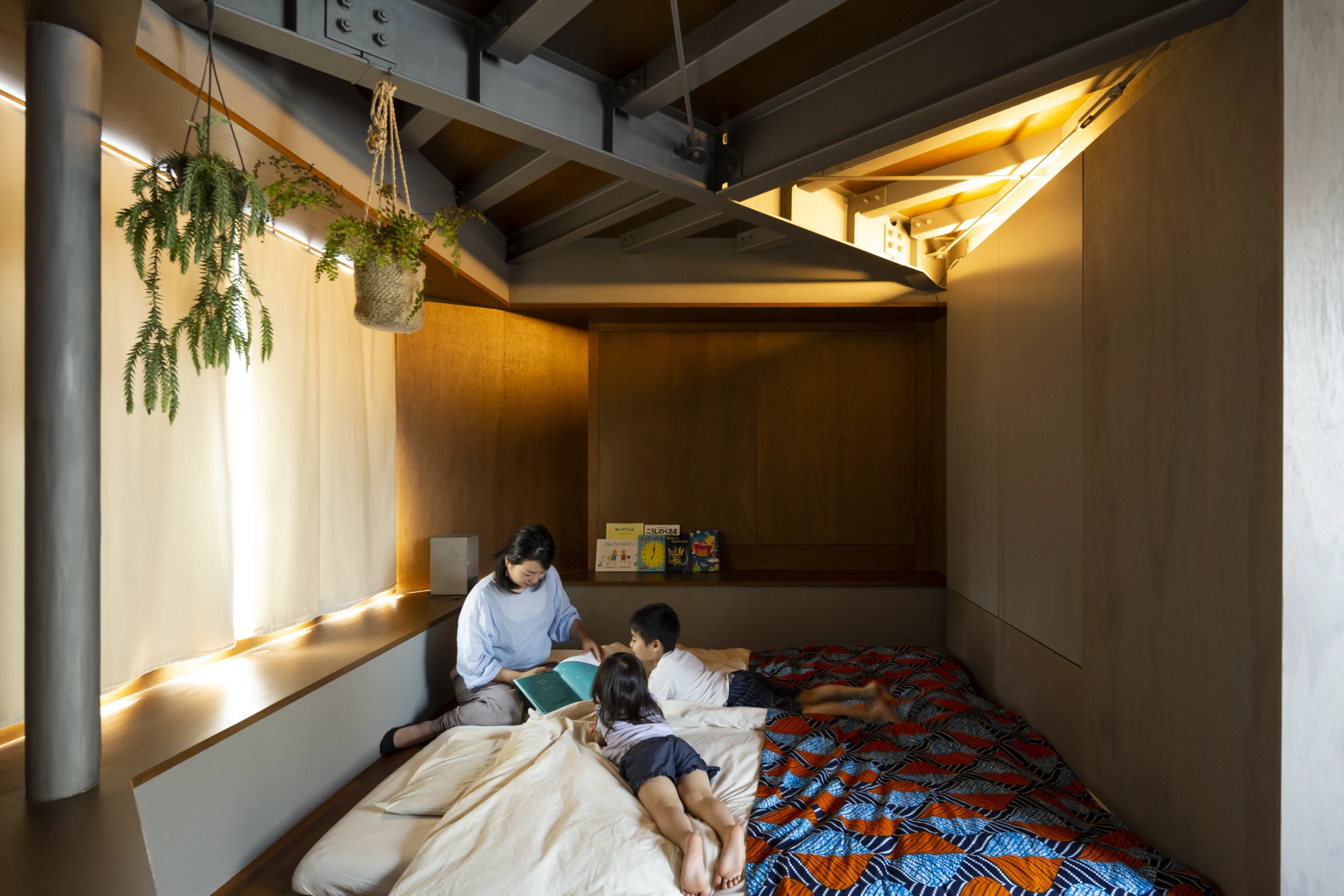
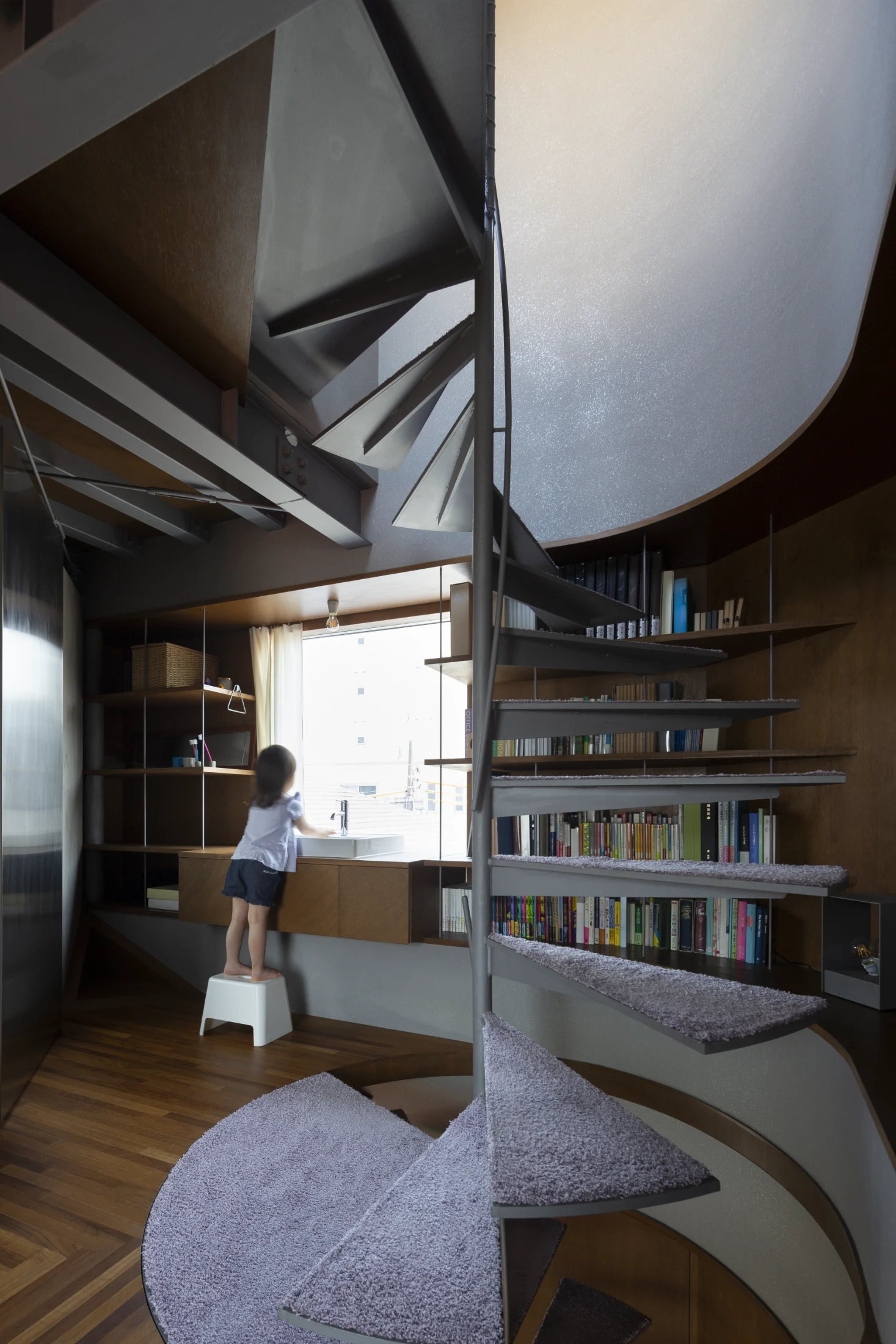
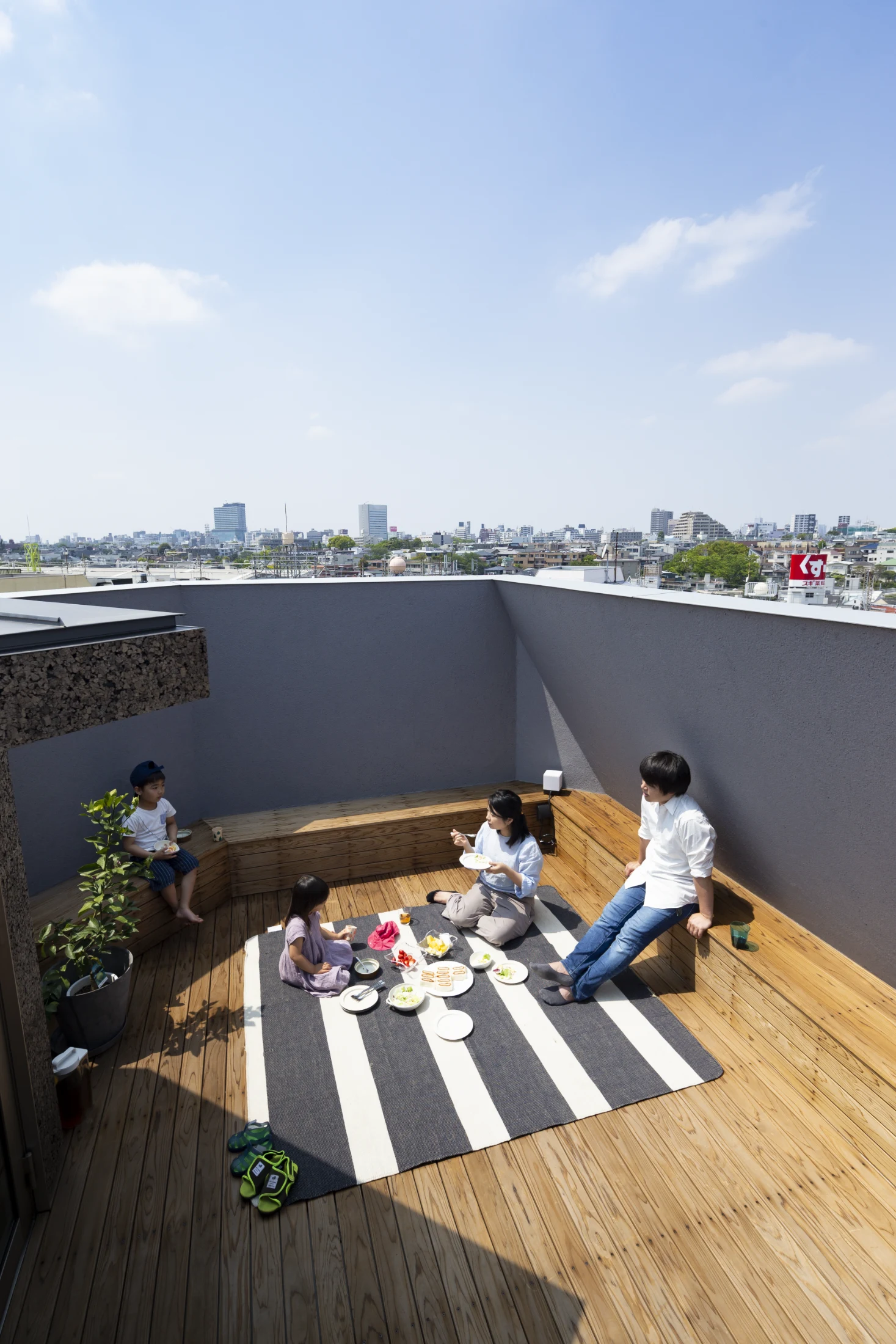
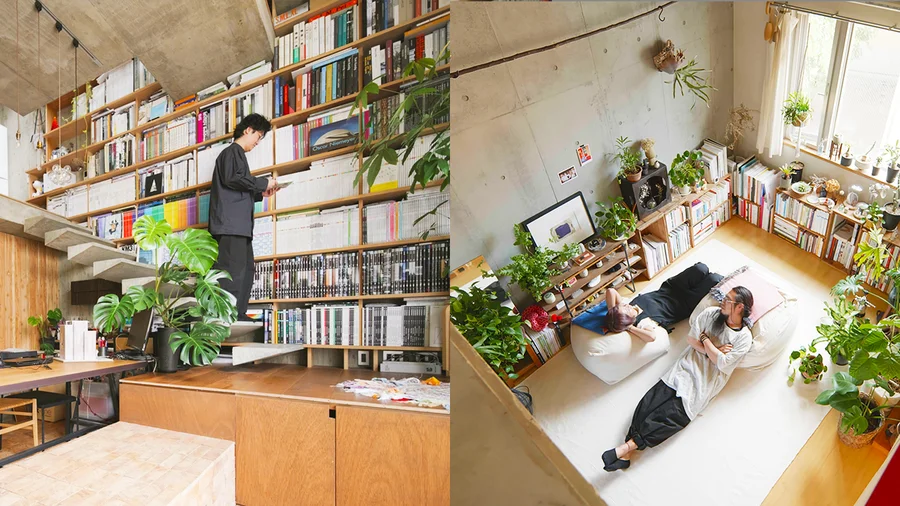
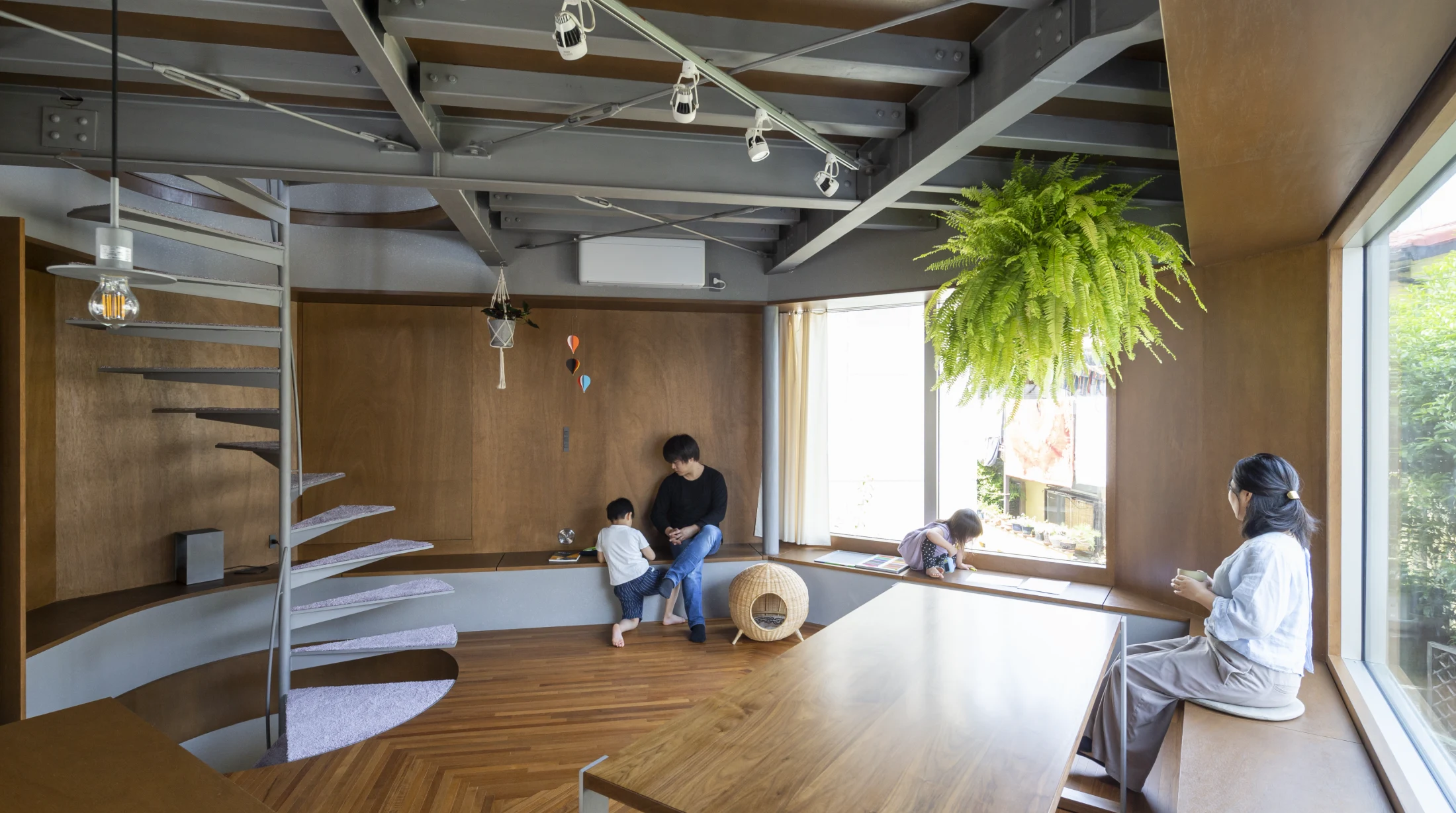
Our children are Rihito, 10 and Mako, 8. Our cats are Andrei, 13 and May, 13. The cats move around according to seasonal and daily changes in light and wind, finding comfortable spots. In summer, they prefer the lower floors where it's cooler, and in winter, they stay on the upper floors where it's warmer. The children seem to enjoy being able to do what they want in various places inside the house and use the space according to their moods: reading books on the upper floor or drawing on the lower floor, freely using the bay windows as benches and tables. Rihito particularly likes looking at the sky from the rooftop, while Mako enjoys playing the piano in the semi-basement space.
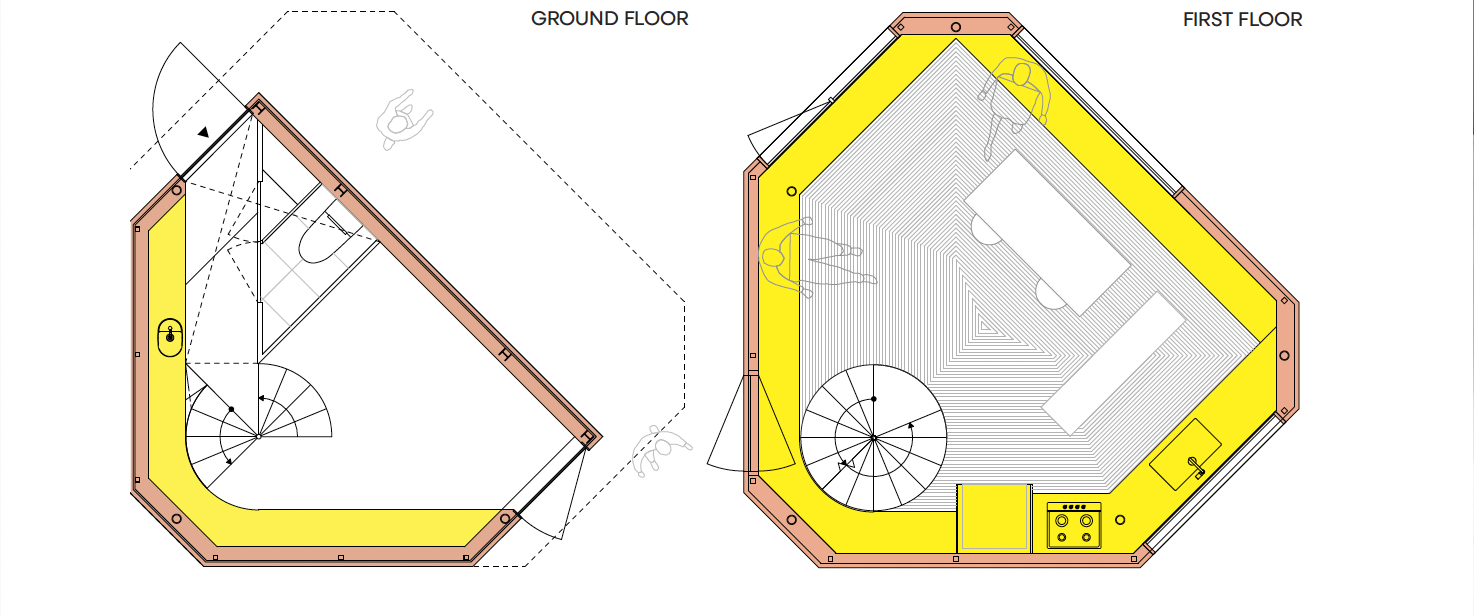
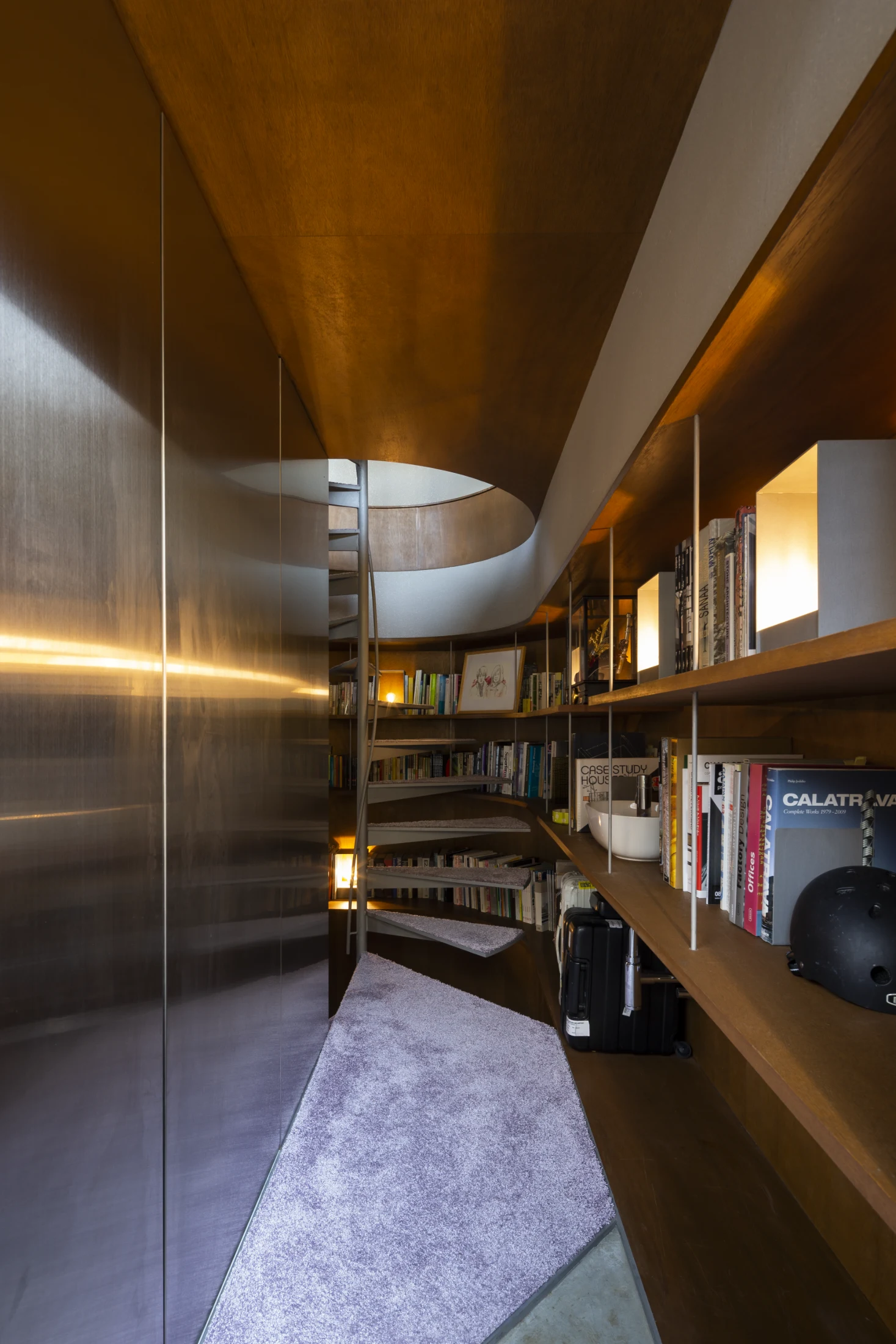
All the living in your home is done 'in the round' – in the centre of the house, across these multiple levels, like a child's fantasy tree house. When and how did this concept come into the design process?
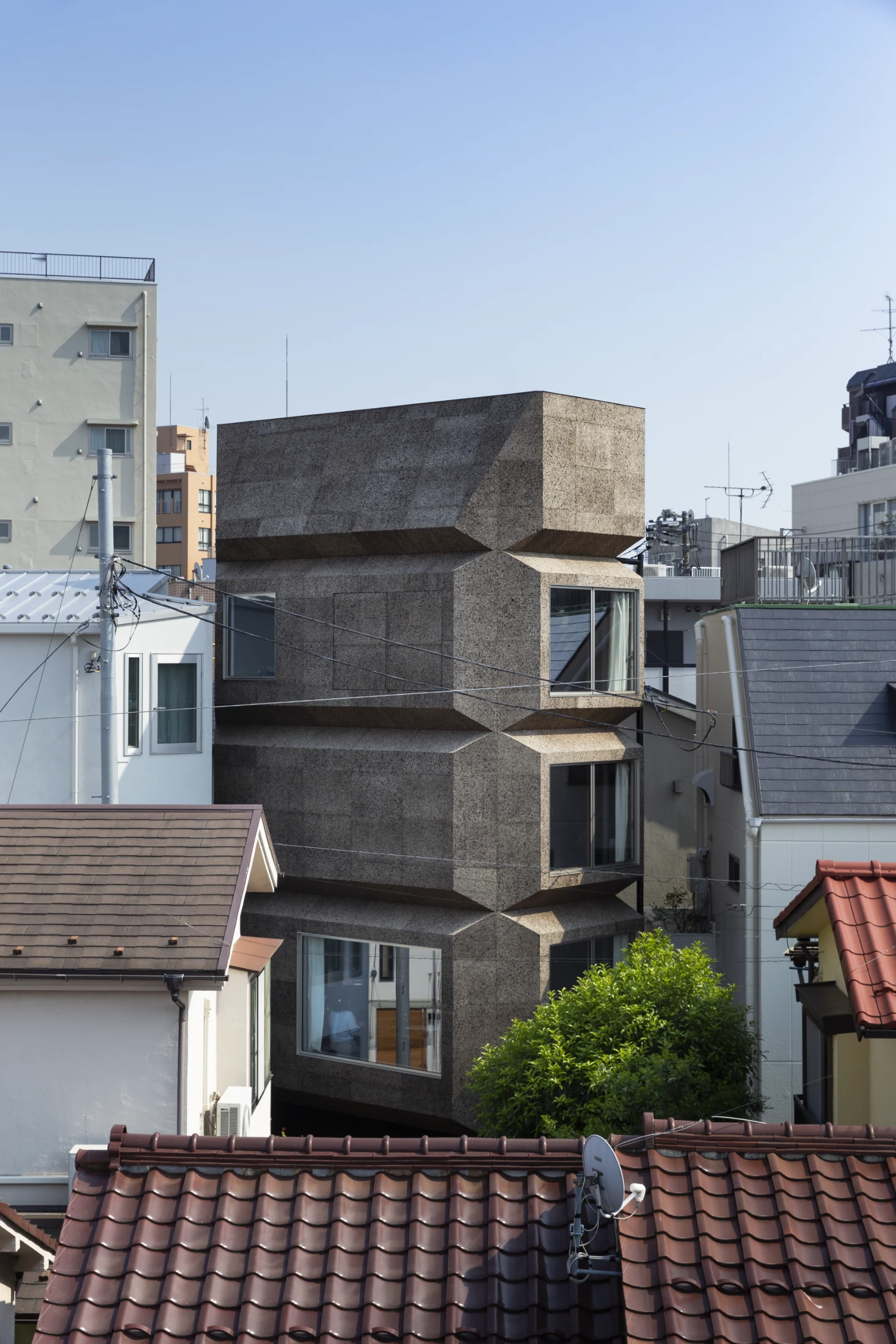
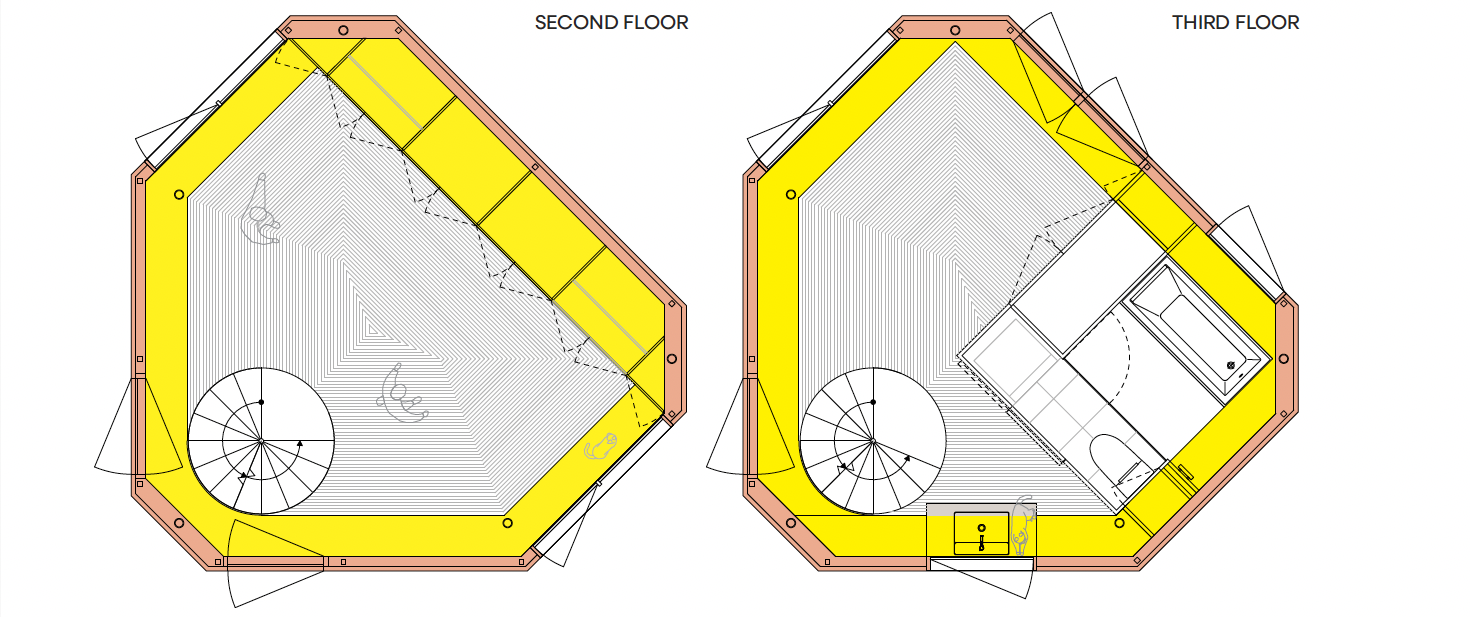
From the beginning, we had "love our neighbours" as our design concept. Even in Tokyo's densely populated areas, we wanted to ensure that we wouldn't block the windows of neighbouring houses, allowing light and air to reach their interiors unobstructed. As we refined this approach, we arrived at an octagonal floor plan that approaches a circular shape.
What about the cork? I understand the inspiration came from a building you saw in Portugal. What was it about the material that made it so appealing?
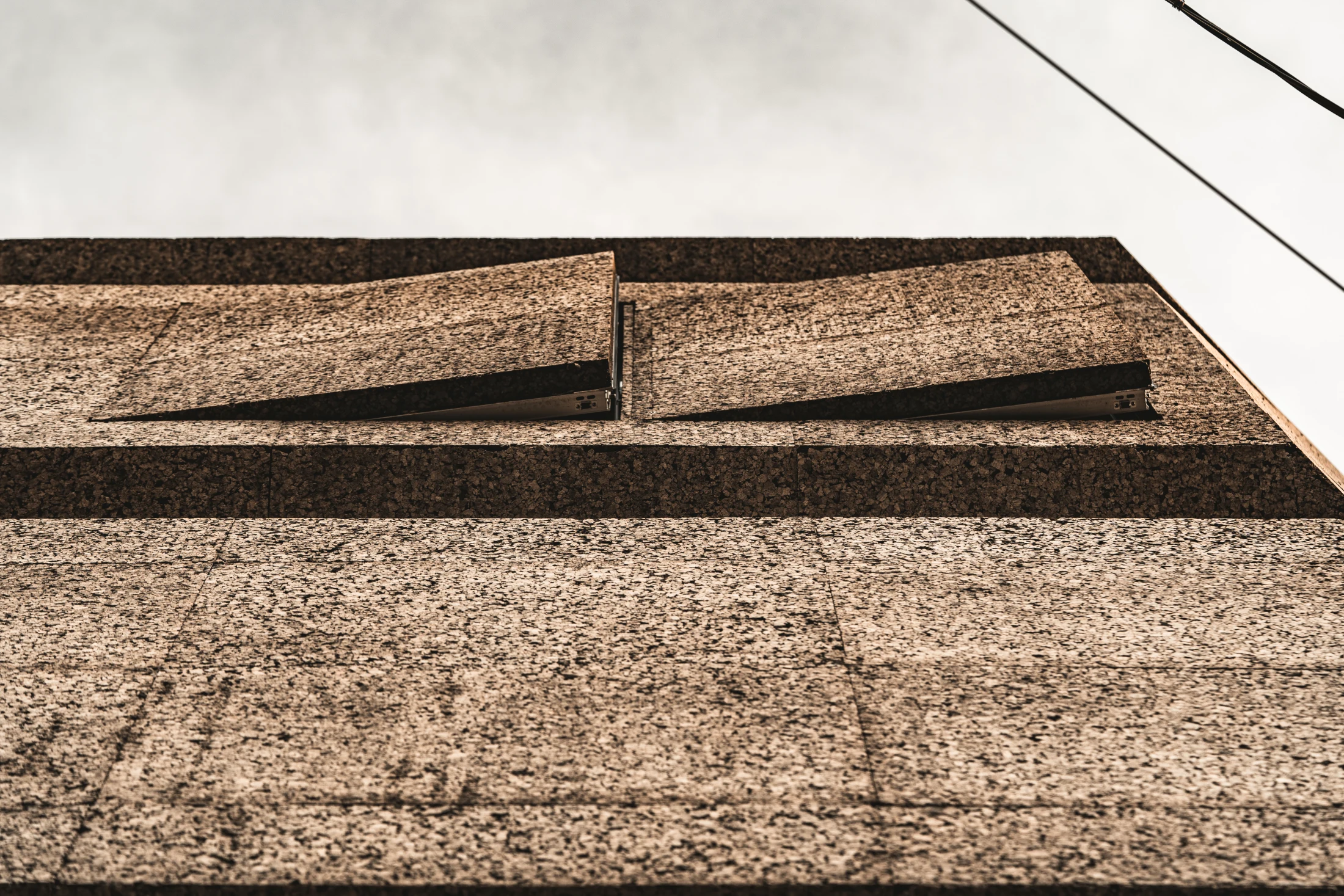
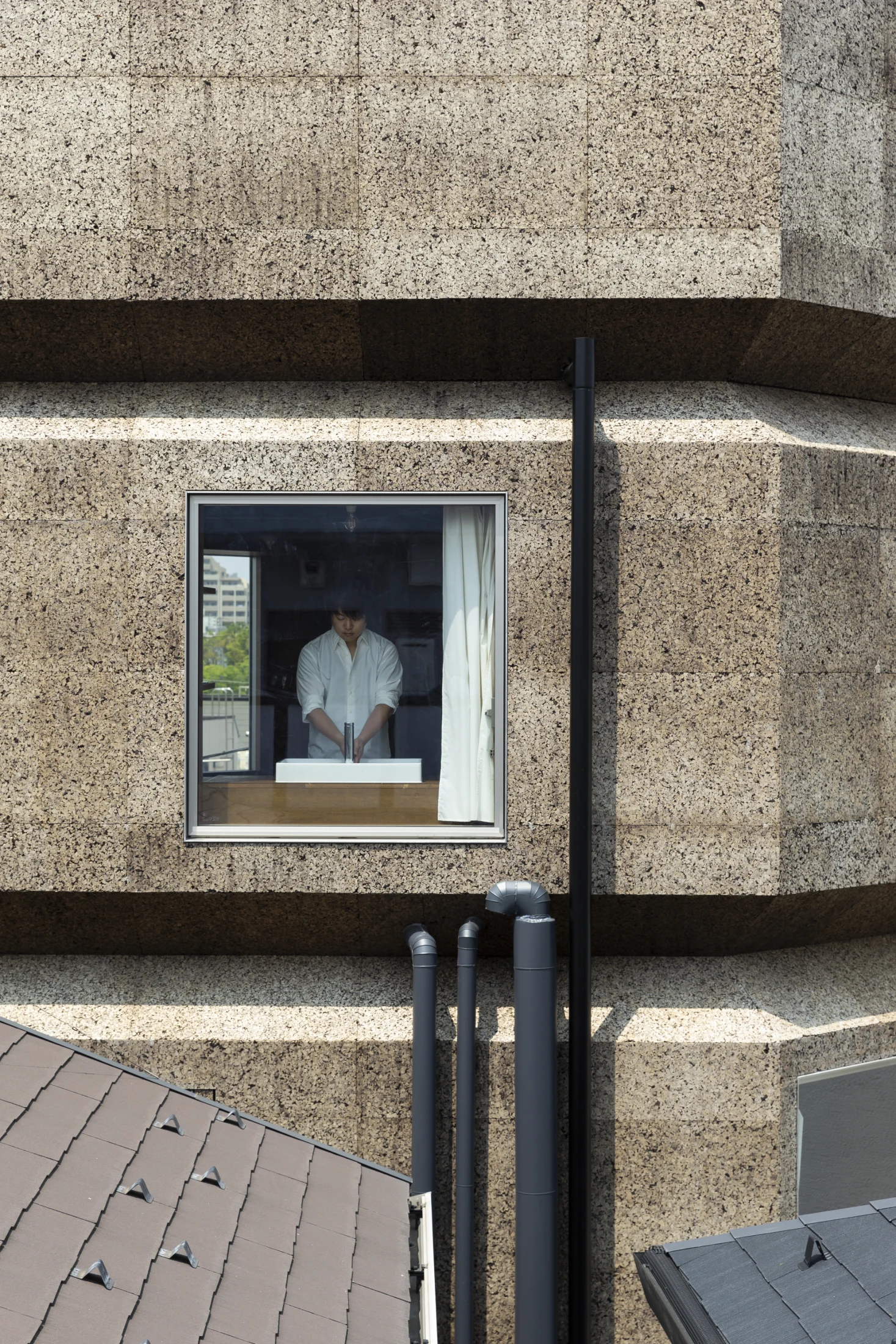
We were searching for an exterior material that could serve both as external insulation and a design element while being environmentally friendly. Cork is harvested from the bark of cork oak trees without cutting down the trees. The bark regenerates every nine years and can be harvested again. The crushed bark is placed in moulds, heated and pressed, binding it together with its own natural resin – no chemical adhesives are used. As a result, for non-humans – for flora and fauna – this house behaves like a large cork tree. These aspects really appealed to us.