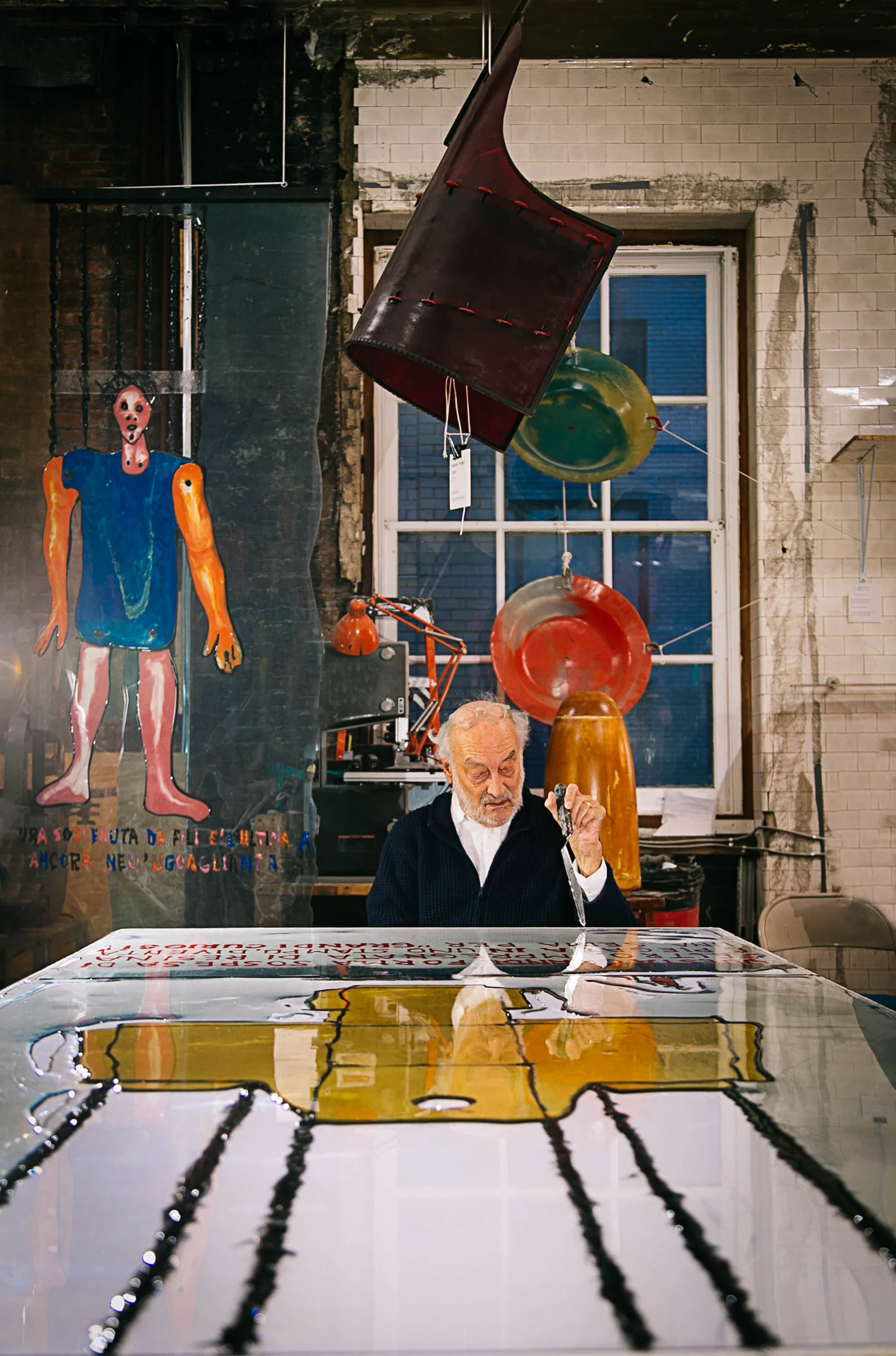
On the 3rd of April, 2024, Gaetano Pesce died of a stroke. He was 84 years old. Looking back at his career, which spanned eight decades and covered pretty much every genre and medium known to science, it's hard to squeeze him into any particular category. And that makes sense. It was this talent for defying categorisation that made Pesce's work so iconic. He's a difficult man to eulogise because, like, where to even start? As Pesce himself noted, "My career is not monolithic, but fragmentary."
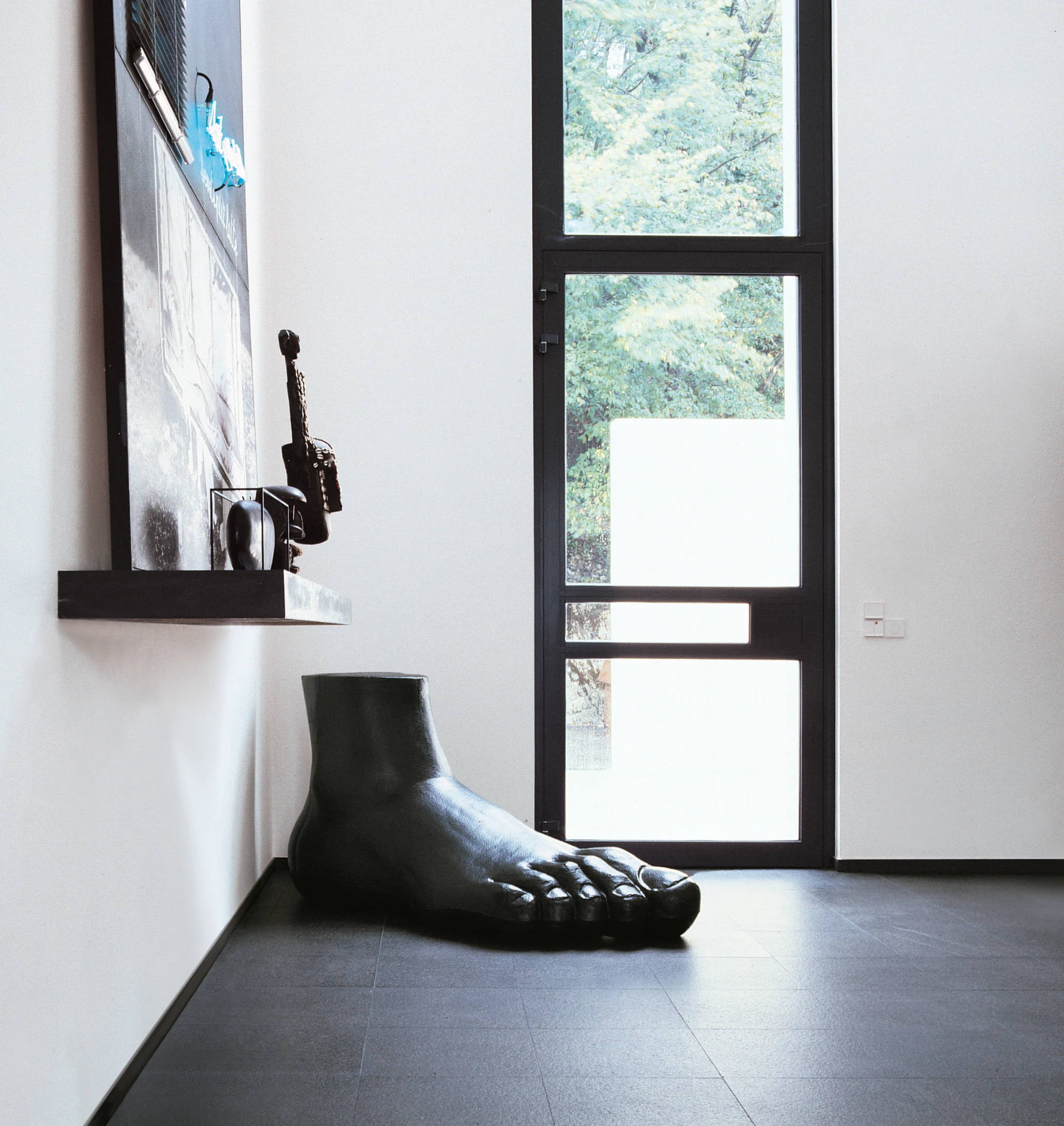
But if you dive into the artist's eclectic back catalogue, a general theme does emerge – one that Il Piede captures perfectly – and that's a firm orientation towards the future. More than perhaps any other artist, Pesce knew where he stood. And which way to face.
"If people don't like the future, they're stupid," Pesce said. What he meant was that the future is basically a blank canvas for human potential and expression. There's nothing there yet. We have to build it. So to not like the future, in Pesce's mind, was evidence of a critical failure of imagination. It was like… hating the sunrise. By labelling rigid thinkers and nostalgia-trapped luddites "stupid", Pesce was ironically advocating for that rarest human quality: open-mindedness.
Gaetano Pesce was born into a world falling apart. A few months before his birth in La Spezia, on the coast of the Ligurian Sea, Germany had invaded Poland. World War II had begun. Pesce's mother was from Venice and his father was a Florentine. This gave the young Pesce a crash course in Italy's two dominant creative forces: the dancing light and colour of Venice, and Florence's obsession with form and technical perfection.
Growing up in post-War Europe, Pesce learned to hate the rigid, geometric rules of modernism. While studying architecture at the University of Venice, he met another design student, Milene Vittore, and together they began to sketch the outlines of a new artistic philosophy.
"At the time, design was about form following function," Pesce said. "For us, this wasn't acceptable. We thought, 'We're young, and we want to see design as an expression'. The idea that design is always very practical: if you design a chair, for example, it needs to be comfortable. But in the meantime, that chair can express meaning. This is the new design, the design of the future."