Magazine Current IssueMagazine Current Issue
A Home in the Sky
A Home in the Sky
From our Mag
November 1, 2024

A Home in the Sky

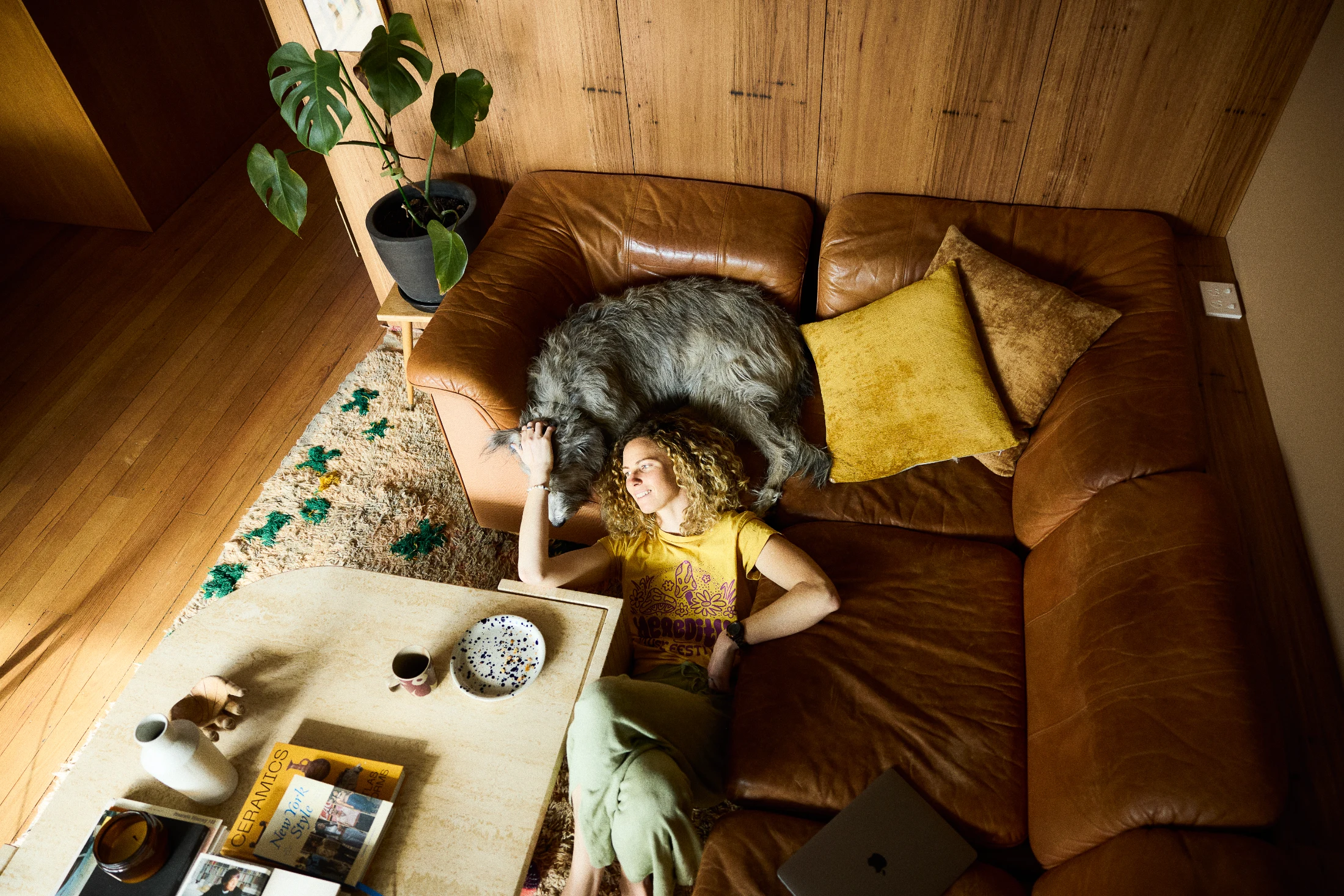
Architect Maddie Sewall in her eclectic Melbourne apartment.

It's the 90s, in a beachy Half Moon Bay house just south of San Francisco. Inside, a five-year-old Maddie Sewall peers into her mother's design studio. It is full of magical things. A rainbow of pens is scattered across a desk. Her mother leans over a drafting board carefully practising her hand rendering and architectural letter writing. The little girl is captivated.

Kirsten Drysdale
Writing:
Writing:
Kirsten Drysdale
Photography:
Photography:
Dylan James
No items found.
Magazine Current IssueMagazine Current Issue
The After shot of the Floorplan
Before
before
after
After
Top
Arrow UpArrow Up

"I was like 'what is this!? This looks incredible! Is this a real job?'". Offcuts of modelling board spill to the floor as she watches her mother's sketches come to life. "I remember her making models and wanting to use them as doll houses. They were sort of miniature worlds, and as a kid it was just so enchanting. So yeah, I think that's what got me curious at a young age."

That curiosity led to the discovery that creating worlds is indeed a real job – one that brought Maddie all the way from the Bay Area to Brunswick, Melbourne. After completing her Master of Architecture at the University of Melbourne, she was keen to find an employer that shared her personal values. "I grew up in a family that really cared about the environment and stewardship of the planet. I love nature and really care about making the world a better place," she says. You'd be hard pressed to find a better fit for an idealistic young architect passionate about sustainability and affordability than Breathe Architecture. So, she pestered Jeremy McLeod – the firm's co-founder – for six months "until he finally gave me a job" in 2014. Just three years later Maddie was appointed the project architect for Skye House, Breathe's contribution to the groundbreaking not-for-profit Nightingale Village project – and got first pick of the apartments upon completion.

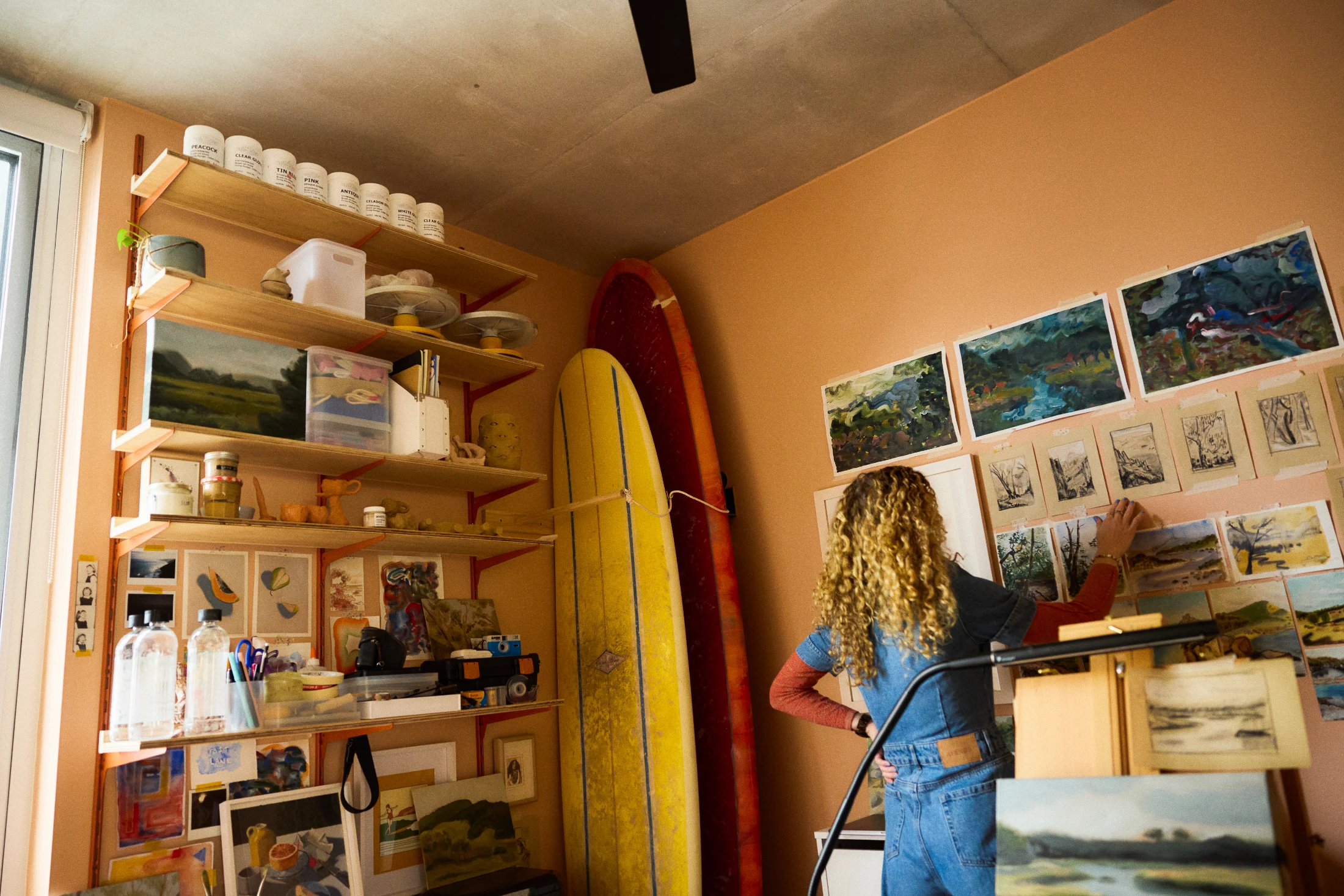
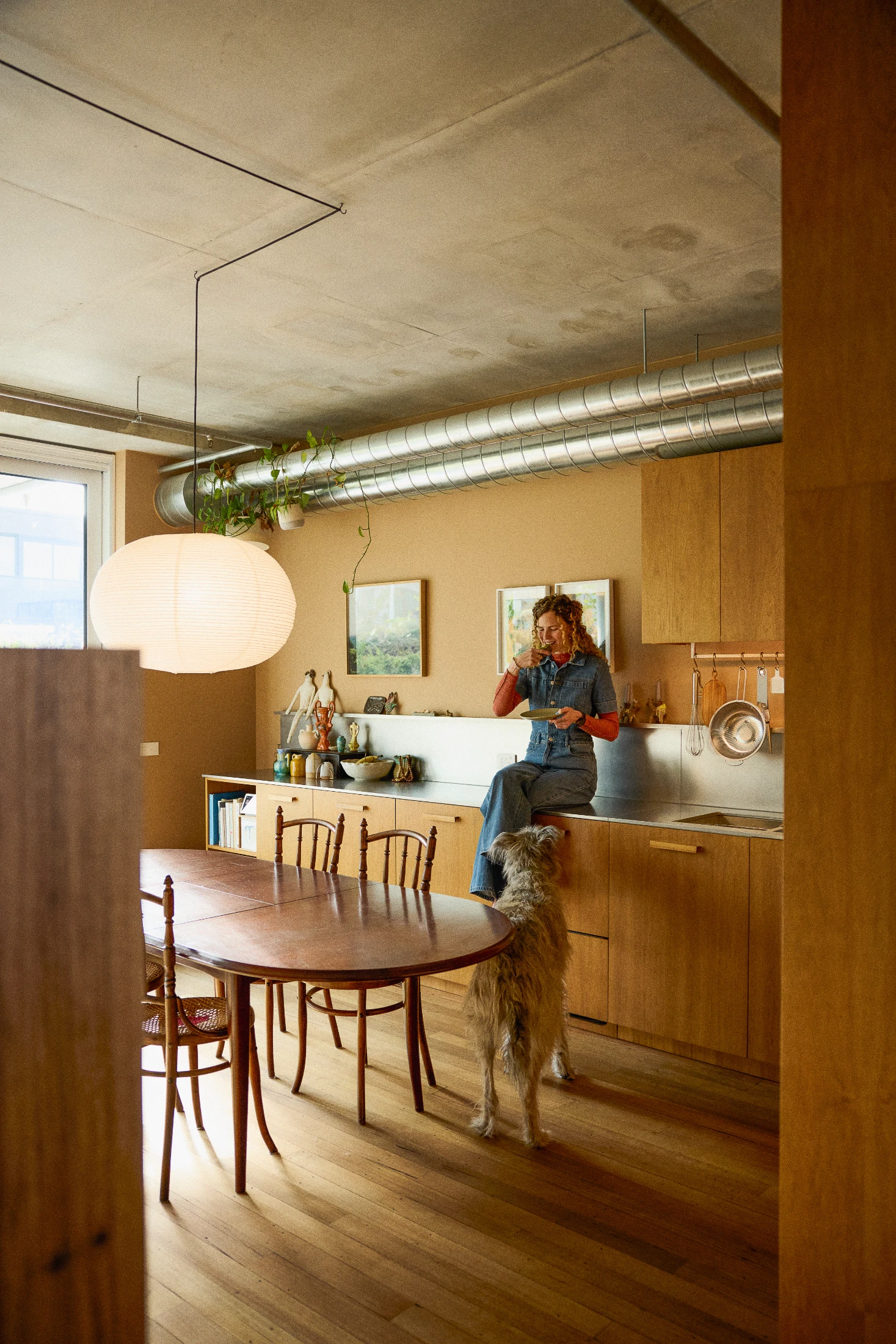
She shares the space with her (very large) rescue dog Poppy, a darling staghound/wolfhound/greyhound cross, whose shaggy languor only adds to the inviting atmosphere. California is half a world away, but an important part of that life is close by – Maddie's twin sister lives across the hallway, with her two children. "They run across the hall all the time, we just prop our doors open. It's like we're one apartment, except when we don't want to be, we can close the doors. It's the best of both worlds – proximity and privacy." Maddie also has her very own studio here – a repurposed second bedroom with a desk that she made herself using tools borrowed from the library. She and her sister regularly spend hours in here, working on ceramics and painting, planning collaborative art projects. "[We're] literally pinching ourselves all the time. This is what I dreamed my life would be like. Doing art together, being neighbours. We're not taking it for granted – we love it."
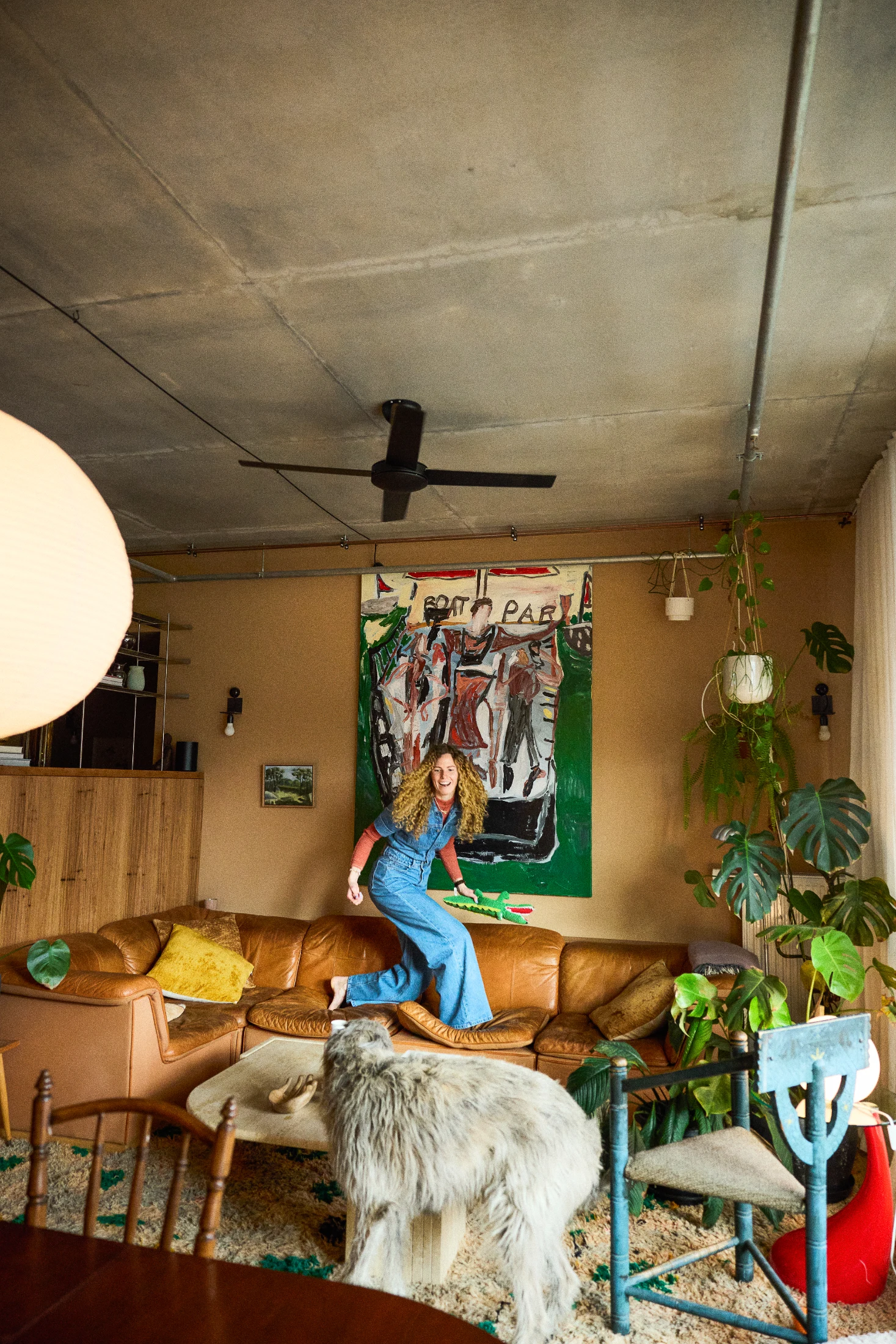
Everyone loves it. The list of awards Skye House (and the Nightingale Village project in general) has won seems endless – it's an extraordinary architectural accomplishment. So what do visitors to Maddie's live-in success story notice first? "The quality of light in here is really beautiful – that strikes people when they walk in. The access to the balcony, bringing that greenery into the space. And I've got this bench that runs along it, acting like a little window seat." That seat is Maddie's favourite spot for a morning coffee, bathed in the sunlight that pours in thanks to the apartment's north-facing aspect. The balcony is special: her apartment is on the first level of the building's setbacks, so it's a bit bigger than most. It features a garden largely grown from cuttings from her neighbours' gardens. And because there is another apartment below it, there's insulation built into the thickness of the balcony, putting it above floor level and giving the interior the embracing 'sunken' feel of a retro conversation pit.

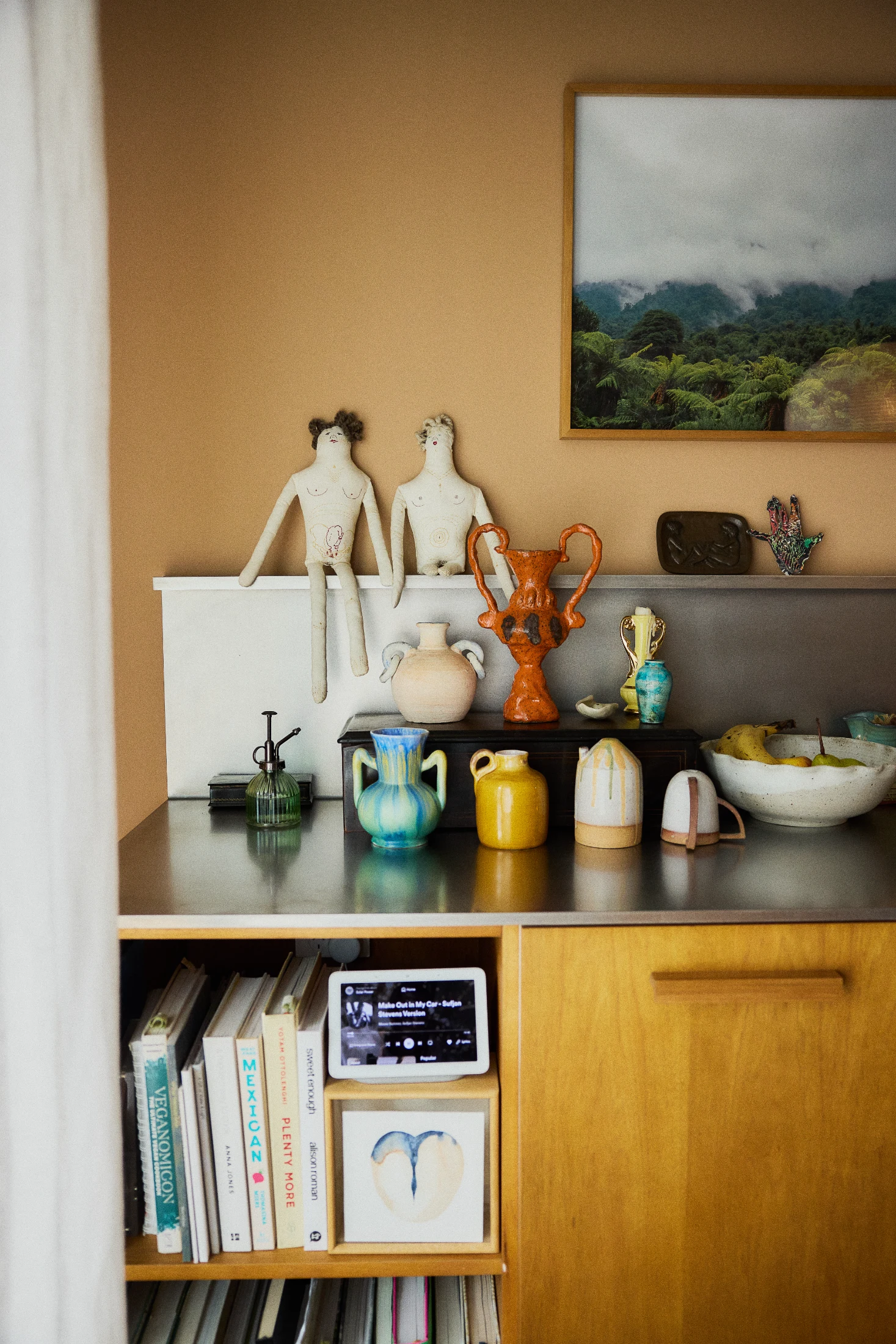
"People also just notice the way you can really personalise these apartments, it's really colourful, which I love." A friend helped her with that – she walked in and said: "This apartment said it needs brown colour". Brown? Maddie wasn't sure but her friend was a colour expert at a paint company. She trusted her, and the gamble paid off. The earthy tones add to the cosy vibe, and complement the abundance of colour elsewhere. Colour in the quilt, handmade by her mother, hanging on the wall; in the artworks, painted by family and friends; in the second-hand tiles used in the custom joinery that houses her record player and piano. The piano, by the way, was acquired free off Facebook Marketplace. All of the furniture is preloved, and obtained almost exclusively through online swap and sell platforms. "I'm addicted to Facebook Marketplace! I hate buying new things because sustainability is a really important part of my life. I just cannot bring myself to go to Freedom Furniture or IKEA, it just hurts my little soul."

Even the maintenance of second-hand items brings Maddie joy. "I find I'm often repairing or mending things like the wicker on my dining chairs, and there's kind of a nice mindfulness to that. I love having things that need restoration. Not all the time, it can be annoying if something breaks at a busy time. But I set it aside and when I have a moment I come back to it. There's something about the caretaking of older things that I really enjoy, actually." Surveying her apartment, the only item Maddie can pin down as having been bought new is her mattress; even her dishware and smaller furnishings were found second-hand. "It feels like a treasure hunt – you get things that not everyone else has. It's nice to feel like you're not in a showroom. It gives it a texture, like a personality."

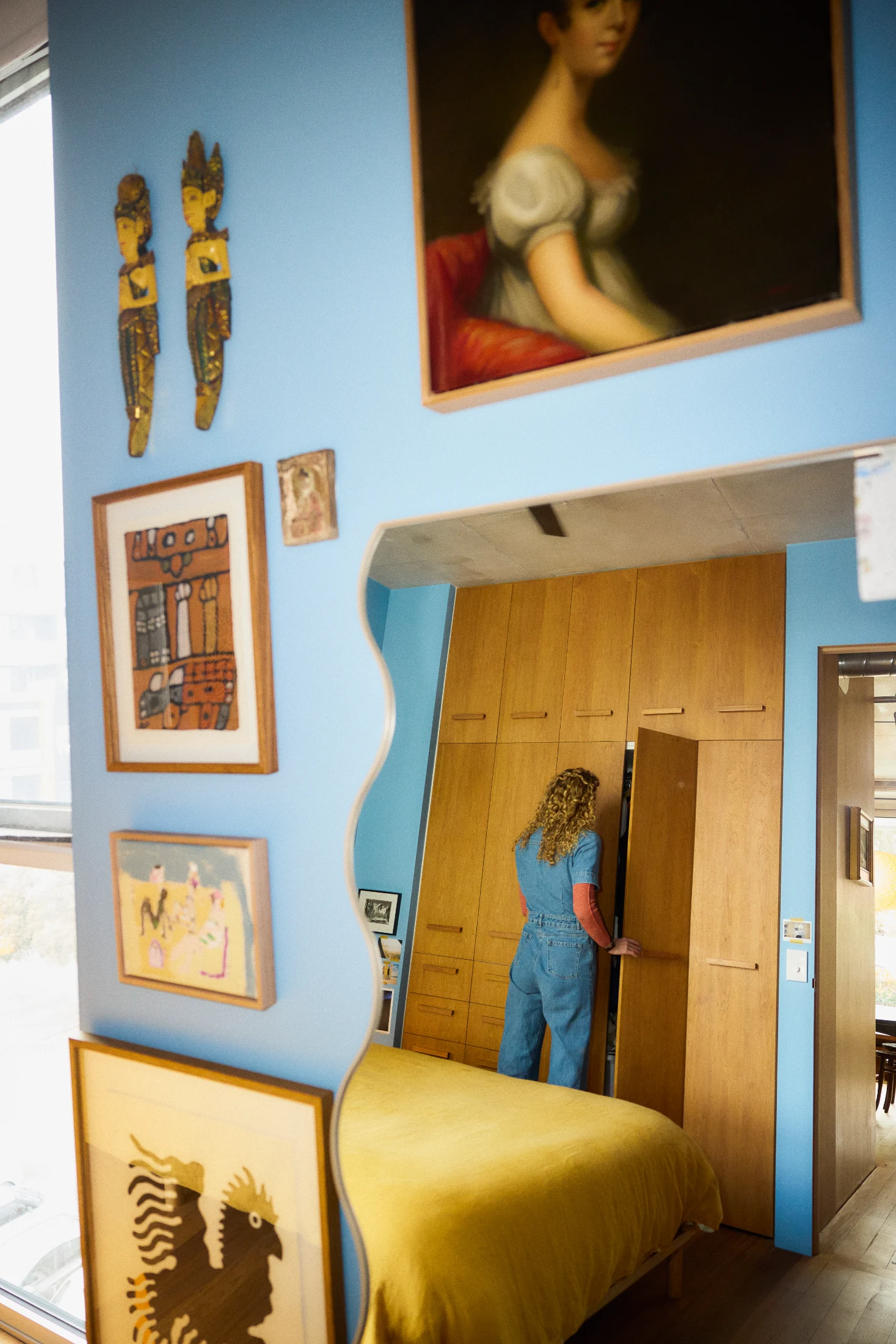
Texture and personality aren't what you'd ordinarily expect of a new-build apartment. Shouldn't it be all cookie-cutter tiles and white paint? Choices Maddie made during the design process have shown it doesn't have to be: leaving the layouts simple and having the raw materials exposed – such as concrete ceilings and columns – allowed a blank canvas for people to make each apartment at Skye House their own, by "layering heaps of other things on top of it" in a way that suits how each resident wants to live. Maddie points to the difference between her own and her sister's apartments, which have mirror image floor plans but are very different in feel. "I've got less floor area because I've furnished it excessively, squeezed the piano in – got that tightly-packed New York City apartment vibe going. But my sister's is much more open – she's very focused on having floor area for her kids to play, so hers is set up totally differently." The 'make it your own' philosophy is one Maddie lives by: inspired after a stay at The Long House in Daylesford, she painted her bedroom blue after not being able to put the colour out of her mind.

When you ask Maddie what she is most proud of about the building she designed, she talks about people. "The community is really beautiful. It's been really lovely to see everybody move in, and connect with one another, and form little interest groups, look after one another." The whole design process around Nightingale Village was highly consultative and collaborative – residents were involved in meetings for years. Effort put into activating the street level has paid off, with humming coffee shops and public spaces providing opportunities for locals and neighbours to interact. "The buildings are beautiful, and the quality of construction is incredibly high but I think I'm most proud of the contribution to Brunswick. We hope this project will be a benchmark for sustainable, affordable housing, and will demonstrate it can be successful."

It's hard to imagine anyone finding a more perfect alignment of their personal and professional passions than Maddie has, but for argument's sake, what would she be doing, if not architecture? "I've got a few alternate realities," Maddie laughs. "In one of them, I'm a person who spends time outside all the time, like a trail guide or a park ranger. In another. I'm an artist, or on a farm." We're grateful, though, that in this reality, a little girl fell in love with the buildings in her mother's hands.

Maddie Sewall is Director of Houses at Melbourne architecture studio Breathe.

Maddie's tips for sustainable, small footprint living.

How can people promote community in their apartment buildings?

Organise simple community events – drinks events like barbecues, or a games night or gardening day. This is a great way to spend time with neighbours and build connections over common interests.

Start a group chat to encourage a 'share economy' – Borrow kids' toys, kitchen equipment, tools. Water each others' plants when someone goes away.

What are your tips for finding beautiful, pre-loved furniture and décor?

Look for things with 'good bones' – even if an item isn't in great condition, if it's structurally solid you can repair or mend it for a new life. It's much better than buying something new and cheap that isn't good quality.

Vintage and antique items that have character and personality really add a lot of texture and history to a space – it makes a space feel lived in and authentically you.

Don't be afraid to mix things up – that's what makes you feel at home in your space.

Any tips for how to maximise storage space?

If you can find an apartment with a separate storage cage and bike parking, that goes a long way to freeing up space in your apartment.

I personally love loose furniture solutions. It keeps spaces flexible and adaptable to changing needs over time – a bedroom that was a study could become a yoga room or with expensive or extensive changes.

What sustainable materials excite you?

Timber offcuts, small batches of tiles, and stone offcuts are all salvaged materials from various projects I've used around my place and are usually easy to come by.

If I can't get salvaged materials, I look for materials that are recycled or fully recyclable, like timber and stainless steel.

How can people incorporate sustainability principles into their homes in an affordable way?

Buy green power. This is the number one thing you can do to make an impactful change. Whether you rent your place or own it, if you buy 100% green power through your electricity provider, the government is required to invest more in renewable energy. It's the easiest and most impactful way to make a difference.

Managing waste and recycling – put the extra effort into taking things to specialist recycling facilities so they don't end up in landfill.

Buy second-hand as much as you can. There's so much stuff in the world.

What should people look for in an apartment or small footprint home?

For me, thermal and acoustic qualities are super important for comfort and good sleep.

Daylight and cross-ventilation are a must. You can change a lot of things about a place when you move in, but the amount of light and air are hard to change.

What adjustments might people need to make to their habits if they're committing to a small footprint lifestyle for the first time?

View apartment life as an opportunity to take advantage of having a 'share economy' – which is a trade off that suits me. For me, so I have a piano but no TV, which means less waste but I need or want and actually need, and what really matters is a way to work out what many neighbours. It's a way to reassess your priorities.

Writing:
Writing:
Kirsten Drysdale
Photography:
Photography:
Dylan James
Back to Top
Arrow UpArrow Up
Top
Arrow UpArrow Up
The After shot of the Floorplan
Before
before
after
After
Businesses featured in this project
No items found.
Products featured in this project
No items found.
Magazine Current IssueMagazine Current Issue
Writing:
Dylan James
Writing:
Kirsten Drysdale
Photography:
Photography:
Dylan James
Back to Top
Arrow UpArrow Up