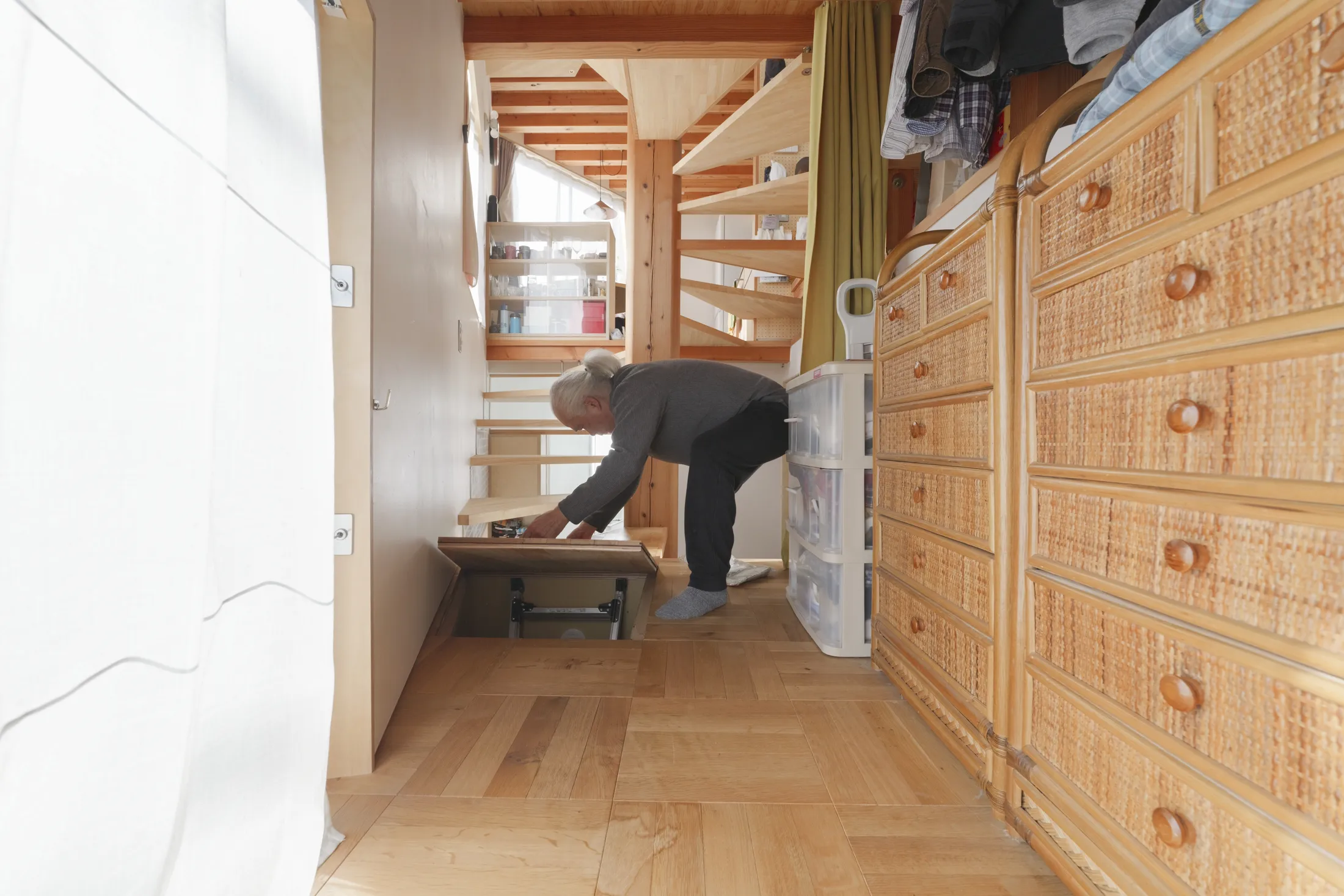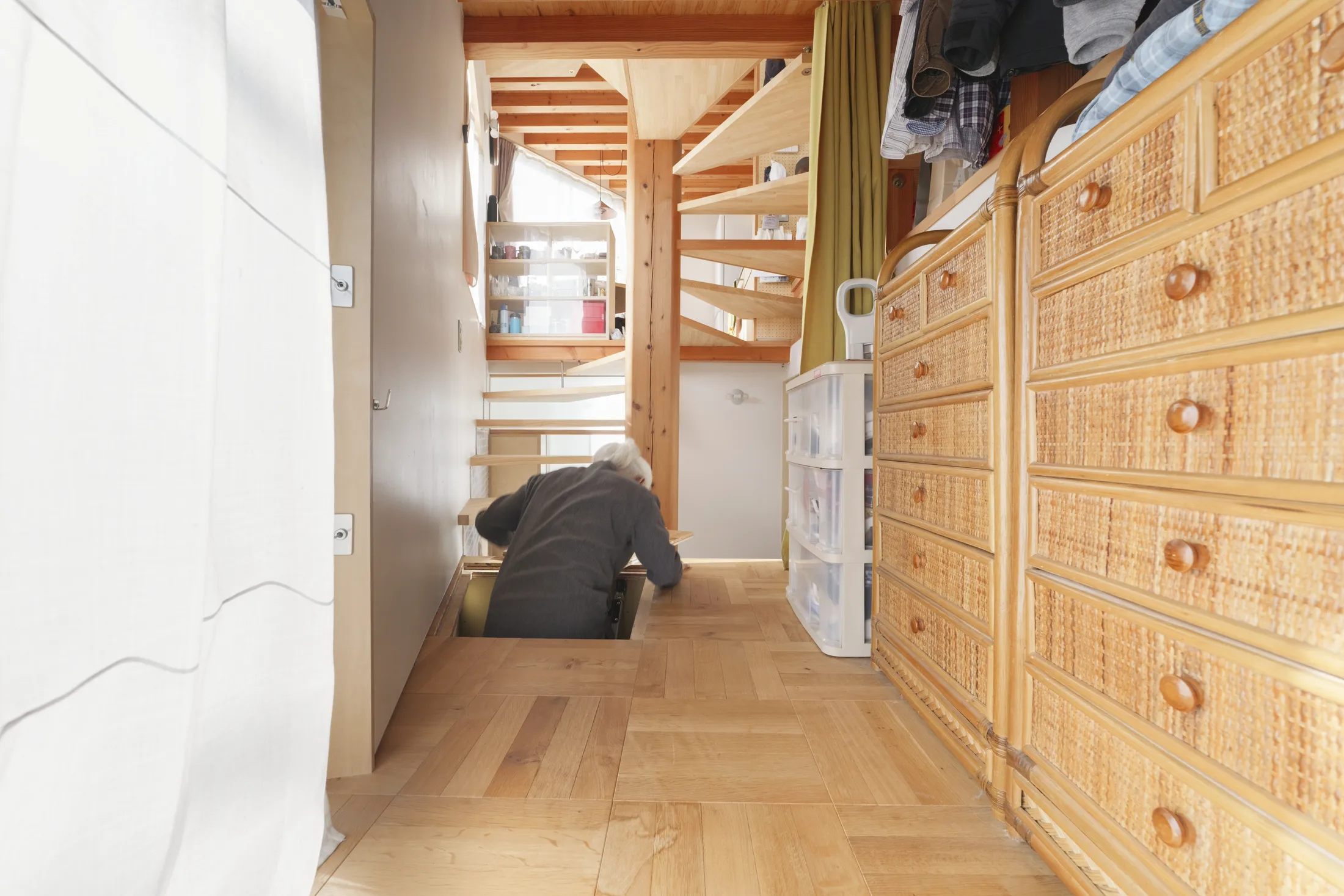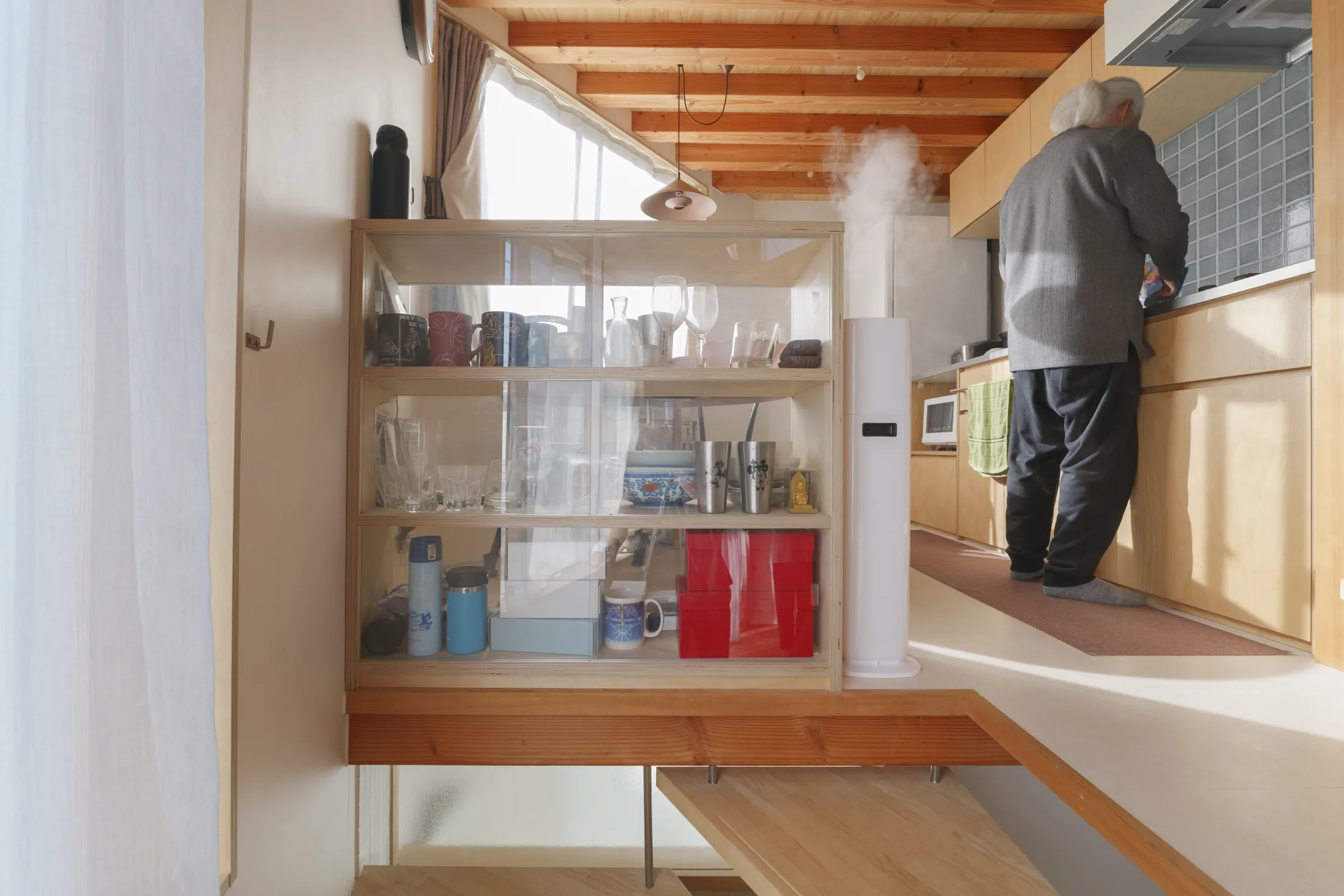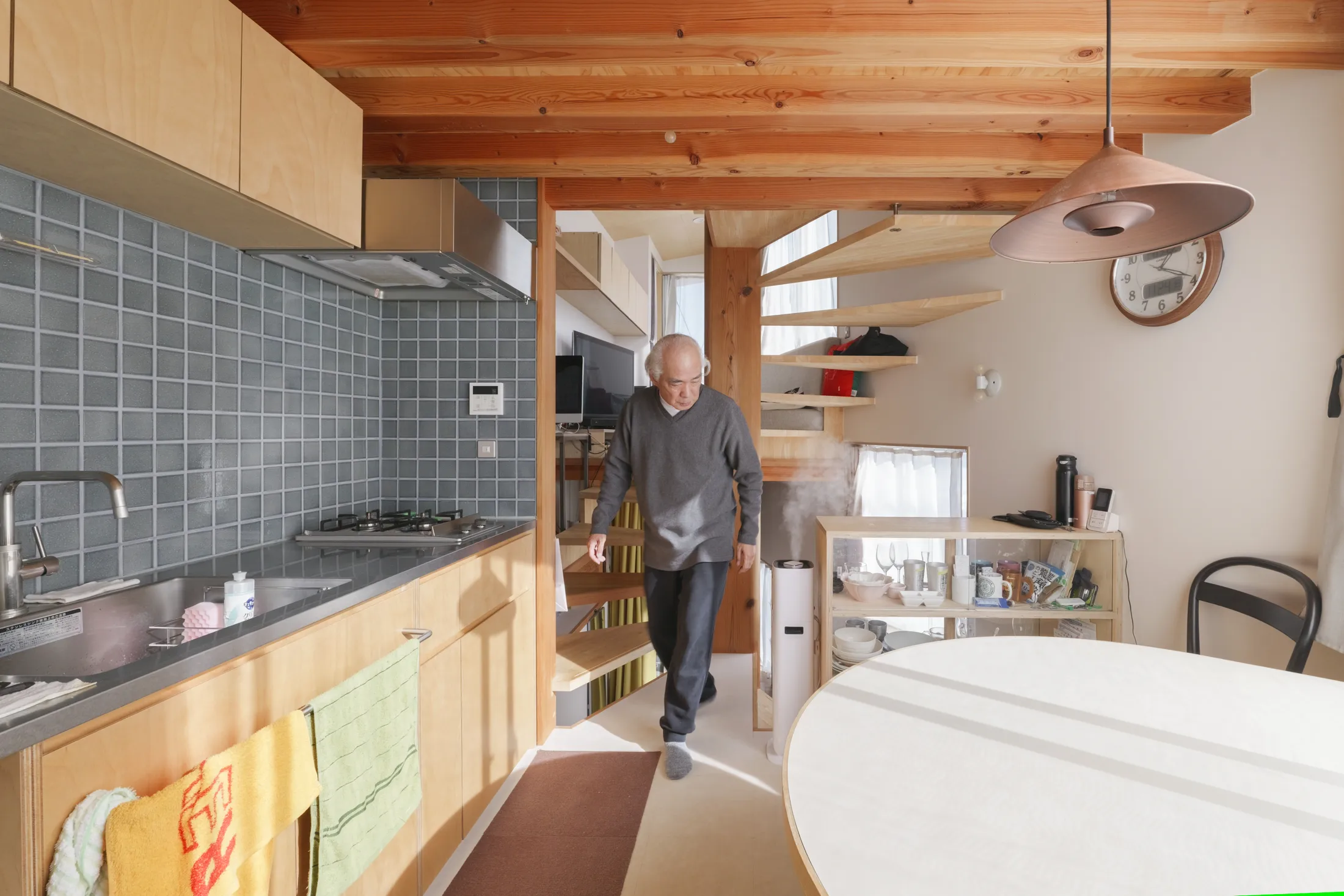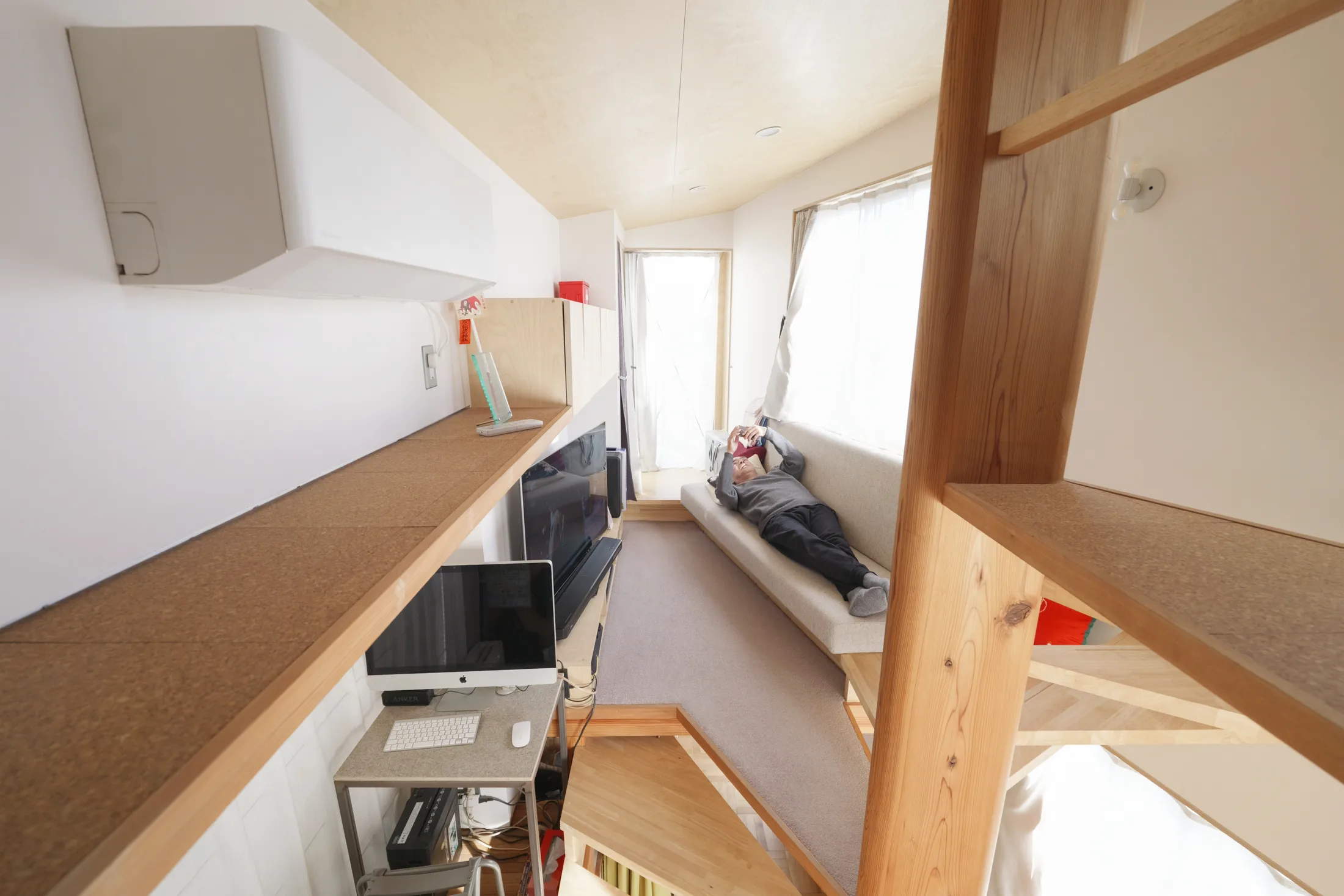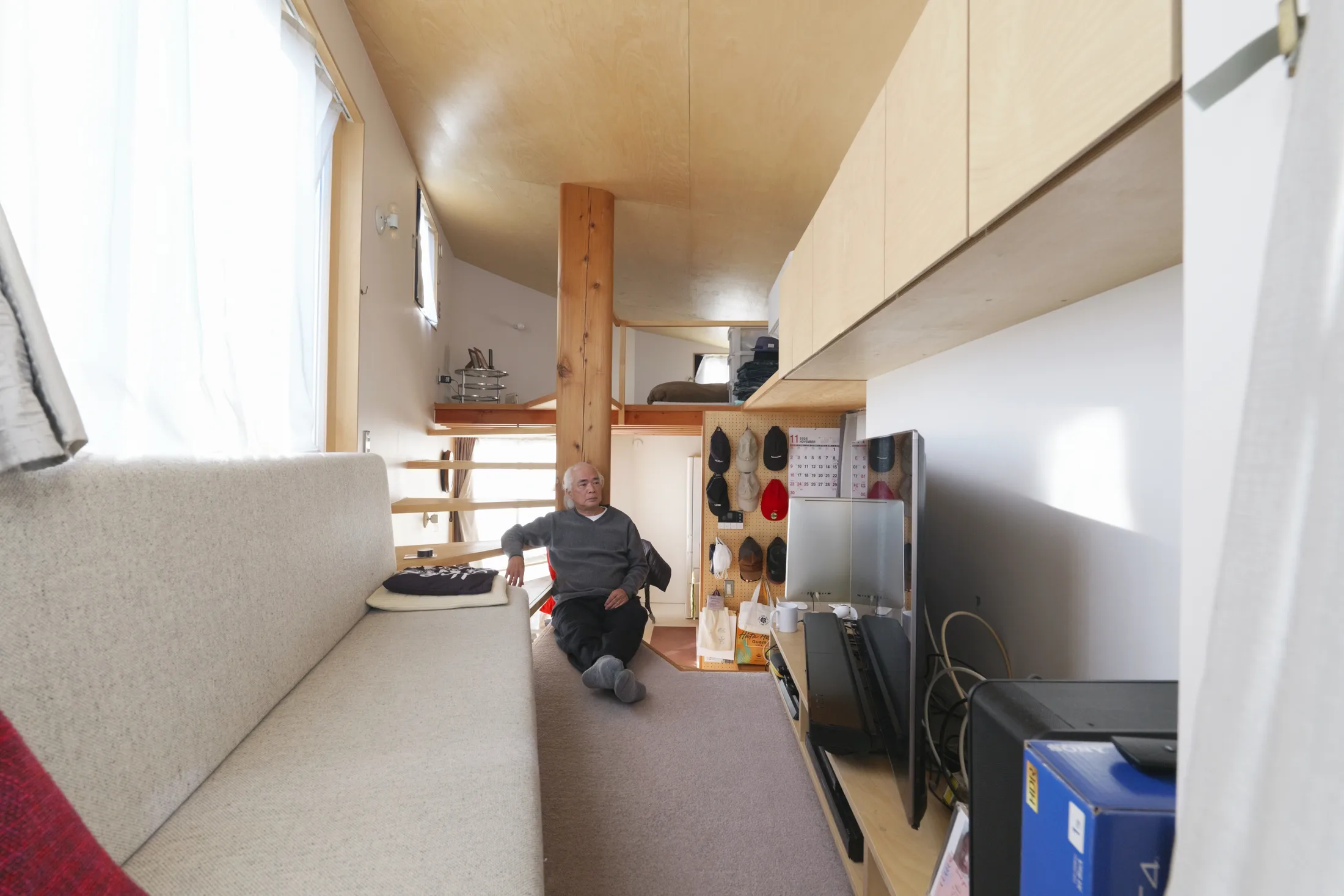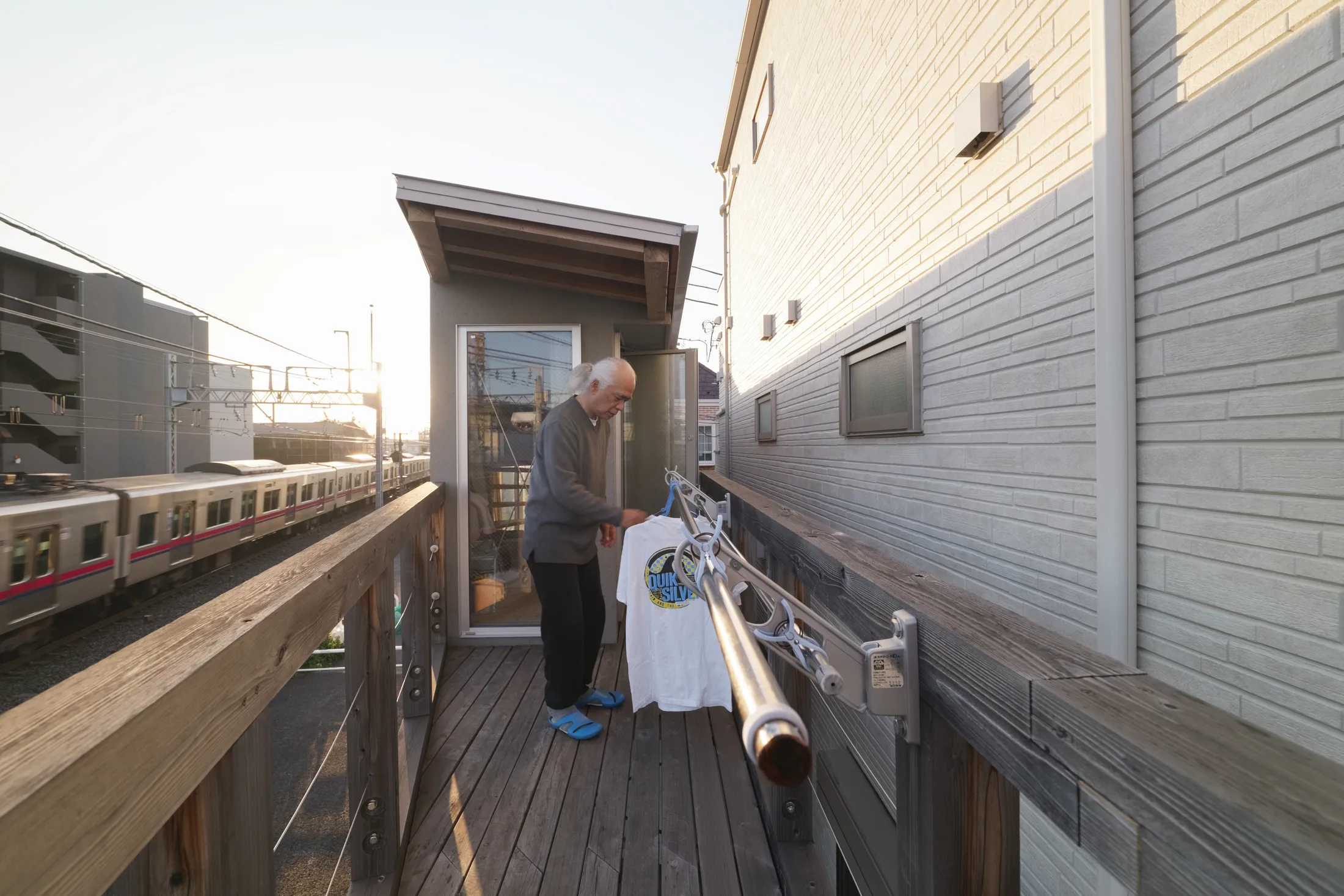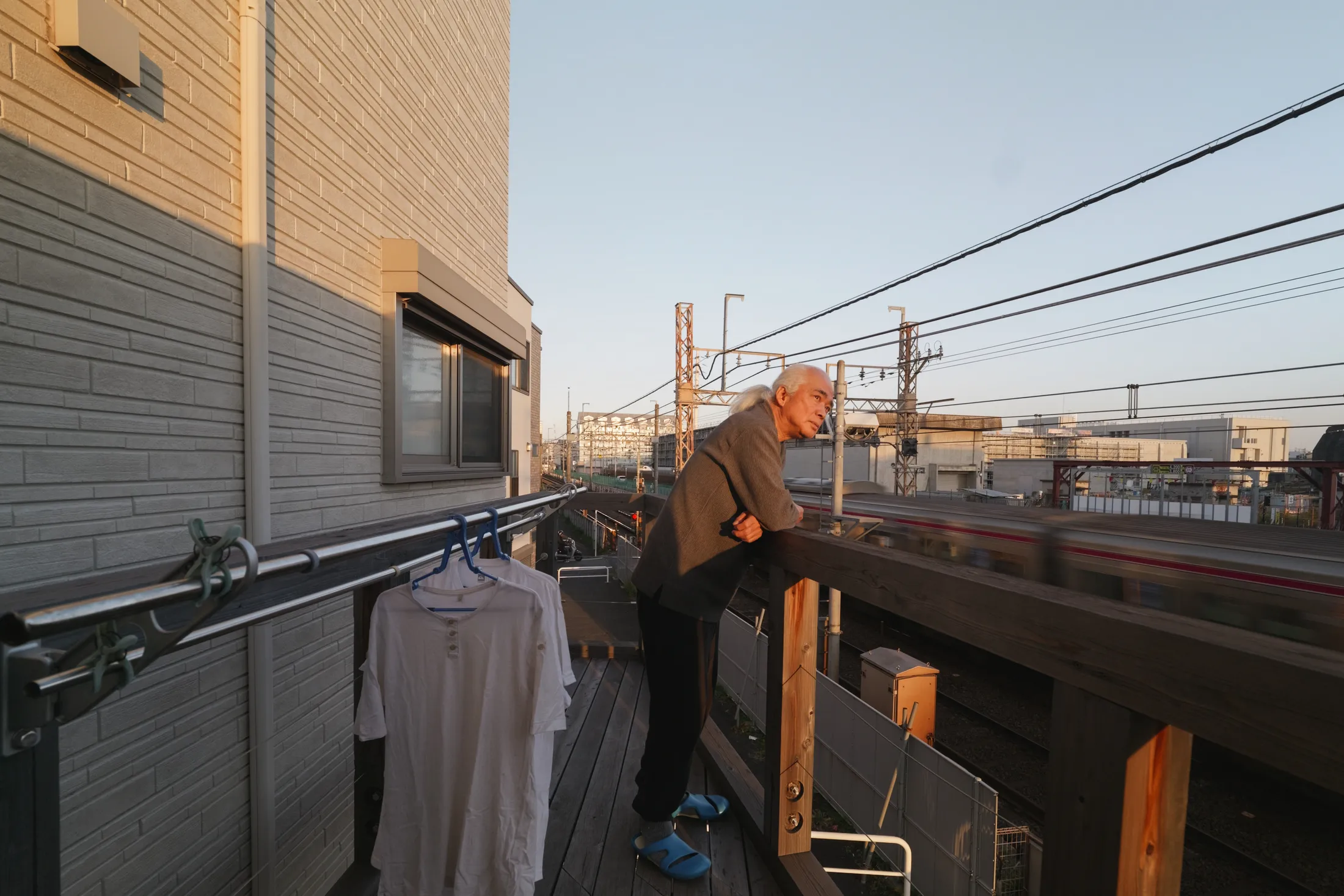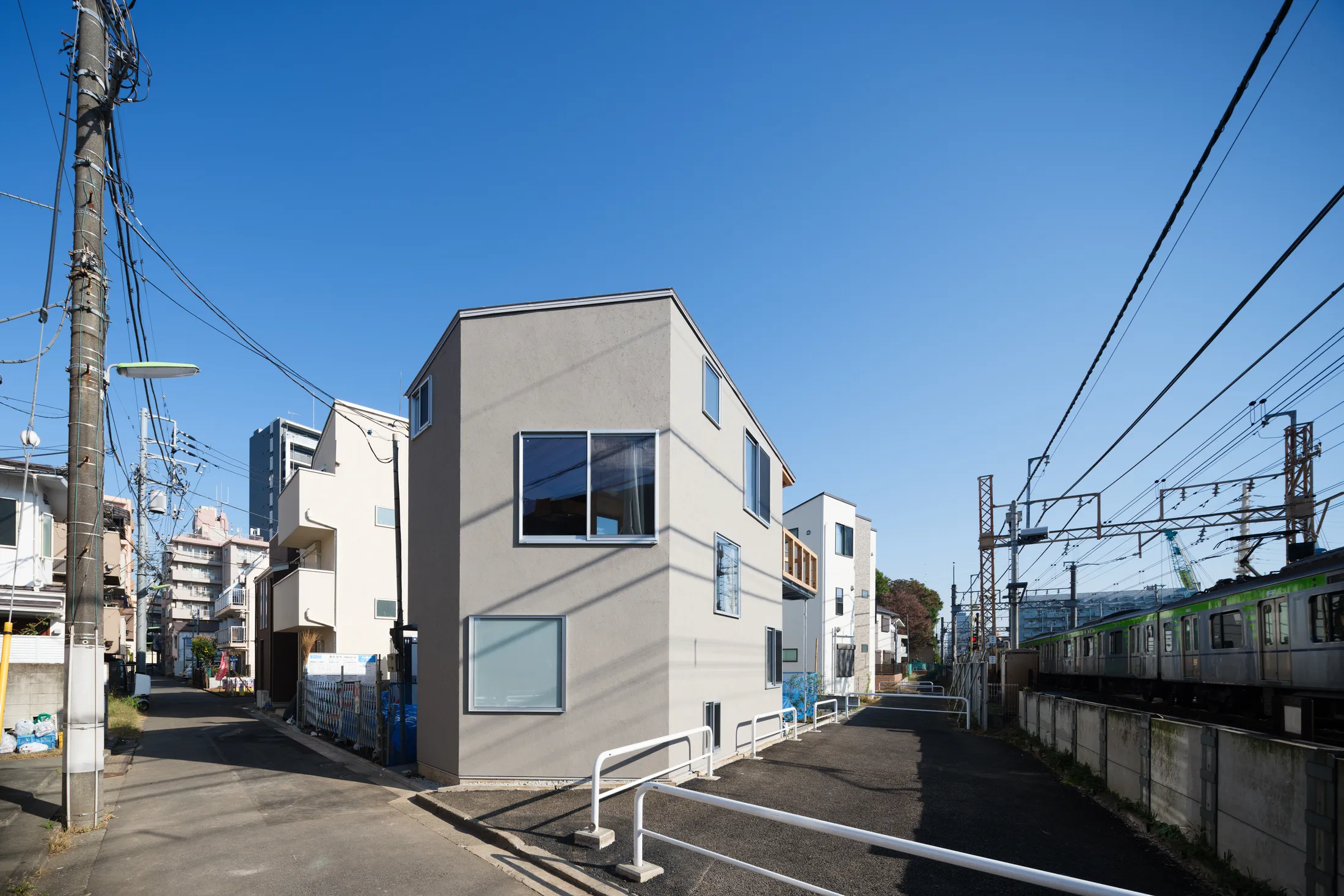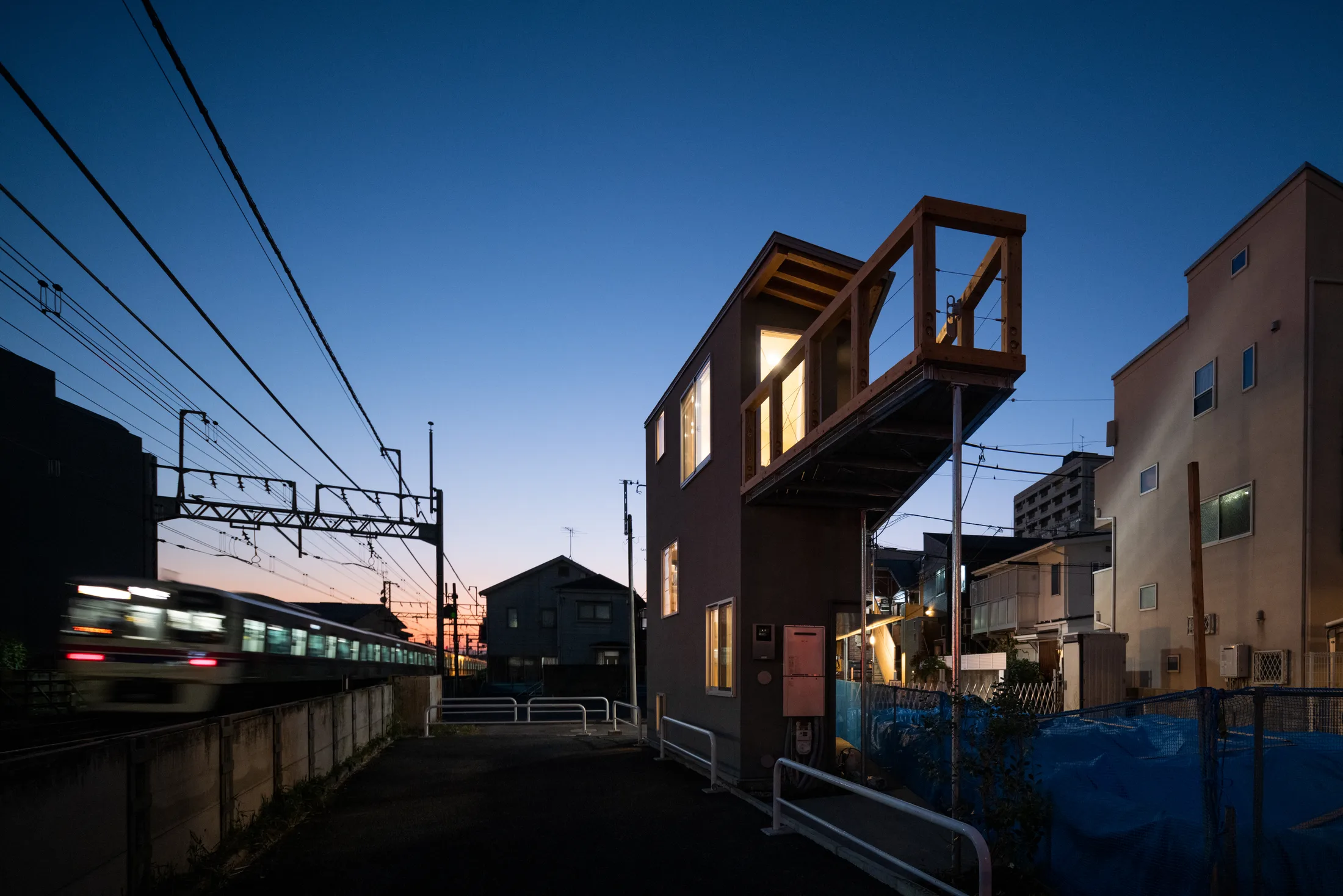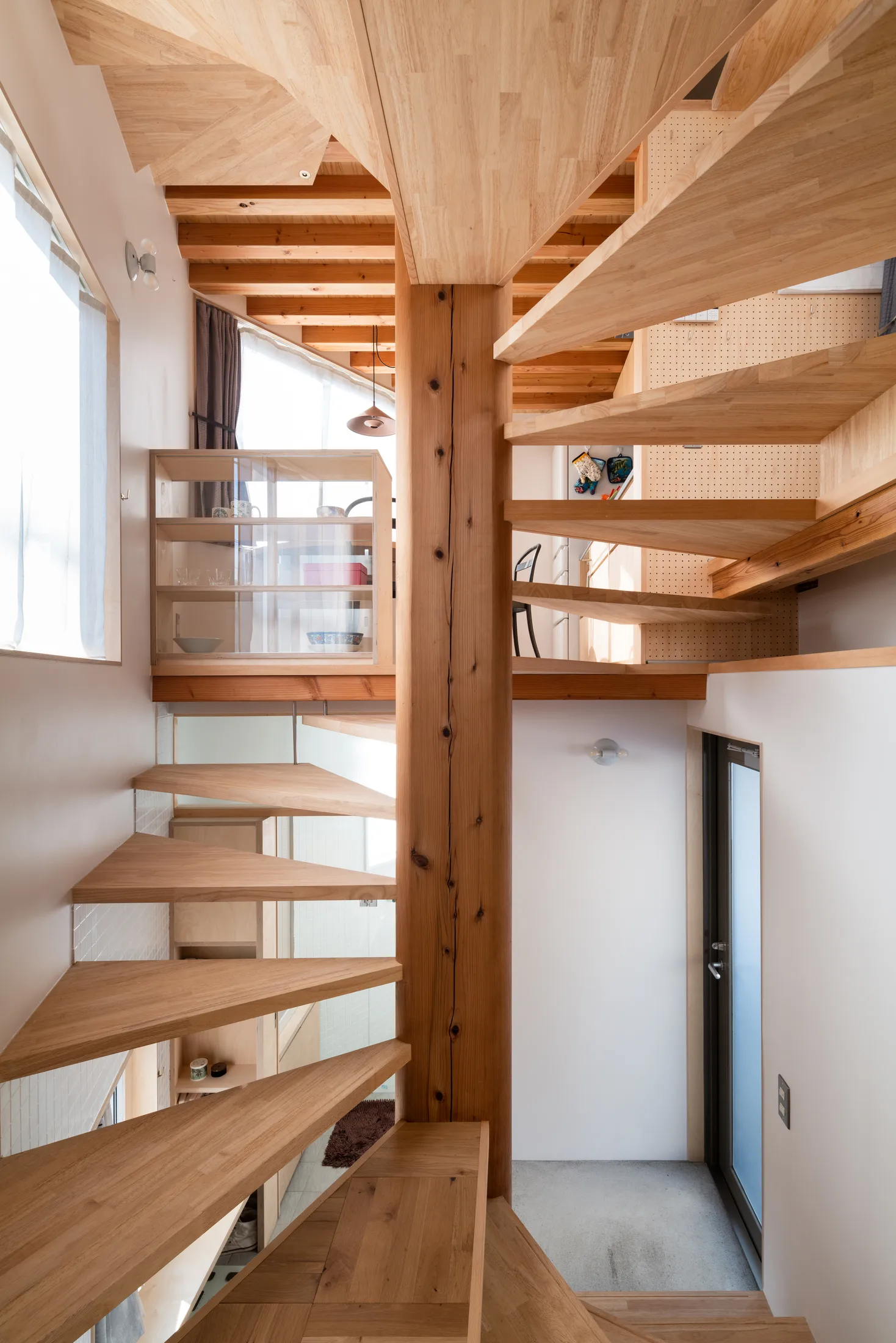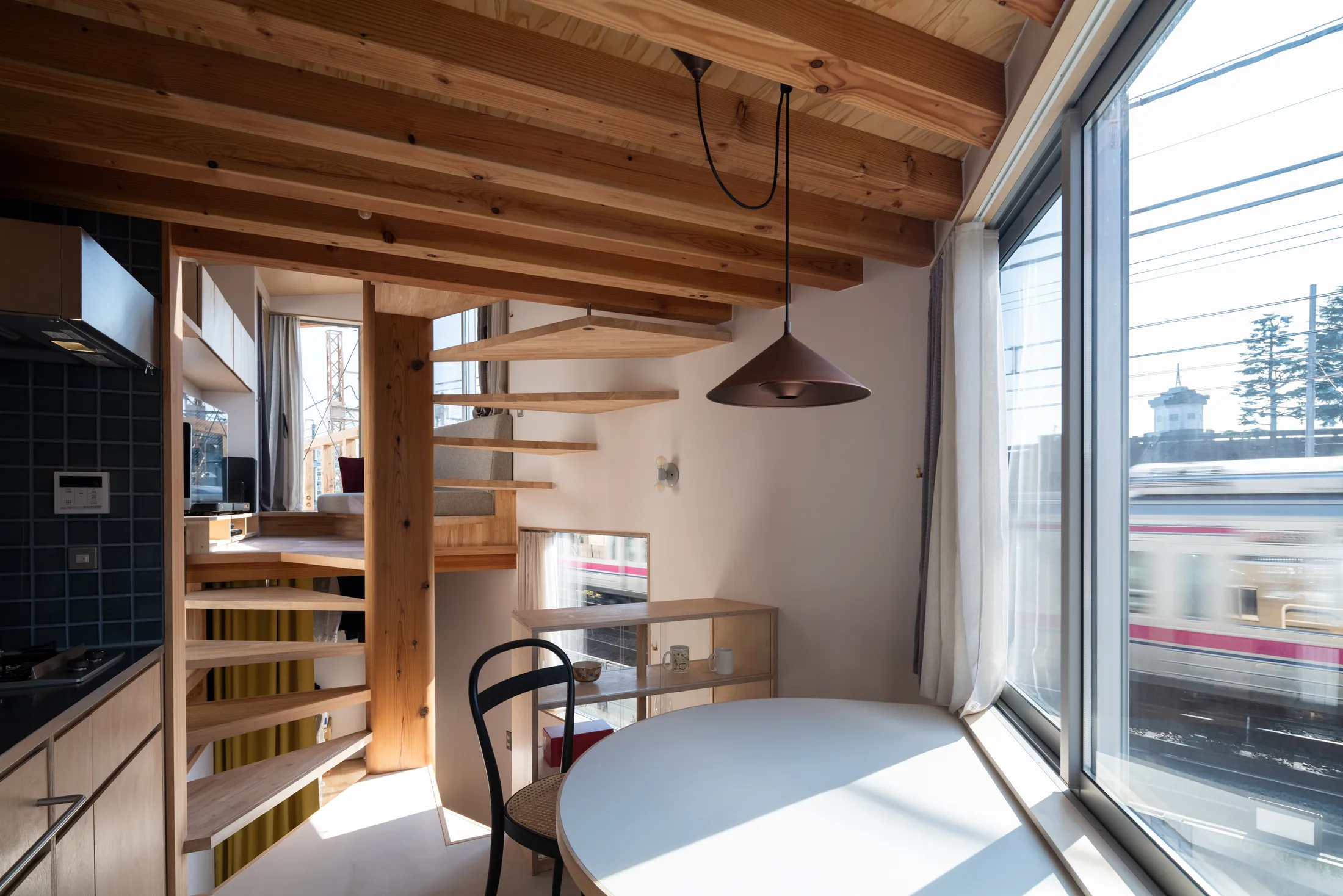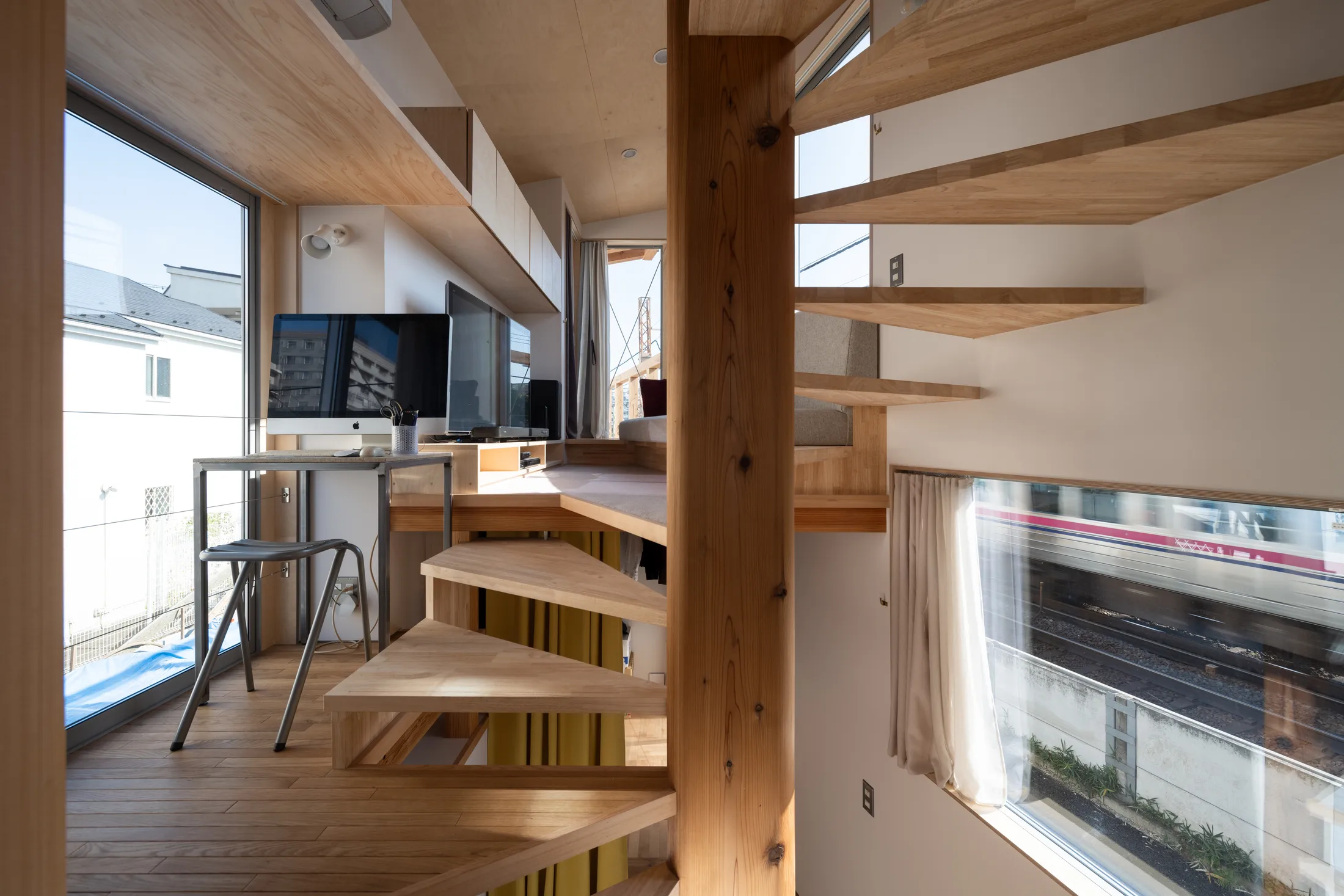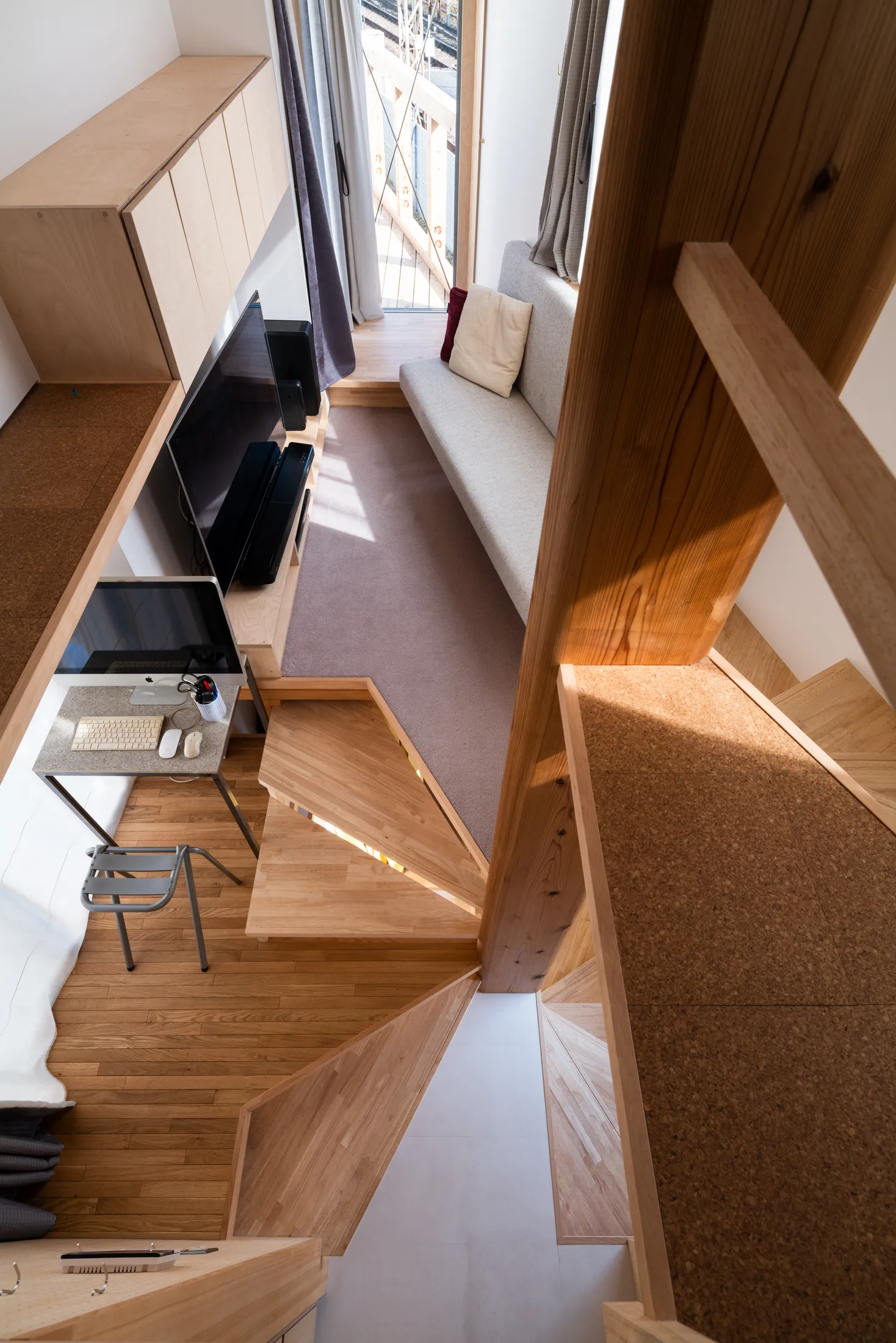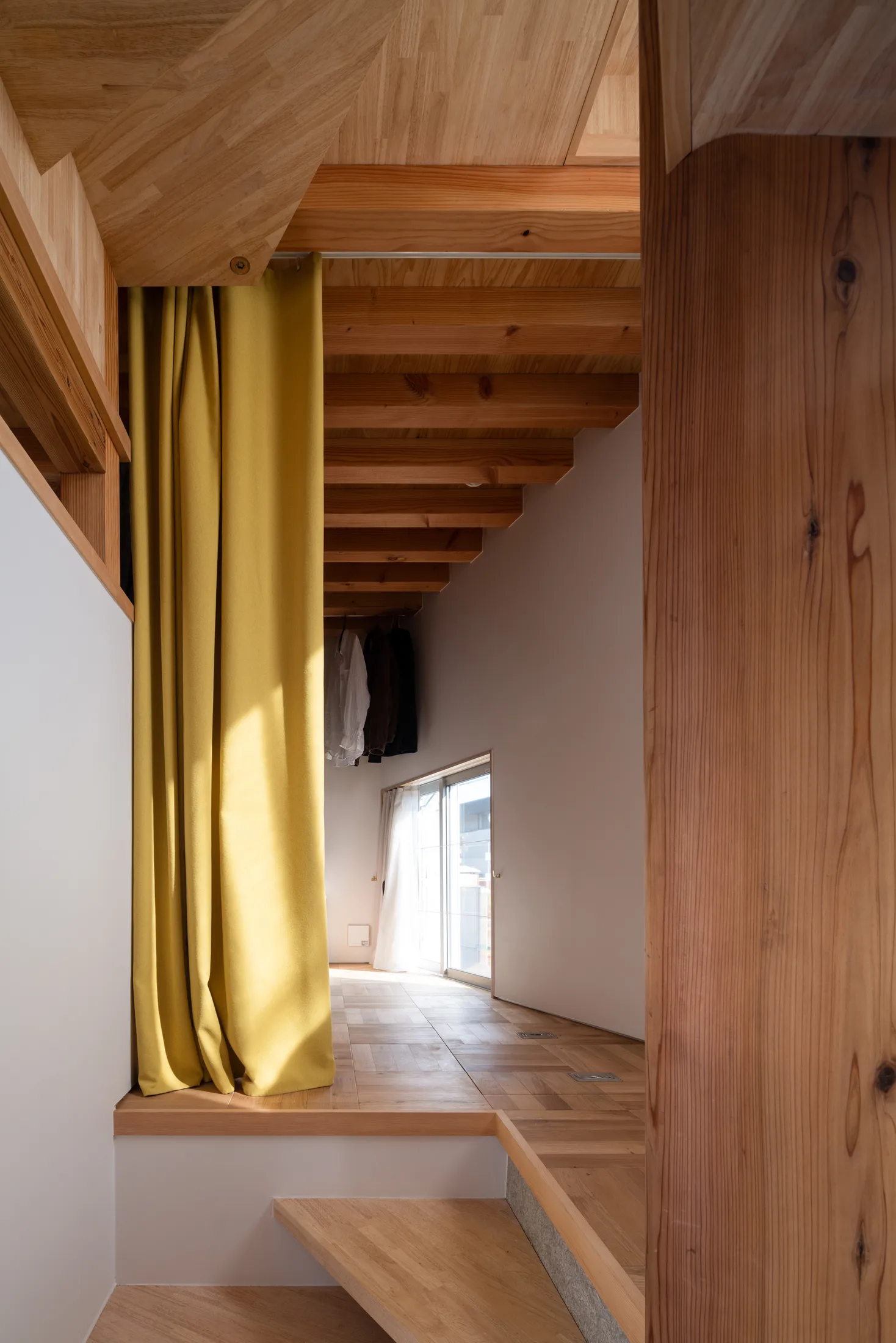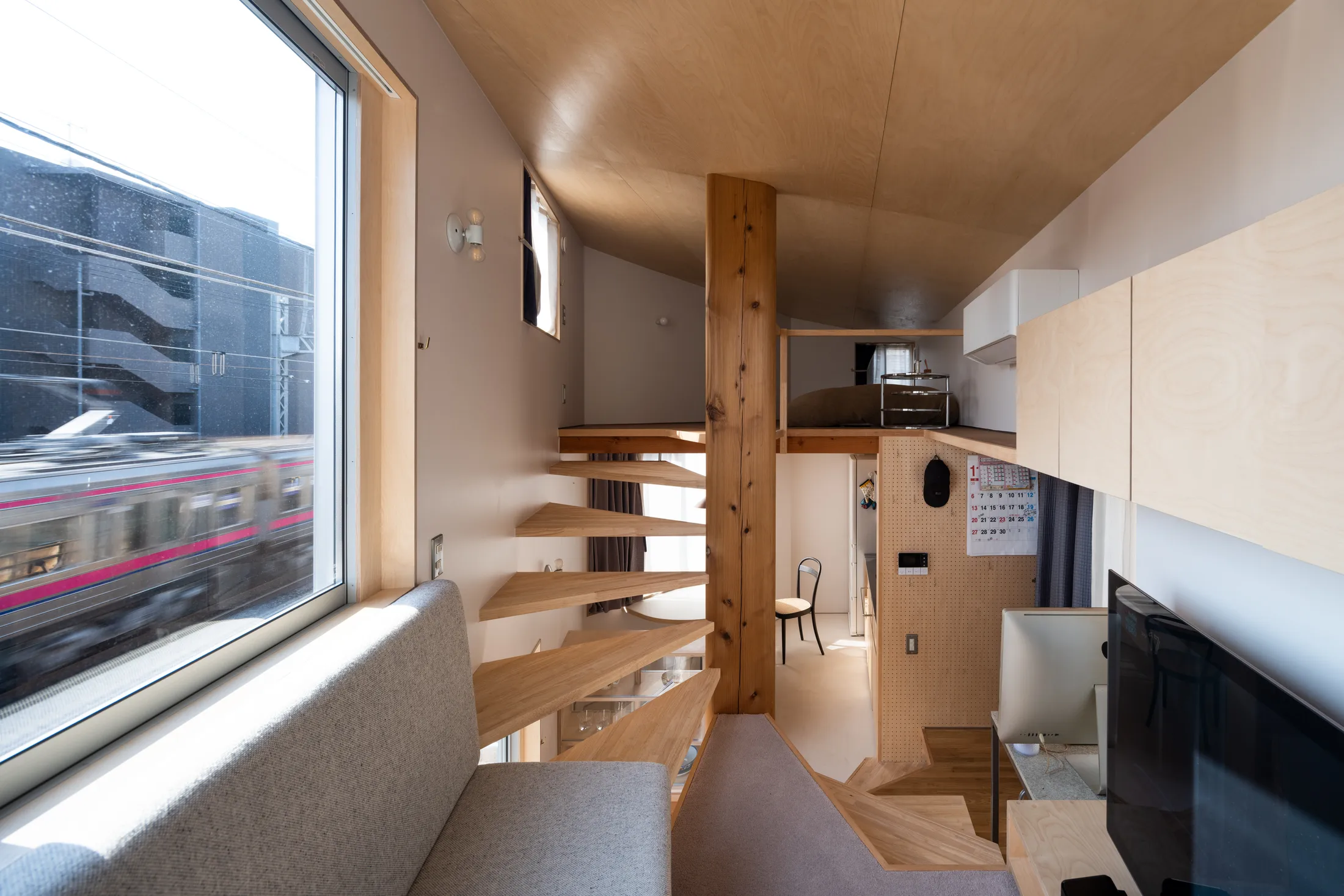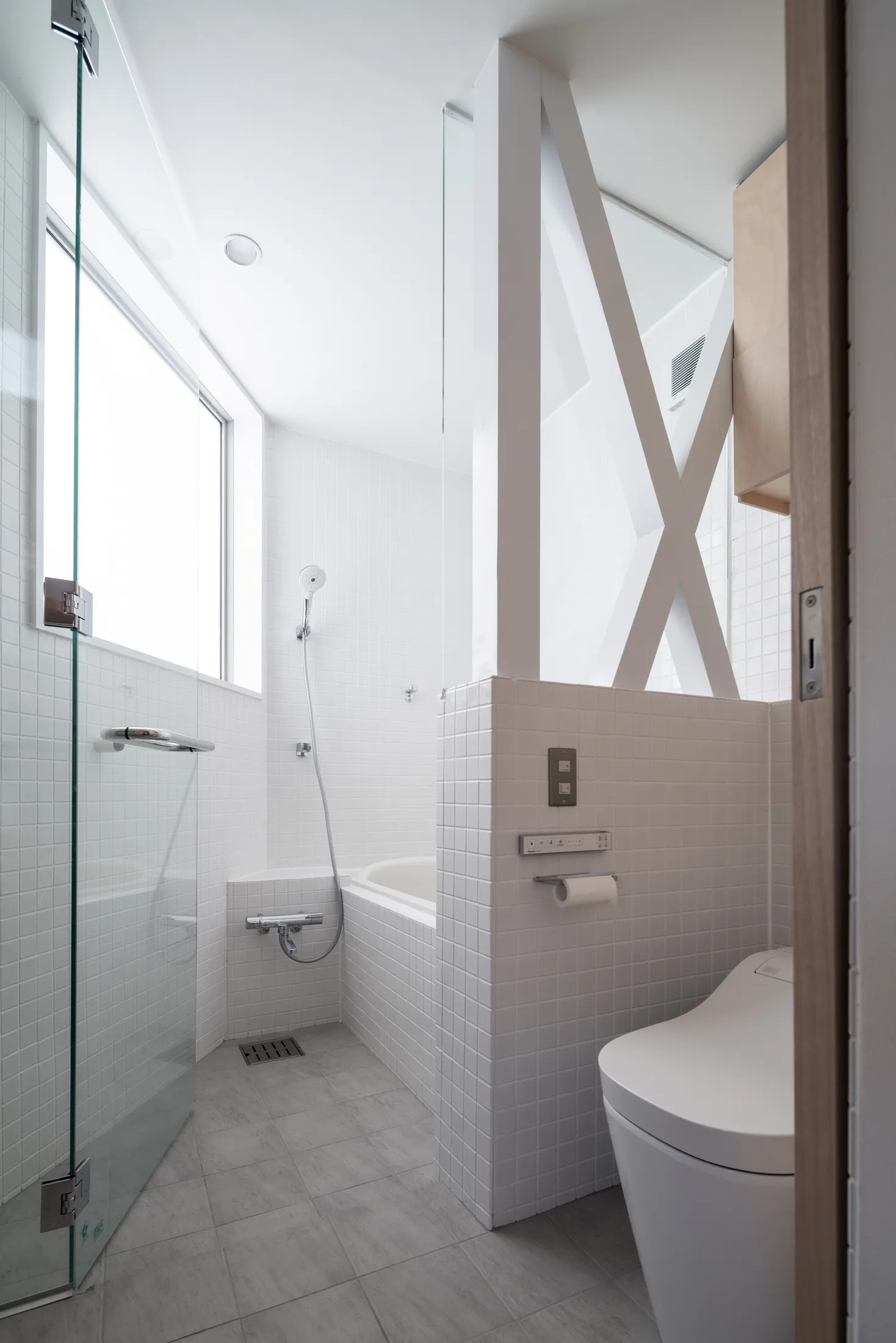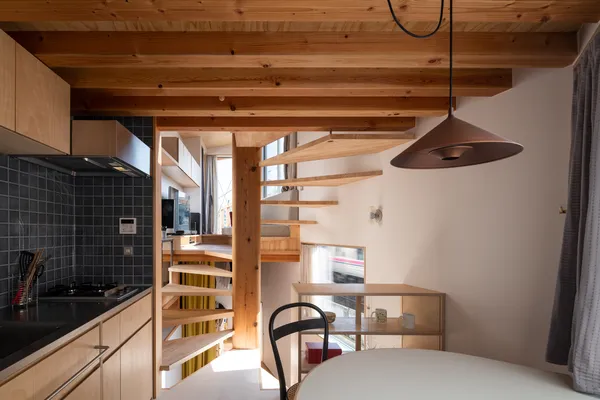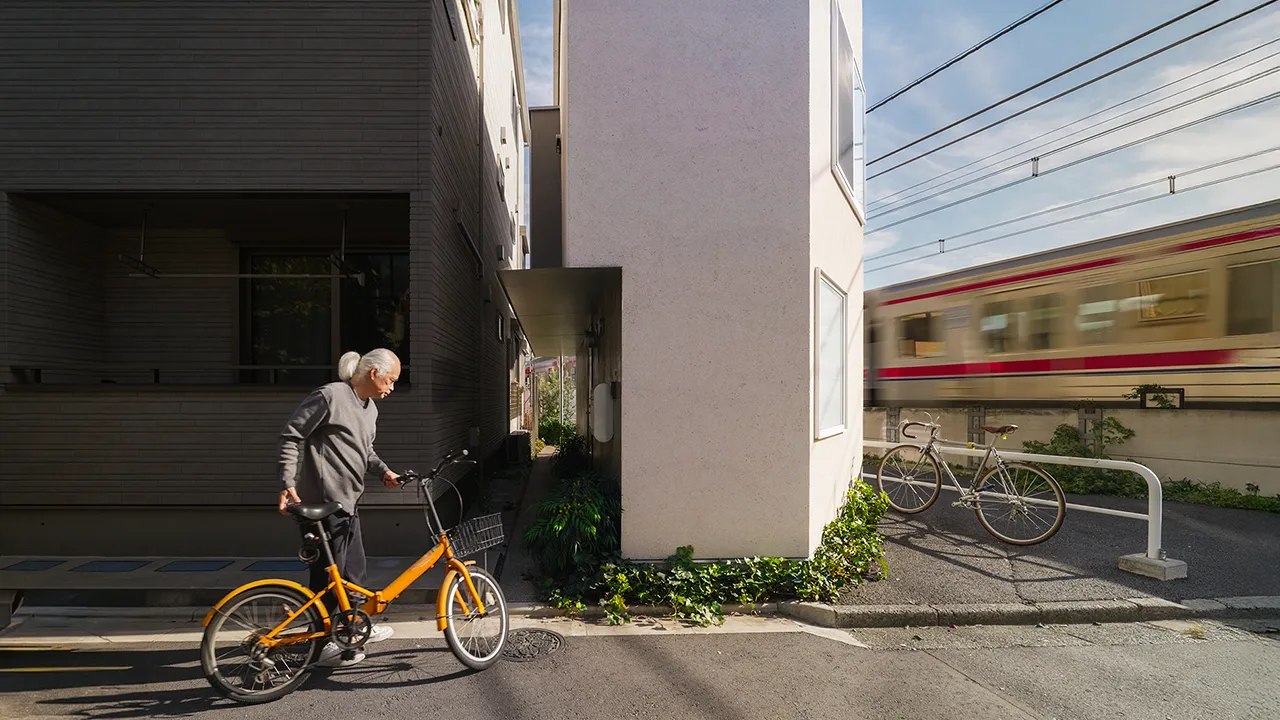




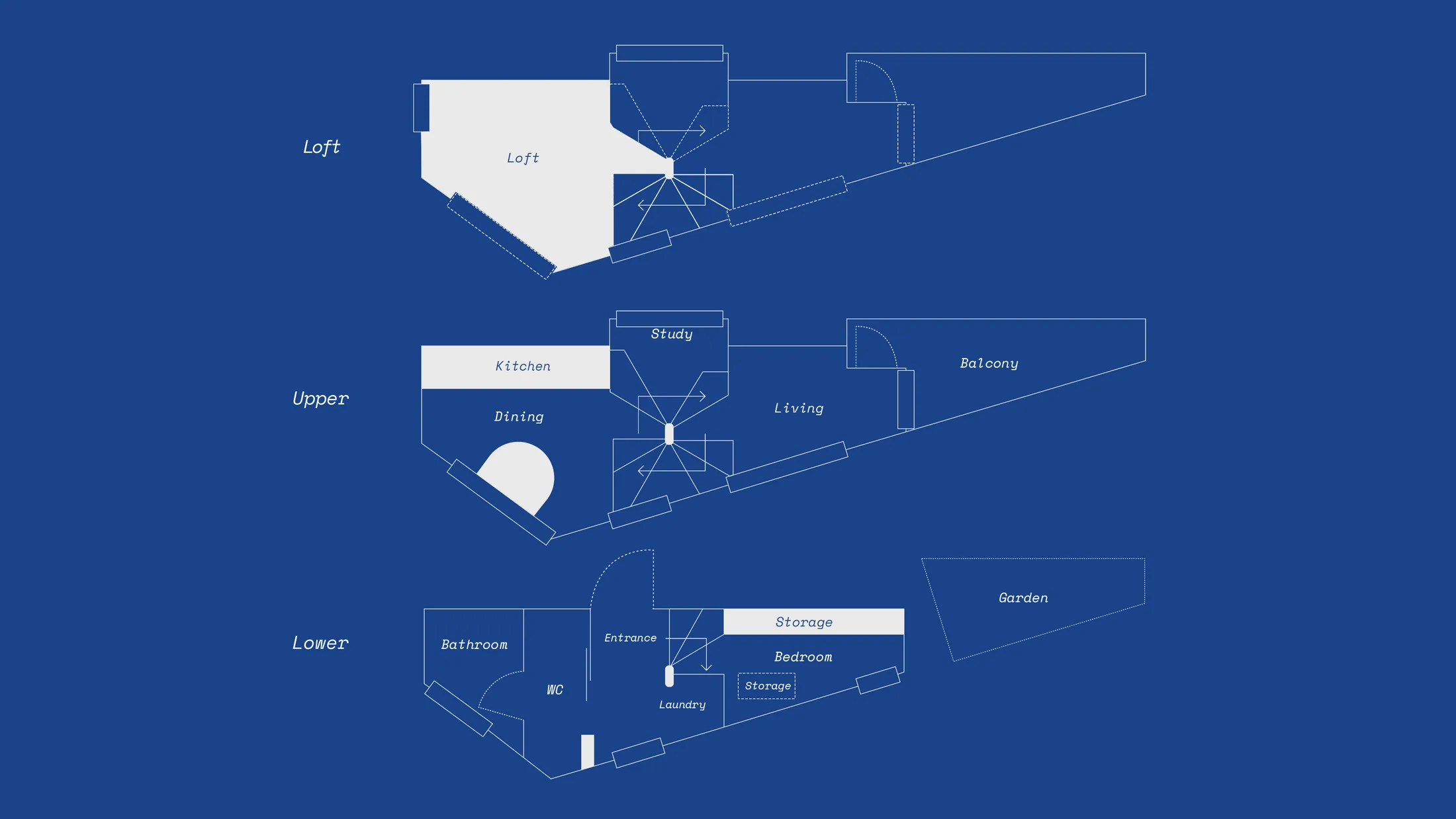

Set on a narrow, irregular site in Tokyo’s Setagaya Ward, House M sits beside an active railway line. Architect Takehiko Suzuki created the home on a compact 30sqm/322sqft site. It was once much larger, but when plans were made to elevate the tracks, the owner chose to sell part of his land and rebuild on what remained, rather than leave the neighbourhood he had lived in for decades. Rather than treating the constraints as limitations, Suzuki used them to shape a vertically layered home organised around a central, tree-like pillar and spiral staircase. The split-level layout compresses private rooms and expands transitional spaces, allowing circulation to double as living space.
From the genkan to the loft, each level flows into the next through carefully calibrated changes in height, light, and material, making the house feel expansive despite its compact size. Birch plywood furniture, exposed beams, and varied window openings soften the density of the plan. Stair treads widen, then contract. They become places to sit, pause, or store everyday belongings. Below, we highlight five design decisions that show how House M transforms circulation, storage, and structure into places to be.
1. Entrance Steps That Store Shoes and Offer a Place to Sit
2. A Raised Sleeping Platform with Storage Beneath
3. A Double-Sided Cabinet That Shares Light and Access
4. A Built-In Sofa That Gives the Room Breathing Space
5. A Hanging Rail That Acts Like a Balustrade
1. Entrance Steps That Store Shoes and Offer a Place to Sit
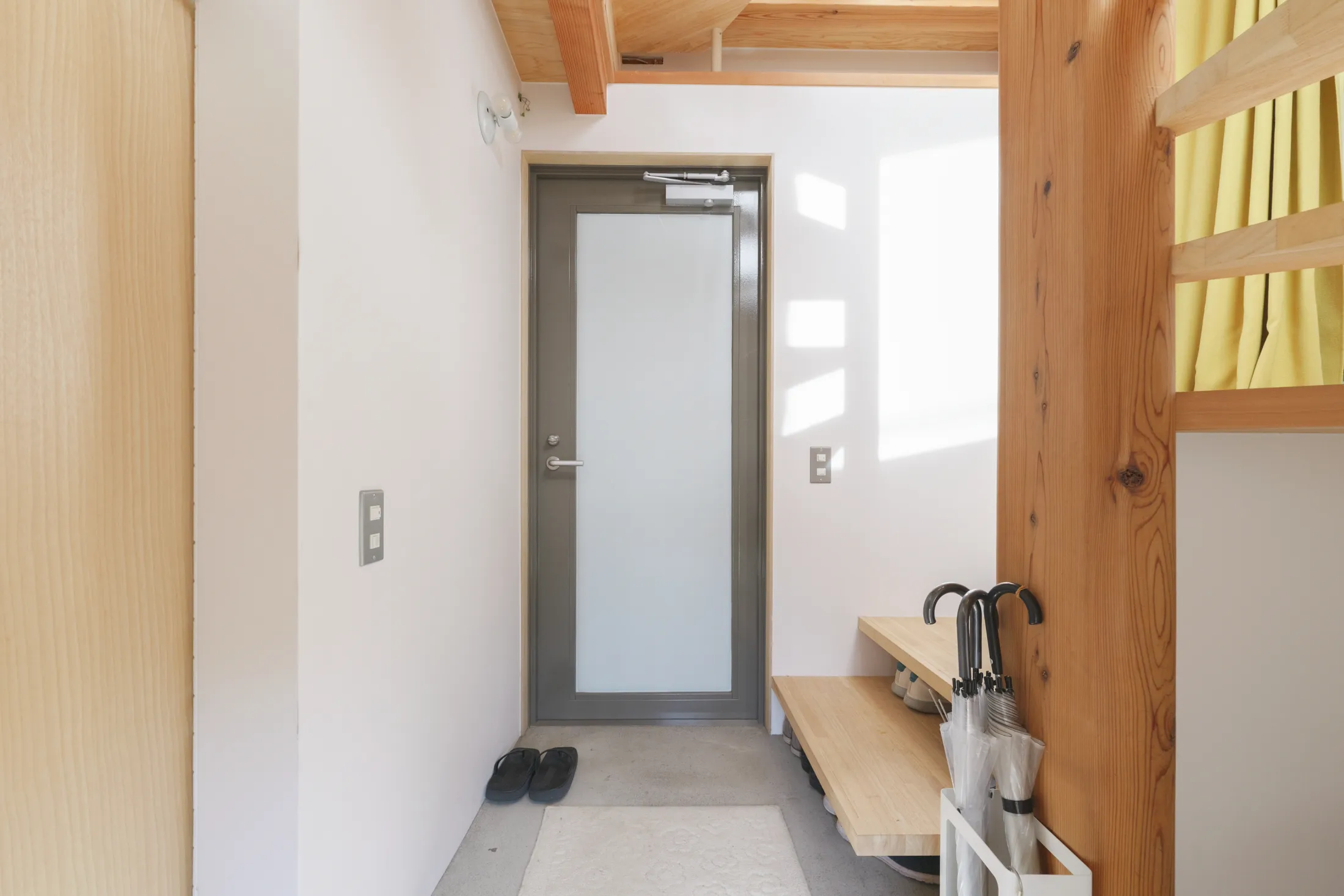
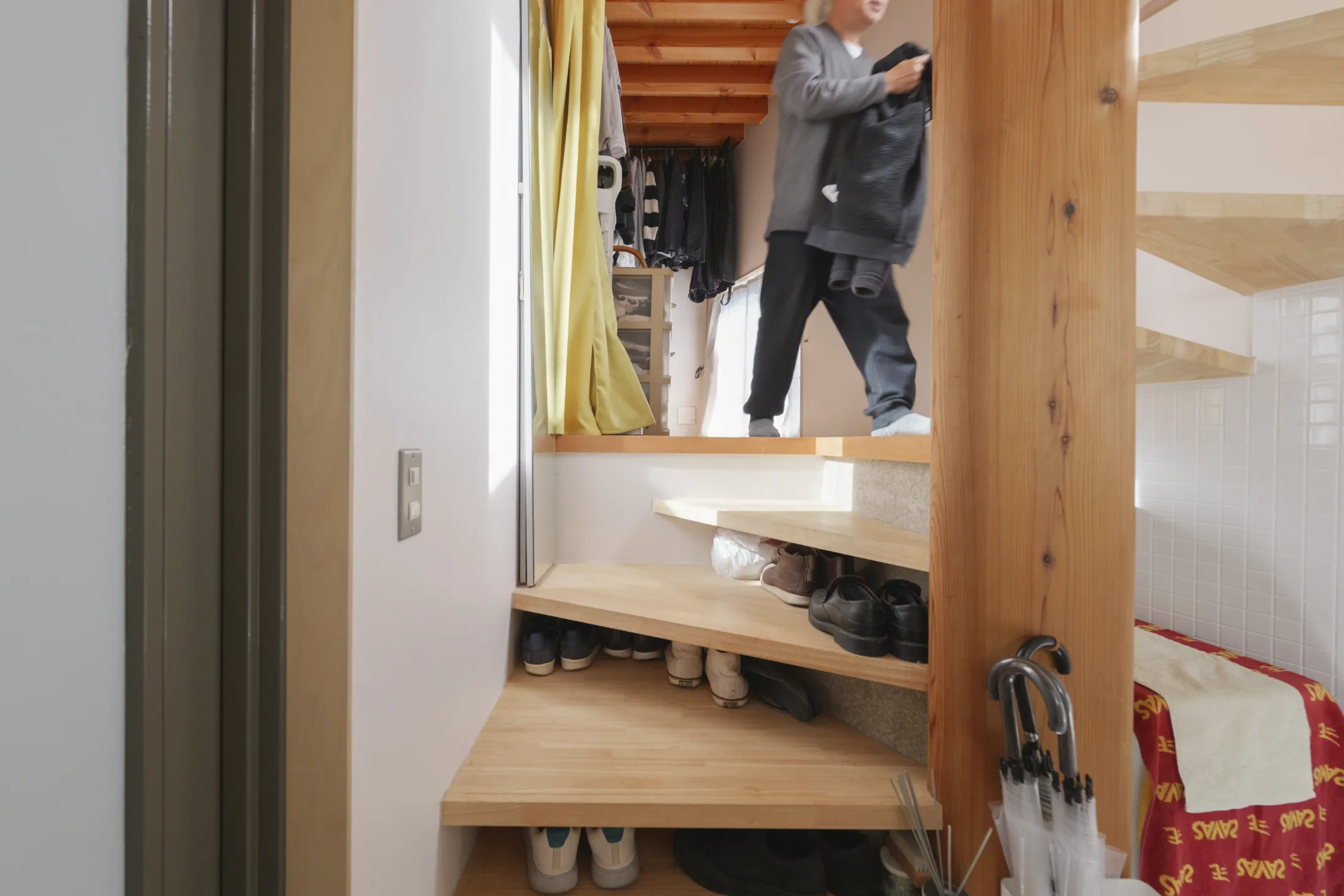
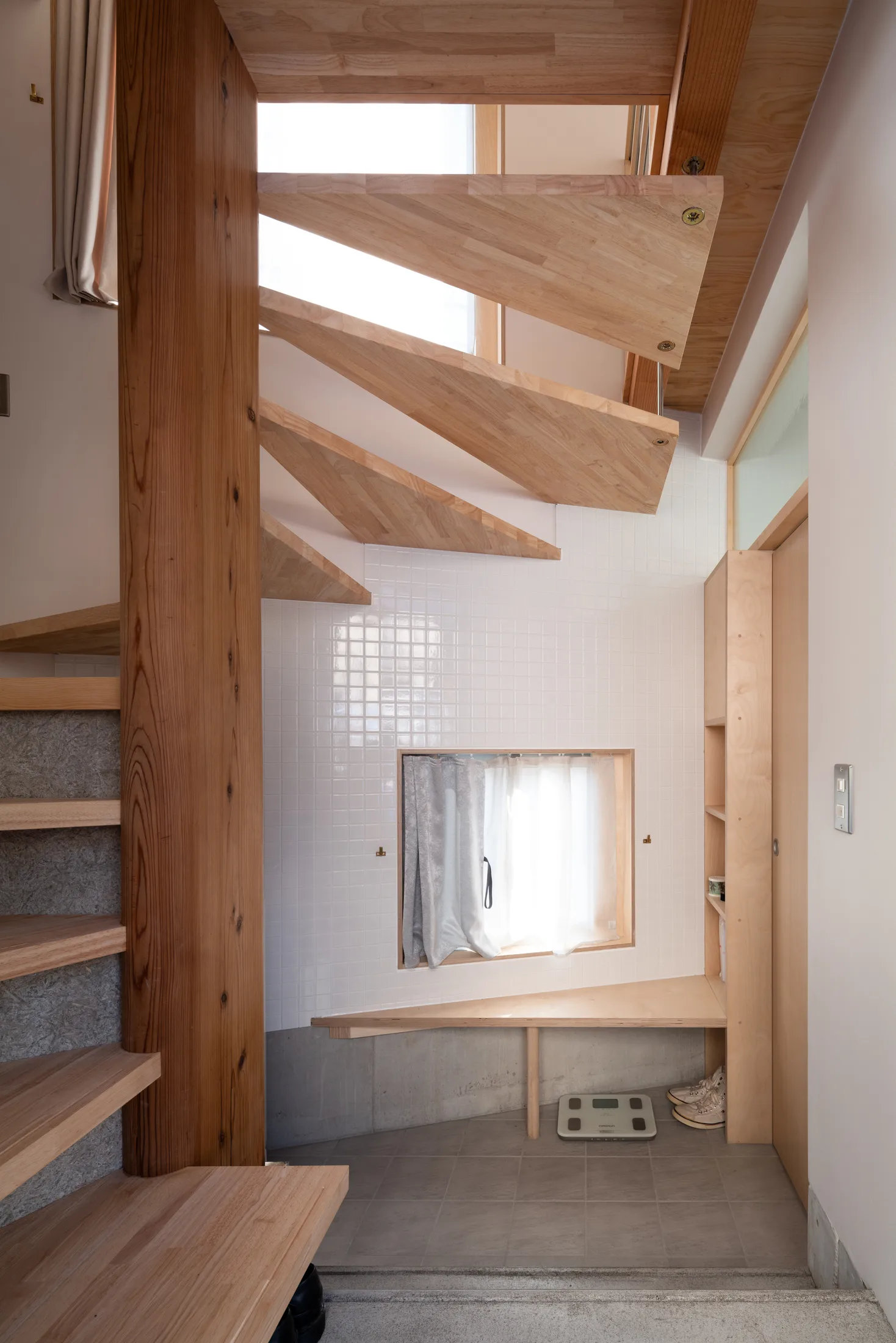
At the entrance, the first stair treads do more than lead upward. They widen slightly and remain open beneath. Shoe storage tucks neatly below, while the steps themselves double as a place to sit and put shoes on. By folding seating and storage into the staircase itself, the genkan becomes an active part of the home, setting the tone for a space where circulation is designed to be used, not just passed through.