Search


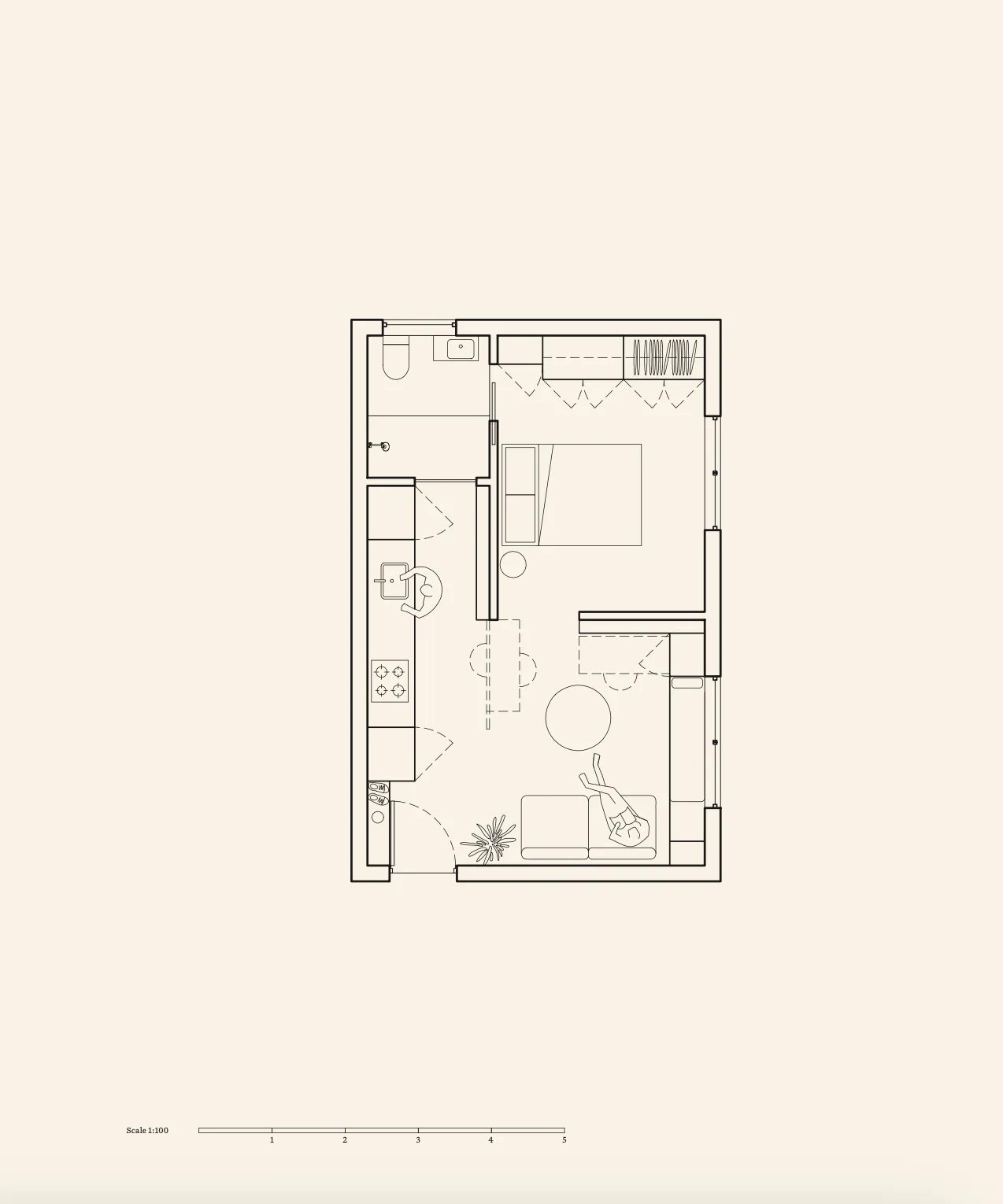
Architect Jack Chen of Tsai Design subtly altered his 1970s, 35sqm/377sqft one-bedroom apartment to create an intricately designed space, interchangeable between office and home.




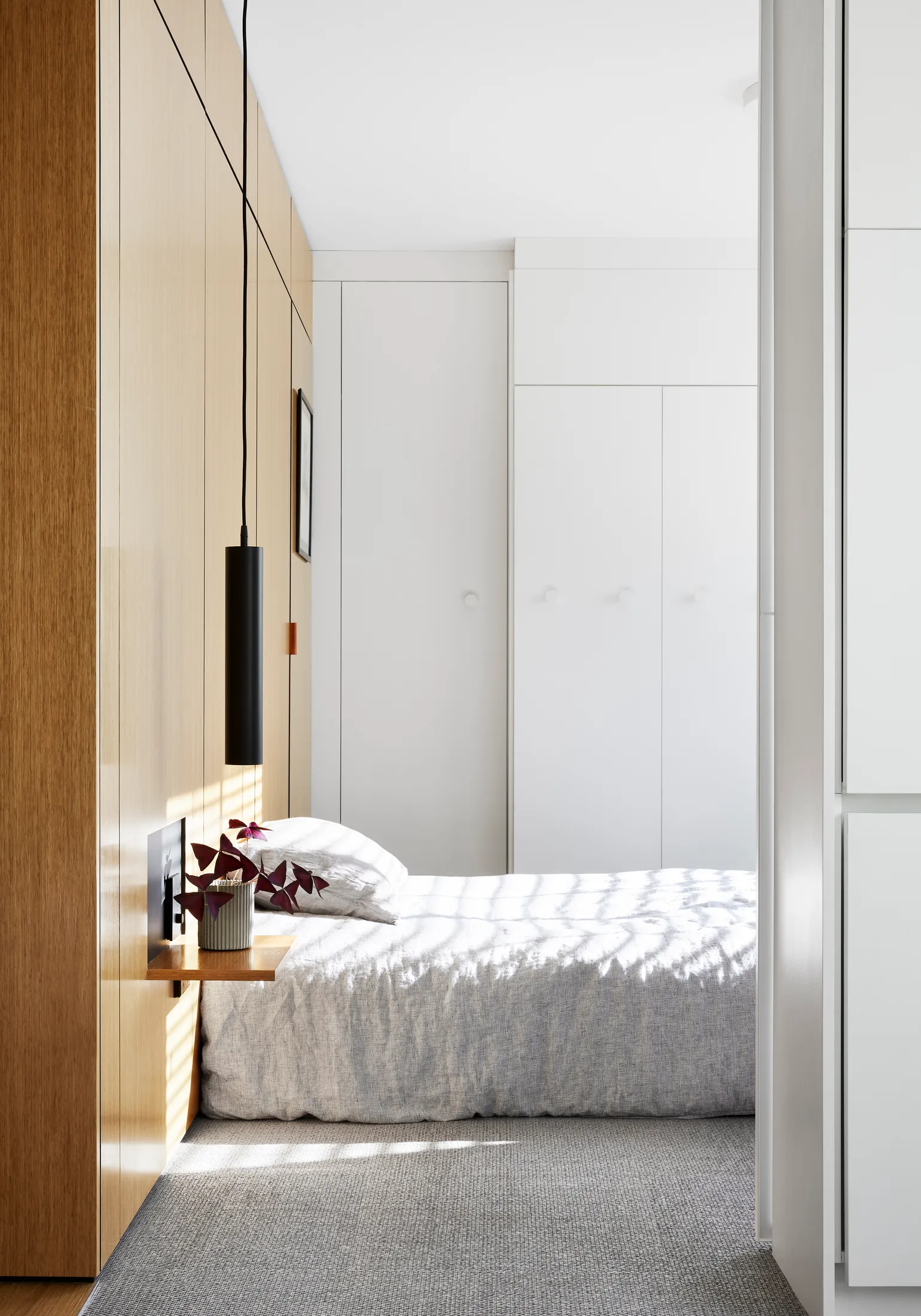
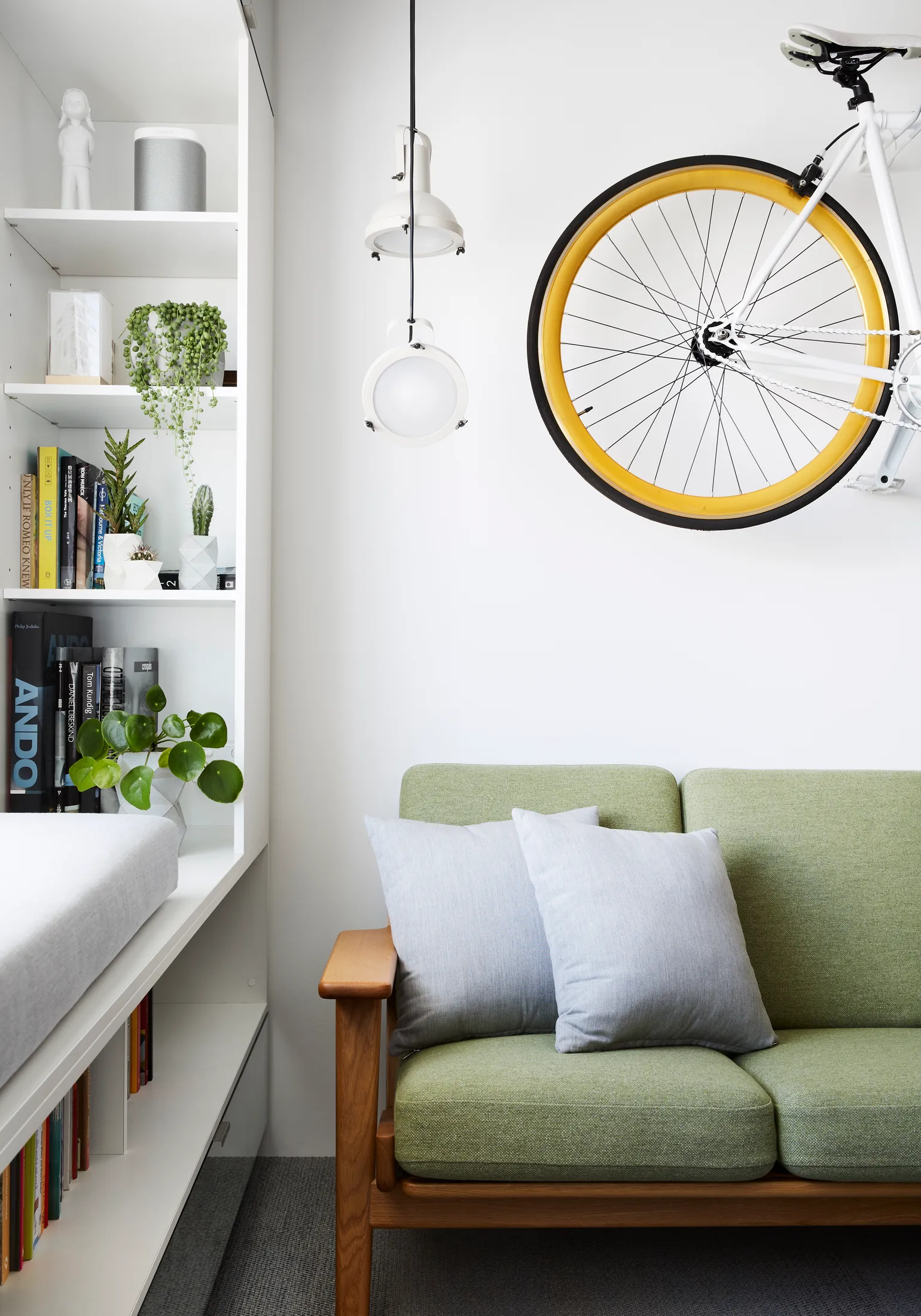
From the outside, you would be forgiven for thinking there’s nothing particularly unique about this nondescript yellow-brick walk-up. The inner suburbs of Melbourne are filled with these 1970s box-shaped apartment complexes; but while they lack the charm of their art deco equivalents, savvy investors recognise the quality builds and finishes, the generous sizing of the blocks’ interior, and the space and value that medium-density living offers.
Building on this solid foundation, architect Jack Chen’s vision for his Type Street Apartment was to ‘see if I could fit a big house into a small apartment’. It takes real foresight to create a light-filled and multipurpose home with only 35sqm/377sqft, but Chen has made Type Street feel much larger than its footprint.
Often the first thing architects do when working with a small floor plan is remove the clutter – the interior walls that break the flow of light, air and movement. However, Chen didn’t make any structural changes when redesigning the Type Street Apartment interior; instead, he focused on what he could add in order to create multipurpose spaces.
His vision is clearest in the kitchen and bathroom. Here, technology meets nature; reflections meet light; and
the space expands and retracts based on the varying requirements of its resident. In the bathroom, the use of natural materials brings the outdoors in. There is timber flooring in the shower, a green wall with preserved moss and a large window that make the most of the sunlight. Located between the bathroom and the kitchen, this window lets light flow through to both spaces. A front-row seat to the bathroom from the kitchen is beset with obvious concerns, but these are well catered for. At the touch of a button, the window in question becomes opaque.
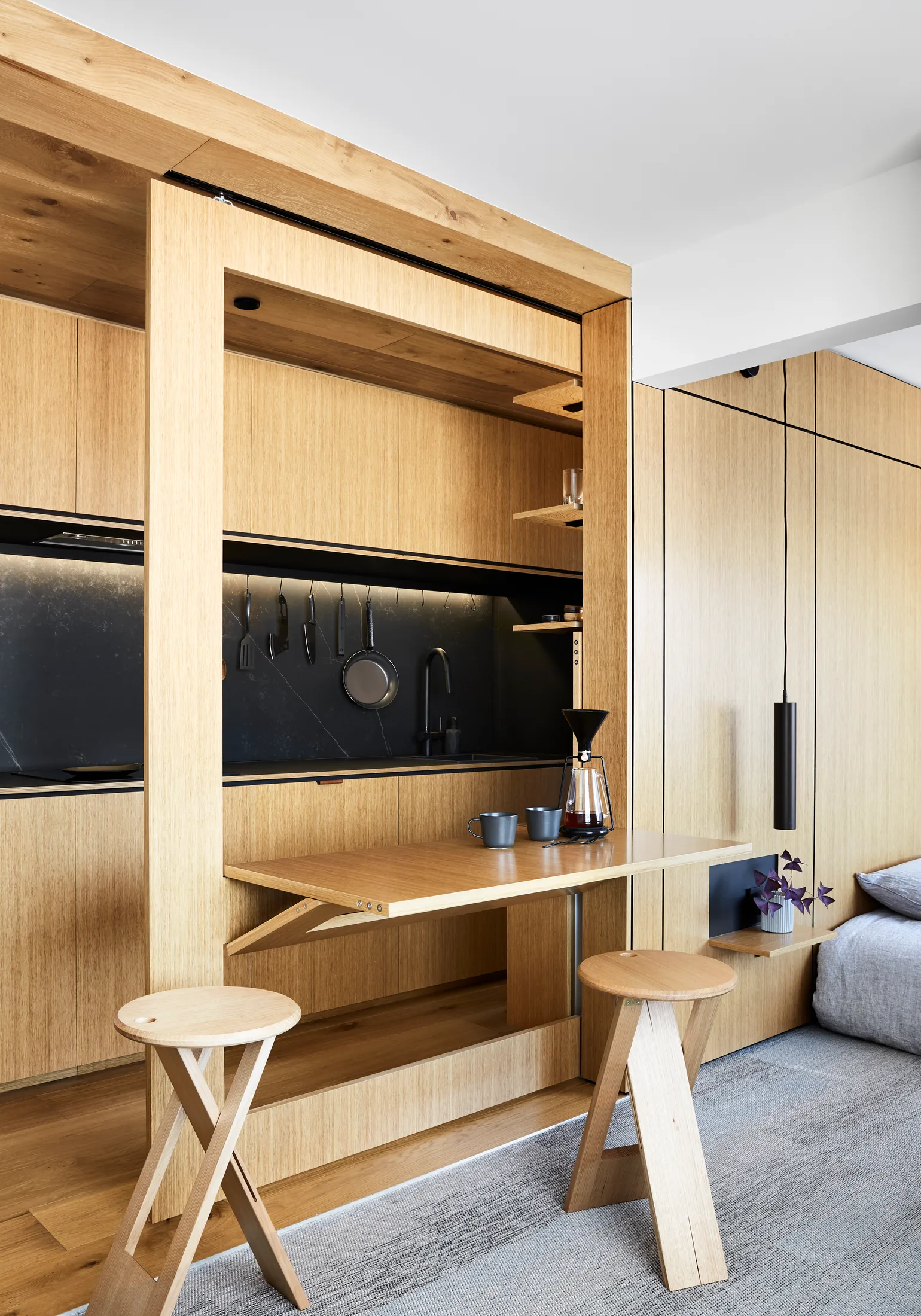
The focal point of the kitchen is the black splashback and 3m/10ft long bench, surrounded by wooden cabinetry. In an apartment this size, an ample meal preparation area is unheard of – dare we say, unnecessary with no formal area for dining. However, the lack of dining space is another of Chen’s illusions. A gentle tug of the panel dividing the kitchen and living area reveals a collapsible table capable of entertaining up to six guests.
Type Street Apartment is a perfect example of minimal realism: an understanding of what the inhabitant will need; how frequently it will be needed; and the appropriate acordance applied to the need based on expected use. In his apartment, Chen wanted the ability to entertain, without taking up valuable floor space, so he made the dining room table and stools invisible when not in use. He lives alone, so it’s okay to have a transparent wall between the bathroom and the kitchen; however, it can easily be made opaque for the privacy of guests. Research into how a client hopes to realistically use the space is vital. As his own client, Chen was able to create a home that balances form and function for his lifestyle not only now, but also in the future.