
Magazine Current IssueMagazine Current Issue
What Am I?
What Am I?
From our Mag
May 1, 2026

What Am I?

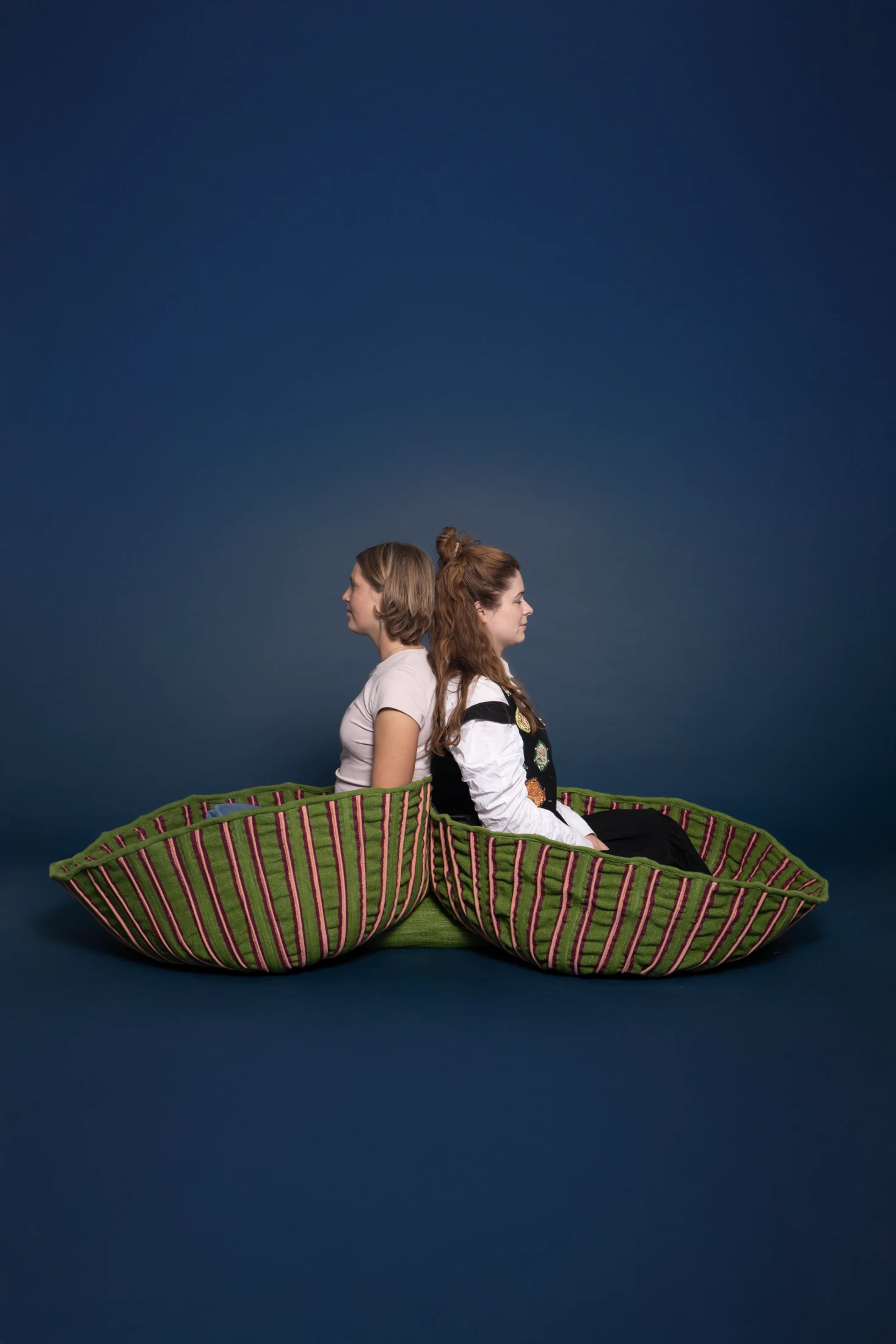
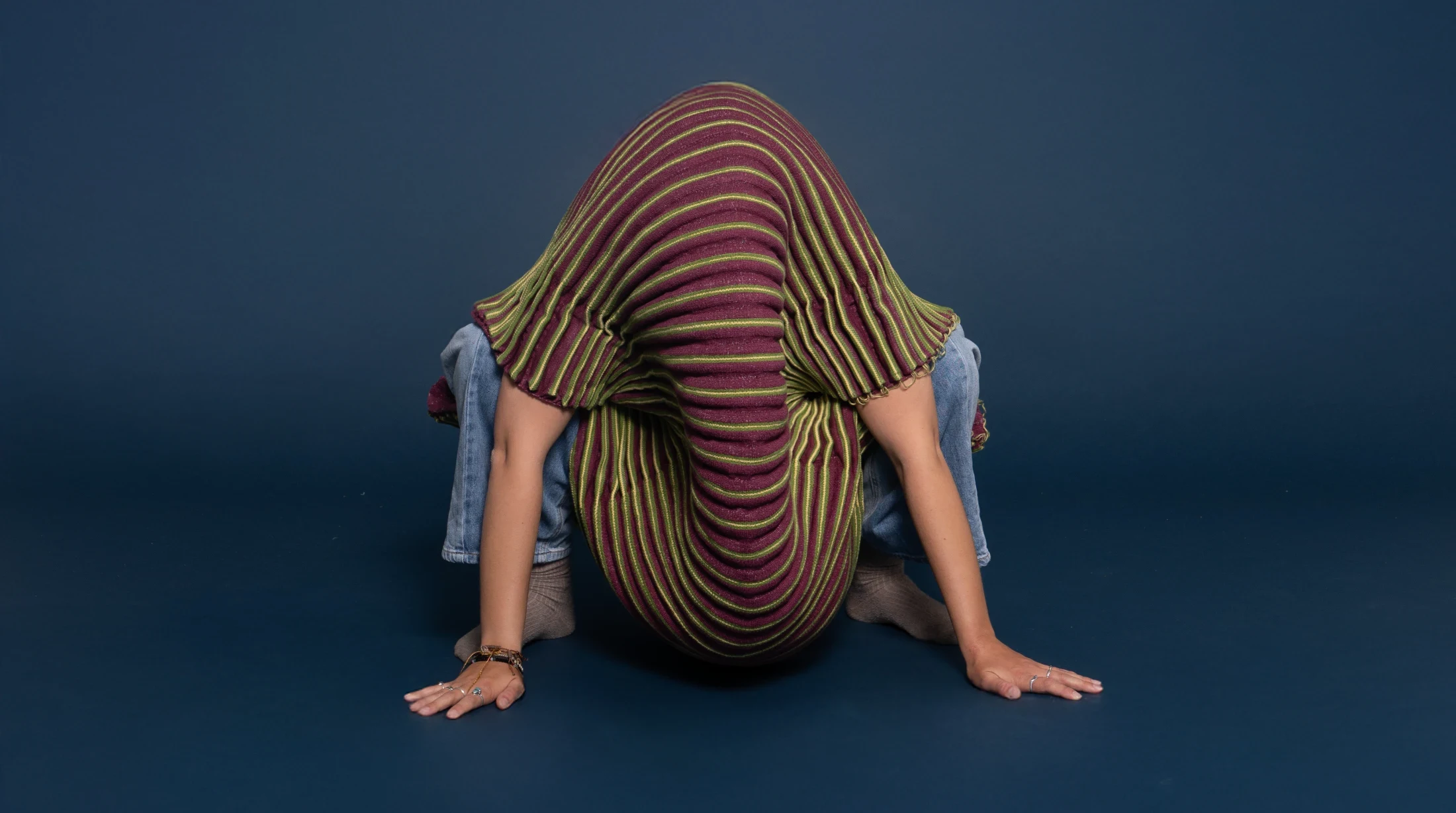
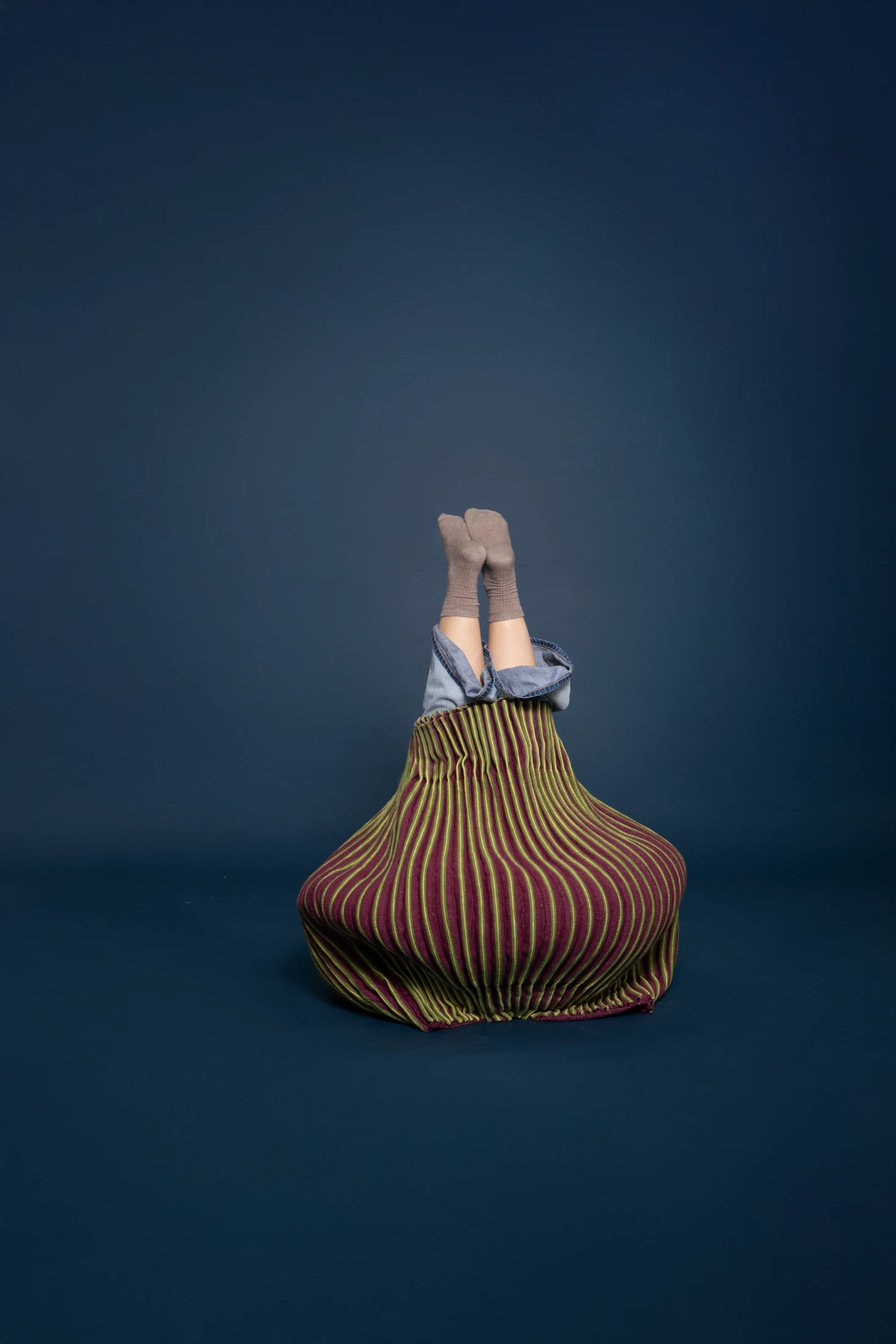
Blob, Mushroom and Dumpling are just a few of the names that Luna Haverkorn uses to label the modes of her shape-shifting, interactive and small-space-friendly textile furniture.
Emerging Dutch designer Luna Haverkorn shows us how ambiguity and vagueness can create space for discovery with her small-space-friendly fabric furniture.
Eloïse Lachicorée
Writing:
Writing:
Eloïse Lachicorée
Photography:
Photography:
No items found.
Magazine Current IssueMagazine Current Issue
The After shot of the Floorplan
Before
before
after
After
Top
Arrow UpArrow Up
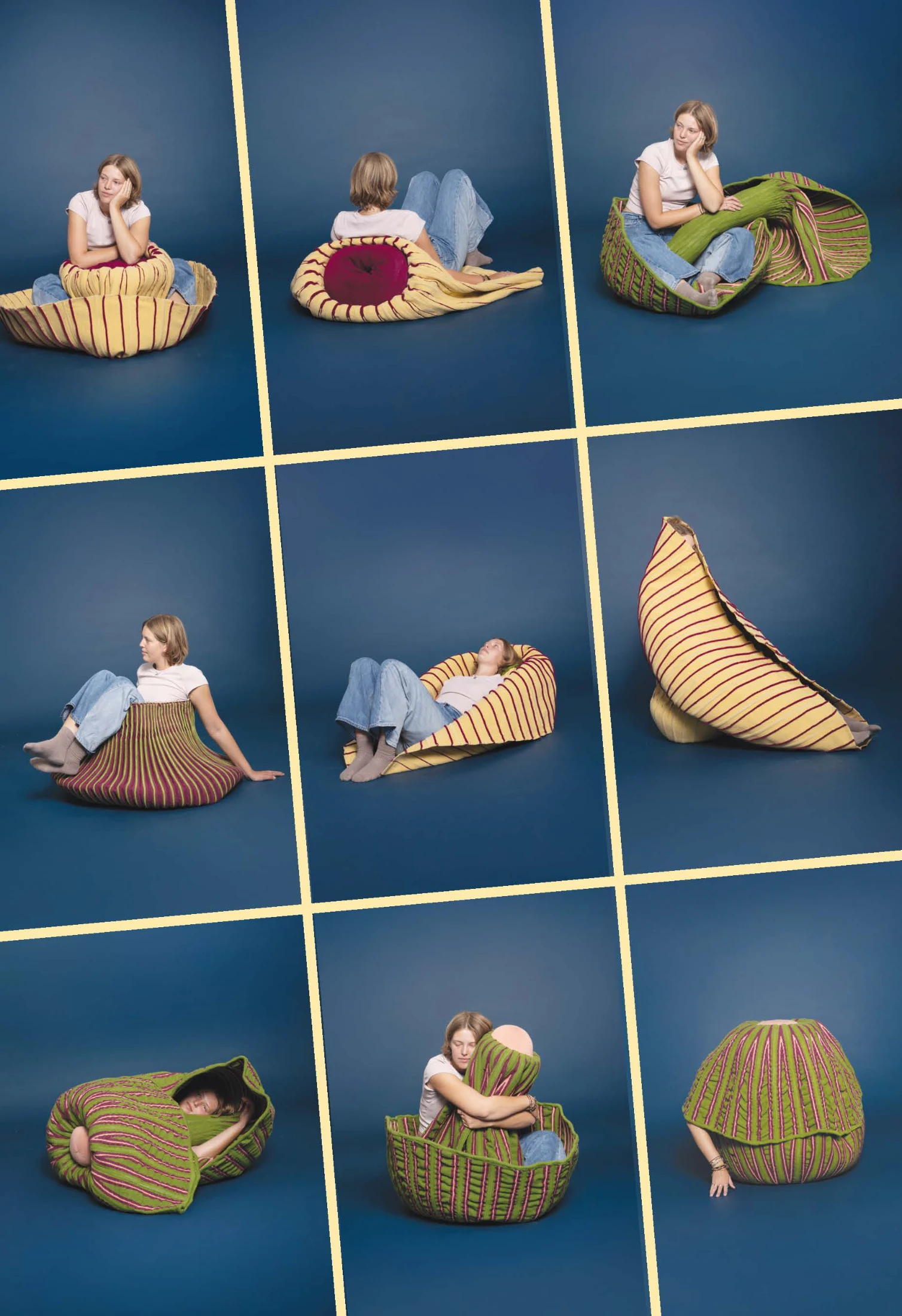
In the hands of Luna Haverkorn, textiles become inviting, interactive forms. (And the morphing and enigmatic piece of furniture you never knew you needed for your small home.) The 24-year-old stretches, shrinks and layers textiles that can be molded and folded into modes like Dumpling, Blob and Pasta Shell. All that's needed is a human ready to play, curl up or cocoon, and these softly-structured and transformable objects will do the rest.

Your textile-based furniture feels so alive with its rich textures and morphing shapes. How do you find the balance between making furniture that is tactile and visually appealing while still being interactive?

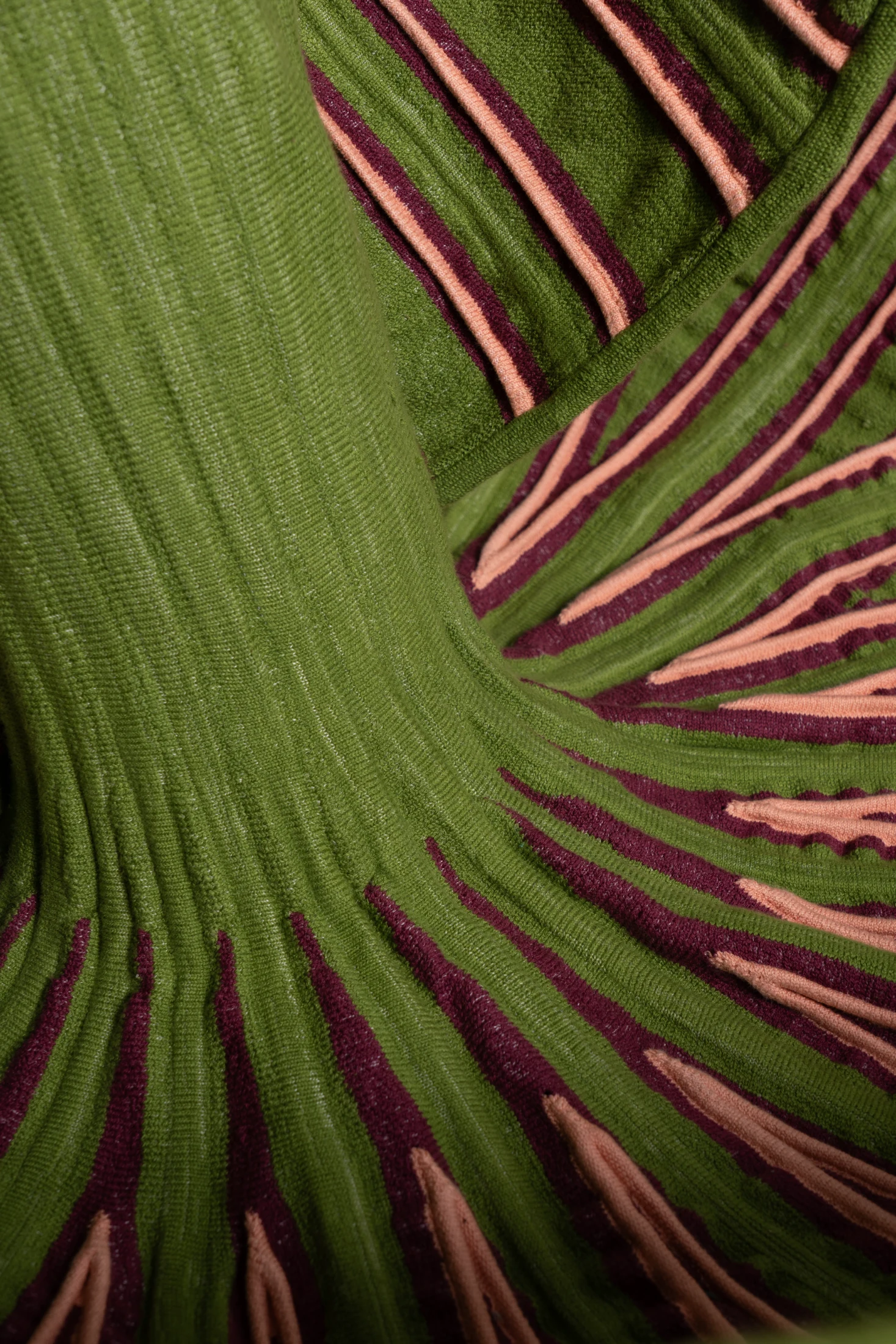
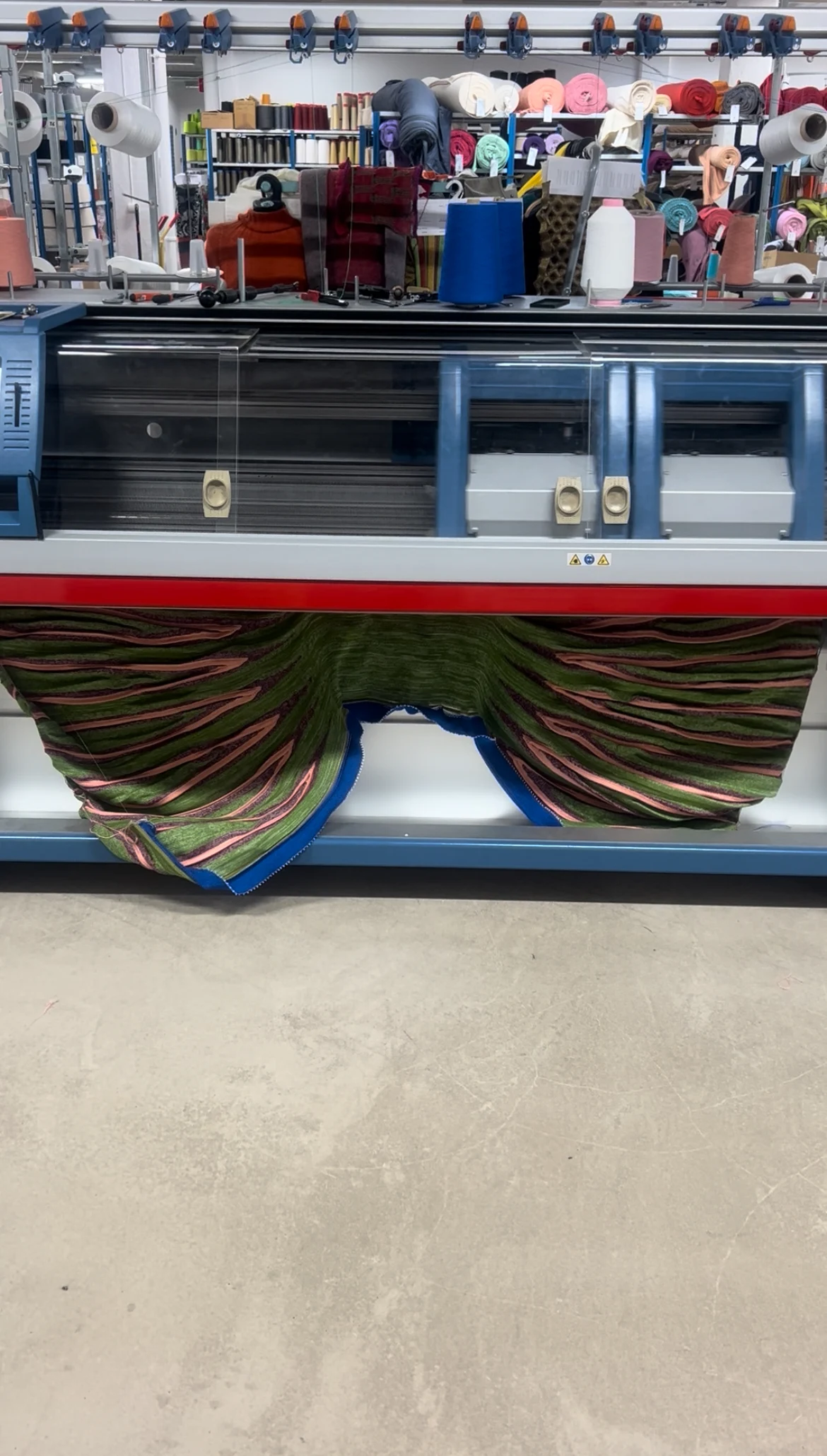
For me, textiles are the perfect medium to achieve this. It's such a flexible material with endless possibilities, you can make it stiff, flexible, stretchy, rigid and so on. Because you can give it so many different properties, you can achieve a wide variety of results. Many of my pieces develop 3D forms with small details, rhythms and moveable parts that invite touch and play. I first learned all the knitting techniques, then I began experimenting with different materials, colours and techniques. I'm also often researching how to make a structure using textiles and as little added material as possible, pushing the fabric to its limits both in tactile and visual ways.

How did you end up here doing what you're doing?

I did my Bachelor's in product design at the Willem de Kooning Academy in Rotterdam, but realised I was mostly using textiles and textile techniques in my projects. During this time, I also bought my first second-hand knitting machine and really wanted to continue working with it, learning more about how it works and exploring the possibilities. I've always had a fascination with 3D textiles, and during two internships I did, I began to move further in this direction. I also interned at Studio Samira Boon and Studio Petra Vonk, two Dutch textile designer studios who specialise in 3D woven pieces and 3D knitting and braiding. After all of that, I decided I wanted to go deeper into textiles and do a Master's in Textile Design at The Swedish School of Textiles.

What do you find so fascinating about textiles?

I aim to knit forms as close to the final shape as possible, which supports structural integrity with minimal seams and waste. Alongside this, I've always been fascinated by how you can make rigid 3D objects out of something soft like textiles. At the Willem de Kooning Academy, I explored this idea in my project MEOOI, where I challenged myself to create a structure entirely from wool – a material that is normally quite soft – so that it could hold weight. This research sparked my ongoing interest in getting strength and tension from the textile itself.

Although I'm now working on different projects, the influence of MEOOI is still present in my practice. The challenge of balancing softness with strength continues to guide me. From that early work, I also learned that sometimes it's better to use a small amount of additional support, what I call bones, so you can use less fabric overall. I'm now focused on finding the right balance between using the natural tension and rigidity of the textile and adding minimal support.

I’m also researching how the human body can become part of the structure itself, where interaction with the piece creates tension around you, making it strong enough. In this way, the strength of the textile depends on your body, encouraging physical engagement while still inviting play, curiosity and personal interpretation.
Do you have names for the different modes your furniture pieces can be shaped into? And if not, can you suggest some?

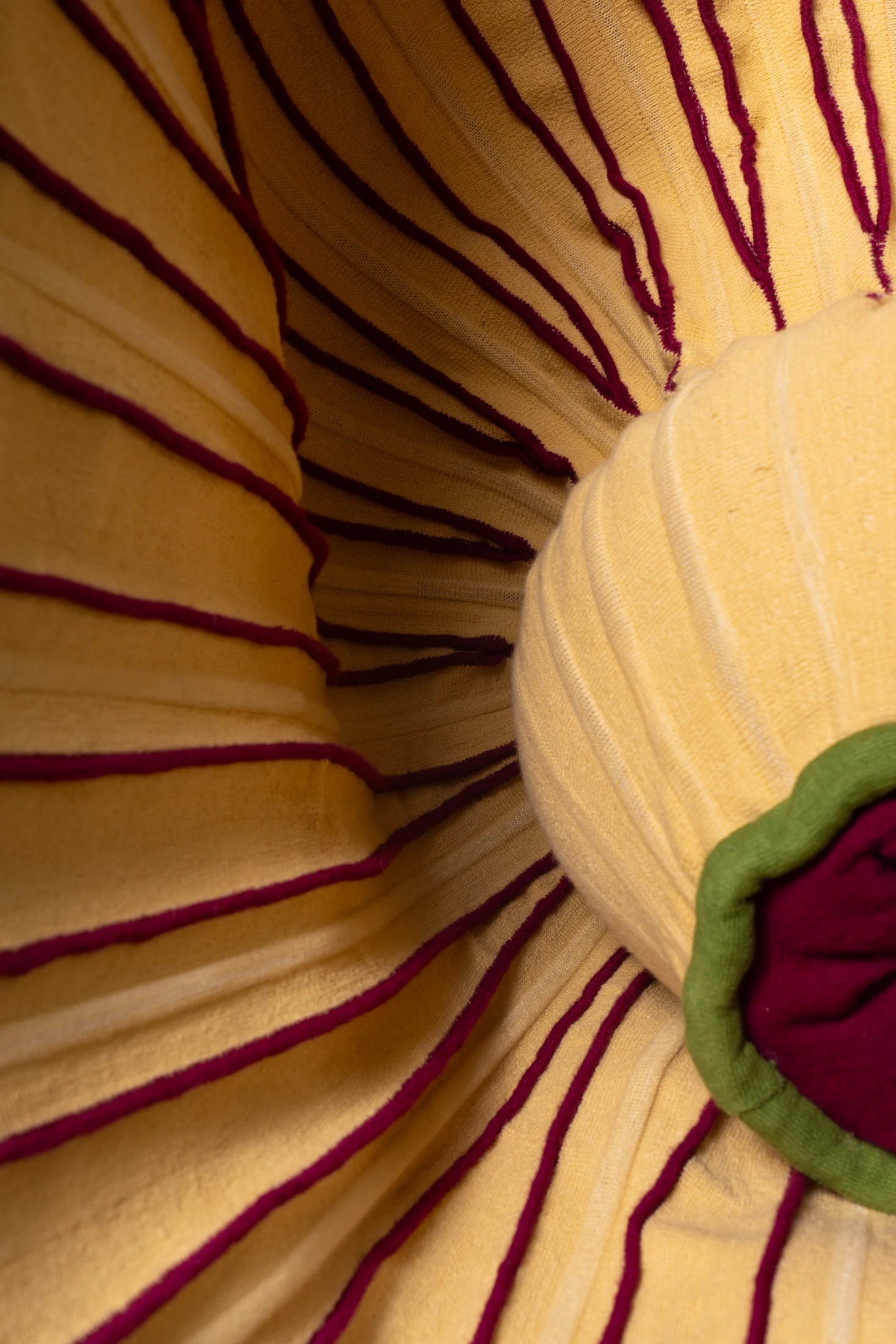
Blob — a word used for every object before it's finished ("I'm making a new big blob"); Pasta shell; Dumpling; Flower; Lily leaf; Mushroom; Shelter shelf; Oyster.

Where do your sources of inspiration lie?

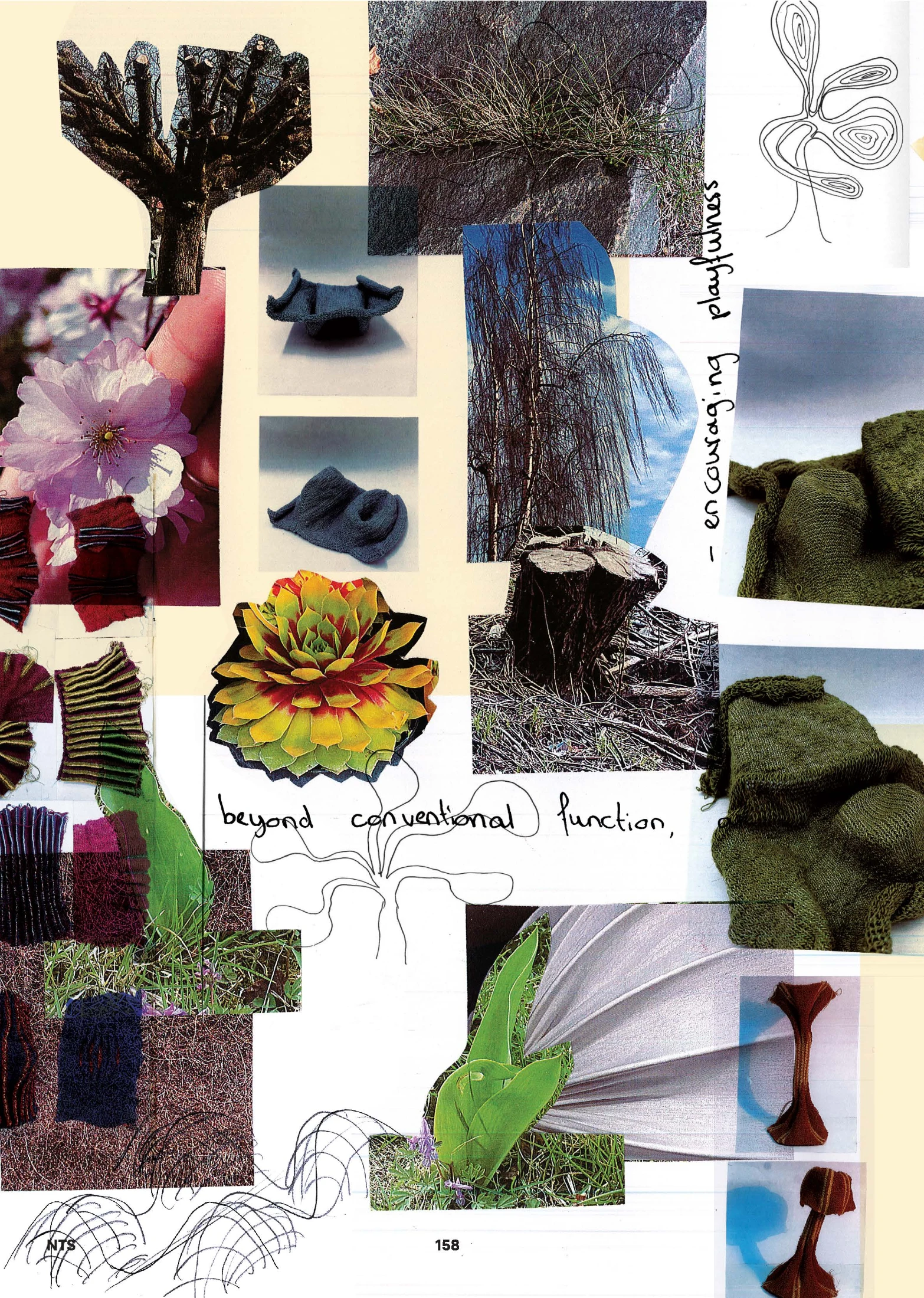
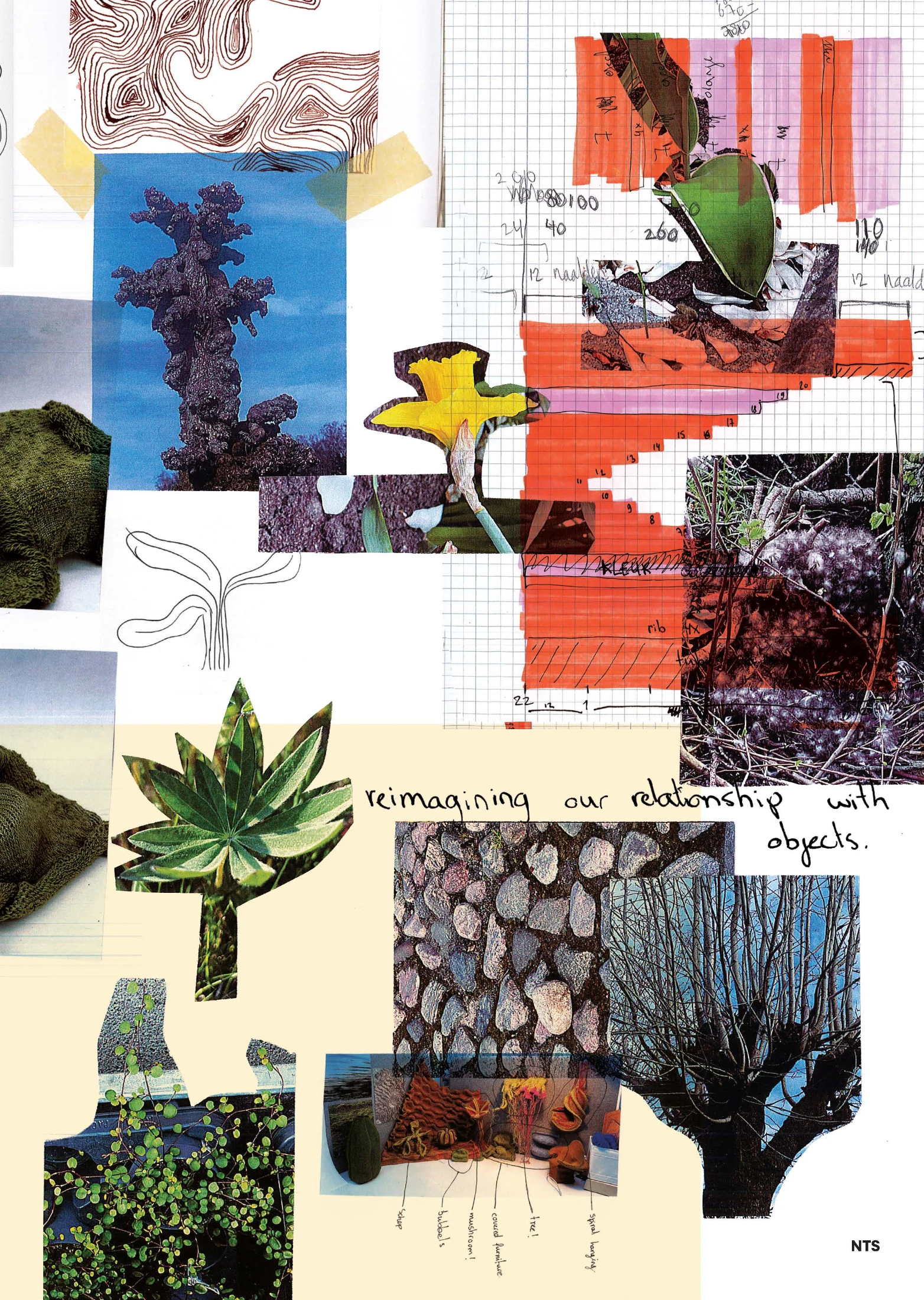
I take a lot of inspiration from nature. I often study the structures and forms I find in plants, trees and other natural elements. I think it's fascinating how something can be both fragile and strong at the same time, and still remain flexible. I also love the variety of textures that exist in nature. I look at these details up close, observing the way leaves, branches or shells are built, how they retain their strength and flexibility, and how they are constructed. Nature's constructions are often both logical and beautiful, and many of them serve a purpose. For example, the thicker lines in a plant or leaf can provide a striking visual texture while also reinforcing the structure.

You've previously described your designs as floating "between art and design". How do you think your practice benefits from straddling these different disciplines?

I want my work to make people think, look closely and explore. It's not 'what you see is what you get,' but rather 'what you explore is what you get.' I want to motivate people to discover their own interpretations and bring them closer to themselves through this process.

It's also fascinating to see how people interact with my work and what they make of it. I want to stimulate their creativity and encourage them to play. That's why my designs often sit between art and design, they are functional enough to use, but open enough to invite personal interpretation and exploration.

Alongside your design work you conduct material research and tests, including experimenting with smart textiles. How does this feed into your creative projects?

My work usually grows out of these experiments. I start by testing something that interests me and sometimes it becomes part of the final project. I also do a lot of experiments that don't get used immediately, but I keep them on a 'shelf' to possibly use in a future project.

Many of my final pieces began as construction tests and experimenting with different materials, like shrinking yarn or combining various textile techniques. These trial-and-error processes are essential to my creative flow.

What are some of the interesting, surprising findings and behaviours you've noticed when manipulating textures and materials in your experimentations?

By using certain knitting structures, you can give textiles different properties, making them stronger, stiffer, or adjusting their stretchability. You can also play with how colours appear or disappear within the material, depending on how it's manipulated. These small transformations are often the most exciting part of the process for me.

What would you like to share with people through your textile designs and material experiments?

I want to encourage people to create their own things and to keep playing so they can find what they want. I want them to explore, react to what they see and do something with it. By creating unknown objects, my work explores how design can unconsciously shape behaviour, showing how ambiguity and vagueness can create space for discovery. This approach encourages playfulness and personal interpretation beyond conventional function and reimagines our relationship with objects.

Knitting, weaving, embroidery and felting are some of your favoured textile techniques... Are there any others you'd like to try?

I've tried many other techniques as well, like tufting, sewing, crochet and more. But now I'm focusing on specialising in flat knitting, which I do on a Stoll flatbed knitting machine. This is the machine I've enjoyed the most so far and the one I feel most creative using. I see endless possibilities with it, so there will definitely be a lot more knitting to come in the next few years. But overall I always try to push the boundaries of the possibilities of the machine and the material.

What are some of the themes and ideas you'd like to explore in your upcoming projects and experiments?

I want to continue with the last project I did, the one featured in the photos. One of the main things I learned from it is how hard it is to balance openness with approachability.

If something is too vague, people freeze; but if you give too many hints, they stop exploring. That balance is something I want to keep working on.

Material-wise, I want to reduce the use of Comfil (which I use for stiffness) by designing smarter structures. This would allow the objects to be softer and more tactile. I also want to explore how different pieces could connect, so users could build with them, combine them and create one big environment. I can already imagine a connected world with many possibilities to sit or play.

Where do you want to take your design practice and work in the future?

I see these pieces living in public spaces, like libraries, museum entrances, other communal areas, while also being suitable for homes. Beyond that, I want to keep knitting and keep creating different objects.

A few ongoing fascinations of mine are: creating 3D textures and structures, making moveable or dynamic objects and designing seating objects. I think these three themes will always return in my work. After finishing my Master's, I would love to start my own studio where I can develop my products further, and of course, sell them.

@luna.haverkorn

Writing:
Writing:
Eloïse Lachicorée
Photography:
Photography:
Back to Top
Arrow UpArrow Up
Top
Arrow UpArrow Up
The After shot of the Floorplan
Before
before
after
After
Businesses featured in this project
No items found.
Products featured in this project
No items found.
Magazine Current IssueMagazine Current Issue
Writing:
Writing:
Eloïse Lachicorée
Photography:
Photography:
Back to Top
Arrow UpArrow Up