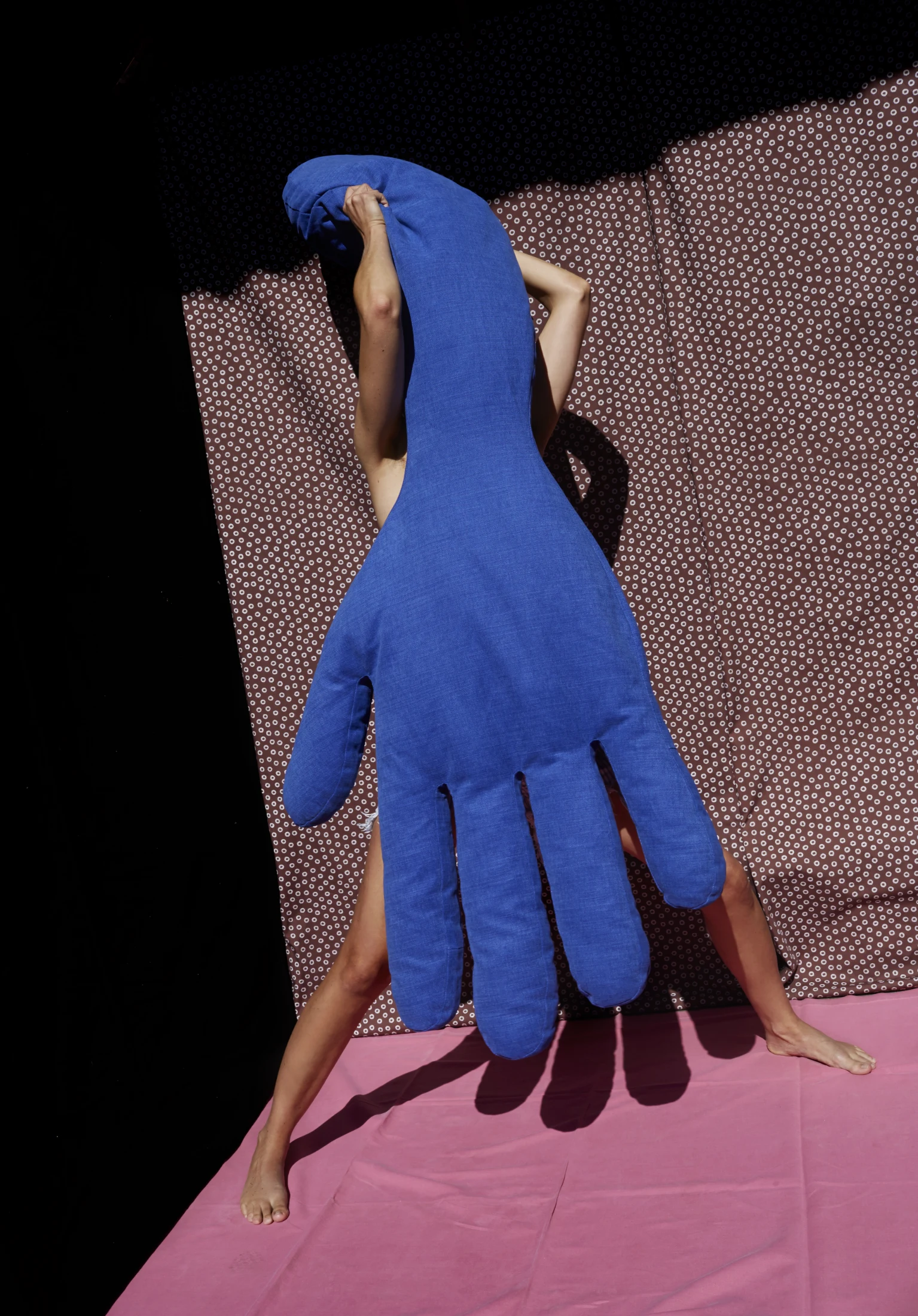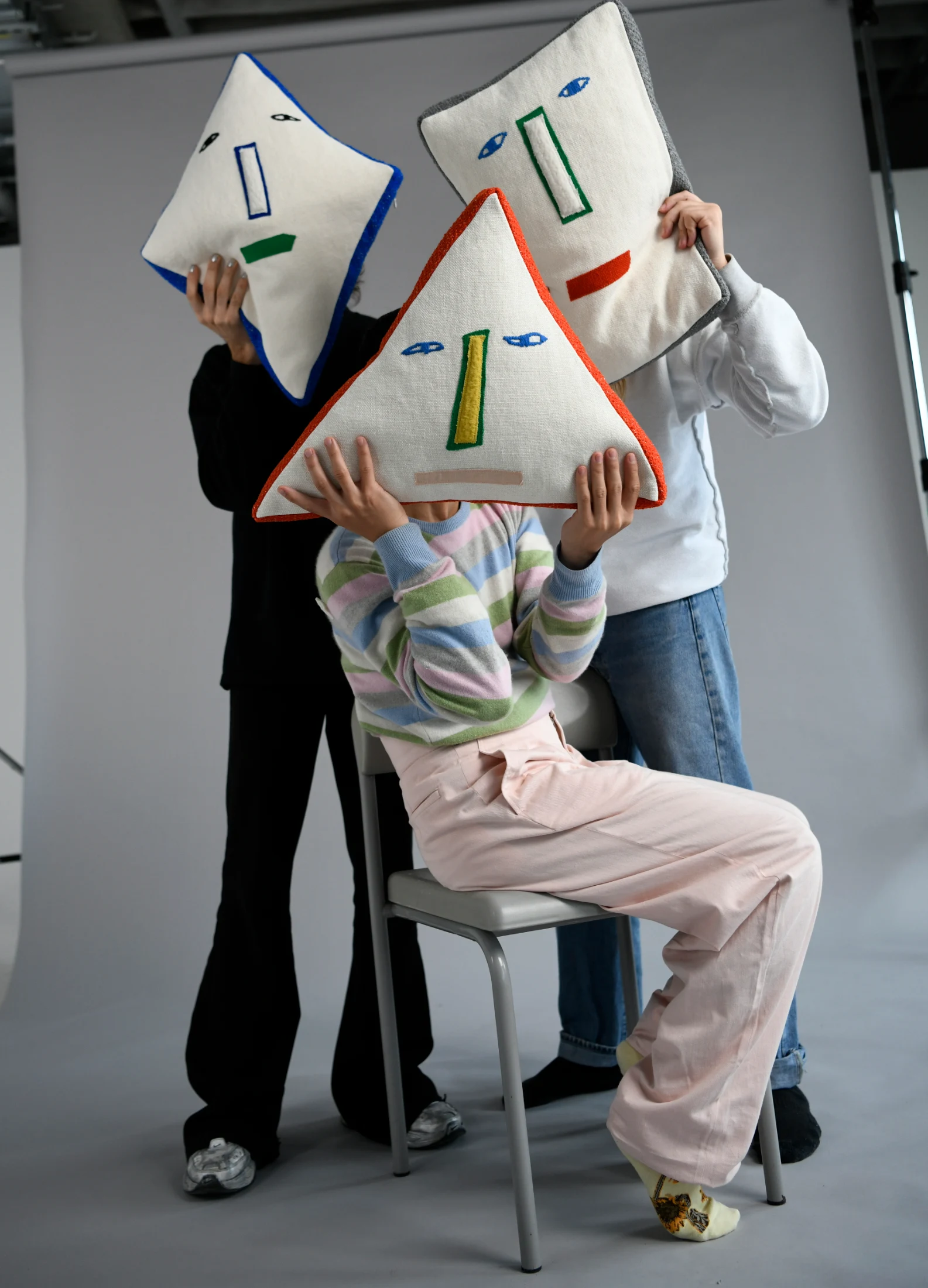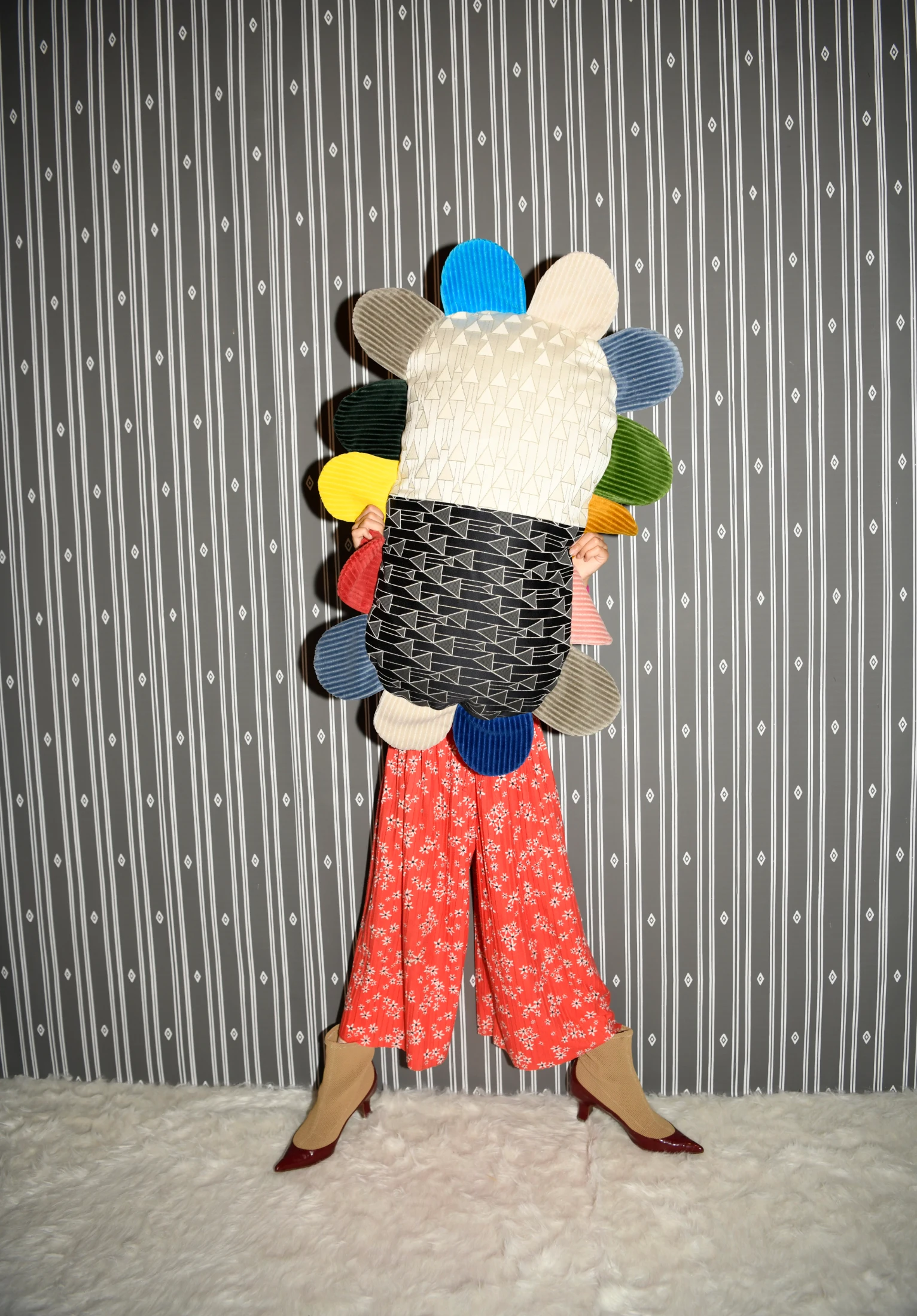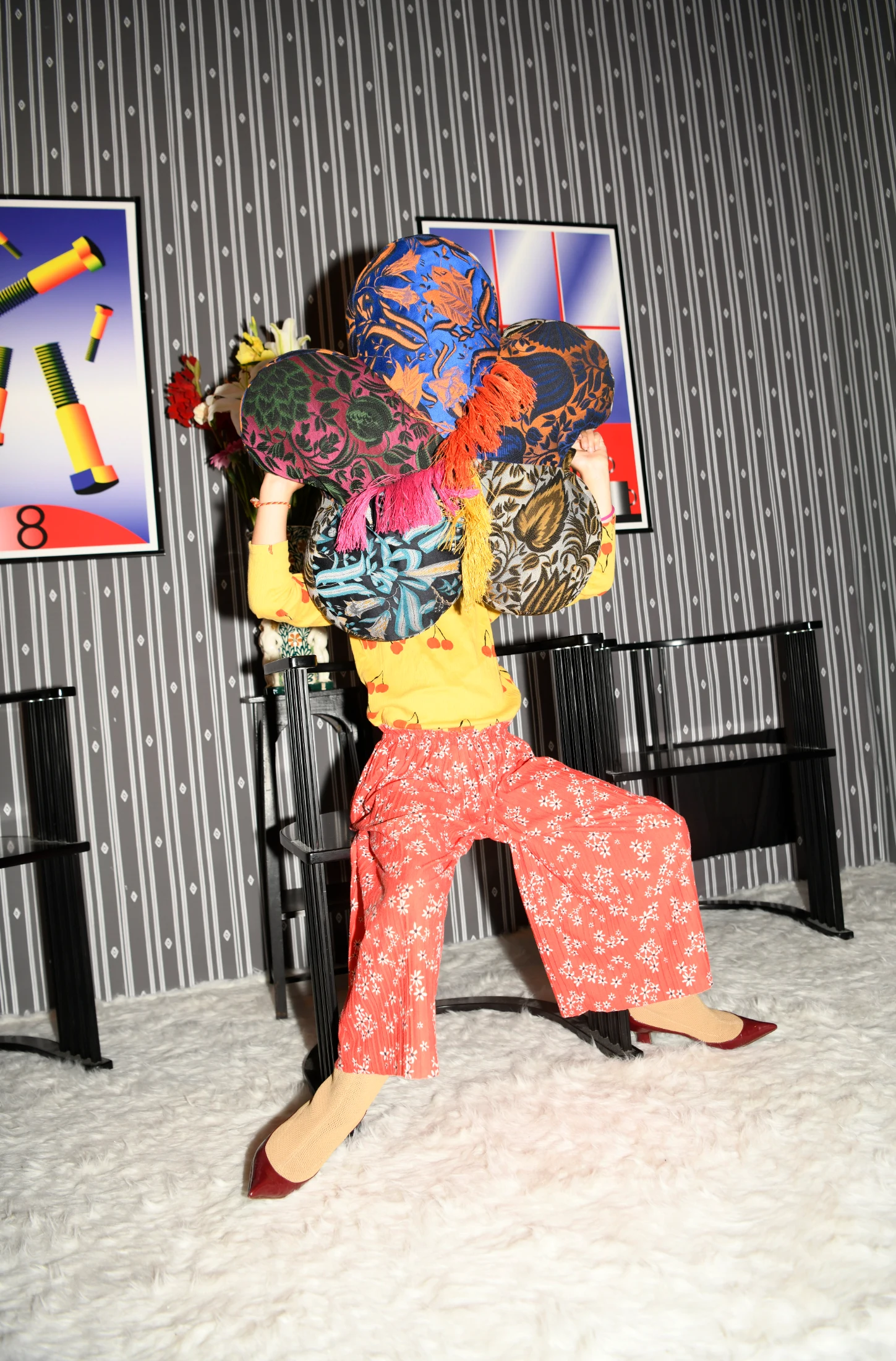



Talk to us about your philosophy of 'contemporary bolstering'.
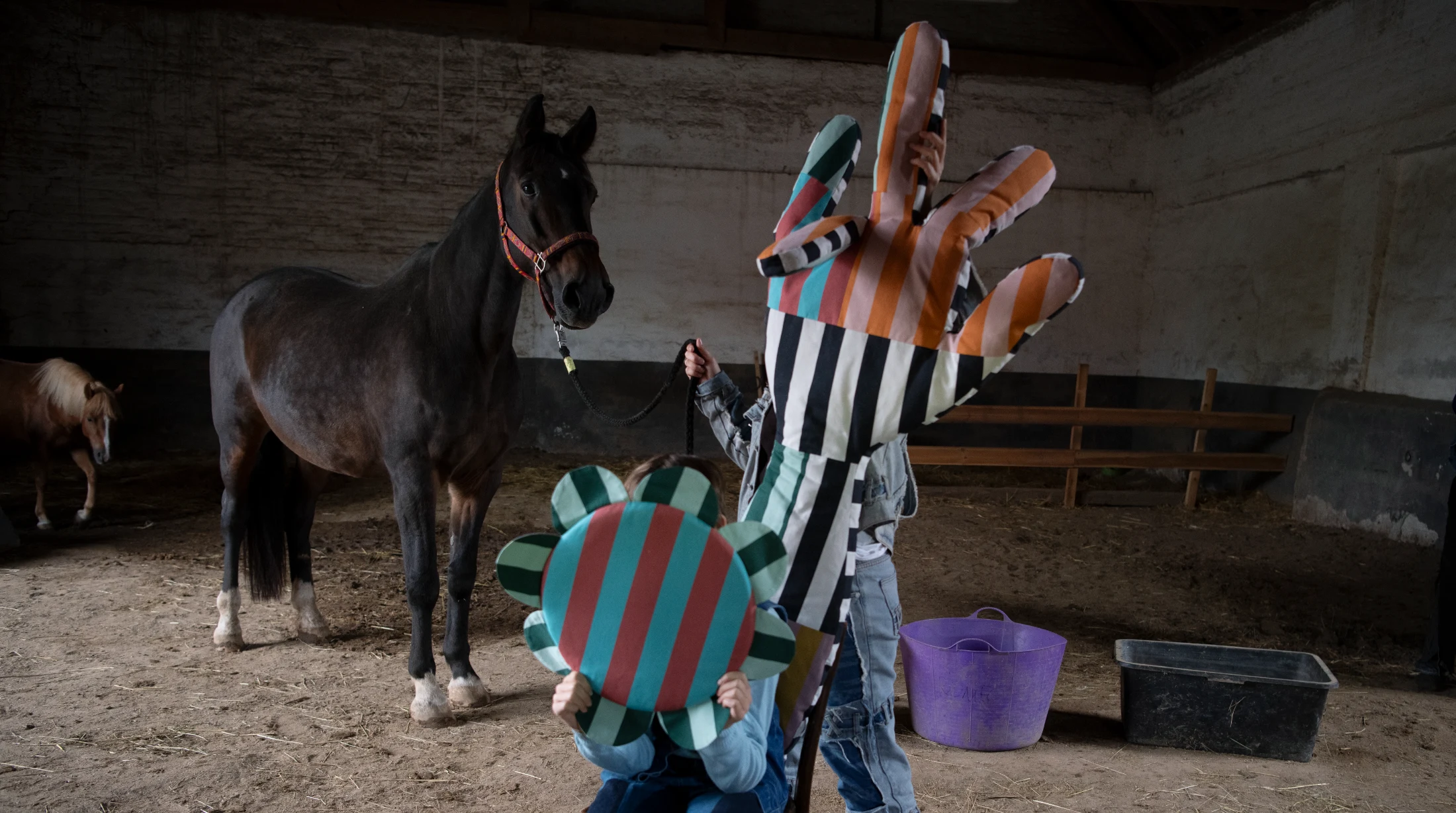
For us, there is far more to a cushion than just decoration – it's a carrier of stories and a field for discourse between the poles of design, art, craftsmanship and interior design. Precisely because a cushion (as an object) is often regarded as secondary or even superfluous, we are interested in this 'skewed' position opening up spaces for critical reflection on supposedly banal things and their cultural significance.
What are your backgrounds and how did you both meet?
Susanne studied tapestry at the Royal College of Art in London, while Johannes studied painting and new media at the Academy of Fine Arts in Vienna. We met through mutual friends during a residency in Paris – in the midst of an inspiring environment that laid the foundation for our later collaboration.
Where did the idea to start WIENER TIMES come from?
Even before WIENER TIMES was founded we worked together on various artistic projects with artistic groups like Gelatin and fabrics – and textile narratives led us to develop the first ideas for WIENER TIMES almost 10 years ago. Through experimentations and research across various archives and libraries, it became clear to us that over the years a relationship between Viennese Heritage and the work that we do was emerging, from digging deep into the vast empires of ornamentation and turning to the gilded spirit of the last century for inspiration.
Where do your fabrics typically come from?
Over the years we have developed close partnerships with renowned textile manufacturers, including Kvadrat, Rubelli, Dedar, Designs of the Time, Pierre Frey, Morris & Co/Sanderson and Liberty London. Our collaboration with traditional Austrian company Backhausen, whose fabrics are deeply rooted in Viennese design history, was of particular importance to us. The opulent, colourful designs of Austrian artist Dagobert Peche or the rigid, geometric designs by architect and designer Josef Hoffmann open up new perspectives and narratives when juxtaposed with fabric designs by the aforementioned manufacturers; and they are good examples of the special character of our work.
The sad news that Backhausen was closing operations in the spring of 2023 led us to gather our resources to stock up on whatever we could of these precious textiles – a hugely important slice of Viennese heritage that would soon cease to be in production. We do, however, regularly work on smaller runs using vintage fabrics or leftover stock when working on one-off commissions.
What inspires you when it comes to your applications of colour and pattern?
Our work is like storytelling with fabric. By combining, juxtaposing and patchworking patterns and textures, we create new narrative spaces. It can be very stimulating to see a geometric Hoffmann design from the Wiener Werkstätte next to a floral William Morris pattern from the Arts and Crafts movement, or to combine a luxurious Pierre Frey tapestry with a simple gingham check. The juxtaposition of fabrics is a central part of our creative process.