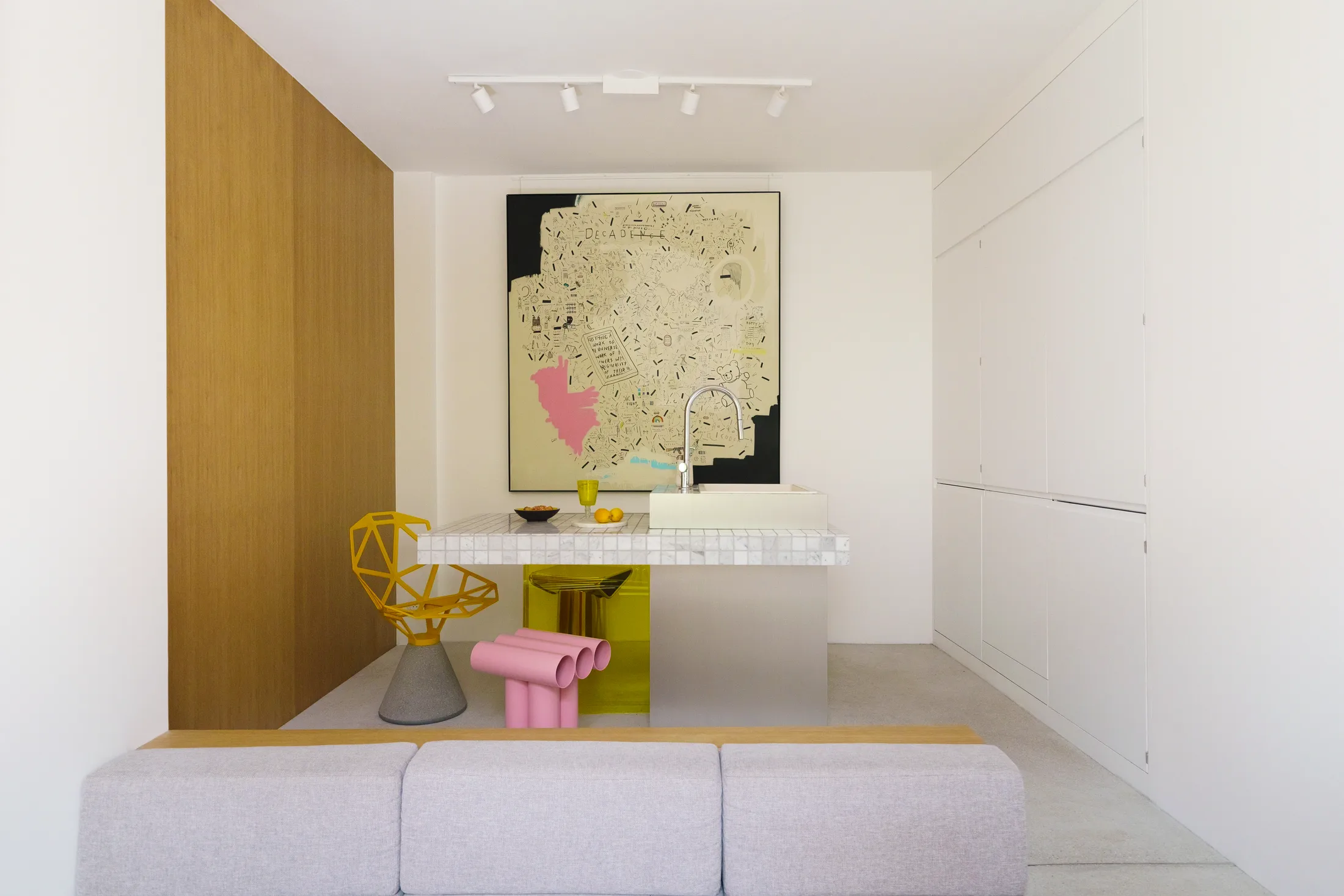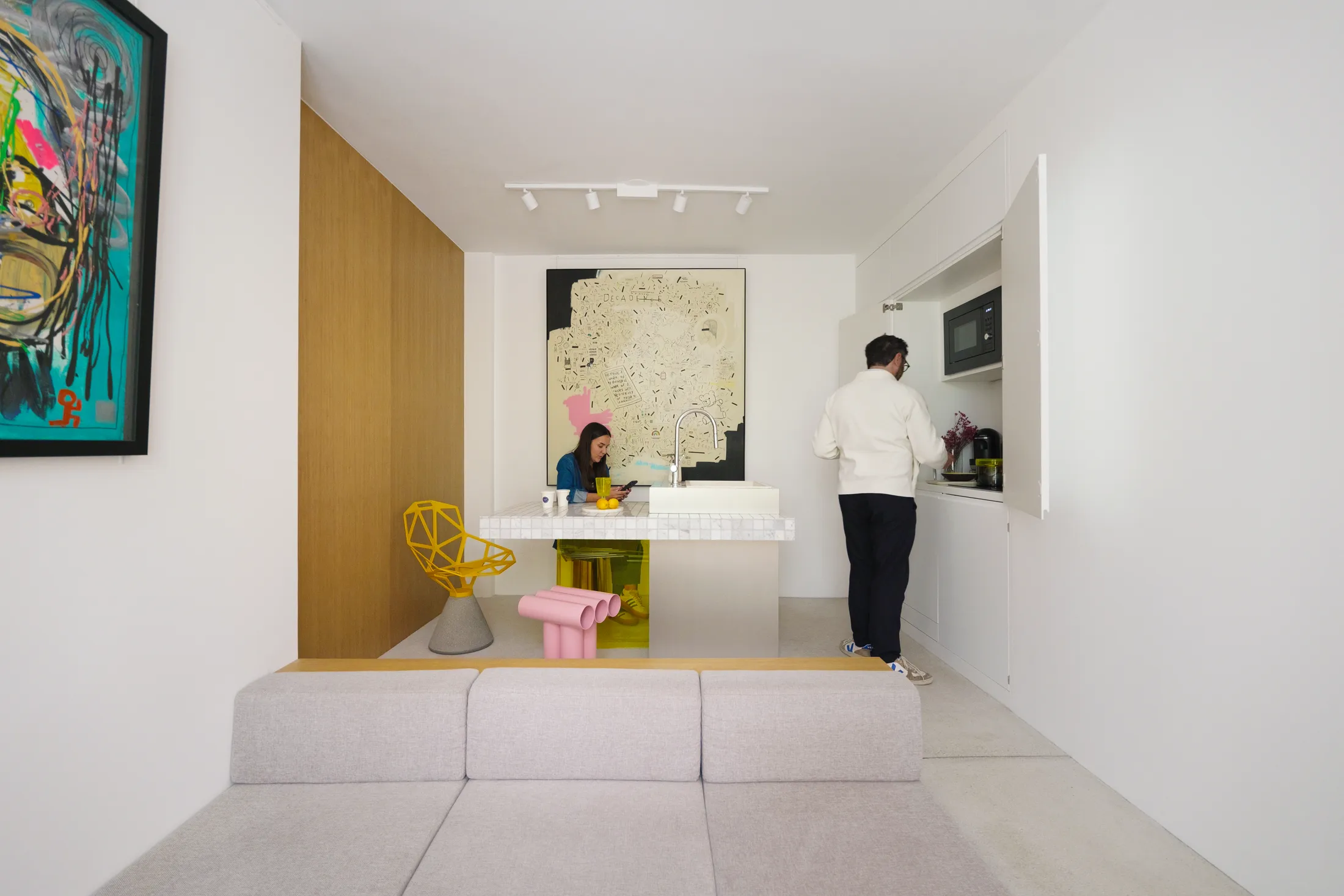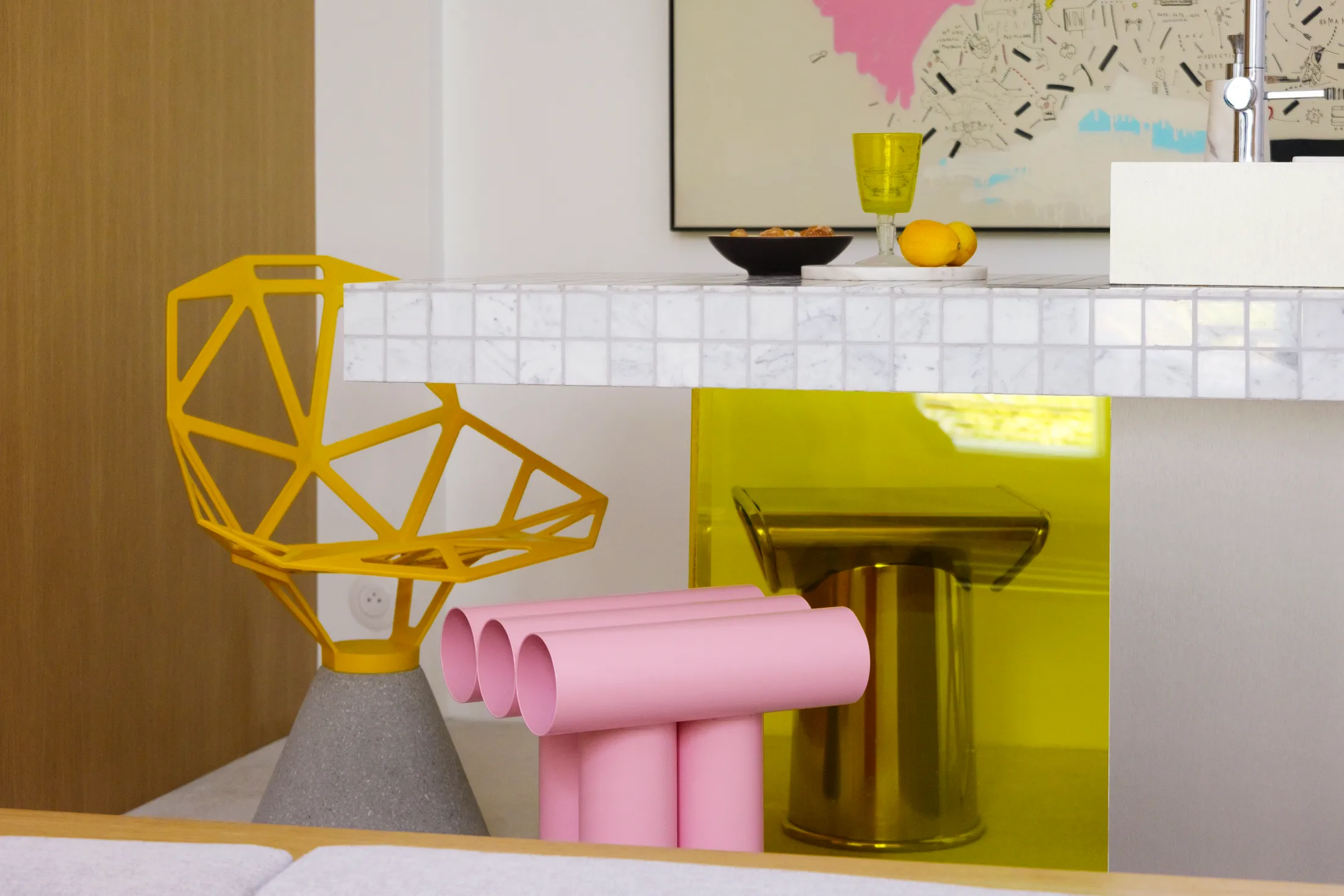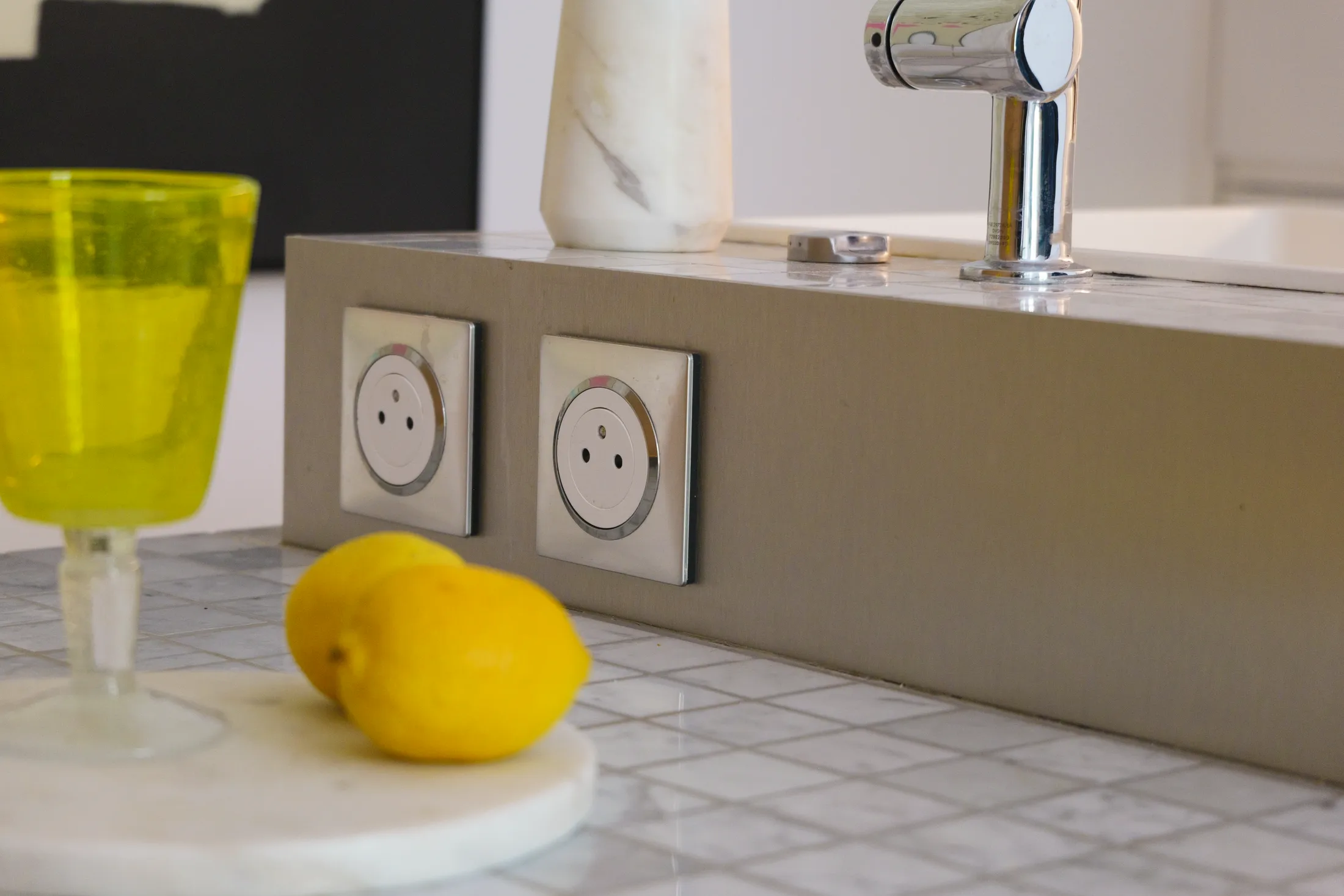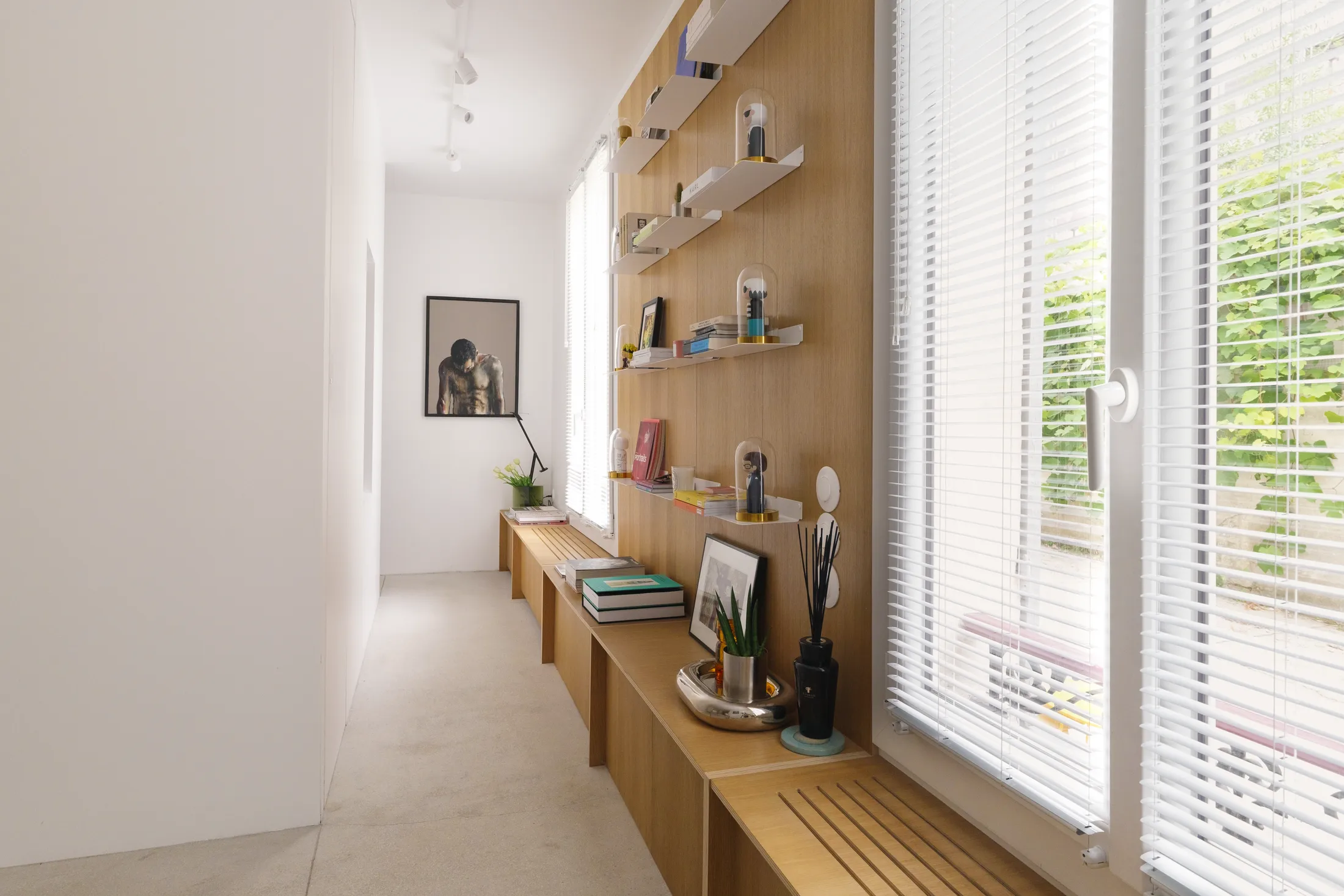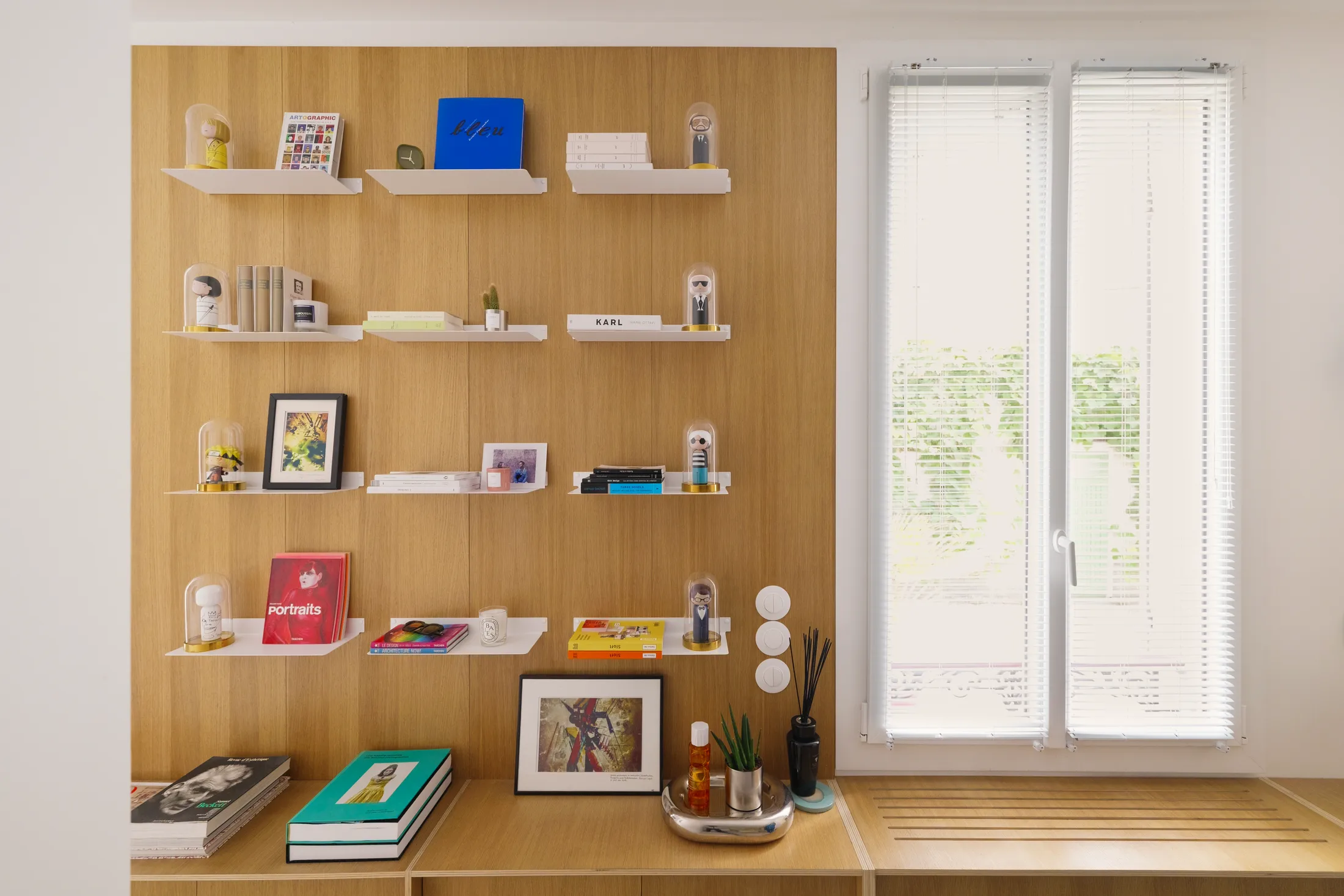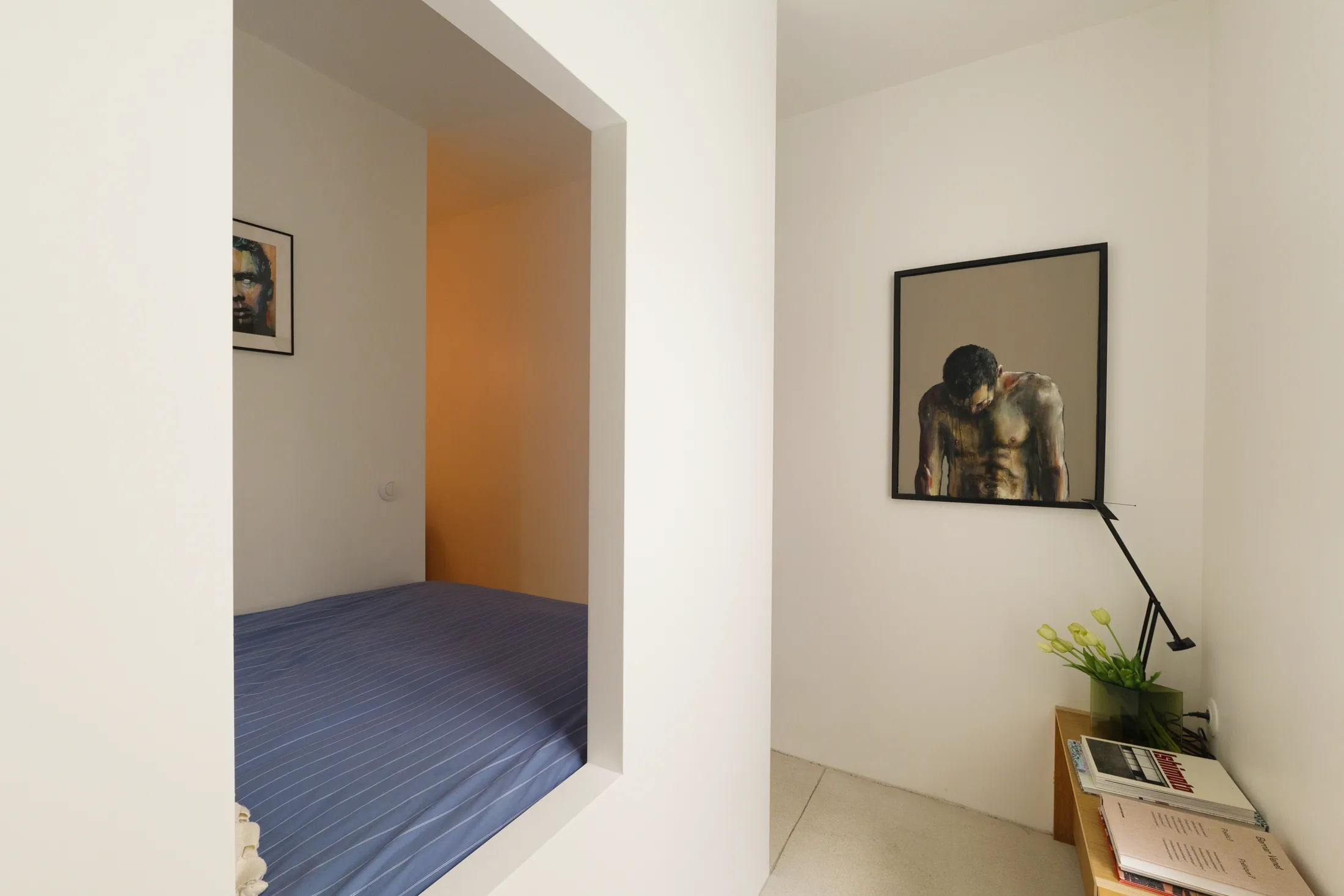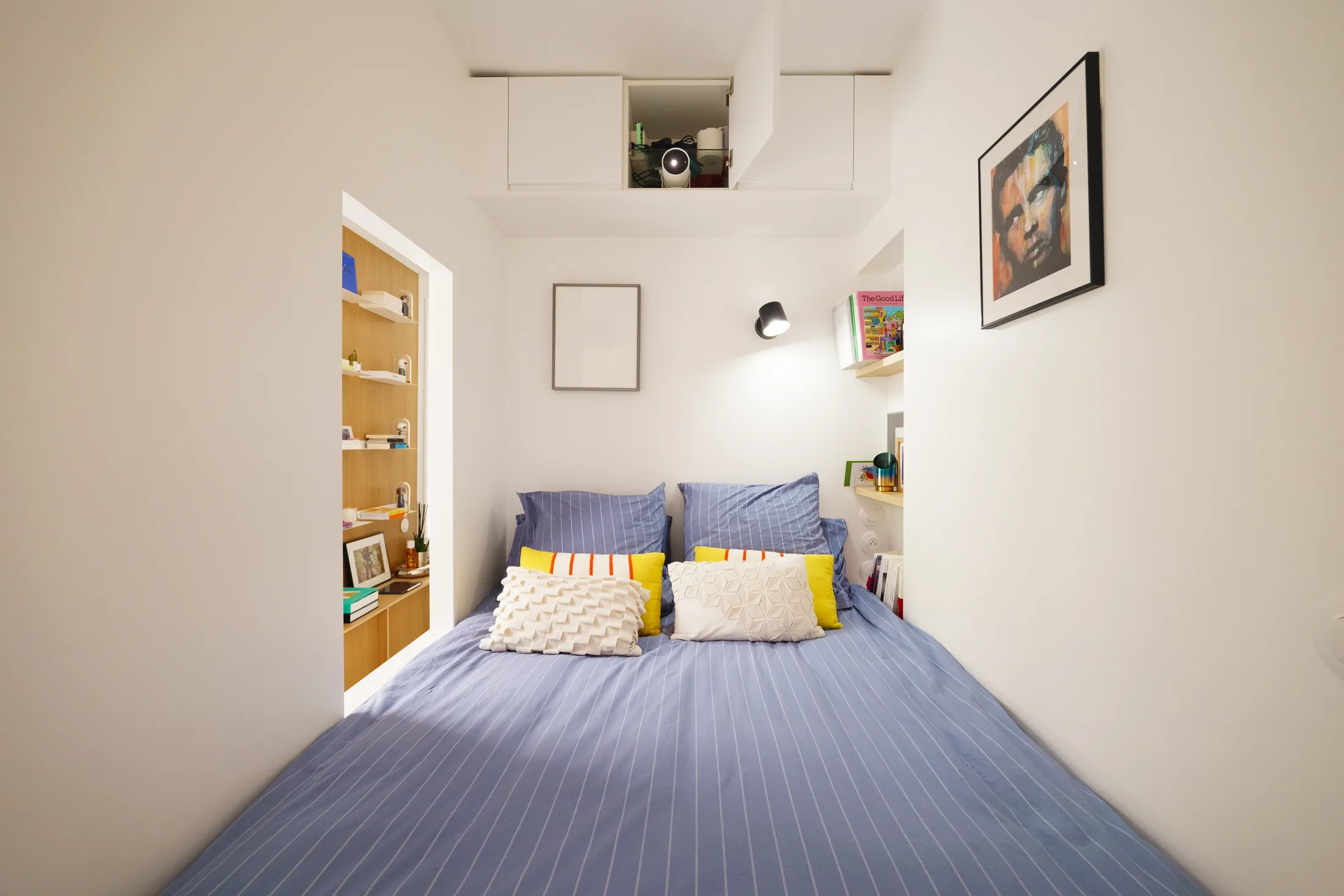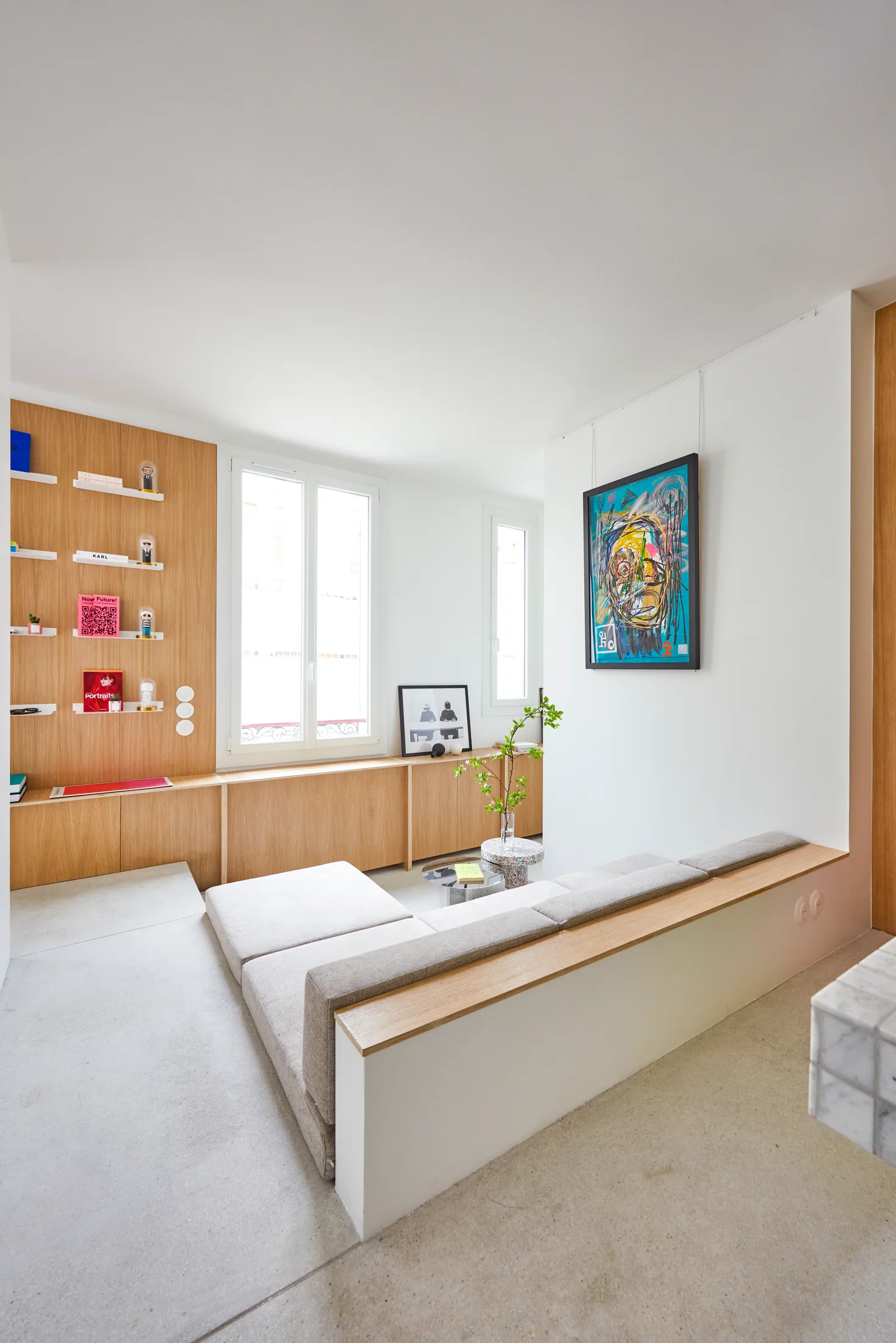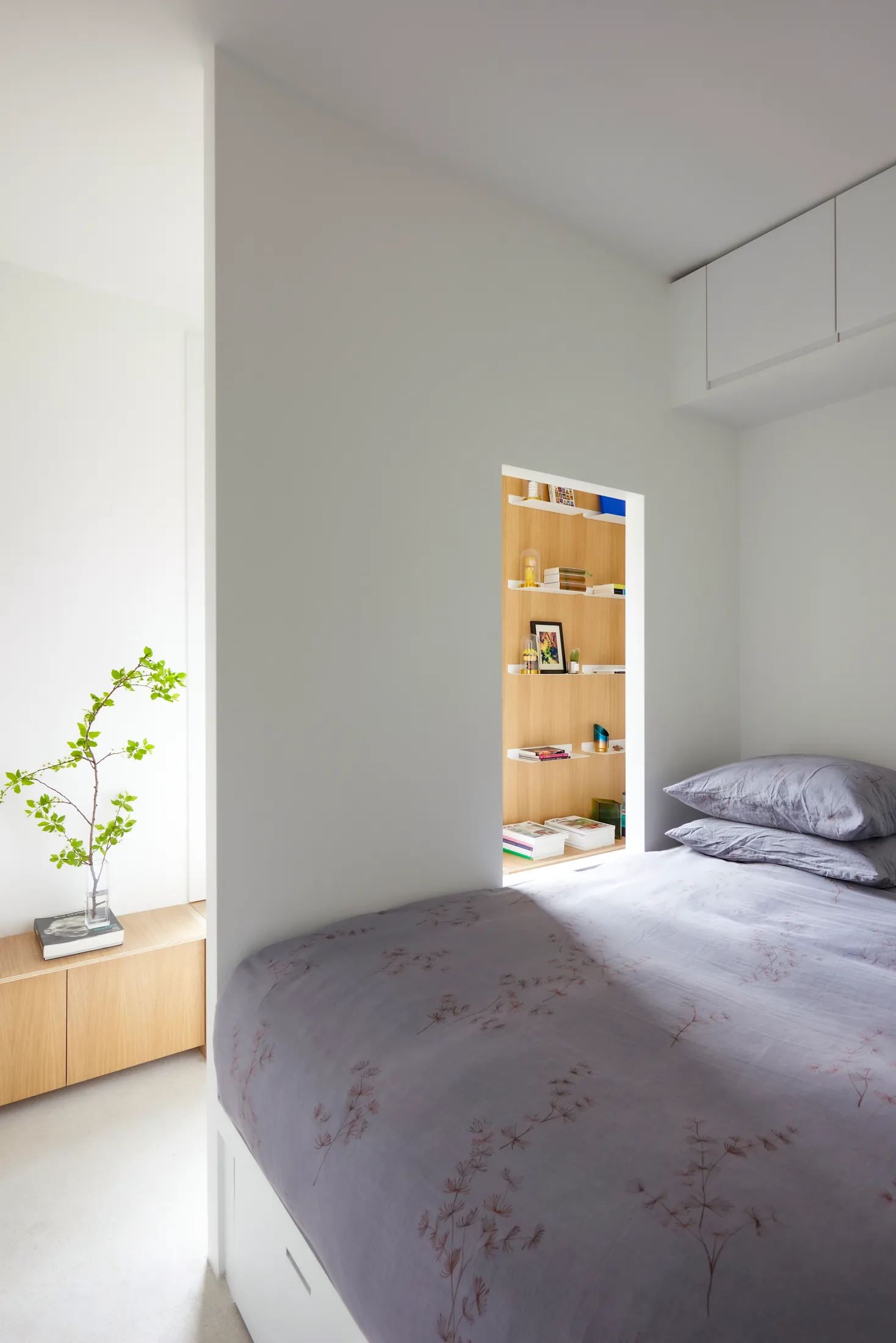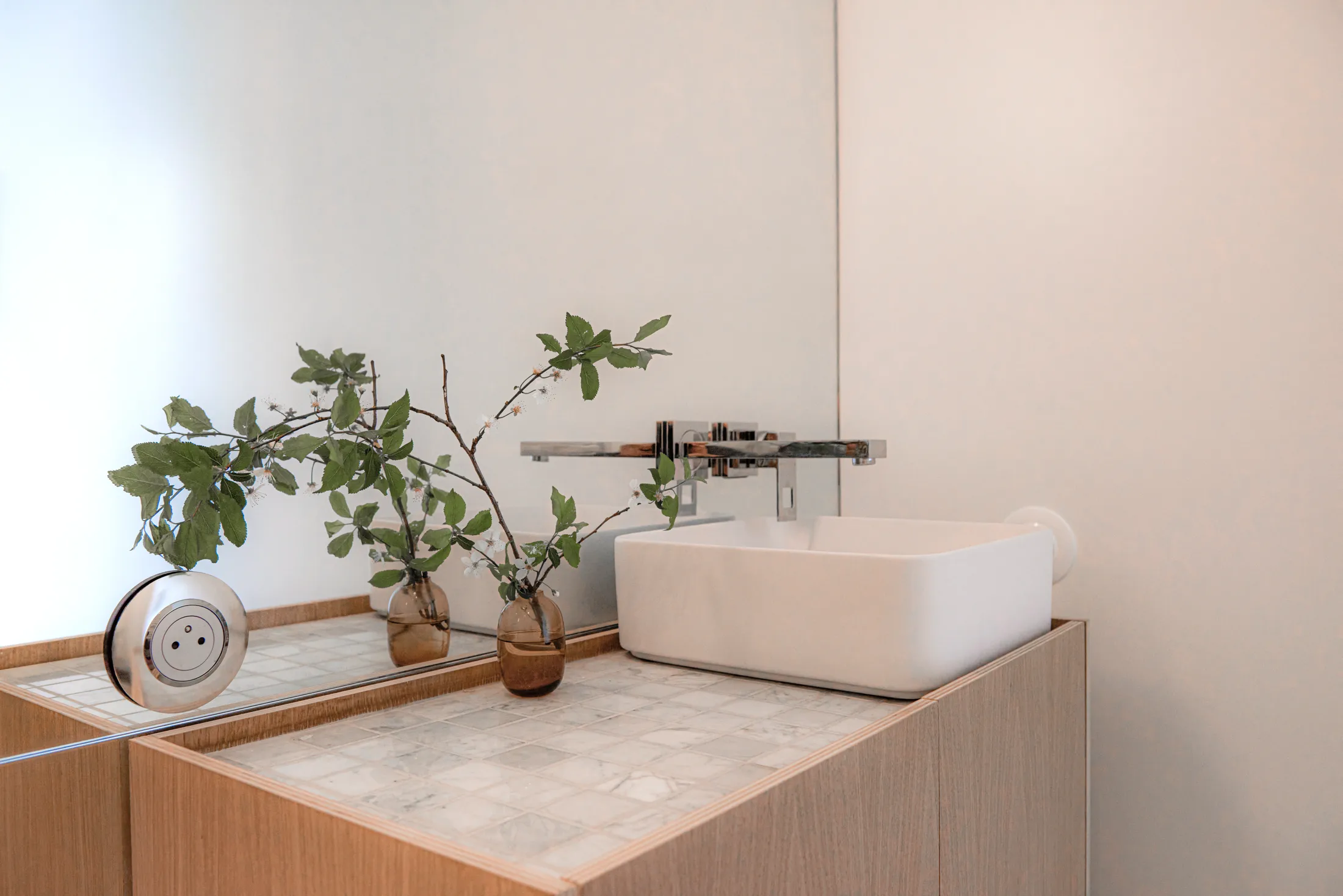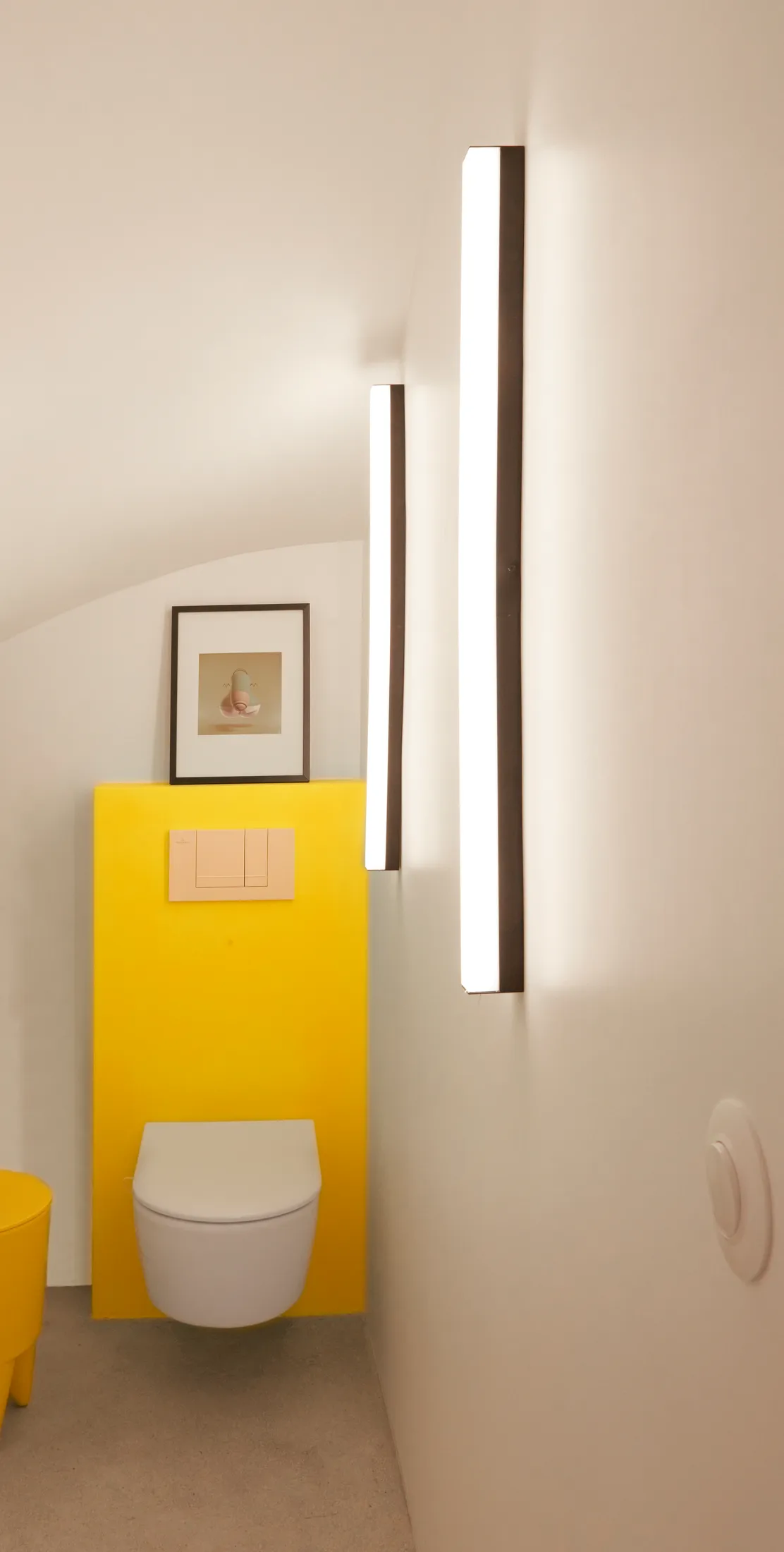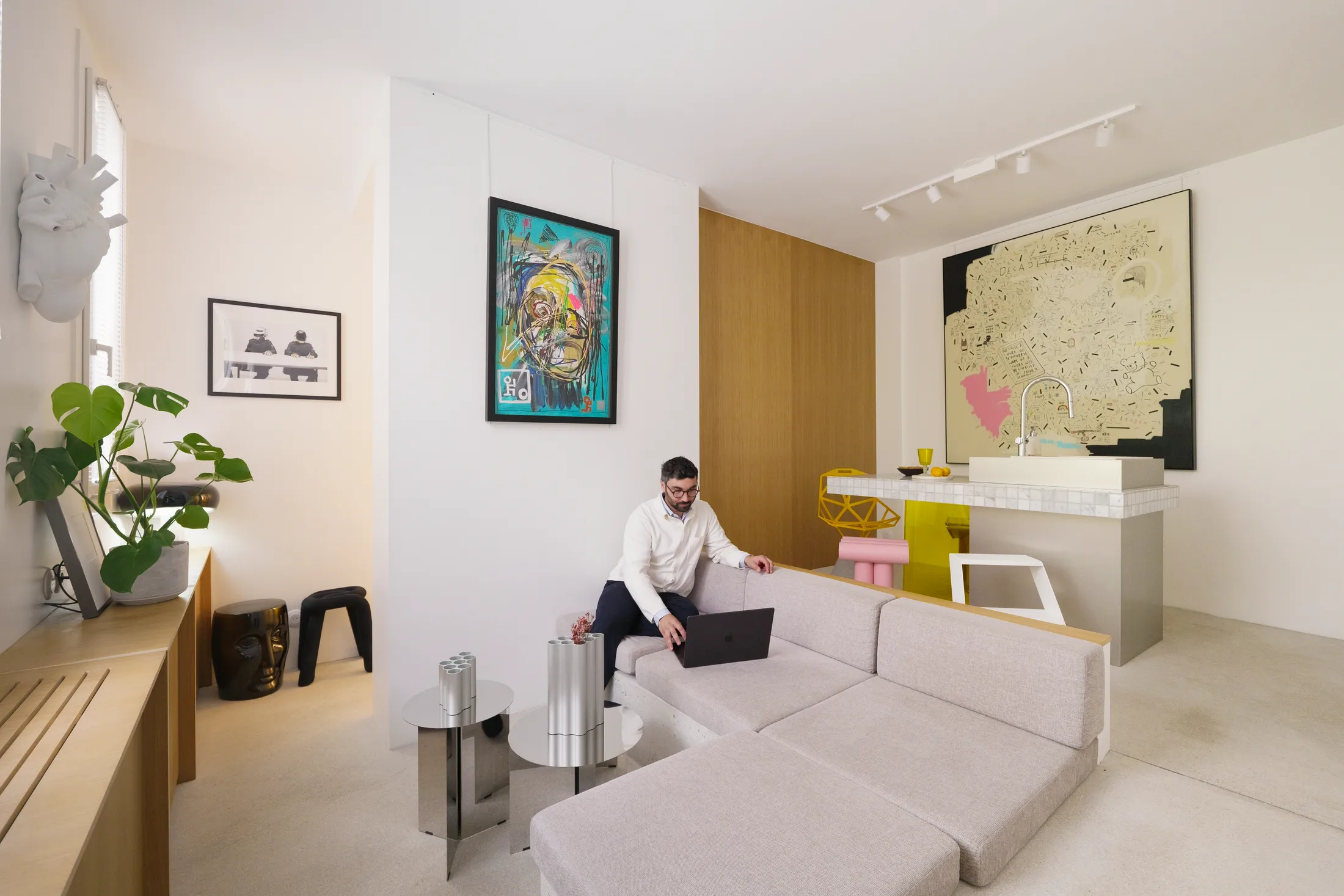



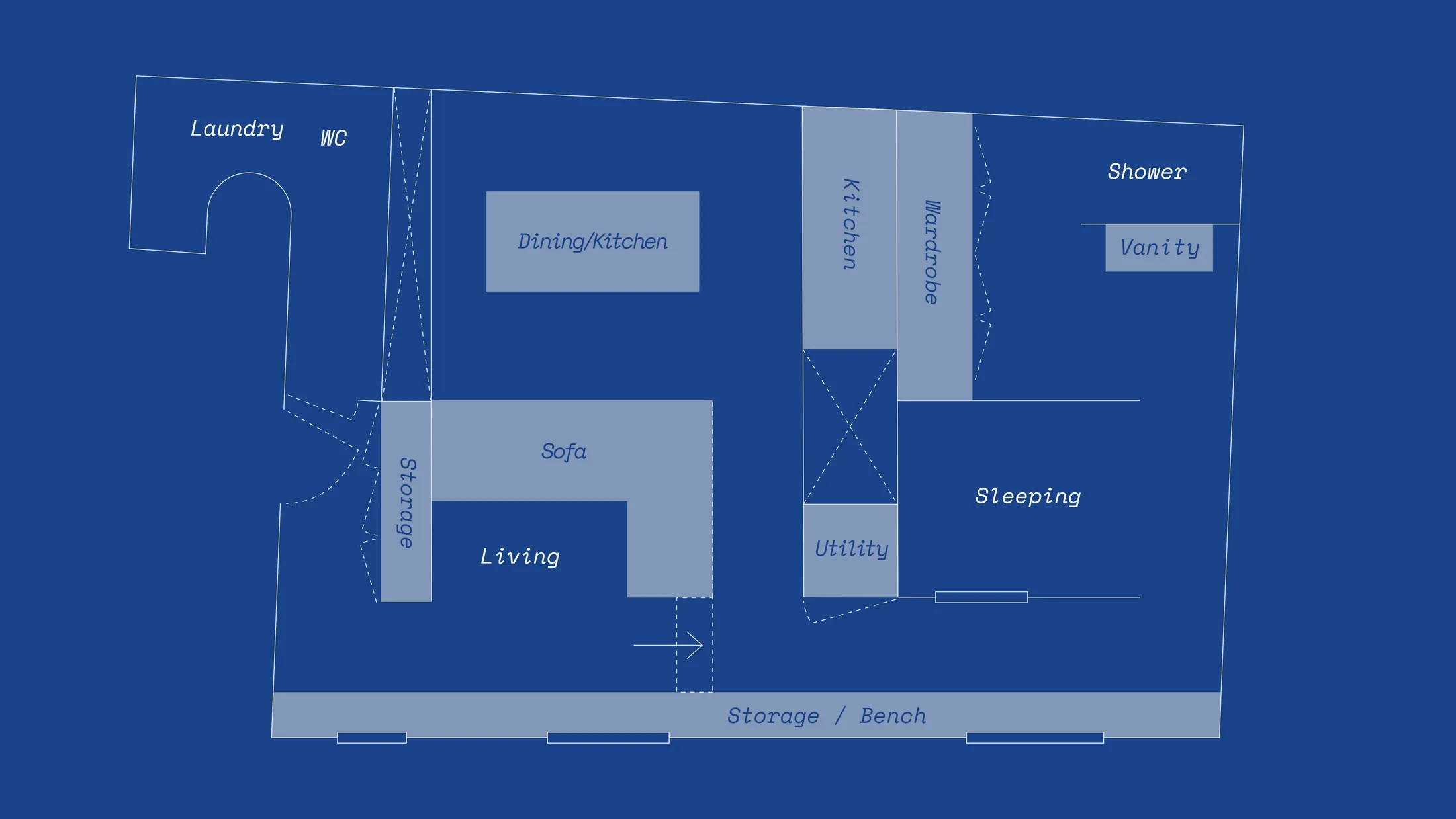
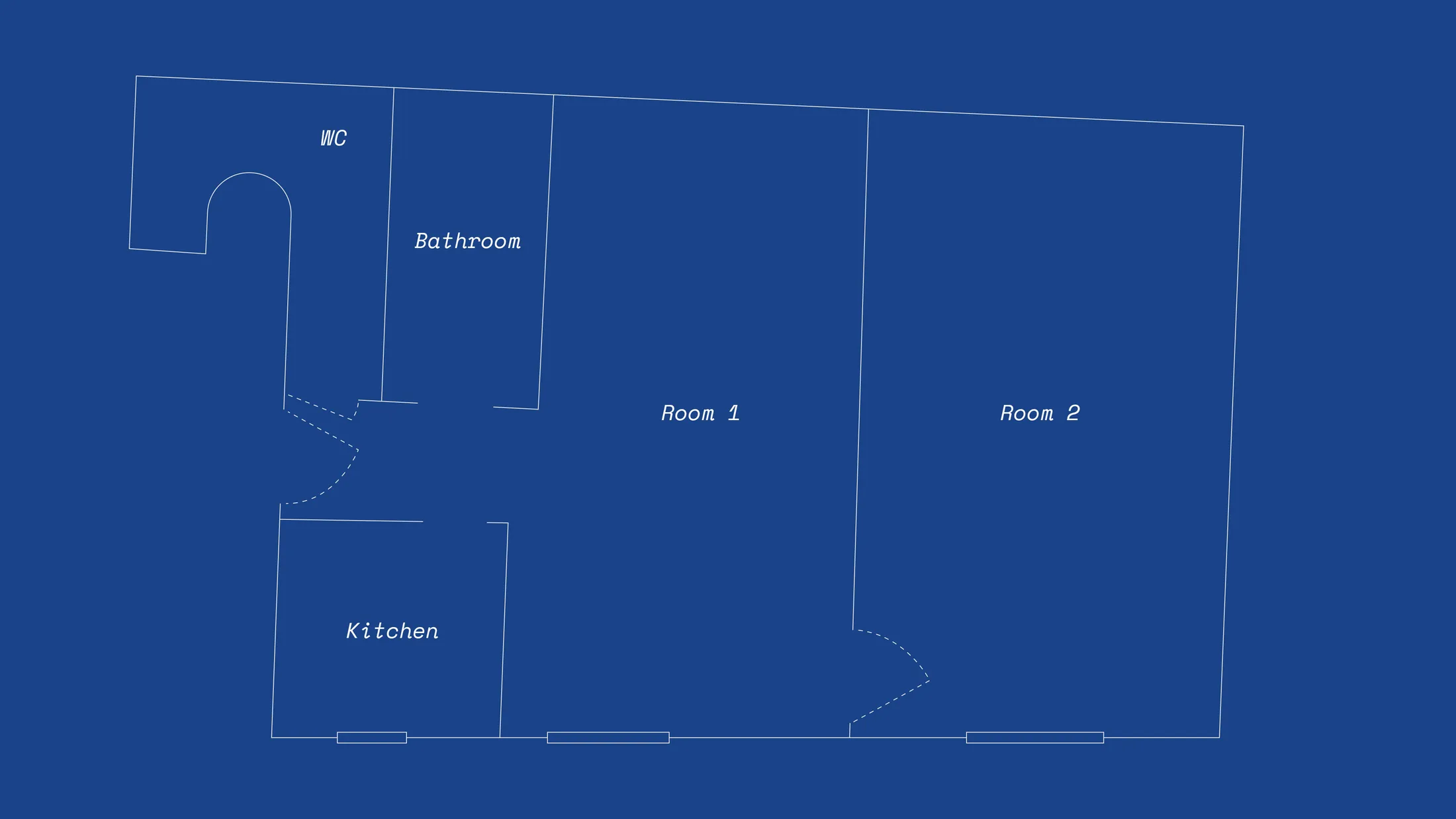

Designed by Alexandre Moret and Lola Guicheteau of STUDIO IDA, this 19th-century workers’ apartment in Paris’ Charenton district was reimagined as a spatial journey rather than a series of enclosed rooms. Organised around a central technical block built over the original chimney flues, the layout progresses from public to private through subtle thresholds, level changes, and framed views. Raw screed floors, oak joinery, mirrors, and restrained white surfaces form a calm backdrop for the client’s artworks, while moments of colour and sculptural elements punctuate the space. Below, we highlight five design details that reveal how the apartment’s gallery-like logic comes to life, balancing everyday use with a carefully choreographed sense of progression.
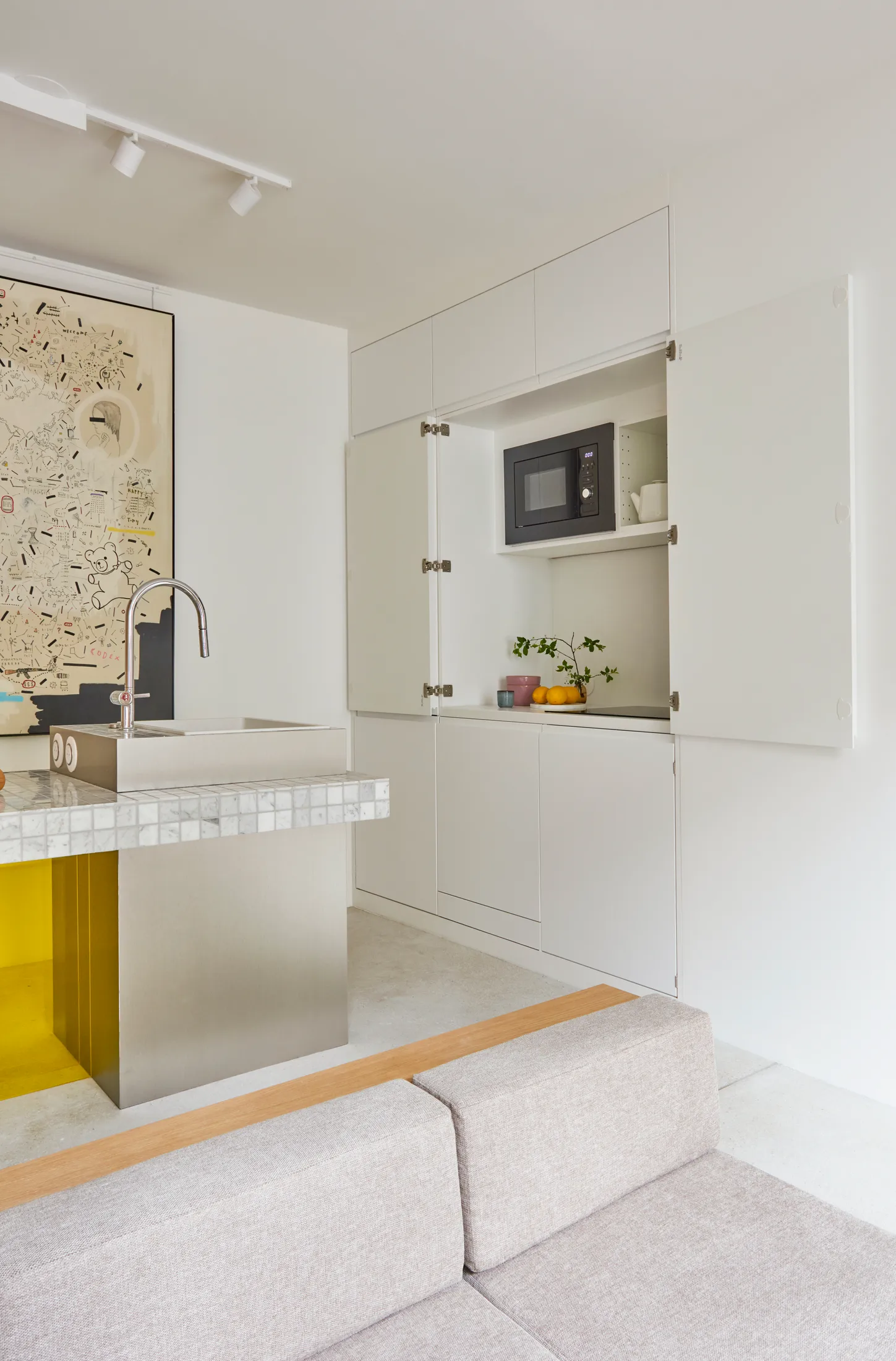
1. A Central Technical Block That Organises Everything
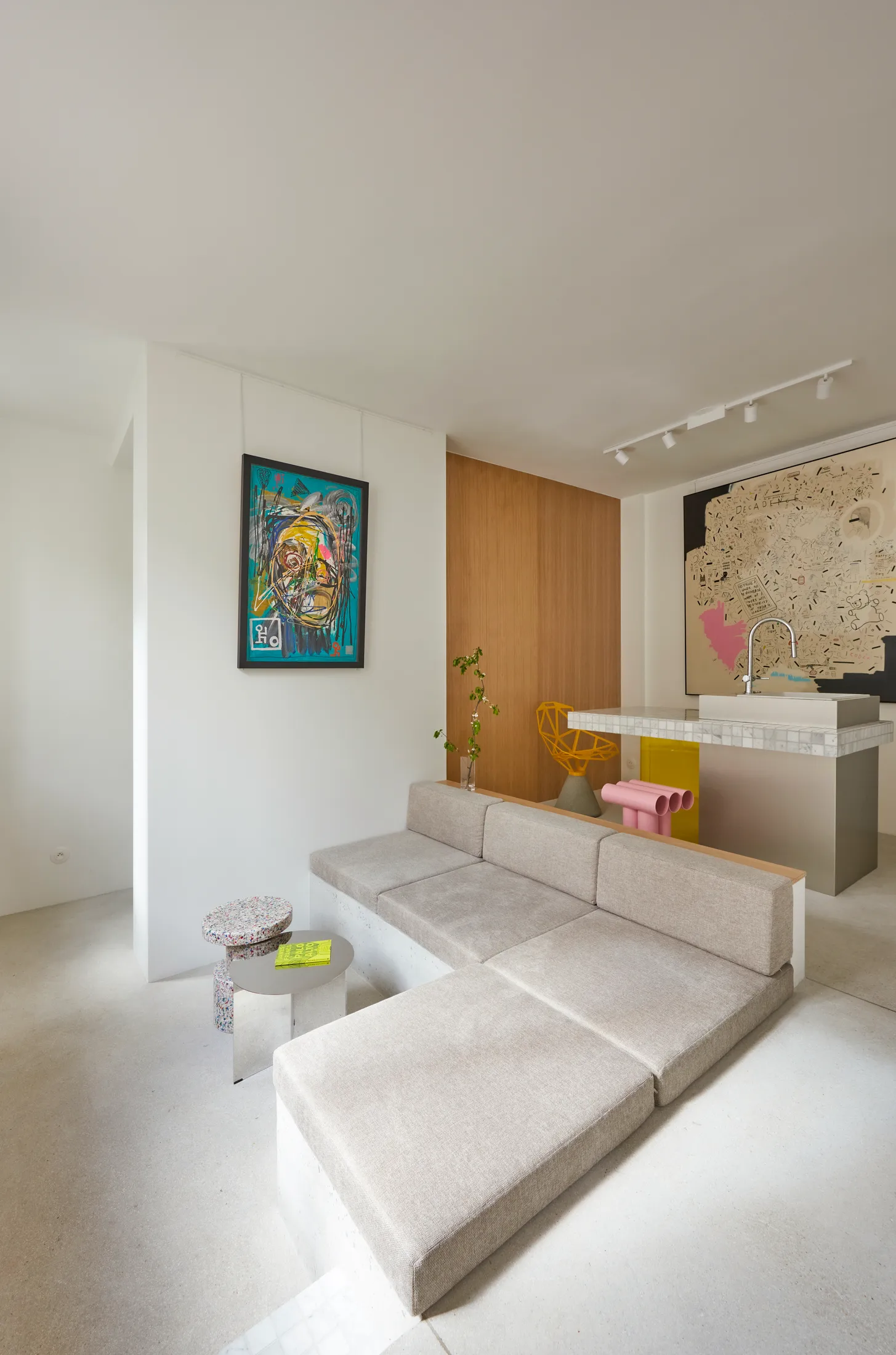
2. A Sculptural Kitchen Island That Reads as an Artwork
3. A Bench and Bookshelf That Guide Movement and Daily Life
4. A Bedroom Revealed Through Light, Not Doors
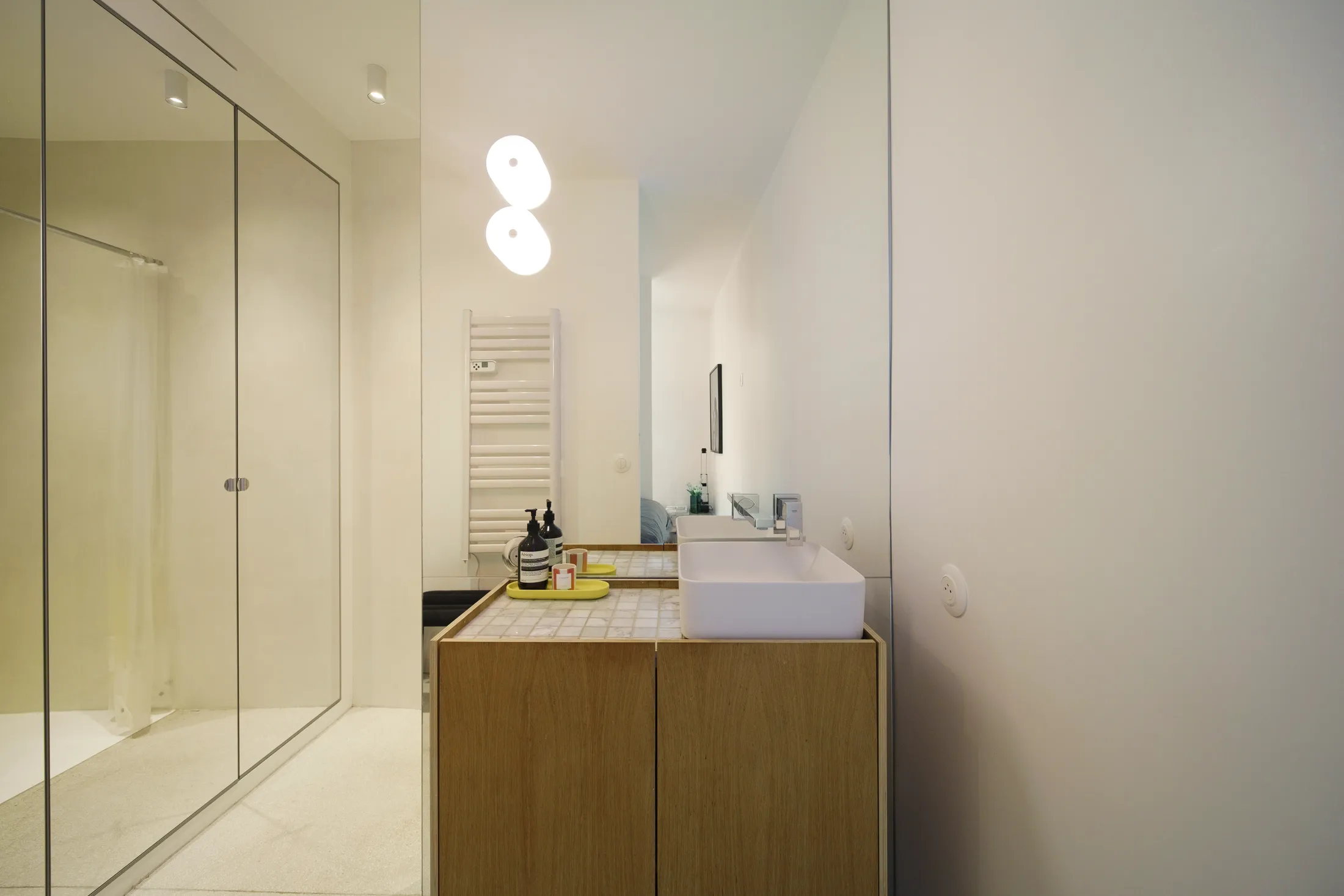
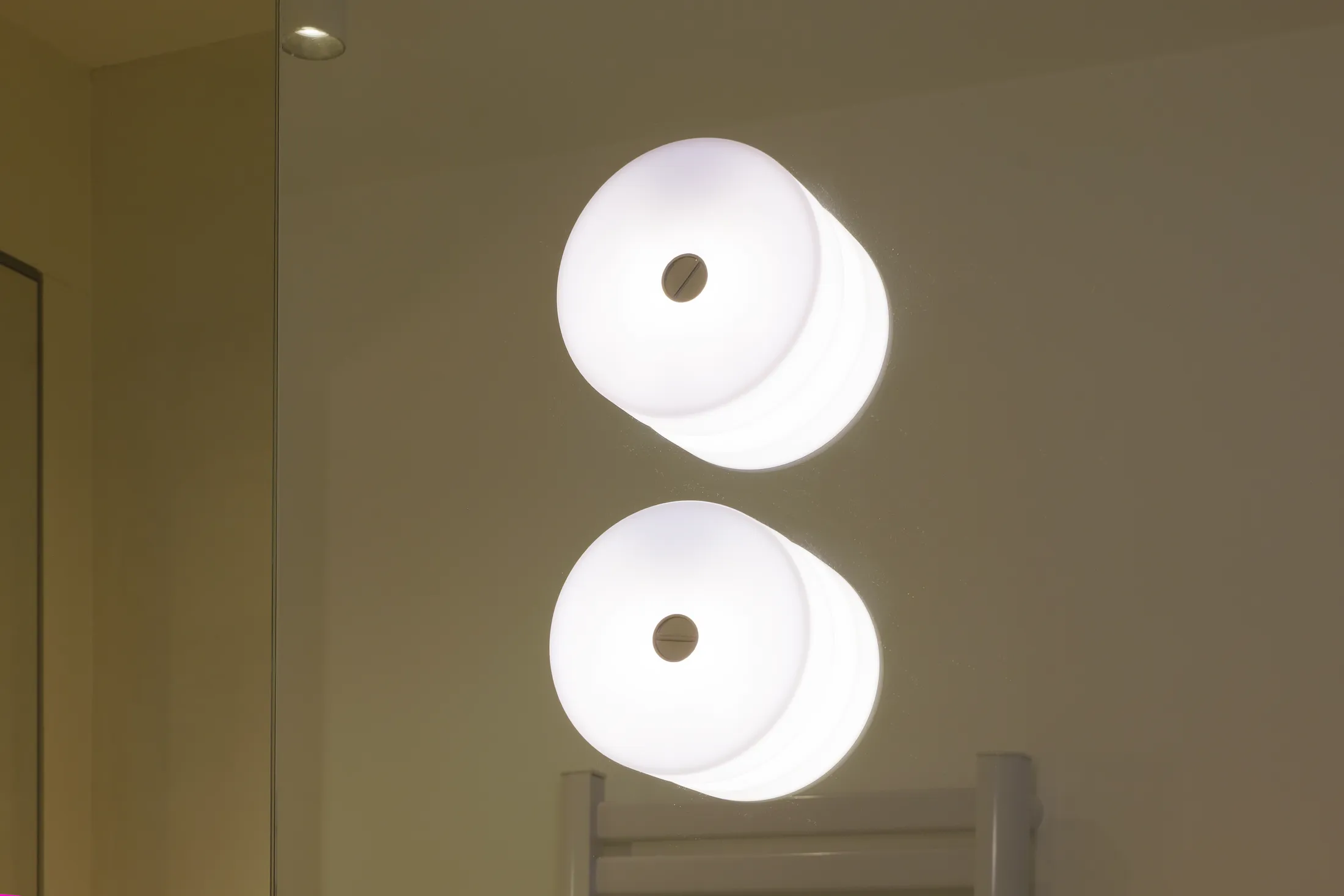
5. A Bathroom Designed for Light, Not Harsh Shadows
1. A Central Technical Block with a Hidden Kitchen
At the heart of the apartment sits a compact white block that conceals the kitchen, bedroom storage, technical systems, and services. When closed, it reads as a calm, continuous surface, allowing the surrounding spaces to remain open and fluid. When needed, the kitchen is revealed behind doors that open to 180 degrees and lie flush with the wall, turning the block into a fully functional workspace without disrupting the overall visual order. Discreet storage is also integrated above the kitchen, making use of the full height of the block while keeping the composition clean. This centralised approach frees the perimeter for light, art, and movement.