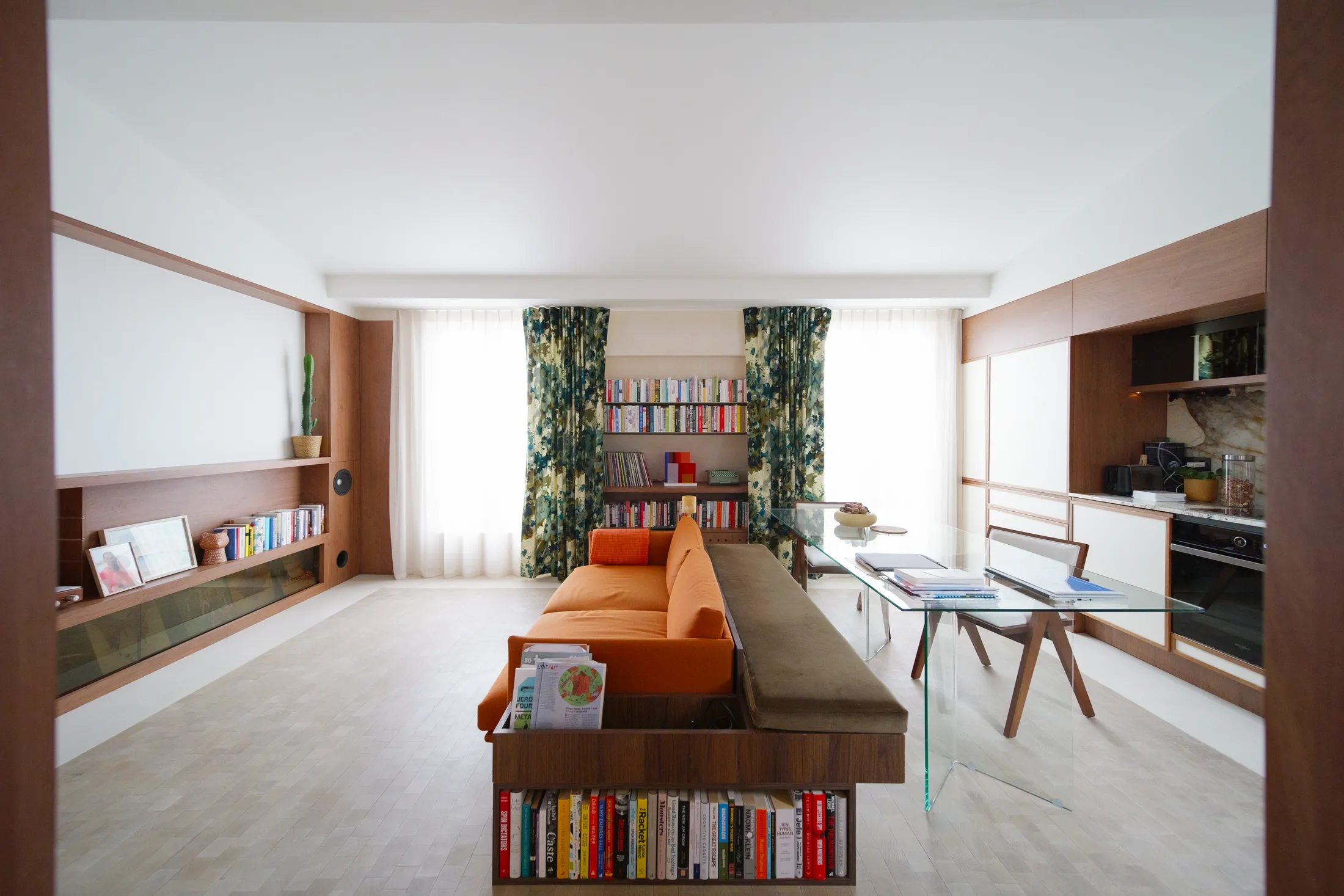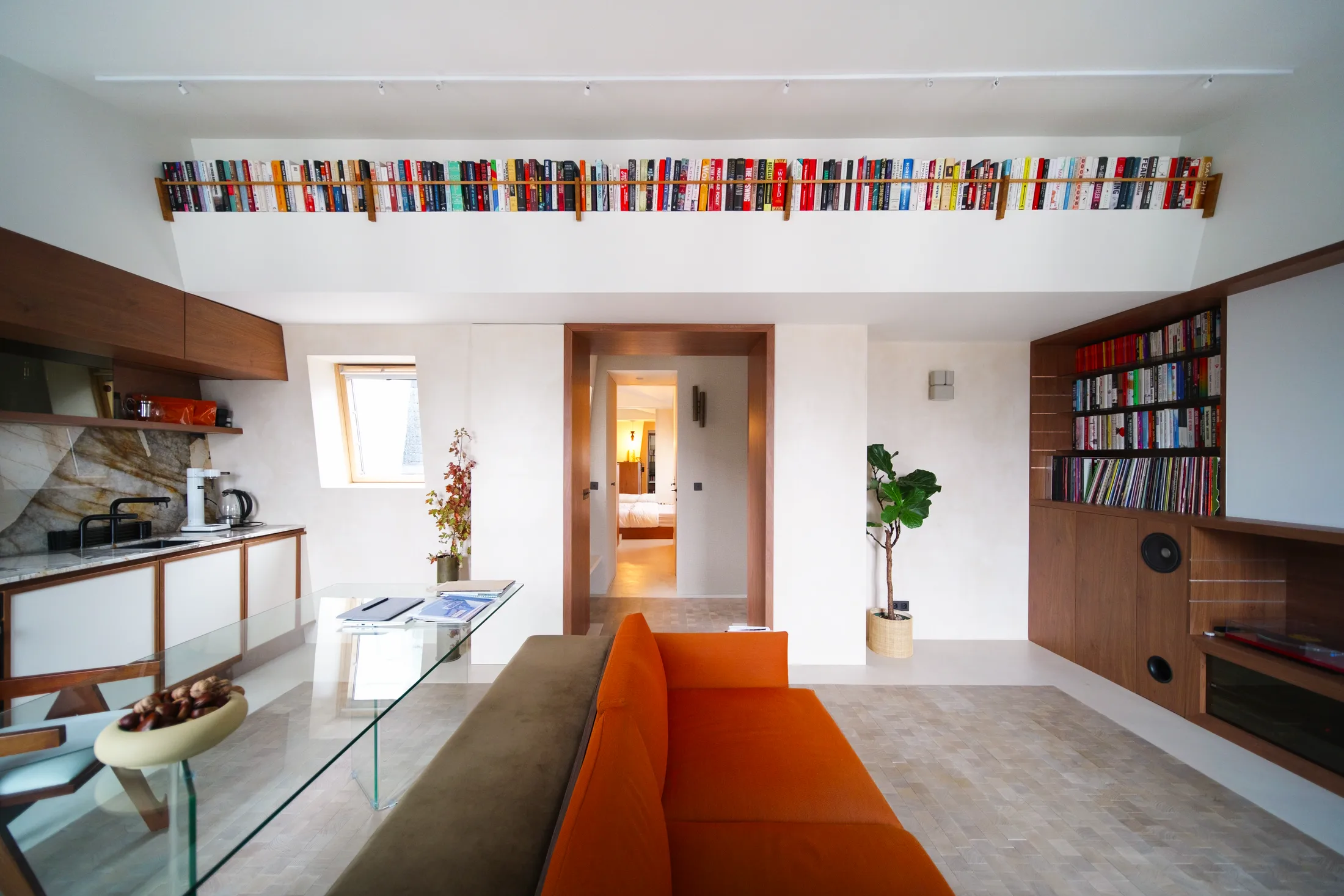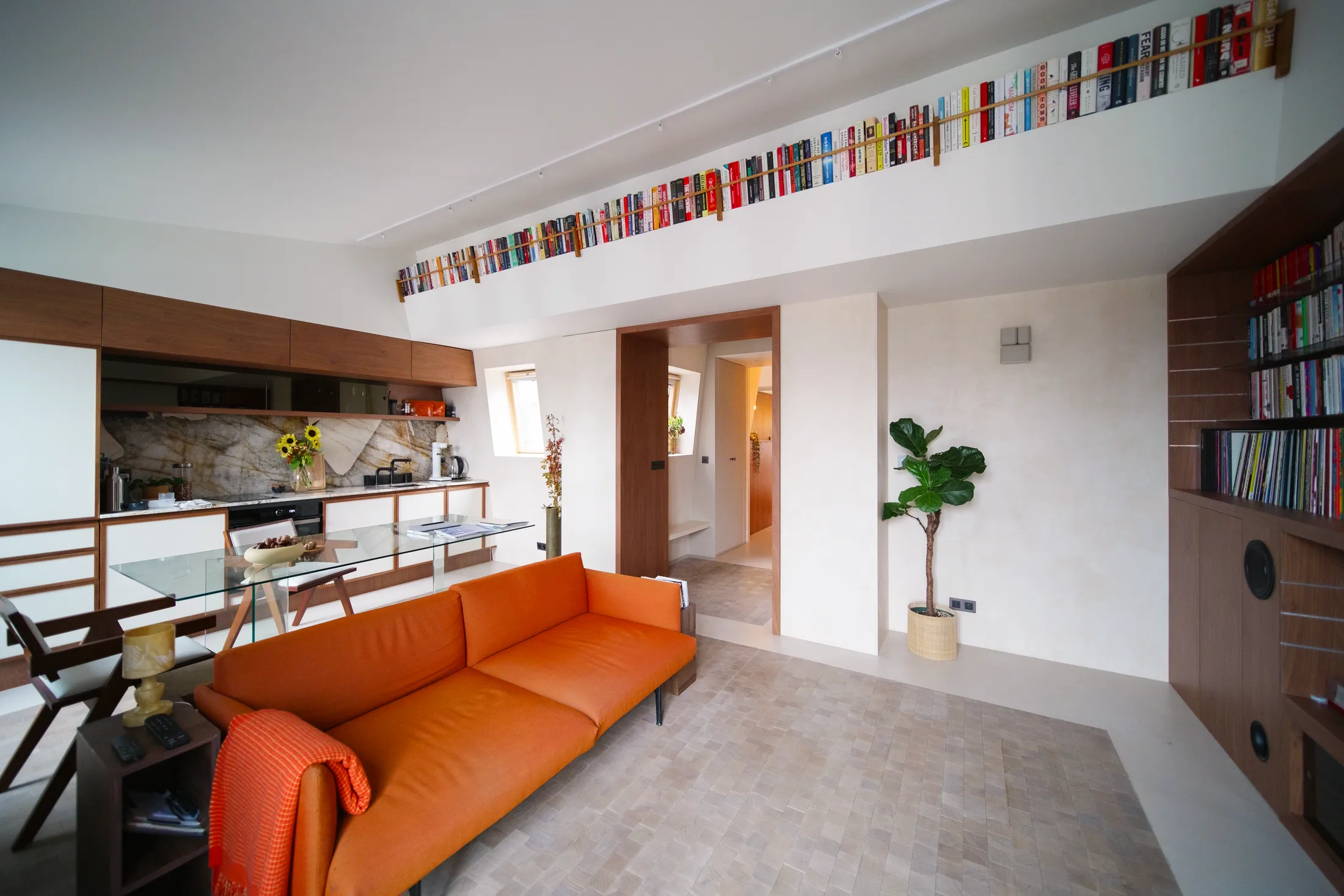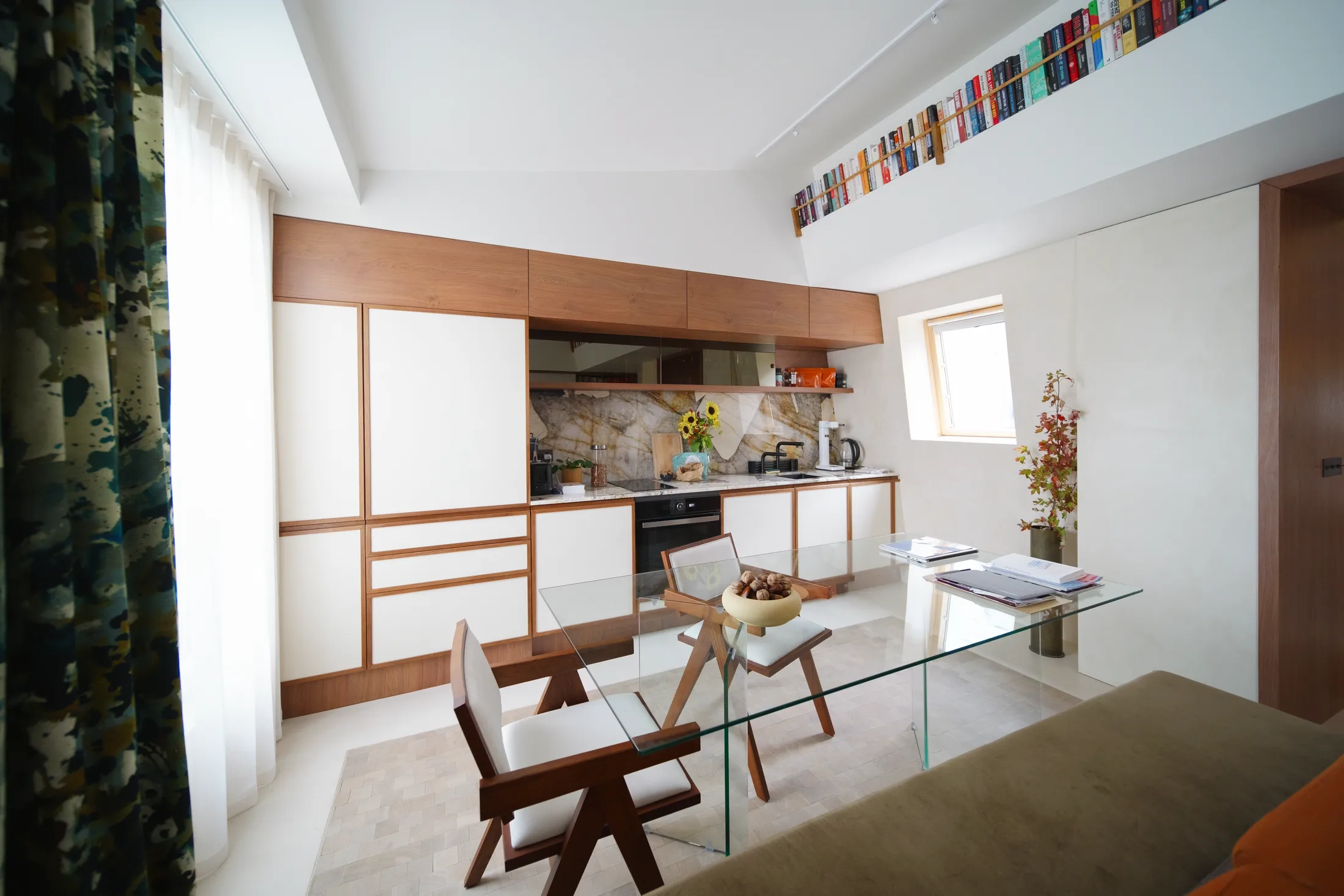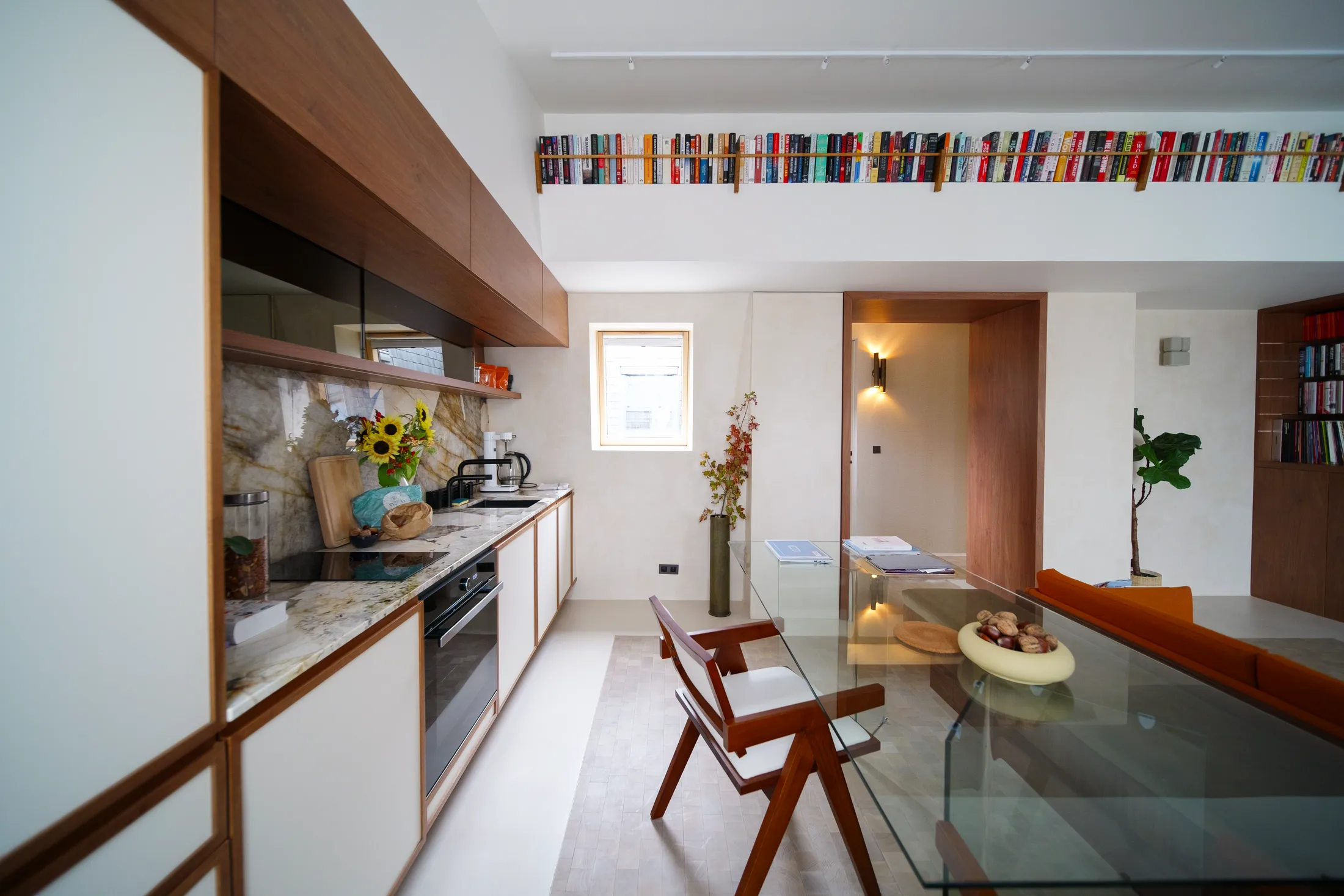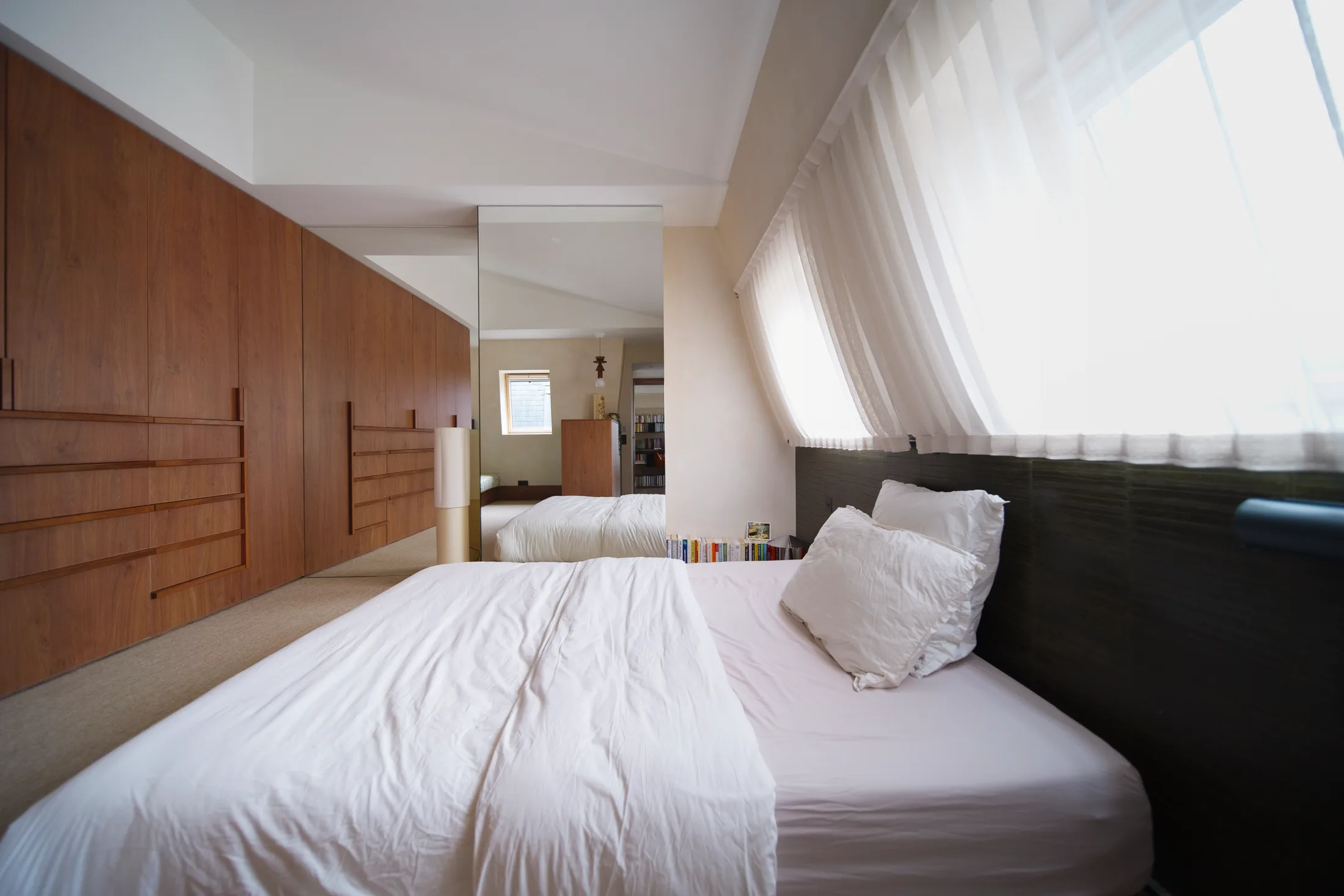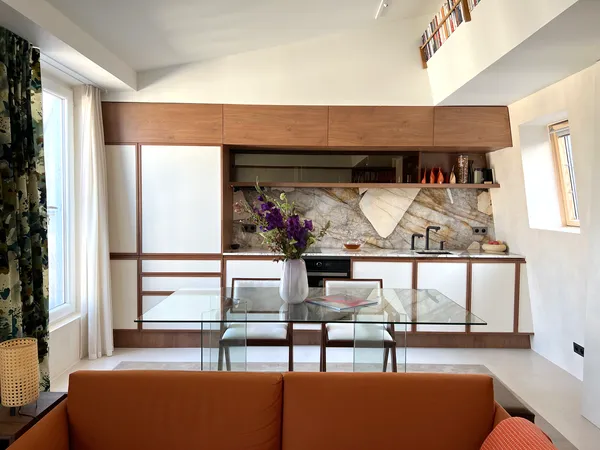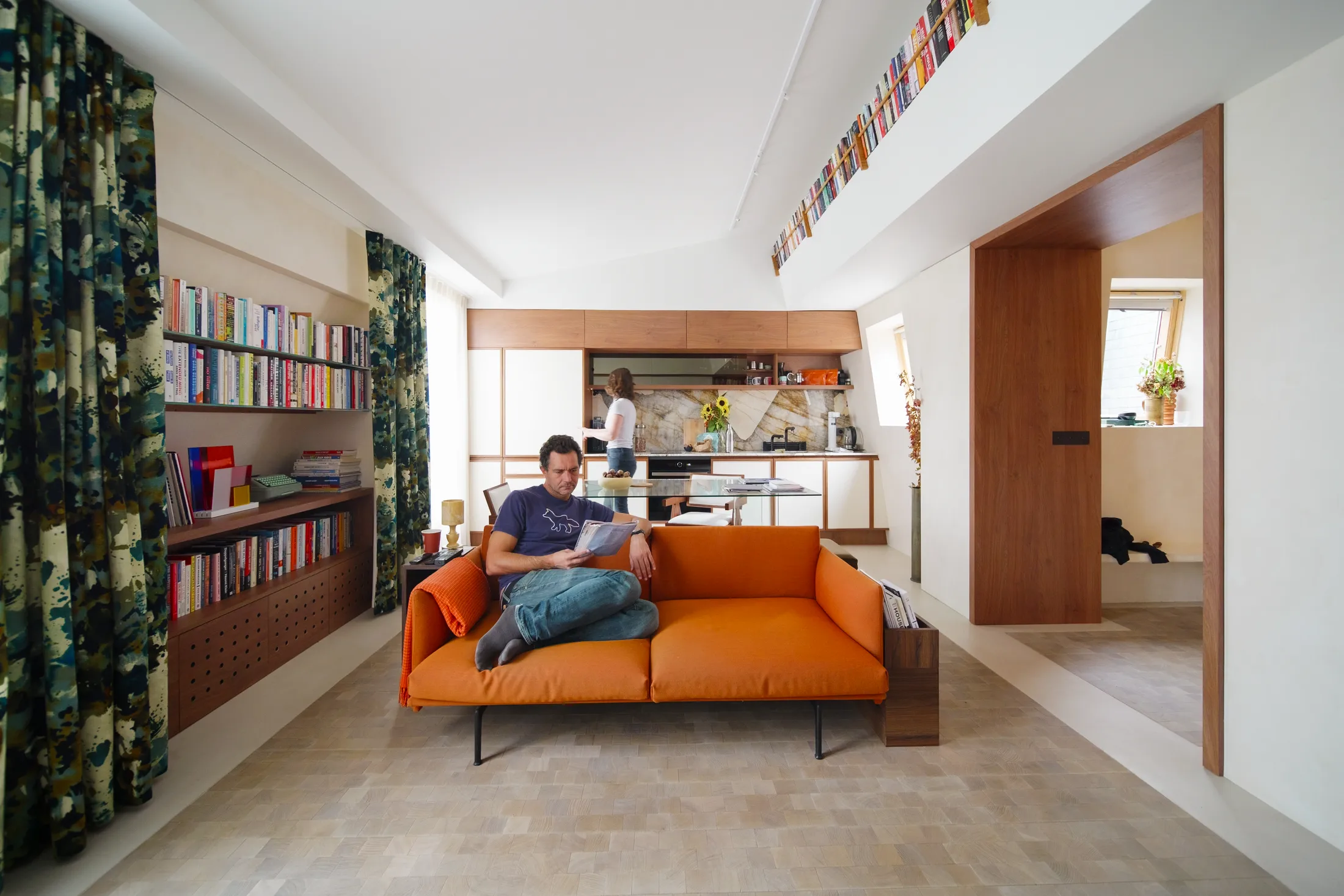



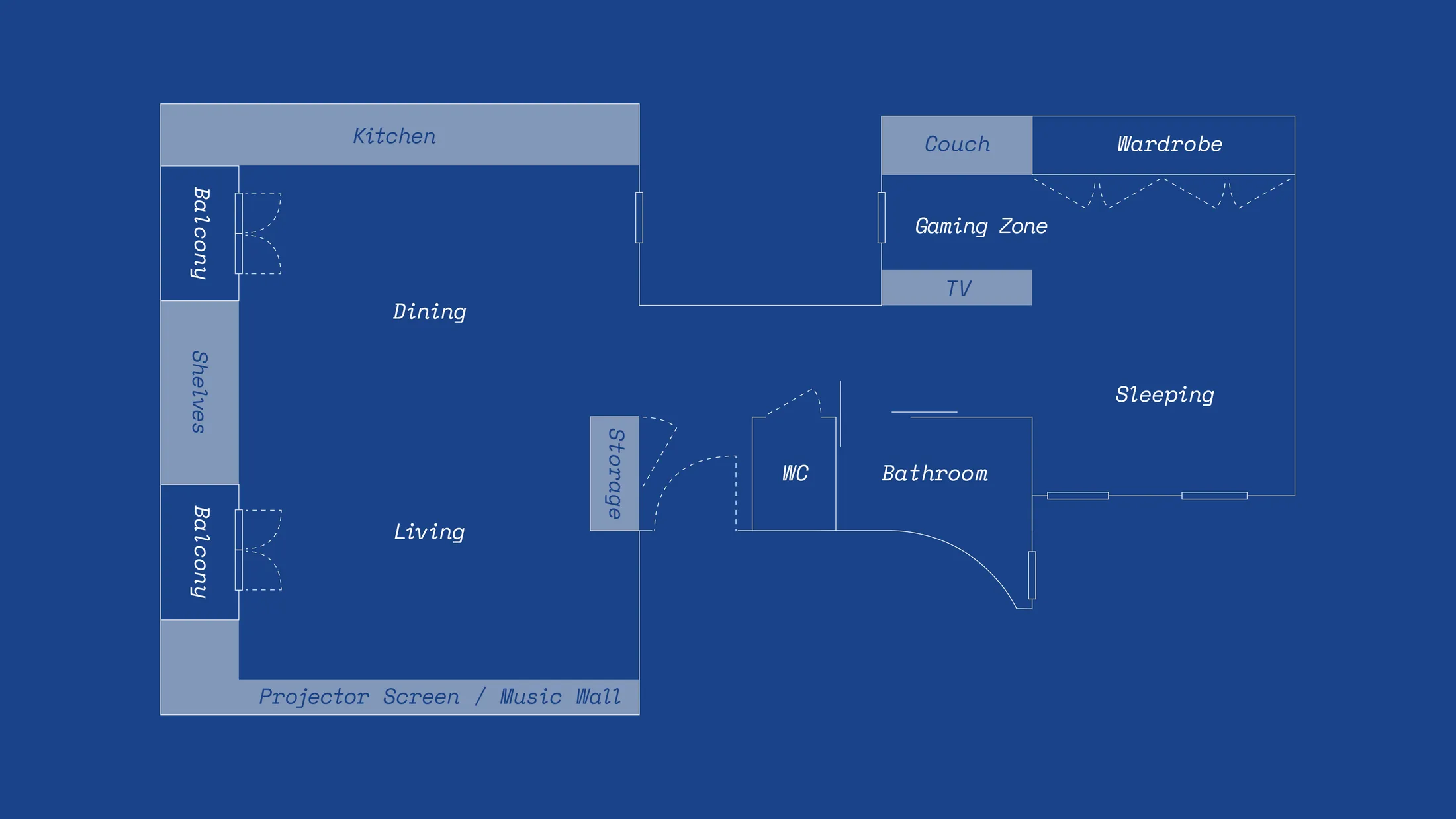
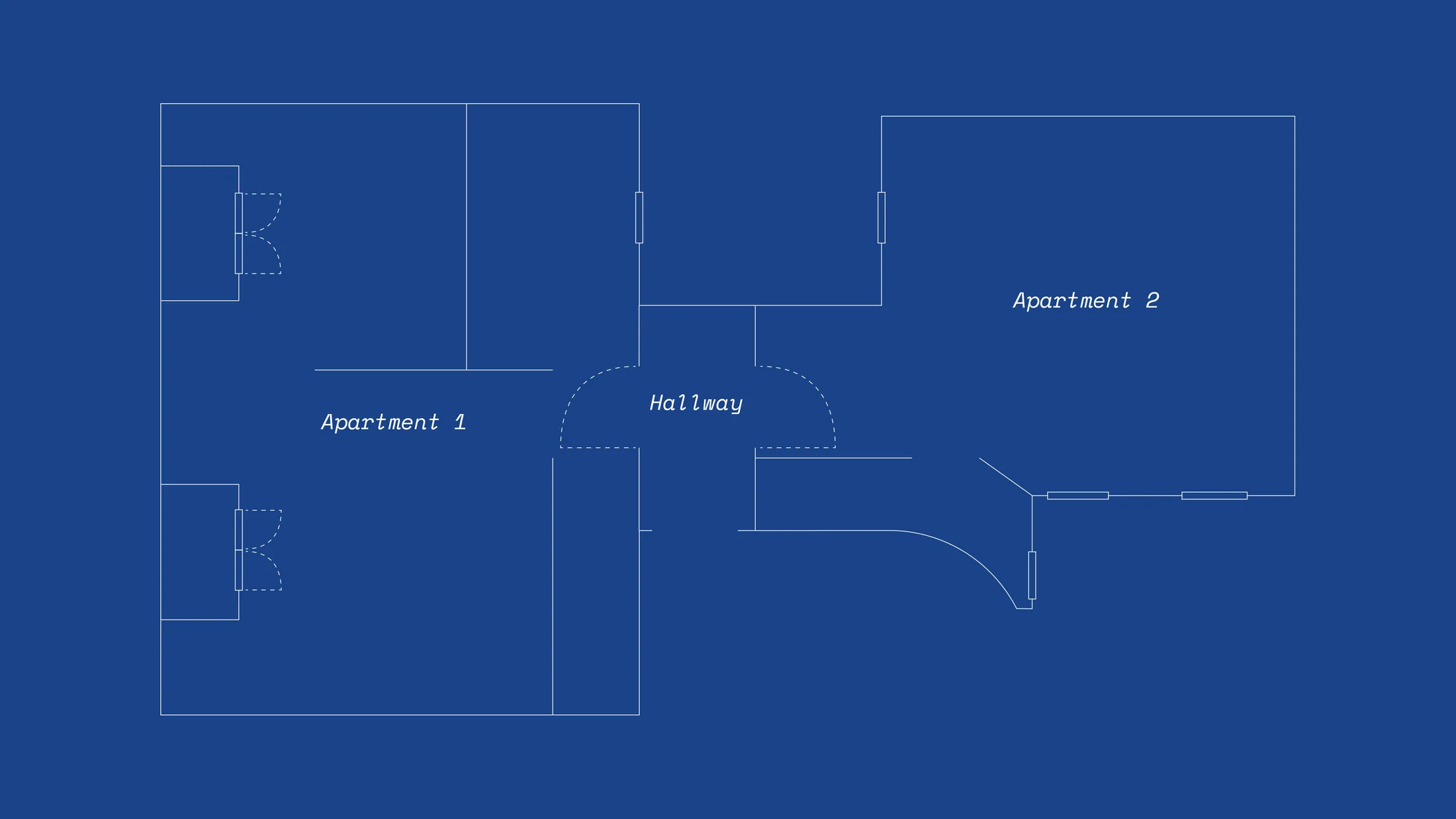

Originally divided into a one-bedroom apartment, a studio and a narrow corridor, the space felt disconnected despite its generous natural light. By enclosing the corridor and removing internal barriers, the designer created a single, open-plan living, dining and kitchen area, while keeping the bedroom tucked away in the former studio.
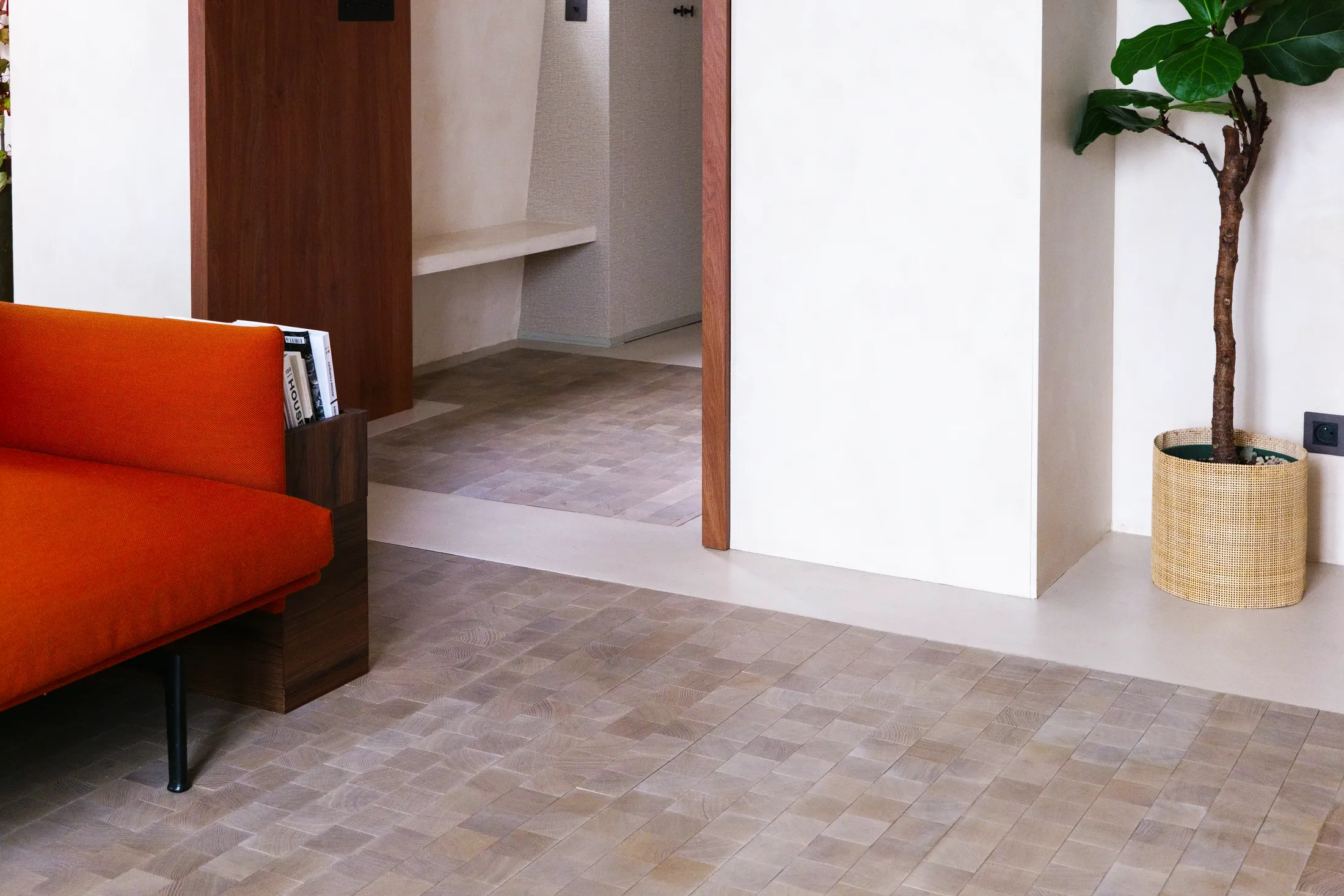
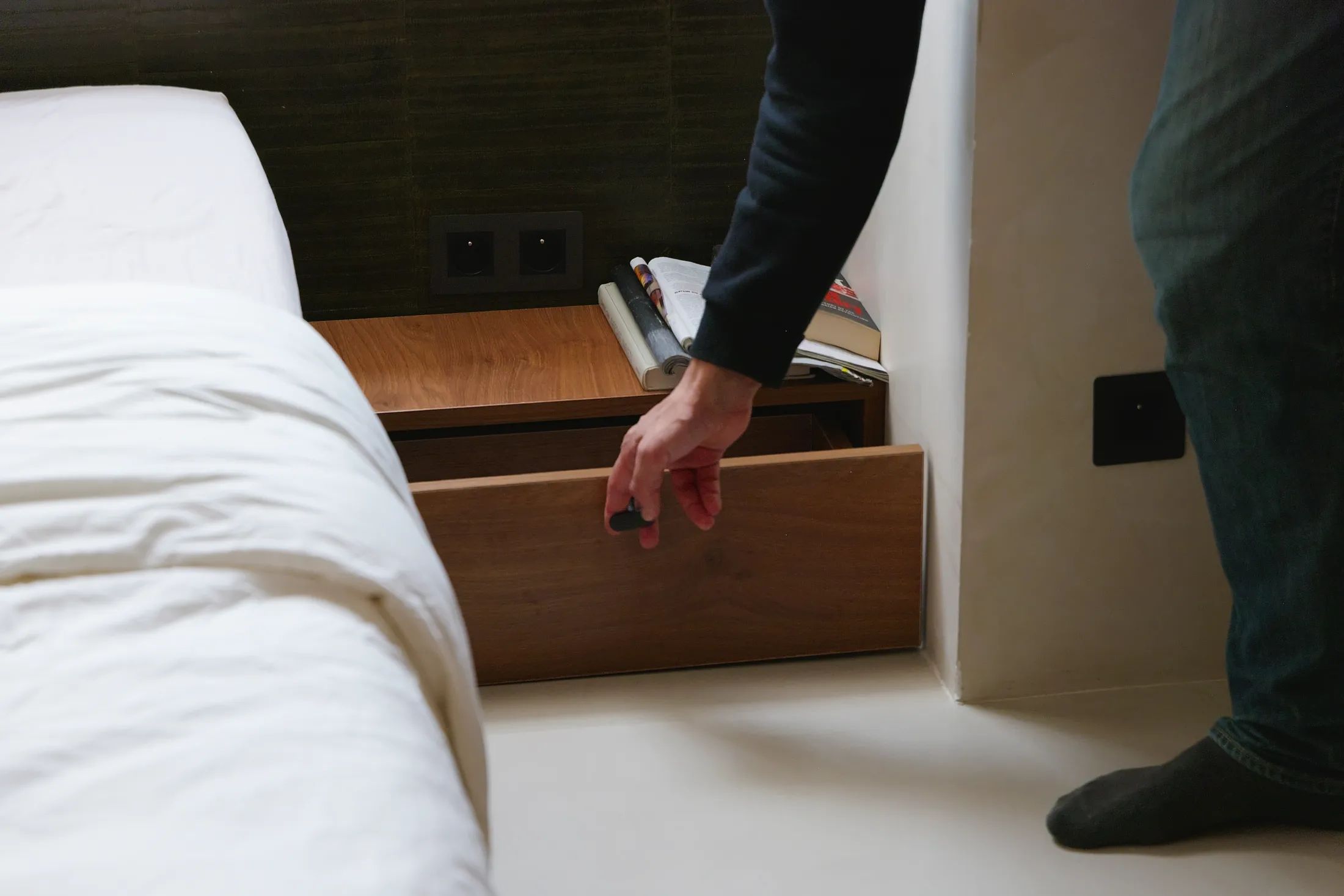
Rather than relying on walls to organise the layout, Mars is structured through custom furniture, material changes and carefully placed storage. A warm palette of dark wood, limewash walls and textured finishes creates a timeless backdrop, while integrated pieces combine multiple functions into single elements. From a bookshelf that doubles as a sofa extension to a dining setup that visually disappears, each intervention is designed to reduce clutter and improve circulation.
Below, we highlight five design details that make Mars feel calm, practical and quietly generous.
1. A Bookshelf Sofa That Defines Living and Dining Zones
2. Looking Up: Turning Overhead Space Into Storage
3. A Glass Dining Table That Lightens the Room
4. Using Flooring to Subtly Define Zones
5. A Low Platform Bed That Keeps the Bedroom Grounded and Calm
1. A Bookshelf Sofa That Defines Living and Dining Zones
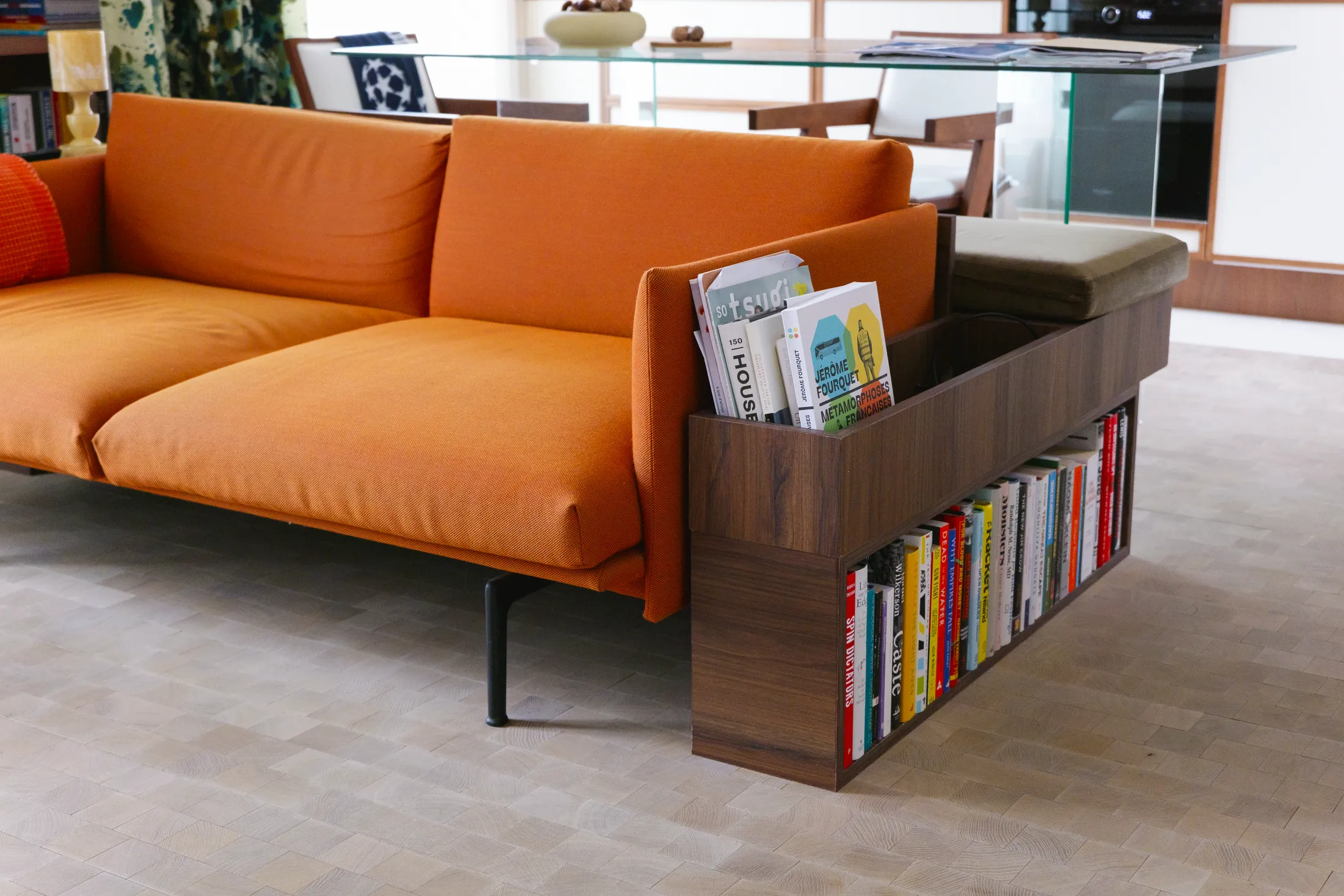
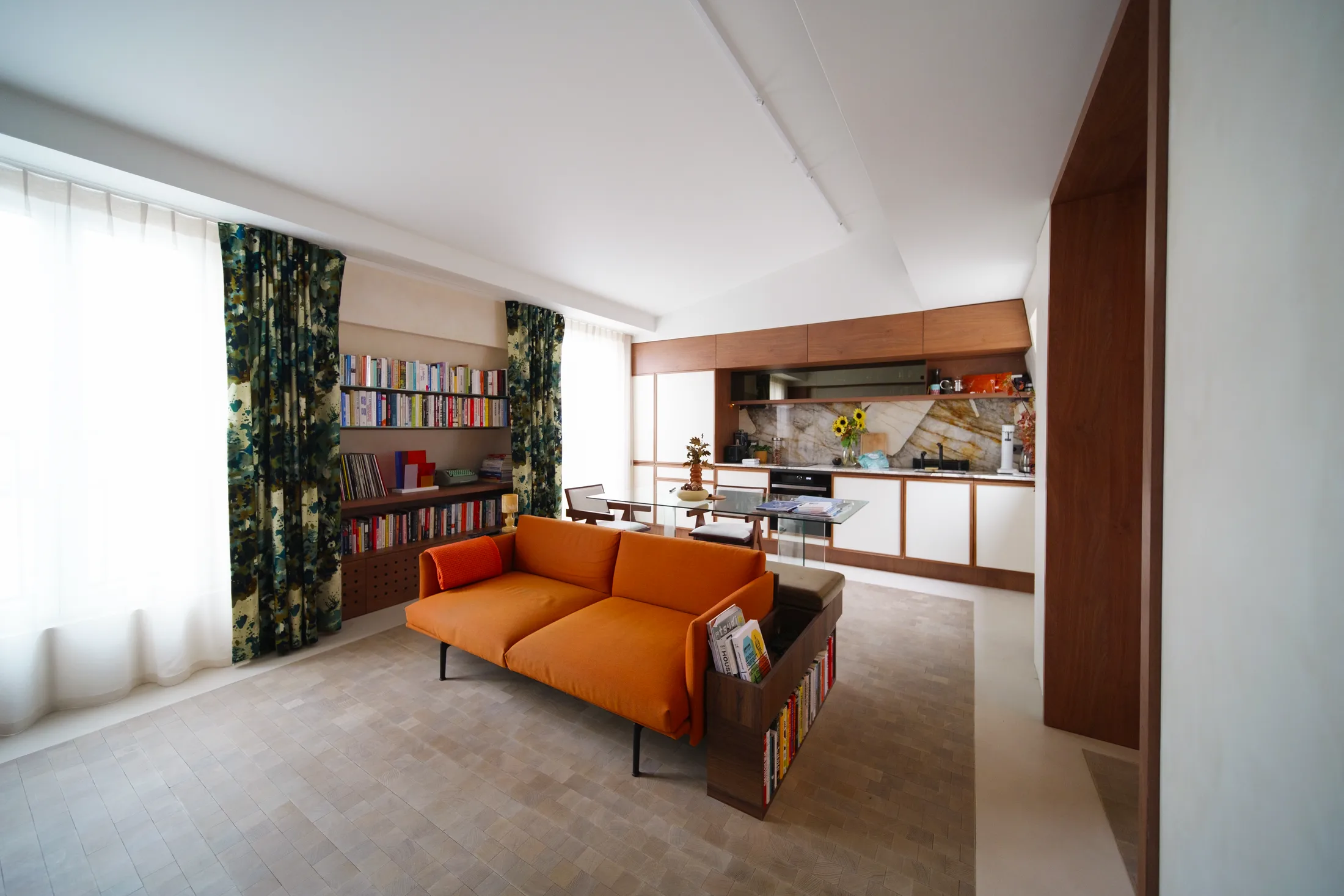
In a compact open-plan space, separating living and dining areas without adding walls can be a challenge. Here, a bespoke furniture piece wraps around the sofa, combining bookshelf, side table and bench seating in a singular piece of furniture.
The piece extends toward the dining area, where it becomes a built-in bench, reducing the need for extra dining chairs and keeping the space visually light. At the same time, the sofa’s shelving integrates storage for books and objects, anchoring the living zone while maintaining openness.
It’s a clever example of how a single piece of furniture can do the work of multiple elements — creating structure, storage and seating without clutter. On tighter budgets, a similar effect can be achieved by arranging off-the-shelf furniture in a continuous line, using alignment rather than construction to define zones.