Magazine Current IssueMagazine Current Issue
How Two Architects Opened Up a Former 57sqm/614sqft Share House in Yokohama
Projects
May 7, 2026

How Two Architects Opened Up a Former 57sqm/614sqft Share House in Yokohama

In Yokohama, Japan, architects Saeco Kobayashi and Taishin Shiozaki have transformed a former five-bedroom share house into pithouse – a flowing 57sqm/614sqft open-air home built around five distinct underfloor "pits" for storage, work, and life.

In Yokohama, Japan, a former share house has been transformed into a 57sqm/614sqft open-air home by architects Saeco Kobayashi and Taishin Shiozaki of atelierco. Until 2016, the structure housed five small bedrooms with shared amenities. Kobayashi and Shiozaki changed all of that – removing the partitions and excavating the ground beneath into something deeply livable.

Bec Vrana Dickinson
Writing:
Writing:
Bec Vrana Dickinson
Photography:
Photography:
Never Too Small
Magazine Current IssueMagazine Current Issue
The After shot of the Floorplan
Before
before
after
After
Top
Arrow UpArrow Up

Before moving to the residential neighbourhood set on the steep slopes overlooking Mount Fuji, the couple lived in a tall apartment block. But as Kobayashi says, "we wanted a lifestyle closer to the ground, and when we found this house, we felt it was possible."

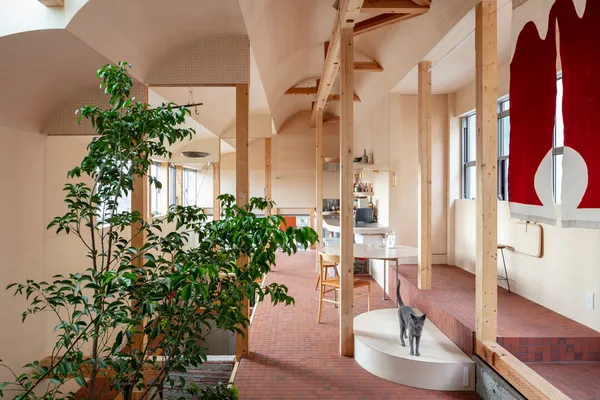
The original share house plan – five 10sqm/108sqft bedrooms, a central kitchen, two showers, two wash basins and two toilets – was neat but densely compartmentalised. Instead of working within those divisions, they removed almost all the internal walls and, even more radically, the floor sections too, exposing the sloping terrain beneath. Revealing what had been sealed off as underfloor voids, these excavated areas became five distinct "pits" – lowered zones that now hold the basis of Kobayashi, Shiozaki, and their cat and dog, Fal and Tono's daily life – who also enjoy running along the exposed beams and catwalk-like platforms around the pits.

Rather than defined rooms, a continuous dynamic space keeps the home open – cooking, eating, working, entertaining, and sleeping thoughtfully distributed across the airy, multi-layered home for four.

An Entrance and Hall That Expand for Entertaining

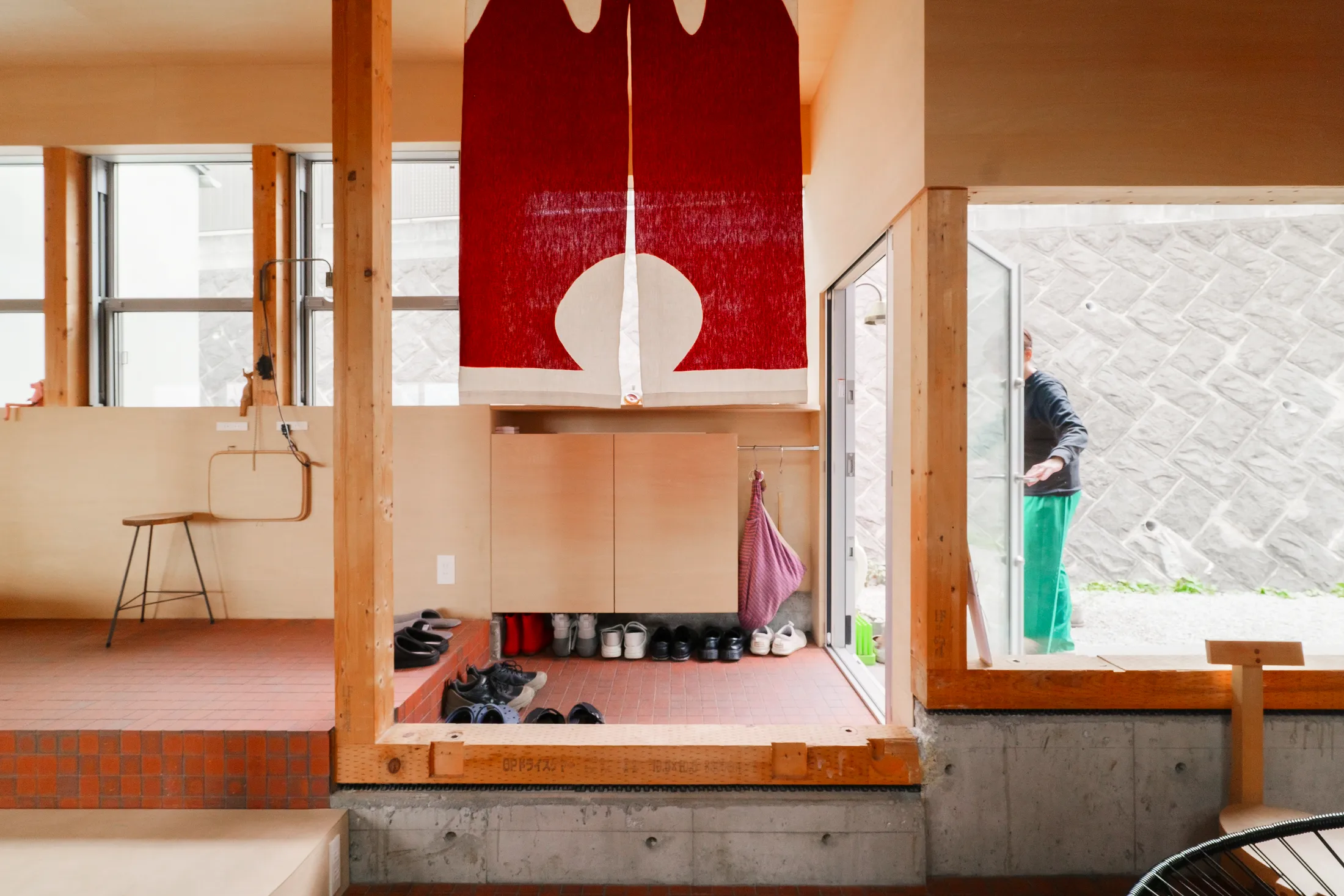
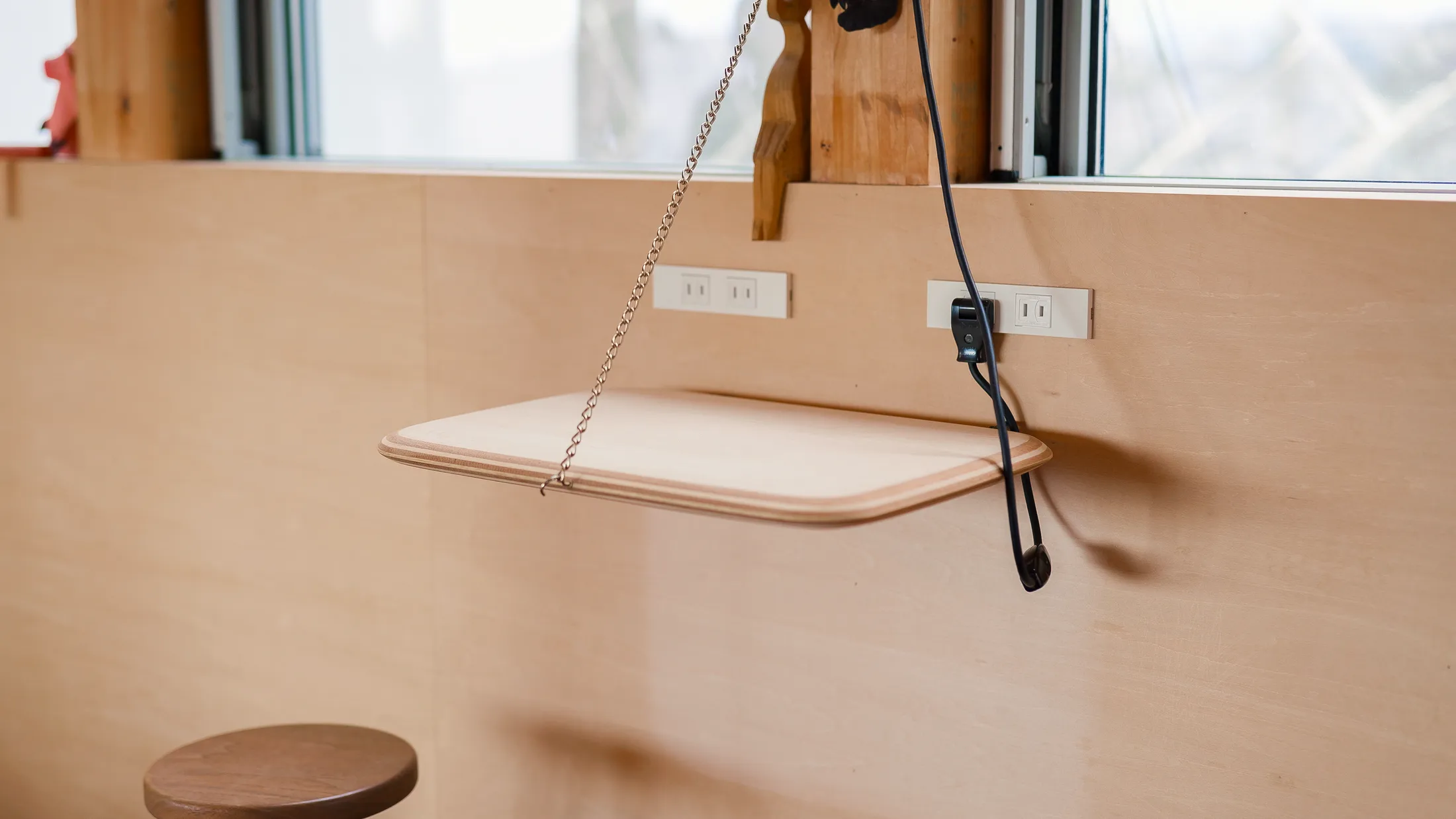
For a house built around beams, the material logic starts before you're even inside, with a low front gate made from a repurposed wooden joist. From the sloping garden path into the entrance, east-facing windows make for a bright arrival, as does the aluminium sash door. Just inside, a bar hangs umbrellas, and a shina plywood unit conceals shoe storage. The same plywood recurs throughout, lining most of the shelving and running across the ceiling above. Through a single step, the entrance moves directly into the hall, where a small table folds out from the wall for when, as Shiozaki says, "people come over, and it gets crowded at the dining table." From there, just one step down leads to the dining and kitchen.
A Floating Kitchen Embedded into the Structure

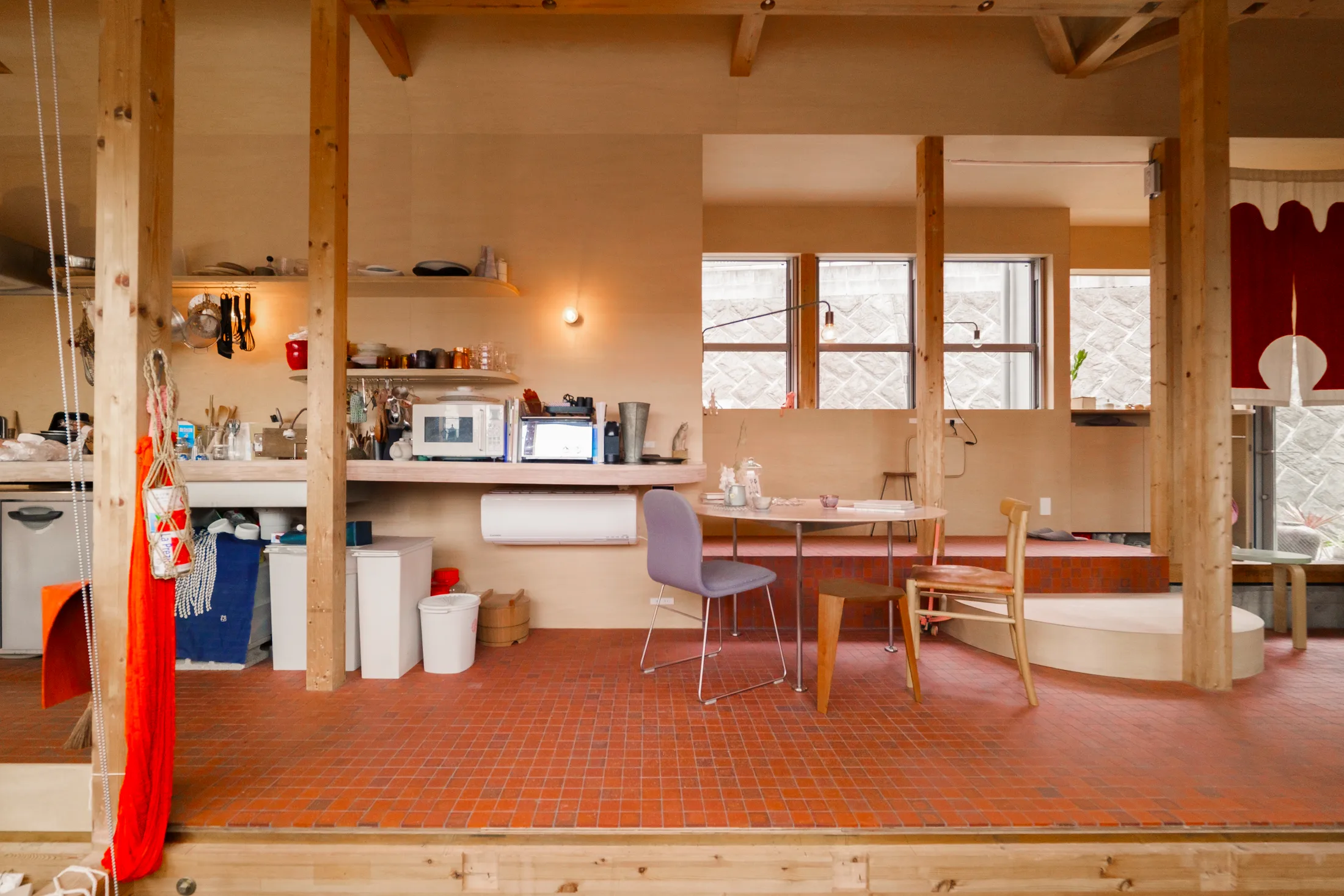
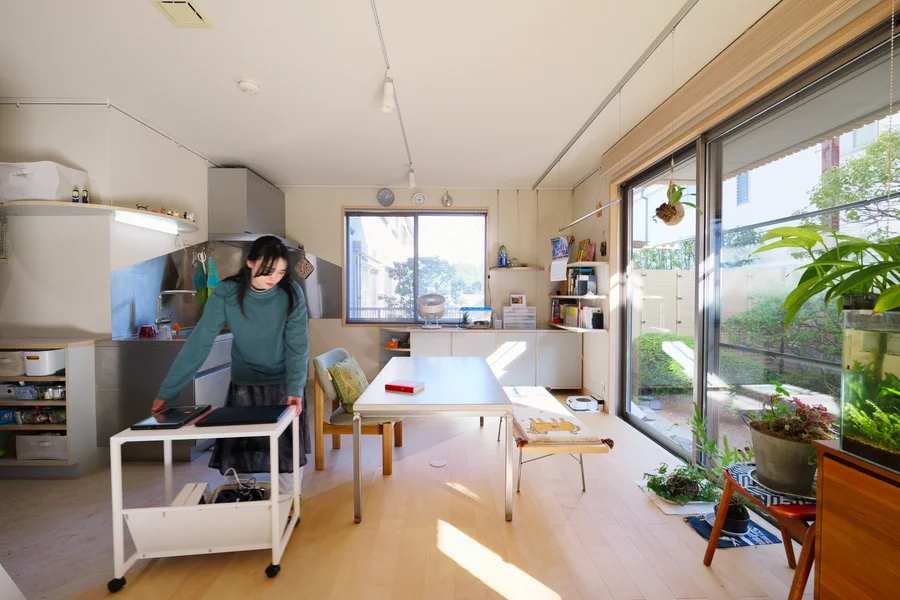
The curved step down into the kitchen and dining is deliberately wide to allow access from all sides – including to the dining table, which sits alongside. The long kitchen bench runs parallel: a stainless steel countertop with a wide sink and sloped drainage section for hand-washed dishes. Rather than adding legs, the bench is held by the existing structural pillars, freeing up space beneath for the industrial freezer on one side and fridge on the other, both sitting flush under the bench alongside the knee-height air conditioning. Further along the level, a sliding corner window sits above another table – where, when opened, indoor and outdoor dining merge and light filters in from the south.

Five Distinct “Pits” That Structure Daily Life

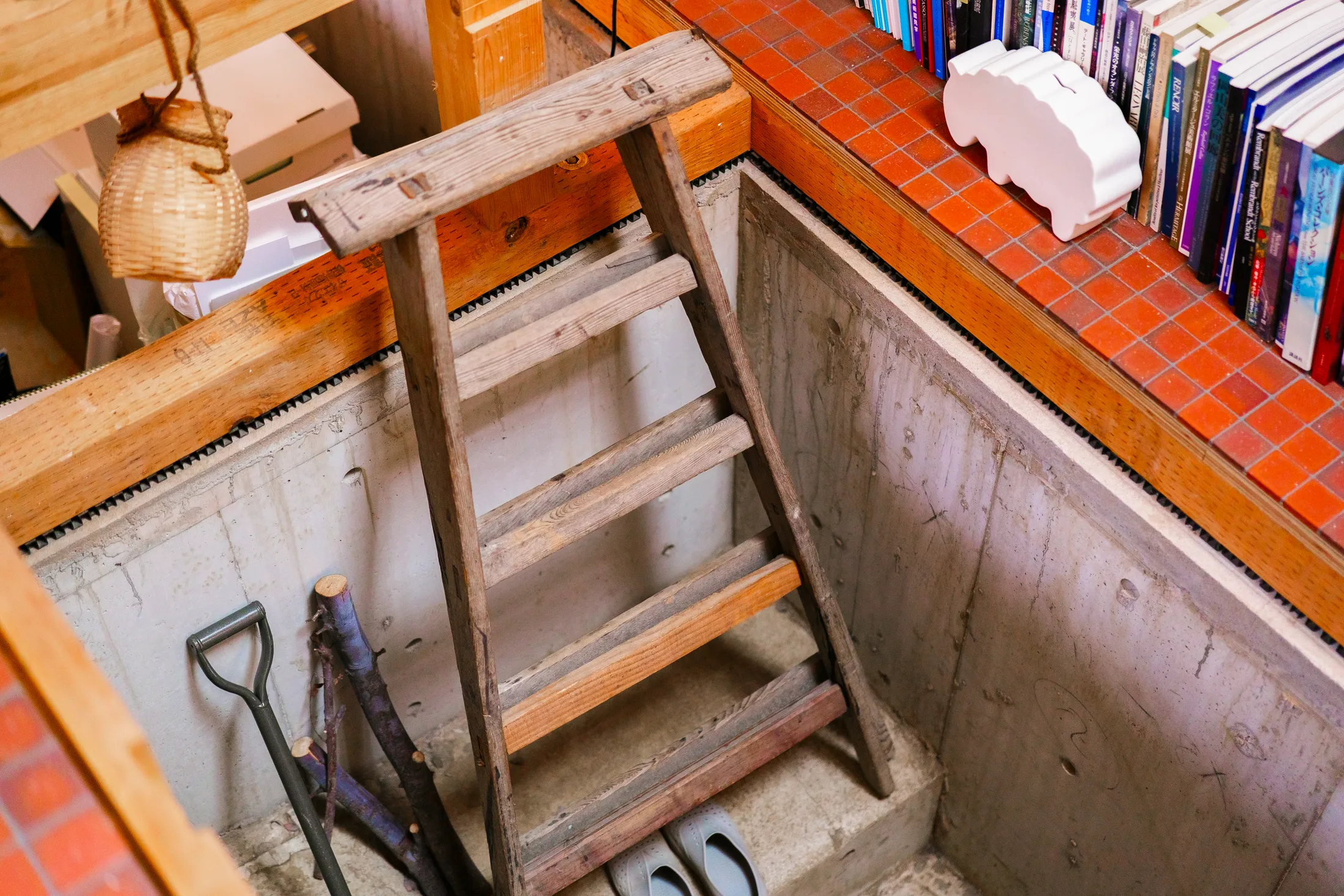
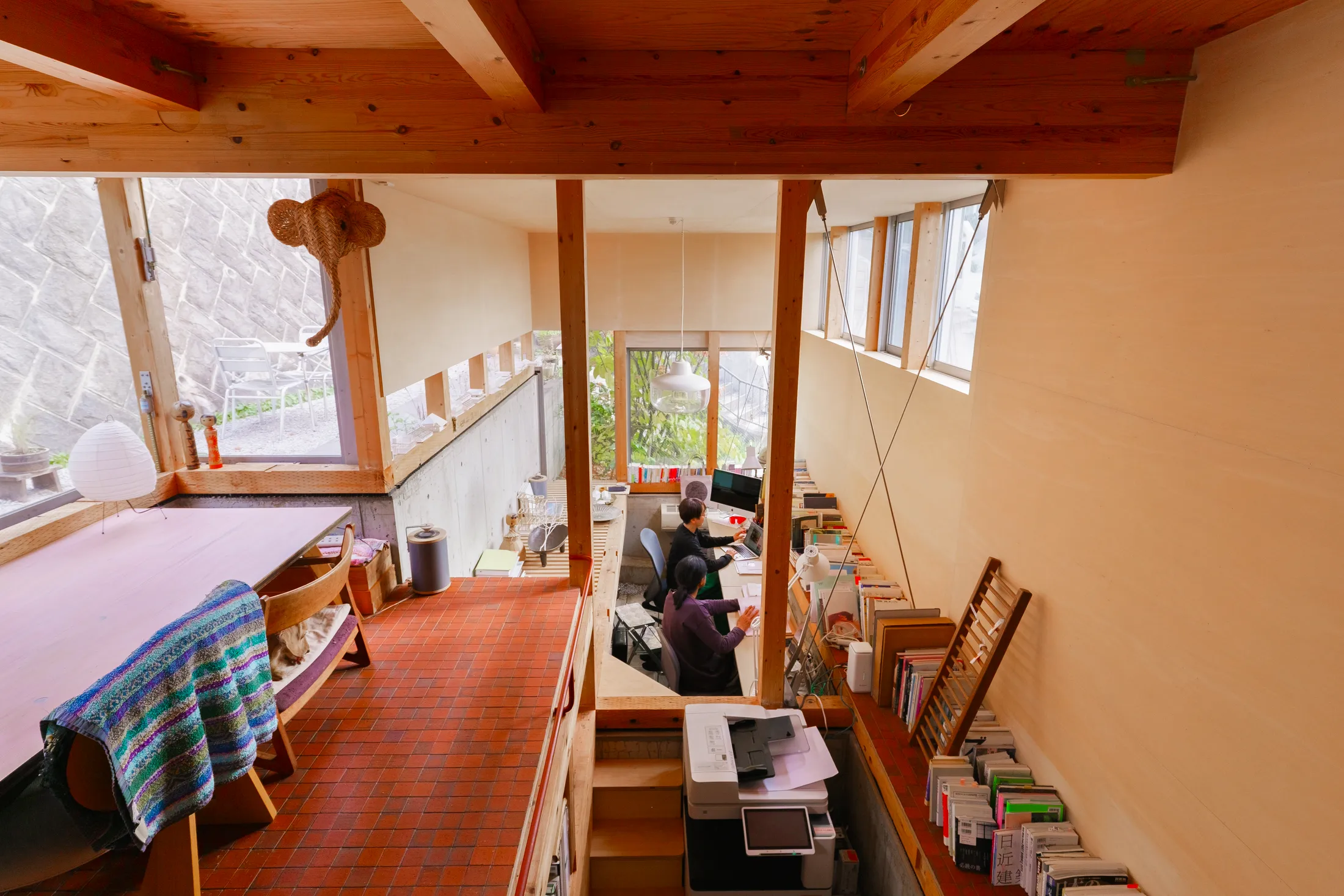
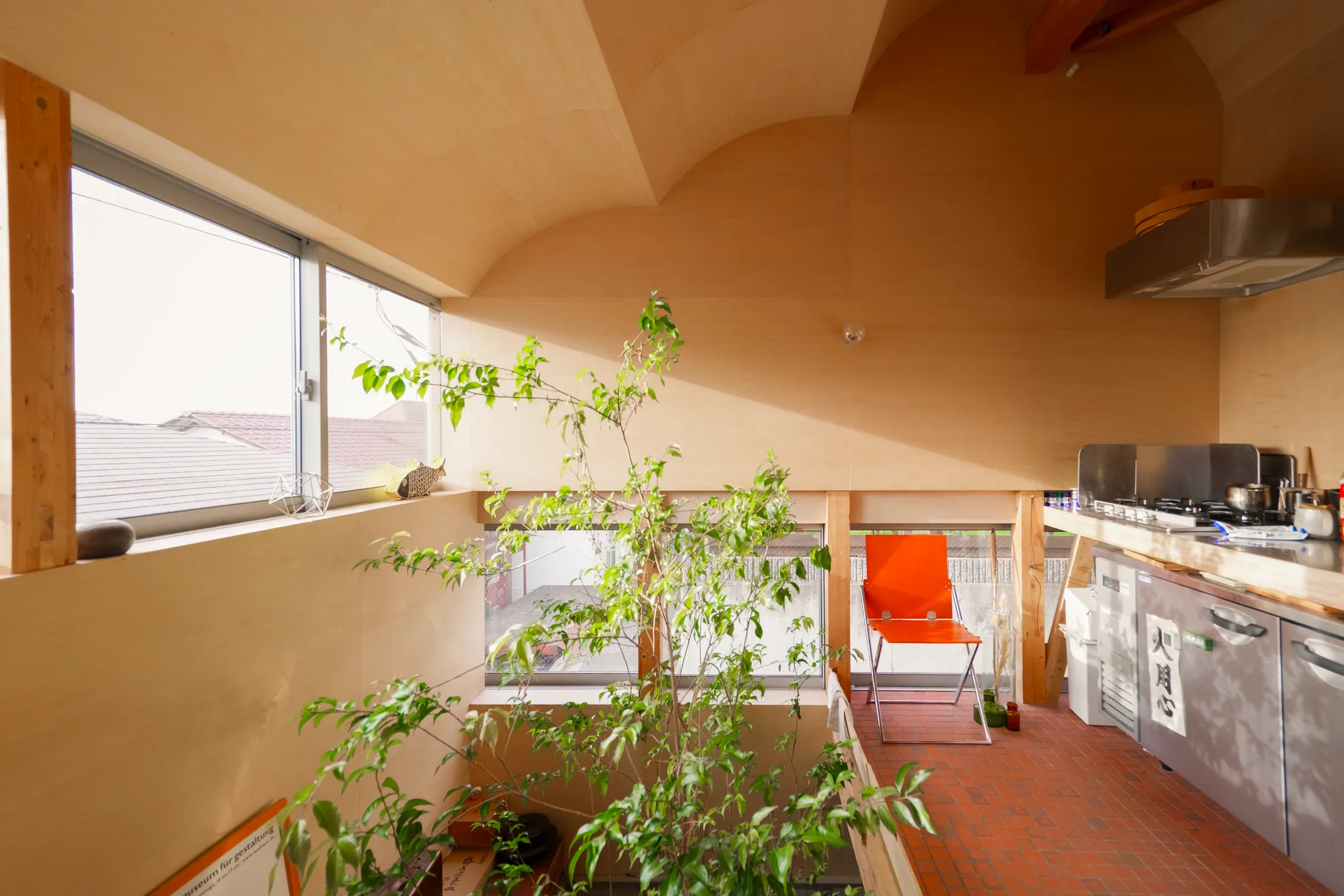
What was once a flat floor is now five distinct lowered areas, or "pits." One functions as a primary workspace, its moisture-proof concrete floor once simply protecting the house from damp ground below. Models, books, and collected objects line the edges, while a pendant light – designed to hold and display objects, currently a ceramic frog – hangs overhead. An adjacent pit expands the studio and houses a scanner and equipment; another holds tools and work materials; the one closest to the kitchen stores everyday household items; and the final pit sprouts a rubber tree – planted directly into the opened concrete and positioned for maximum light and airflow. By harnessing what was underfoot, the pits carve depth and definition into the home – without a single added wall.

A High Room For Sleeping and Seeing

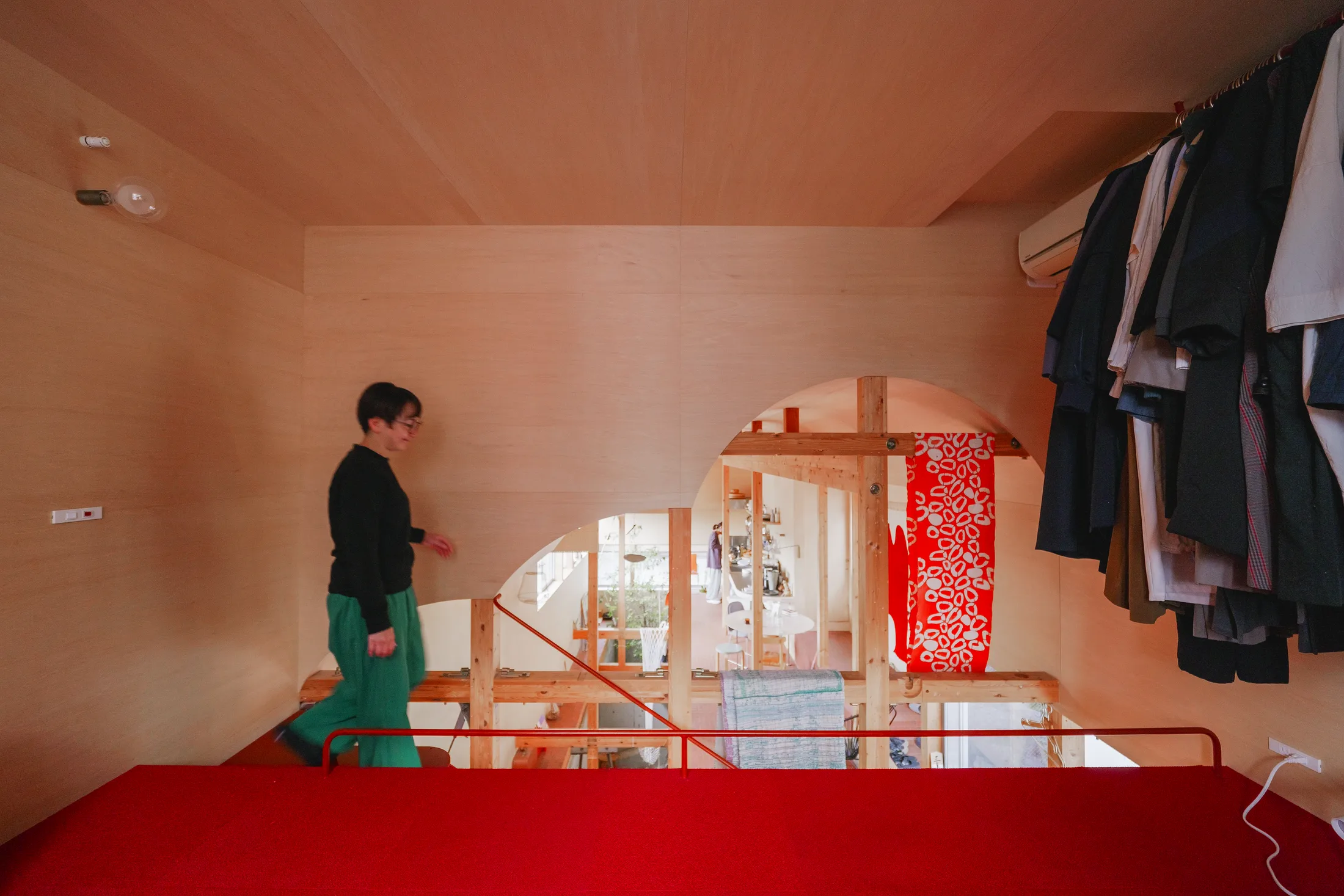
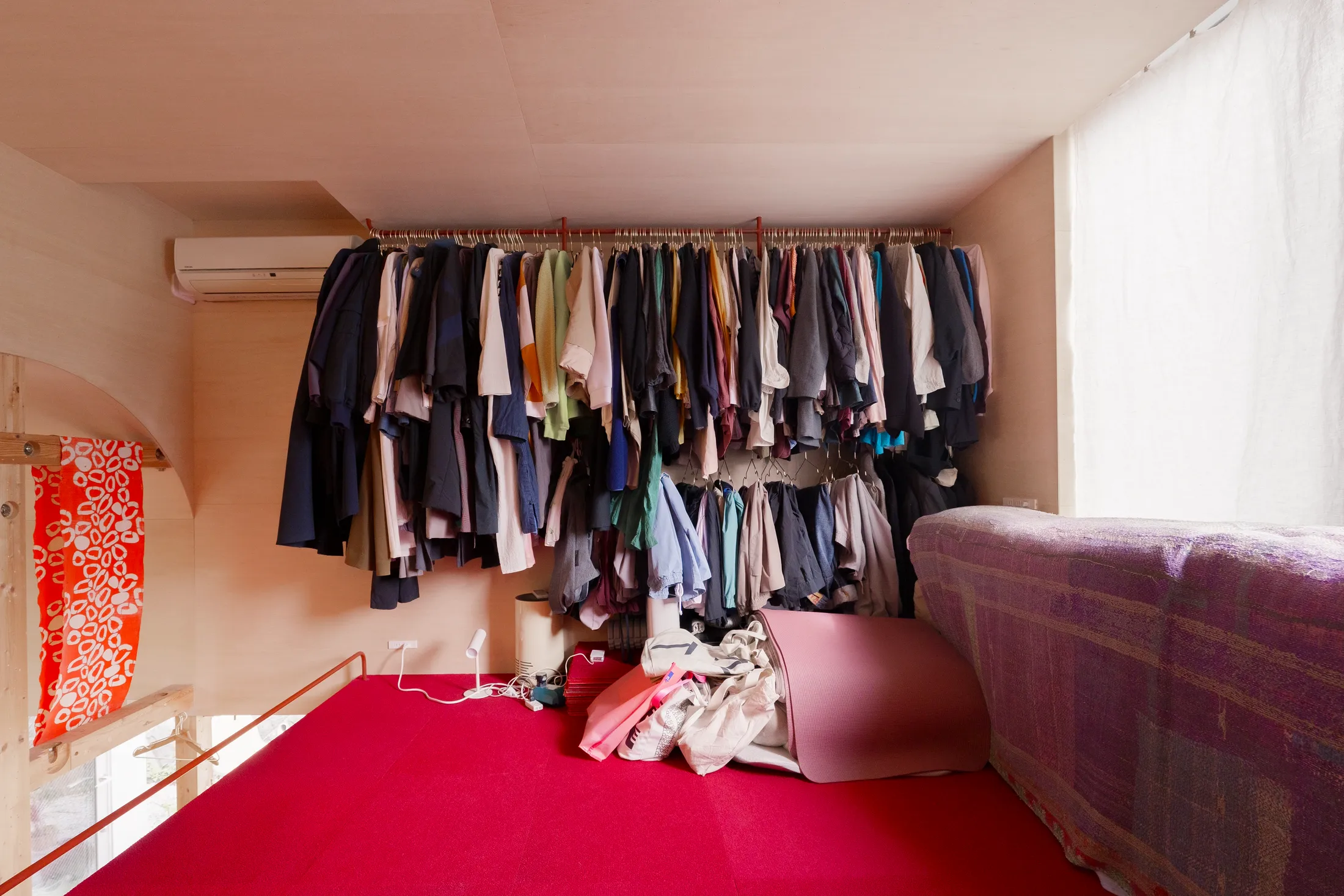
A steel staircase connects the kitchen and dining level to the room above with deliberately wide, overlapping steps, helping guests and pets feel secure moving between levels. Carpet softens the floor, while the futon bed is packed away each day to free up the room – mostly for Tono, their dog, to play. Instead of concealed wardrobes, clothing hangs on open racks – lighter, and one less thing to build. A cabinet inherited from Saeco's grandmother anchors one wall, a quiet counterpoint to the otherwise minimal space. From this level, the full cross-section of the house is visible – it's the spot Kobayashi returns to – to sit and take in the view.

A Bathroom Built to Get Wet

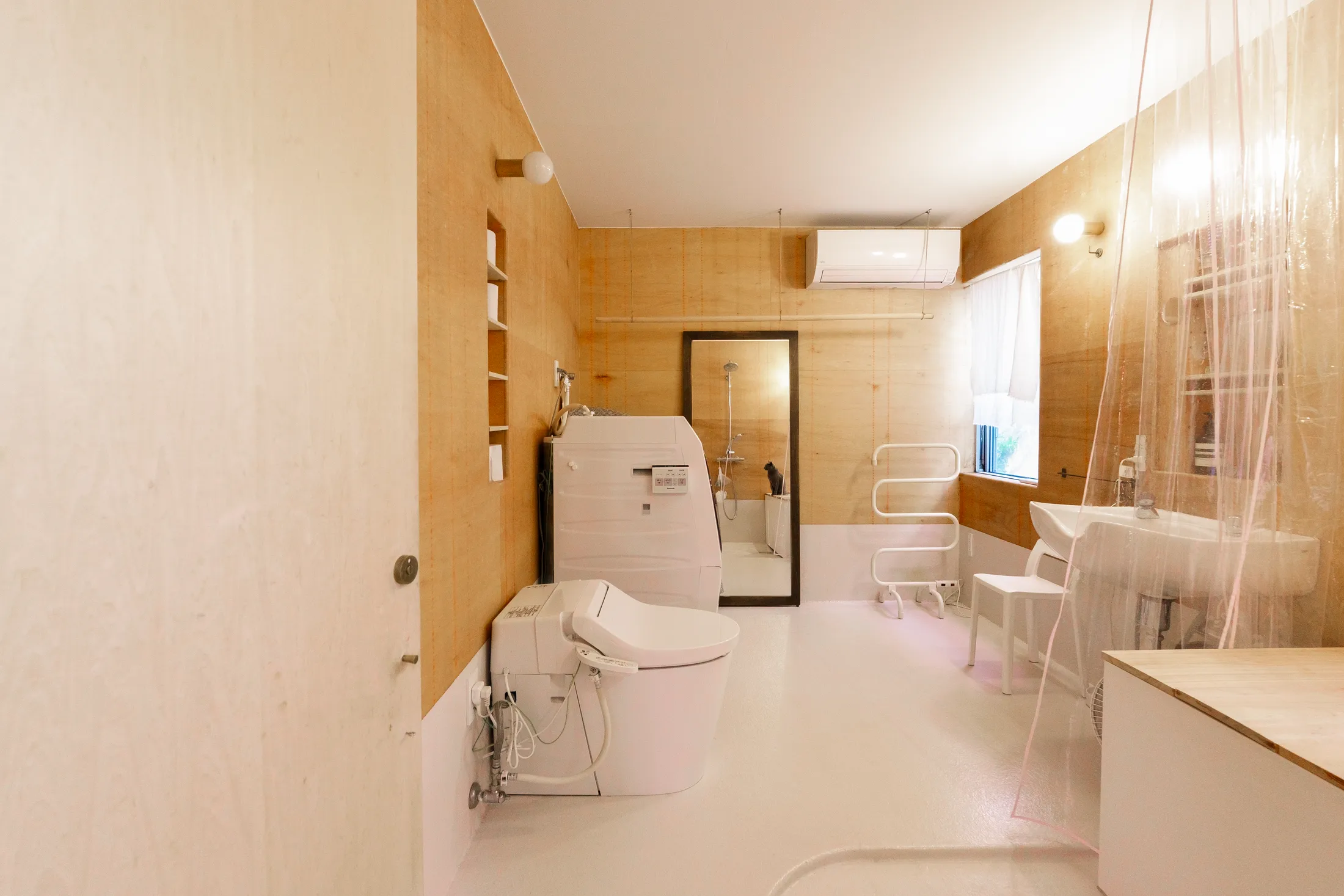
Where the share house had two shower rooms and two wash basins, the couple combined these into a single, generous bathroom and laundry. A curtain encloses the shower when needed, while a deep basin with a pull-out tap doubles as a hair-washing station and secondary shower. Consequently, the entire room is waterproofed in FRP (fiber-reinforced polymer) – even the Lauan plywood panels, which bring warmth and texture to the otherwise white space. Filled out with a washing machine, drying rack, and air-con, the room is both impeccably practical and a favourite retreat for the dog and cat whenever the couple are out.

"No matter how small the land itself may be," Shiozaki says, "it's possible to create a rich environment within it." By removing partitions and floors, Pit House has become that – a layered landscape that maximises openness and the freedom of a home without walls – pits, beams and all.

Writing:
Writing:
Bec Vrana Dickinson
Photography:
Photography:
Never Too Small
Back to Top
Arrow UpArrow Up
Top
Arrow UpArrow Up
The After shot of the Floorplan
Before
before
after
After
Businesses featured in this project
Business Image
Architecture
atelierco
atelierco is a kanagawa and tokyo based architects' office, established in 2015 by taishin shiozaki and saeco kobayashi.
View Profile
Products featured in this project
No items found.
Magazine Current IssueMagazine Current Issue
Writing:
Never Too Small
Writing:
Bec Vrana Dickinson
Photography:
Photography:
Never Too Small
Back to Top
Arrow UpArrow Up