Magazine Current IssueMagazine Current Issue
Hell on Earth
Hell on Earth
From our Mag
August 1, 2026

Hell on Earth

Welcome to Haw Par Villa: the gleefully grotesque, morality-meets-marketing fever dream built on Tiger Balm millions. Decapitations, dioramas and DJs included. 

It’s the trippy, gore-filled attraction that has freaked out singaporeans for 89 years. And nobody’s sure if it’s coming back. Get ready for the weird and wonderful story of haw par villa – the amusement park from hell.

James Shackell
Writing:
Writing:
James Shackell
Photography:
Photography:
The After shot of the Floorplan
Before
before
after
After
Top
Arrow UpArrow Up

Here is a non-exhaustive list of just some of the things you can see at Haw Par Villa, Singapore’s largest (and some would say most batshit crazy) open-air theme park:

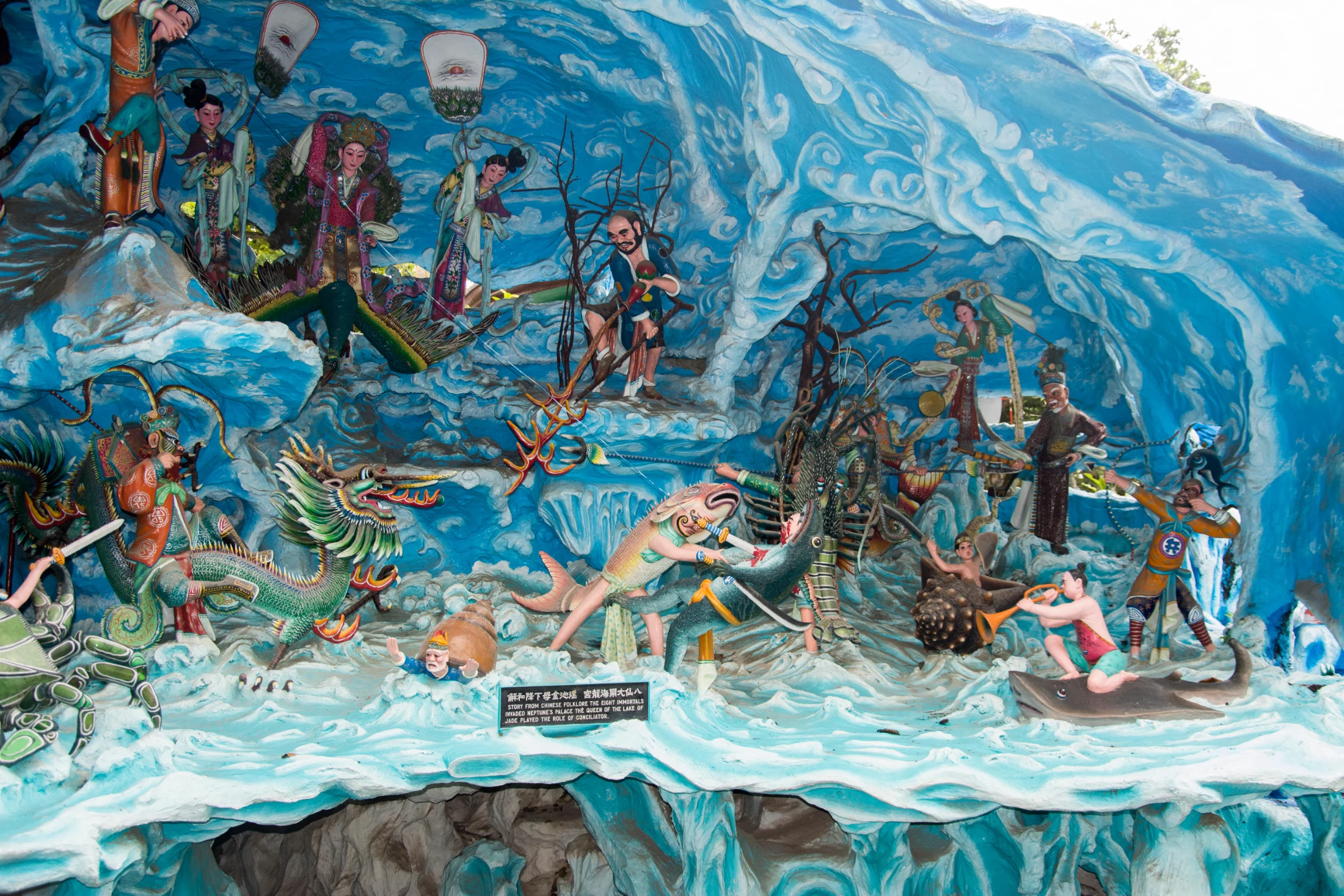
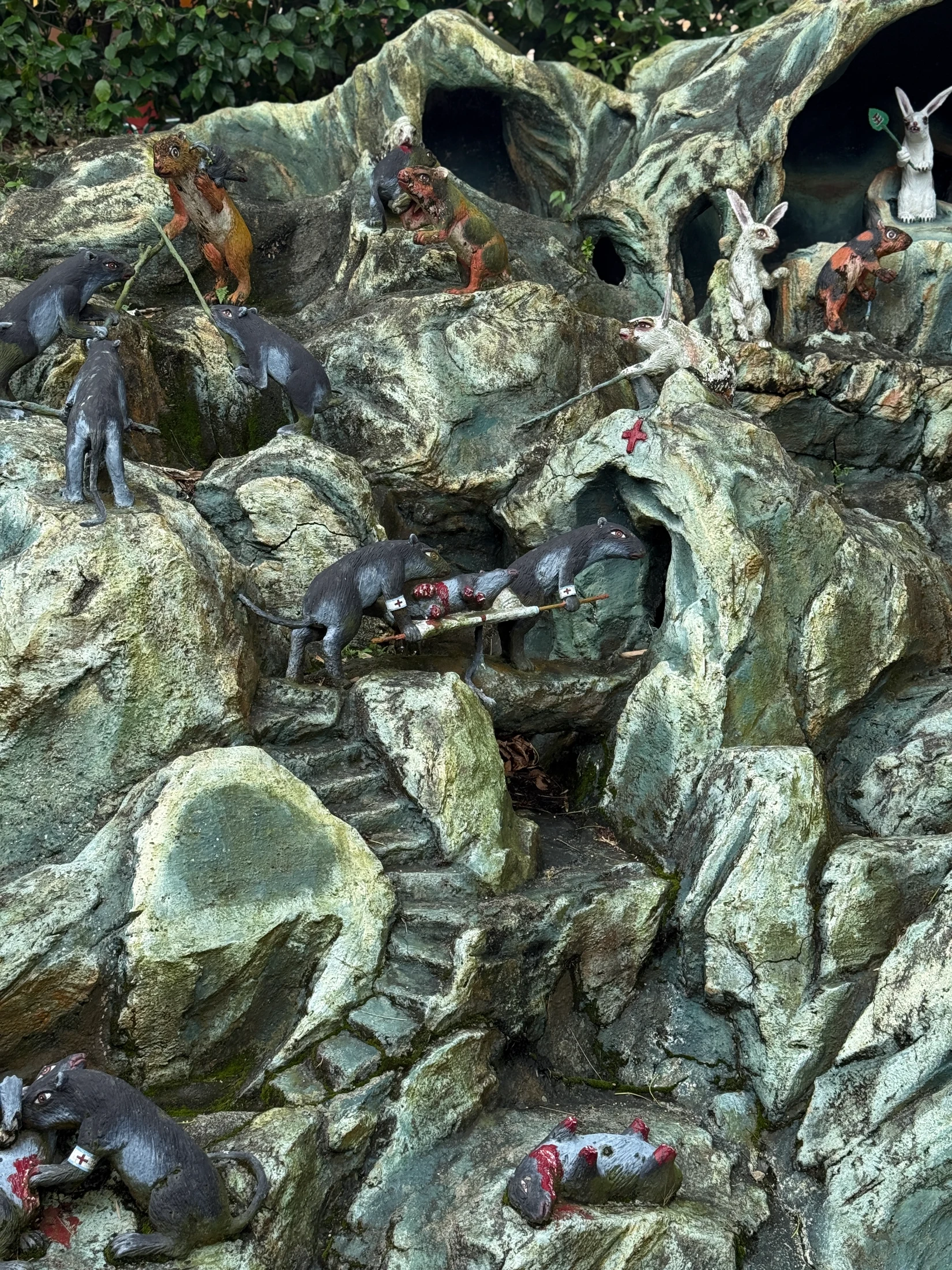
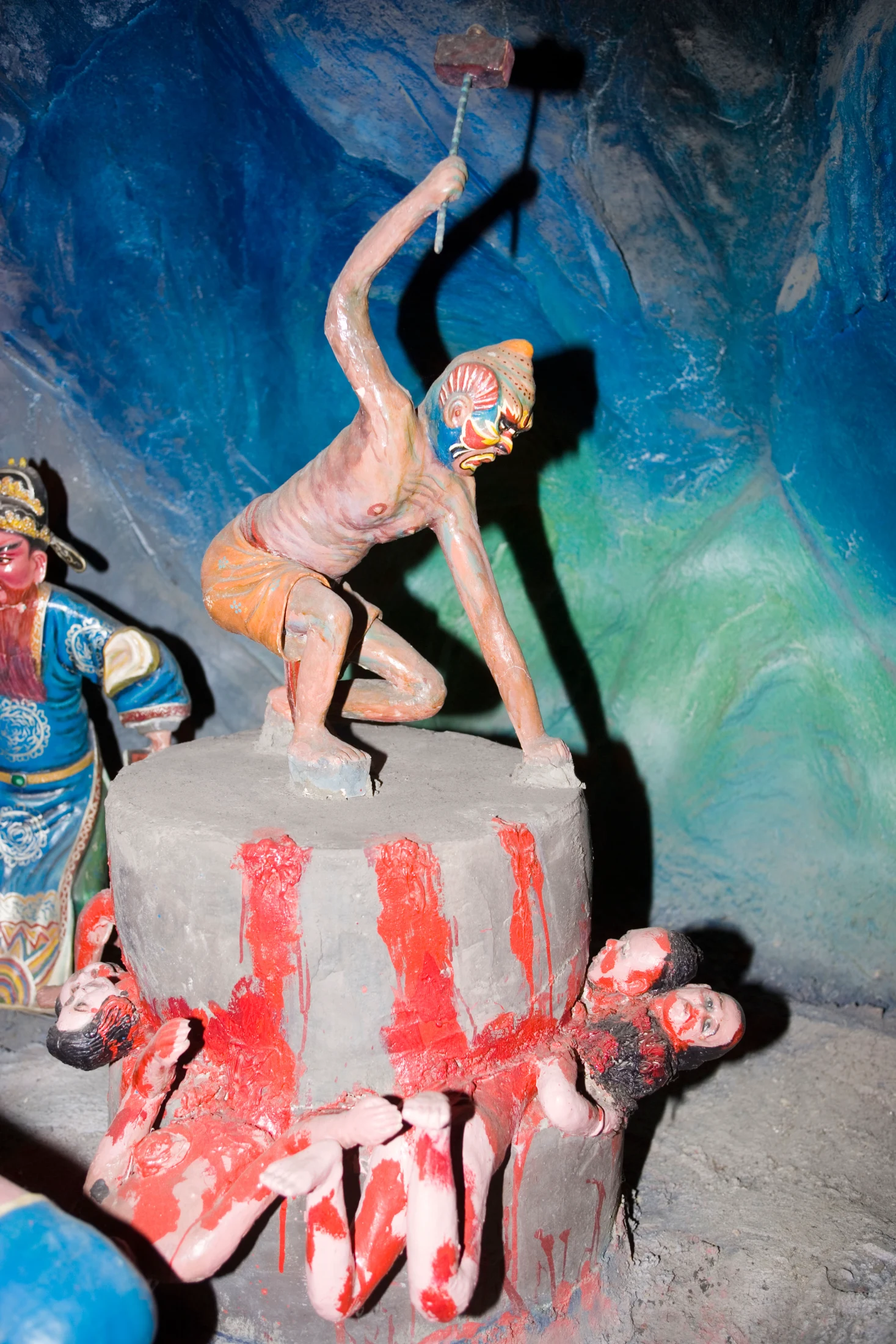
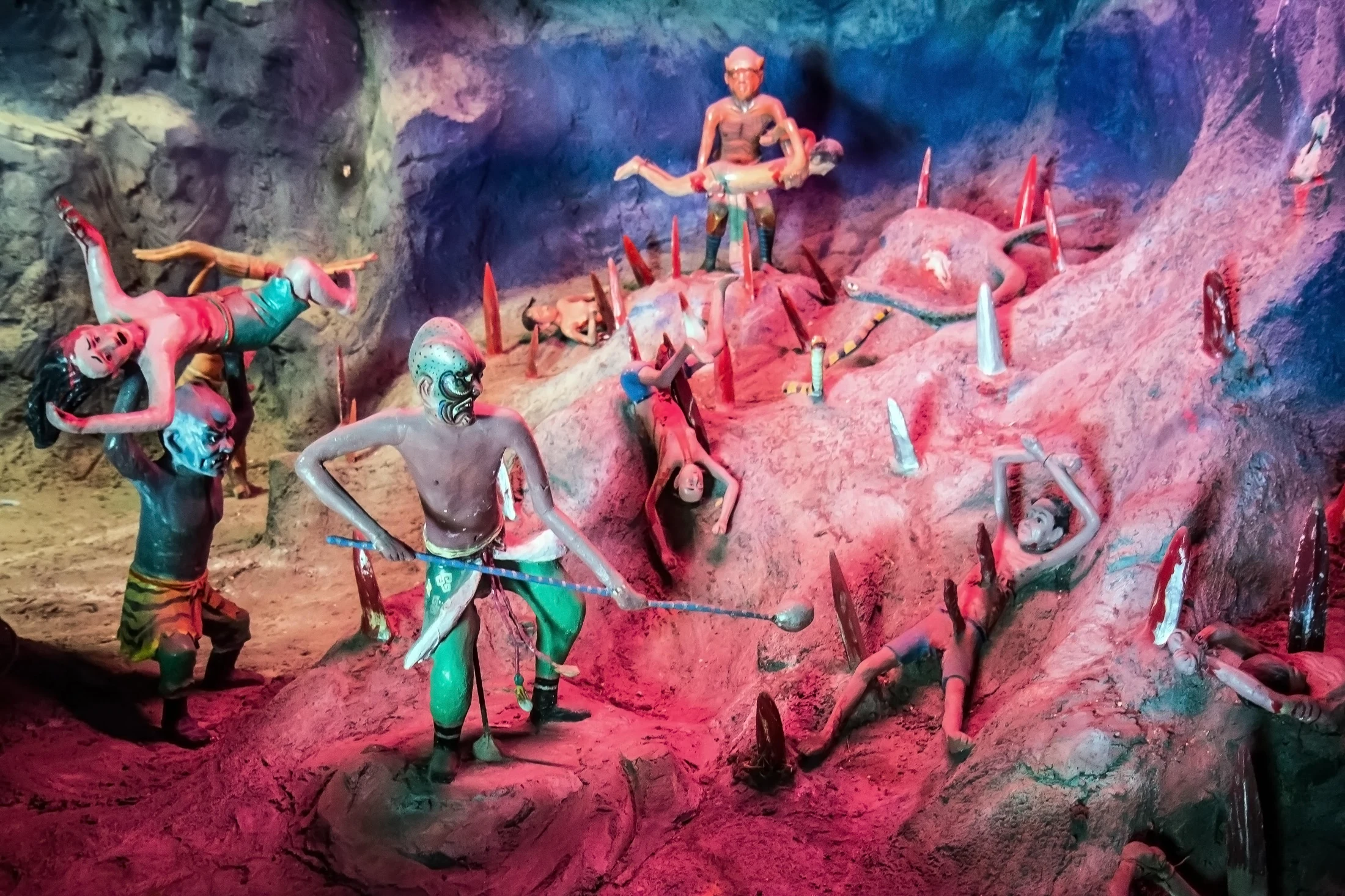
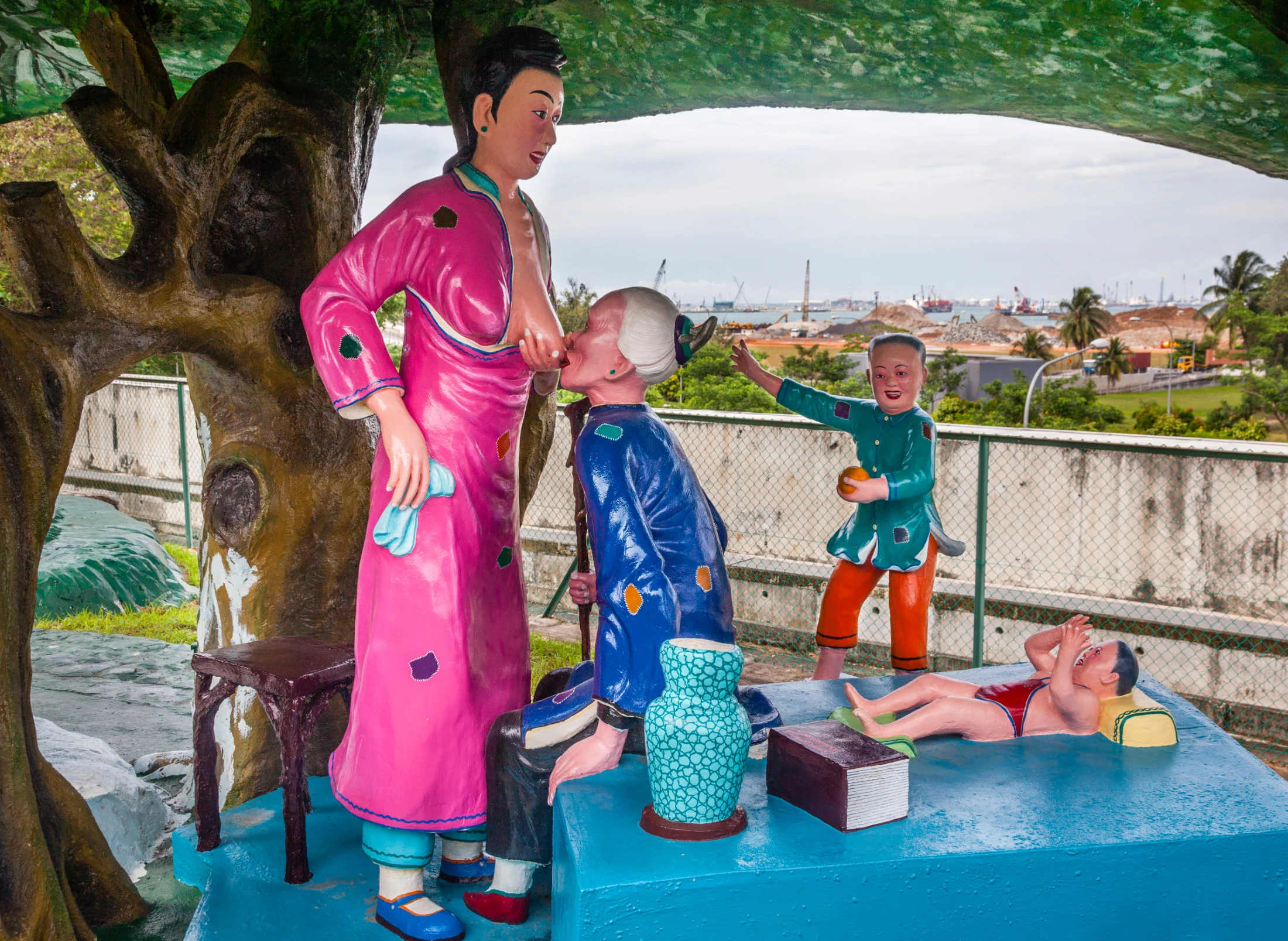
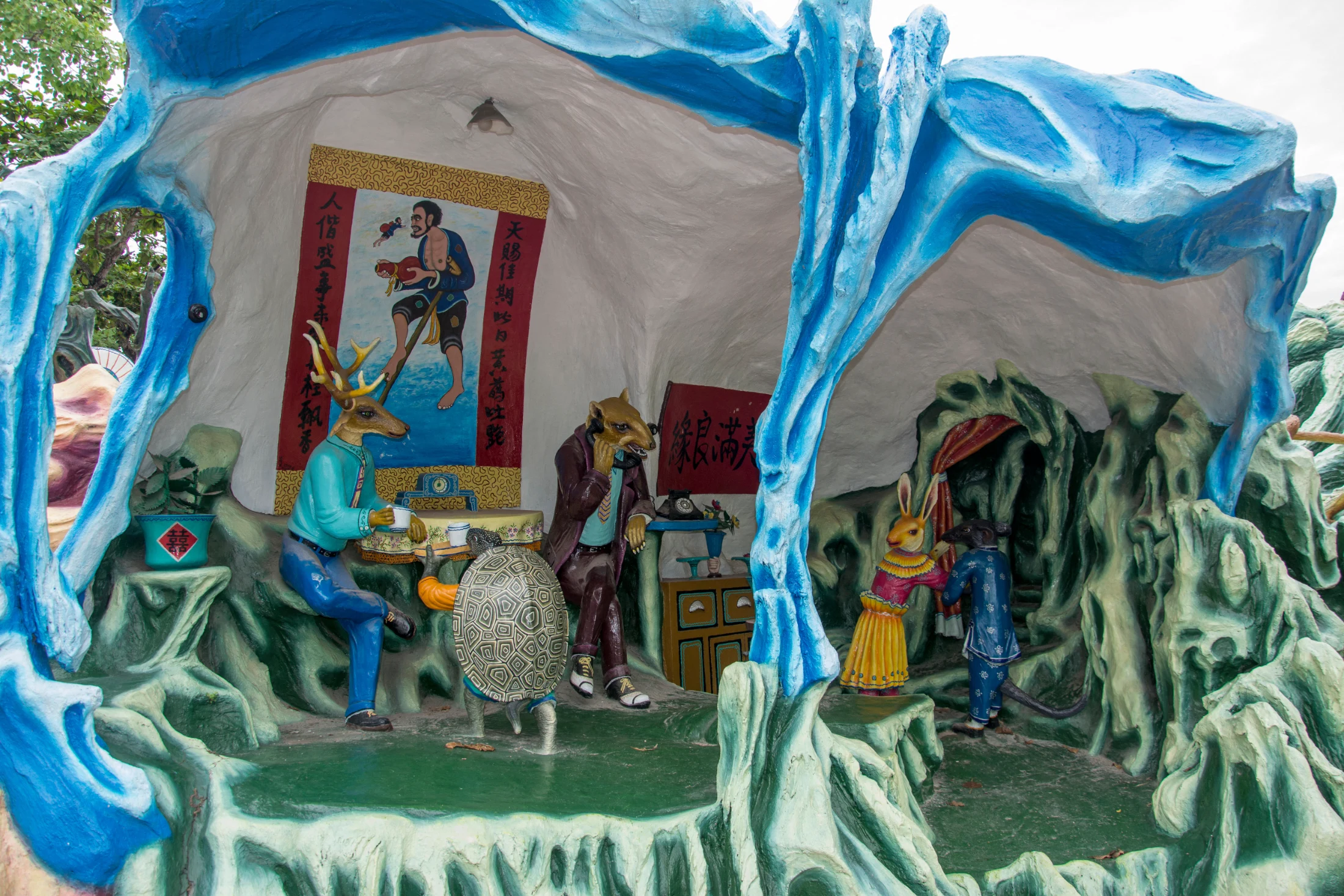
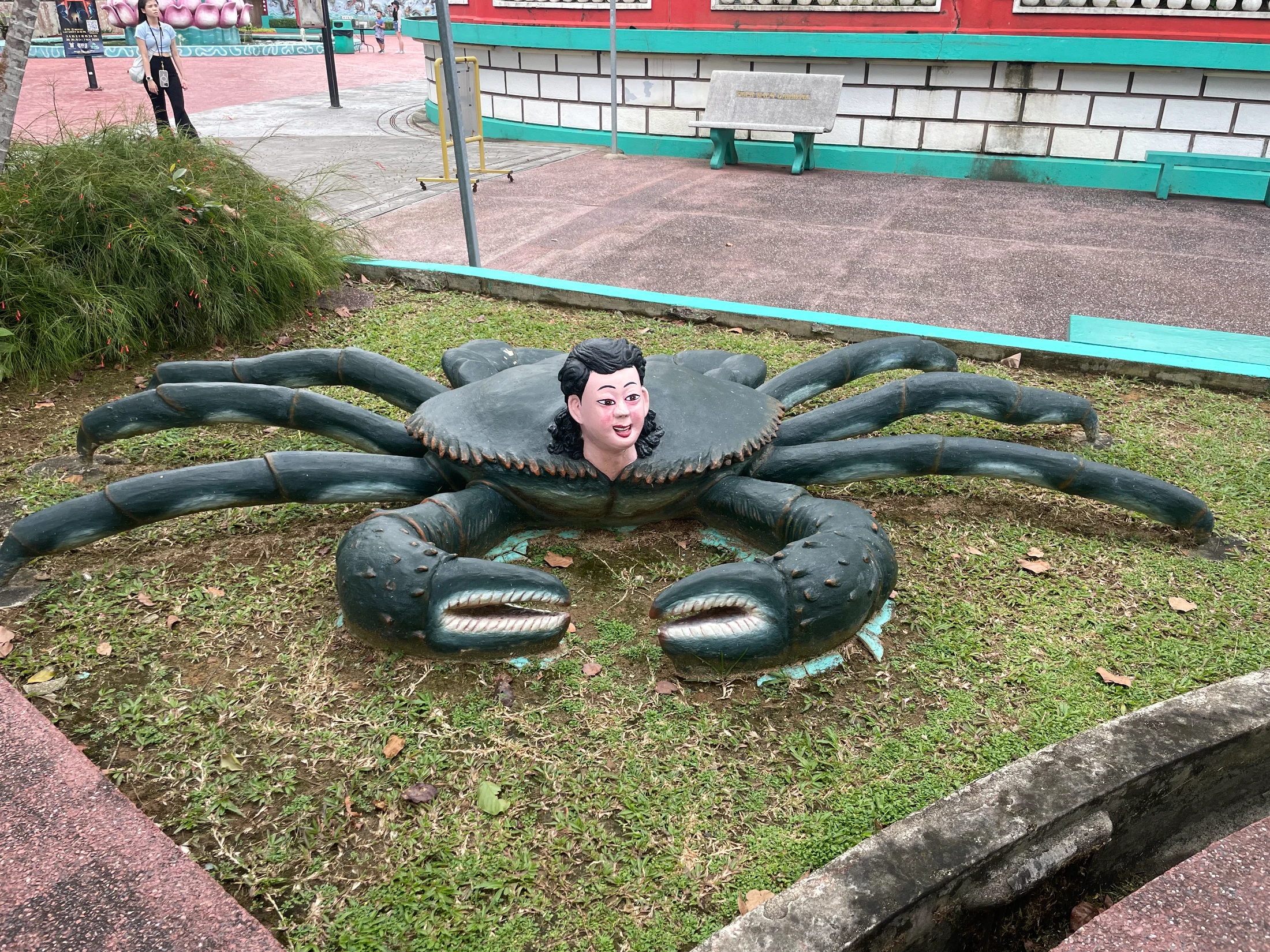
A collection of impaled and severed heads. Note the blood weeping from eyeballs. Rats and rabbits engaged in a no-holds-barred battleto the death. Tax dodgers being pounded into hamburger meat by agiant stone mallet. Demons flinging young girls onto a hill of knives.A woman breastfeeding her elderly mother-in-law with an expressionthat can only be described as ‘mixed feelings’. Human-crab nightmarefuel. Absolutely banging Sunday DJ sessions.

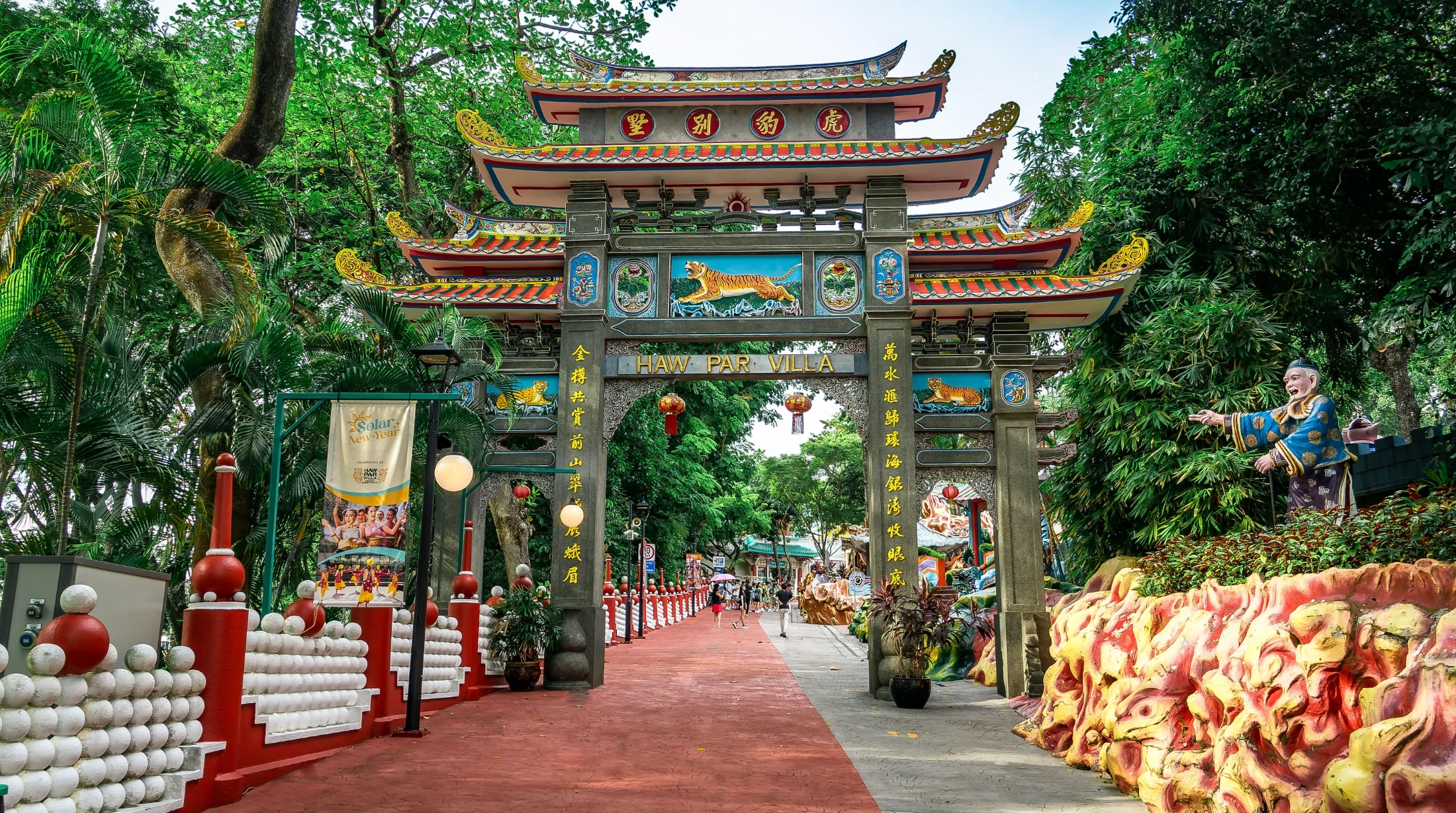
We should probably clarify that everything on this list, with the exception of the DJs, is a diorama, sculpted from plastered cement paste and wire mesh and painted at great expense by some of the best artisans in Asia. Haw Par is the Confucian hell-themed theme park that money built. Lots and lots of money. And it's arguably the weirdest attraction in Singapore, or anywhere within 1000 kilometres of Singapore. Imagine Dante's Inferno meets Disneyland.

"It feels deeply un-Singaporean, in a way, but also very Singaporean at the same time," says local Daniel O'Connor, who's been hosting his electronic dance party series, Ice Cream Sundays, at Haw Par since 2019.

"Everyone in Singapore had the experience of going there when they were younger, but if you hadn't been brought up with it, you'd feel like this place can't even exist."

Like pretty much every Singaporean over the age of 30, Daniel has some pretty vivid childhood memories of Haw Par. It was the kind of place you went once – and then tried to repress as quickly as possible. In the park's heyday, which arguably stretched from the 1970s to the 1990s, when one million visitors per year were piling through the Tiger Gate, parents would bring their kids here to witness the iconic Ten Courts of Hell: a weird mashup of Chinese Buddhist, Taoist and folk-religious punishment scenes, each designed to scare the living bejeebus out of small children. Disembowelment. Tongues cut out. That kind of thing¹.

“Doing Ice Cream Sundays at Haw Par probably brought back some nightmares for our attendees,” Daniel laughs. “For local kids, it was the place where we got told, like, this is what happens to you when you do bad things. For me though, I just remember finding the whole park really odd. Really strange.”
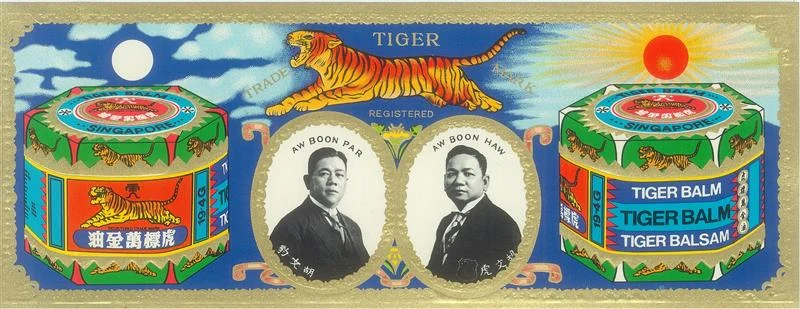
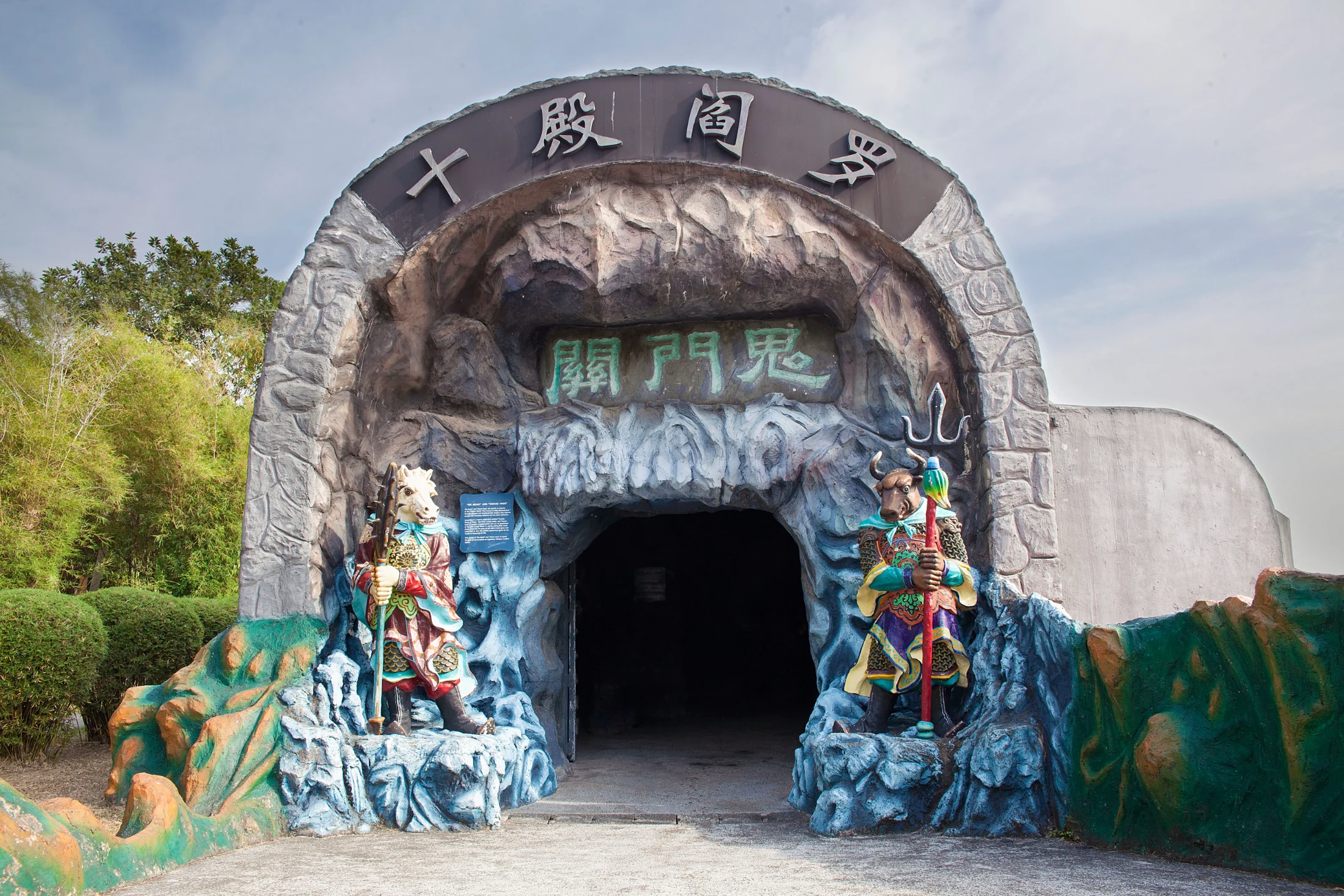
Haw Par Villa was built in 1937, but the park has changed a lot over the last 89 years, both in content and in purpose, and the story behind its construction is almost Shakespearean-ly dramatic and weird.

It features two brothers, one famous topical ointment, solid gold spectacles and a car shaped like a tiger. Oh, and unimaginable, Crazy Rich Asians levels of wealth.

The story goes like this.

In 1908, Burmese-Chinese herbalist Aw Chu Kin, founder of a small herbal medicine business, died, with the company eventually passing to his two sons, Aw Boon Haw and Aw Boon Par.

They refined their father's formula and launched a new product, which they decided to call Tiger Balm. Yep, that Tiger Balm.

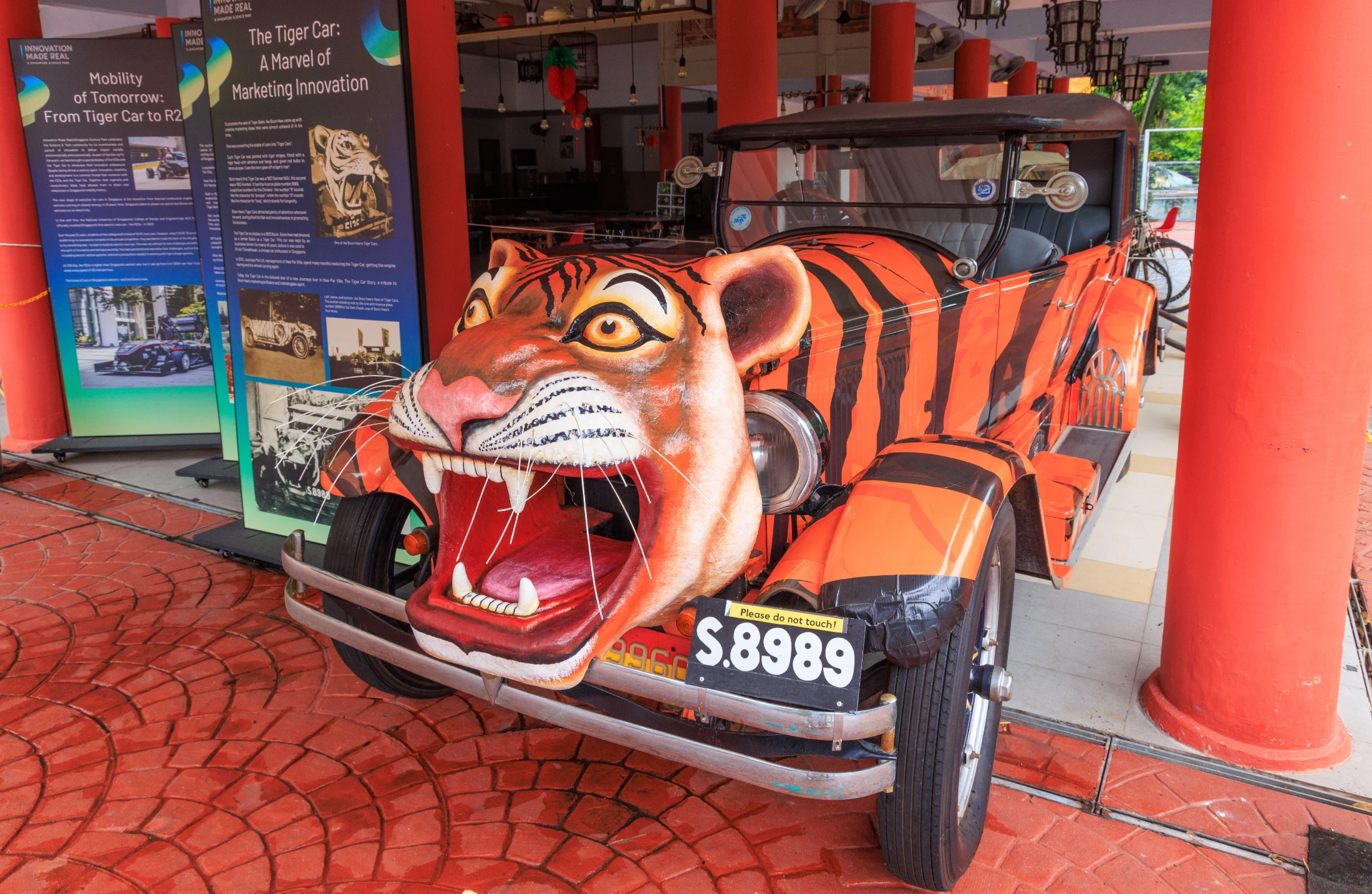
By 1918, the Aw family were the richest family in Rangoon. By the 1920s, they were one of the richest in Asia, with the Tiger Balm empire turning over tens of millions of dollars a year². Aw Boon Haw, the older of the two brothers, was the marketing genius behind the ointment, and arguably the greatest driver of the brand's success. He famously wore a pair of solid gold 18-carat spectacles³ and drove a luxury German NSU with what has to be the ugliest conversion known to man: a hideous custom tiger head, roaring from the front bonnet, complete with black and orange stripes. Google it and weep.

In the 1930s, Boon Haw decided to build his younger brother, Boon Par, a mansion in Singapore, surrounded by gardens and sculptures. Two more brothers, Kwek Hoon Sua and Kwek Choon Sua, both well versed in Chinese folklore, were commissioned to design and manage the project.

Set on 8.5 hectares of primo real estate, the original property spilled down a hillside in four distinct terraces, with the topmost level comprising Boon Par's villa and home. Colourful pavilions, sculptures and bloodthirsty dioramas were scattered throughout the grounds. There was even a zoo, in which the animals were allowed to roam free. Boon Haw named the property Tiger Balm Gardens.

While Tiger Balm Gardens was initially conceived as a private residence, the charity-minded Aw brothers soon had the idea to open the park up to visitors. And in 1937, that's just what happened. Anyone, regardless of race, could walk through the Tiger Gate and spend time in Boon Par's garden – free of charge. Quite a radical concept in pre-war, British colonial Singapore.It was a generous gesture, but also a savvy one. Boon Haw used the gardens as a marketing tool for Tiger Balm, and also as a weird vehicle for moral instruction. With their graphic hodgepodge of Buddhist and Taoist (and sometimes just straight made-up) mythology, the Aw brothers hoped to instill traditional Chinese values in the largely illiterate population of Singapore.

The Ten Courts of Hell, for example, show the post-mortem consequences of lying, cruelty, theft and even cheating during exams (that one involves being tied to a pole and disemboweled). The grotesque violence was kind of the point. No metaphor here, no subtext. If you do this stuff, these are the things that will happen to you in hell – and that's the Tiger Balm Guarantee.

Weird? Well yeah, but it came from a good place. The Aw brothers were actually known as much for their philanthropy as their obscene wealth⁴, which is kind of a wild concept in 2026. Hospitals, schools, homes for the elderly, flood relief, war bonds, refugee aid, temples for the poor – millions and millions of dollars flowed from Tiger Balm to worthy causes all over Asia. One of the Aw-built nursing homes, St Theresa's Home on Upper Thomson Road in Singapore, is still there. You can visit it today.

Tiger Balm Gardens served two purposes: sell a butt-load of camphor ointment, and scare people straight. By all accounts it was pretty successful at both.

Unfortunately for the Aw family, tragedy was just around the corner. Boon Par died in 1944, in Rangoon, during the Japanese occupation of Singapore. On his deathbed, he allegedly made an ominous prophecy: "My dear brother will survive me by 10 years". Nine years and 362 days later, just three days short of the deadline, Boon Haw died from a heart attack in Hawaii.

And this wasn't the only misfortune to strike down the Aw family. During the war, two of Boon Haw's sons died as toddlers, while his remaining son, Aw Hoe, the designated heir to the Haw Par fortune, perished in a freak plane crash in 1951.

With the two brothers dead, the Tiger Balm business and Haw Par Villa both passed to one of Boon Par's sons, Aw Cheng Chye. It was Aw Cheng Chye who built the park's famous 'International Corners', each filled with sculptures and attractions representing countries from all over the globe. A sumo wrestler. A Thai dancer. A replica of the Statue of Liberty. Even a bizarre Australia-themed section, some of which has survived to the present day.

Unfortunately, Aw Cheng Chye himself died in 1971, following a hostile British takeover of Tiger Balm, and by the mid-80s the park had been acquired by the Singaporean Government through the Land Acquisition Act. The Aw family donated all the statues and sculptures to the nation of Singapore, on the condition that the name Haw Par (and the family memorials within the grounds) be kept as is.

The decades passed, and Haw Par changed yet again. An amphitheatre was added, as well as a boat ride through the Courts of Hell that allowed visitors to float through a giant, 60-metre dragon. Buildings came and went, while visitor numbers gradually, inevitably declined. By the 2010s, what had once been a kooky moralistic sculpture garden, and one of Singapore's top three tourist attractions, was now giving off haunted amusement park vibes. That's where Daniel O'Connor and Ice Cream Sundays come into the picture.

"I was just driving past Haw Par one day," Daniel says, "It jogged this memory, and I was like, 'Man, that place was insane. I wonder if they're open to doing events there?'"

As it turned out, Journeys, the management company hired by Singapore Tourism to run Haw Par, was interested in hosting music. Anything to spark fresh interest in this somewhat-forgotten bizzarro relic. But they did have a few concerns.

"We found that they had hosted a government-backed live music event there, years before," Daniel says. "And obviously the management company wanted to see cool events happening at Haw Par and more people getting interested in the park. But they were a little hesitant at first. We had like three really long, exhausting meetings where they asked, you know, what kind of music will you be playing? What's the crowd going to be like? They wanted to make sure we weren't disrespecting the park."

Eventually, Daniel and his Ice Cream Sundays business partner, Jake Camacho, convinced Journeys to give them a go – and Ice Cream Sundays at Haw Par Villa was born. Daniel and Jake hosted several DJ sets and Sunday afternoon dance sessions at Haw Par over the following years. And the local Singaporean electronic scene ate it up like pineapple tarts.

There was something refreshing and weird about hosting the region’s best DJs in a spooky, hell-themed amusement park, complete with human-crab monster.

"People were really intrigued, really excited," Daniel says. "And I think for a lot of locals, there was that added sense of nostalgia. Everyone had visited Haw Par as kids. Some of the visiting DJs though, we'd take them around the park while doing sound checks and stuff, and they were just blown away. They'd be like, 'I've never been anywhere like this in the world. Let alone in Singapore.'"

Ice Cream Sundays helped rejuvenate interest in Haw Par Villa, but unfortunately not enough. In 2025, Journeys' contract with the Singapore Tourism Board expired, and Haw Par Villa was (temporarily) closed to the public. Hell's Museum would remain open and operational, but the rest of the park was basically put into cryosleep until the Singaporean government could figure out what the heck to do with it.

"The park is closed at the moment, and there's been no timeline from the government on when it will open again," Daniel says. "The government decided not to put out a tender for the management of the park. Maybe do some renovations in the meantime. We talked to Journeys and they said it could be anywhere from a few months to two years."

So yes, ironically, Singapore's theme park dedicated to the afterlife is now facing the prospect of death. Boon Haw's weird Confucian morality circus might be coming to an end – the cracked and peeling relic of a very different time, with very different values. Will Haw Par Villa reopen to the public? Only the Singaporean government knows the answer to that question. Part of the challenge with physical spectacles like this is marketing, revenue, money. And Haw Par is kind of facing an uphill struggle there. How do you sell a place that freaks out grown adults, let alone kids? A gory mix of folklore museum and 1930s fever dream?

Still, whatever happens, you can't take away the park's accomplishments. Boon Haw's personal motto, which was refreshing for a member of the uber-rich, was: "That which is derived from society should be returned to society." And by any measure, he succeeded in that goal. Haw Par belongs to Singapore now, and even if it never reopens its famous Tiger Gate, the park gave generations of visitors an experience, and a lesson, they'll never forget.

Sweet dreams.

¹ And you thought YouTube Kids was bad.

² A pretty absurd figure for the 1920s. USD $10m back then equals roughly USD $185m today, adjusted for inflation.

³ The legend goes that he asked the optometrist for 24-carat, but was told that this would make the glasses too soft. First World problems, eh?

⁴ When the brothers incorporated in 1932, it was written into the company's charter that up to 50 per cent of annual profits could be donated to charity.

Writing:
Writing:
James Shackell
Photography:
Photography:
Back to Top
Arrow UpArrow Up
Top
Arrow UpArrow Up
The After shot of the Floorplan
Before
before
after
After
Businesses featured in this project
No items found.
Products featured in this project
No items found.
Magazine Current IssueMagazine Current Issue
Writing:
Writing:
James Shackell
Photography:
Photography:
Back to Top
Arrow UpArrow Up