
Magazine Current IssueMagazine Current Issue
Planet Walala
Planet Walala
From our Mag
May 1, 2026

Planet Walala

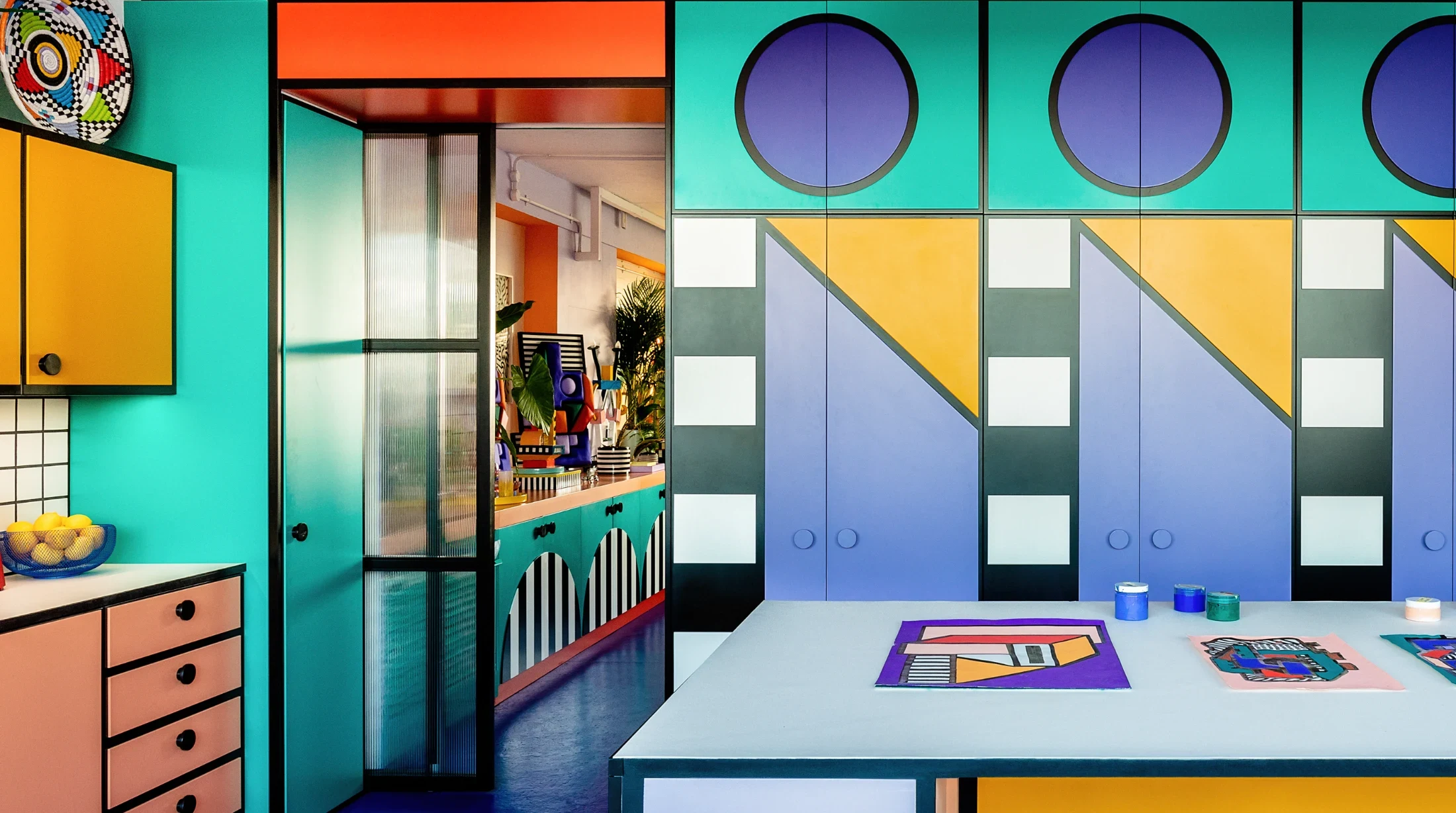
Urban artist Camille Walala’s eye-catching, technicolour masterpieces aren’t just designed to brighten bleak urban tableaus, they’re engineered to elicit joy.
She’s teamed up with LEGO and Armani, and her bold, neo-Memphis works have transformed buildings (and brands) from London to Hong Kong. But for French urban artist Camille Walala, there’s a much simpler, more important reason to get out of bed in the morning: she wants to make people smile. Pull up a bench and say hello to the world’s most prolific architect of joy.
James Shackell
Writing:
Writing:
James Shackell
Photography:
Photography:
No items found.
Magazine Current IssueMagazine Current Issue
The After shot of the Floorplan
Before
before
after
After
Top
Arrow UpArrow Up

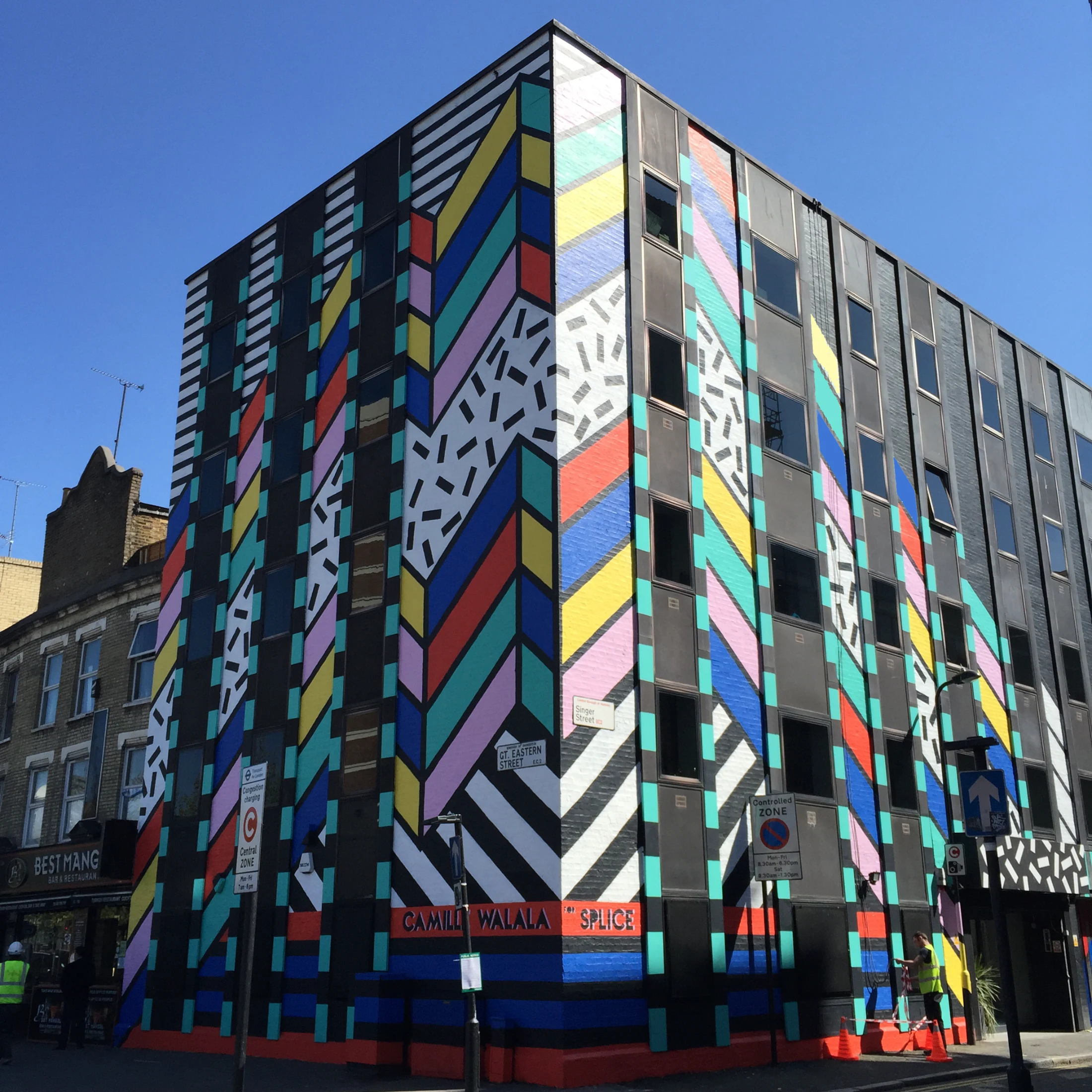
In 2015, before Camille Walala had joined forces with Armani and LEGO and the London Design Festival, before she became a global post-pop sensation, and long before her last name was synonymous with fun, she had the opportunity to decorate a building. A grey and dreary cube on grey and dreary Old Street in East London. The sort of anonymous corporate structure that barely merits a first glance, let alone a second. It was the architectural equivalent of unbuttered wholemeal toast.

"Normally, when I'm doing street art, I don't sign my name," Camille says, "I find it weird to put my name on pieces. But this one, this building, it almost didn't happen. The landlord realised he could get $10,000 worth of advertising by covering the exterior with a banner instead.

"So I said, just let me have two weeks. Then you can cover it up. And because I knew it was worth $10,000 per month, I put my name on it big. Like, really big. Right up high, so it wouldn't get graffitied."

It was a bold move, bordering on cheeky, but it paid dividends. During those two weeks, not only did the building – a work Camille titled Dream Come True – generate considerable hype and viral buzz (Instagram was just beginning to gather rocket fuel in 2015), it also caught the eyes of passers-by. And some of those eyes worked for Georgio Armani. Pretty soon, Camille was being invited to design Armani's new accessories collection, appropriately titled 'New Pop'. It was her breakthrough, and she hasn't looked back since.

"I'd always wanted to do a building," Camille says. "To give new life to a building nobody would notice. The uglier the better. And that project went massive. Things really escalated after that."
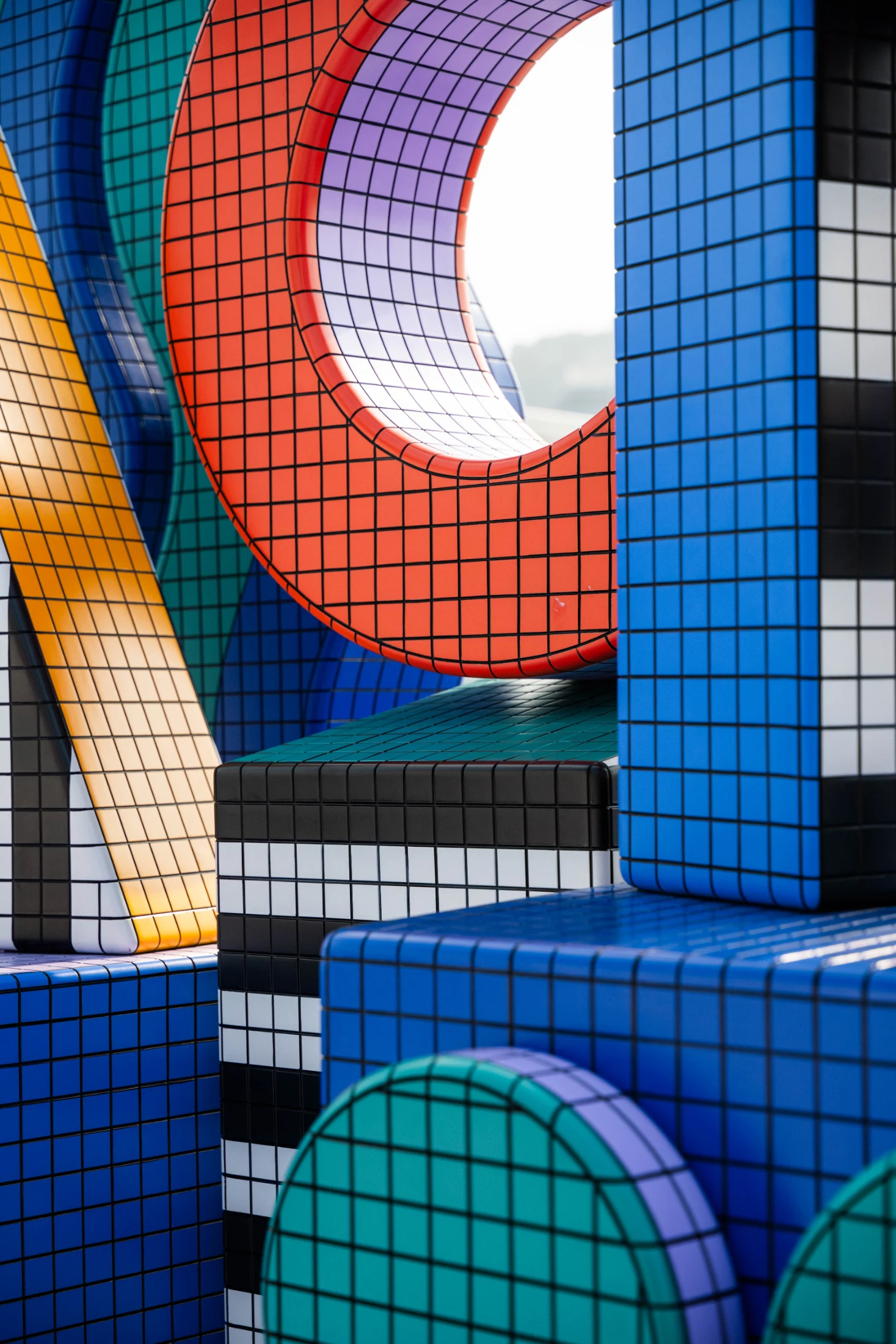
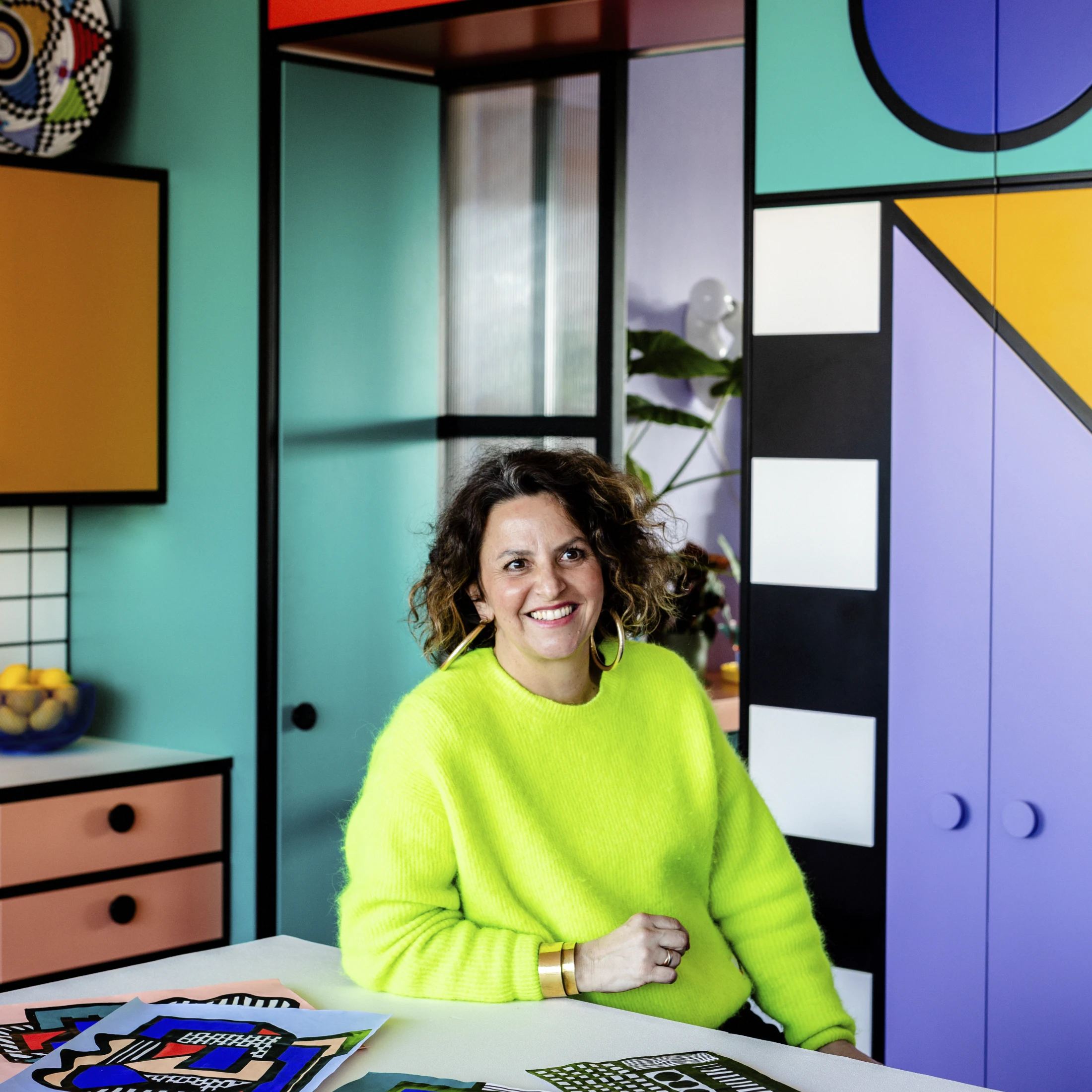
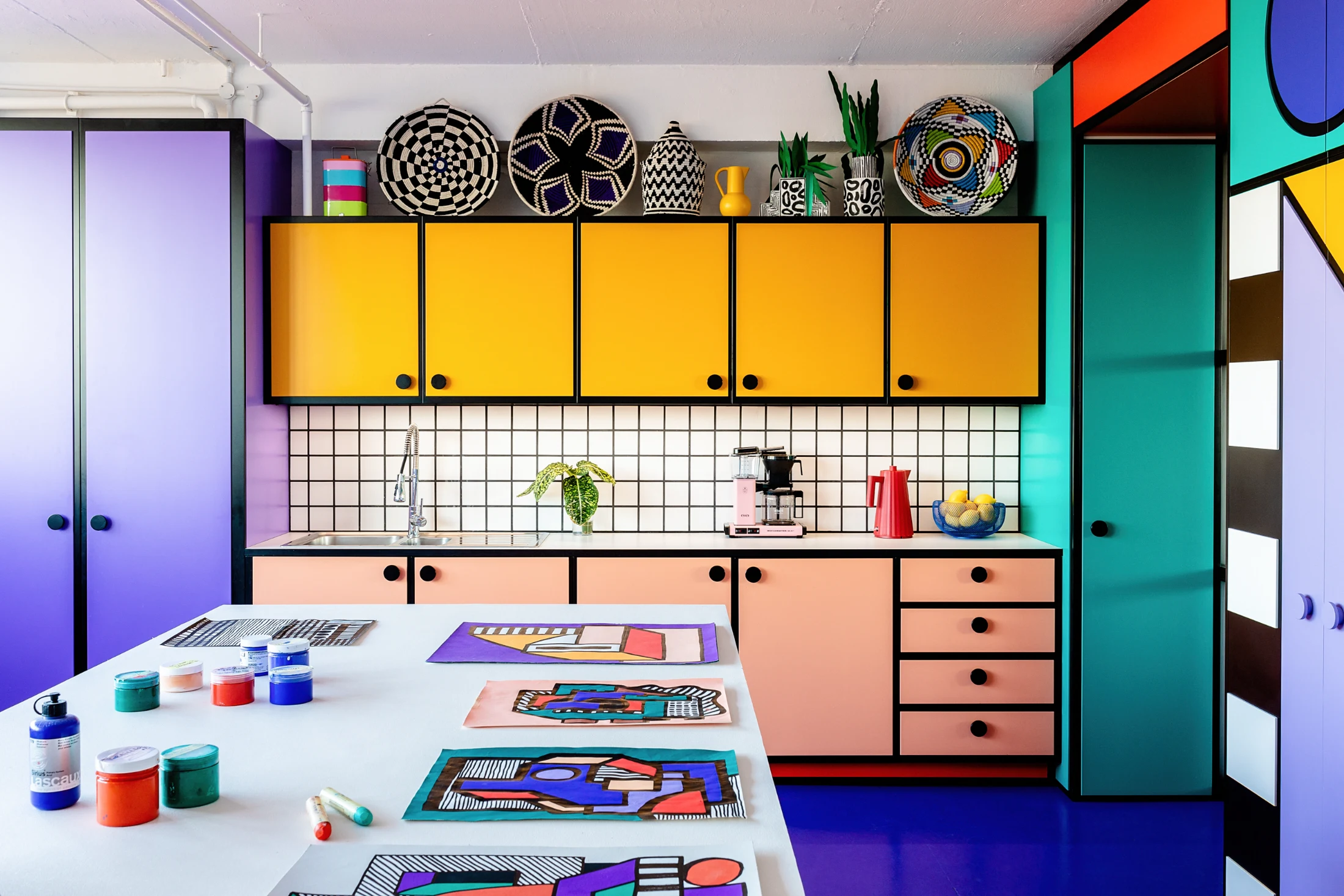
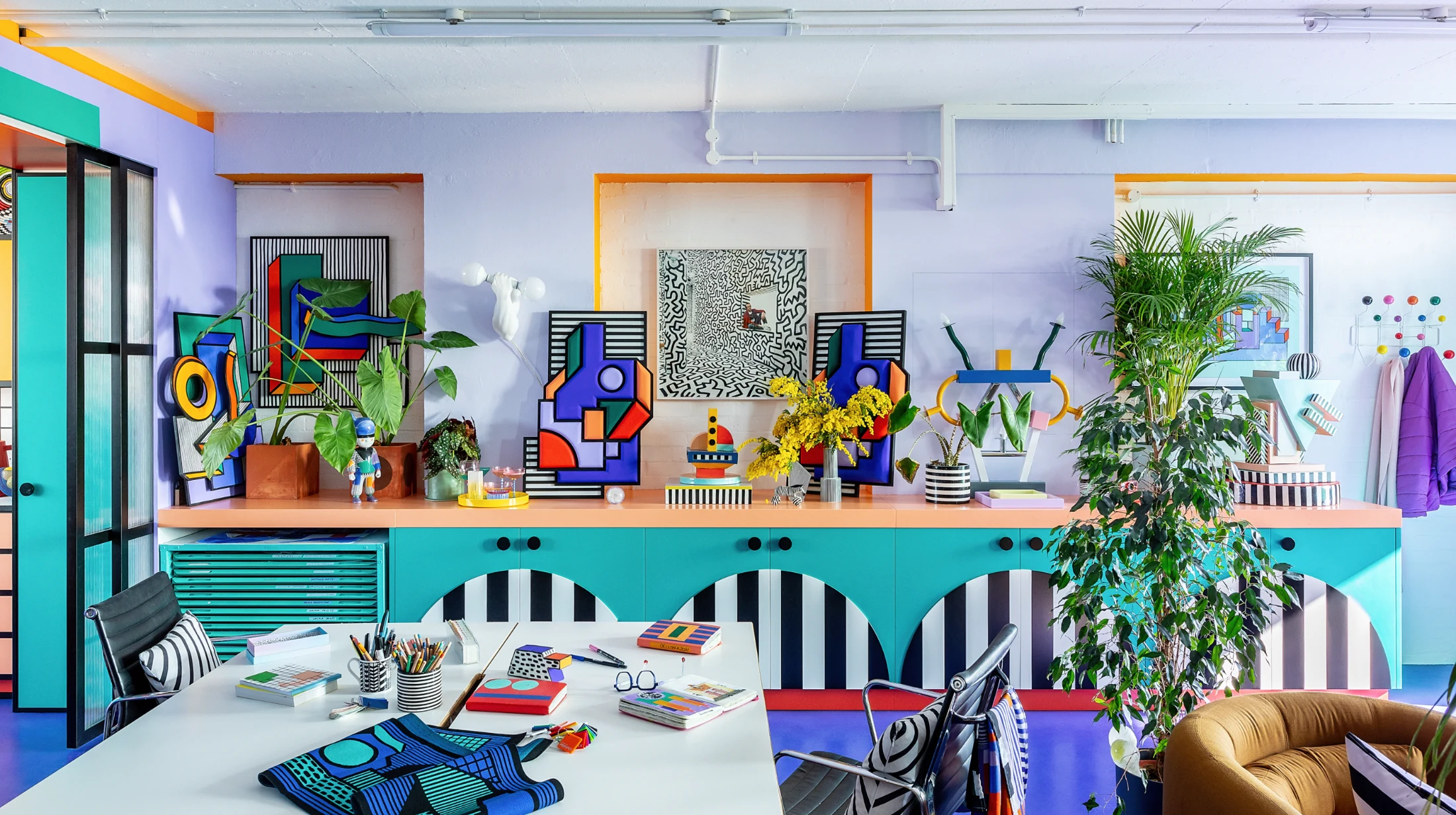
When you look at Dream Come True, the first thought that leaps to mind might be 'Memphis Milano', or maybe 'Pop Art'. But Camille's work isn't quite so easy to categorise. Yes, she's known for saturated, bold colours, high contrast, and patterns that hold your attention hostage. Yeah, she blurs that line between 'high' and 'low' culture, dragging art out of the galleries and literally into the streets. Like Warhol and Roy Lichtenstein, her pieces also lend themselves naturally to brand collabs and crossovers. Some of which are pretty lucrative.

But unlike traditional Pop Art, there's no irony with Camille's work. Her message is 100 per cent sincere. She's not necessarily trying to critique mass culture or subvert consumerism (let's face it, partnering with Armani isn't usually the strongest anti-consumerist stance). In fact, her goal is much more prosaic: Camille Walala just wants to make you smile. It's a philosophy she calls "disseminating positivity".

"With art, I finally found my purpose in life, which is to create space for people to find joy. It's so powerful to watch people having a good time in the spaces I create. To feel the vibrations.

"When we did Dream Come True, people would come up to us and give us a hug and say, 'Oh God, thank you so much for adding some colour in here!' One morning we found this Post-it on the wall saying, 'ALL BUILDINGS SHOULD BE COLOURFUL!'"

In the lofty circles of global design, of course, Camilla Walala is now a household name, but this wasn't always the case. In fact, her journey from creative nobody to global sensation was pretty circuitous. Born in Piégon, a small village in the south of France, in 1975, Camille struggled at school. Her dyslexia often left her feeling out of step, and out of place. Creativity became her language – a way to communicate feelings and ideas that words couldn't quite capture.

In 1997, her father encouraged her to move to London and improve her English. In 1999 she was there again, working a series of odd jobs: selling cheese, waiting tables and testing her creative boundaries at night. Drawing. Stitching. Pottery classes. The 20-something Camille tried them all. Eventually she settled on textile design, graduating from the University of Brighton in 2009.

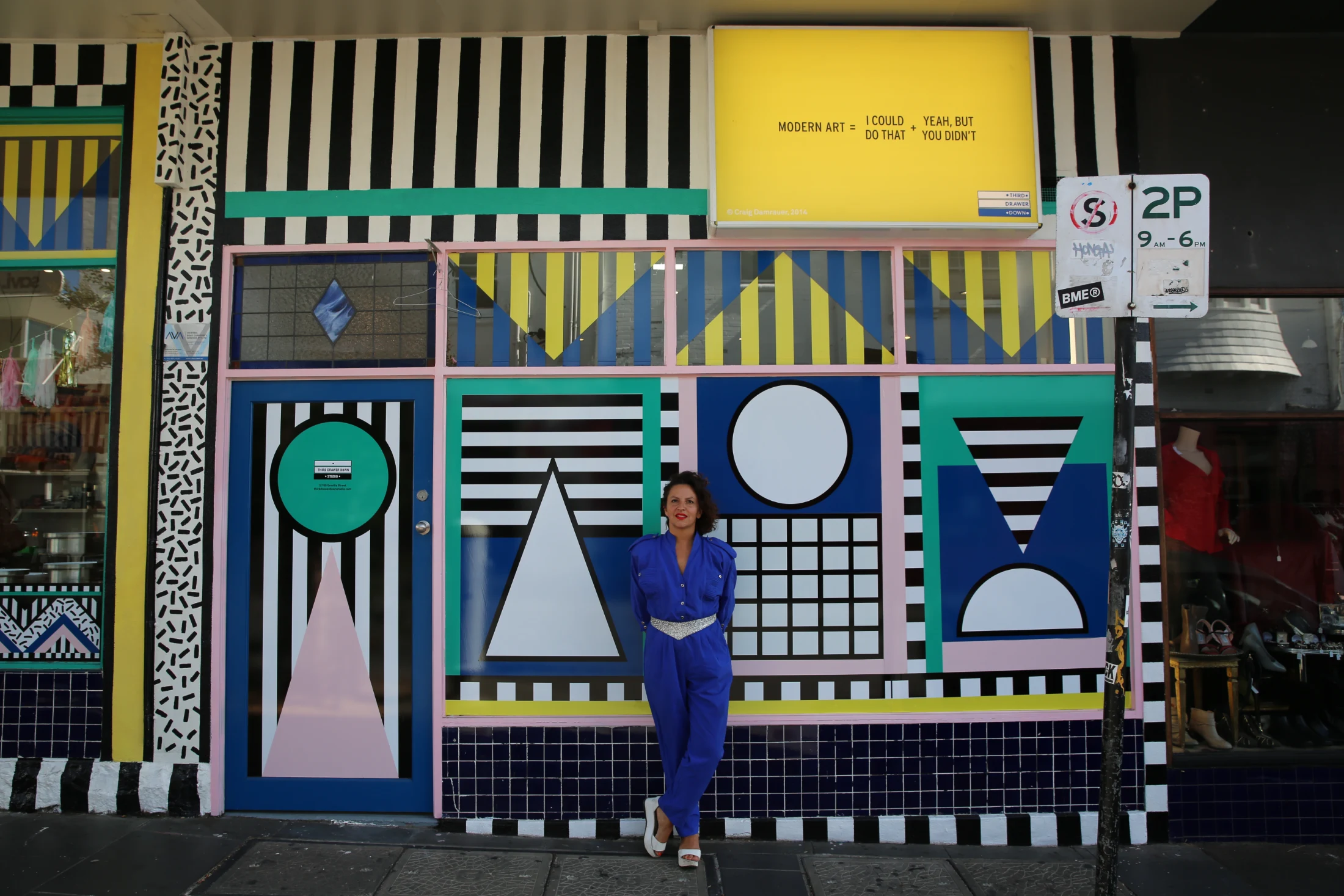
"I loved patterns, but I was no good at graphic design," Camille admits. "I couldn't answer briefs. If it wasn't abstract, if the client wanted a flower, for example, I couldn't do it. My boyfriend at the time was Australian, and he introduced me to street art. I used to come to Sydney to avoid the European winter, and I just asked around, 'Does anyone need someone to paint a wall?'

"Eventually I met Abbey from Third Drawer Down¹ and she got me to do the front of their shop. It was nice to have people make me think, 'Oh, I could do that'. Because I didn't believe it myself."

Early career artists are often faced with a bleak decision: give up and work in marketing, or create for someone else. Like a design studio. But Camille recognised early on that she valued her artistic independence, and her integrity, and she was willing to put up with years of anonymous, low-paid jobs if it meant achieving success on her terms. Which is pretty much what happened. Between graduating in 2009 and Dream Come True in 2015, she worked anywhere that paid, creating and building the Camille Walala brand in her spare time. And even after finding success with Armani, financial and creative independence took another full decade of slog.

"I knew I didn't want to work for a designer. I wanted to keep my brain for myself," she laughs. "And it's actually been really nice to struggle, in a way, because when you finally make it, you know you haven't given up. It just took a while to become confident in my work."

Now, of course, Camille has achieved every artist's daydream, which is to have the kind of international clout (and let's be frank, bank balance) that allows you to pick and choose who you work with. It's a plateau not many creatives ever reach. But when you get there, the view is pretty sweet. And when you have brands like Gorman and LEGO knocking on your door, begging for brand collabs, confidence becomes a little easier, even for someone as naturally humble as Camille.

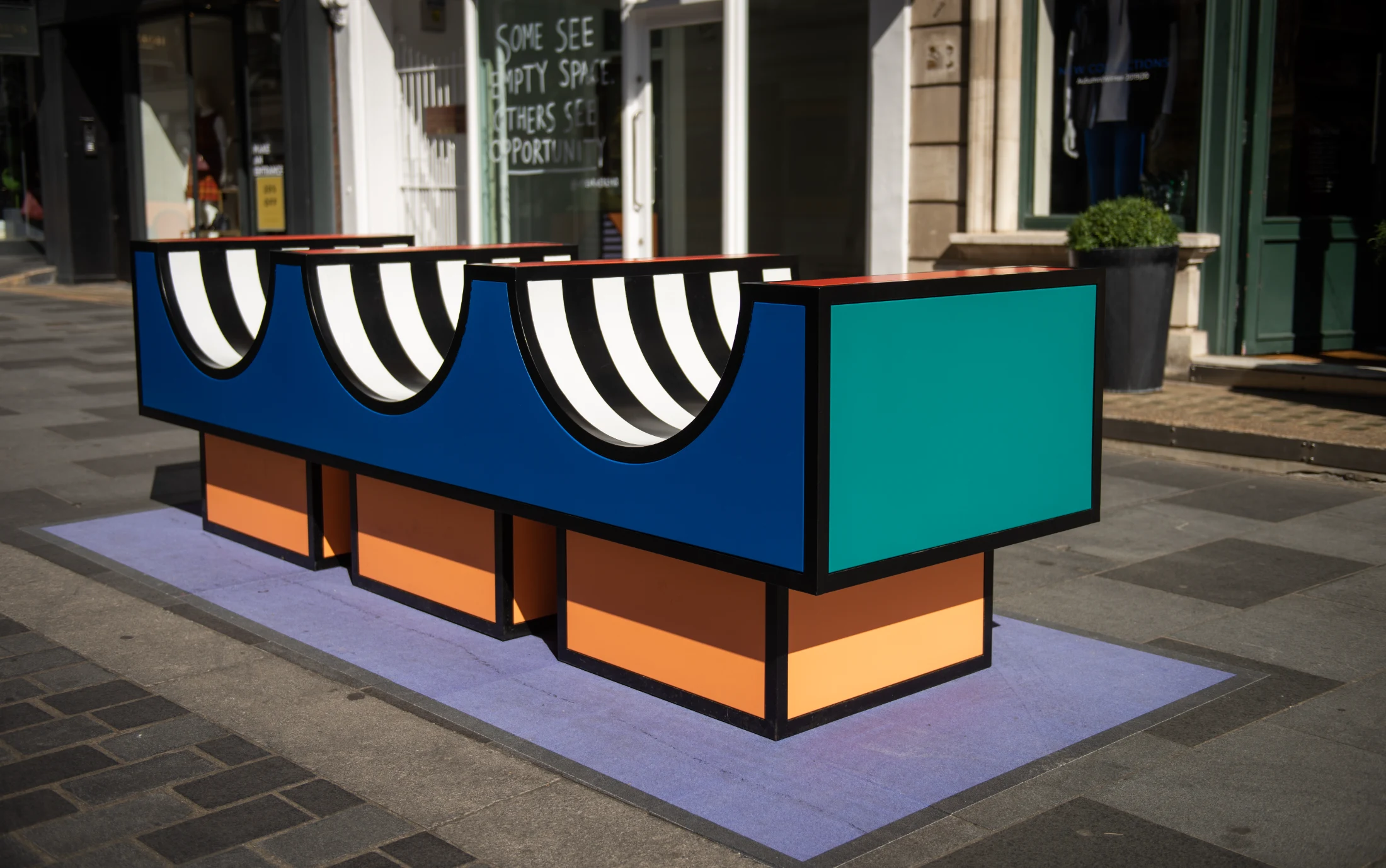
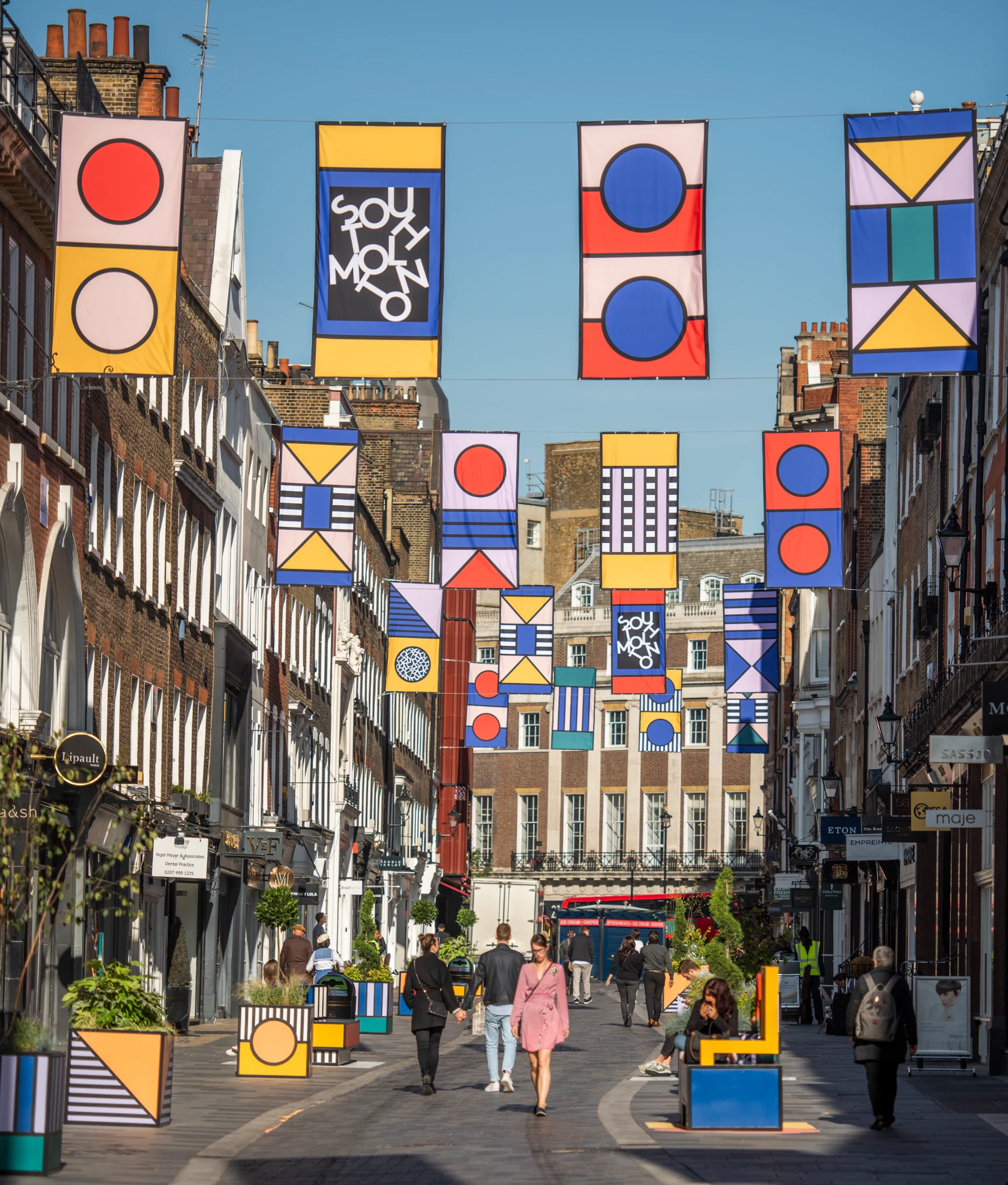
"With my public art, I'm really just trying to bring people together," she says. "Recently I had this big job near Selfridges, in Central London, and they asked me to do a mural in this quiet, pedestrian street. I looked around and thought, 'There's nowhere to sit. How about we do benches instead?'"

That project became Walala Lounge on South Molton Street, and it's a good example of why Camille Walala is more than an Instagram fad. Her work isn't just beautiful, or fun, or zany-but-shallow clickbait. It actually connects people. Chatting with Camille, I get the sense she'd happily trade the fame, and the gushing professional acclaim – and yeah, even the cash – for the chance to simply spread joy and make people smile.

"I was kind of moved when I saw people sitting there," she says. "It was just these weird benches in the middle of London, but soon you had old ladies eating sandwiches, business people chatting. It was a starting point for conversation. An unexpected exchange. Sometimes these things just need a little help."

Like Dream Come True, Walala Lounge is another headliner project that almost didn't happen. Working with large-scale murals and installations, Camille is pretty accustomed to red tape and government bureaucracy, but when she pitched the idea to the local council, they said yes…on one condition.

"They said, 'When you do these benches, you need to put things down the middle so people can't lie down.' And I was furious! I was like, 'No way. If that's the case, I'm not gonna do anything. I won't do the project.' And they backed down and said, 'Okay that's fine, sorry, you don't have to do that.'

"Then I had all this time to do the bench designs, so I made one into a big double bed," she laughs. "Like fuck you."

Walala Lounge had the desired effect: it made people happy. For Londoners scurrying from A to B, fighting rain and crowds and honking traffic, it literally brightened their day. And you can kind of look at Camille's entire back catalogue as an attempt to engineer emotional uplift on a grand scale. To disseminate happiness, as she puts it. Using colour, pattern and play to turn overlooked spaces – grey, boring, utilitarian spaces – into emotional landmarks.

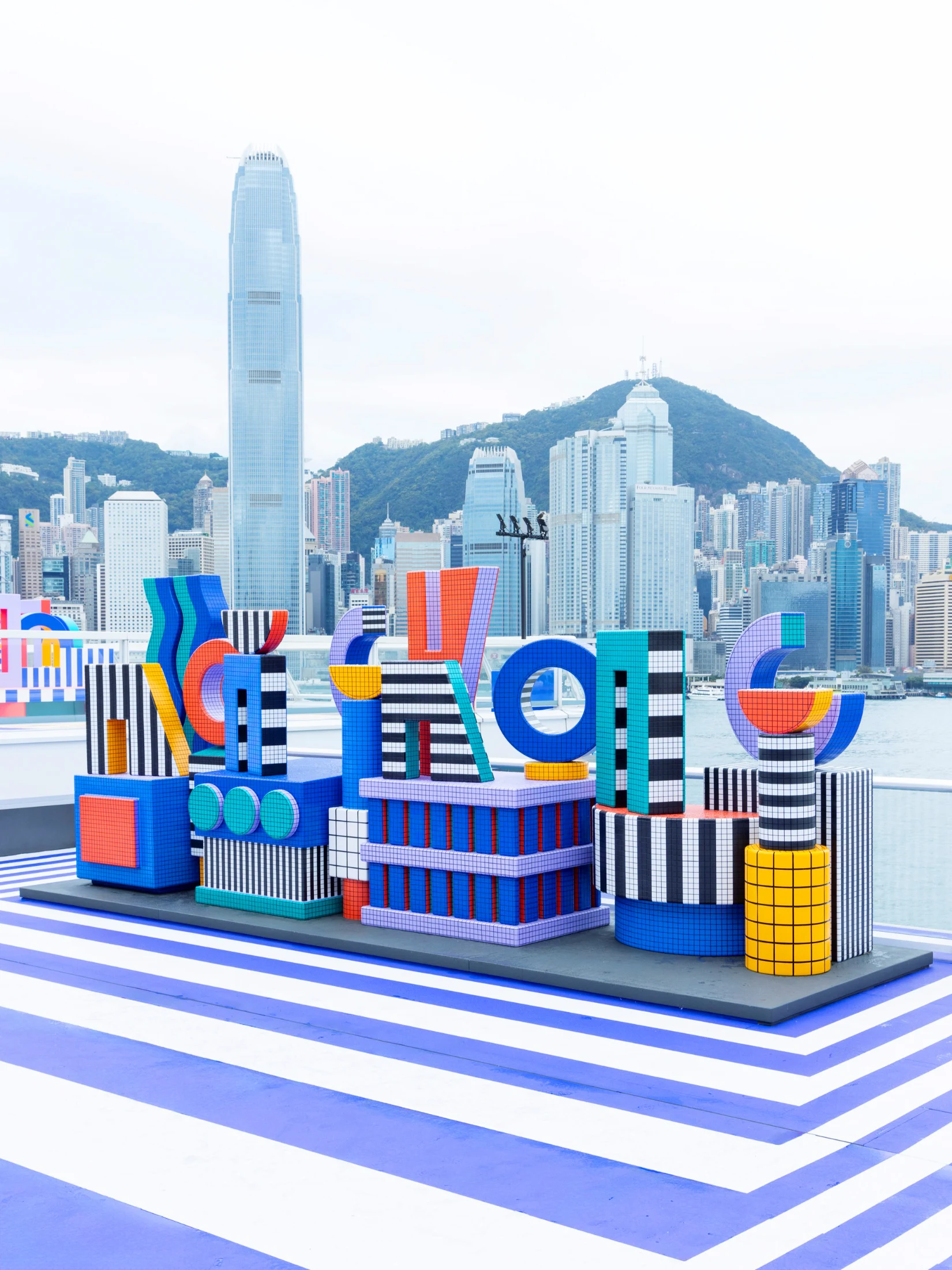
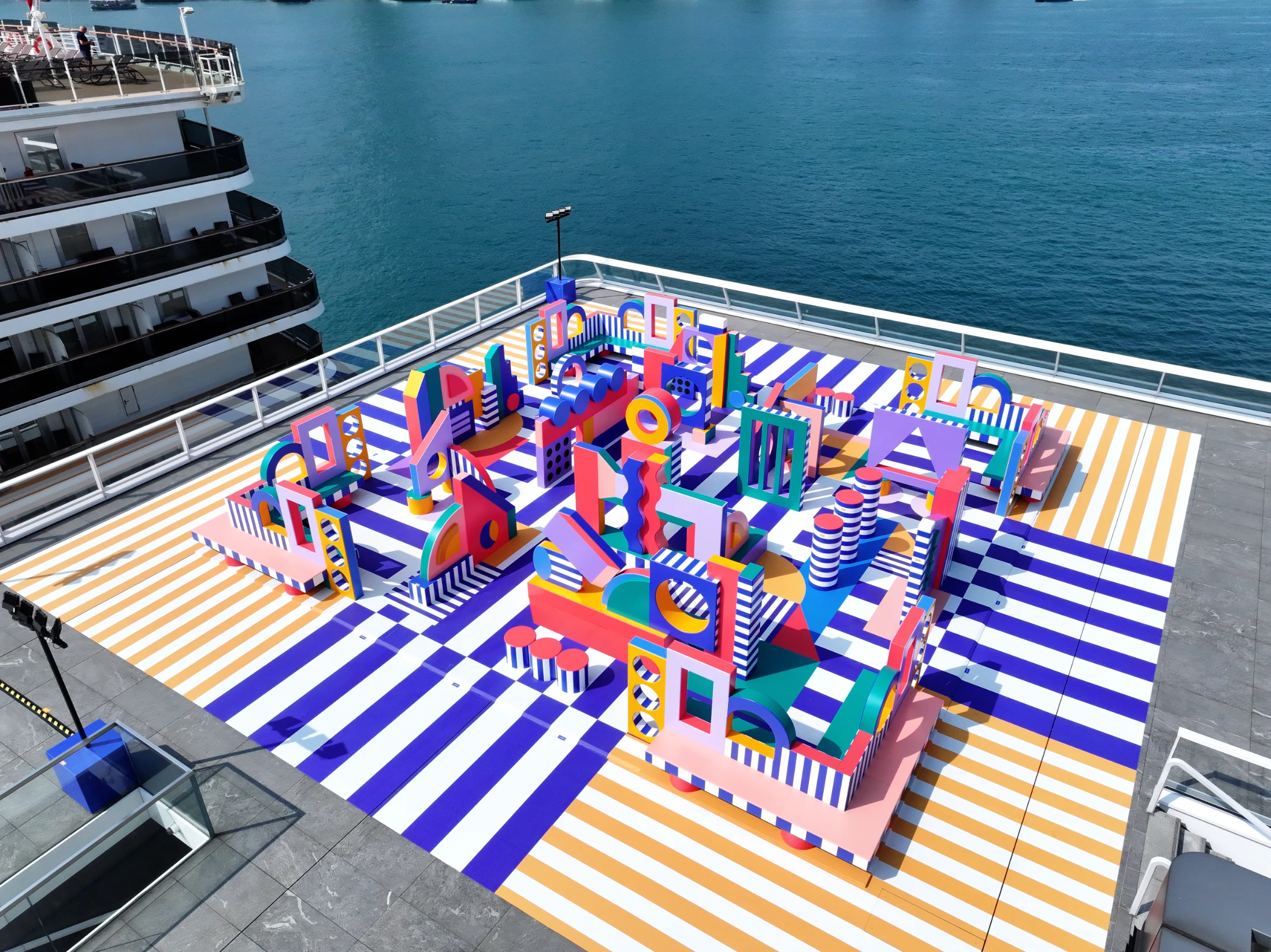
Over the years, these landmarks have ranged from House of DOTS (a life-size dollhouse, designed for LEGO, constructed from eight shipping containers in London's Coal Drops Yard) to Planet Walala (a technicolour maze outside Hong Kong's Harbour City). These projects, big or small, are connected by a common thread, which is joy as a fundamental design principle. A common language. Camille works with joy like a sculptor works with clay; not as decoration, but as intention. It's simultaneously the whole point of her work and the secret ingredient behind her commercial success.

Because let's face it, in 2025 the world needs every drop of joy it can get its hands on. We're in a crippling joy deficit right now. Hope, optimism, happiness – fun for fun's sake – these are rare resources. And like all rare and precious things, they have value. Camille's visual vocab, with its trademark reds, and yellows and Memphis-esque zig-zags, speaks to so many of us precisely because we recognise, deep down, what we're missing. Optimism without irony. Happiness without guilt. Collaboration, community and the simple thrill of being alive, here, right now.

"I just want people to feel that lightness," Camille says. "When people come up to me and say, 'I saw your work. It made me smile.' I'm not asking too much, right? Especially these days, it's nice to have a big smile."

¹A collaborative artist studio and homewares shop, founded by Abigail Crompton, that’s been running in Victoria since 2003. In fact, Third Drawer Down is now a global design business, with distribution hubs across the US, UK and Asia.

Writing:
Writing:
James Shackell
Photography:
Photography:
Back to Top
Arrow UpArrow Up
Top
Arrow UpArrow Up
The After shot of the Floorplan
Before
before
after
After
Businesses featured in this project
No items found.
Products featured in this project
No items found.
Magazine Current IssueMagazine Current Issue
Writing:
Writing:
James Shackell
Photography:
Photography:
Back to Top
Arrow UpArrow Up