
Magazine Current IssueMagazine Current Issue
The Bench
The Bench
From our Mag
November 1, 2025

The Bench

All hail the public bench in all its benevolent brilliance – the simplest piece of urban furniture.

A seat for collective wisdom.

Kirsten Drysdale
Writing:
Writing:
Kirsten Drysdale
Photography:
Photography:
No items found.
Magazine Current IssueMagazine Current Issue
The After shot of the Floorplan
Before
before
after
After
Top
Arrow UpArrow Up

It starts with birds

They say that birdwatching is one of those things that creeps up on you. A sign that you've matured into a fully-fledged adult – or at least, officially entered your 30s. One minute, you're out all night drinking and dancing until the sun comes up – the next, you're in the morning sunshine pointing out honeyeaters and identifying a wonga pigeon by its call. You don't consciously develop this interest, it just emerges, a sudden alertness to the ubiquity and beauty of the world's winged creatures. They're everywhere when you start looking.

An eye for benches comes next. A deep appreciation for that simplest piece of urban furniture: a raised horizontal platform, put there for people to sit on. This is a perspective that can only be brought into focus by age, as some degree of physical weariness is necessary for a bench to become visible. A bench is a place to rest tired legs and aching knees and creaky hips. A place to contemplate the years, the moment, the meaning of life. One of the things you realise while sitting on a bench is that children don't seem to notice benches at all. Their parks and playgrounds often feature them but they are blind to the gift of a seat for their carers. Off they race to the monkey bars and the climbing net and the swings, defying gravity and fatigue while mums and dads and grandparents sit on the benches and watch, marvelling at their energy.

The bench has been with us for thousands of years. Maybe not quite since the dawn of time – clues in skeletal remains suggest our cavemen ancestors preferred to squat than sit. But at some point in our evolution, hominids started favouring elevated butt rests over weight-bearing hyperflexion.

Public benches have been designed into our civic spaces since Ancient Greece. There are around 100 streetside benches in Pompeii, found in front of shops, bars and houses. Research suggests the citizens had pushed for them to be located "in shady spots", and objected to their placement in areas "where traffic would be obstructed". In 14th century Tuscany, benches were a standard feature in civic centres, while records from early modern Florence reveal "a rich culture and vocabulary of alfresco bench-sitting"¹. The Florentine benches were grandiose, show-off pieces: stairstepped forms built into the stone facades of the palaces of patrician families like the Medicis², who were quite deliberately mimicking the town square "as part of a strategy to designate their homes as new centers of civic authority".

By the 19th century, you didn't need to have a palace to have a bench. The Industrial Revolution meant benches could be pumped out much more readily, out of cast iron – heavy, but a far more portable material than stone – and so they became an even more common feature in modern cities.

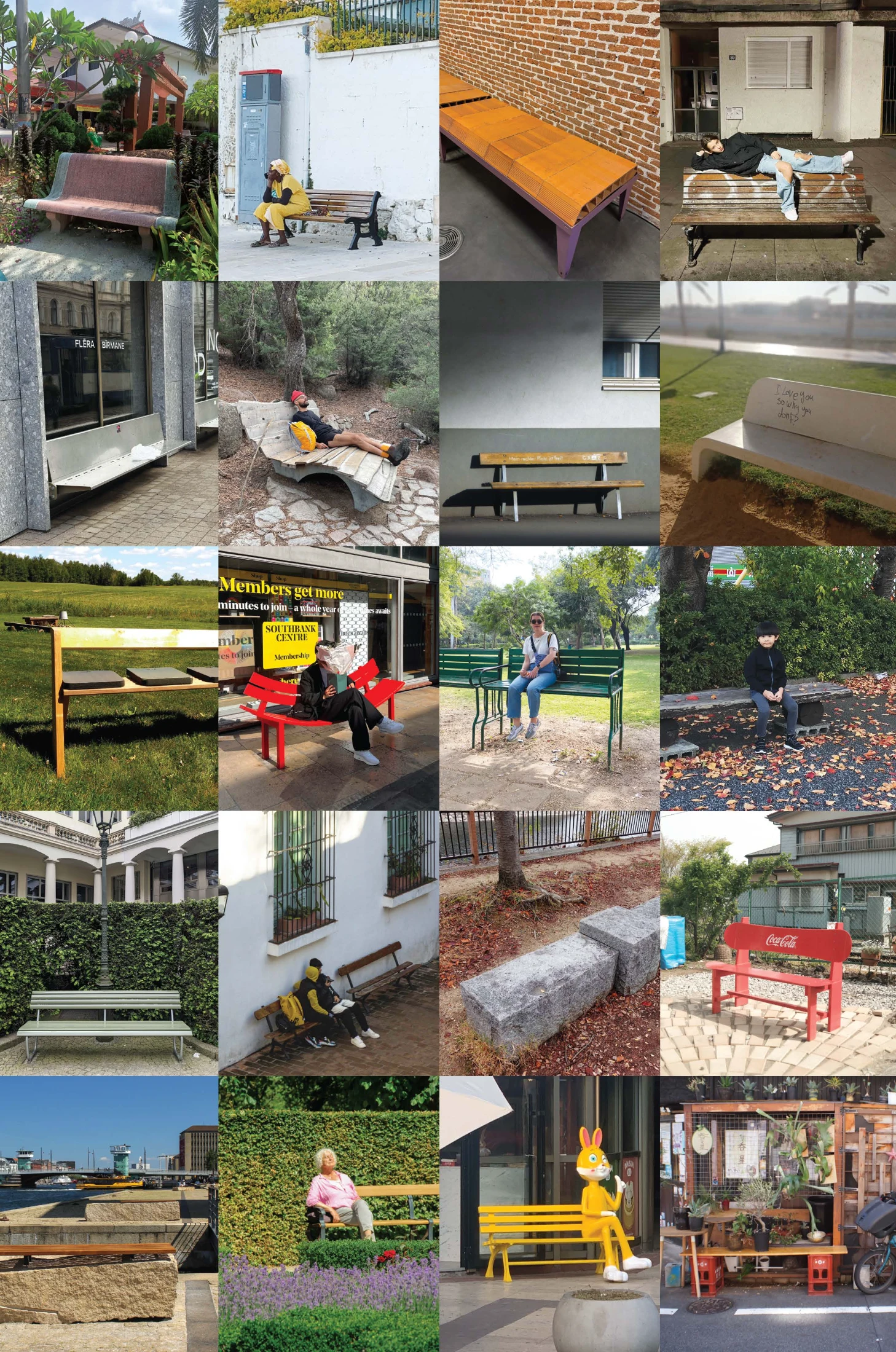
Now, you'll find benches in every society, in every part of the world, in all sorts of styles. A bench might have a backrest and armrests at the sides. It might be hand carved from stone or slapped together with old wooden pallet pieces or feature ornate camels and sphinxes at each end (you'll find plenty of these Egyptian-themed examples along the Victorian Embankment in London). A bench might be made of moulded plastic or reclaimed railway sleepers or lengths of bamboo. It doesn't matter - it's a bench. A blessed bench, right where it's needed, on the top of a hill, at a bend on the track, at the edge of a lake, in the foyer or at the station or on the wharf. You'll spot that bench and be flooded with gratitude, because you're old enough to need it.

Slowing down

The bench is a pause button. We tend to move through the world in a hurry, it's hard not to. Our public spaces are designed for mass transit, productivity, efficiency and consumption. Off we go, from here to there, doing this and buying that, checking timetables and taking phone calls and replying to messages and emails on our palm-sized computers. You've got 10 seconds to cross this road, don't forget that report is due tomorrow, neon signs and advertising scream for your attention, while caffeine and adrenaline courses through your veins.

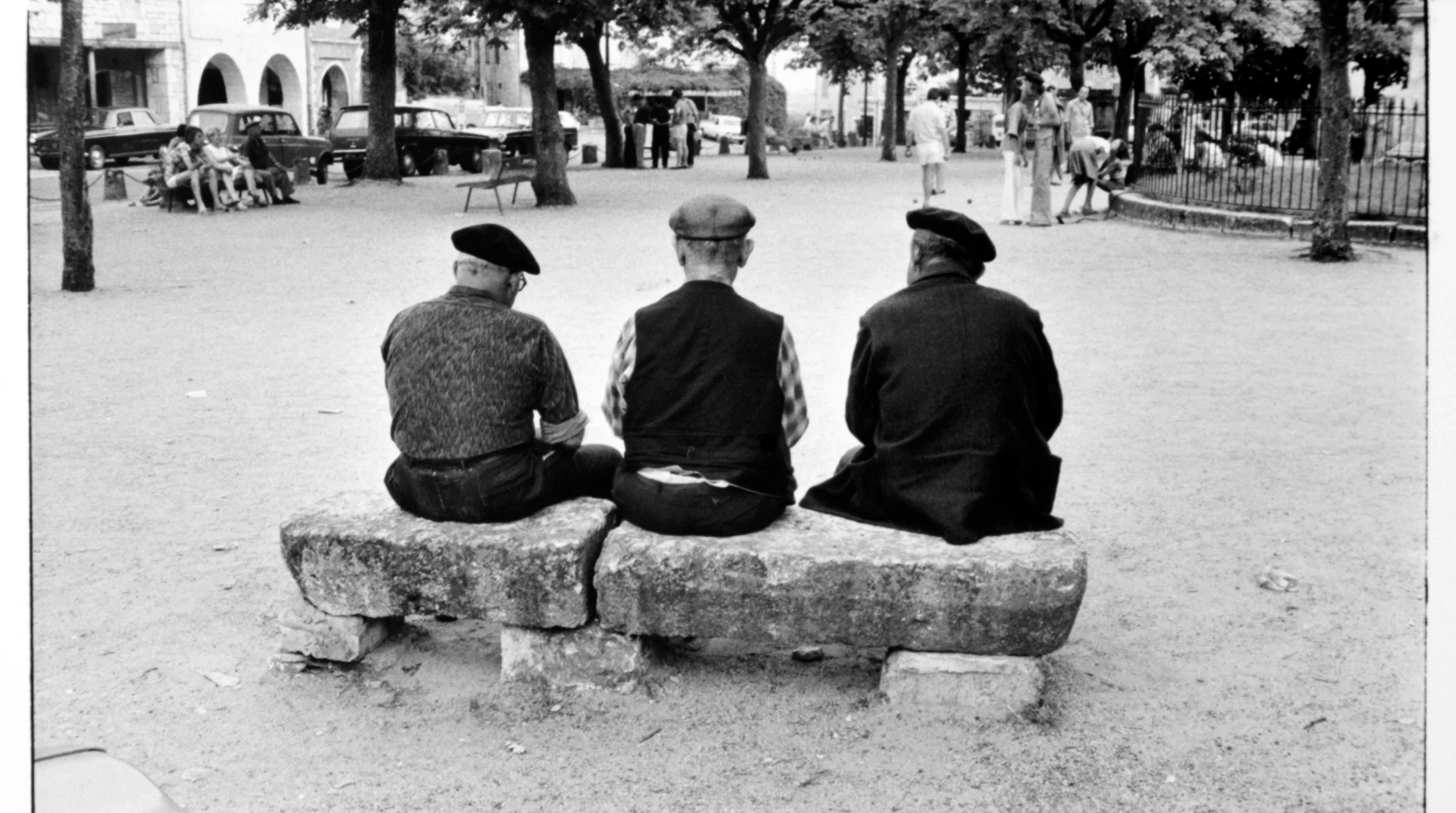
A bench says no to all that. You can sit here a while. Stop. Just be. Watch the children play, or the fountain spray, or the world go by. A bench requires no power, or signal, or ticket to work. For elderly people especially, a bench is a ticket to social participation. It's the singular simple structure allowing them to be out in the world, when their limited mobility might otherwise keep them isolated. You see it especially in European cities, where the plaza benches are often full of white-haired men, sharing jokes and stories with each other, flirting with the women – young and old – who pass by, and solving the problems of the world. Their social lives depend on having somewhere to sit together. Some cities install specially designed seniors' benches in public areas, with a slightly raised seat height making it easier for those with stiffened joints to get down and back up again comfortably. There are even versions with gaps in the seat length, for wheelchairs or walking frames to slot into. The bench is there so that you can be here.

Art and Philosophy

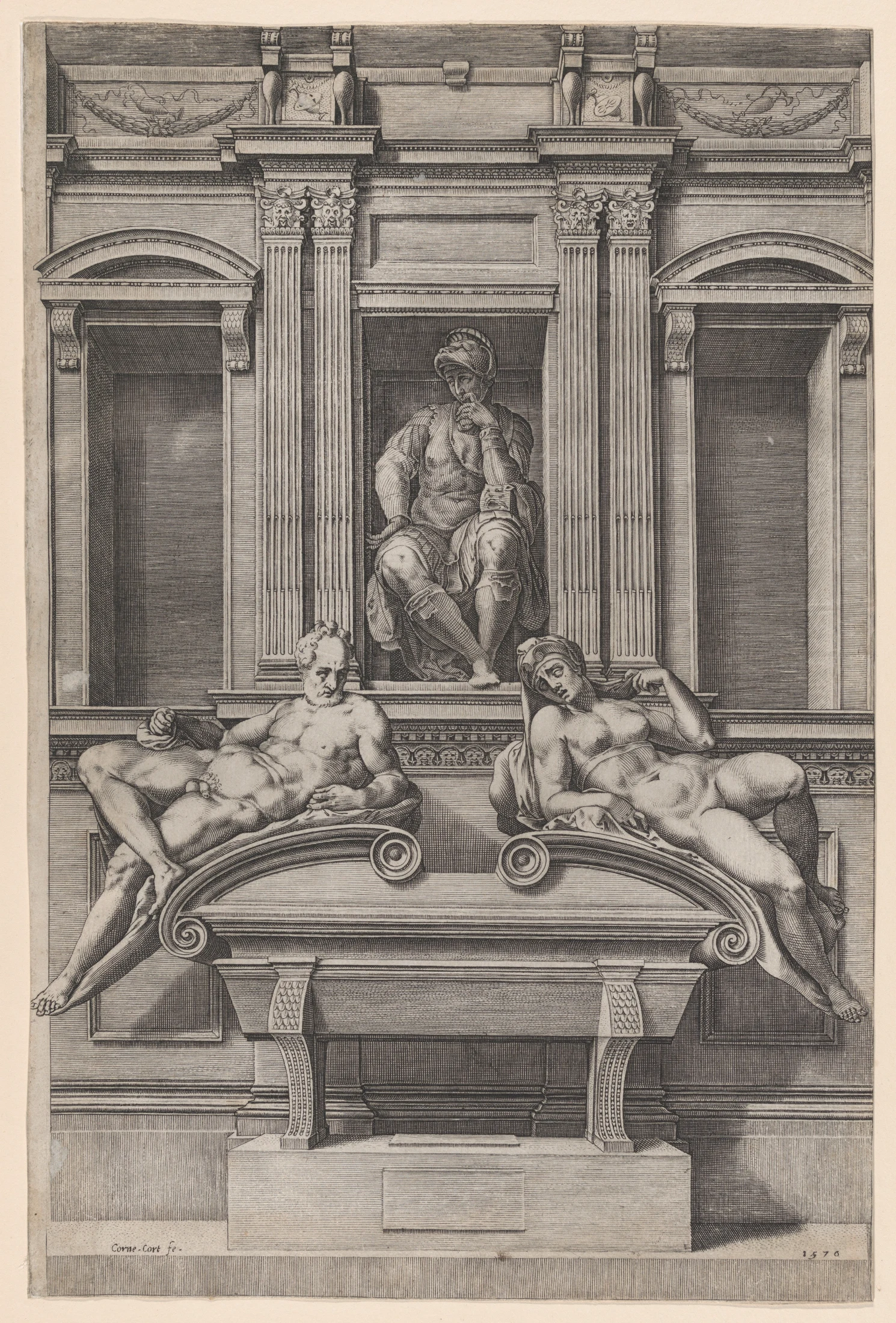
Let's think, for a moment, about the relationship between sitting and thinking – specifically, the kind of serious, reflective thinking that comes with being still, not the active, pacing-the-room trying-to-remember-where-you-left-your-keys thinking. The world's most iconic expression of this act is The Thinker – a bronze sculpture³ by Auguste Rodin from 1904. It shows a man, deep in thought, chin resting on his hand – and he is sitting. But Rodin's isn't the only sitting Thinker. There's also the Thinker from Yehud, a clay figurine on the handle of a jug discovered during an archaeological excavation in Israel, which dates to the Middle Bronze Age. There's The Thinker and the Sitting Woman, found in modern-day Romania but dating even further back to 5000BC and believed to be from the Hamangia culture. When Michelangelo was commissioned to produce a tomb for Lorenzo de Medici⁴, his sculpture of the Duke depicted him with finger to lips, in an "attitude of reflection and meditation".

All of these Thinkers have something in common: they are supporting their heads with their hands, and supporting their arms with their knees. You can't do that standing up.

Follow this logic through to the French philosopher René Descartes' dictum, "I think, therefore I am". If to be we need to think, and to think we need to sit, then a bench is a philosophical tool, supporting our very existence. A noble public good. And yet, people will graffiti phalluses all over them. We are not worthy!

Death

The memorial plaques frequently affixed to public benches are a further nudge in the philosophical direction. You read the name of some stranger, their dates of birth and death, and a poignant message about how loved they were. It doesn't mean much at first. But you sit a little longer, and you look back at the plaque, and your mind does a quick calculation to determine their age when they left this world. And then you are picturing a little boy, who didn't even make it to school, and you imagine his family and their pain. Or the number tells of a woman who nearly clocked a century, left behind 19 great-grandchildren and must have seen extraordinary things in her lifetime. You imagine these strangers, grieve for their ghosts, and you take in the scene around you and relish it. The bench reminds you that you and everyone you know will die.

Mortality is a good thing to be reminded of. The agony and the ecstasy of life are fleeting. We are so lucky to be here, at all.

Community and competition

Whatever it is made of, a bench is – by its very nature and above all else – communal. What makes a bench a bench and not a mere chair is its length – the fact it is designed for more than one person to sit on. Things you may not even think of as benches, are in their essence, benches. Church pews. Sportsfield dugouts. Bus stop 'leaners'⁵. A plank of wood resting on a couple of milk crates at a backyard bonfire? That's an instant bench, for you and all your friends. Benches bring people together. Cheek-to-cheek, in both senses.

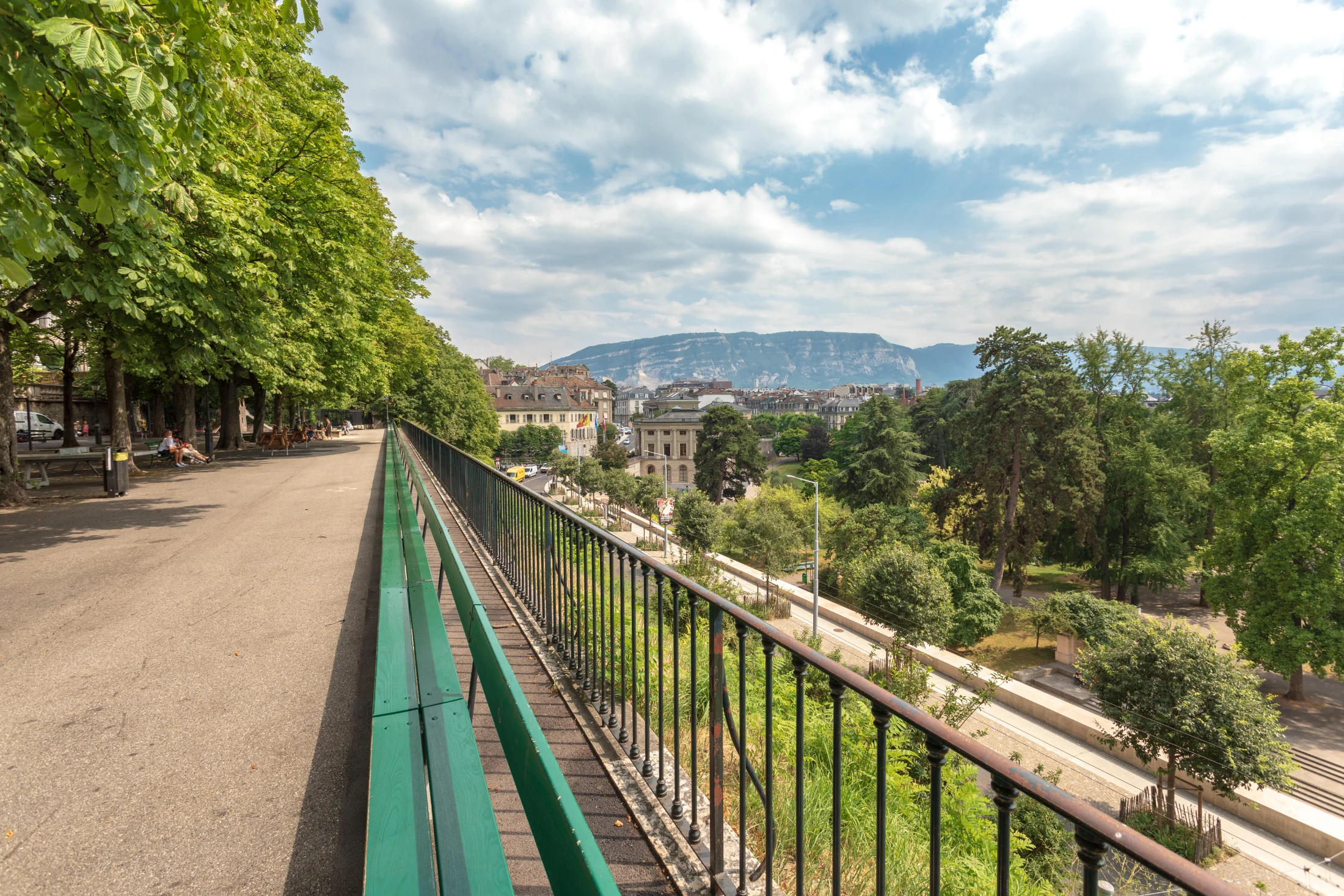
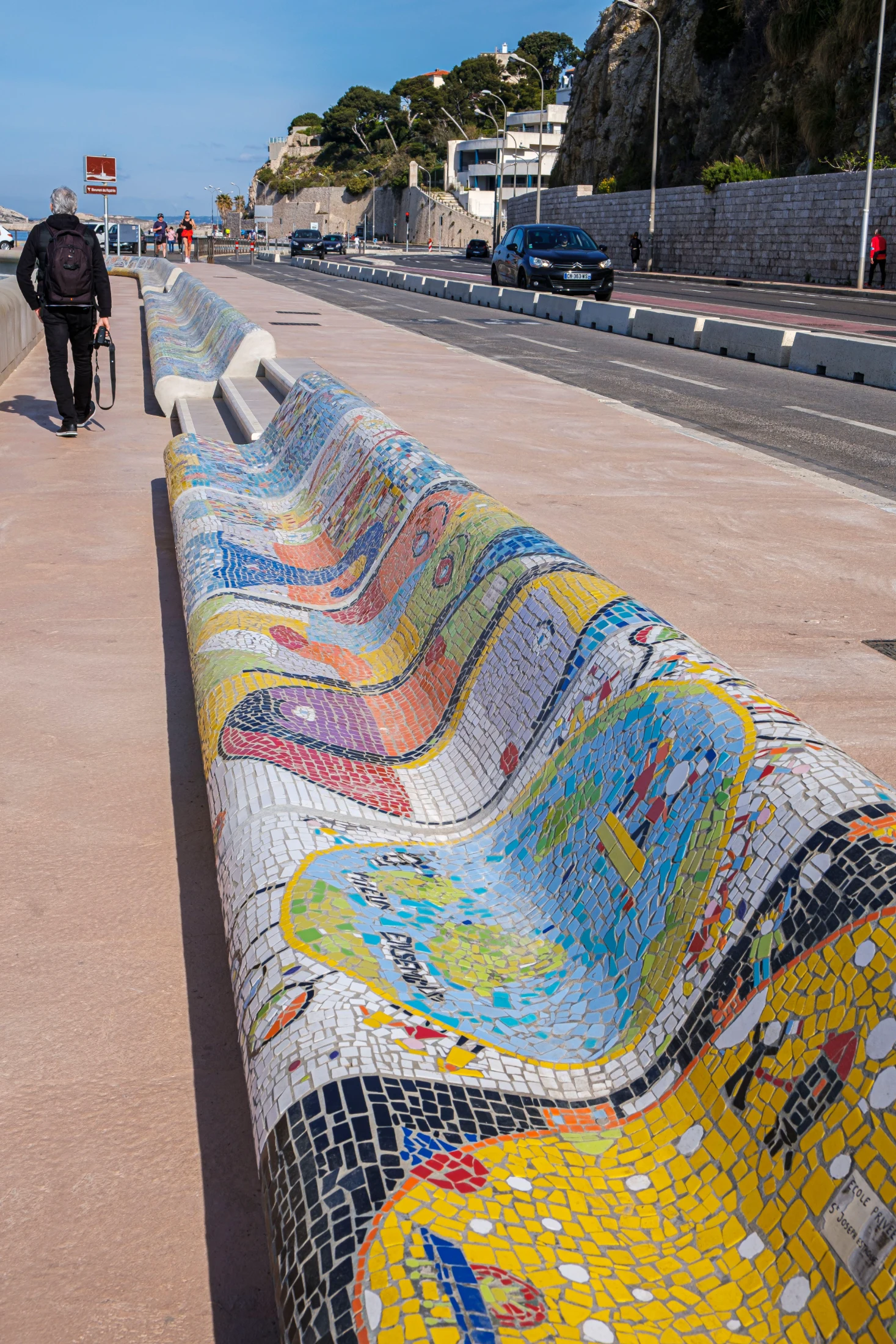
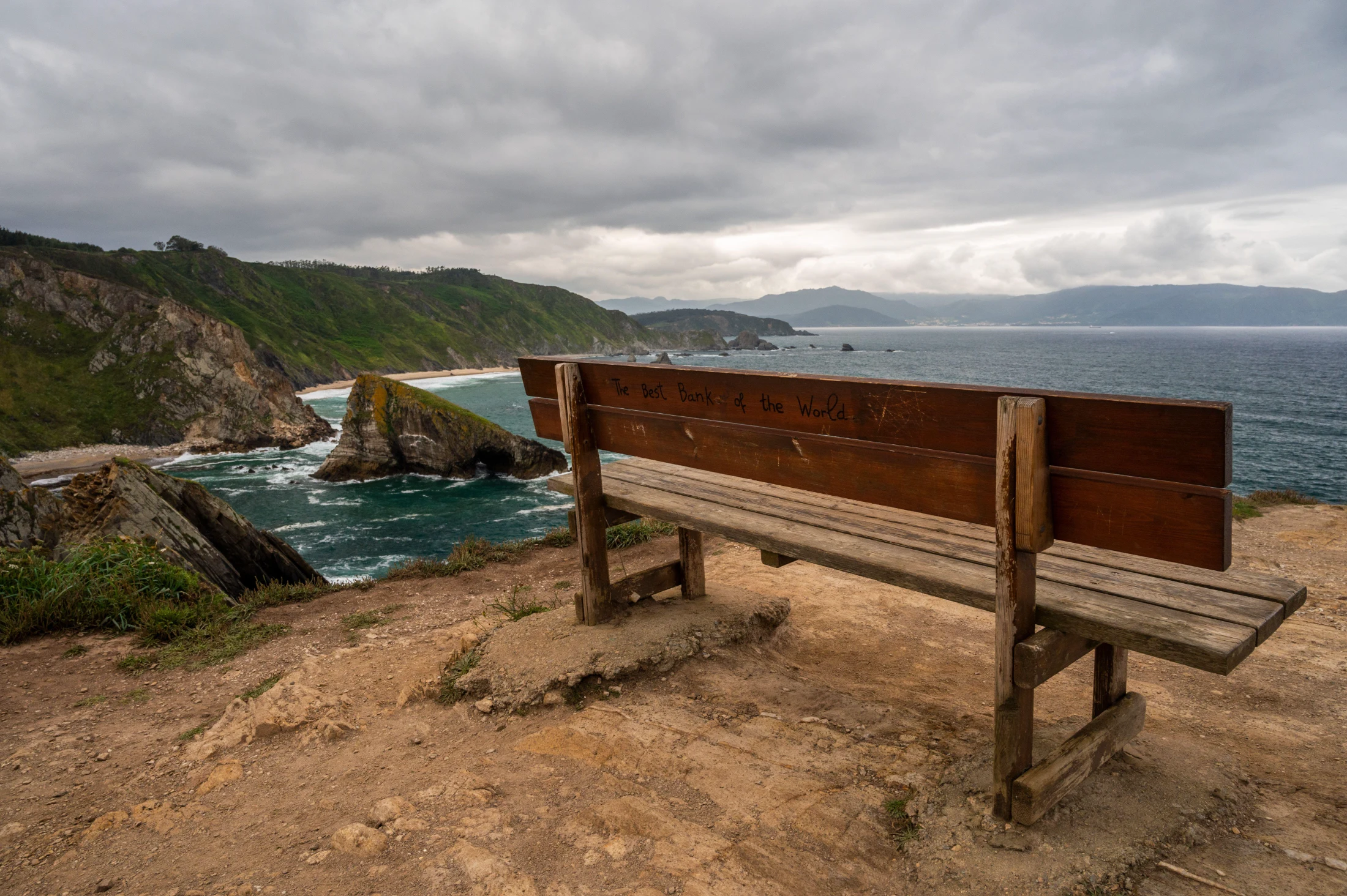
There are many claims to the longest bench in the world – different places specify their own criteria to try to claim the title. Longest wooden bench (Appenzell, Switzerland; 1013.32m), longest concrete bench (Marseille, France; 3km), longest painted bench (Moscow, Russia; 302m - but now broken into segments around the city). Longest doesn't mean the best, of course. And for that measure, there are many contenders. There's a beautiful bench in Geneva, stretching 120 metres along the Promenade de la Treille, which is lined with chestnut trees. Since the 1700s people have sat on this bench to take in the views of the Salève and Jura mountains. There's a bench in Japan, 460m long (it officially held the Guinness World Record in 1989) on the Masuhogaura Coast, from where you can watch the sunset on the Sea of Japan. There's a bench on a clifftop in the Spanish village of Ortigueira which is literally called "The Best Bench in the World" (well, el mejor banco del mundo) – a band visiting the region for a music festival in 2010 graffitied that onto the back of it, and then the Spanish Ministry of Industry made it official, putting it on tourist signs and maps.

Yoga and spikes

Modern benches offer contemporary twists on the age-old design. In Belgium, there are benches with built-in solar panels. You can sit in the sun while you charge your device and use the city's free WiFi. A snake-like bench in Rome, designed by architect and yoga instructor Robyne Kassen, is made of wood frames covered in a canvas-coated concrete and formed into what she calls the "Infinity System": a series of graduated angles to supportively fold your body into various contortions and positions. A huge public art installation called "Please Be Seated" by Paul Cocksedge⁶ features three rings of benches made of scaffolding planks, each rising and falling in a waveform. The low points flatten out into bench seating, while the high points form arches providing shelter and access to the inner rings. After debuting in London, the work toured mainland China and is now permanently located in the Hong Kong Special Administrative Region – it can probably claim the record for the world's most-travelled bench.

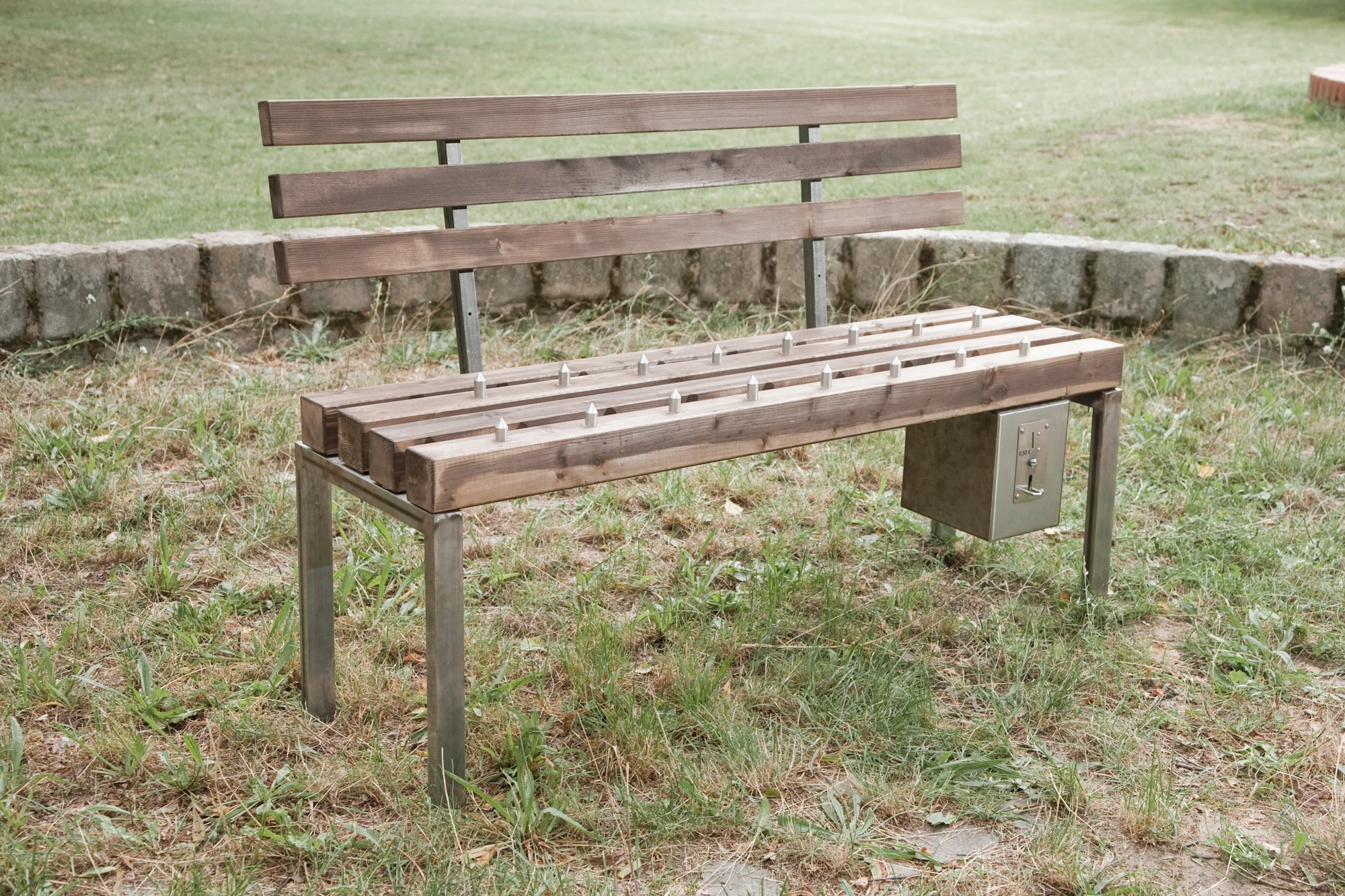
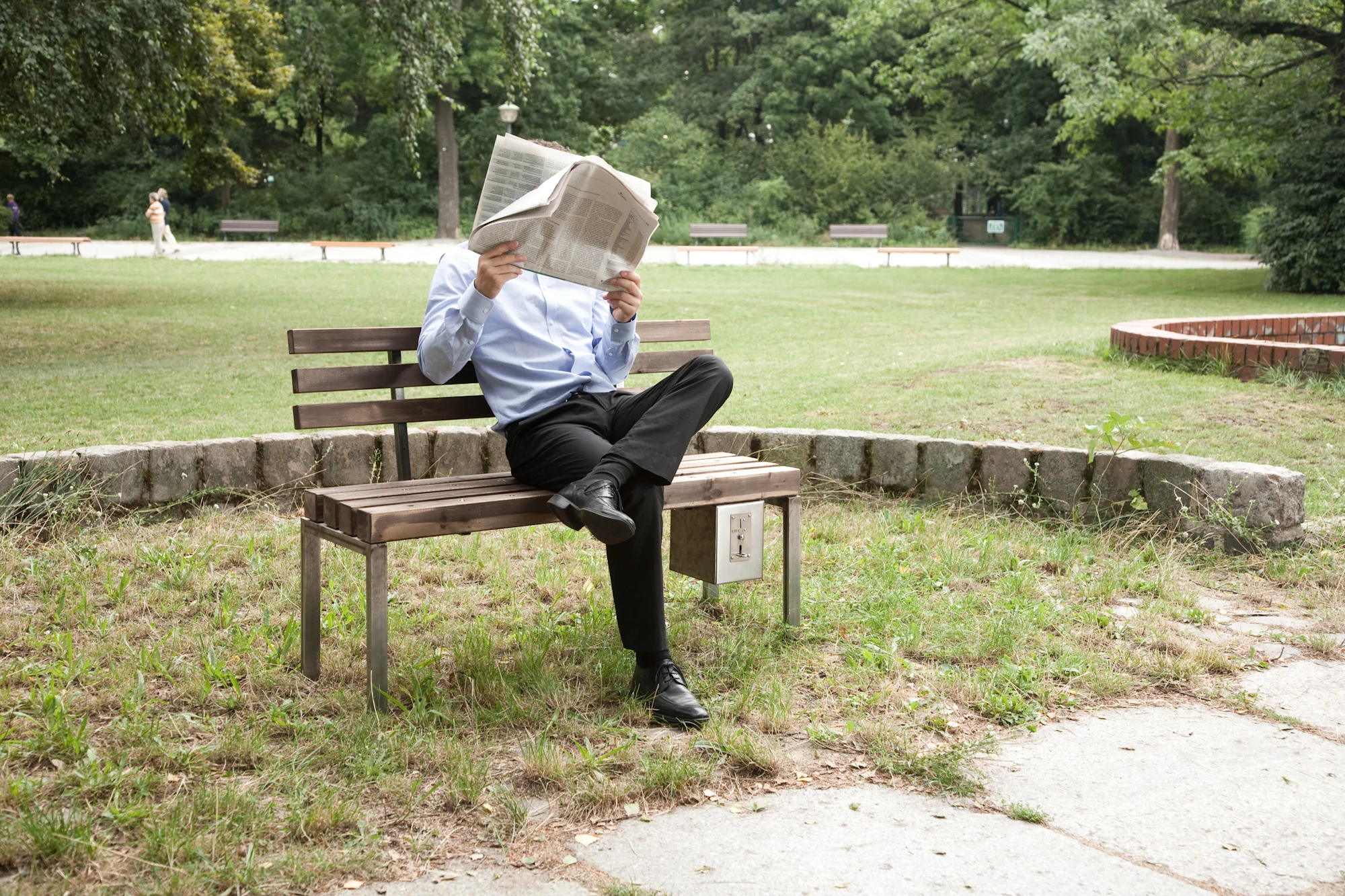
There are, sadly, less friendly iterations of public benches, too. Those divided by arm rests to prevent people from stretching out to sleep on them, or made from deliberately uncomfortable material to stop anyone loitering too long, or designed with awkwardly arched seats that you can't fully relax into (they do offer a good core workout, though). In one Tokyo neighbourhood, city authorities have "partially closed" benches by attaching orange traffic poles to them with cable ties, in an effort to deter nighttime drinkers. (These are all examples of "hostile architecture" – structures designed to repel people, or to discourage particular behaviours. Very much not in the spirit of a bench.) Not all bench horror stories are true, though – the internet will tell you that in China, the government has installed coin-operated park benches which you must pay to use, with spikes that emerge from the seat when your time runs out. But this, it seems, is an unfounded rumour stemming from the very real project of a German artist, Fabian Brunsing: in 2008 he built such a bench as an art installation, called "Pay & Sit: the private bench"⁷. It was intended as a protest piece, a comment on capitalism and the commercialisation of public space. That enough people have found it plausible that a government really would do such a thing perhaps proves his point.

Picture it

A good bench makes a great picture. The influential American photographer Diane Arbus knew this better than just about anyone. She became best known for her affectionate portraits of "freaks" – people on the fringes of society, but it is notable how many of her images were of ordinary people sitting on benches. Their titles are somehow as simply evocative as the photographs themselves:

Old couple on a bench at night, Santa Monica, Cal., 1962

Teenage boy on a bench in Central Park, N.Y.C., 1962

Man and a boy on a bench in Central Park, N.Y.C., 1962

Susan Sontag and her son on bench, N.Y.C., 1965

Elderly couple on a park bench, N.Y.C. 1969

Young Puerto Rican couple on a bench, N.Y.C, 1965

Seated young couple on a park bench, N.Y.C. , 1962

Woman on a park bench on a sunny day, N.Y.C., 1969

Movie makers see the same thing Arbus did. A bench is an irresistible visual motif for life itself. Think of how many poignant scenes take place in this most basic setting:

Good Will Hunting (1997) - wise Robin Williams gives young upstart Matt Damon some brutal home truths while the pair sit on a bench at a duck pond. (You can sit on that bench yourself at the Boston Public Gardens.) Notting Hill (1999) – a world-famous actress (Julia Roberts) and bookshop owner (Hugh Grant) approach a garden bench bearing the inscription of a lifelong couple, as their own unlikely romance is blossoming. And of course, the bench scene of all bench scenes, Tom Hanks' character in Forrest Gump (1994) shares his entire box-of-chocolates life story throughout the movie from a bus stop bench, telling it to whoever happens to sit next to him. (That bench is so iconic it was on the movie's poster, and is now displayed in a museum.)

¹ For more on this, look up Seats of Power: The Outdoor Benches of Early Modern Florence by Yvonne Elet in the Journal of the Society of Architectural Historians. It’s a fascinating look at the origins of outdoor public seating, and its place in the history of Western architecture and urbanism.

² The Medici family was a hugely influential Italian banking and political dynasty during the Renaissance era. Along with other wealthy elite families, they financed some of the great artists and scientists of the time, including Donatello, Botticelli, Leonardo da Vinci, Michelangelo and Galileo.

³ There are so many casts of this sculpture, found all around the world, that determining which counts as the true original is not entirely clear. Rodin produced the first small version in 1881 from plaster. Three years later, he made a small bronze version (which is currently held by the National Gallery of Victoria in Melbourne), while the first full-scale model (the one most people think of when they think of The Thinker) was presented in Paris in 1904 and now lives at the Musée Rodin. There are at least 28 large-scale bronze versions held in museums and public places worldwide, and countless other versions in different sizes and materials. So many Thinkers in the world! And yet, so many stupid things happening.

4 Yes, those Medicis (see Footnote 2).

⁵ ‘Leaners’ are perhaps the most controversial evolution of the bench – these raised and angled railings are installed at “derrière height” in places where high foot traffic puts space at a premium. People hate them. A perch is for parrots, not people!

⁶ Cocksedge has come up with quite a few novel interpretations of the bench – a similar structure titled Time Loop made of infinite loops of timber is also in the Hong Kong Special Administrative Region, while a 2011 project for Beijing Design Week titled Manuscript used huge curls of red steel inscribed with poetry, on which visitors could sit or lie down.

7 You can find video of his coin-operated bench online – and while you’re there, you’ll notice that all the images and video purportedly of the Chinese version are actually of Brunsing’s contraption. If in 15 years since the claim was made, not a single authentic image has emerged of the state-sanctioned spiky benches, it’s probably fair to assume they don’t exist.

Writing:
Writing:
Kirsten Drysdale
Photography:
Photography:
Back to Top
Arrow UpArrow Up
Top
Arrow UpArrow Up
The After shot of the Floorplan
Before
before
after
After
Businesses featured in this project
No items found.
Products featured in this project
No items found.
Magazine Current IssueMagazine Current Issue
Writing:
Writing:
Kirsten Drysdale
Photography:
Photography:
Back to Top
Arrow UpArrow Up