
Magazine Current IssueMagazine Current Issue
A Complex Craft
A Complex Craft
From our Mag
May 1, 2026

A Complex Craft

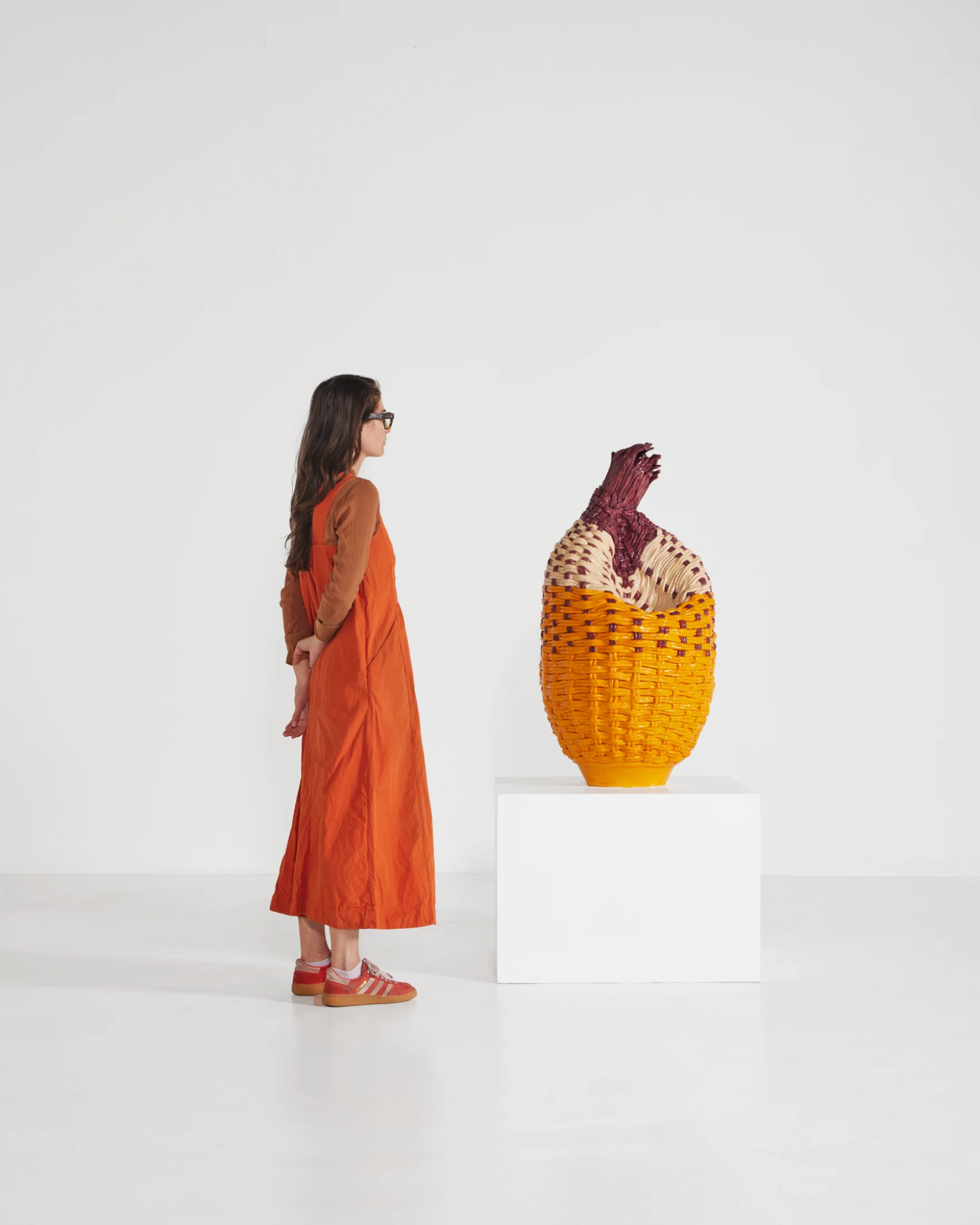
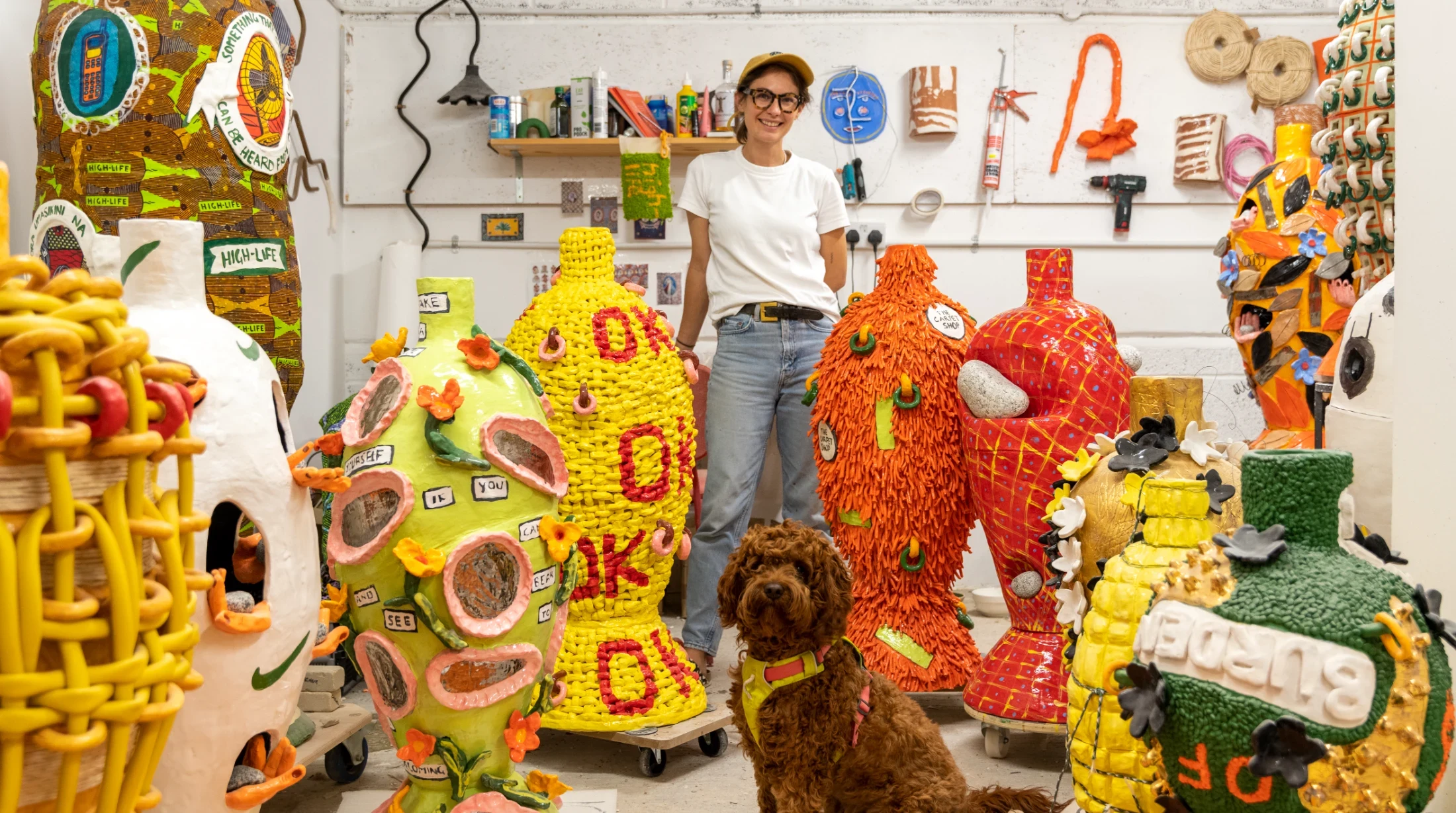
Extra large, colourful and intricately detailed, the sculptures of London-based Zimbabwean ceramicist Xanthe Somers capture your attention, draw you in and then, if you choose to bite, they catch you.
Inside the Sculptural World of Xanthe Somers.
Kate Kolberg
Writing:
Writing:
Kate Kolberg
Photography:
Photography:
No items found.
Magazine Current IssueMagazine Current Issue
The After shot of the Floorplan
Before
before
after
After
Top
Arrow UpArrow Up
Many metaphors came to mind as I attempted to digest the practice of Xanthe Somers. A web. A labyrinth. A tapestry. But the one that felt most ripe was a lure. Extra large, colourful and intricately detailed, the sculptures of the London-based Zimbabwean ceramicist capture your attention, draw you in and then, if you choose to bite, they catch you. Once caught, you might not feel trapped or tricked like a fish, but you are likely to experience a similarly abrupt shift in perspective: this is not what I thought it was.
That's because a prolonged engagement with Somers's sculptures reveals the historical legacies coiled into them. How, beyond their playful exteriors and familiar domestic shapes, lies the artist's critical readings of the complex realities of race, labour, extractive economies and gender. We spoke to Somers from her Herne Hill studio in London, where her dog Jenga and the frequent sounds of a train crossing the overhead railway arch kept her company as she described how she weaves these complicated and neglected narratives into her practice.

Your roots in Harare are such a huge part of your practice, so let's begin there. Tell us a little about your childhood and how you experienced Zimbabwe at the time.

My childhood was wholesome, I went to a good school, lived in a lovely home and spent most of my time outside in the sunshine. I am sure I was aware of the poverty and the wealth disparity – though, I had nothing to compare it to, and as a child I seemed to accept the world I was brought into.

You've described the experience of being raised in a very British cultural context within an African landscape as both confusing and formative. Was this something you were always aware of or did it come with age?

I grew up with our hot summer holiday falling over Christmas time, but shops would still spray their windows with fake snow to echo a cold British Christmas. This is what I read in books and what I watched in movies; this imagined reality was palpable. It would be 30 degrees outside and we would cover a hot Christmas roast in gravy and bread sauce, because British traditions remained our traditions and the remnants of colonial rule remained prevalent there.

That said, I only really grappled with the reality of what it was to grow up in Zimbabwe, in a very British cultural context, once I went to university in Cape Town – especially when the Rhodes Must Fall protests swept South Africa. It became more clear, under the Cambridge curriculum, that I was learning about vikings or the Battle of 1066 rather than, say, the history of Zimbabwe.

You've since moved to London but still visit Zimbabwe regularly. What do those trips look like?

I have family and friends who live in Harare, so I mostly go back to visit them. But in September when the msasa trees are red with new leaves, and the ground is dusty, and my grandmother sends me pictures of the hot red sunsets, I get such an urge to be back in that landscape.

Several art projects have also brought me back. I completed two residencies with Southern Guild in South Africa in 2024 and 2025 as well as a residency with First Floor Gallery in 2021, which culminated in an exhibition at their Victoria Falls gallery. More recently I also worked on a project where I hosted a workshop in Harare where we made woven clay mirrors as a project for a safari lodge in Mana Pools. There were a variety of local Zimbabwean ceramicists who were brought on board for the project, and I learnt a great deal from them.

I find these working visits back in Africa to be inspiring and formative. I'm grateful that I remain able to participate in African cultural conversations there and within my home in the UK.
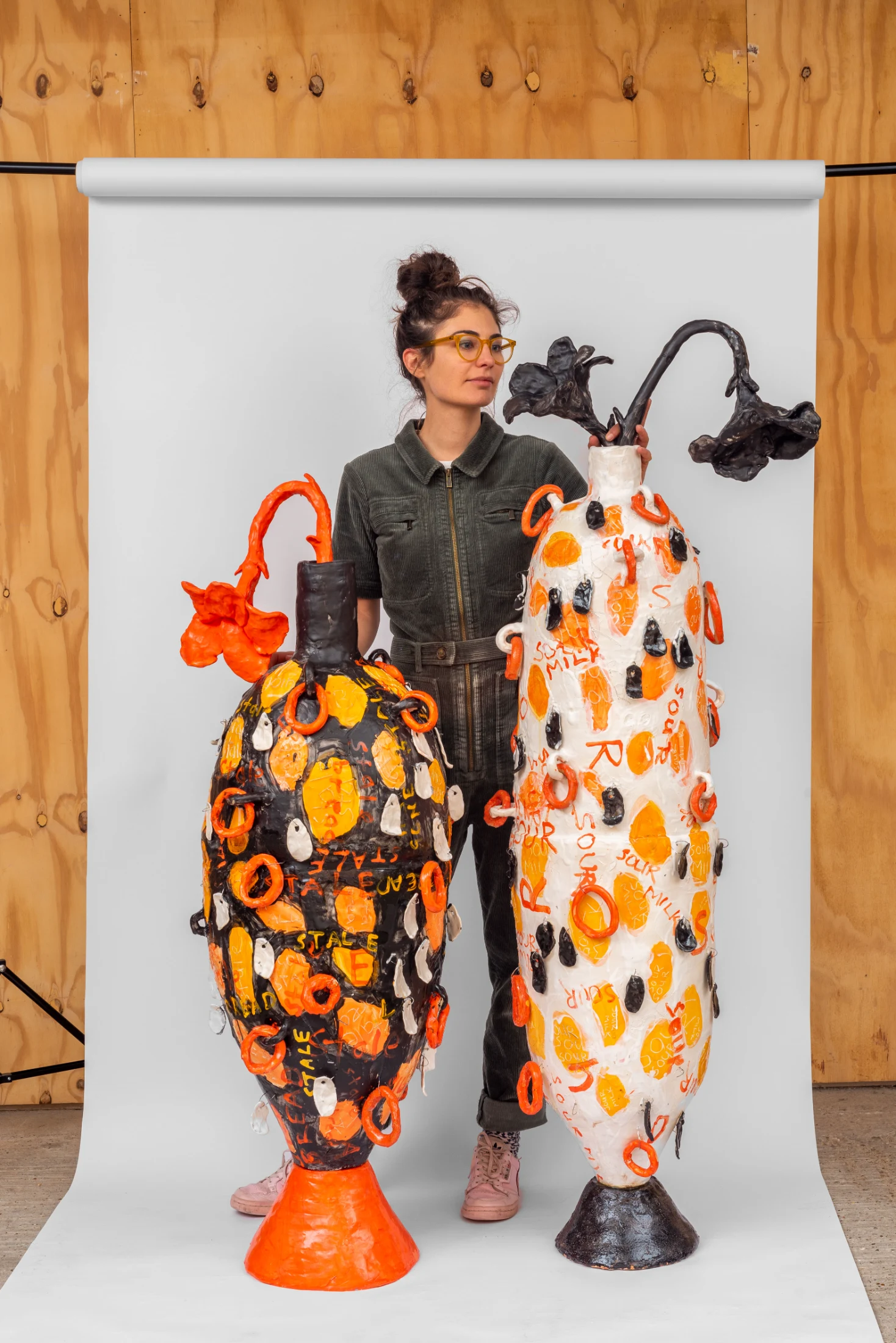
Let's talk about your work. Your sculptures often take the form of familiar and utilitarian domestic objects, which, you point out, are objects often made by women. What draws you to the domestic as your central theme?

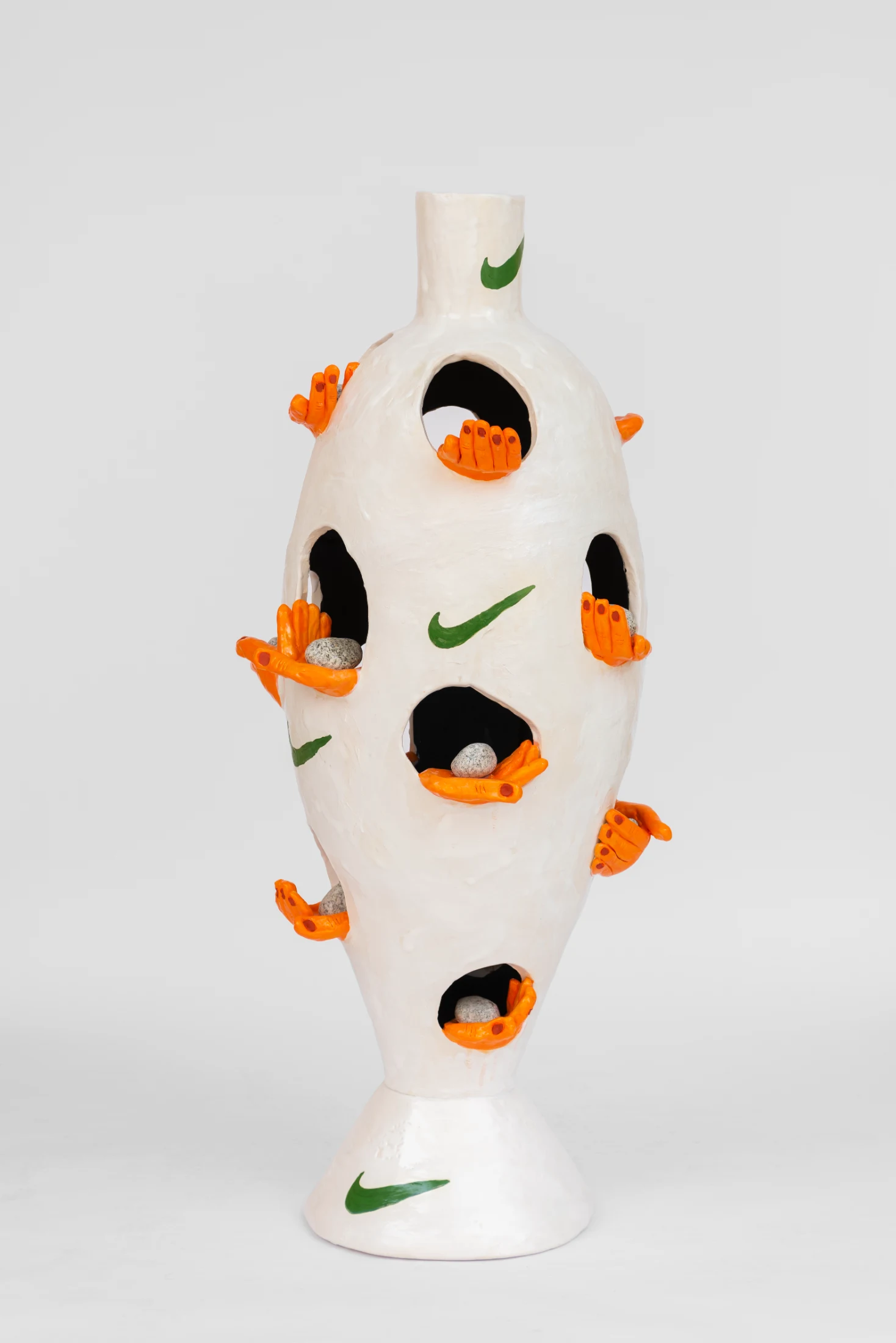
In Zimbabwe, where I grew up, many homes have cleaners and gardeners who exist within an 'invisible' framework; caring for children, cooking meals and sometimes traveling for hours. Their work is underpaid, undervalued and often considered unskilled. I wanted to bring attention to the undervalued and invisible labour of women within the domestic sphere – and more broadly the labour practices in the Global South – and a way I found of doing this was to explore the laborious act of weaving through the medium of clay.

Drawing on the traditions of cloth, clay, and weaving – mediums long entwined with storytelling and historically confined to the hands of women – these works consider how traditions of clay and weaving, as well as practices like caring and cleaning, have been marked by silence and erasure. By reimagining these inherited crafts through scale, colour, and motif, my pieces bring past traditions under a contemporary lens, offering space for visibility and recognition where stories have long been overlooked.

An approach that seemed to have informed your 2024 exhibition 'Invisible Hand' at Southern Guild in Cape Town…

Yes, those works stem in part from my interest in the political and historical context of Zimbabwe's basket-making region, Binga. In the late 1950s, Binga was deeply affected by the construction of Lake Kariba, which was, in essence, built to power British mining and farming. It involved erecting a river dam that then submerged vast tracts of land, altered natural habitats and wildlife, and displaced over 57,000 riverine people from both sides of its banks. In response, these displaced women learned to adapt their traditional weaving techniques using local materials, and eventually turned them into a vital economic activity for the area.

The story of Binga is so individual and tethered to that place, but on the other hand there's also such a universality to these themes.

I think weaving in general is a visceral way to speak about the domestic. The sheets we sleep on, the carpets we walk on, the clothes on our back are all a form of woven fabric and can be extrapolated to speak more broadly about domesticity, women’s work and racialised spaces – in Zimbabwe, the Global South, and further afield.

Weaving can be used as a wider metaphor for social cohesion, or lack thereof. This predicament is significant in Zimbabwe but is apparent the world over. This is seen through the pay gap, the type of work, the power between the domestic and the public, the contrast between craft and fine art, and the negligible value attached to non-monetised women's work.

Far from negligible or invisibilised, your objects are amplified – almost shouting with colour, size, details and even humour. What are you pointing toward with these manipulations?

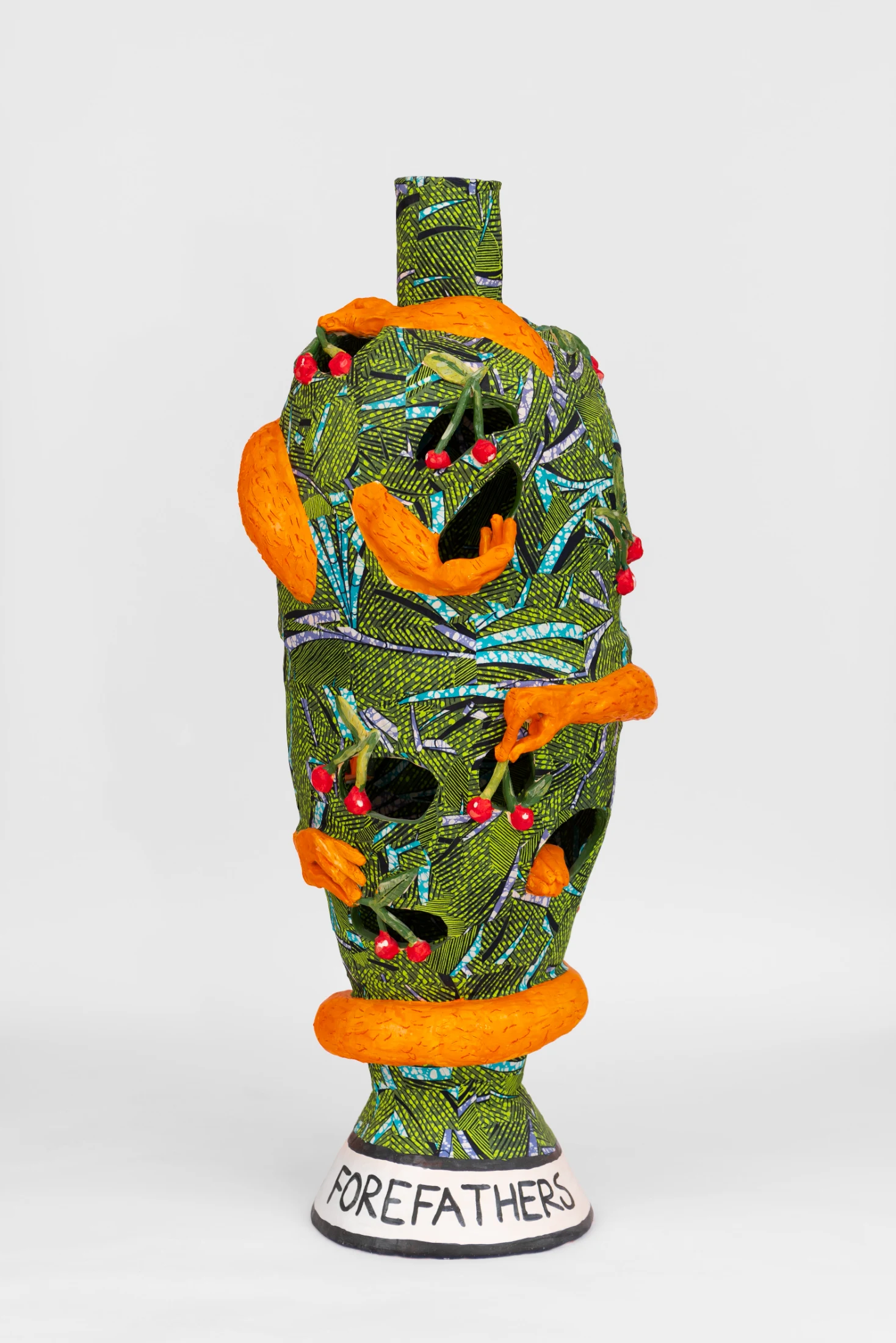
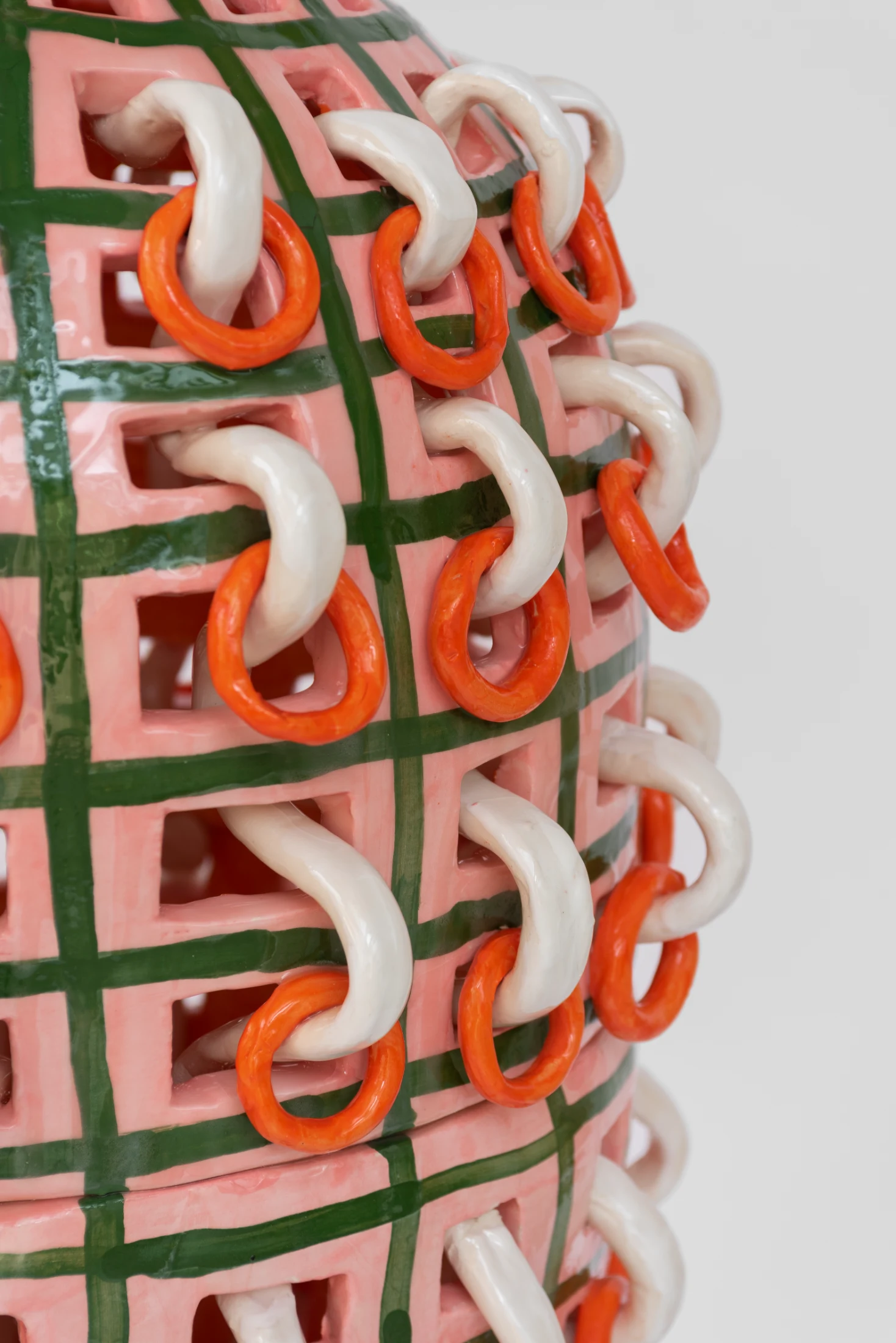
Yes, I use bold colours to draw viewers in. Humans are like bees – pulled towards colour. There is something that happens when there is recognition in a work. This may be the vessel shape that I return to, or a utilitarian domestic object, but there is a comfort for the viewer, which I hope is then disrupted when you are lured closer and see that there may be an undercurrent or deeper context asking you to look again.

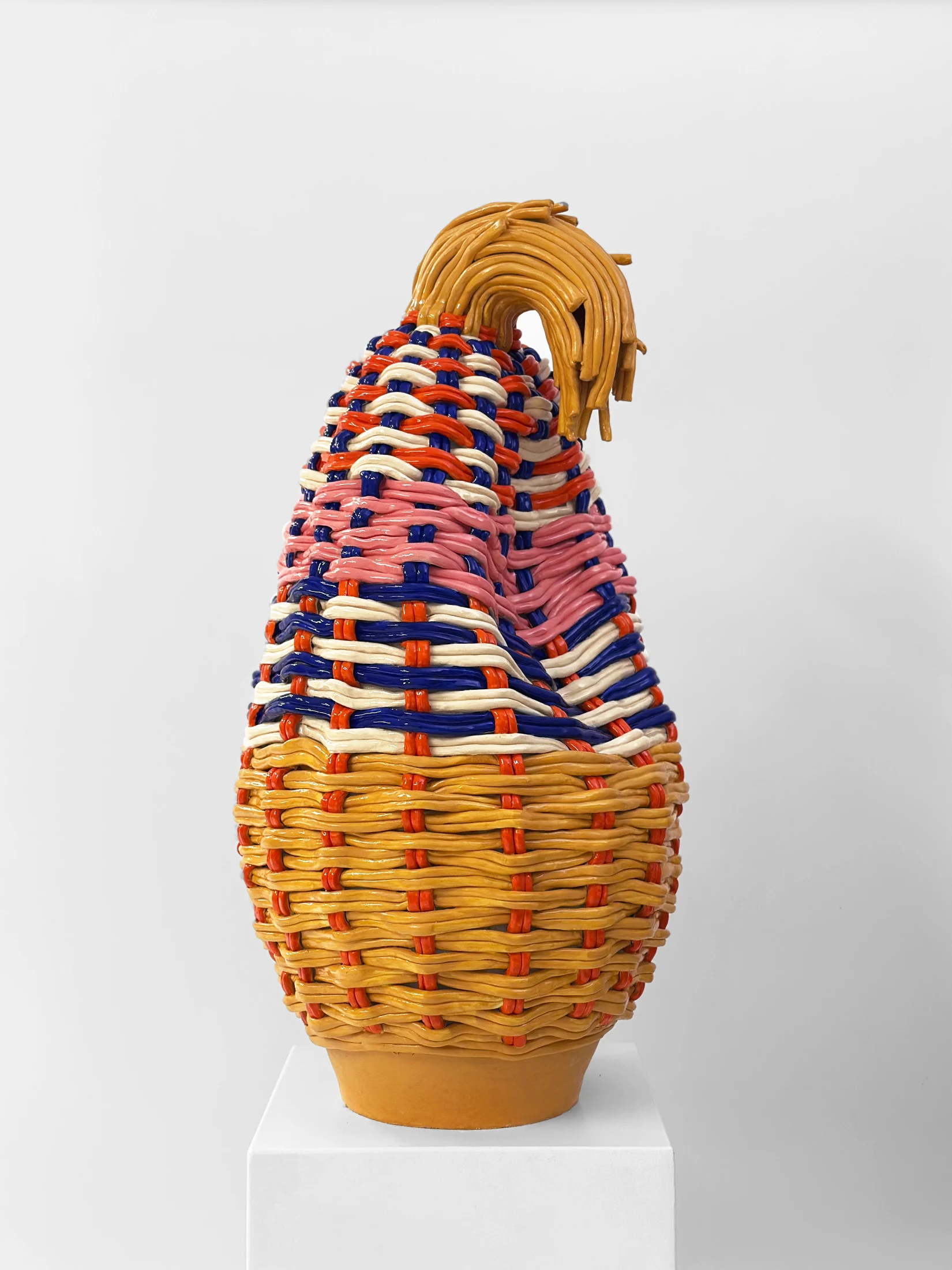
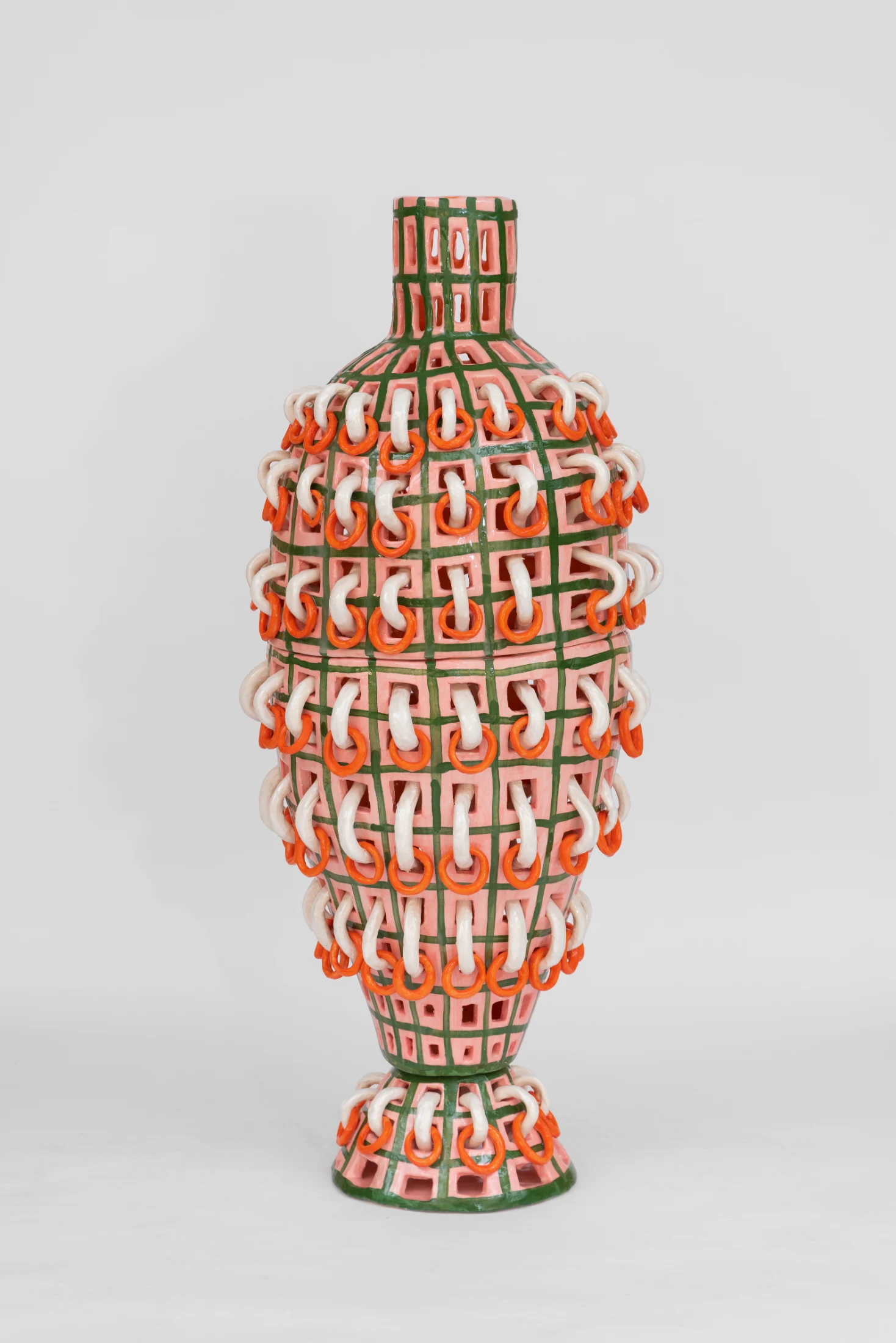
Lately, I have been exploring 'unravelling' as a central motif to reflect the fragility and loss of narrative. My woven baskets embody this tension: they are at once weighted, folding and holding, yet also fraying. Threads remain unfinished or pulled loose, with holes emerging under strain. This interplay of cohesion and collapse becomes a metaphor for the socio-political critiques embedded within my practice.

Your process is clearly very tactile and time intensive. Could you describe it for us? Is there something you learn or gain through the slow, repetitive labour of clay?

For the woven series of works the interior frames of the stoneware vessels are slowly coiled by hand, then punctured and burdened by weight to form their collapsing shape. The repetitive woven-clay technique is applied to the exterior body, which is weighted, folding, and holding. Once bisque fired, they are intricately painted to employ weaving as both metaphor and mnemonic device, referencing grass baskets while also drawing from children's blankets, kitchen cloths, knitted jumpers and other humble textiles that quietly signal care within the home.

The slow nature of this work can be a struggle, I don't think I am a naturally patient person so each day requires me to find slowness and rhythm, which is something I have come to appreciate. The time-intensive, laborious act of weaving with clay feels like an appropriate way to speak about labour practices.

As your career continues to evolve, how do you imagine the dialogue between your two homes continuing to shape your work in the years ahead?

These themes are central, so I imagine they will remain at the forefront of what I do. I am currently exploring weaving other mediums into my clay vessels, such as horse hair, and thatched grass, which will hopefully further the material language I am creating. I am constantly trying to make bigger work. I find it so exciting to build large sculptures, especially when venturing into unknown territories where they may collapse or unravel at any second.

xanthesomers.com | @xanthesomers

Writing:
Writing:
Kate Kolberg
Photography:
Photography:
Back to Top
Arrow UpArrow Up
Top
Arrow UpArrow Up
The After shot of the Floorplan
Before
before
after
After
Businesses featured in this project
No items found.
Products featured in this project
No items found.
Magazine Current IssueMagazine Current Issue
Writing:
Writing:
Kate Kolberg
Photography:
Photography:
Back to Top
Arrow UpArrow Up