

Magazine Current IssueMagazine Current Issue
5 Bold Design Ideas Inside a Small Milan Loft-Style Apartment
Projects
March 12, 2026

5 Bold Design Ideas Inside a Small Milan Loft-Style Apartment

Curtains that hide a kitchen, a travertine-tiled loft cube and a colour-drenched bathroom — this Milan apartment shows how bold ideas can shape a small studio apartment.

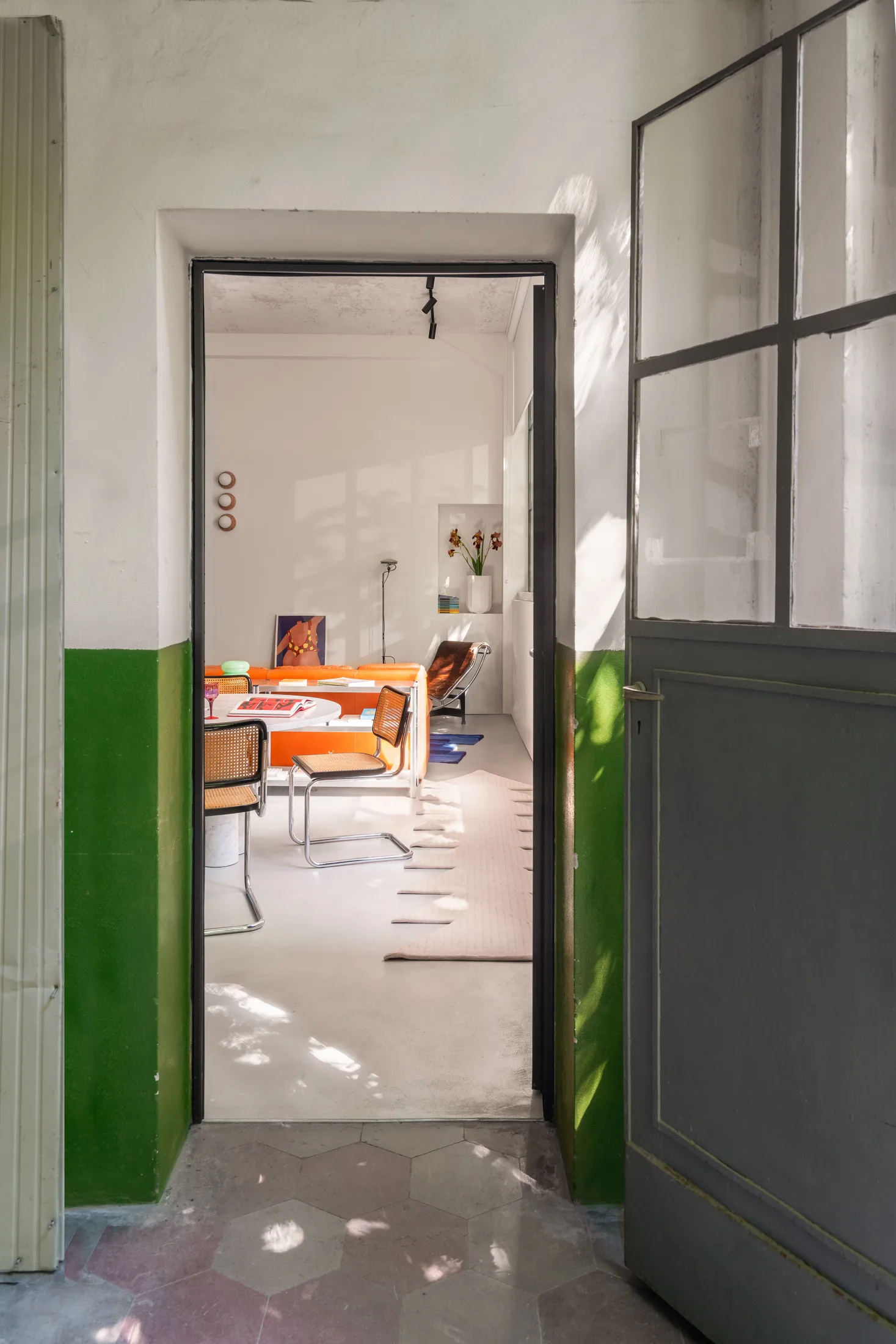
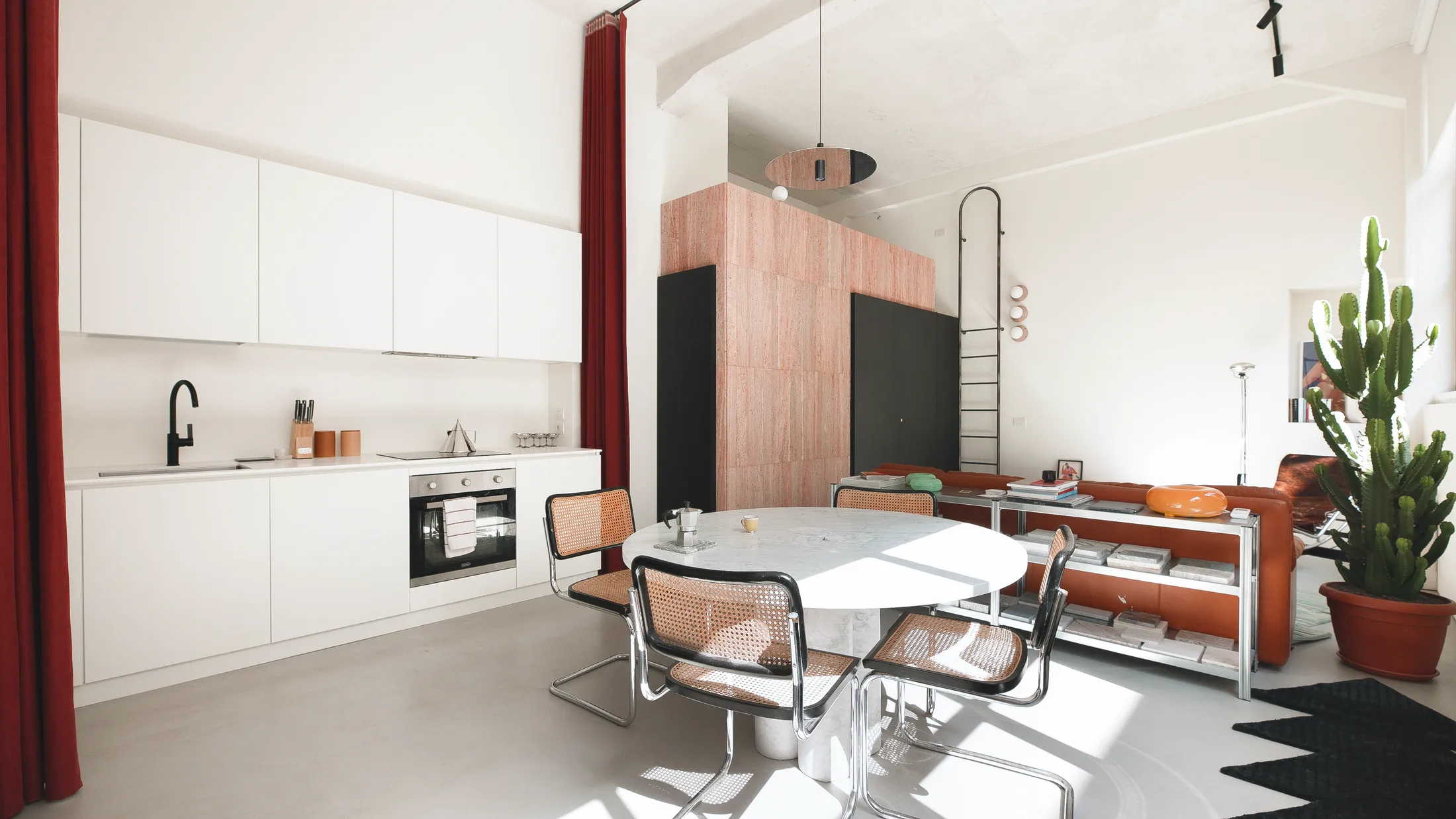
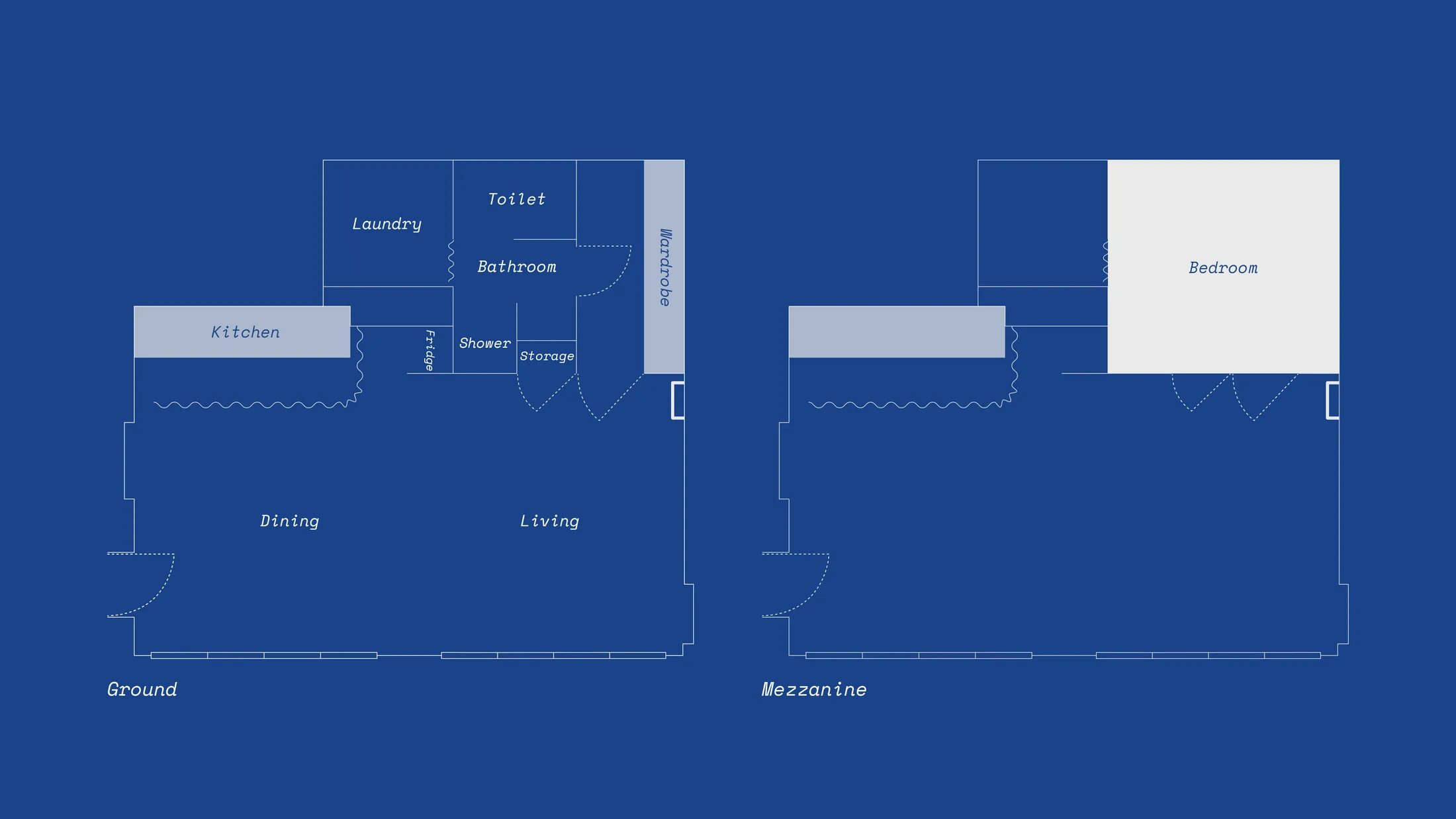
In Milan’s Lambrate district, architect Piermattia Cribiori and the team at Atelierzero transformed a former office into Abode67, a compact 45sqm/484sqft apartment with an additional 10sqm mezzanine. Inspired by the atmosphere of early 2000s lofts, the project uses material contrasts, custom furniture and bold colours to define zones within an open-plan layout.

Writing:
Piercarlo Quecchia
Writing:
Photography:
Photography:
Piercarlo Quecchia
Magazine Current IssueMagazine Current Issue
The After shot of the Floorplan
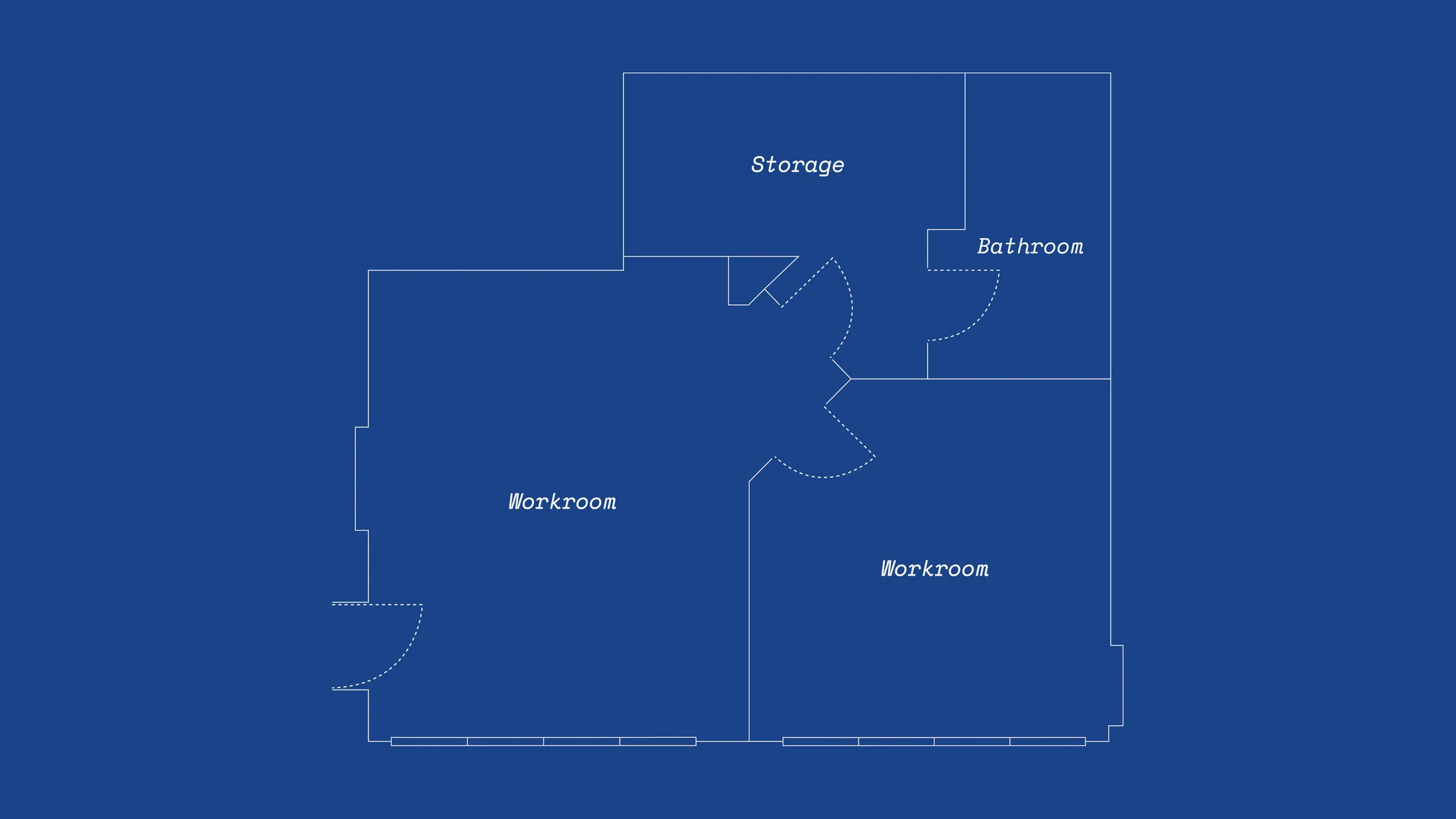
Before
before
after
After
Top
Arrow UpArrow Up

Originally configured as two workrooms, a bathroom and a small storage space, the apartment felt dark and disjointed. A dropped ceiling concealed the true height of the room and the layout restricted natural light from entering through the large industrial-style windows. During the renovation, the architects removed all internal partitions, revealing a brighter, more generous space.

Rather than reconfiguring the space with new walls, Atelierzero organised the apartment around a series of strategic interventions: a multifunctional central cube, curtains that conceal functional areas and carefully positioned furniture that subtly defines different zones. Materials play a key role too, from pleated travertine tiles and velvet curtains, to polished steel lighting and resin flooring. Together these elements transform a simple open-plan layout into a layered environment that works as both home and workspace.

Below are five design ideas that make Abode 67 feel fluid, practical and full of character.

1. A pleated travertine cube that organises the entire apartment
2. A curtain that conceals and reveals the kitchen
3. A zig-zag pendant that turns wiring into a design feature
4. Colour drenching to make a bold, monochromatic bathroom
5. Using furniture and plants to define zones

1. A pleated travertine cube that organises the entire apartment

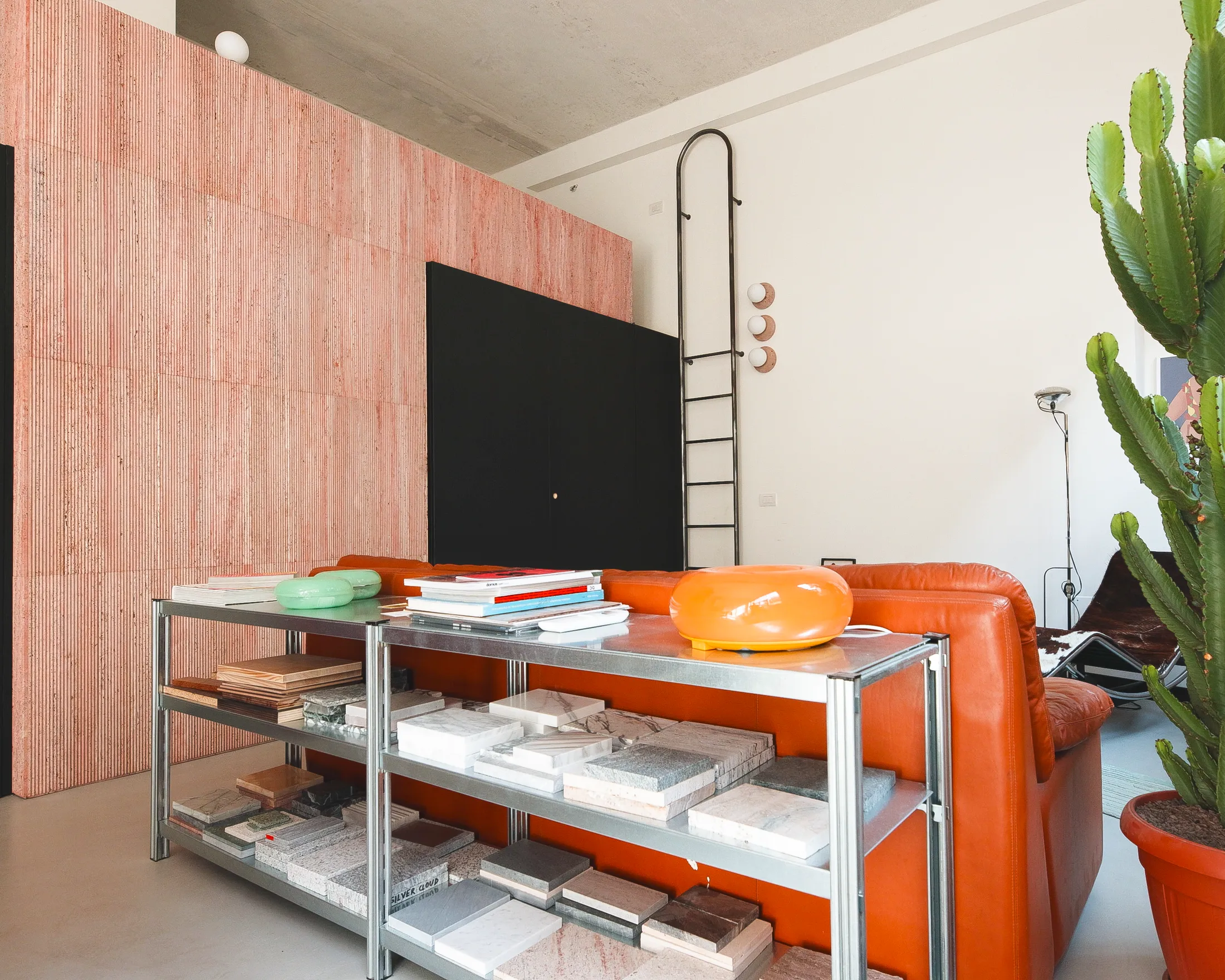
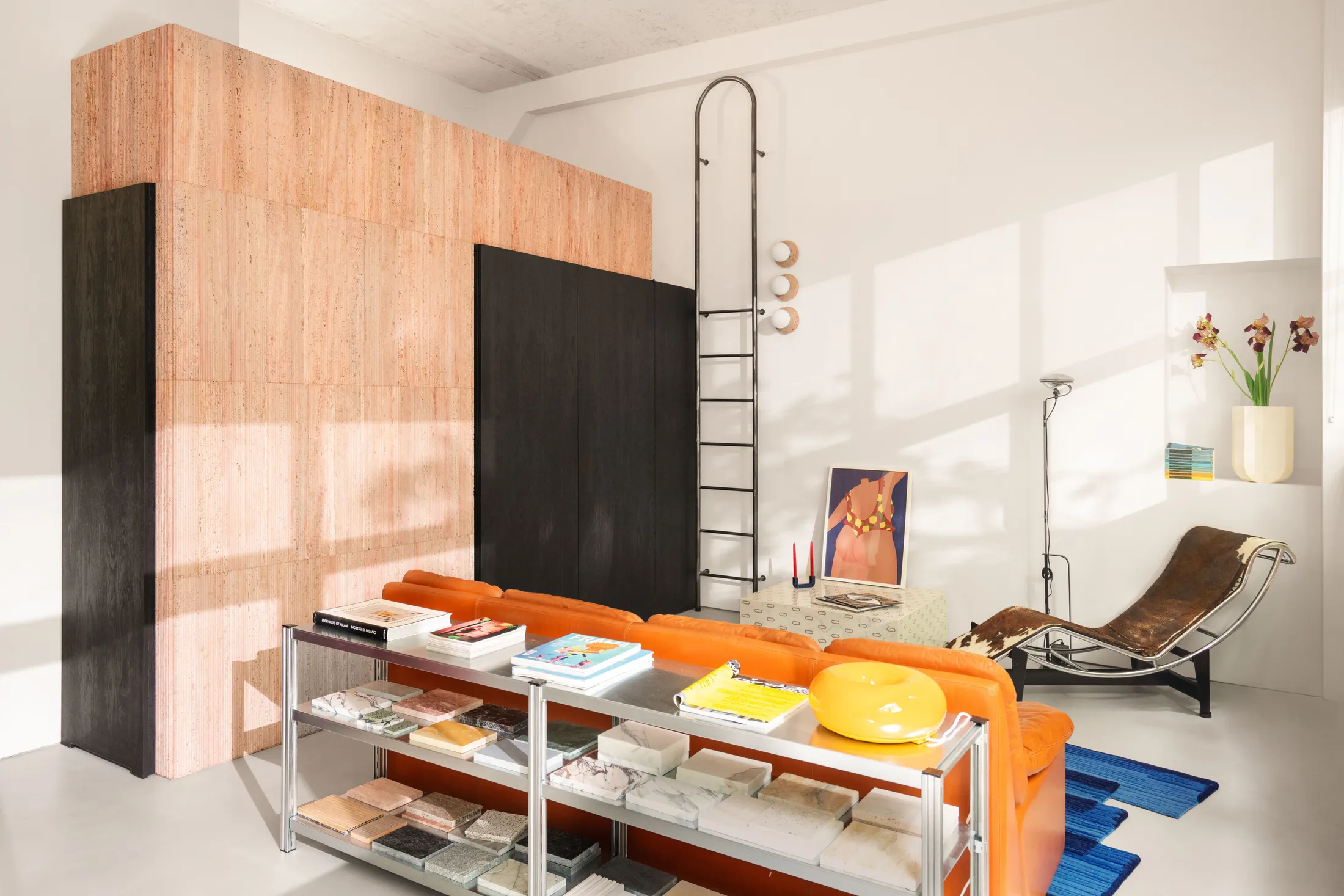
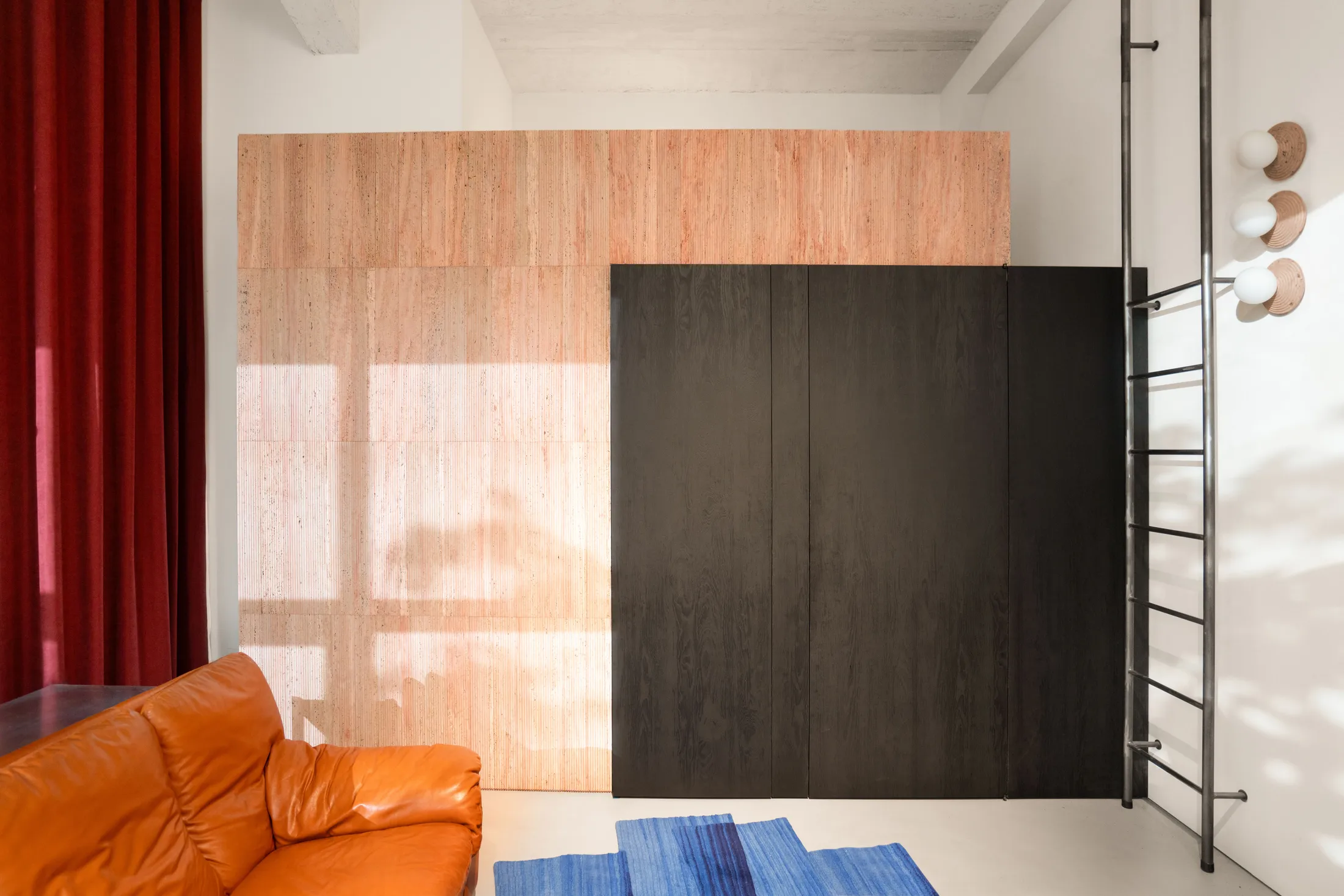
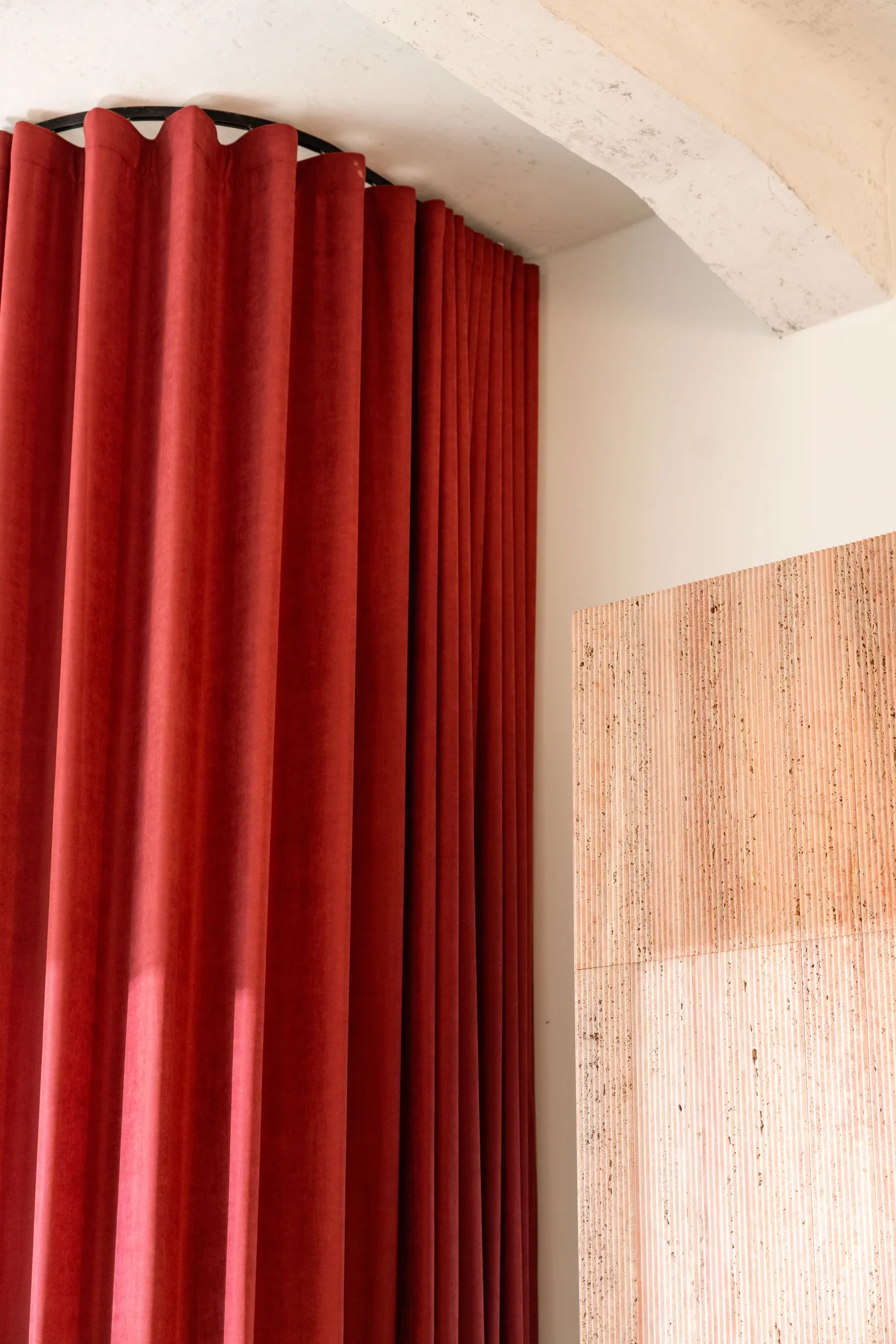
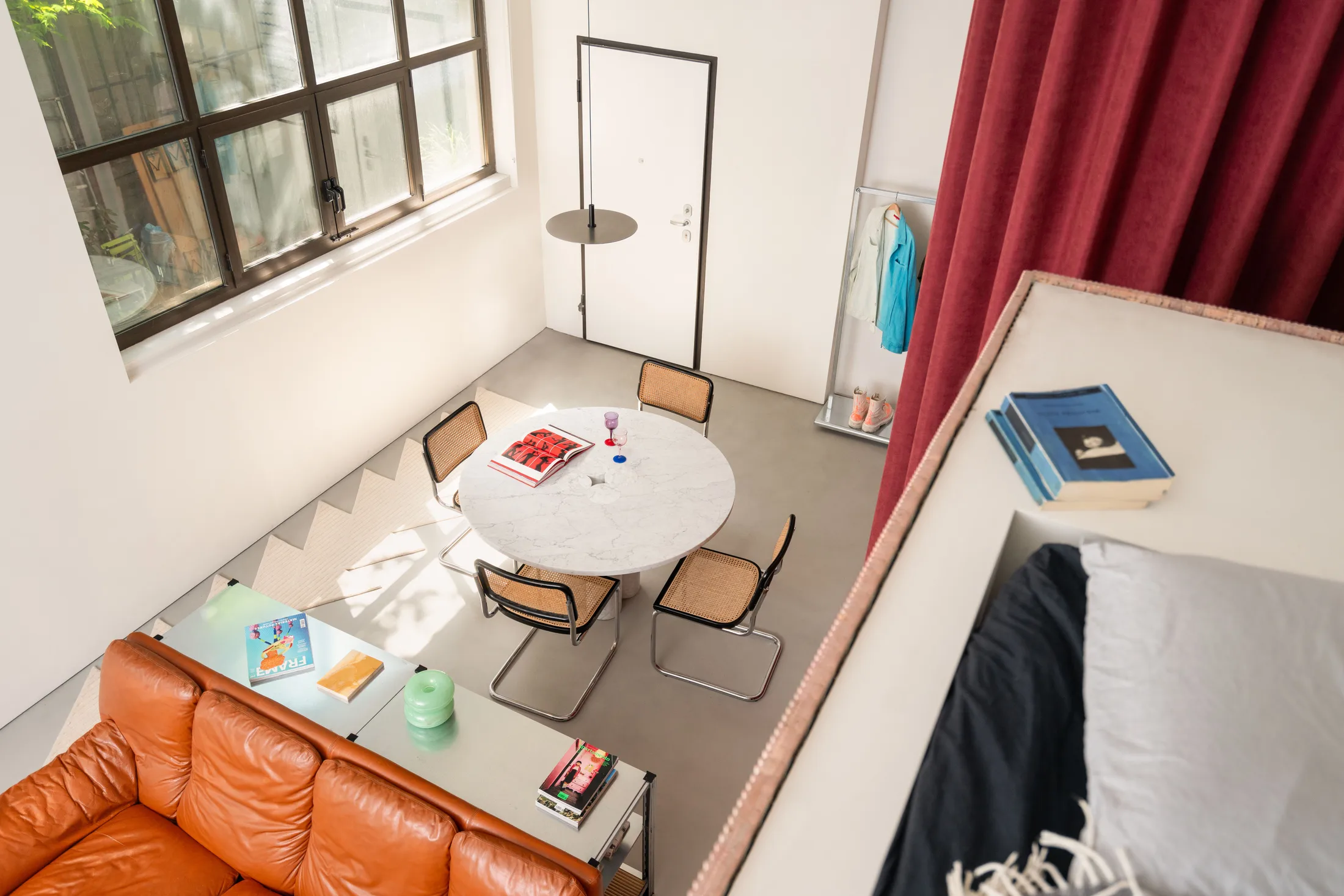
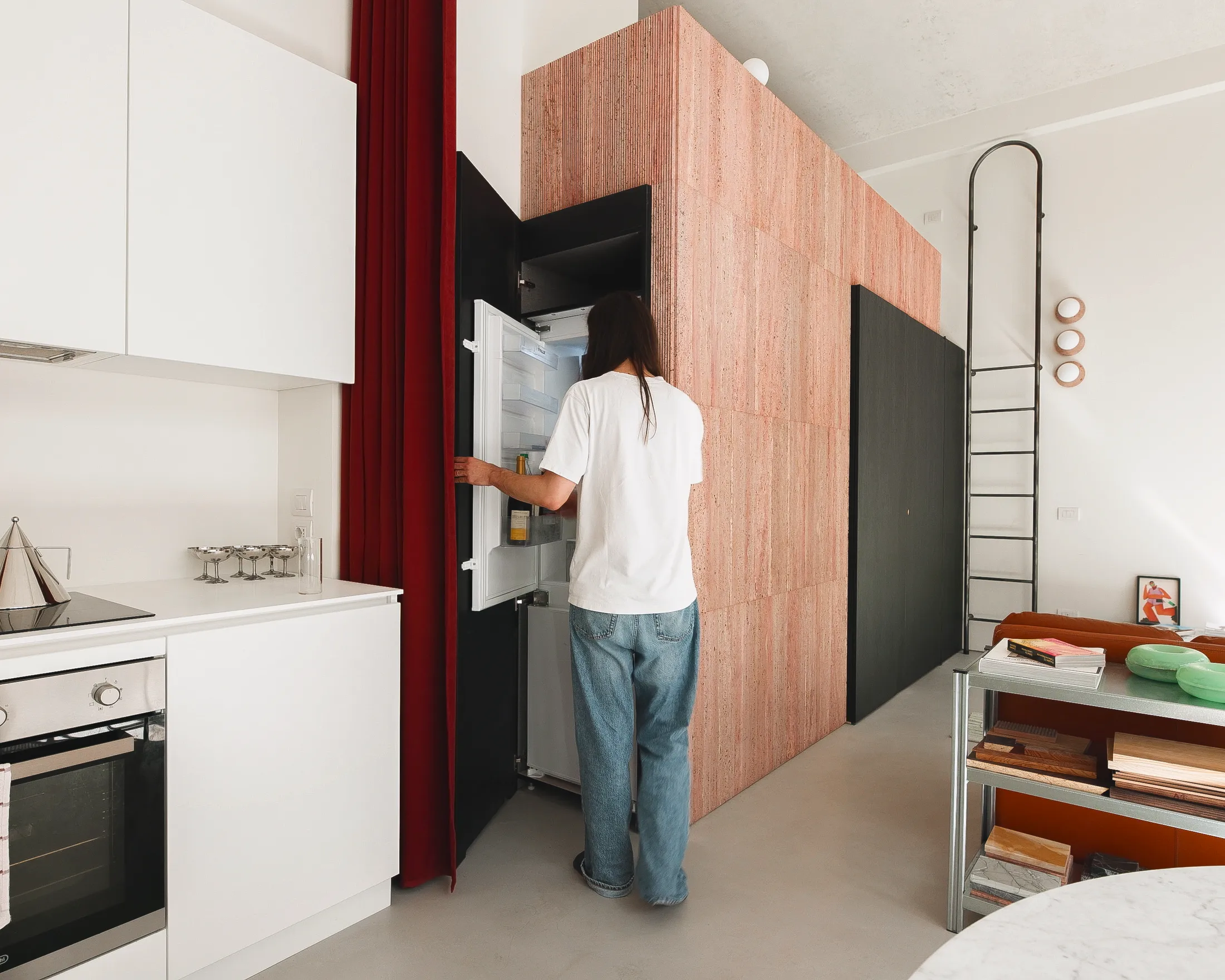
At the centre of Abode 67 sits a multifunctional architectural cube that quietly holds the apartment together. Clad in pleated red travertine slabs, the structure supports the mezzanine bedroom above while concealing a surprising number of functions within. Behind its doors are: storage cupboards, the refrigerator, the entrance into the walk-in wardrobe and access to the apartment’s bathroom. Rather than scattering these functions throughout the floorplan, Atelierzero concentrated them inside this single sculptural block. The cube’s striking travertine surface was developed in collaboration with the client, a marble craftsman, to add texture and character to the wall. The pleated stone panels also echo the folds of the nearby kitchen curtain, making the cube feel cohesive with the rest of the space, whilst feeling dynamic and expressive.
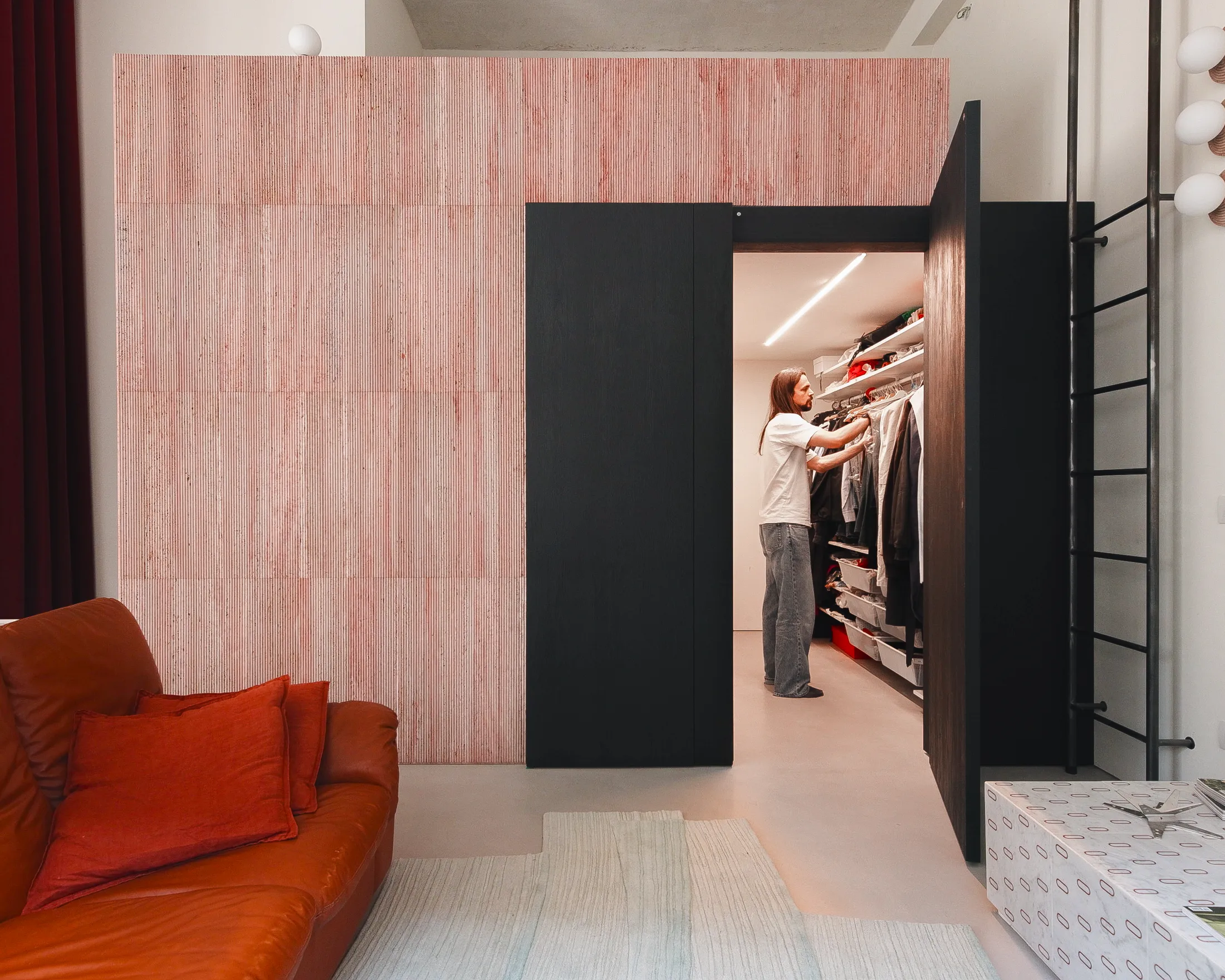
2. A curtain that conceals and reveals the kitchen

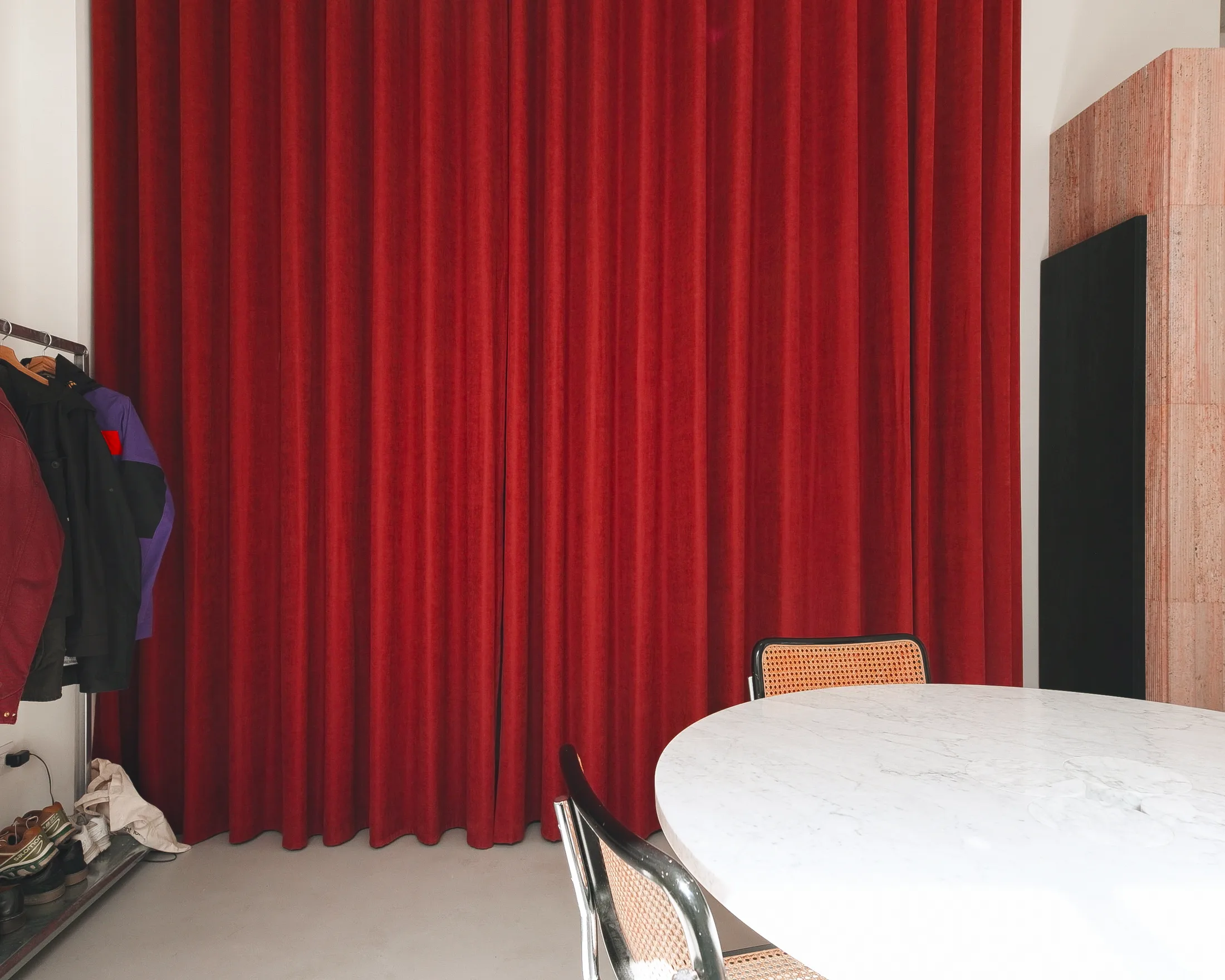
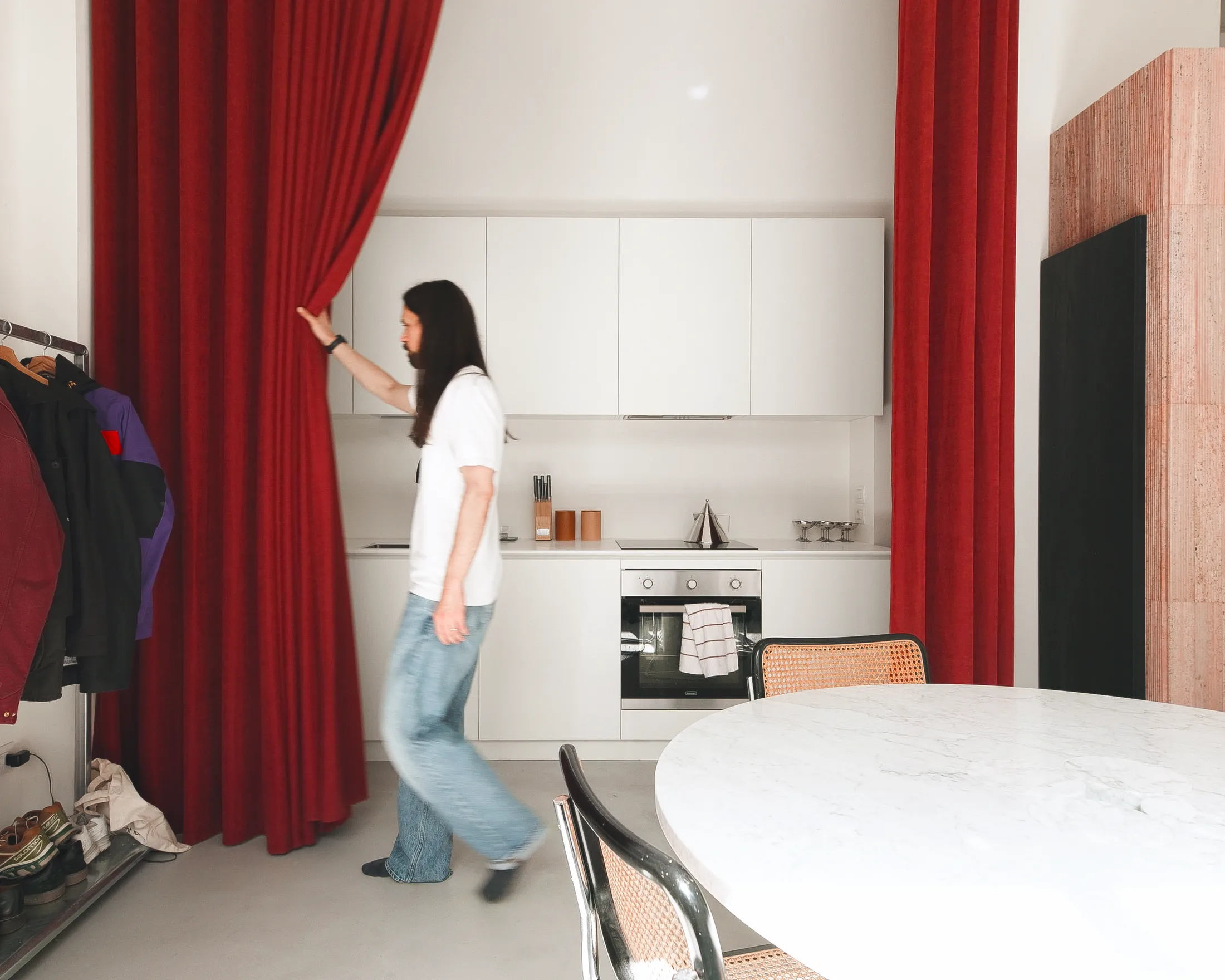
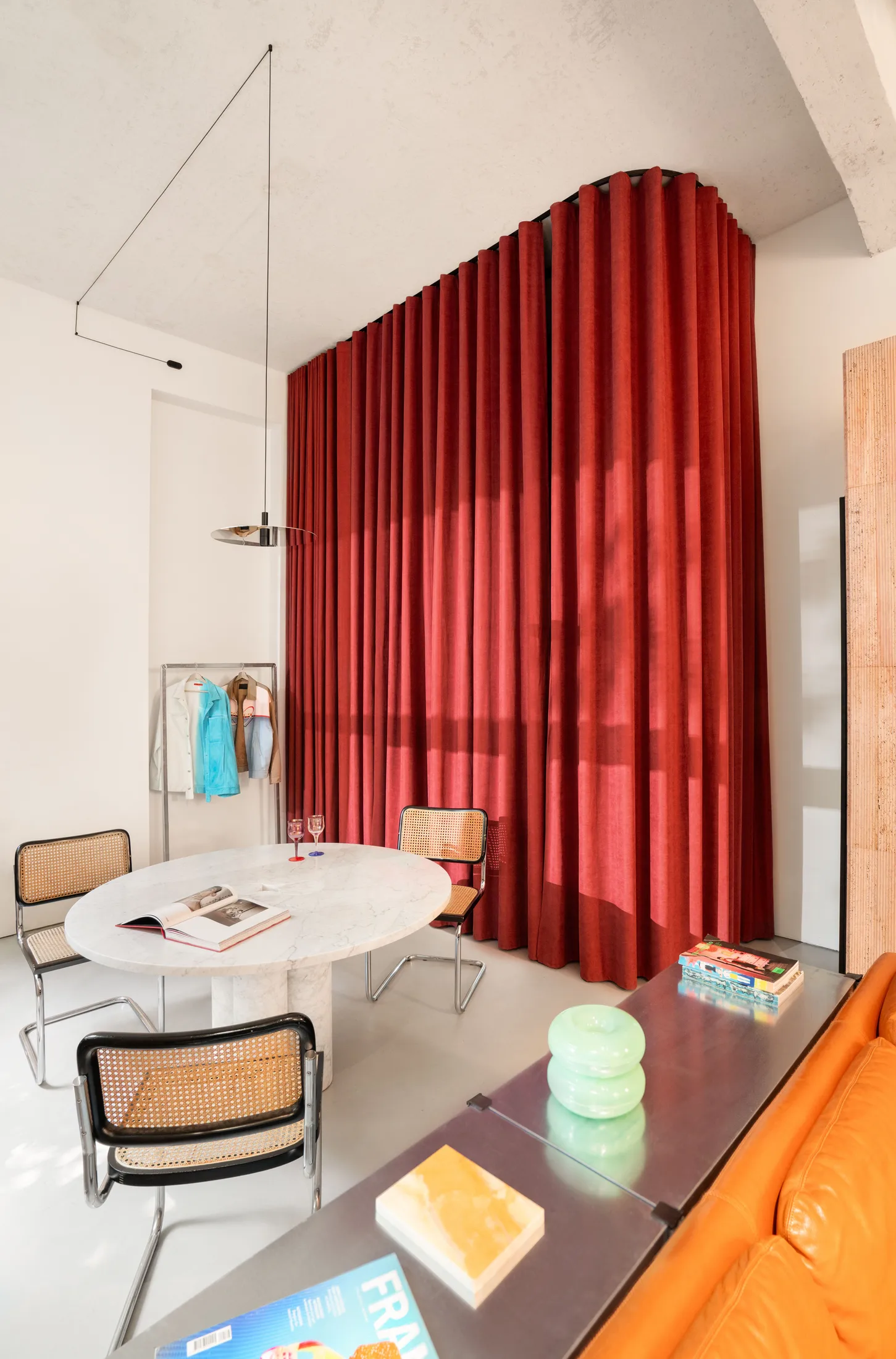
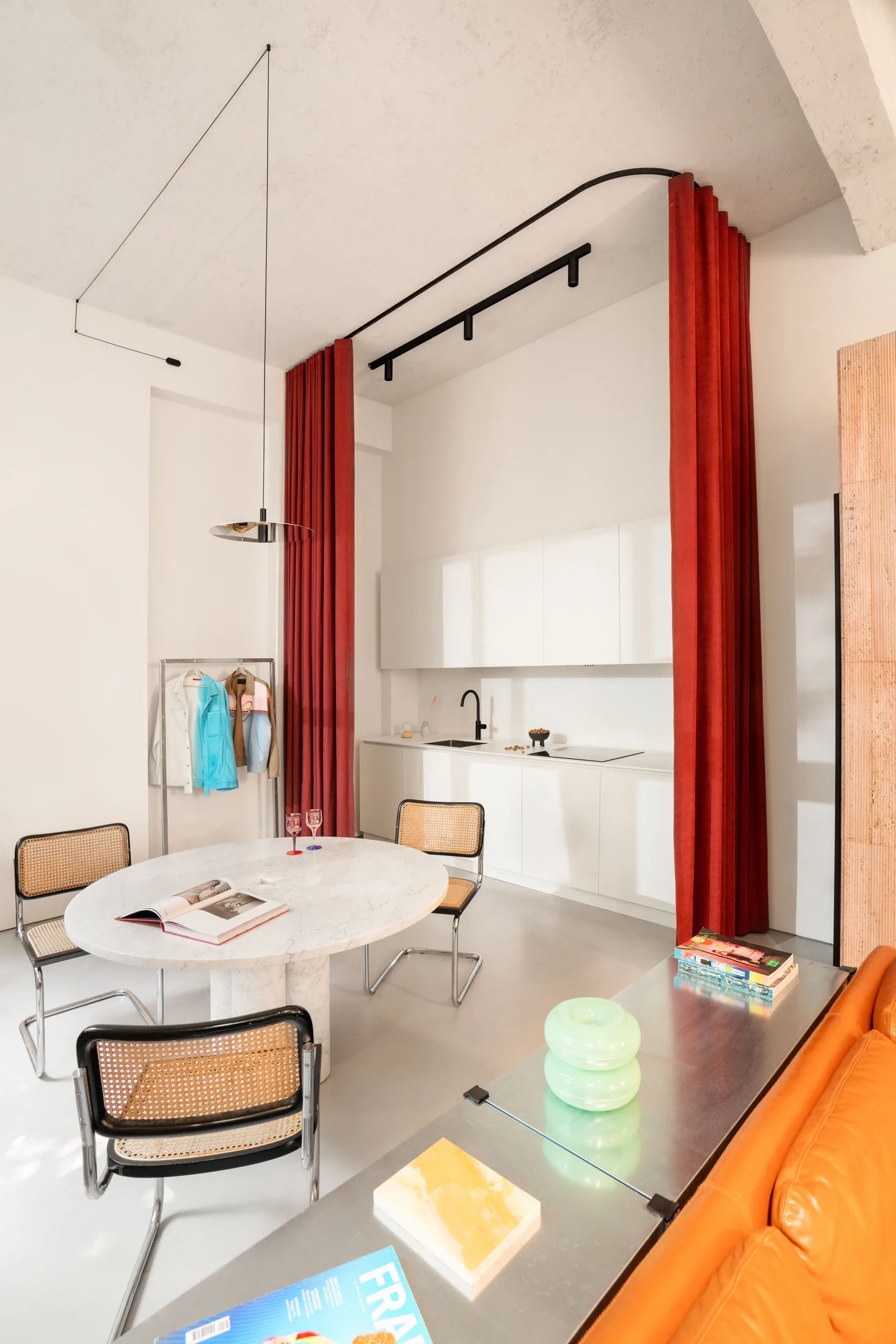
In open-plan apartments where the kitchen sits within the same space as the living area, keeping both spaces visually unobtrusive and clutter-free can help the room feel calmer and more cohesive. At Abode 67, this was particularly important as the apartment also functions as an office and informal showroom for the client’s marble business. Atelierzero solved this with a deceptively simple move: a full-height curtain that hides the kitchen entirely when it's not in use. When drawn, the deep red fabric conceals the linear kitchen and allows the living area to function as a calm, lounge-like space rather than a functional cooking and dining zone — an ideal feature when hosting meetings with clients or suppliers. Beyond its practical role, the curtain introduces softness into the industrial loft aesthetic. Its rich colour echoes the central cube’s travertine tones, whilst the flowing fabric adds warmth to the otherwise minimal space. In compact homes where rooms must perform multiple roles, this simple device allows the space to transform instantly.

3. A zig-zag pendant that turns wiring into a design feature

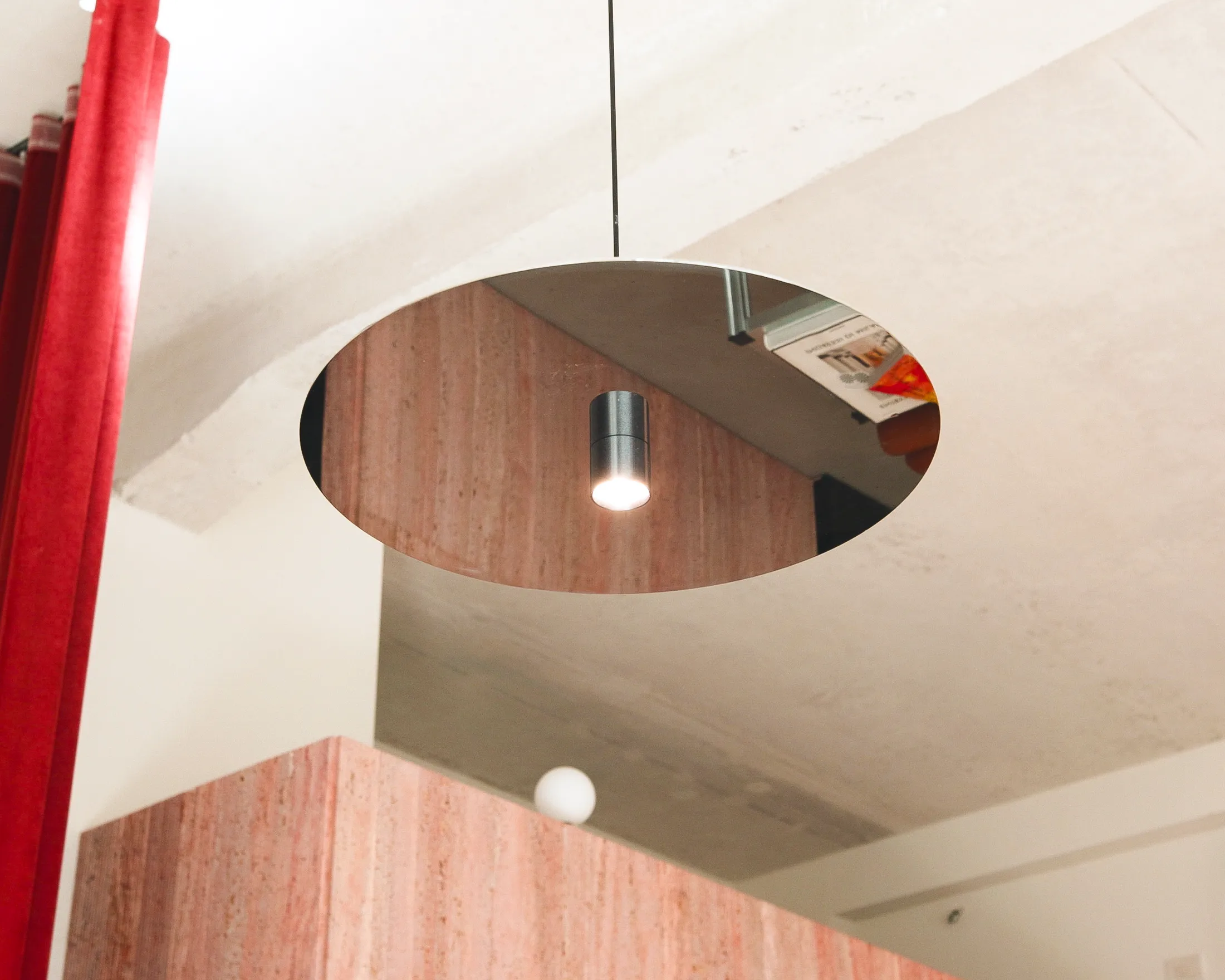
Installing overhead pendant lighting in open loft spaces can be tricky when the electrical connection points are located far from the ceiling. Instead of hiding the cable run from a pendant light, Atelierzero decided to turn it into a subtle design feature. The pendant light in Abode 67’s dining area designed by the architects themselves under their design label DeRerum begins at the wall and zig-zags across the ceiling before reaching the centre of the dining table. The cable becomes a crisp linear element that guides the eye across the room, elegantly zoning the dining area within the open-plan space. At the end of the line hangs a polished reflective steel disc light, capturing surrounding colours and movement and adding a playful layer of reflection above the dining area.

4. Colour drenching to make a bold, monochromatic bathroom

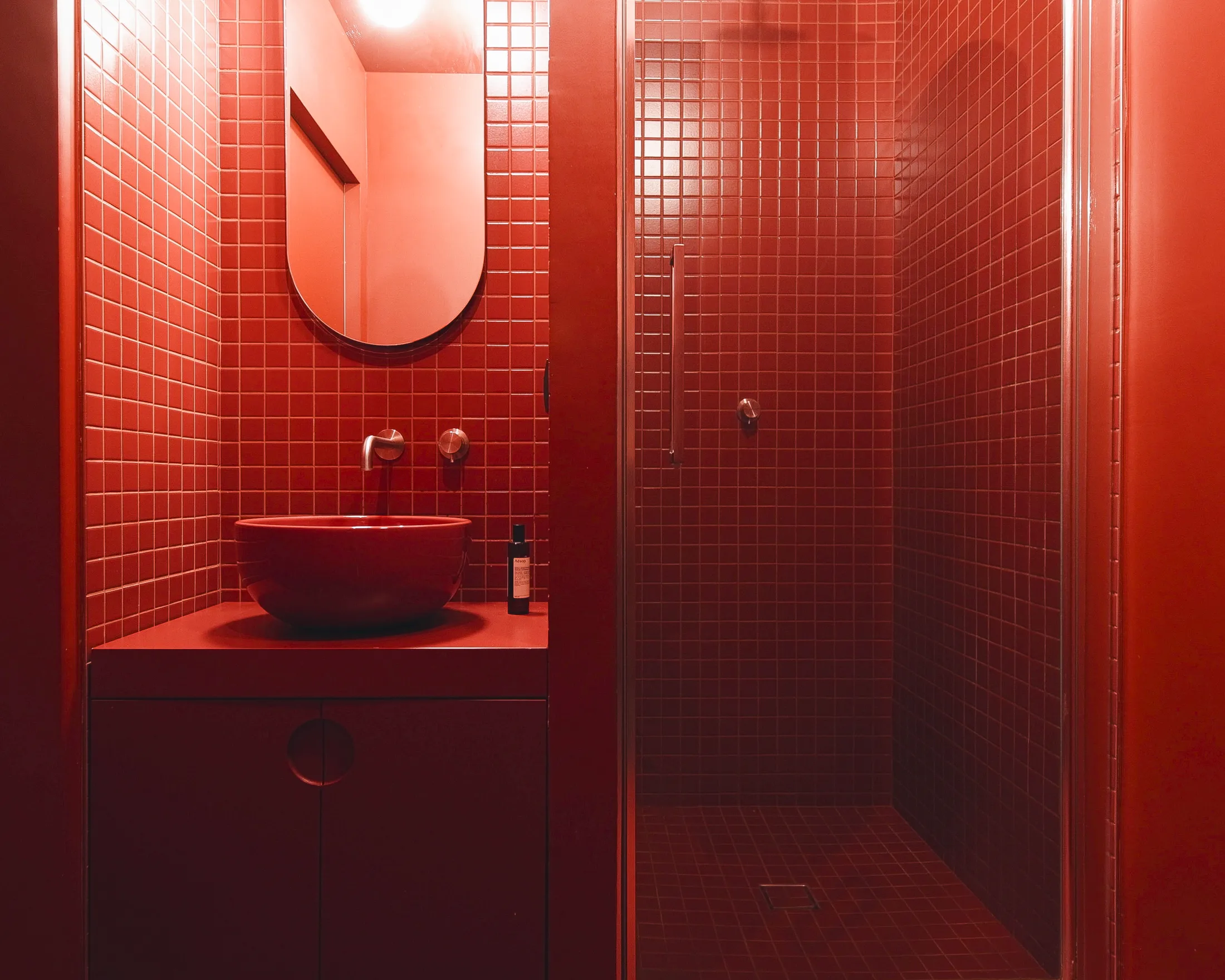
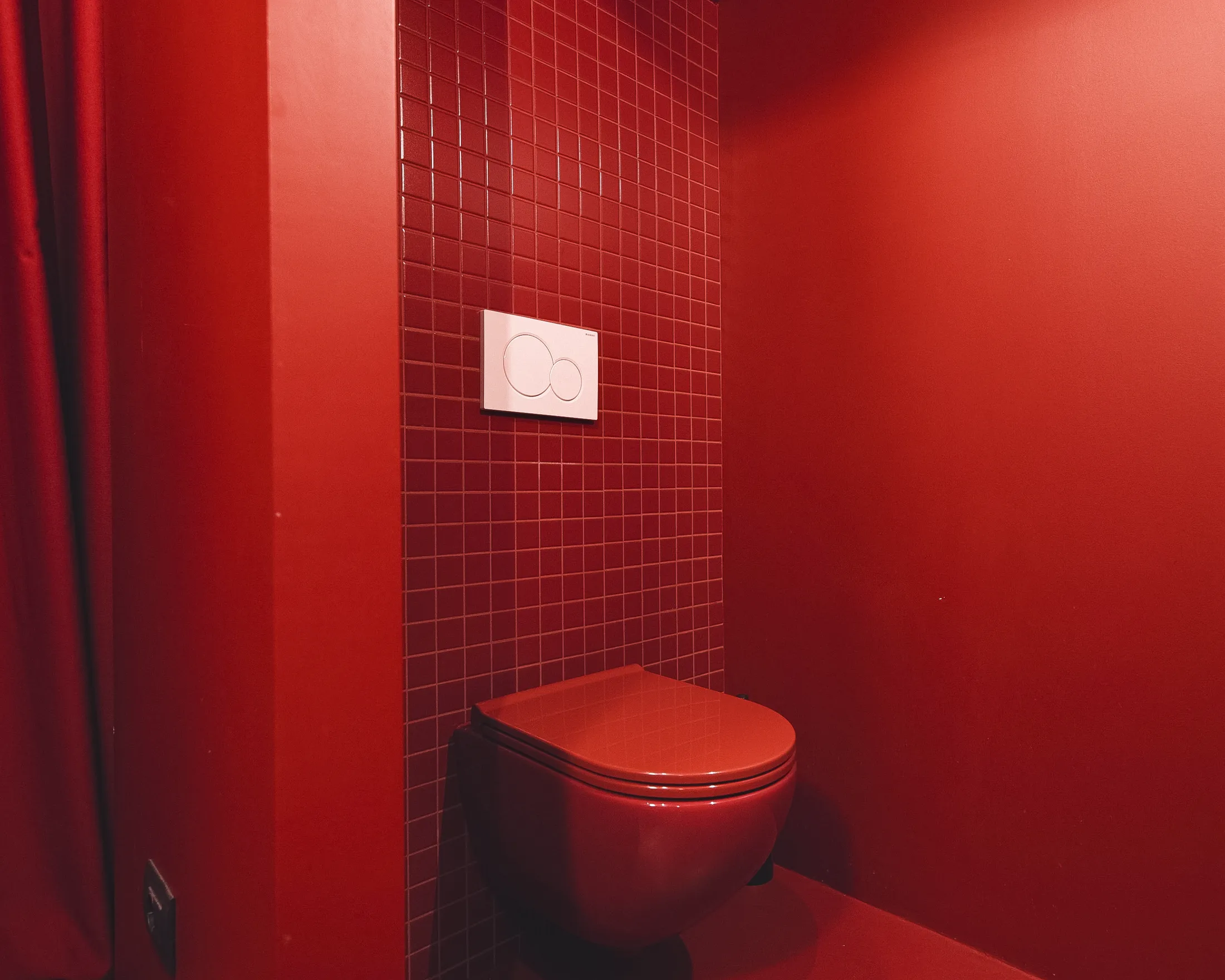
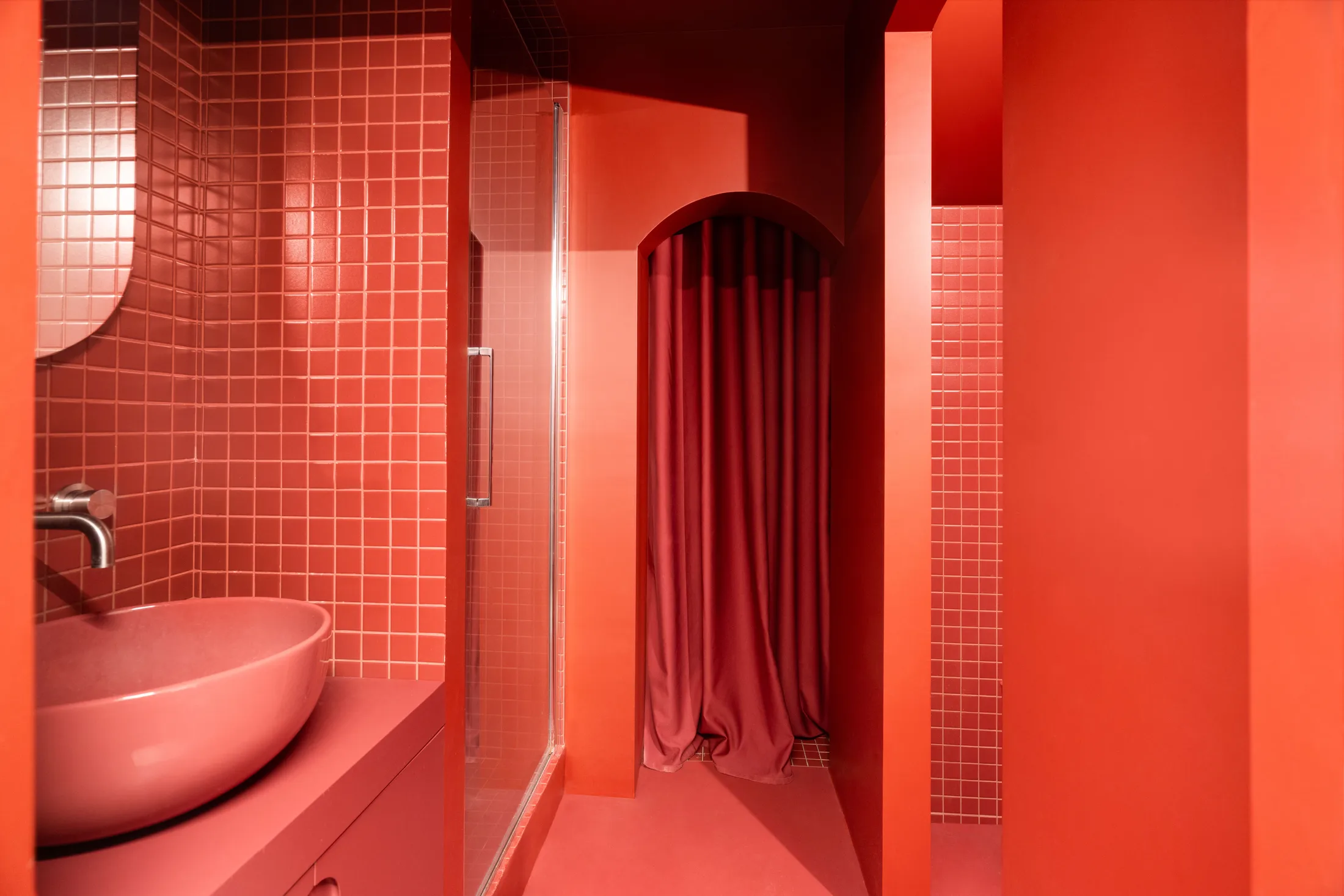
While the main living space maintains a restrained industrial palette, the bathroom introduces a dramatic shift. Every surface — the walls, floor, fixtures and cabinetry are all finished in deep red, creating an immersive colour-drenched space. The inspiration comes from David Lynch’s iconic “Red Room” in the movie Twin Peaks, where colour becomes a defining spatial experience. Hidden within the travertine cube, the bathroom feels like a secret chamber revealed only once you move deeper into the apartment. Because the space receives no natural light, the intense colour also helps create a stronger sense of atmosphere. Rather than fighting the lack of daylight, the designers embraced it, transforming the bathroom to feel bold and cinematic within the apartment’s otherwise calm interior.

5. Using furniture and plants to define zones

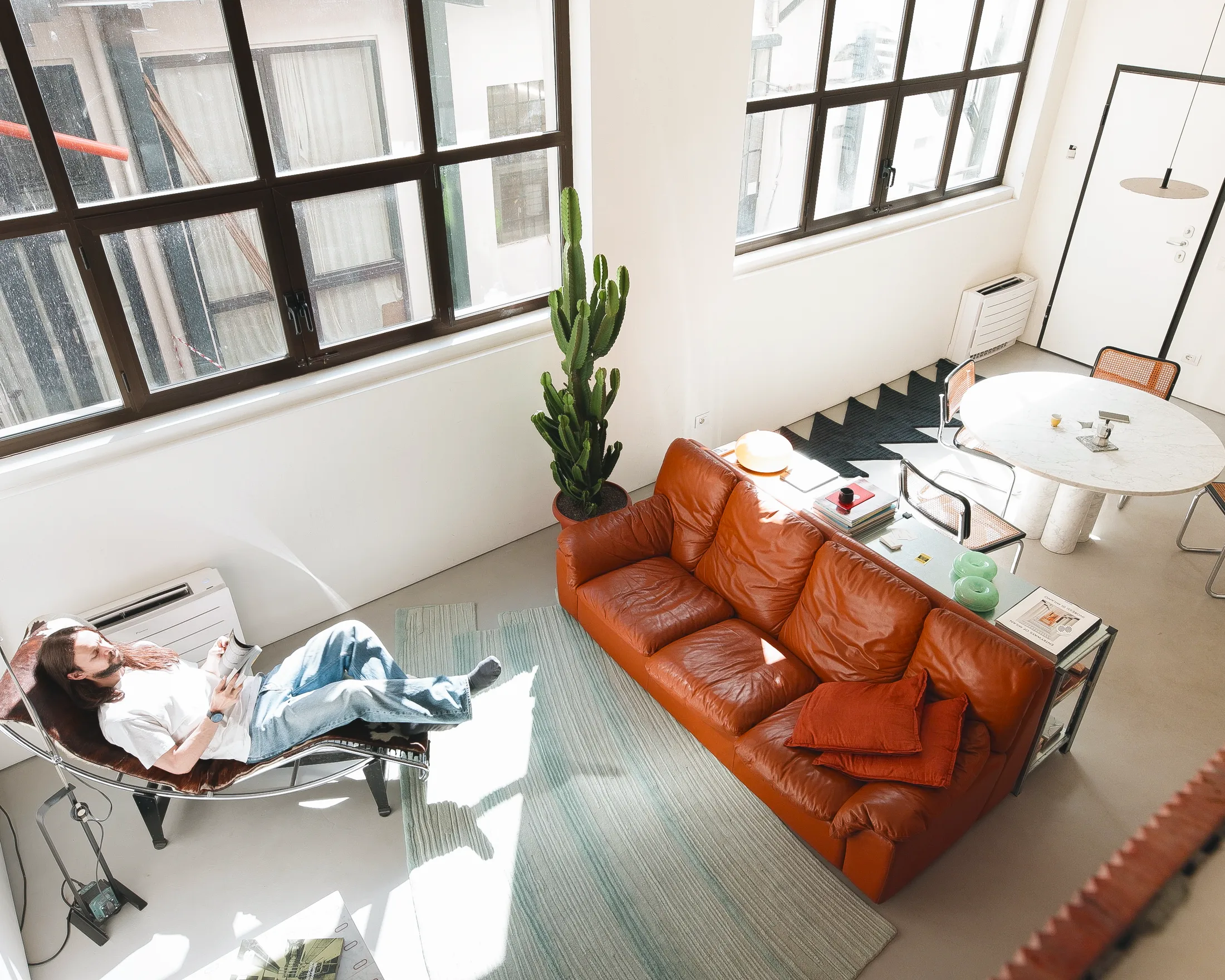
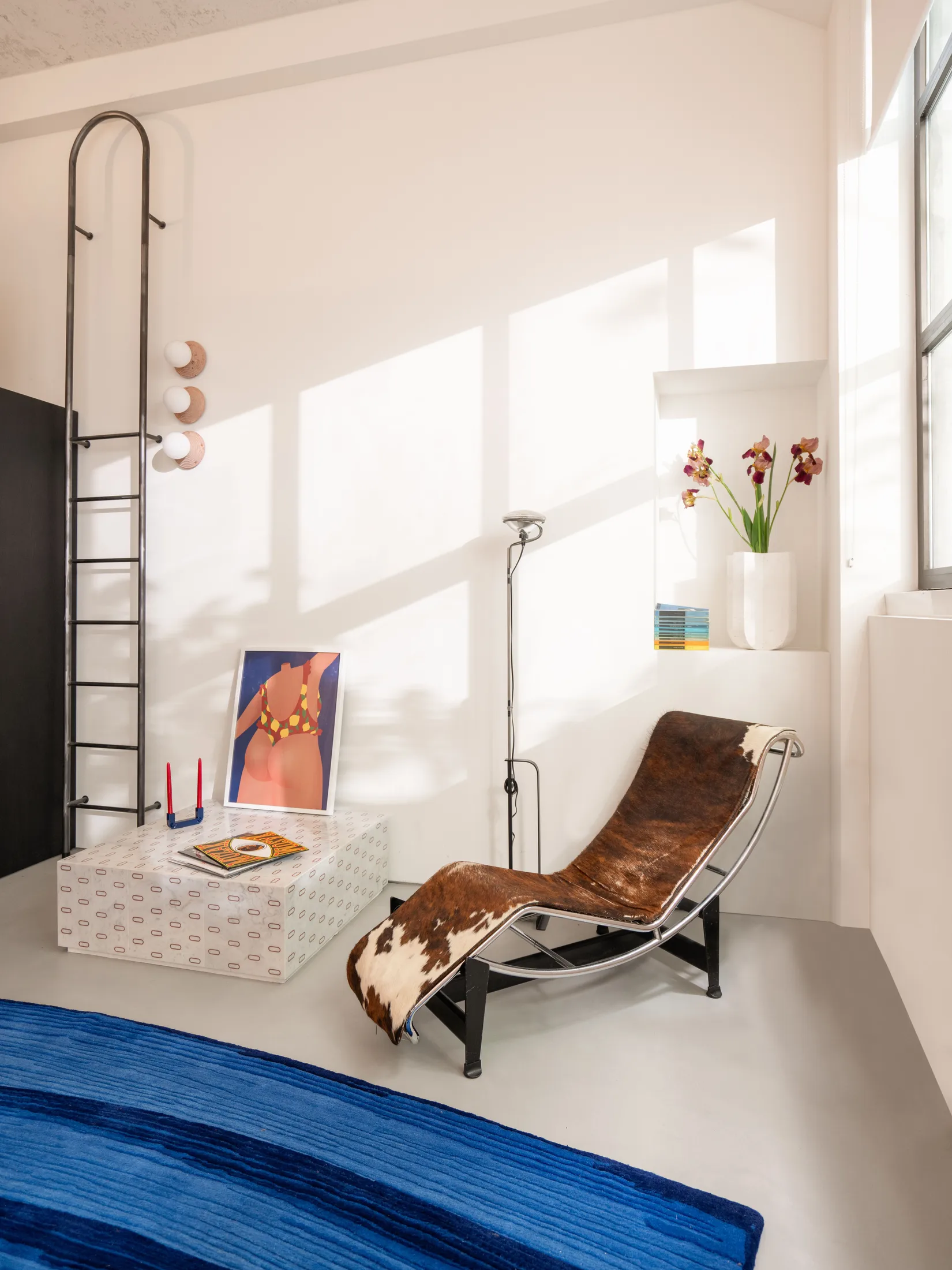
With all internal partitions removed, defining zones within the apartment required a lighter touch than building new walls. Instead, Atelierzero used furniture and objects to subtly organise the open space. A low metal bookshelf and the back of the sofa are positioned almost back-to-back, creating a gentle boundary that separates the living room from the rest of the open-plan. The bookshelf helps anchor the living area while still keeping sightlines open across the apartment. Nearby, a tall plant and carefully placed objects further reinforce this soft transition between the two spaces. Together these elements guide movement through the room while maintaining the sense of openness created by removing the original partitioning walls.

For more ideas on how to zone your small living room download our Essential Guide your Small Living Room.

Together, these design moves show how Atelierzero transformed a modest footprint into a bold, flexible urban loft. By concentrating functions within a sculptural central cube and using curtains, colour and furniture to shape the surrounding space, they created a home that feels both open and richly layered.

It’s a project that embraces contrast — stone and fabric, industrial structure and soft colour — while proving that even in compact homes there is room for surprise, character and craft.

If you’d like to explore more of their work, you can also view the architects’ project Petit Sept, another example of their thoughtful approach to design.

Scroll on to explore more images by photographer Piercarlo Quecchia and see how materials, light and texture shape this Milan apartment.

Writing:
Piercarlo Quecchia
Writing:
Photography:
Photography:
Piercarlo Quecchia
Back to Top
Arrow UpArrow Up
Top
Arrow UpArrow Up
The After shot of the Floorplan
Before
before
after
After
Businesses featured in this project
Business Image
Interior Design
Atelierzero
Atelierzero is an Architecture and Interior Design studio exploring the relationship between space, color, and daily life through research and narrative.
View Profile
Products featured in this project
No items found.
Magazine Current IssueMagazine Current Issue
Writing:
Piercarlo Quecchia
Writing:
Photography:
Photography:
Piercarlo Quecchia
Back to Top
Arrow UpArrow Up