
Magazine Current IssueMagazine Current Issue
Valuing the Vacant
Valuing the Vacant
From our Mag
February 1, 2025

Valuing the Vacant

The Meanwhile Use movement is seeing abandoned and underutilised spaces being revitalised to inject new life and opportunities into communities.

The temporary activation of empty urban spaces, also known as ‘meanwhile use’, is booming all over the world. And that’s a good thing. Right?

James Shackell
Writing:
Writing:
James Shackell
Photography:
Photography:
No items found.
Magazine Current IssueMagazine Current Issue
The After shot of the Floorplan
Before
before
after
After
Top
Arrow UpArrow Up

They say nature abhors a vacuum. Well, the same is true of urban planning. Where Nothing exists, there’s always a Something to come along and fill it up. Often that Something isn’t particularly good for people or the community – crime, vandalism and drug-use spring to mind – but with careful planning and creativity, neglected city spaces can become thriving (and productive) ecosystems. Full of life and energy.

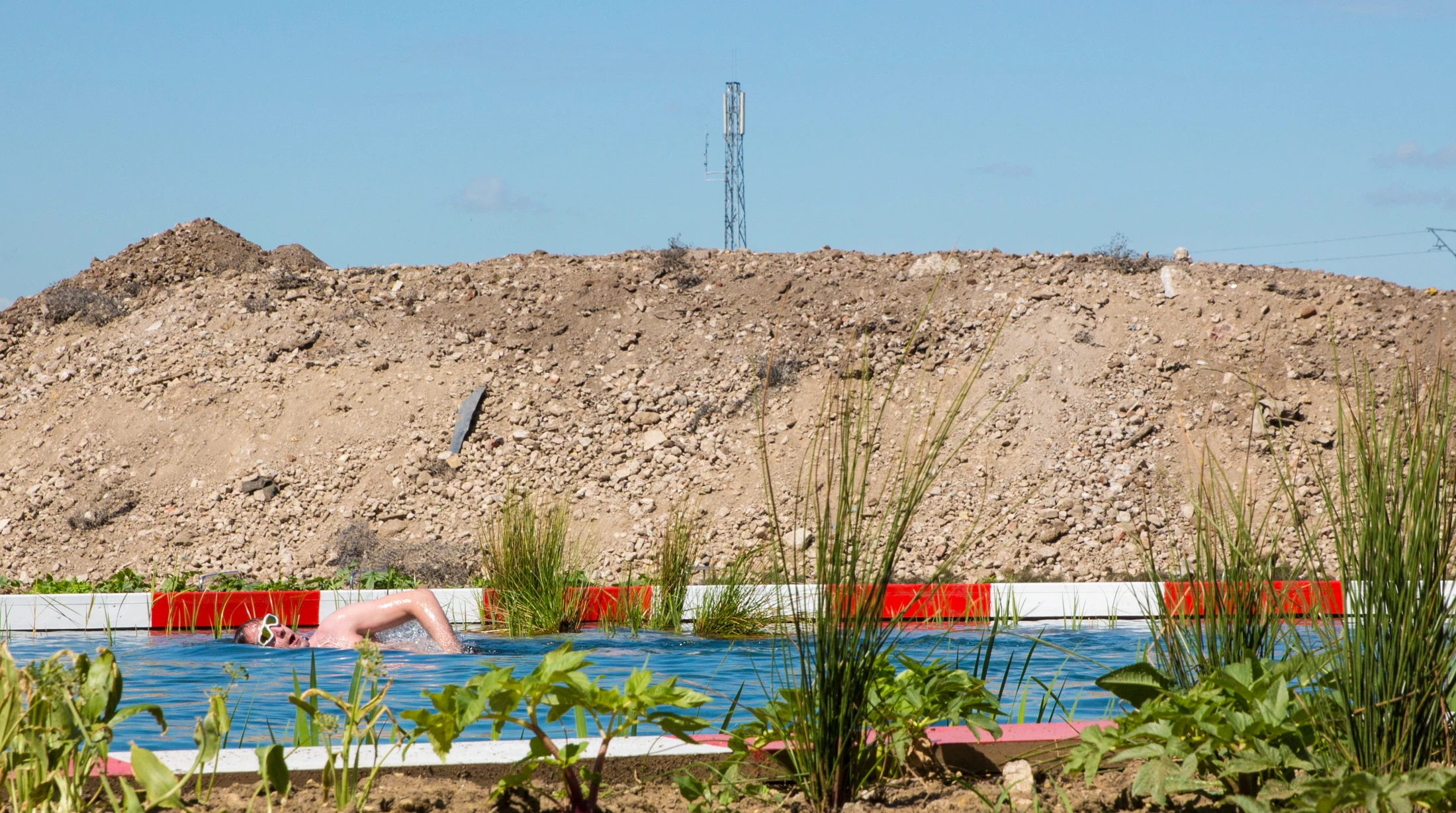
The term for this process is ‘Meanwhile Use’. It means the temporary activation of urban spaces that would otherwise sit empty: abandoned car parks, stalled redevelopment sites, defunct public buildings, weed-choked commercial lots, and so on. Spaces that get closed off or forgotten. The unswept corners of our urban jungle.

In his excellent book, Meanwhile City, Design Director Martin Jenča puts the problem this way:

“Closing off a place until it is finished is, frankly, counterproductive. It makes people walk by a fence for months, if not years. And even if that fence mentions the hopes for the area’s future, what it really communicates is – don’t come here, there’s nothing for you.”

“Don’t come here” is basically the opposite of what most cities are going for, and through his design agency, Milk, Martin has joined dozens of architects, city planners and community collectives around the world championing the concept of better, safer, more productive urban spaces. Just on a temporary scale.

If we’re talking etymology, the phrase ‘Meanwhile Use’ seems to have first emerged in London, thanks to the now-defunct London Development Agency (LDA). In 2010, the LDA launched a ‘Meanwhile London’ competition, asking for proposals for three temporary sites in the Royal Docks area. Newham Borough Council offered the winners free use of the land, plus $7,500 cash to get their projects off the ground.

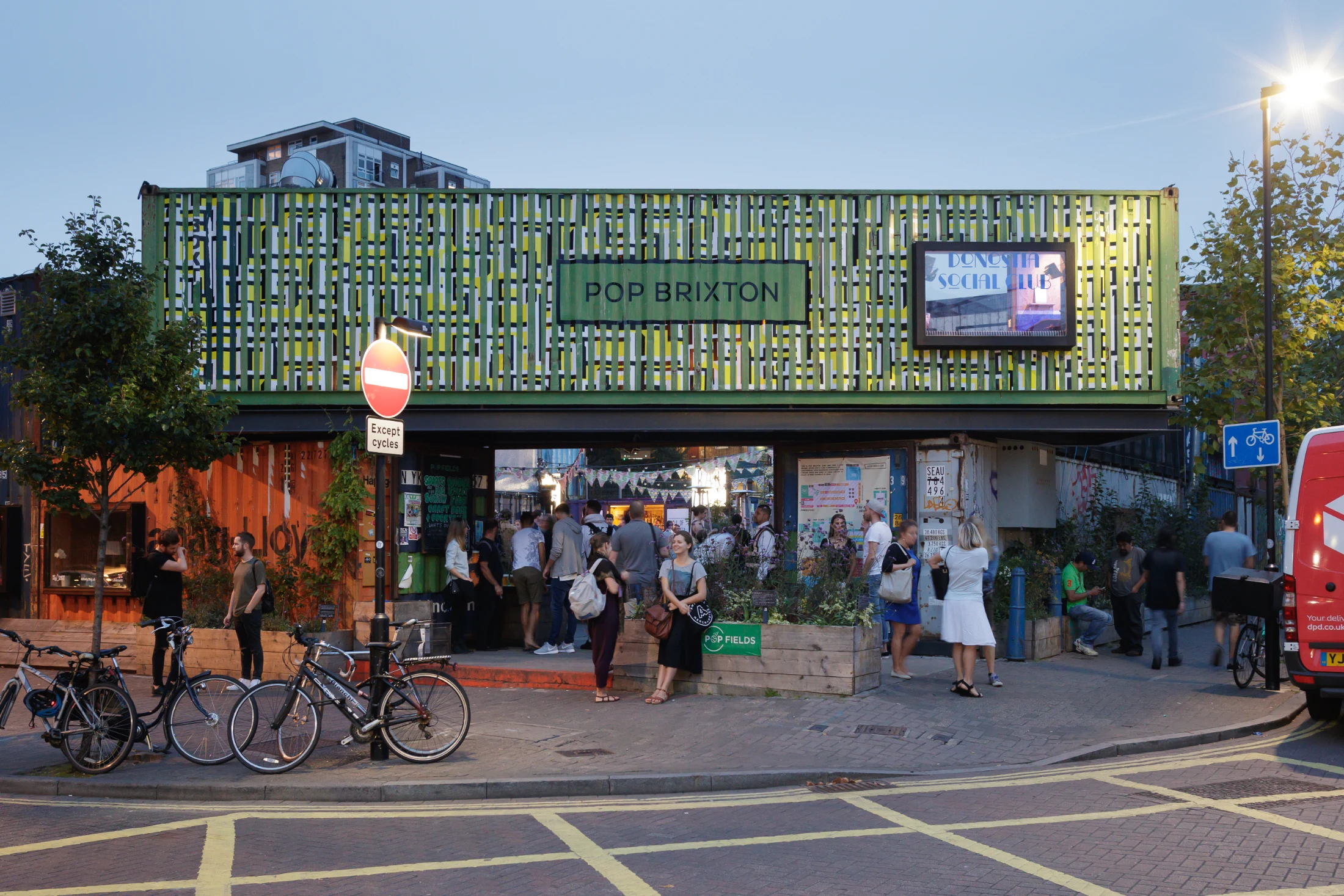
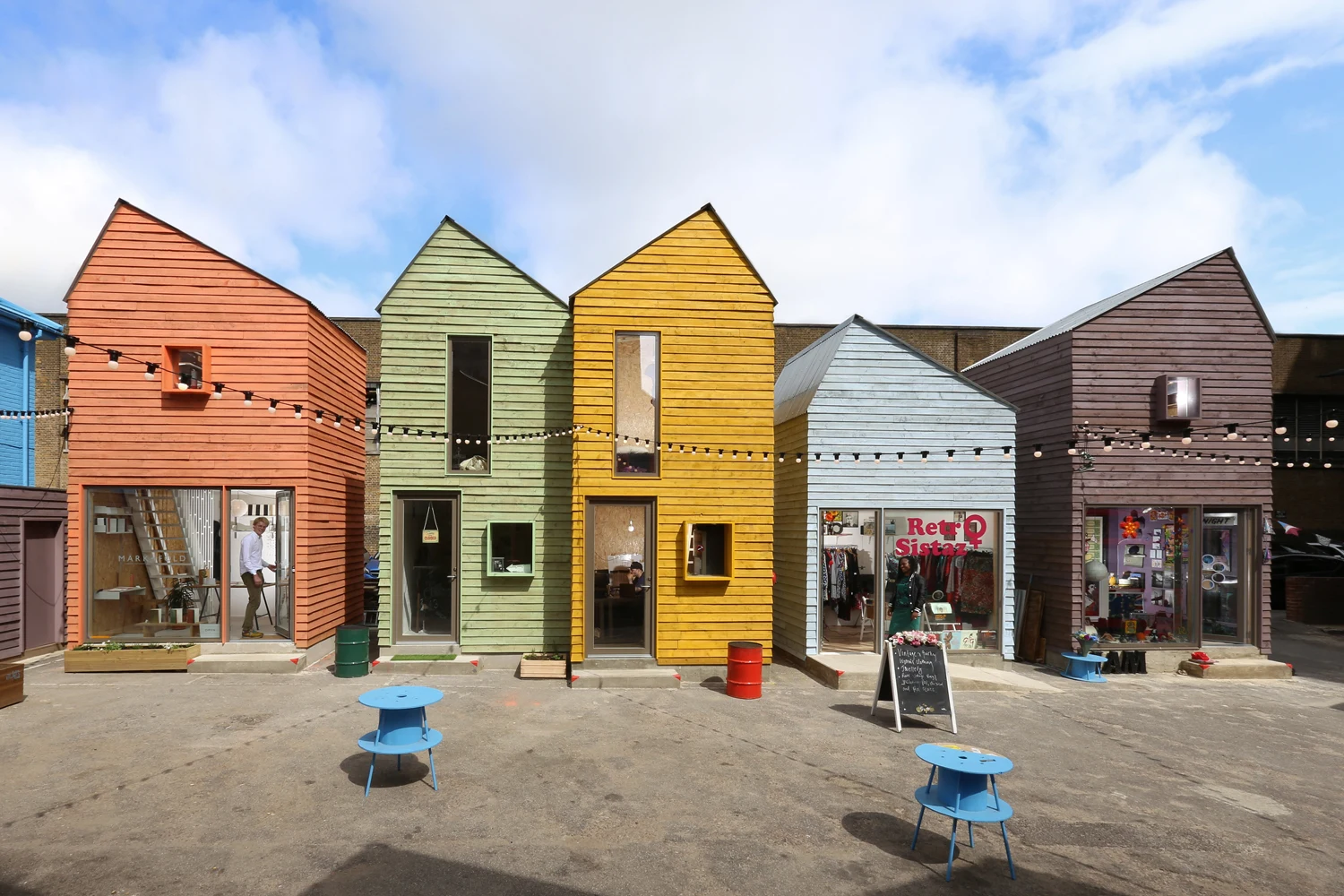
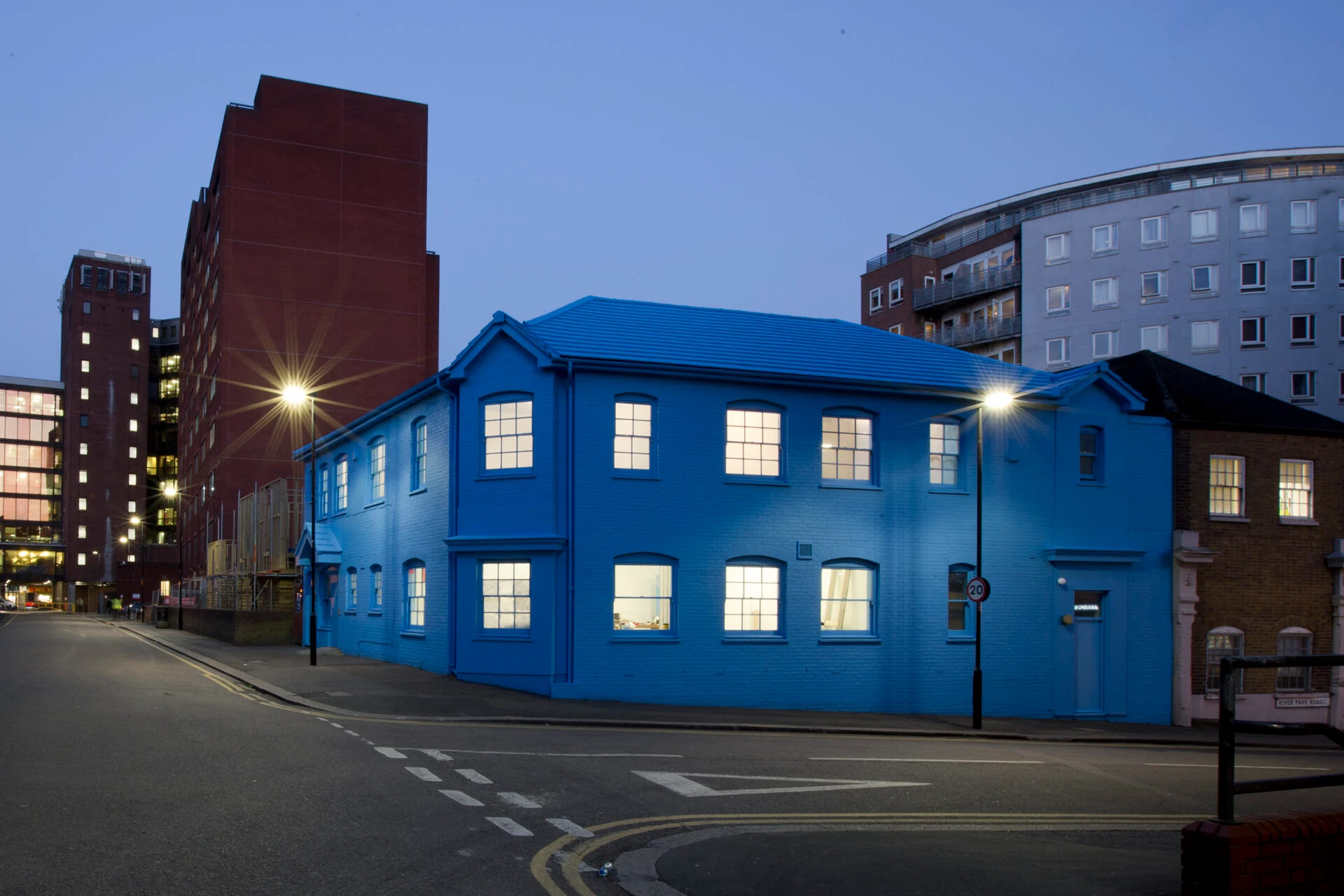
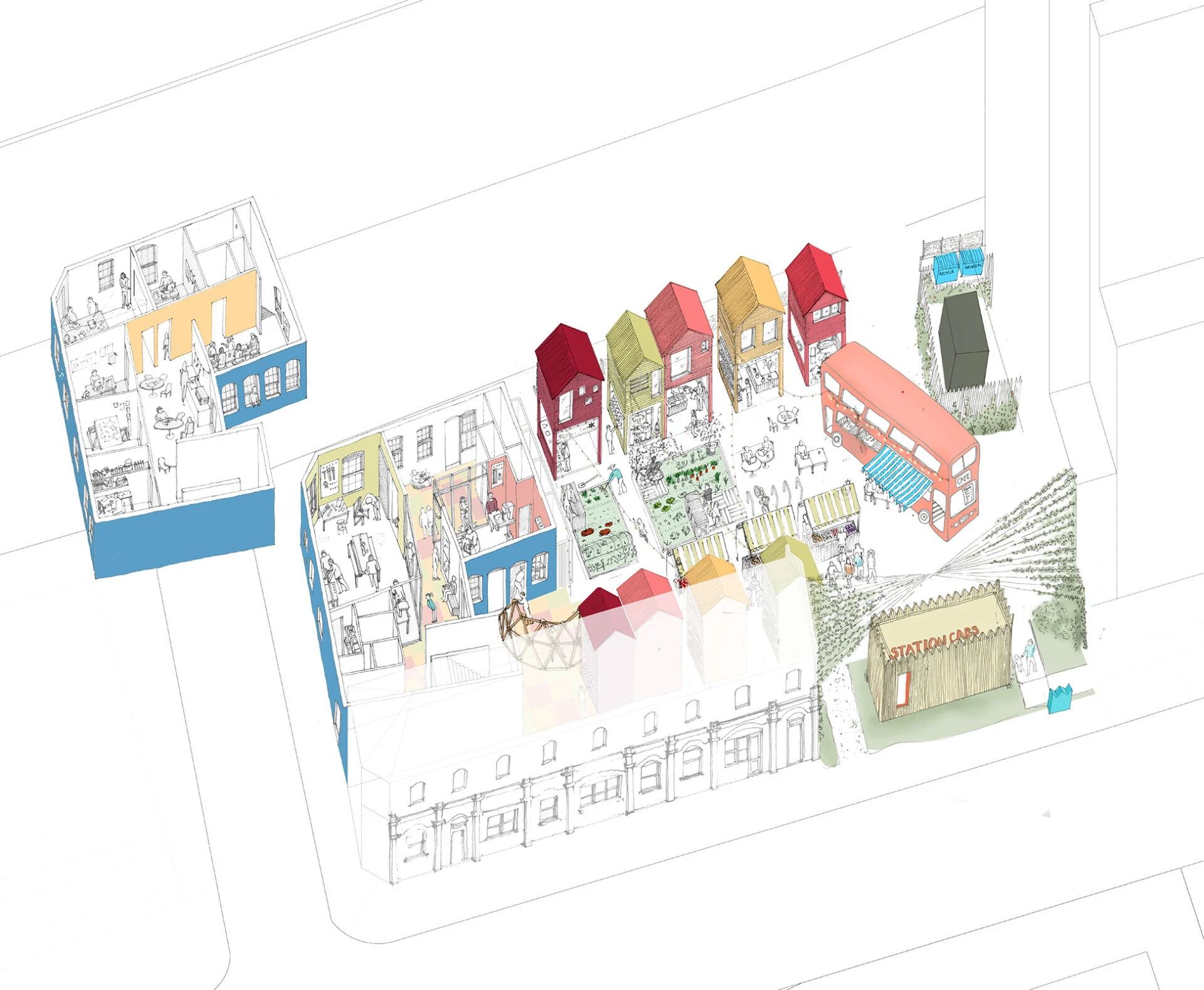
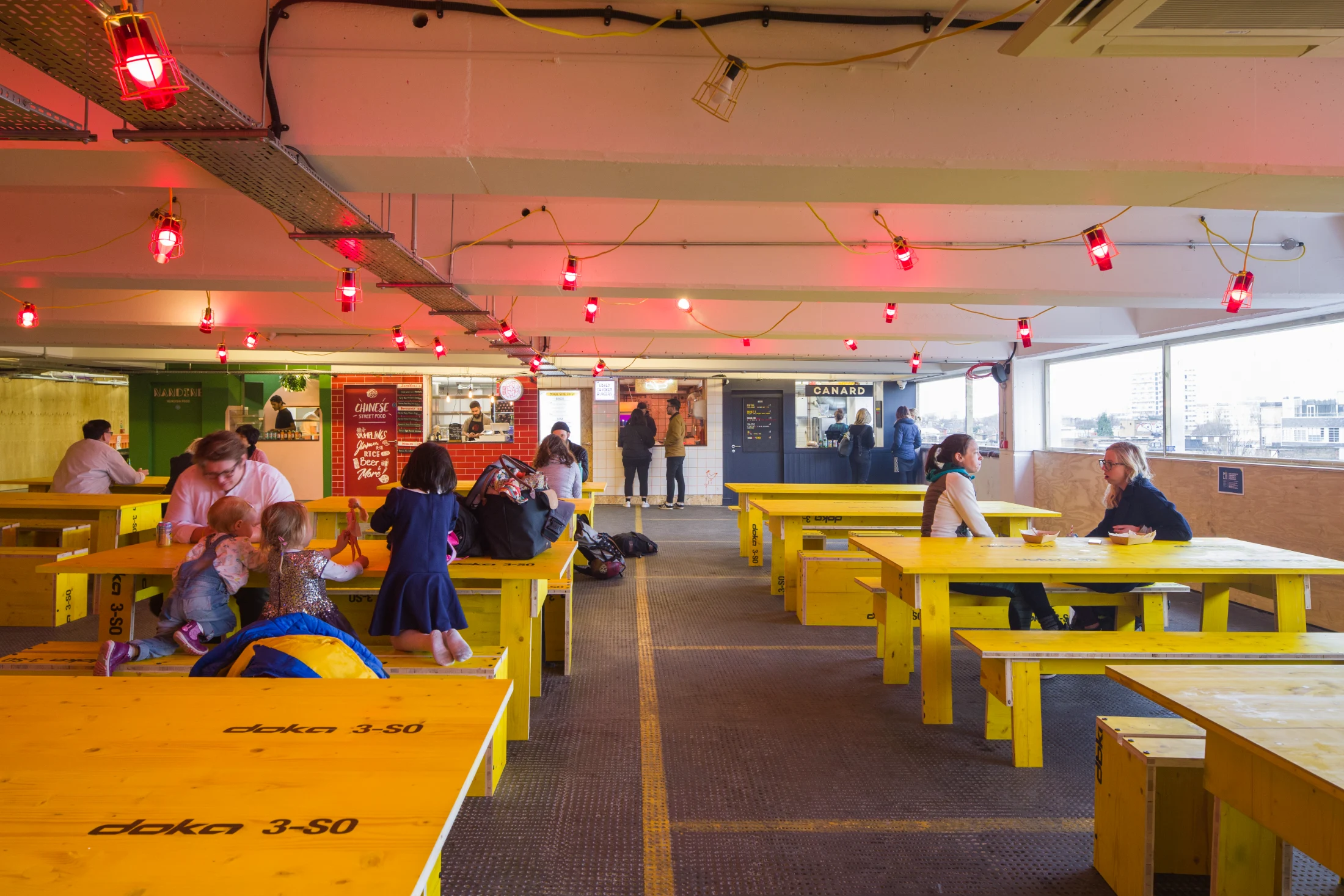
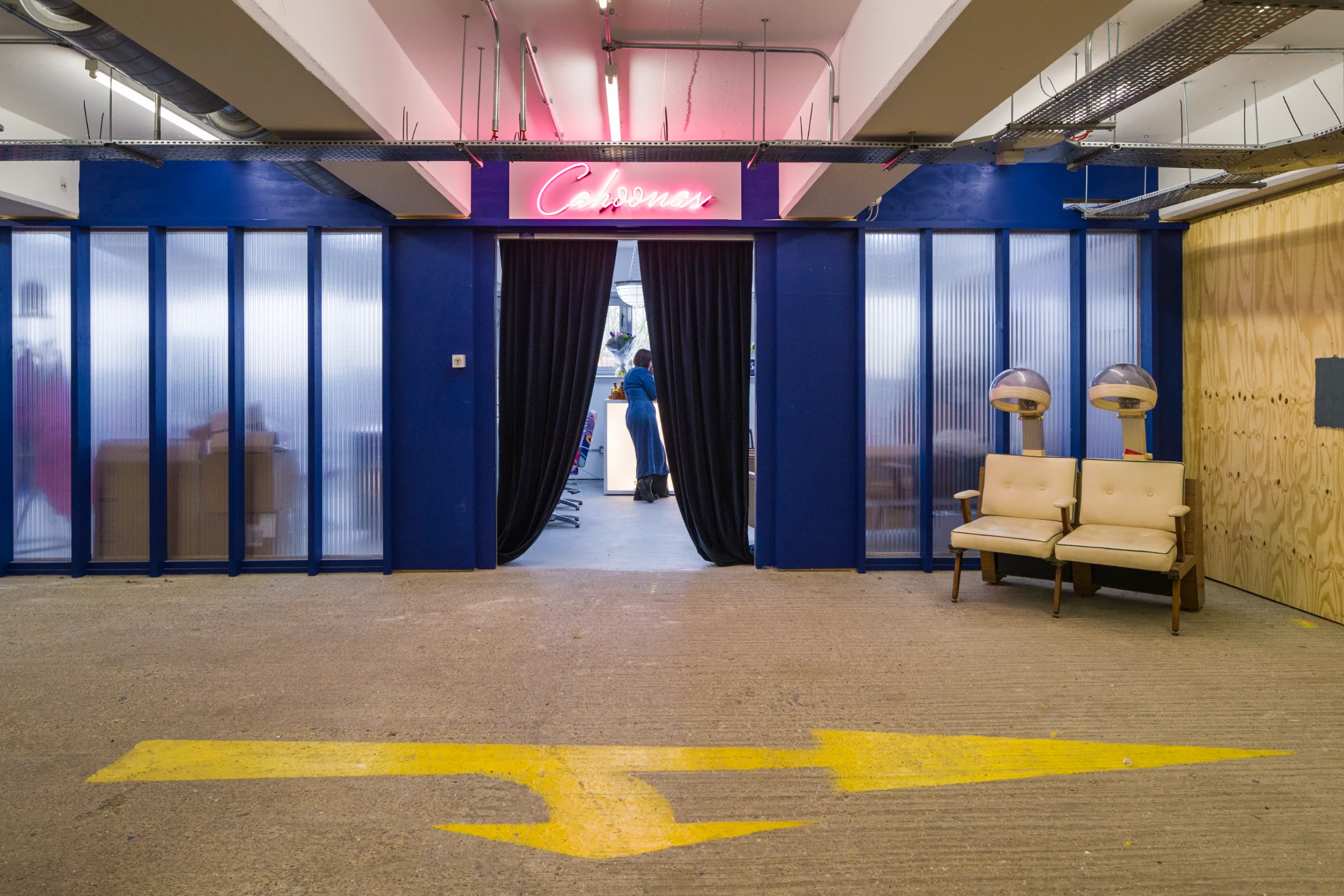
The concept was a success, and ‘meanwhile’ sites started popping up (literally) all over London; perhaps no surprise, given the city’s almost perpetual state of redevelopment and construction. London is always a work in progress, and the untapped potential for unutilised – and highly valuable – city land was too good to pass up. Soon there was Peckham Levels (a multi-story carpark-turned-creative hub), Pop Brixton (a Brixton market housed in old shipping containers), Blue House Yard (artist studios and retail sheds in Wood Green), and Skip Garden (thriving community gardens grown in old skips), among others.

Some of these projects flourished and faded. Others moved around the city, jumping from site to site. A few even became permanent installations.

“It’s become almost a sector or established practice in London,” says Australian architect and lecturer Cathy Smith, “but the exciting thing about Meanwhile Use is not so much that it’s formalising a practice that’s already happening – people have been using temporary urban spaces forever – but more the conversations that surround it."
The conversations Cathy’s talking about include difficult ones, such as ‘How can we fight urban blight in our cities?’, ‘Does Meanwhile Use promote precarity?’ and ‘Are temporary activations suitable or even appropriate for housing?’

This is the flip side of Meanwhile Use. It’s hard to argue that commercial or retail pop-ups in otherwise abandoned spaces are a bad thing. Especially when the alternative is literally nothing. But Meanwhile Use also extends to accommodation and social housing – known in the business as Property Guardianship – and that’s a very different cup of Earl Grey. Particularly in the middle of a global housing crisis.

“The controversial bit is: will this become just a second grade rental system?” Cathy says. “By definition, property guardianship is not a rental. People typically use an occupation licence, which is not a legislated tenure per se. And that’s a problem for tenants, because they’re not tenants at all! They’re occupants, and that means their accommodation is determined by the contractual relationship with the provider.”

Under Property Guardianship, housing providers still have some legal obligations: temporary accommodation must meet habitable standards, and occupants are entitled to notice of eviction (usually a rather brutal 28 days, but still). As Cathy points out, these contracts technically “fall between legislation”. They may be more flexible, but it also means many of the common protections afforded to renters don’t extend to Meanwhile Use occupants.

“I’ve heard of some great examples, such as transition housing for women escaping domestic violence with longer and more secure tenure,” Cathy says. “But most providers tend to exclude families and children, for obvious reasons.”

So why are we having these tricky conversations now? Well, the fact is that Meanwhile Use (to quote Martin) “makes cities more resilient”, and the post-Covid years have shown that resilient cities are more important than ever.

“The agile nature of Meanwhile Uses [enhance a city’s] ability to adapt, recover or spring back when hit by unexpected events,” Martin says. “During the global financial crisis in 2008, many developments were stalled due to the economic downturn. Architects, cultural activists and urban practitioners explored self-initiated projects on abandoned sites. Empty public buildings were repurposed as affordable workspaces, and struggling shopping streets and town centres bolstered retail with temporary and seasonal street markets, impromptu events and pop-ups.”

In a world where unprecedented global events seem to happen roughly every Tuesday, and where people are more concerned than ever with concepts like safety, equity and environmental sustainability, our cities need to be more than just places to work and live. They need to be places for Community, in the old-school, hyper-localised, capital C sense of the word, where residents are invested (sometimes literally) in the success of their neighbourhood.

“There’s a great example in Hastings [in the UK] called Hastings Commons,” Cathy says, “where several buildings were actually bought by the community using a Land Trust model. They’re community-owned now. And they’ve been turned into social and affordable housing, a place for start-ups, cooperative workspaces, all sorts of things.

“The need for these spaces is more pressing than ever. It hasn’t gone away since Covid. If anything, it’s gotten worse. And when it’s done well, the opportunities are worthwhile.”

That’s the other thing about nature, it tends to magnetise. Plant trees in a barren wilderness and life will inevitably come. Likewise, cultivate investment and activity in urban areas, and the ripples tend to flow outwards, attracting all good things: more money, more talent, more creativity, more community.

Meanwhile Use may be temporary, but its influence – if handled with care – could last forever.

Writing:
Writing:
James Shackell
Photography:
Photography:
Back to Top
Arrow UpArrow Up
Top
Arrow UpArrow Up
The After shot of the Floorplan
Before
before
after
After
Businesses featured in this project
No items found.
Products featured in this project
No items found.
Magazine Current IssueMagazine Current Issue
Writing:
Writing:
James Shackell
Photography:
Photography:
Back to Top
Arrow UpArrow Up