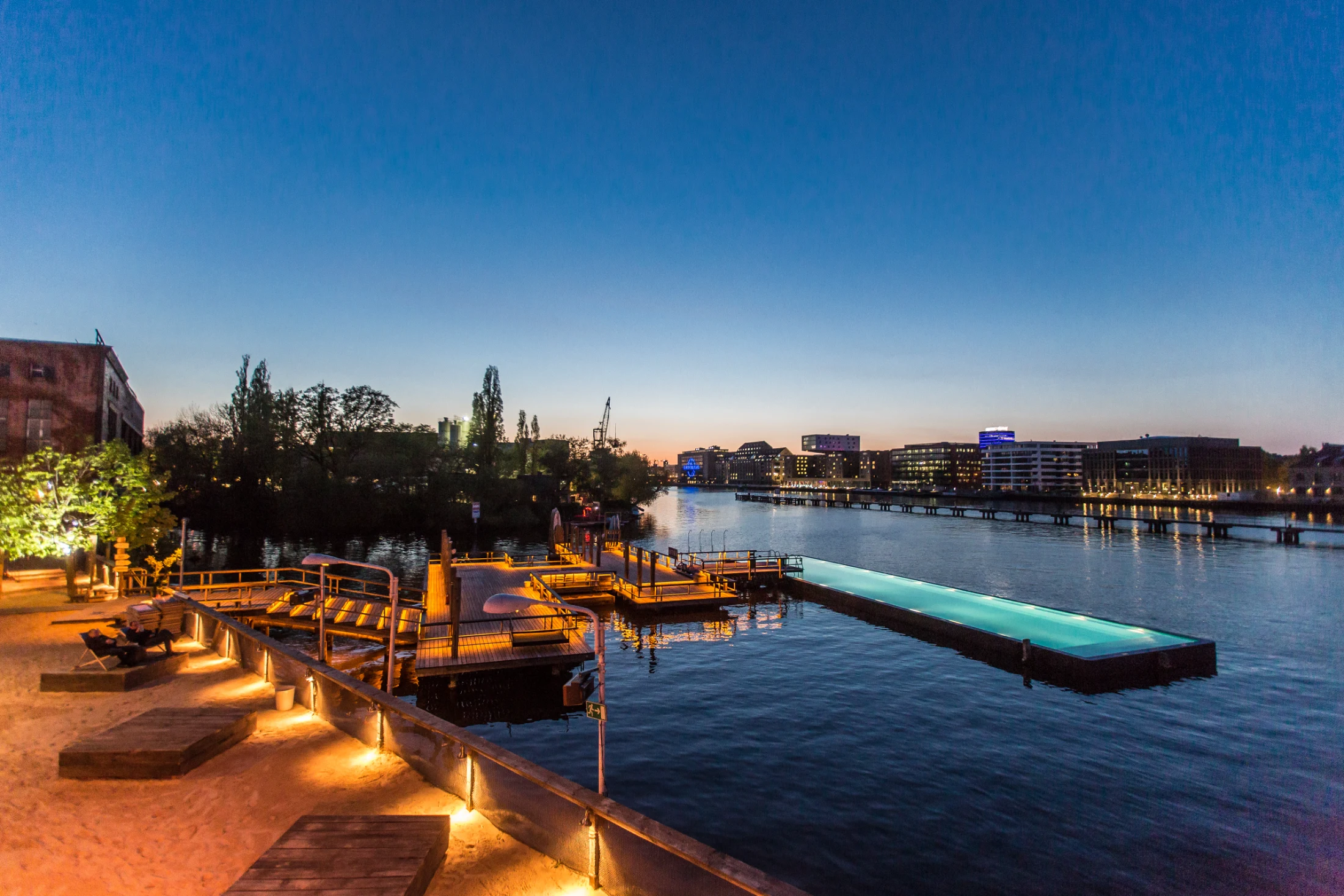
In Berlin, spa culture is indeed the perfect companion to its club culture: hip, utopian, co-ed, and mostly stark naked. My memorable first experience was at Badeschiff, the floating sauna and pool³ on Berlin's main river Spree. “You cannot wear any clothes,” the door lady sternly told me and my friend Anique. She handed us bathrobes and two pairs of thongs. “You change in the outbuilding, then walk to the float.” It was mid-winter.
“Madam, it's –15 Celsius outside,” I protested. She shrugged.
Naked underneath our robes, we ran through ankle-deep snow through the courtyard, across the bridge to the domed raft. We were greeted with a scene of classic Berlin hedonism: beautiful people, naked and toned like Olympic athletes, reading newspapers or drinking coffee between sauna sessions or dips in the outdoor pool. A specialty of the German sauna is 'Aufguss', an hourly ritual in which the saunamaster whips up hot air with a swinging towel. It feels like being hit by electric bolts of intense heat, and is not for the faint-hearted: the appropriate behaviour is to dash out after a few minutes and plunge into cold water. Afterwards, I vividly remember standing on the outside deck, high on endorphins, and listening to the sound of snowflakes falling on the river – all while shuffling my feet, because my wet thongs were literally freezing to the ground!
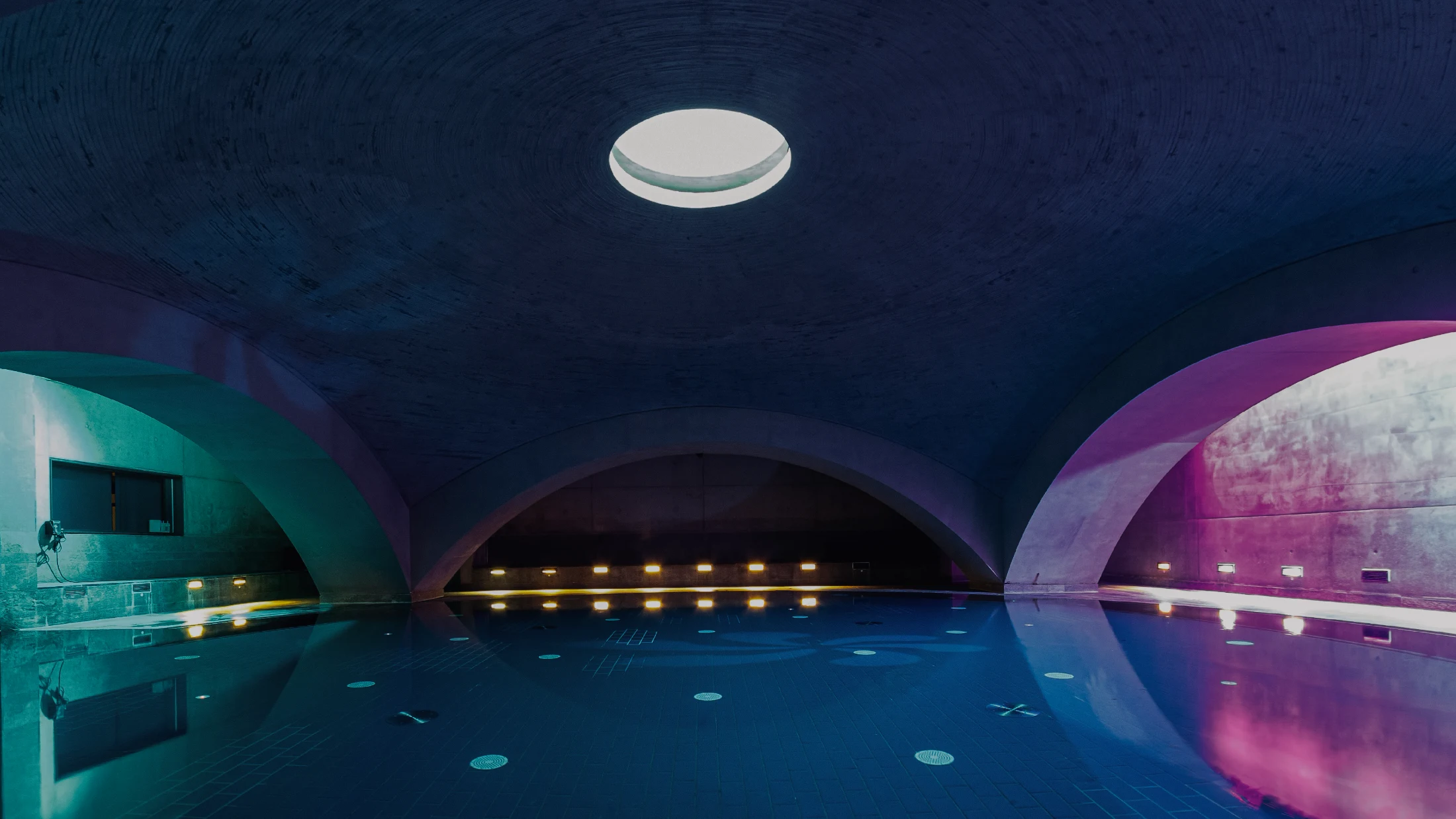
Badeschiff was built in 2004 as an urban art project. In retrospect, it presaged two major urban trends. The first was the evolution of humble neighbourhood baths into elaborate wellness centres that married health, gastronomy, and entertainment. Berlin soon followed with Liquidrom, which featured Aufguss with honey and salt body rubs, an extra-buoyant saltwater pool, and live DJ sets pumped through underwater speakers. Thanks to a genius ticketing policy, which gave everyone free entry on their birthday, Liquidrom quickly became a favourite birthday pre-party venue. Its influence could even be seen in the expansion of clubs like Bar25, which grew to offer spa, massage and haute cuisine.
Similar projects have since sprouted throughout northern Europe, putting a youthful, contemporary twist on sauna culture. A number of start-ups in Copenhagen have enlivened the harbour area with products ranging from sauna huts, floating saunas, outdoor hot tubs, all the way to a floating jacuzzi, which is essentially a motorised hot tub sailing through the harbour waters, carrying a group of friends and their Champagne – a truly insane sight (or magnificent, depending on your viewpoint).
Unlike the German sauna, which is an open social environment, Scandinavian saunas are small spaces, to be enjoyed with the closest friends only. So HotTub in Copenhagen became our refuge during the pandemic winters, when only outdoor socialising in small groups was allowed. This was also where I discovered the Scandinavian practice of winter bathing. Until that point, entering ice-covered open sea waters was a step too far for me. But, emboldened by watching friends jump into the harbour, I got out of our steamy tub and slowly lowered myself into the coldest water I had ever thought my body would touch. After the initial shock, the rush of endorphins was simply extraordinary. It couldn't compare to a cold shower: it was an instant high.
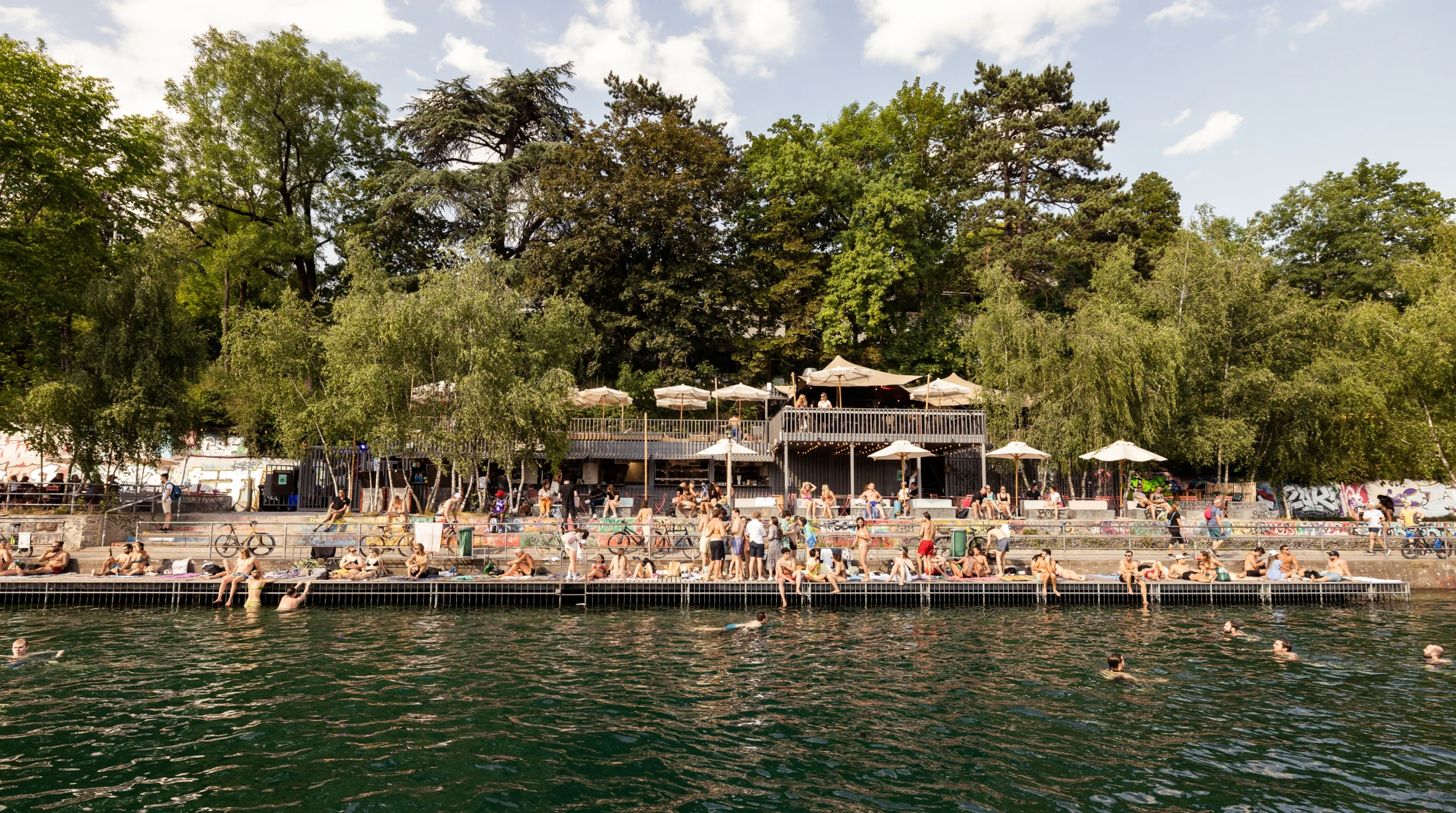
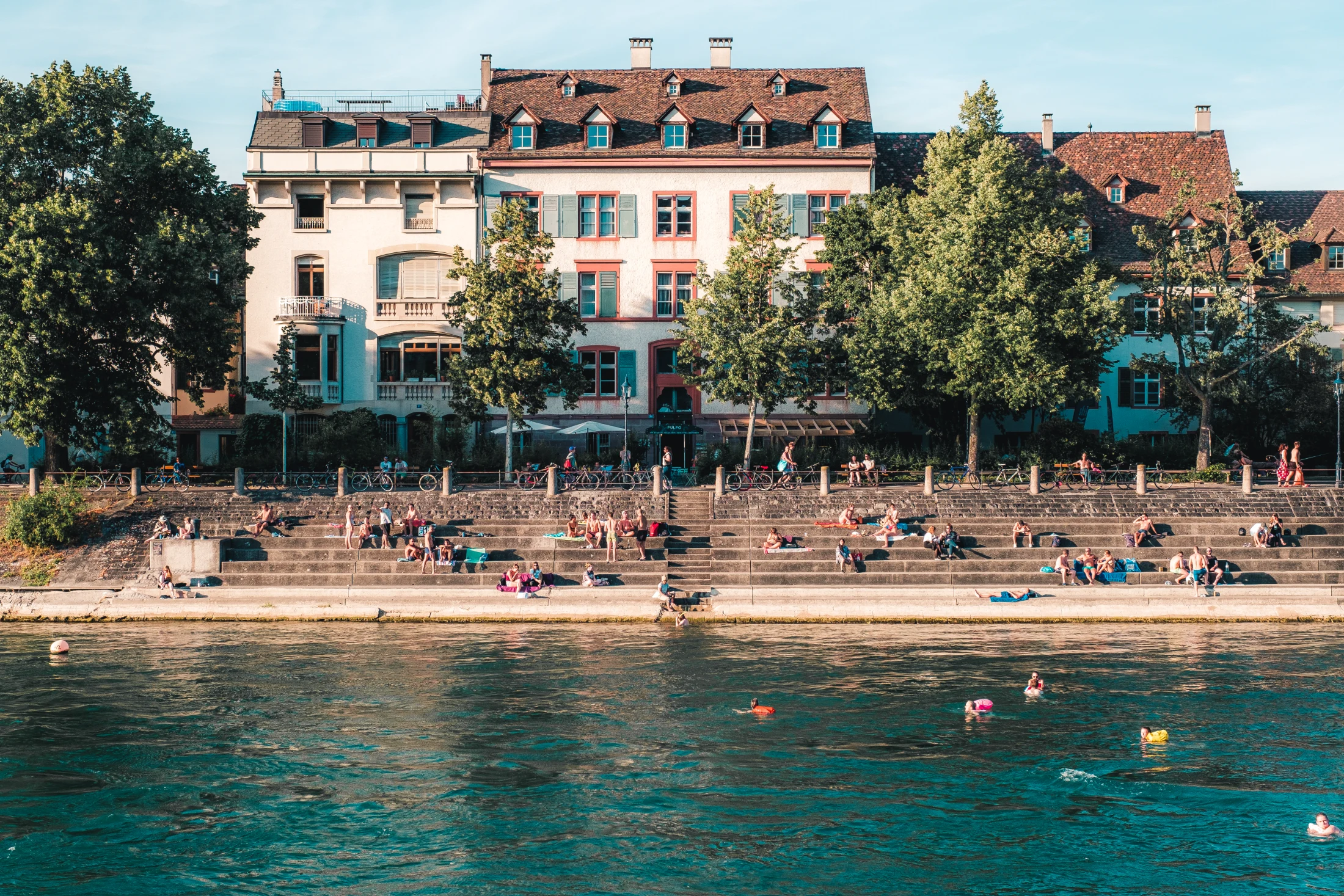
But the second major urban trend has been the movement, made possible by deindustrialisation, to make urban waters once again good for swimming. Here again Europe has led the way. Swiss cities started restoring their rivers in the 1980s, and by 2010, on my visit to Zurich, my academic colleagues thought nothing of undressing in our conference break and jumping into the river Limmat for a dip – right in the city centre! There are now over 40 ‘Badis’, or public baths, in Zurich, all elegantly designed and offering a variety of experiences: women-only, men-only, and in the evening many turn into bars with live music.
More excitingly, in Basel, it has become a custom for commuters to travel back home by jumping into the Rhine river – their clothes packed in a special watertight bag called Wickelfisch – and letting the river carry them downstream. Staircases at regular intervals facilitate an exit.
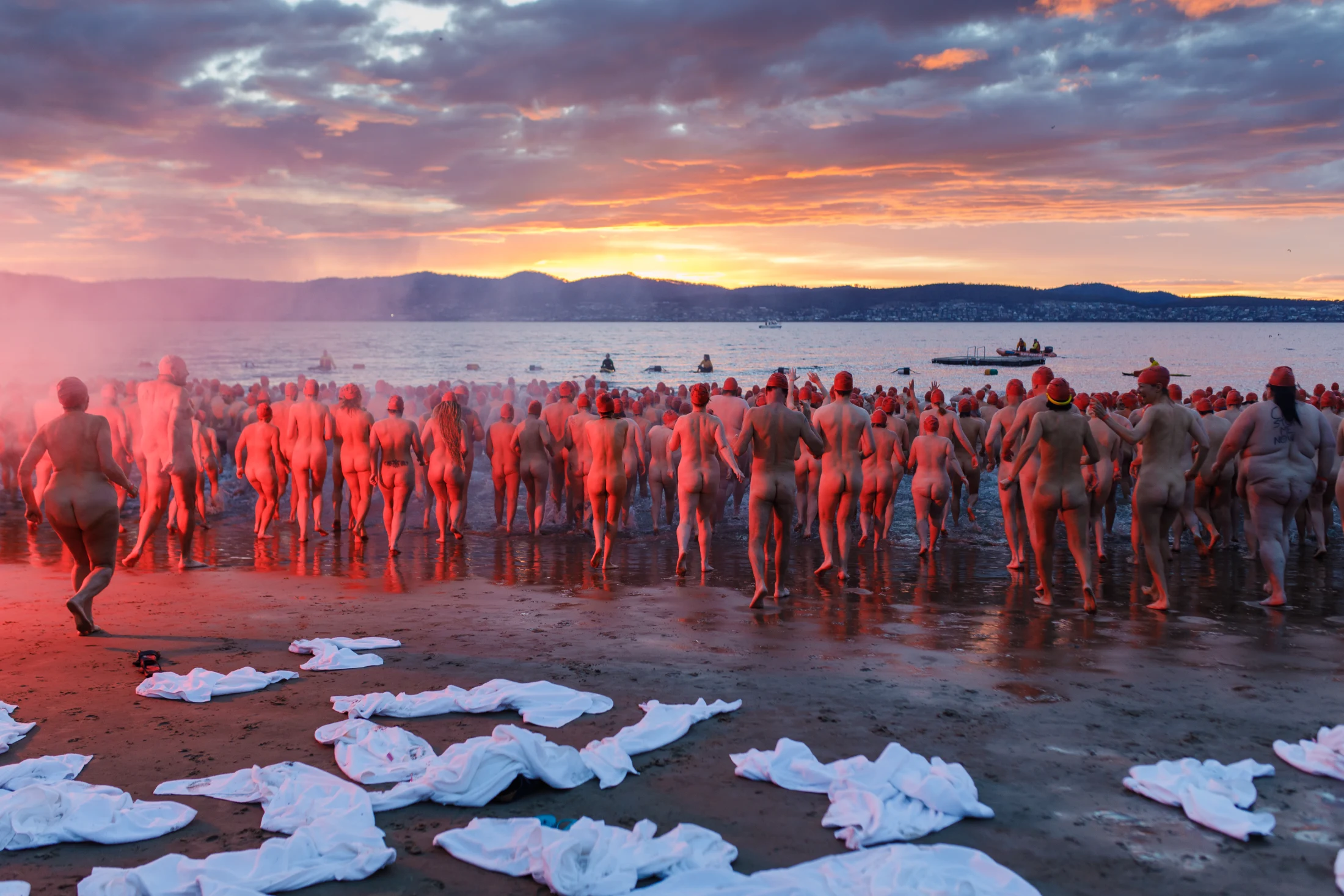
Important community spaces where we connect to our environment. A similar sentiment was expressed in Australia's entry to the 2016 Venice Architecture Biennale, which turned the closed pavilion into a public pool. Whereas northern Europe has had to discover open baths, in Australia swimming spaces have long been public, open, democratic. Writer Anna Funder described them as community infrastructure akin to a public library. Christos Tsiolkas has written passionately that they represent a democratic, multicultural society that he “would love to keep defending”. Fittingly, the pavilion itself became a refuge during the hot Venice summer. Visitors enjoyed a respite from the cerebral hauteur of the Biennale by taking their shoes off and chilling in cold water.
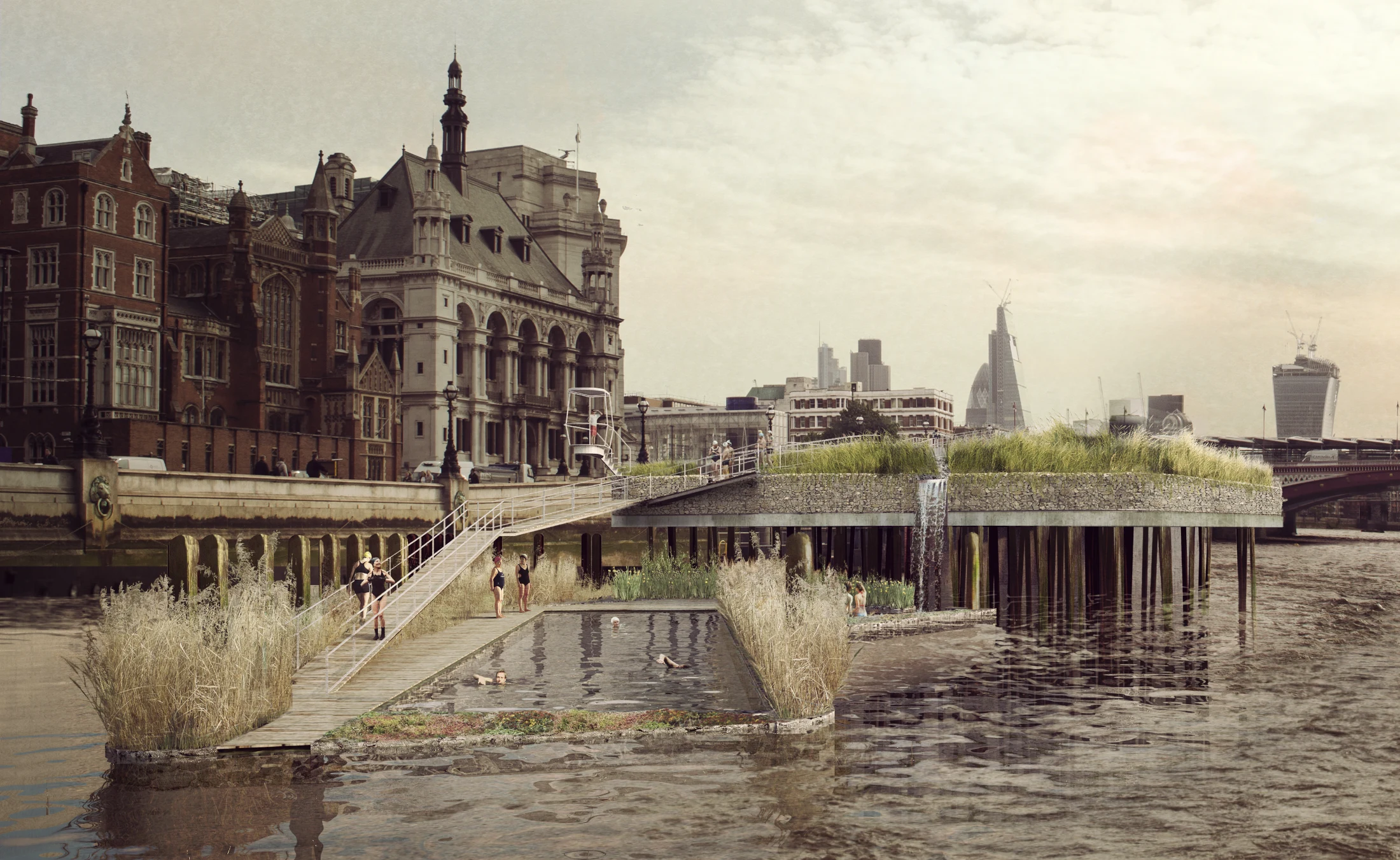
The movement has gathered pace since the Paris Olympics, with the formation of the Swimmable Cities group in August 2024. It's a global alliance advocating for everyone's right to access safe, healthy and swimmable waterways, offering an array of free online tools for cities, designers and funders. Swimmable Cities is convened by Melbourne-based Matt Sykes, with Chris Romer-Lee in the steering group. Romer-Lee, whose design for a floating, naturally-filtering Thames Baths kickstarted the reintroduction of swimming in the Thames, has also worked with Yarra Pools towards making Melbourne's Birrarung river once again safe for swimming. Meanwhile, community groups, such as the Yarra Yabbies, are reintroducing community swimming in the upper reaches of the river.
Copenhagen, likewise, has rehabilitated its entire harbour area, creating a whole new design language of urban swimming: from the semi-industrial plunge points of Refshaleøen, via the landscaped harbour baths of Islands Brygge and Sluseholmen, to the floating bathhouses in the suburban Amager – such as the lovely, curling Sneglen (Snail) by White Arkitekter. Mads Birgens, Head of Urbanism at COBE, one of the key architecture studios involved in the harbour redesign, describes the new culture of urban swimming as an ‘inspiring and exciting’ success. “The entire harbour has become one huge space for the city to gather around, and a fantastic destination for both citizens and tourists,” he tells me. “It is the heart of contemporary Copenhagen, and that quality of life by the sea has become a special feature of the city.”
I can attest to that, having lived directly on the Copenhagen harbour. Lunch-break swims with colleagues, after-work beers with housemates on the pier right at our doorstep, and starting the weekend with a harbour swim – it was a blessed life. Our building's garage had both bike and kayak parking. Even the yoga studio downstairs offered special paddleboard yoga.
There is something inherently democratic in urban swimming, which is open, affordable and accessible to all. In his book Sea Pools, architect Chris Romer-Lee calls them “liquid piazzas”.