Magazine Current IssueMagazine Current Issue
Say 'Yes' To Crazy Dreams
From our Mag
August 1, 2026

Say 'Yes' To Crazy Dreams

Singapore’s much loved Supermama design stores began as an all-in family gamble – a quit-the-jobs-sell-the-flat-and-see-what-happens kind of thing but turned into a coming of age story for contemporary Singaporean design.

Singapore is not an easy place to define. It is old and new, all at once. It’s a nation, a city-state, and a tropical island; a multi-ethnic mix of Chinese, Malay, Indian and Eurasian peoples. Historically, Singapore has been a Kingdom, a Sultanate, a British Colony, a Japanese conquest, a part of Malaysia (briefly), and since 1965 its own Independent Republic.

Its identity, therefore, spent a long time in flux. Twenty years ago, if you went to Singapore, you probably came back with a Merlion¹ fridge magnet. Or perhaps a Merlion keychain. Or a box of Merlion-shaped chocolates. No one knew quite how else to say ‘hey, I’ve been to Singapore!’

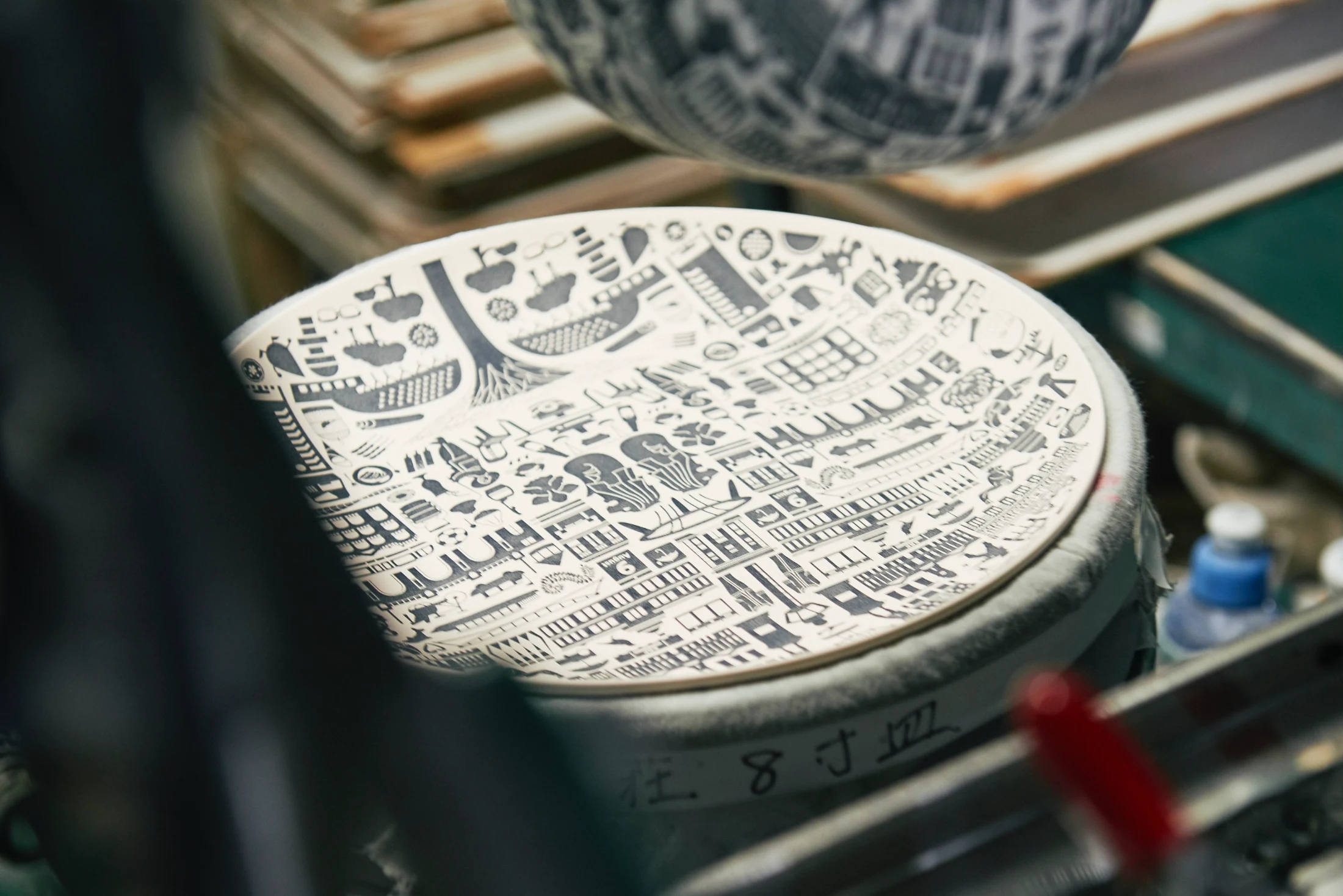
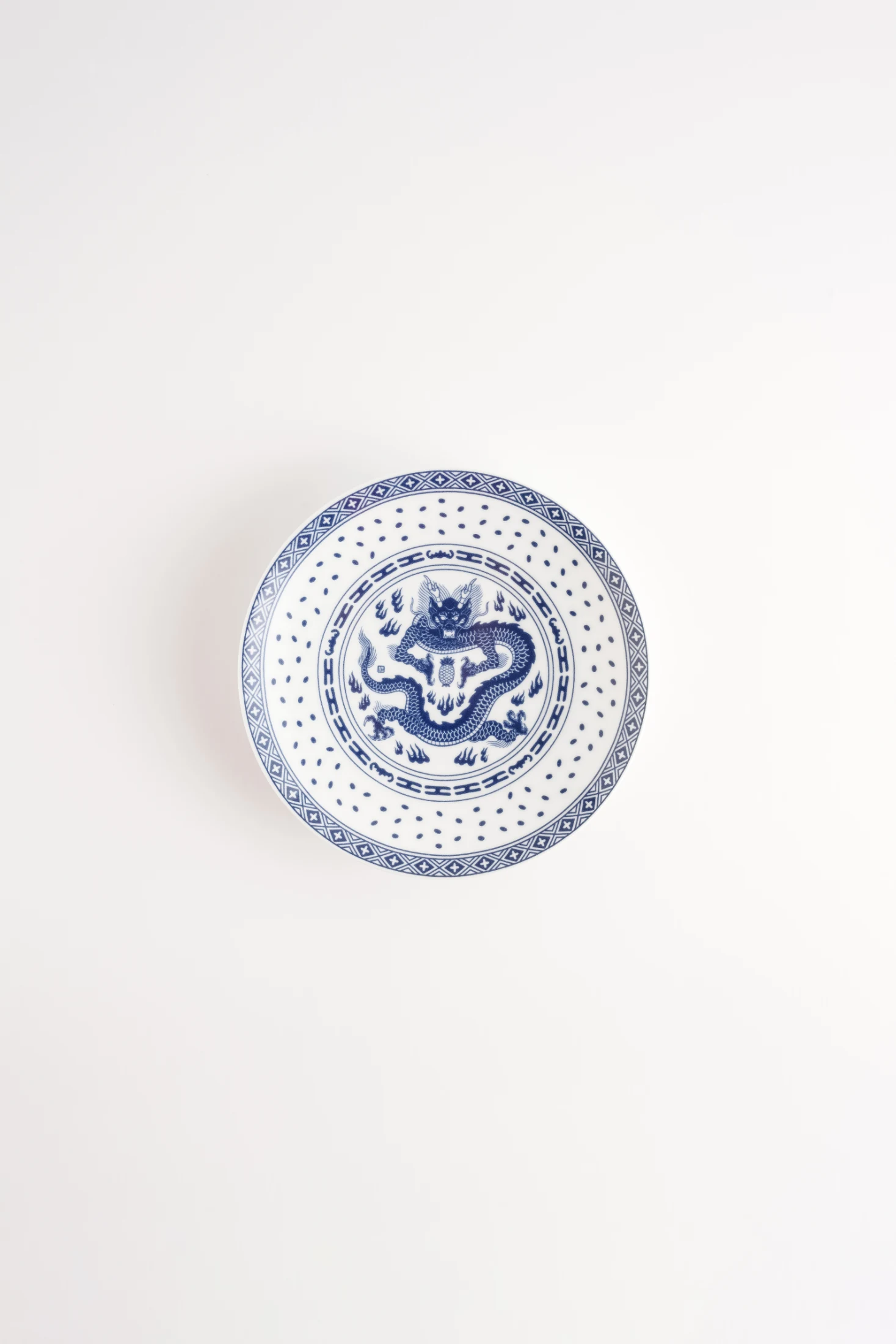
Now, you come back with a blue and white porcelain plate decorated with a much wider variety of Singaporean icons (yes, you can get one with a Merlion on it, if you must), and a bunch of other gorgeous little design pieces and objets d’art you picked up from Supermama, because everyone knows you simply cannot leave Singapore without stopping in at Supermama for a souvenir before you go.

Kirsten Drysdale
Writing:
Writing:
Kirsten Drysdale
Photography:
Photography:
The After shot of the Floorplan
Before
before
after
After
Top
Arrow UpArrow Up

So: What is Singapore’s “Supermama”? A store? A brand? An attitude? All of the above. But above all, Supermama is a story. A really great story about a vision, good timing, and one man’s love for his family, his country, and great design. The story begins in December 2010.

2010

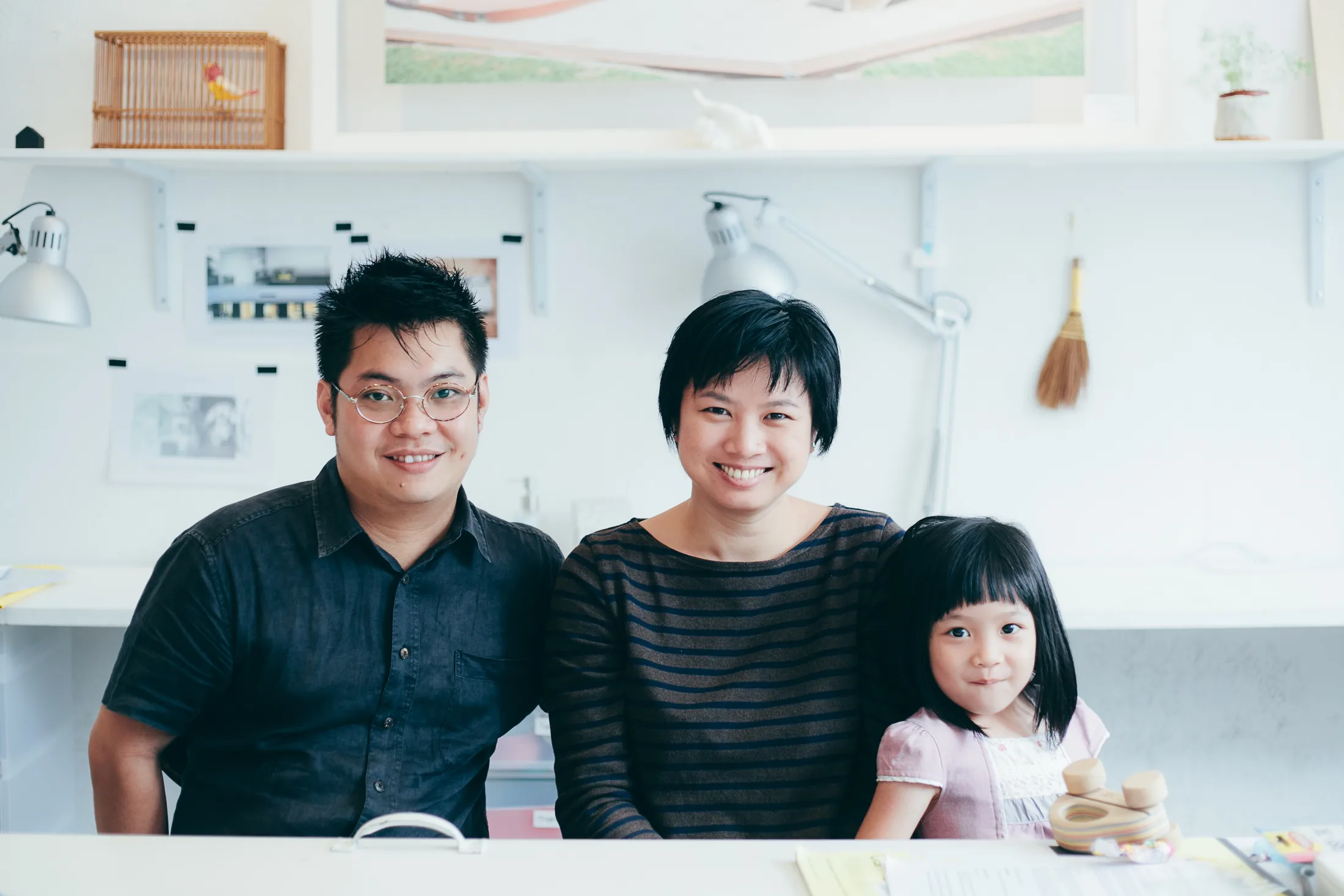
A young couple in Singapore – Edwin Low and Mei Ling Lee – have just had their second child, Toby. He is only a couple of months old. His older sister, Donna, is a two-year-old toddler.

This family of four are living in a four-room HDB2 apartment. Edwin is an industrial designer and works as a teacher at Singapore Polytechnic. Mei Ling has a degree in social work and economics, and a job with the civil service. The children are delightful. Life is good. Their outlook is promising and secure.

But Edwin has a dream, an itch he wants to scratch. It's a crazy dream, but he tentatively broaches it with Mei Ling. Over breakfast one morning, he suggests to his wife that they quit their jobs, sell their apartment and downsize to a smaller one, and use the money to start a design store focused on showcasing local Singaporean designers and makers.

He does not expect her to agree to this.

“There’s a way for me to make decisions, right? And being a couple, being husband and wife, something I stick to is that whatever major decision I make, I must get the go-ahead – the green light from her. Sometimes she may say [hesitatingly] ‘mmm yes’, but that’s when I know even though she agrees, that’s not a go-ahead for me. But surprisingly, when I raised this possibility of setting up a store, quitting our jobs, selling our home – she said ‘yes’! And I knew that we should pursue this.”

And so – even though Edwin explicitly warns he expects this mad venture to fail, that they'll close the store in a year and return to their normal lives – they do it. The motivation is partly a passion for local design, but also the hope that this move will allow them to spend more quality time with the children in their precious early years. The couple have been talking about what people regret most in old age "from their rocking chairs" and don't want one of their regrets to also be not spending enough time with their kids. They see this as 'stealing' a gap year from their retirement – finishing work at 66 instead of 65, and using that time now.

So, sure, there's a logic behind it. But as everyone tells them – it's still nuts.

"That's the reason I named it Supermama. I wanted my kids to grow up and to know this decision that their mum made is a super decision, a crazy decision, and so we called it 'Supermama'."
2011

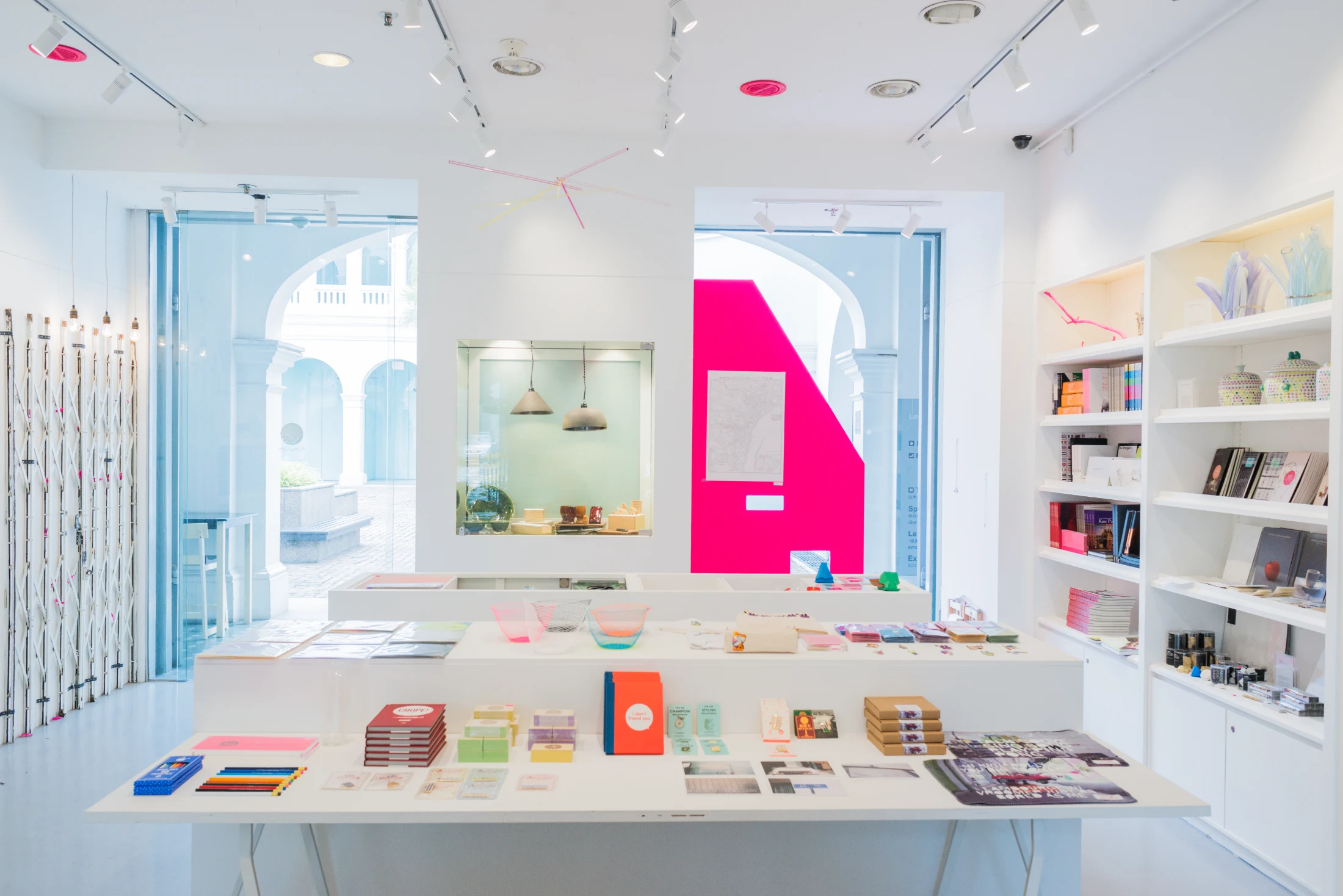
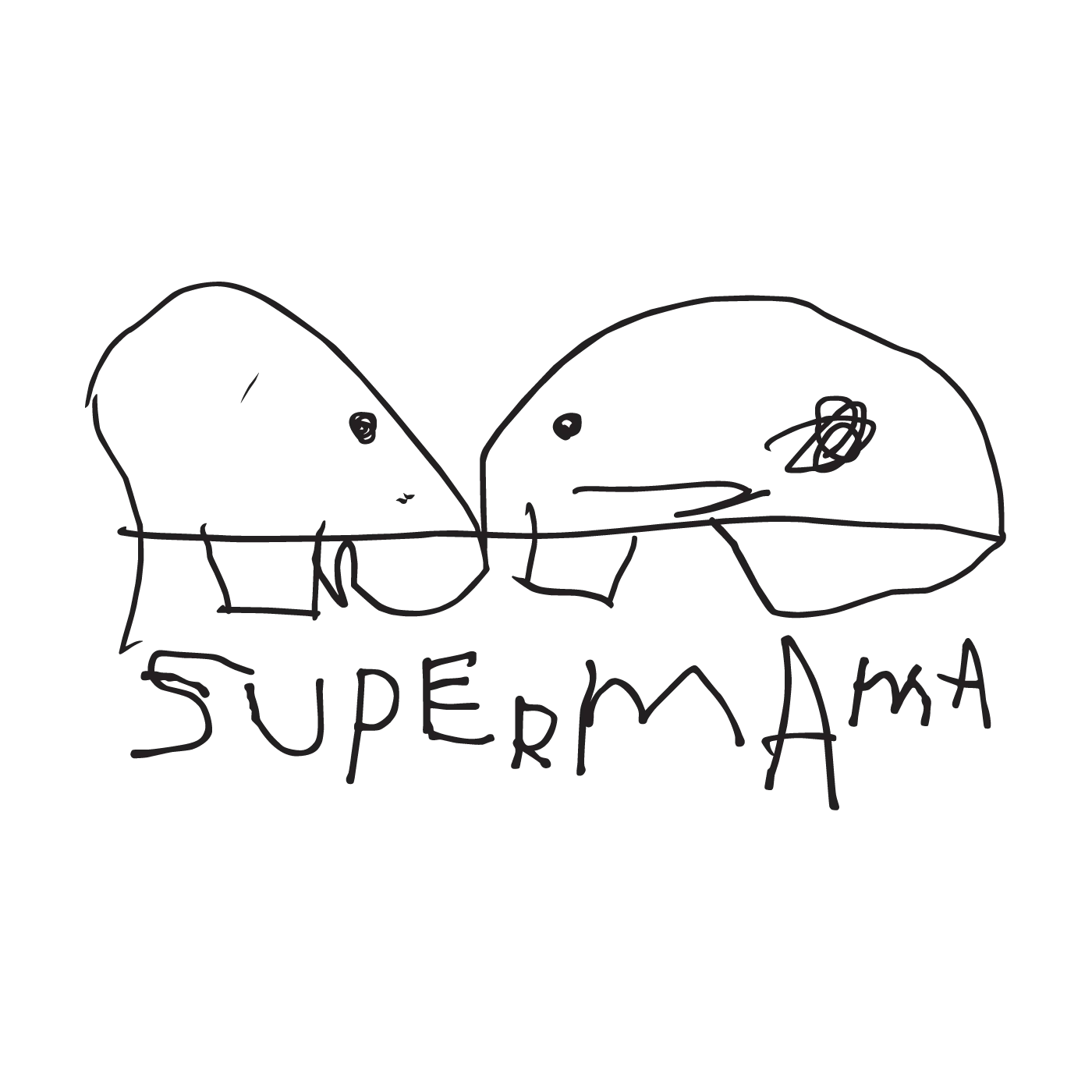
Edwin finds a 55-square-metre (600-square-foot) space and pumps $150K from their savings into the fit-out and stock. They don't have a budget for branding, but his daughter, Donna, is up late one night, doodling because she can't sleep.

"She drew this hippo and elephant sort of figure. I was really intrigued because if you look at the strokes, it's neither hippo or elephant, but it gives off the feeling of the 'hippo-elephant'. And I thought, this is so magical, because how can someone only three years old capture the essence of these animals in a few strokes? And I thought this should be the way we look at life, always. From the lens of kids."

That doodle becomes Supermama's first logo3.

Edwin stocks the store with "random knick-knacks" – unique and lovely objects, made by his Singaporean designer friends. There are also lots of well-crafted items from Japan – metal-casted paperweights and beautiful stationery. Minimalist Japanese home appliance brand Plus-Minus-Zero has products on the shelves, alongside Uniform Wares watches (British-designed, Swiss-made). Illustrated children's books are a key focus.

"Every day we bring our kids to the store. Donna and Toby are crawling around reading books that we are supposed to sell. It's created a sanctuary for us. We spend a lot of time with the kids. It's really one of the best years of our life."

Barely anyone comes into the shop. It makes just $600 in its first month. And yet, the family is so, so happy.

"It's really dreamy... It's a nice life."

2012

A year is up, and it's crunch time. The business is 'lacklustre'... not quite failing as he'd expected it would – but not thriving, either. The couple aren't ready to kill the dream.

"You are neither here nor there, you know? You are caught in a space where you don't make money, but you don't lose money. How I wished I would have lost money so I could just call it a day."

Encouraged by a friend who assures him that not losing money in the first year of a business is actually a really good sign, Edwin decides to give the store another year, and Mei Ling goes back to work to help pay the bills.

At some point in the months that follow, Edwin is approached by some people from the National Heritage Board: they like what he's trying to do, and offer him a retail space on Queen Street. It's about half the size of his current spot, but is near the National Museum and the world-famous Raffles Hotel so has much better foot traffic. Edwin agrees, and Supermama relocates.

Here comes some incredibly good timing: One evening, Edwin is taking his daughter Donna to her hiphop dance class at Orchard Road4...

"And I chance upon these two Japanese gentlemen selling porcelain pieces, at like a three-day pop-up stall. And I saw the price they were selling them at – it was half the price of what I was selling a very similar type of product for. But I asked them – how can you sell that at half the price? I don't even make much money from my price! And that was when I realised: they are the maker."

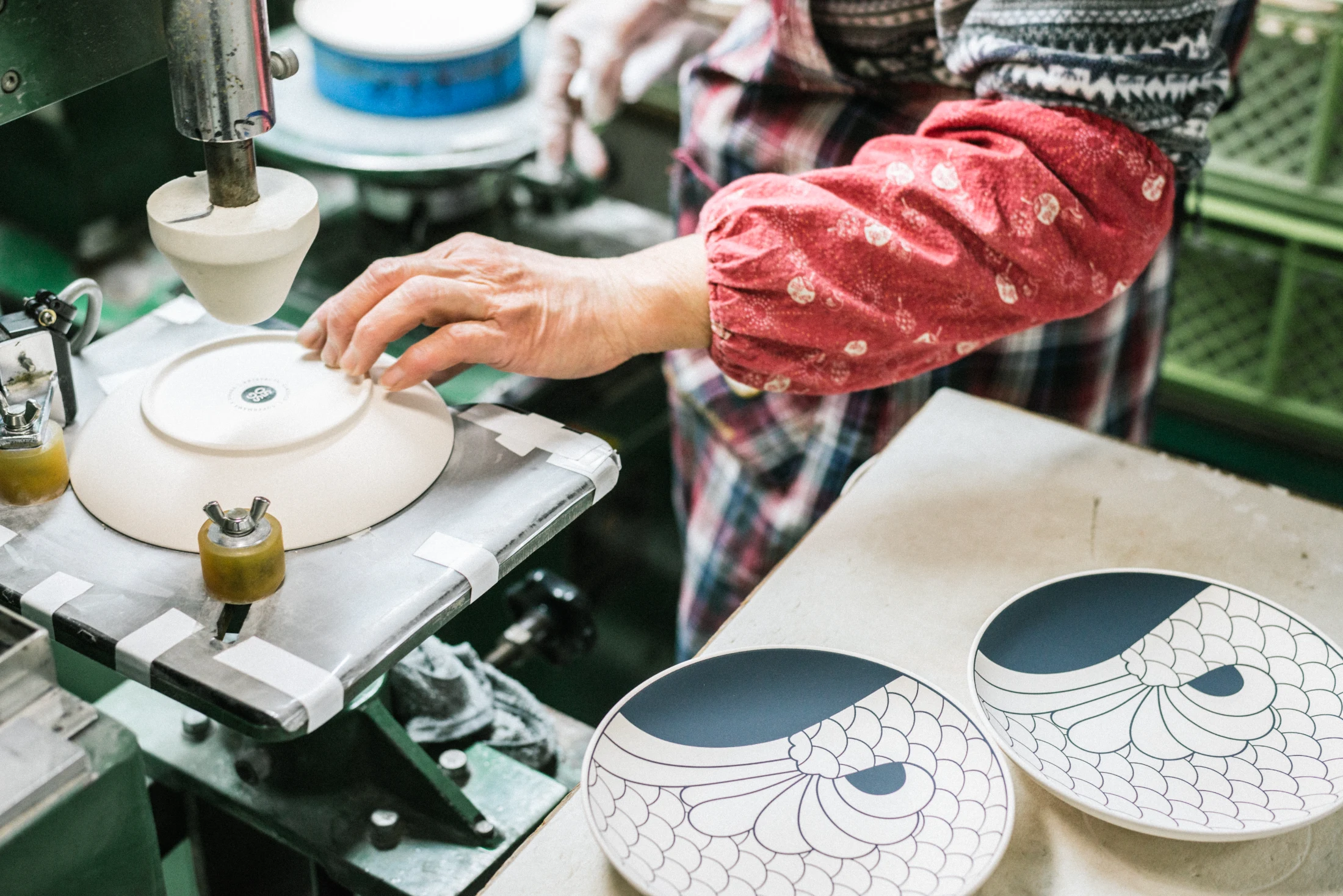
They were from Kihara Inc – a Japanese porcelain company. Not just any porcelain company: one based in Arita on Japan's southern island of Kyushu, a region known for its 400-year history producing traditional porcelain. Kihara makes the kinds of stunning blue and white plates that the Dutch East India Company shipped to Europeans keen on exotic wares in centuries past, and that today are exhibited at the world's leading trade and design shows.

The very next day, Edwin is setting up his new store. He opens the door to walk outside for a drink and at that precise moment, the Japanese craftsmen he'd met the night before are walking past. He quite literally bumps into them. More chat follows, and it turns out that the Kihara team isn't hugely confident in the future of their business either. They tell Edwin they couldn't sell a single piece at the pop-up stall, and are about to head back to Japan.

Edwin knows they have something special, though. He suggests he take their remaining stock on consignment, to display right here in his store. Anything that doesn't sell he can ship back to them. The Japanese guys agree.

And this collaboration is a major turning point for Supermama: Kihara's blue and white plates are soon flying off the shelves, people can't get enough of them. It's not long before another idea forms in Edwin's head: what if he had some Singaporean designers design plates, and Kihara produced them? He's been trying to find some Japanese producers for some time, with no luck, but this time, the Japanese makers say 'yes'.

2013

"So we produced the first series. Five designs. And we sold like crazy. And that sort of gave us the base to build up."

This first Supermama series was known as 'Singapore Icons', and the series itself became iconic. The plates celebrated the nation's history and heritage, featuring motifs based on local architecture and geographical features and cultural traditions. (Finally, Singapore had alternatives to the Merlion!) The collection was named a "Design of the Year" at the prestigious President*s5 Design Award.

"The first collection is so important because it opens up two doors. The first is to tell people that 'designed in Singapore' products have a market, there is a potential for sales there. The second is that when Mr Kihara saw that we sold, he introduced me to his circle of craft facilities – Shotoku Glass in Tokyo, Nousaku [metal casting] in Toyama, Maruju [specialist fabrics] in Nagoya. And I realised that the makers' circle is really small, and it's close. And I managed to start to access all of them, just from Kihara."

2014

With all these doors opening up, Supermama needs to stretch out a bit to fit everything coming through them. There are textiles, glassware and artworks to display, alongside the mainstay of porcelain wares.

Edwin moves the store to a new 70-square-metre (753-square-foot) space at the Singapore Art Museum. It's a natural home for a business dedicated to showcasing the country's best design talent, and Supermama's momentum picks up.

Edwin and Mei Ling's 'gap year' has lasted four years now... but in hindsight, the crazy dream is starting to look less like a 'gap' and more like a map to where they are meant to be.

2015

Edwin finally realises he's not going to fold the business. Singapore is celebrating its 50th year of independence, and the occasion fuels a sense of patriotism and identity. Suddenly, there's a market hungry for local design – and everyone knows the best place to find it.

"Singapore is essentially a city of borrowed cultures, right? We're young, we come from a city of migrants, we come together and we formed a country. And because of that, our cultures are borrowed. And a lot of times if we wanted to buy something, it was European brands, or US brands. But in 2015, we celebrate our Jubilee, and there's this change – people want to buy local products, local style, and when they start to see that I'm doing things beyond the Merlion, they go 'wow! This brand is interesting!'."

Supermama makes a profit for the very first time since it launched. Things are looking so promising, that Mei Ling quits her job with the government and joins Edwin in running the business.

They launch a new range called 'Souvenirs from Singapore', collaborating with artists and museums to create artefacts celebrating the quirks and charm and rich history of the country: a bone china set illustrated with Chatterbox Chicken Rice scenes; a Classic Toy Box of board games many Singaporeans remember from their childhoods; bold graphic 'A-to-Z' fridge magnets featuring various Singlish words and phrases, celebrating Singapore's lingua franca mix of English, Malay, Mandarin, Tamil and Hokkien.

Merlions aren't all there is to say any more.

2016-2025

From here, Supermama snowballs into the success story and design hub it is today.

It opens its first pop-up at Orchard Central in 2016 (not far from the mall where Edwin first met the men from Kihara). Edwin and Mei Ling have their third child, Natalie, in 2018. When the Singapore Art Museum starts a major renovation in 2020, Supermama finds a number of new homes: An outlet opens at the Asian Civilisations Museum in 2021; a new flagship store on Henderson Road in 2023; and another at the Peranakan Museum in 2025.

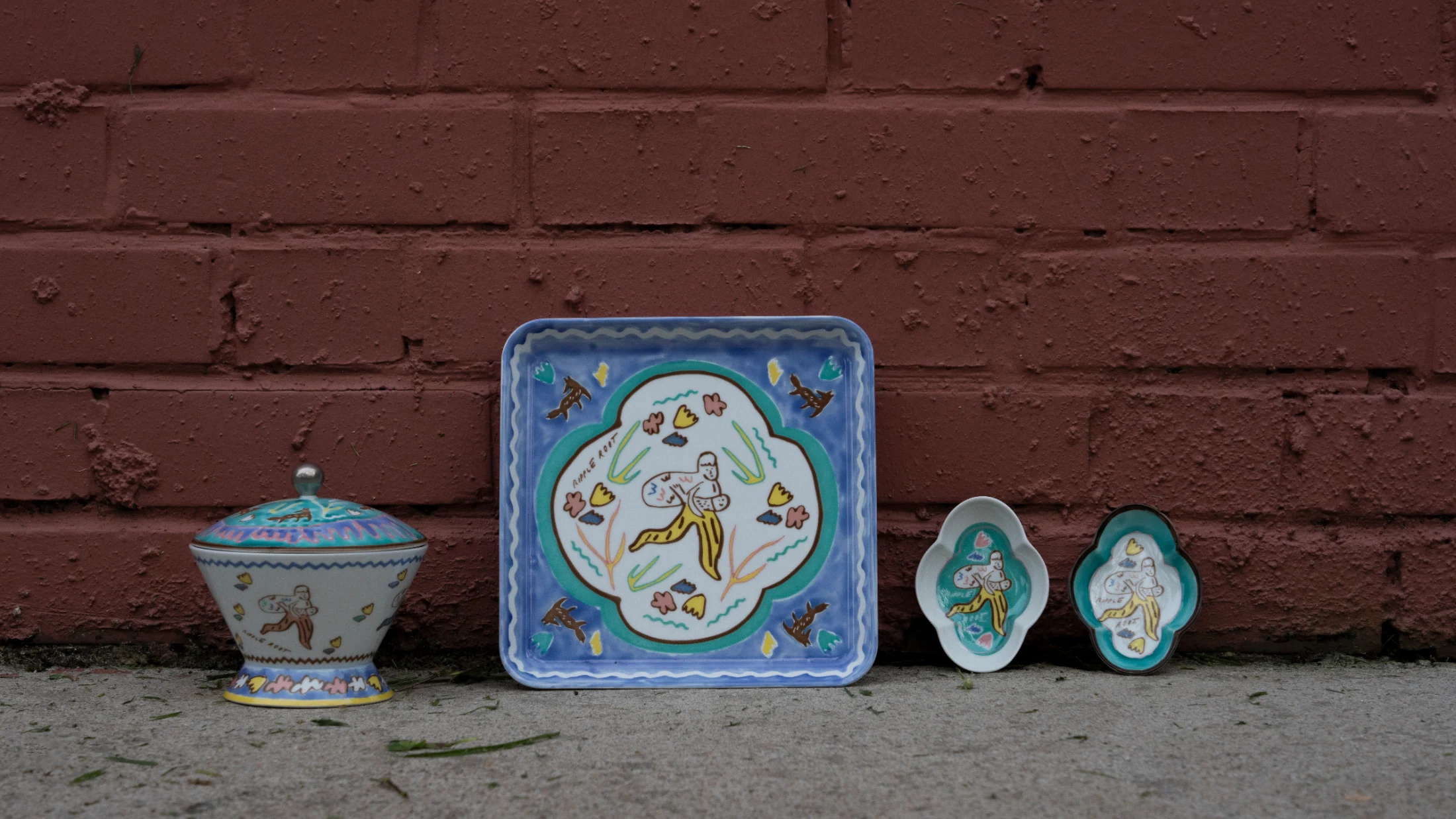
Supermama presents at the Milan Design Week showcase in 2021 and 2022. It launches the 'New Nanyang' collection, pairing Singaporean artists with Japanese craftsmen to create a stunning new collection of art objects designed to "encapsulate the spirit of the New Asian Language". In 2025 Edwin is the lead curator for the EMERGE @ FIND exhibition, showcasing over 70 up-and-coming designers from across Asia.

Mission very much accomplished, you'd have to say?

2026

With Supermama so well established, much of Edwin's energy these days is being poured into a new project: weareSuper – a multi-faceted social enterprise in an 800-square-metre (8611-square-foot) space in Singapore's Enabling Village, a complex designed for inclusivity and disability access.

"There are eight different sections. There's a cafe. There's a bookshop, there's an open studio, a video space, there are two small galleries. There's a coffee roaster. There's a 3D-printing lab. So I just bring all this together in one space."

Although he has long worked with people with disabilities, Edwin had never outwardly made a point of saying so. Here, the project is explicitly set up for that purpose – but he believes it can and should be just as successful as any other business.

"The way I approach presenting the works from people with disabilities is with the same care as how I would have curated and put things into my museum stores. So when you walk in, you're like 'wow, this is really damn good', but you have a second 'wow' when I say that these are all works by people with disabilities."

It's an ambitious - and highly satisfying - endeavour.

"I'm not approaching this from a posture of support. With a lot of social enterprise, you get funding, you get grants... I'm approaching this whole project to see whether we can really create a real business that even if I'm not allowed to mention the word 'disabled', the business still runs."

Edwin says he's allowing himself a couple of years to give weareSuper a chance to succeed on those terms. And he knows better than anyone that with the right combination of timing, people and passion, crazy dreams can indeed come true.

¹ The Merlion – a mascot with a lion’s head on a mermaid’s tail – has been Singapore’s official logo since 1964. Upon announcing it, the country’s Tourism Board said “It is the hope of the Board that its legendary ‘Merlion’ will attract the curiosity of all those in foreign parts who may come across this emblem and arouse in them a desire to visit Singapore”. The Merlion was chosen partly to reflect the Sanskrit meaning of ‘Singapore’ (Lion City), and partly as a nod to the city-state’s original name ‘Temasek’, meaning ‘sea’ in Javanese.

² The HDB is Singapore’s treasured Housing & Development Board – the country’s national public housing authority. Unlike in many other parts of the world, public housing in Singapore is a point of civic pride, with almost 80 per cent of the population residing in one of the million or so government-built, subsidised (and high quality) flats that have been constructed since the program began in 1960. These apartment towers dominate the Singapore skyline, come in various sizes and configurations, and most complexes feature leisure facilities, food outlets and grocery stores.

³ The doodle is still on the sign of their flagship store, but these days is only used on more personal or special order projects.

⁴ Orchard Road is Singapore’s premier shopping district – a long avenue of malls, department stores, restaurants and hotels.

⁵ This is not a typo. The Presidents Design Award (PDA) is so well-designed, it has substituted an asterisk for an apostrophe in its own name.

supermamastore.com | @supermamasg

Writing:
Writing:
Kirsten Drysdale
Photography:
Photography:
Back to Top
Arrow UpArrow Up
Top
Arrow UpArrow Up
The After shot of the Floorplan
Before
before
after
After
Businesses featured in this project
No items found.
Products featured in this project
No items found.
Magazine Current IssueMagazine Current Issue
Writing:
Writing:
Kirsten Drysdale
Photography:
Photography:
Back to Top
Arrow UpArrow Up